

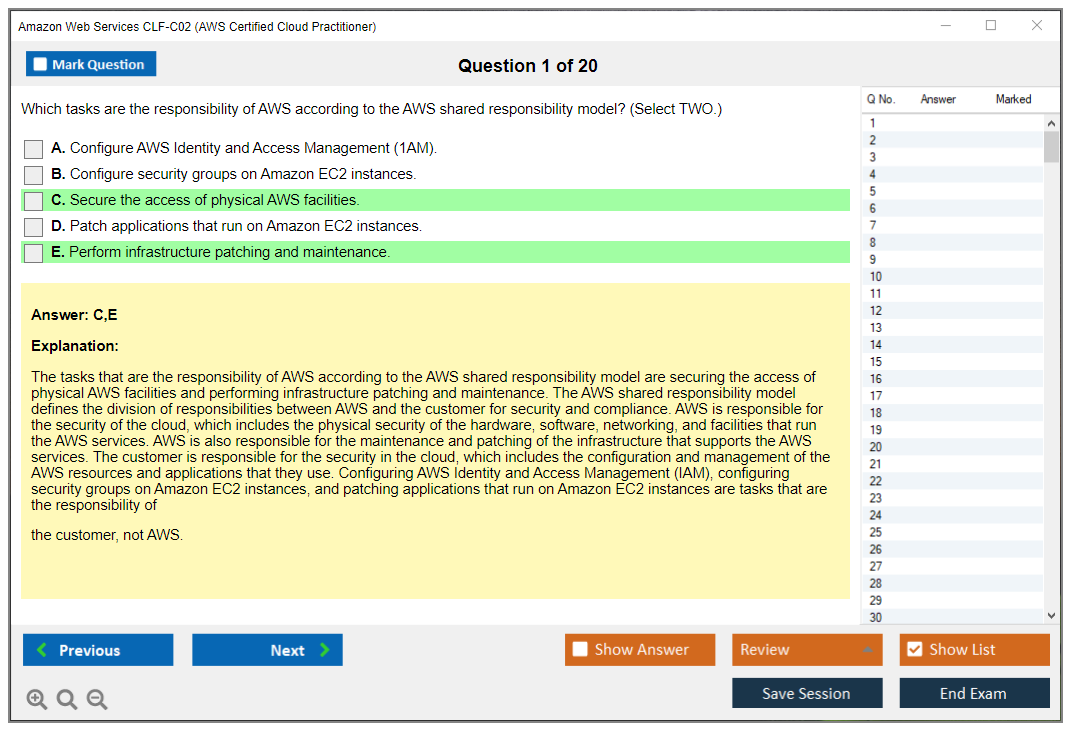
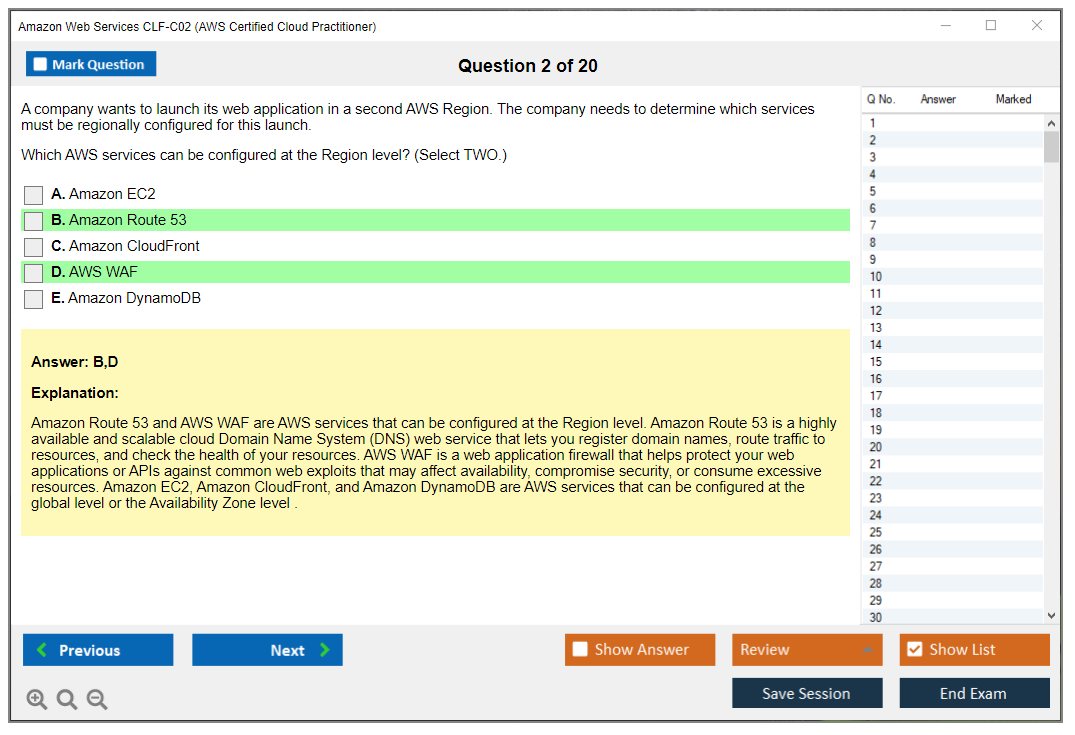
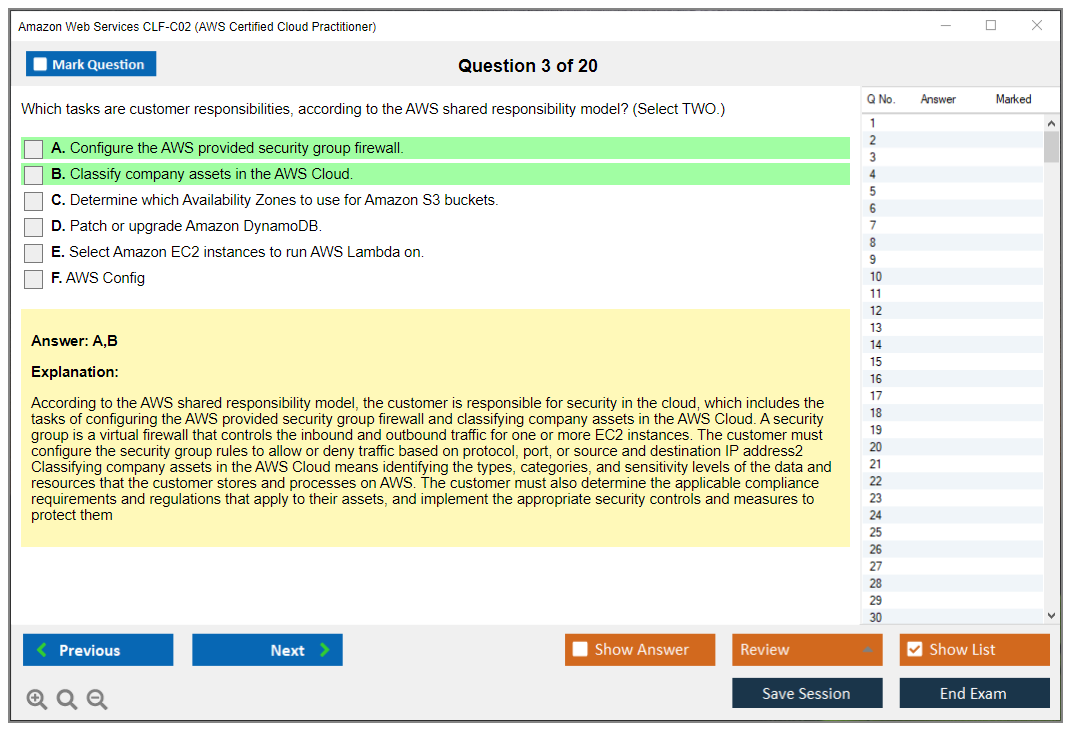
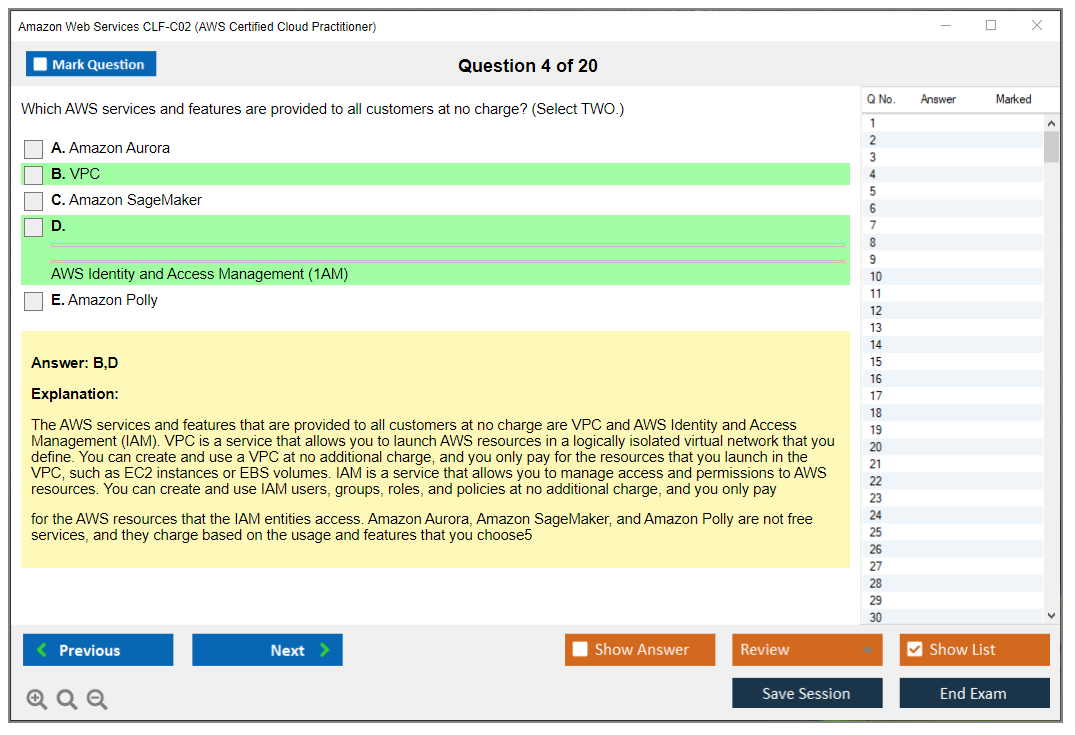
Amazon AWS CLF-C02 (AWS Certified Cloud Practitioner)
Amazon AWS CLF-C02 (AWS Certified Cloud Practitioner) Overview
What the AWS Certified Cloud Practitioner CLF-C02 actually validates
The AWS Certified Cloud Practitioner CLF-C02 represents your entry ticket into AWS's certification world, validating foundational cloud knowledge for professionals across every imaginable role. This is not some technical deep-dive where you are configuring VPCs or writing Lambda functions. It is about grasping what AWS actually is, how cloud computing works conceptually, and why organizations even bother adopting AWS. The CLF-C02 version dropped in September 2023, replacing CLF-C01 and reflecting updated services, pricing models, and cloud best practices that have evolved as AWS keeps expanding what feels like an endless service catalog.
This AWS foundational certification establishes baseline credentials demonstrating you understand AWS Cloud fundamentals, core services, security principles, and basic architectural concepts. Unlike associate or professional-level AWS certifications, the Cloud Practitioner credential targets everyone. Sales, marketing, finance, legal, technical roles. You are not expected to implement solutions. Just speak the language. Understand what is possible.
The certification validates your ability to explain AWS Cloud value proposition, understand the shared responsibility model, describe basic security and compliance concepts, and comprehend cloud economics. The thing is, it is more business understanding than technical implementation. You will need to know when you would use S3 versus EBS, but not how to configure lifecycle policies or encryption keys down to every detail.
Who should actually take CLF-C02
Entry-level AWS certification status makes CLF-C02 perfect for career changers, students, executives, and anyone beginning their cloud path without needing deep technical implementation chops. If you are coming from a non-technical background and want to break into cloud computing? This is your starting point. Organizations increasingly require Cloud Practitioner certification for non-technical staff to ensure company-wide cloud literacy and informed decision-making about AWS adoption.
The credential demonstrates commitment to professional development and provides common language for cross-functional teams discussing cloud initiatives. When your finance team understands Reserved Instances and Savings Plans, and your legal team grasps the AWS security shared responsibility model, those conversations become infinitely more productive. Having everyone on the same page about what AWS does cuts through organizational confusion like nothing else.
IT professionals transitioning from on-premises infrastructure to cloud environments seek foundational AWS knowledge before pursuing specialized certifications like the AWS Certified Solutions Architect - Associate (SAA-C03). Business analysts, project managers, and product owners working on AWS-based projects need to understand technical constraints and possibilities. This cert gives them that framework without overwhelming them. Sales and marketing professionals selling AWS solutions or cloud-based products require credible technical conversations with customers, and CLF-C02 provides exactly that baseline they are looking for.
Finance and procurement specialists managing cloud budgets, analyzing AWS bills, and optimizing organizational cloud spending benefit enormously from understanding AWS billing and pricing basics. Legal and compliance officers ensuring AWS implementations meet regulatory requirements need to understand shared responsibility for data protection. Who is responsible for what matters legally. Students and recent graduates building cloud skills for entry-level positions in increasingly cloud-centric job markets should absolutely start here before jumping into more advanced material that will frankly overwhelm them.
CLF-C02 exam format and what to expect
The exam consists of 65 questions (50 scored, 15 unscored for research purposes), delivered in 90 minutes through Pearson VUE testing centers or online proctoring. Your choice, really. Question types include multiple choice (one correct answer from four options) and multiple response (two or more correct answers from five or more options). Those multiple response questions trip people up constantly because you have to identify ALL correct answers. Getting three out of four earns you absolutely nothing.
Cost structure and payment options
CLF-C02 exam cost runs $100 USD, which is significantly lower than associate-level exams typically costing $150. AWS offers a 50% discount voucher when you pass CLF-C02, applicable to your next certification exam. A great incentive to keep progressing. If you fail? Wait 14 days before retaking, and you will pay the full fee again. No refunds once you schedule, but you can reschedule up to 24 hours before your appointment for a $25 fee.
Passing score and how scoring actually works
The AWS Cloud Practitioner passing score is 700 on a scale of 100-1000. AWS uses scaled scoring, meaning your raw score (actual number of questions answered correctly) gets converted to this standardized scale. You will not know exactly how many questions you got right, just whether you passed or failed and your scaled score. Can be frustrating. The scaled scoring accounts for variations in exam difficulty across different versions, so theoretically a 700 on one exam form represents the same competency as a 700 on another form.
Difficulty level for beginners
The AWS Cloud Practitioner difficulty sits at beginner level, but that does not mean it is a cakewalk if you have zero cloud exposure. Far from it. People with IT backgrounds generally find it straightforward after 1-2 weeks of study. Complete beginners might need 4-6 weeks to absorb concepts like elasticity, fault tolerance, and the shared responsibility model. The trickiest part? Memorizing which AWS services do what. There are dozens of services covered at a surface level, and the exam absolutely loves asking you to match use cases to appropriate services.
Common challenges include distinguishing between similar services (RDS versus DynamoDB, EC2 versus Lambda), understanding pricing models for different services, and remembering which security controls are customer responsibility versus AWS responsibility. The questions often include plausible-sounding wrong answers that reference real AWS services used incorrectly. Not gonna lie, can really mess with your head during the exam.
I once saw someone walk out of the testing center convinced they had failed because they spent so much time second-guessing themselves on service distinctions. They passed with an 850. Moral of the story? Trust your preparation more than your mid-exam panic.
Domain 1 - Cloud concepts
This domain covers approximately 24% of the exam and focuses on full understanding of AWS Cloud concepts including deployment models (public, private, hybrid), cloud computing advantages (elasticity, scalability, high availability), and design principles that drive decision-making. You need to explain the value proposition of the AWS Cloud. Why would an organization move from on-premises to cloud? What are the six advantages of cloud computing that AWS promotes constantly? Knowledge of AWS global infrastructure including Regions, Availability Zones, Edge Locations, and how geographic distribution supports fault tolerance and low latency is essential here.
Domain 2 - Security and compliance
Representing about 30% of the exam, this domain tests understanding of AWS security shared responsibility model distinguishing customer responsibilities from AWS-managed security controls. Here is the deal: AWS secures the infrastructure (hardware, facilities, network), while customers secure what they put in the cloud (data, applications, access management). Grasp of AWS compliance programs, data protection mechanisms, and identity/access management fundamentals through AWS IAM is critical. Questions cover concepts like least privilege, multi-factor authentication, and encryption at rest versus in transit. Stuff that sounds simple but gets complicated fast.
Domain 3 - Cloud technology and services
This is the biggest domain at roughly 34% of the exam, so pay attention here. Familiarity with core AWS services across compute (EC2, Lambda), storage (S3, EBS), databases (RDS, DynamoDB), and networking (VPC, CloudFront) categories gets tested extensively. You do not need to configure these services, but you must know when to use each one. Like, when would you choose S3 for object storage versus EBS for block storage attached to EC2 instances? Or RDS for managed relational databases versus DynamoDB for NoSQL workloads? The exam also covers AWS management tools like CloudWatch for monitoring and CloudFormation for infrastructure as code.
Domain 4 - Billing, pricing, and support
About 12% of the exam focuses on ability to explain AWS billing and pricing basics including pay-as-you-go models, Reserved Instances, Savings Plans, and cost optimization strategies. You need to understand how different pricing models work. On-demand versus reserved versus spot instances for EC2, which can save organizations massive amounts of money if used correctly. Knowledge of AWS support tiers (Basic, Developer, Business, Enterprise) and appropriate use cases for each level is tested. Understanding of AWS Well-Architected Framework pillars (operational excellence, security, reliability, performance efficiency, cost optimization, and sustainability) appears in this domain and throughout the exam.
Prerequisites and what background helps
AWS CLF-C02 prerequisites formally do not exist. Anyone can take this exam without prior certifications or AWS experience, which is refreshing. That said, AWS recommends six months of exposure to AWS Cloud, but that is overkill for most people. If you have basic IT literacy (understanding what servers, databases, and networks are conceptually), you can prepare for this exam in 2-4 weeks of focused study without burning yourself out.
Suggested background includes basic understanding of IT services and their uses in cloud platforms. If you have never heard terms like "database," "virtual machine," or "API," you will need to spend extra time on foundational concepts before diving into AWS-specific material. No shame in that. People coming from traditional IT backgrounds find the transition easier because they understand what problems cloud computing solves.
Official AWS training and study resources
AWS Cloud Practitioner study materials start with AWS Skill Builder, which offers free digital training specifically for CLF-C02. Cannot beat free. The "AWS Cloud Practitioner Essentials" course provides about 6 hours of content covering all four exam domains. AWS also offers instructor-led training (paid) if you prefer structured classroom environments where you can ask questions. The AWS Certified Cloud Practitioner Exam Guide (available as PDF from AWS) outlines every topic tested and should be your roadmap for studying. Seriously, print it out.
Documentation to focus on includes AWS whitepapers like "Overview of Amazon Web Services" and "How AWS Pricing Works." You do not need to memorize pricing down to the cent, but understanding billing concepts prevents surprises on exam day. The AWS website's service pages for EC2, S3, RDS, Lambda, VPC, IAM, and CloudWatch provide enough depth without overwhelming you with implementation details that are not tested anyway.
Study plan that actually works
A realistic study plan for someone with basic IT knowledge spans 2-4 weeks at 1-2 hours daily. Manageable for most people with full-time jobs. Week one covers cloud concepts and AWS global infrastructure. Week two focuses on core services (compute, storage, databases, networking). Week three tackles security, compliance, and the shared responsibility model. Week four reviews billing, support plans, and takes multiple practice tests to identify weak spots. If you are completely new to IT, extend this to 6-8 weeks with more time on foundational concepts so you are not rushing.
Practice tests and exam preparation strategy
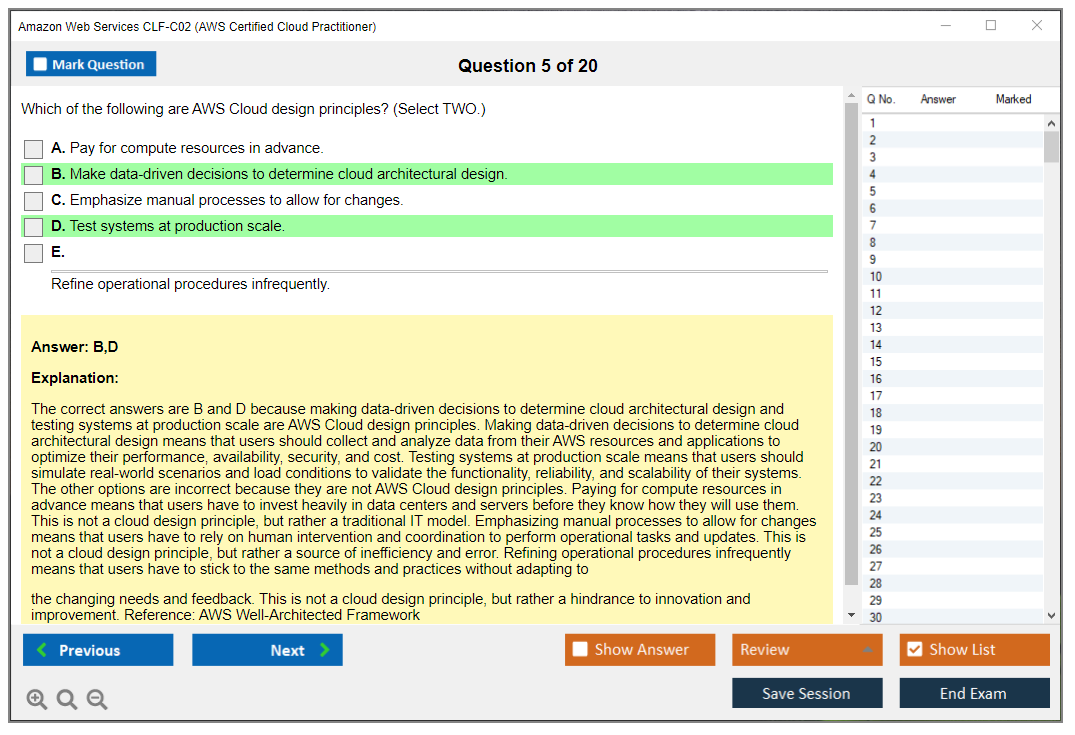
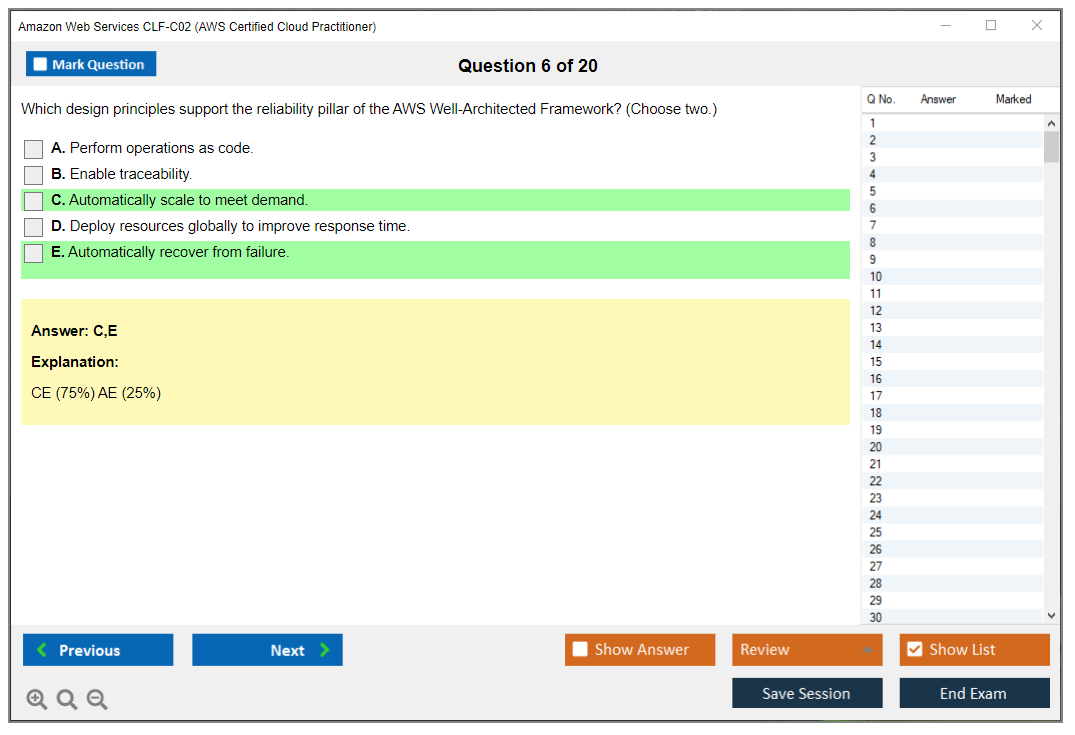
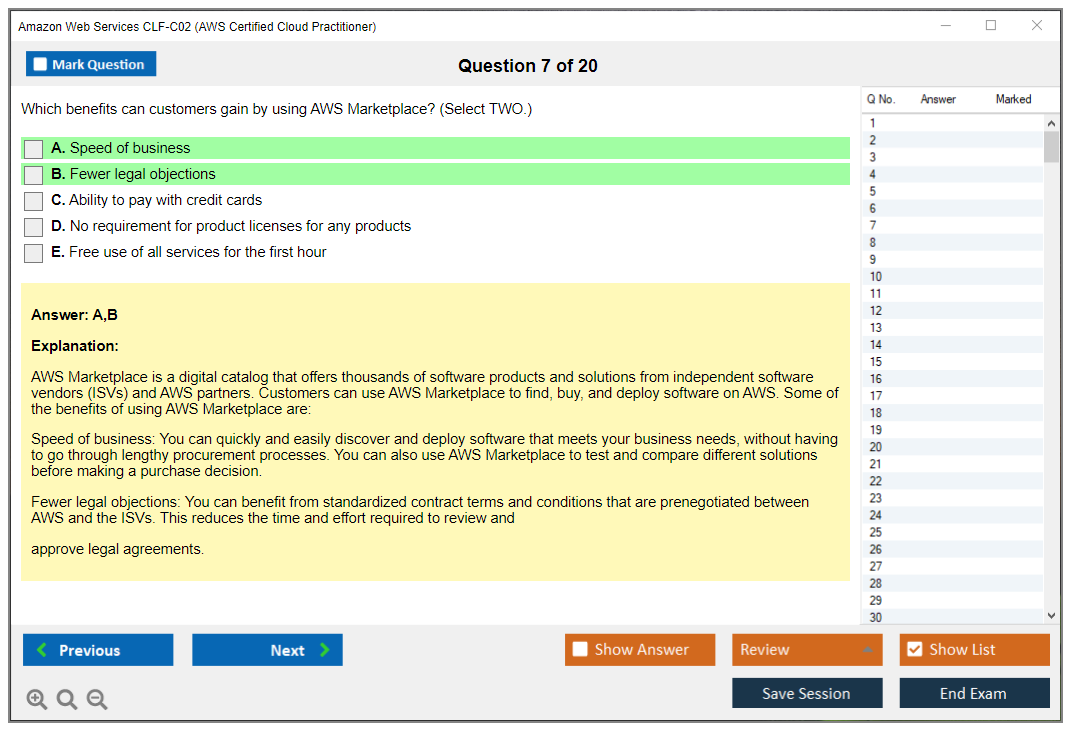
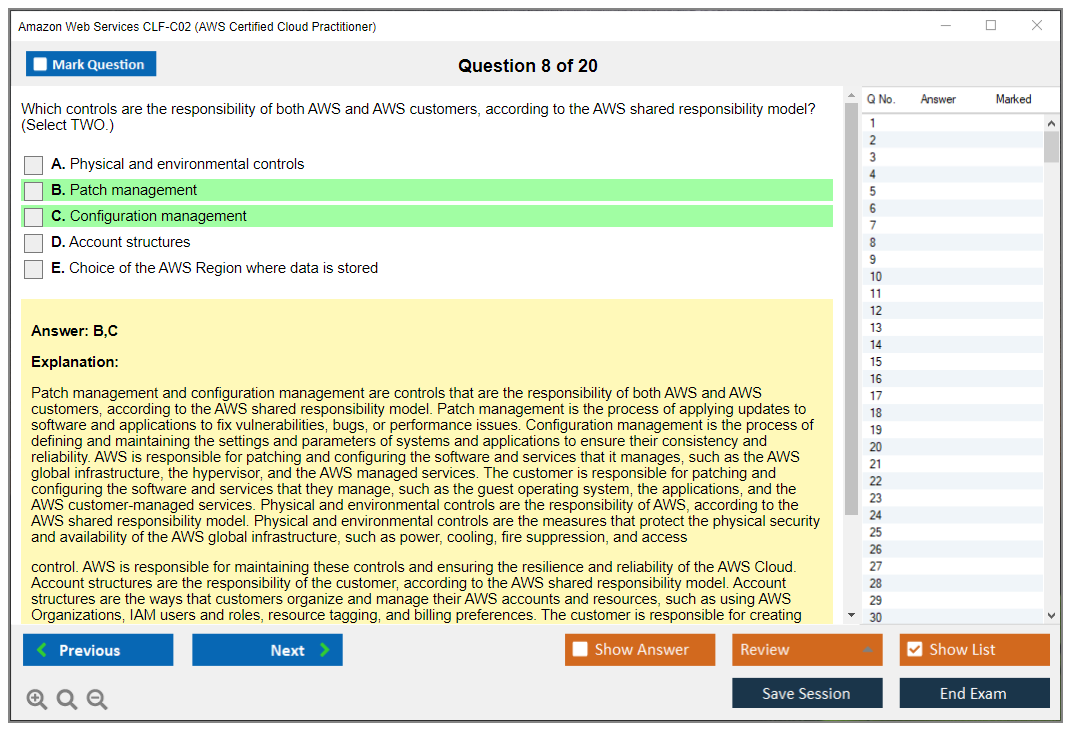
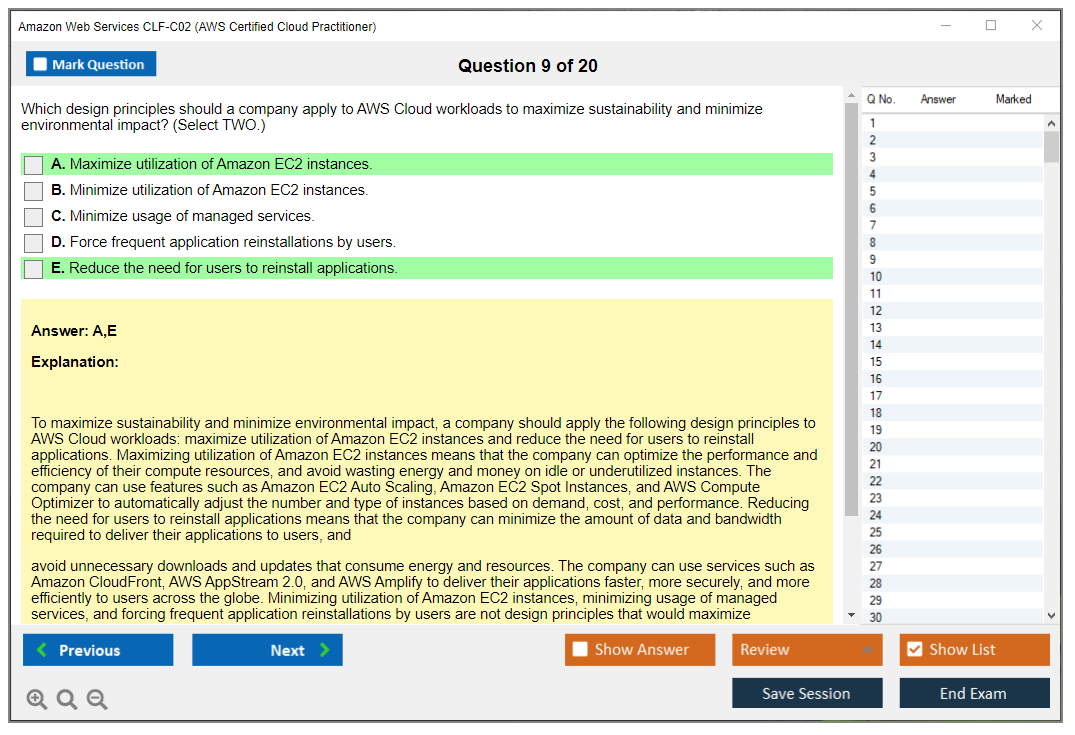
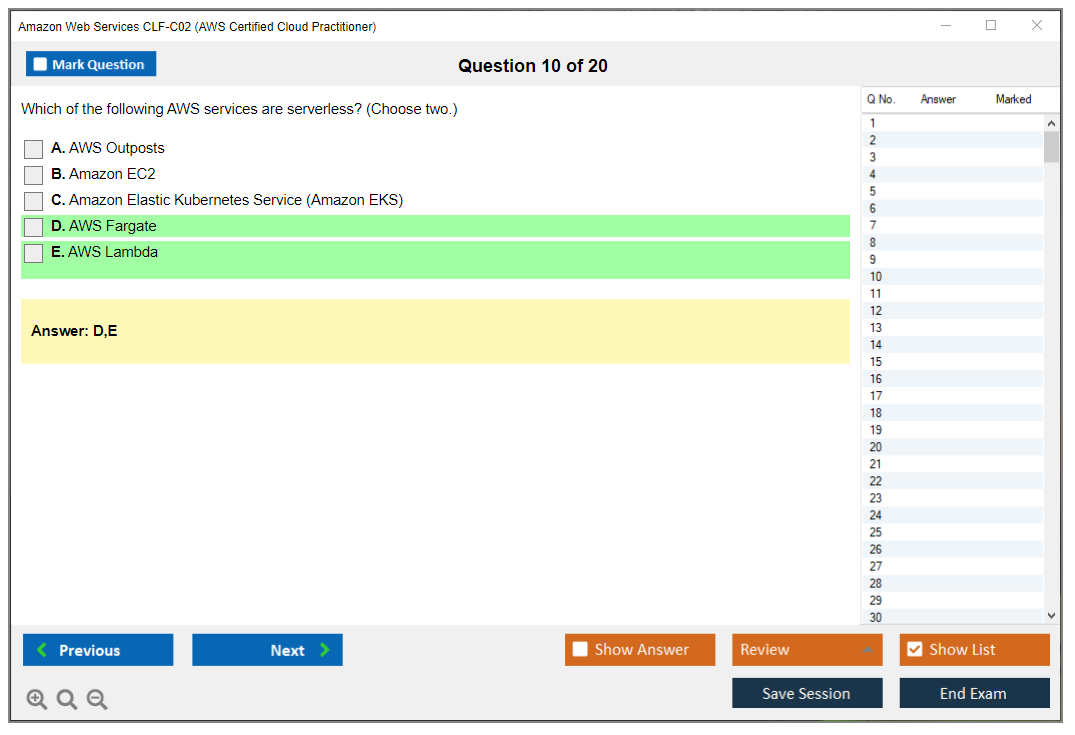
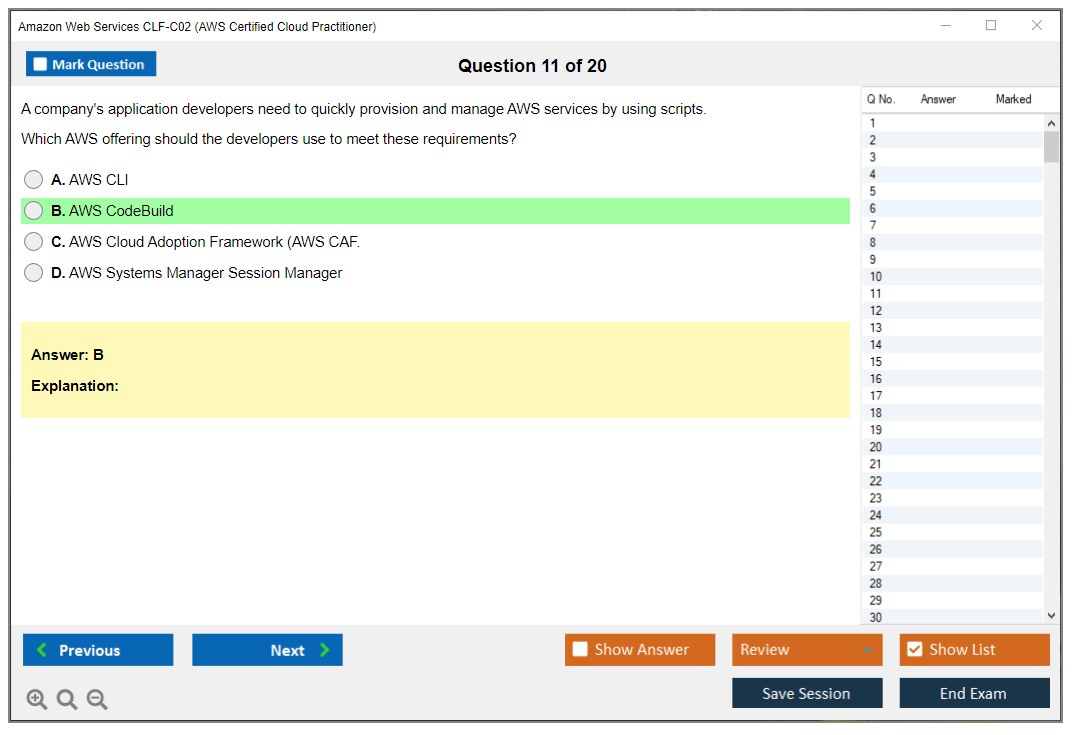
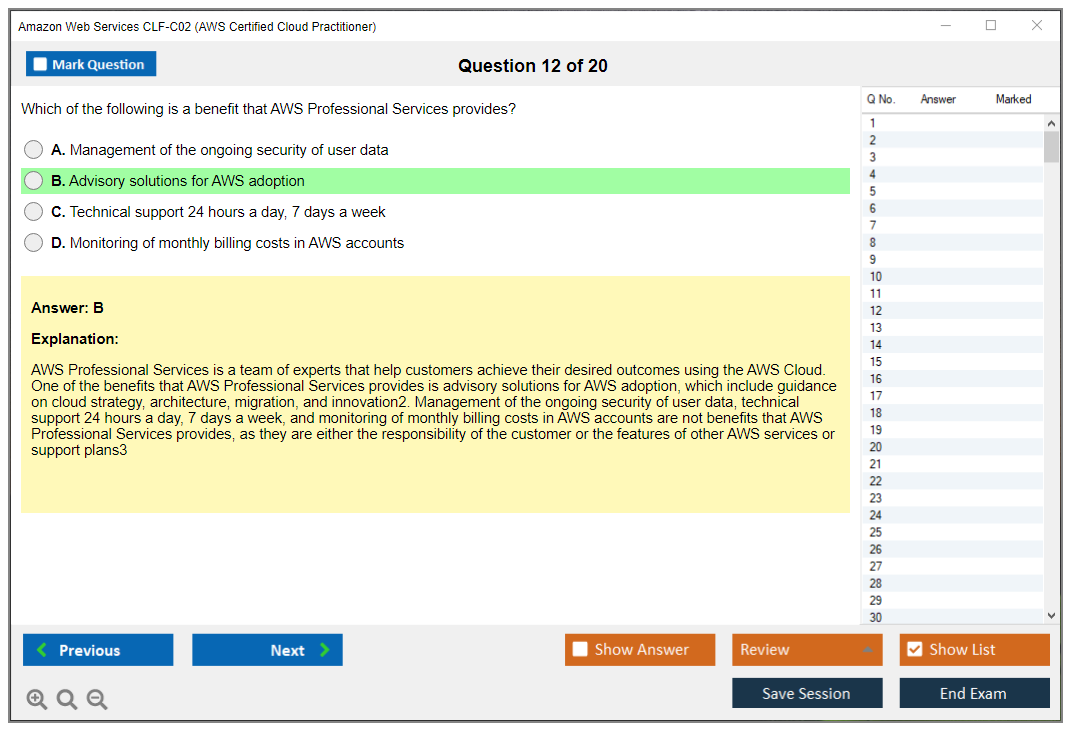
CLF-C02 practice tests are essential. Take at least three full-length practice exams before scheduling the real thing. No exceptions. Quality mock exams mimic the actual exam's question style and difficulty, which matters more than you would think. AWS offers an official practice exam for $20, which includes 20 questions and gives you a feel for the real format. Worth every penny. Third-party platforms provide full-length practice exams, though quality varies wildly, so read reviews before purchasing.
Topic-by-topic drills help reinforce weak areas identified in practice tests. If you are consistently missing pricing questions, spend extra time on Reserved Instances, Savings Plans, and cost optimization strategies until they click. IAM questions require understanding policies, roles, users, and groups conceptually. How they interact matters. Well-Architected Framework questions appear throughout the exam, so memorizing the six pillars pays off big time.
Exam-day tips? Read questions carefully. AWS loves including extra information that is completely irrelevant to the actual question, which can throw you off. Eliminate obviously wrong answers first. If you are stuck between two answers, consider which one fits with AWS best practices and the Well-Architected Framework. That usually points you in the right direction. Time management matters less here than on longer exams, but do not spend five minutes on a single question either.
Renewal cycle and keeping your certification current
AWS Cloud Practitioner renewal requires recertification every three years, which comes up faster than you would expect. You can renew by retaking the CLF-C02 exam (or whatever version is current at renewal time) or by passing a higher-level AWS certification, which automatically renews your Cloud Practitioner credential. Nice shortcut. AWS also introduced recertification through continuing education. Earning 30 credits through AWS training activities can extend your certification by one year without retaking the exam.
Staying current with AWS changes matters because the cloud evolves rapidly. Shockingly fast. New services launch constantly, pricing models change, and best practices get updated based on lessons learned from massive deployments. Following the AWS blog, attending AWS events (virtual or in-person), and engaging with the AWS community helps maintain your knowledge beyond just keeping the certification valid. For those looking to advance beyond foundational knowledge, the AWS Certified Developer - Associate (DVA-C02) or AWS Certified SysOps Administrator - Associate (SOA-C02) represent logical next steps depending on your career direction and interests.
Quick answers to common questions
How much does the AWS Certified Cloud Practitioner (CLF-C02) exam cost? $100 USD globally, with a 50% discount voucher for your next exam upon passing. Solid deal.
What is the passing score for AWS Cloud Practitioner CLF-C02? 700 out of 1000 on AWS's scaled scoring system.
Is the AWS Cloud Practitioner exam hard for beginners? It is manageable with 2-6 weeks of study depending on your IT background, but requires memorizing many service names and use cases. There is no way around that.
What are the CLF-C02 exam objectives and domains? Four domains: Cloud Concepts (24%), Security and Compliance (30%), Cloud Technology and Services (34%), and Billing, Pricing, and Support (12%).
How often do you need to renew the AWS Cloud Practitioner certification? Every three years through retaking the exam, passing a higher-level certification, or earning continuing education credits.
CLF-C02 Exam Details
Amazon AWS CLF-C02 (AWS Certified Cloud Practitioner) overview
What the certification validates
The AWS Certified Cloud Practitioner CLF-C02 is the gateway cert. Straight up. AWS basically says, "Okay, you get what cloud actually is, why anyone cares, and how AWS frames security, pricing, and their core lineup," without expecting you to architect a VPC on a napkin under pressure.
This is an AWS foundational certification. You're demonstrating you can hang in conversations about the AWS security shared responsibility model, interpret a monthly invoice without panicking, and pick reasonable services when someone describes a use case. It's an entry-level AWS certification, but don't sleep on it. The exam forces you to apply ideas rather than just regurgitate memorized bullet points, and that shift catches people off guard.
Who should take CLF-C02
Honestly? Lots of folks. Career switchers hunting cloud roles. Project managers coordinating AWS migrations. Sales engineers pitching solutions. Junior IT staff building foundational knowledge. Even developers who've coded for years but never touched the billing or compliance side of AWS.
The thing is, it's also a smart confidence move if associate-level exams intimidate you. You learn AWS's question patterns, how scaled scoring works, and (I mean, the whole proctored environment vibe) without drowning in implementation minutiae that demands actual build experience.
CLF-C02 exam details
Exam format (question types, length, delivery)
The exam throws 65 questions total at you. That splits into 50 scored plus 15 unscored experimental items AWS tests for future versions, and there's zero way to identify which is which during the test. That ambiguity messes with people's heads. You'll encounter a bizarre question and assume you're tanking, when it might not even factor into your final score.
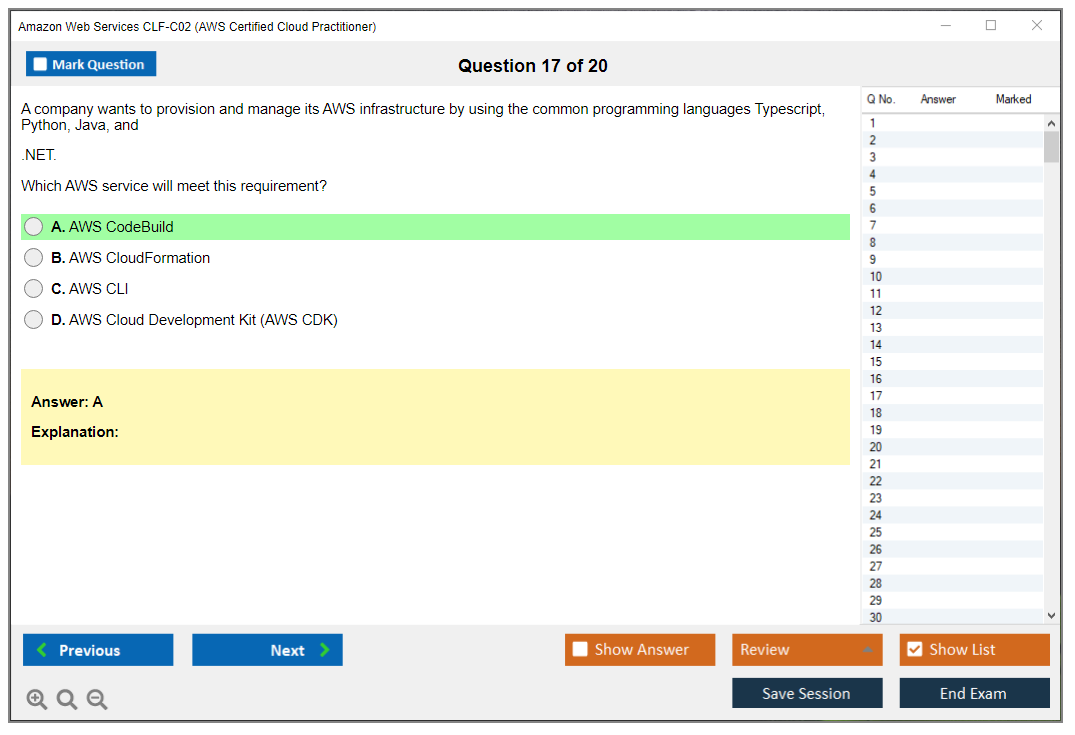
Question style leans scenario-based. Not epic novels, but enough context to force judgment calls, like "a startup wants predictable workloads at lower cost" or "which service delivers serverless compute without server management." This is an AWS cloud concepts exam, not trivia hour at the bar. Understanding the why behind each service beats rote memorization every time.
Formats include:
- Multiple-choice, one right answer among four. Pretty straightforward.
- Multiple-response, two or more correct picks from five-plus options. This format bleeds points because there's no partial credit. Miss a selection, or grab one extra wrong choice, and that entire question scores zero.
You get 90 minutes. Plenty of runway, assuming you don't spiral into overthinking. Some questions are gimmes if you recognize service names. Others are wordy enough you'll reread twice, which is completely normal.
Delivery happens through Pearson VUE, either:
- Testing center. Show up, they hand you a workstation, and your main enemy is usually nerves. They provide whiteboard plus marker.
- Online proctoring via Pearson VUE OnVUE. Webcam surveillance, room scan protocol, strict rules, and you need a quiet private space with zero interruptions. You can use a physical whiteboard or single-sided erasable board after showing it's blank to the proctor.
The exam ships in English, Japanese, Korean, Simplified Chinese, Traditional Chinese, Bahasa (Indonesian), Spanish (Spain), Spanish (Latin America), French (France), German, Italian, and Portuguese (Brazil).
No external materials allowed. No notes. No phone within arm's reach. No "let me Google that real quick." Just you, the interface, and your prep work.
Accommodations exist for candidates who need them, but submit requests early through AWS's official accommodations process. Waiting until exam week creates unnecessary stress and potential delays.
Results land instantly as pass/fail, then a detailed score report appears in your AWS Certification account within roughly five business days showing domain-level performance.
Cost (exam fee, reschedule policies, discounts if applicable)
The CLF-C02 exam cost runs $100 USD, consistent whether you test at a center or online. I appreciate that. No sneaky "remote convenience surcharge" garbage.
Payment accepts credit card, debit card, or voucher codes. Vouchers surface through AWS Training partners, promotional campaigns, and occasionally employer programs negotiating bulk purchases.
Rescheduling works fine up to 24 hours before your appointment slot without penalty. Inside that window? You forfeit the full hundred bucks. Fail the exam and you're paying another $100 for the retake (no sympathy discount) so treating the first attempt like a throwaway practice run is financially dumb.
Passing any AWS cert typically scores you a 50% discount voucher toward your next exam. So your next move, maybe Solutions Architect Associate, becomes cheaper. Some training bundles include vouchers too, and organizations certifying multiple employees can pursue volume pricing, but that requires direct AWS negotiation for specifics.
Also worth noting: no subscription fee. No annual membership charge. You pay per attempt, period.
Passing score (scaled scoring, what "pass" means)
The AWS Cloud Practitioner passing score sits at 700, within a scaled range from 100 to 1000. Scaled scoring exists because exam versions vary slightly in difficulty, so AWS adjusts mathematically across forms to keep the bar consistent, meaning your target stays the same regardless which version you draw.
Those 15 unscored questions vanish from calculations. But since you can't identify them mid-exam, you've gotta treat every question like it counts toward your final score.
The score report breaks down domain-level feedback as "needs improvement," "competent," or "proficient." That's actually valuable if you're climbing the certification ladder, because it reveals whether you're struggling with, say, AWS billing and pricing basics versus security fundamentals, giving you a roadmap for deeper study.
Higher scores unlock nothing special. Pass equals pass. AWS doesn't broadcast your score publicly either. Sharing with employers is entirely your decision.
Difficulty (beginner level expectations, common challenges)
AWS Cloud Practitioner difficulty registers as beginner-tier within AWS's certification hierarchy, but "beginner" absolutely doesn't translate to "wing it without studying." The exam expects broad service recognition and conceptual understanding without demanding implementation depth.
Zero programming required. No mandatory hands-on console work. No expectation you'll write IAM policies from memory. But you definitely need to recognize IAM's purpose, understand what S3 buckets do, and grasp the operational shift between EC2 and Lambda architectures.
Common stumbling blocks:
- Similar-sounding services. EC2 versus Lambda. RDS versus DynamoDB. S3 versus EBS versus EFS. People constantly confuse these because they memorize service names instead of actual use cases and differentiators. I once watched someone ace a mock exam and then blank completely when the real test swapped out two database service names in the same question stem. Wild.
- Billing scenarios. Reserved Instances versus Savings Plans. Cost allocation tags. Support plan tiers. Consolidated billing mechanics. This area trips up technical folks who ignore the financial dimension, while non-IT candidates sometimes excel because they respect the money implications.
- Shared responsibility model boundaries. Who patches what. Who secures what. This concept appears frequently, and candidates either internalize the logic or they don't. There's not much middle ground.
AWS guards pass rate data, but you'll hear whispered estimates around 60-70%. I mean, sure, but those numbers lack context. What really matters is quality prep time. IT professionals often pass with 20-40 study hours, while non-technical folks typically need 40-80 hours because they're simultaneously learning foundational networking, database concepts, and security principles alongside AWS-specific content.
CLF-C02 exam objectives (domains)
Domain 1: Cloud concepts
This covers the "why cloud exists" territory. Benefits like elasticity, agility, economies of scale, plus foundational models (IaaS, PaaS, SaaS distinctions).
You'll also encounter AWS global infrastructure concepts. Regions. Availability Zones. Edge locations. Expect scenario questions like "design for high availability" even though you're not actually building architectures yet.
Domain 2: Security and compliance
This domain houses the AWS security shared responsibility model, and you absolutely need that framework memorized cold. AWS secures the infrastructure of the cloud, customers secure everything in the cloud, but that boundary shifts depending on service type. The exam ruthlessly tests those shifting lines.
IAM fundamentals appear here too. Users, roles, policies, MFA implementation, least privilege principles. Light compliance concepts surface as well, more "what does AWS Artifact provide" than "recite ISO certification numbers."
Domain 3: Cloud technology and services
Big territory. Compute, storage, databases, networking, management tools. The objective is service recognition plus basic use case matching, not detailed architecture diagrams or configuration syntax.
Invest extra effort on the "usual suspects": EC2, Lambda, ECS/EKS at high level, S3, EBS, RDS, DynamoDB, VPC basics, CloudFront, Route 53, CloudWatch, CloudTrail. Not all those receive heavy testing weight, but they dominate AWS CLF-C02 exam objectives and practice question pools.
Domain 4: Billing, pricing, and support
This domain sneaks up on technical candidates. Pricing models, Free Tier mechanics, cost management tools, support plan differences, and cost impact factors.
If you only study services while ignoring billing? You're gambling. The exam validates you can participate in cloud adoption decisions without accidentally incinerating budget through ignorance.
Prerequisites and recommended experience
Prerequisites (formal vs recommended)
Zero formal AWS CLF-C02 prerequisites exist. No mandatory training course. No predecessor certification. You could literally schedule it this afternoon if motivated.
AWS recommends basic IT familiarity and some AWS exposure, even just watching service demos. Knowing what databases do. Understanding "public versus private network" concepts. Grasping encryption's purpose. Small pieces. But foundational.
Suggested background (IT basics, cloud literacy, AWS exposure)
If cloud computing is completely foreign, start with vocabulary acquisition. If you've worked IT roles, focus more on mapping existing knowledge onto AWS service equivalents.
Hands-on work isn't mandatory, but honestly? Doing a couple simple console tasks (creating an S3 bucket, exploring the billing dashboard) cements concepts way faster than endless slide decks, and the Free Tier makes experimentation essentially risk-free.
Best study materials for CLF-C02
Official AWS training and digital courses
The free AWS Skill Builder Cloud Practitioner learning path is the obvious launch point. It tracks the exam blueprint faithfully without wandering into irrelevant tangents.
Paid courses help if you crave structure, and some bundle exam vouchers that offset cost, but don't assume "paid" automatically equals "superior quality." Free resources combined intelligently often work just fine.
Documentation to focus on (core services, security, pricing)
AWS documentation can bury you under information overload. Stay targeted: IAM overview, shared responsibility model page, pricing pages for EC2 and Lambda, AWS Support plans comparison chart.
For AWS billing and pricing basics, also read about Cost Explorer and Budgets functionality, because those tools appear in scenario questions as "which tool should the company implement" prompts.
Study plan and timeline (1 to 4 weeks / 4 to 8 weeks options)
Already working IT? A 1-4 week sprint works. Video course, organized notes, relentless practice questions.
New to everything? 4-8 weeks feels more realistic, because you're absorbing both cloud approaches and general IT concepts simultaneously, which demands repetition over cramming.
Practice tests and exam prep strategy
Practice tests (what to look for in quality mock exams)
CLF-C02 practice tests deliver value only if they explain why each answer works or fails. Practice tests that just spit out correct letters without reasoning? Essentially worthless.
I prefer mocks highlighting distractor anatomy, because AWS questions frequently plant one answer that's "technically accurate" but wrong for the specific scenario context, and learning to spot that pattern is huge.
Topic-by-topic drills (pricing, IAM, Well-Architected basics)
Run focused drills on IAM and pricing until they're automatic. Seriously. Those domains create the most preventable score losses.
Well-Architected Framework basics deserve attention too, mostly the pillar names and broad concepts like operational excellence and cost optimization, because the exam loves principle-based questions that sound philosophical but have a definitive AWS-aligned answer.
Exam-day tips (time management, eliminating distractors)
Read the last sentence first. What's the actual question. Then scan for qualifier keywords like "most cost-effective," "least operational overhead," or "high availability."
Never camp on one question forever. Flag it, keep moving, circle back later with fresh perspective. Also (wait, this is important) multiple-response questions demand you slow down and verify each option individually, because one wrong selection nukes the entire question.
CLF-C02 renewal and validity
Renewal cycle (validity period and recertification options)
AWS Cloud Practitioner renewal follows standard AWS certification validity rules. Lasts 3 years. To renew, you typically retake the current Cloud Practitioner exam, or earn a higher-level AWS certification that automatically renews lower-tier certs under AWS's recertification policy framework.
Continuing education / staying current with AWS changes
AWS ships changes constantly. New features drop weekly. For Cloud Practitioner depth, staying current mostly means tracking major service category additions, pricing model updates, and significant security program changes, not memorizing every product launch announcement AWS publishes.
FAQs
Cost, passing score, difficulty (quick answers)
How much does the AWS Certified Cloud Practitioner (CLF-C02) exam cost? $100 USD flat. What is the passing score for AWS Cloud Practitioner CLF-C02? 700 scaled score. Is the AWS Cloud Practitioner exam hard for beginners? Beginner-friendly positioning, but broad coverage, and billing plus service confusion trips people up regularly.
Objectives, prerequisites, renewal (quick answers)
What are the CLF-C02 exam objectives and domains? Cloud concepts, security and compliance, cloud technology and services, billing/pricing/support. What are the AWS CLF-C02 prerequisites? None formally required, basic IT knowledge helps dramatically. How often do you need to renew the AWS Cloud Practitioner certification? Every 3 years exactly.
CLF-C02 Exam Objectives and Domains
The four-domain structure of CLF-C02
AWS doesn't randomly quiz you. The AWS CLF-C02 exam objectives fall into four weighted domains that make sense once you see what Cloud Practitioners actually need. Each domain gets different question percentages, which shows where AWS wants your attention focused.
Domain 1? Cloud Concepts, 24%. Domain 2 handles Security and Compliance at 30%. Domain 3 tackles Cloud Technology and Services, weighing in at 34%. Domain 4 covers Billing, Pricing, and Support at 12%. See how Security grabs the biggest chunk? That's on purpose, because AWS knows security concerns are what keep CTOs awake at 3 AM worrying about data breaches and compliance nightmares. They're making sure you've got a solid grasp on protection mechanisms before they hand over any certification with their name on it.
The structure covers everything you'll need for intelligent AWS conversations without making you memorize deep technical implementation details. You're not building VPCs from scratch here. You're showing you understand which service fits which scenario and why that matters to real businesses.
Why domain weighting actually matters for your study plan
Domain weighting determines question distribution. Simple math? Domain 3 (Cloud Technology and Services) at 34% means roughly 22 questions out of 65. Domain 4's 12%? Maybe 8 questions.
Here's the mistake, though. People see Domain 4's measly 12% and completely ignore it. Terrible strategy. Those billing questions are often the easiest points available if you actually prepare. Understanding Reserved Instances versus Spot pricing isn't rocket science. It's free points if you study them.
Smart candidates use domain structure to identify gaps and prioritize study efforts based on both domain weight and personal familiarity with the material. If you're already comfortable with cloud concepts from work but have never touched AWS billing dashboards, spend more time on Domain 4 despite its lower weight. The goal is passing, not perfectly matching study hours to percentages.
Domain 1: Cloud Concepts (24% of exam)
This domain pushes conceptual understanding over specific implementation. You'll need to define AWS Cloud benefits: security, reliability, high availability, elasticity, agility, pay-as-you-go pricing, scalability, global reach, economy of scale. That's a mouthful, but mostly common sense when you think it through.
Explain cloud architecture principles. Design for failure, decouple components, implement elasticity, think parallel. Design for failure assumes stuff breaks. Decoupling means your web server shouldn't directly talk to your database without middleware. Elasticity? Scale up when needed, down when you don't.
Understand deployment models distinguishing cloud-based, on-premises (private cloud), and hybrid approaches with appropriate use cases. Cloud-based lives entirely in AWS. On-premises is your data center (though AWS confusingly calls this "private cloud"). Hybrid combines both, usually connected via Direct Connect or VPN.
You'll also identify AWS value proposition compared to traditional infrastructure: reduced TCO, operational burden transfer, faster time-to-market. Not gonna lie, this sounds like marketing fluff, but it's marketing fluff you need for the exam. The idea is you don't buy servers anymore, don't wait weeks for procurement, and can spin up infrastructure in minutes instead of months.
Describe global infrastructure components: Regions (geographic areas with multiple Availability Zones), Availability Zones (isolated data centers), Edge Locations (content delivery endpoints), Regional Edge Caches. A Region's like US-East-1. Each contains multiple AZs, which are physically separate data centers with independent power and networking. Edge Locations are smaller points-of-presence for CloudFront delivery.
Explain how infrastructure design supports fault tolerance, high availability, disaster recovery through geographic distribution and redundancy. Deploy across multiple AZs and you survive data center failure. Multiple Regions mean you survive regional disasters. Core concept right there.
Recognize the financial benefits, including converting capital expenses to variable expenses and benefiting from massive economies of scale. You pay as you go instead of buying hardware upfront. AWS purchases servers in such massive volume they get discounts you never could, and they pass some savings along.
Domain 2: Security and Compliance (30% of exam)
This domain carries the heaviest weight. Master the AWS security shared responsibility model distinguishing AWS responsibilities (security OF the cloud) from yours (security IN the cloud). AWS secures physical buildings, servers, network infrastructure, hypervisors. You secure operating systems, applications, data, access controls.
The thing is, AWS manages physical stuff (hardware, networking, hypervisor security) while customers manage guest OS, applications, data. Shared responsibility varies by service type: IaaS like EC2 requires more customer responsibility than PaaS like RDS or SaaS managed services. With EC2 you patch the OS. With RDS, AWS patches the database engine for you.
Explain IAM concepts: users, groups, roles, policies, principle of least privilege. Users are individual people or applications. Groups collect users. Roles work for services or federated access. Policies define allowed actions. Least privilege means giving minimum necessary permissions.
Describe MFA importance and implementation for securing accounts and sensitive operations. Enable MFA on your root account. Period, no excuses. Use it on IAM users with admin privileges too.
Understand compliance programs and certifications (HIPAA, PCI DSS, SOC, ISO) demonstrating AWS meets regulatory requirements. These are third-party audits proving AWS meets security standards. You still configure your workloads correctly, but the foundation's certified.
Identify security services: AWS Shield (DDoS protection), WAF (web application firewall), GuardDuty (threat detection), Security Hub. Shield Standard's free and automatic. Shield Advanced costs money but provides better protection. WAF filters web traffic using rules. GuardDuty uses machine learning for suspicious activity detection. Security Hub aggregates findings from multiple security services.
Explain data protection methods: encryption at rest and in transit, Key Management Service (KMS), Certificate Manager. Encryption at rest protects stored data. Encryption in transit protects data moving across networks. KMS manages encryption keys. Certificate Manager handles SSL/TLS certificates.
Describe network security capabilities through VPC, security groups, network ACLs, PrivateLink. VPCs isolate your network. Security groups are stateful firewalls at instance level. Network ACLs are stateless firewalls at subnet level. PrivateLink connects to AWS services without touching the public internet.
Understand CloudTrail for governance, compliance, auditing through API call logging and user activity tracking. CloudTrail records who did what and when. It's your audit log. Recognize Artifact as the repository for compliance documentation and security reports. Artifact's where you download compliance reports and agreements.
Domain 3: Cloud Technology and Services (34% of exam)
This domain requires service knowledge breadth and ability to match services to scenarios rather than deep technical expertise. Identify compute services: EC2 (virtual servers), Lambda (serverless functions), ECS/EKS (containers), Elastic Beanstalk (platform-as-a-service). EC2's traditional virtual machines. Lambda runs code without server management. ECS and EKS run Docker containers. Elastic Beanstalk deploys web apps without infrastructure worries.
Describe storage services: S3 (object storage), EBS (block storage for EC2), EFS (managed file storage), Storage Gateway (hybrid storage). S3 stores files as objects with HTTP access. EBS is like a hard drive attached to EC2. EFS is shared file storage multiple instances mount. Storage Gateway connects on-premises systems to AWS storage.
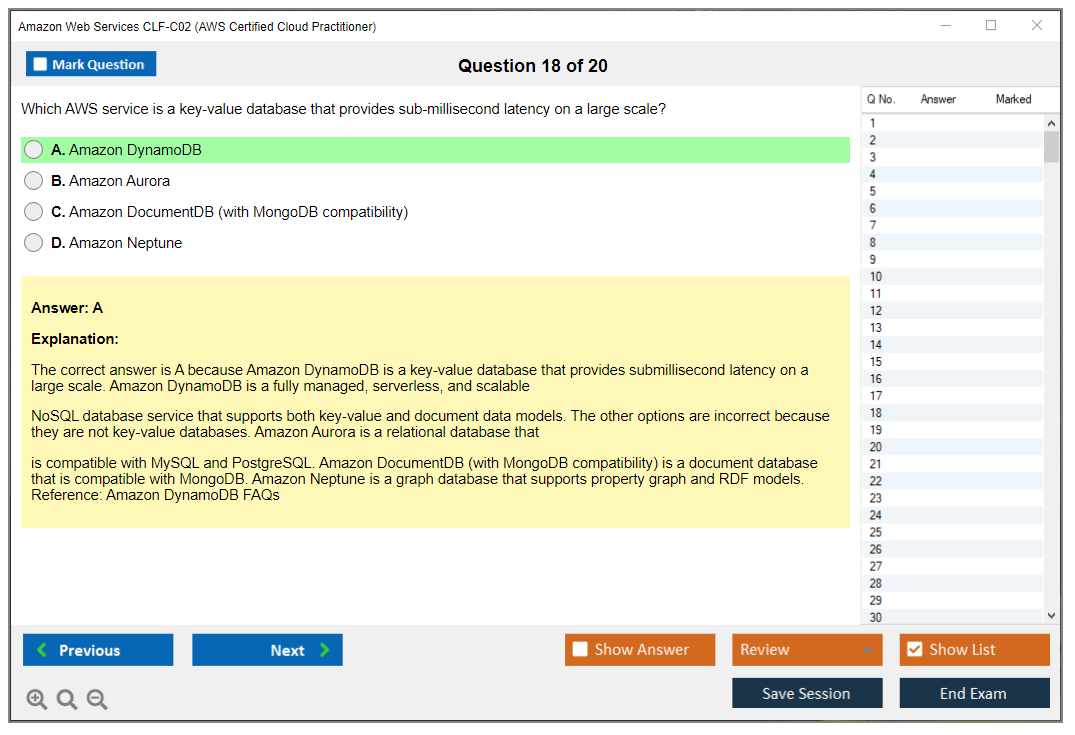
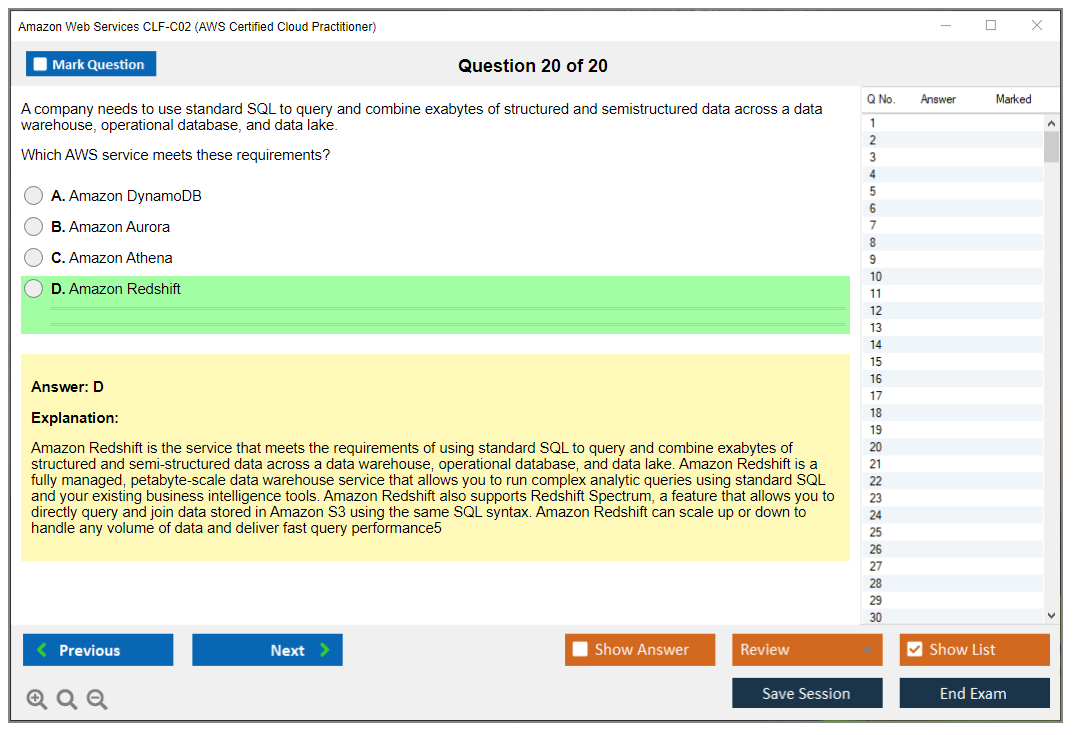
Explain database services distinguishing RDS (managed relational), DynamoDB (NoSQL), Redshift (data warehousing), Aurora (high-performance relational). RDS runs MySQL, PostgreSQL, SQL Server, Oracle, MariaDB. DynamoDB's key-value and document NoSQL. Redshift's for analytics on massive datasets. Aurora's AWS's own relational engine compatible with MySQL and PostgreSQL.
Identify networking services: VPC (isolated networks), CloudFront (content delivery), Route 53 (DNS), Elastic Load Balancing. CloudFront caches content globally. Route 53's DNS that routes users to nearest endpoints. Load balancers distribute traffic across multiple targets.
Understand management and governance tools: CloudFormation (infrastructure as code), CloudWatch (monitoring), Config (configuration tracking), Systems Manager. CloudFormation templates define infrastructure. CloudWatch collects metrics and logs. Config tracks resource configuration changes. Systems Manager automates operational tasks across your infrastructure, which is where things get interesting because you can patch hundreds of instances at once without touching individual servers.
Describe migration services like Database Migration Service, Snow Family (physical data transfer), DataSync. Database Migration Service moves databases to AWS with minimal downtime. Snowball, Snowcone, Snowmobile physically ship massive data amounts. DataSync transfers files over networks.
Recognize analytics services: Athena (query S3 data), EMR (big data processing), Glue (ETL service). Athena runs SQL queries directly on S3. EMR runs Hadoop, Spark, other big data frameworks. Glue prepares and transforms data.
Identify application integration services: SQS (message queuing), SNS (pub/sub messaging), EventBridge. SQS decouples components with queues. SNS sends notifications to multiple subscribers. EventBridge routes events between services.
Understand AI/ML services at high level: SageMaker, Rekognition, Comprehend, Lex. You don't build models, just know what these do. Rekognition analyzes images. Comprehend analyzes text. Lex builds chatbots.
Domain 4: Billing, Pricing, and Support (12% of exam)
This domain tests practical AWS economics knowledge necessary for informed adoption and optimization decisions. Understand pricing fundamentals: pay-as-you-go, pay-less-when-you-reserve, pay-less-with-volume discounts. You pay for usage. Commit longer for discounts. Use more and rates drop at thresholds.
Explain Free Tier offerings: always-free services, 12-month free tier, trial periods. Some services like Lambda have perpetual free tiers. New accounts get 12 months of free EC2, S3, RDS within limits. Some offer short trials.
Describe pricing models for common services: EC2 (On-Demand, Reserved Instances, Savings Plans, Spot Instances), S3 (storage classes), data transfer costs. On-Demand's pay-per-hour with no commitment. Reserved Instances are 1- or 3-year commitments for 30-70% discounts. Savings Plans are flexible commitments. Spot Instances use spare capacity at up to 90% discount but can be interrupted. Honestly, that's a huge discount but you've gotta architect for interruptions. S3 has multiple storage classes with different pricing for different access patterns.
Identify cost management tools: Cost Explorer (visualize spending), Budgets (set spending alerts), Cost and Usage Reports (detailed billing data). Cost Explorer shows spending graphs. Budgets send alerts when you exceed thresholds. Cost and Usage Reports provide raw billing data for analysis.
Understand Organizations for consolidated billing across multiple accounts and volume discounts through aggregated usage. Organizations lets you manage multiple accounts centrally. Consolidated billing combines usage across accounts for volume discounts.
Explain support plan tiers: Basic (free, limited resources), Developer (business hours email), Business (24/7 phone/chat, faster response), Enterprise (dedicated TAM, concierge). Basic gives forums and documentation. Developer adds email support during business hours. Business adds round-the-clock support and faster response. Enterprise adds dedicated Technical Account Manager and architectural guidance.
Recognize when to escalate to different tiers based on workload criticality and response requirements. Production workloads need Business or Enterprise. Development workloads can use Developer. Critical production systems should consider Enterprise.
Describe Trusted Advisor providing best practice recommendations across cost optimization, performance, security, fault tolerance, service limits. Trusted Advisor scans your account and suggests improvements. Basic and Developer plans get limited checks. Business and Enterprise get all checks.
Understand tagging strategies for cost allocation, resource organization, departmental chargeback implementations. Tags are key-value pairs you attach to resources. Use them consistently to track costs by project, department, environment, whatever makes sense for your organization.
How task statements guide your preparation
Each domain contains specific task statements describing activities and knowledge areas candidates should master. These aren't vague topics. AWS publishes exactly what you need. For example, Domain 2 has statements like "Explain the AWS shared responsibility model" and "Describe AWS access management capabilities." That's your study checklist right there.
When working through CLF-C02 practice tests, pay attention to which task statements you're weak on. Keep missing billing model questions? That's a specific task statement needing review. The exam guide literally tells you what to study. Use it.
The official exam guide's free from AWS and breaks down each domain into task statements with knowledge areas. Read that document before spending money on study materials. Honestly, half the battle's knowing exactly what AWS expects, and they publish it free. Then use quality practice materials to verify you've actually learned it.
Building a thorough study plan? Map your resources to task statements. For every statement, identify which AWS documentation, training videos, or practice questions cover that topic. This structured approach beats randomly reading about services hoping you'll see them on the exam.
Domain structure also helps gauge readiness. If you can confidently explain every task statement in a domain, you're probably ready for that section. Fuzzy on multiple statements, especially in heavily weighted domains like Security or Cloud Technology? You need more study time before booking your exam.
Prerequisites and Recommended Experience for CLF-C02
Amazon AWS CLF-C02 (AWS Certified Cloud Practitioner) overview
The AWS Certified Cloud Practitioner CLF-C02 is AWS's "come as you are" cert. Zero gatekeeping. Nobody checks your job title or demands you sit through some mandatory class before you can test. It's the AWS foundational certification that proves you can actually talk cloud in a way that makes sense to both engineers and business folks, and that you understand what AWS is selling, how it gets secured at a high level, and how the bill gets made.
That matters. A lot, actually. Because the Cloud Practitioner's often the first time someone stops guessing what "the cloud" even means and starts using the same vocabulary that hiring managers, vendors, and platform teams use every day.
What the certification validates
You're not proving you can build a VPC from scratch under pressure or anything. You're proving you understand the basics of AWS and cloud concepts, can identify core services, and can answer questions about pricing, support plans, and the AWS security shared responsibility model without mixing everything up.
Expect "what service fits this need" questions, but at the 10,000-foot level. Think IAM vs Organizations vs KMS. Think S3 storage classes. Think "who patches what" in managed services. Short, conceptual. Sometimes annoyingly worded.
Who should take CLF-C02
Career changers. Students. Project managers who suddenly need cloud literacy. Account managers in tech. Finance folks who get pulled into cloud spend meetings. Also tech people who've been on-prem forever and keep hearing "just put it in AWS" like that's a plan.
Non-technical professionals with real AWS exposure often do great because they've seen budgets, support tickets, and org politics up close. Technical candidates without cloud experience can also pass, but they sometimes overthink it and try to treat it like a sysadmin exam. Different vibe entirely.
CLF-C02 exam details
This is where people start spiraling. Don't.
Exam format (question types, length, delivery)
CLF-C02's multiple choice and multiple response. Pearson VUE delivery, either testing center or online proctoring. You get a fixed exam time window, and the questions are meant to be read fast, but not sloppy. Some options are "almost right" in a way that feels petty. That's normal for an AWS cloud concepts exam.
Cost (exam fee, reschedule policies, discounts if applicable)
The CLF-C02 exam cost is USD $100, and yes, taxes can apply depending on where you live. Reschedule and cancellation rules follow Pearson VUE policies and the timing window you're in, so check before you click purchase when life gets chaotic.
Discounts happen sometimes. Your employer might have vouchers. AWS events hand them out occasionally. Also, passing gets you a discount on your next AWS exam, which is nice if you're heading toward an associate cert.
Passing score (scaled scoring, what "pass" means)
The AWS Cloud Practitioner passing score is 700 on a 100 to 1000 scaled score range. You don't get a clean "70%" style number because different forms can weigh questions differently and AWS uses scaled scoring. Pass means pass. Nobody asks your score on LinkedIn.
Difficulty (beginner level expectations, common challenges)
The AWS Cloud Practitioner difficulty is beginner-friendly, but it's not "watch one video and wing it" territory. The hardest part for most people is the pricing and support side because it's less intuitive than services, and the exam loves small distinctions like which support plan includes what, or what tool gets used for which cost visibility task.
Also, AWS has a lot of names. Acronyms everywhere. Randomly similar service names that'll trip you up if you don't study.
CLF-C02 exam objectives (domains)
The AWS CLF-C02 exam objectives are split into four domains. You don't need to memorize the percentages like it's a religion, but you should know what kind of thinking each domain expects.
Domain 1. Cloud concepts
This is cloud 101: value proposition, elasticity, agility, economies of scale, and cloud deployment models (public, private, hybrid). The shared responsibility model shows up here too because it's a "concept" that impacts everything.
You'll see IaaS/PaaS/SaaS, virtualization basics, and why managed services reduce operational overhead. Simple questions, but they punish vague understanding.
Domain 2. Security and compliance
Identity. Access. Encryption. Governance.
The exam wants you to know what IAM does, what MFA is, how least privilege works, and that AWS has compliance programs while you still own your part of compliance.
Know the difference between authentication and authorization. Know what KMS is for. Understand that security in AWS is a split job, not magic.
Domain 3. Cloud technology and services
This is the "service zoo" section: compute, storage, databases, networking, and some monitoring and automation basics. EC2 vs Lambda. S3 vs EBS vs EFS. RDS vs DynamoDB. CloudFront basics. Route 53 basics. Maybe a little Elastic Beanstalk, ECS/EKS at a high level, and CloudWatch.
You're identifying, not architecting. That's the mindset.
Domain 4. Billing, pricing, and support
This is where AWS billing and pricing basics live: pricing models (On-Demand, Savings Plans, Reserved Instances at a high level, Spot), free tier awareness, cost allocation tags, and tools like Cost Explorer and Budgets.
Support plans too. Basic vs Developer vs Business vs Enterprise, and which ones include things like TAM, response times, and Trusted Advisor checks. People hate this domain. Learn it anyway.
Prerequisites and recommended experience
This is the part everyone asks about, and where the AWS CLF-C02 prerequisites conversation gets misunderstood.
Prerequisites (formal vs recommended)
Formally? Zero prerequisites. None. No required courses. No required work history. No prior certs. No degree. No "must have six months of AWS." And that distinction between "formal requirements" and "recommended prep" changes how you plan because you can schedule the exam today, but your odds of passing tomorrow depend on what you actually know.
Anyone can register for CLF-C02. You don't have to prove anything to AWS to get a seat. That's why it's such a good entry-level AWS certification for career changers, students, and non-technical professionals who want a real credential without spending a year trying to qualify for the right to start.
AWS also doesn't require completion of training courses. Official training exists, and it's aligned to the exam, and it's usually well produced, but it's optional. Some people learn better with structure and quizzes. Others learn by reading docs and doing practice questions. Both paths work.
No prerequisite certifications are needed either. Cloud Practitioner's the foundation that points upward to associate-level certs like Solutions Architect Associate. It's not an "after you pass X" exam. It's the first rung.
Age rules are boring but real: the exam gets delivered through Pearson VUE, and candidates under 18 may need parental consent depending on jurisdiction. If you're a high school student trying to get ahead, you're allowed in. You just might have extra paperwork.
Also worth saying out loud: there are no work experience requirements in the official exam guide. That's a big difference from professional-level AWS certs that expect years of hands-on practice. CLF-C02's designed to be accessible, and AWS is pretty explicit about that.
Now the recommended part. AWS recommends about six months of exposure to AWS Cloud in any role. Any role. Technical, managerial, sales, finance, procurement. That recommendation isn't a gate. It's a hint about what "ready" feels like because having real-world context makes the billing questions and shared responsibility questions click faster.
No AWS exposure? You can still pass. Self-study can cover the gap. But you'll probably need more deliberate prep time, and you should expect to reread things like support plans and pricing tools until they stick, since you won't have meetings and tickets and invoices in your memory to anchor the concepts.
No specific educational background is required either. I've seen high school students pass it and I've seen senior executives pass it, and I've also seen smart engineers fail it because they refused to study the business stuff and assumed "cloud is cloud." Different brains, different traps.
My sister tried taking it after two years working in IT support and still needed a full month of study. Not because she wasn't smart, but because nobody at her company talked about AWS billing in a way that matched how the exam asks questions. That disconnect catches people.
Suggested background (IT basics, cloud literacy, AWS exposure)
Basic IT literacy helps a ton. You don't need to be a network engineer, but you should know what a server is, what a database is, and why latency matters. If you understand client-server architecture, basic IP addressing ideas, and high-level security concepts like authentication, authorization, and encryption, you'll move faster through the service questions and make fewer silly mistakes.
Cloud literacy matters too. Know the difference between IaaS, PaaS, and SaaS. Know what virtualization is trying to accomplish. Know cloud deployment models like public, private, and hybrid, and why an org might pick one. These aren't "memorize definitions" topics. They're "can you read a scenario and not panic" topics.
General business sense is the sneaky advantage. If you've done cost-benefit analysis, vendor comparisons, or sat through procurement conversations, the billing and support domain becomes way less painful because you already think in tradeoffs, constraints, and what a company is actually buying.
Best study materials for CLF-C02
Your goal is coverage, not depth. Don't build a Kubernetes cluster to prove you're serious. Study what the exam asks.
Official AWS training and digital courses
AWS Skill Builder and the official Cloud Practitioner learning path are solid, structured AWS Cloud Practitioner study materials. They're mapped to the objectives, and they keep you from wandering into rabbit holes. If you like a guided experience, start there.
Other stuff exists. Books. YouTube. Third-party courses. Pick one primary resource, then supplement. Too many sources turns into doom-scrolling.
Documentation to focus on (core services, security, pricing)
Docs are great if you're disciplined. Focus on product pages and "getting started" sections for core services like EC2, S3, RDS, Lambda, VPC basics, IAM, CloudWatch, and CloudTrail. For security, read the shared responsibility model page until you can explain it to a friend.
For pricing, spend time with the Billing console concepts, Cost Explorer, AWS Budgets, and support plan comparisons. This is where points get dropped.
Study plan and timeline (1 to 4 weeks / 4 to 8 weeks options)
If you already work around AWS, 1 to 4 weeks is realistic. A little content each day, then practice questions, then review your misses. If you're brand new, 4 to 8 weeks feels better because you need repetition, and you need time for the vocabulary to stop sounding like alphabet soup.
Practice tests and exam prep strategy
Practice questions are where you learn the exam's tone. Not just the facts.
Practice tests (what to look for in quality mock exams)
Good CLF-C02 practice tests explain why an answer is right and why the others are wrong, and they don't rely on trick wording. Avoid dumps. They teach you nothing and they can get you banned.
Spend extra time reviewing wrong answers. That's where learning happens. The score is just a signal.
Topic-by-topic drills (pricing, IAM, Well-Architected basics)
If you're weak on pricing, drill pricing tools and purchase options until you can pick the right one quickly. IAM is another high-yield area: users, groups, roles, policies, and MFA.
Also, know the Well-Architected pillars at a basic level. You don't need to recite whitepapers, just recognize what "operational excellence" vs "cost optimization" means in a question.
Exam-day tips (time management, eliminating distractors)
Read the last line first sometimes. It tells you what they're really asking. Eliminate two wrong answers quickly, then choose between the remaining two based on scope and responsibility boundaries.
Don't linger. Flag and move on. You can come back.
CLF-C02 renewal and validity
Certs expire. Plan for that upfront.
Renewal cycle (validity period and recertification options)
AWS Cloud Practitioner renewal is on a 3-year validity cycle. To renew, you typically recertify by passing the current exam version again or using AWS's recertification options if they're offered at the time. Policies can change, so confirm in your AWS Certification account when you're getting close.
Continuing education / staying current with AWS changes
AWS changes constantly. The way you "stay current" is simple: follow AWS release notes occasionally, skim service updates, and keep an eye on pricing and support changes because those show up in real life fast.
FAQs
Cost, passing score, difficulty (quick answers)
How much does the exam cost? The CLF-C02 exam cost is $100 USD.
What's the passing score? The AWS Cloud Practitioner passing score is 700 (scaled).
Is it hard for beginners? The AWS Cloud Practitioner difficulty is beginner-friendly, but you still need prep, especially for billing, support, and security responsibility questions.
Objectives, prerequisites, renewal (quick answers)
What are the objectives? The AWS CLF-C02 exam objectives cover cloud concepts, security and compliance, core AWS services, and billing/pricing/support.
Are there prerequisites? There are no formal AWS CLF-C02 prerequisites at all, but AWS recommends about six months of AWS exposure in any role.
How often do you renew? AWS Cloud Practitioner renewal is every 3 years.
Conclusion
Wrapping up your CLF-C02 path
Let's be real here. The AWS Certified Cloud Practitioner CLF-C02 isn't this impossible beast everyone makes it out to be. It's entry-level stuff that just proves you get cloud concepts and aren't tossing around buzzwords to sound smart in those Monday morning standups. That $100 CLF-C02 exam cost? Honestly one of the cheaper ways to validate your skills. Considering the career opportunities it unlocks, that's actually pretty reasonable.
The AWS Cloud Practitioner passing score is 700 out of 1000. Do the math. You need around 70% to pass, which is totally achievable when you've actually worked through those AWS CLF-C02 exam objectives covering all four domains. Cloud concepts. Security stuff. Billing. Services coverage. The thing is, it's substantial material but not architect-level crazy deep, you know? Most folks dedicate 2-4 weeks with decent AWS Cloud Practitioner study materials and they're golden.
Now here's where AWS Cloud Practitioner difficulty gets interesting. Beginners hear "practitioner" and think it'll be a cakewalk, then those pricing calculation scenarios or AWS security shared responsibility model subtleties catch them completely off guard. No official AWS CLF-C02 prerequisites exist, sure, but spending actual hands-on time clicking through the console? big deal. You'll instantly recognize what IAM policies accomplish instead of robotically memorizing textbook definitions that don't stick.
Won't sugarcoat it. CLF-C02 practice tests make or break your prep. Reading AWS documentation till 3am sounds productive, except practice questions reveal how AWS actually phrases things and where they plant landmines. This AWS foundational certification exam obsesses over testing whether you know which service handles what specific task. Hammering those AWS cloud concepts exam scenarios builds that automatic recognition you desperately need.
Oh, and yeah. AWS Cloud Practitioner renewal kicks in every three years now. Not forever anymore. Staying current actually matters since AWS billing and pricing basics evolve and new services drop constantly. My cousin let his cert lapse and had to retake the whole thing, which was annoying because the billing section had changed completely. Anyway, the cloud space transforms fast.
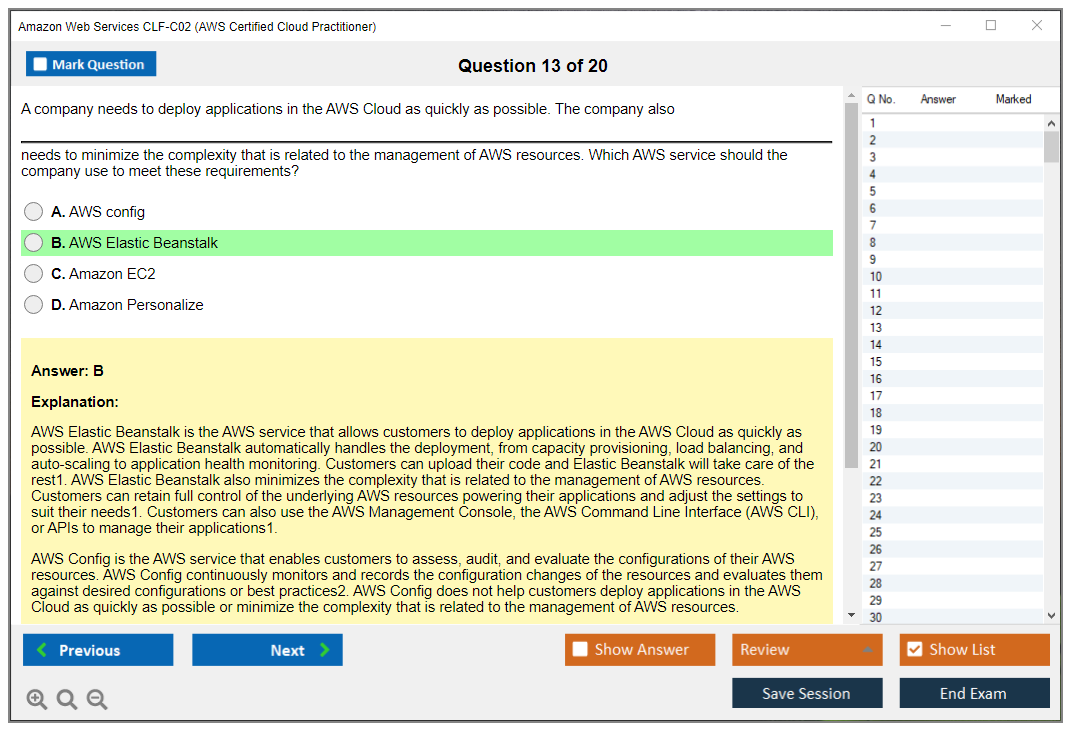
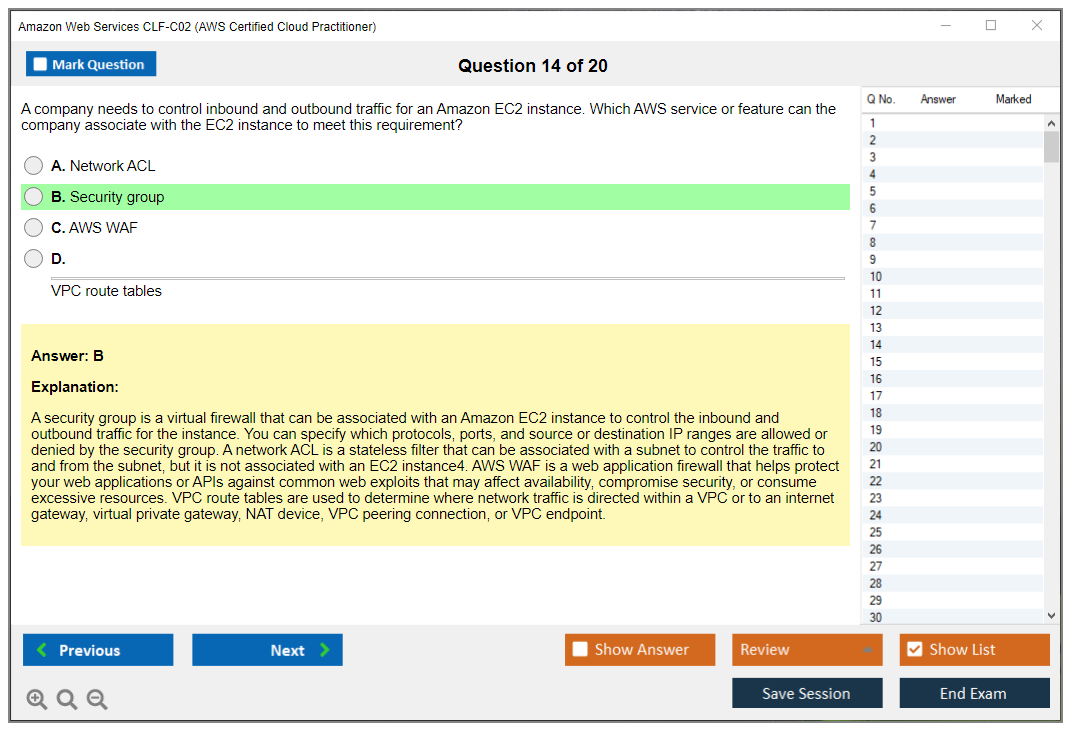
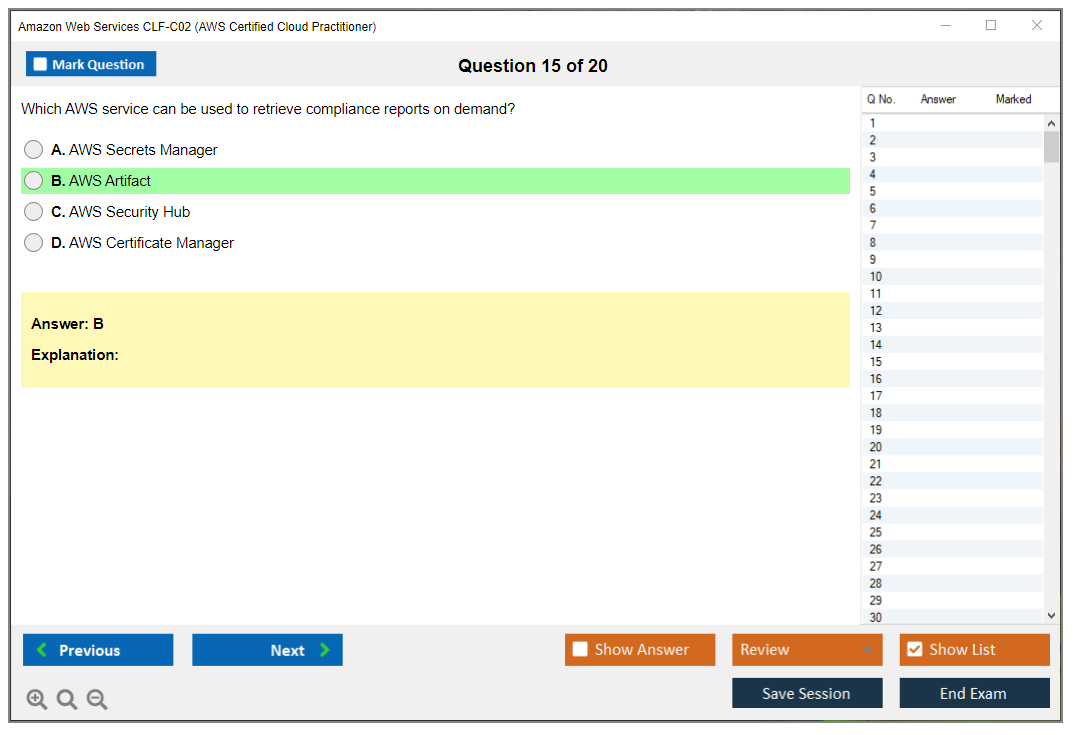
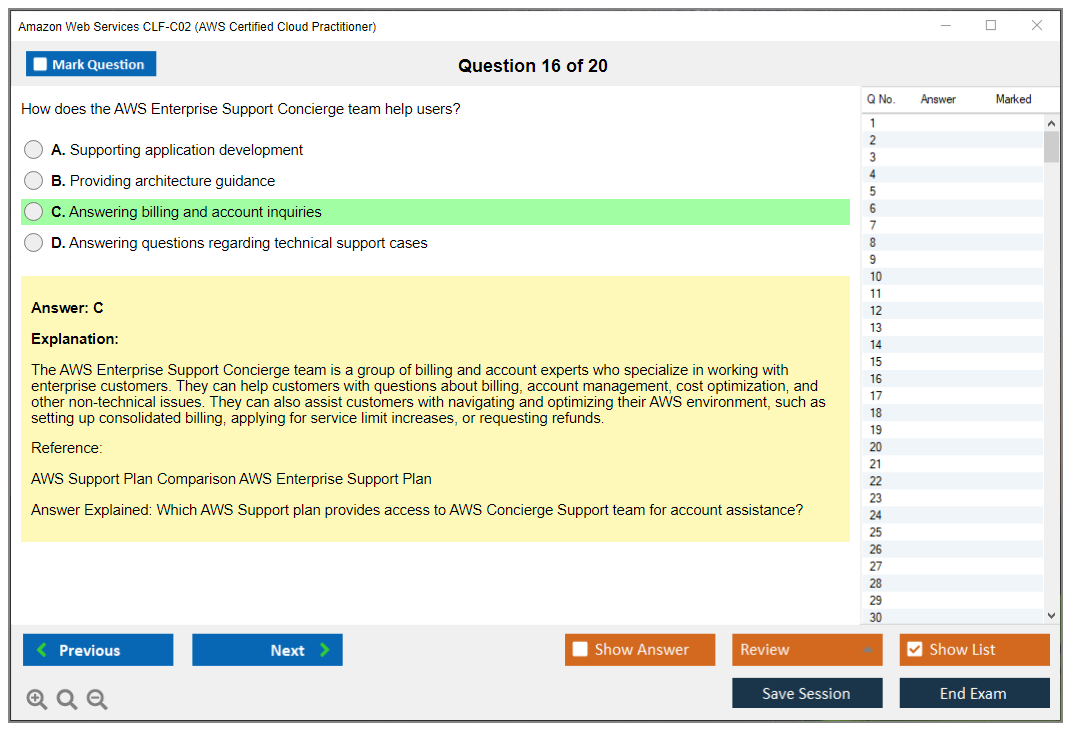
If you're really serious about nailing this first try without hemorrhaging multiple $100 exam fees, get yourself a full resource mirroring the actual test format. The CLF-C02 Practice Exam Questions Pack at /amazon-dumps/clf-c02/ delivers that real-world question experience you absolutely need to walk in feeling confident instead of nauseous. Because honestly? Passing this cert isn't some lottery. It's about knowing precisely what curveballs they'll throw at you.
