

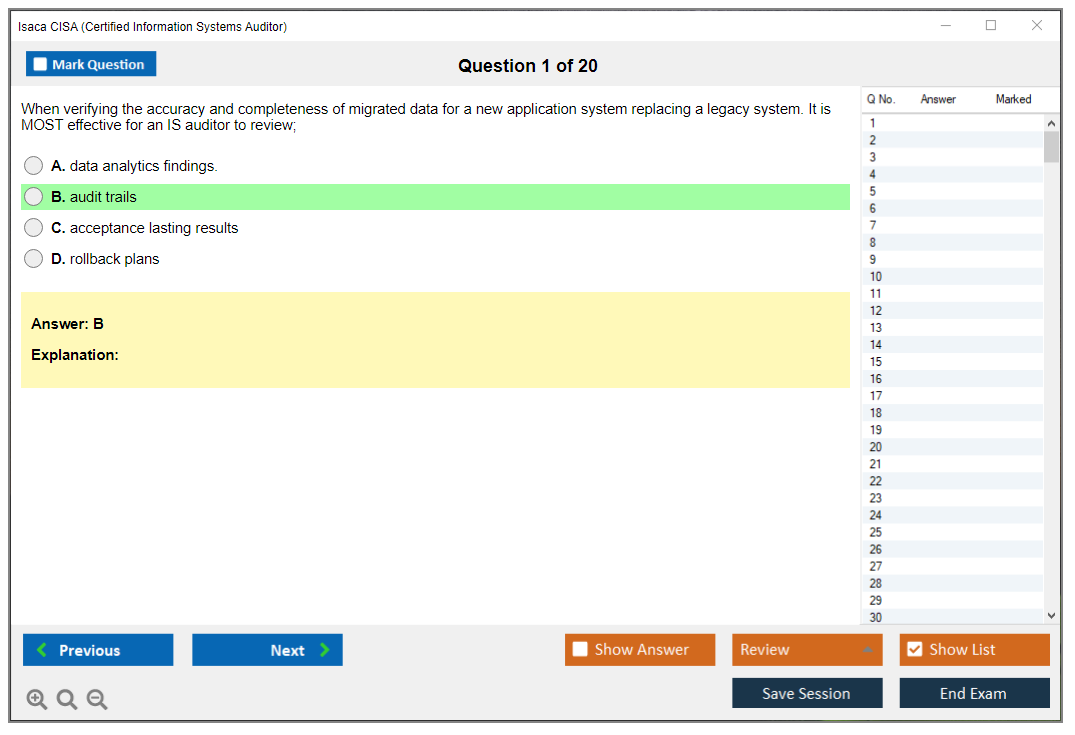
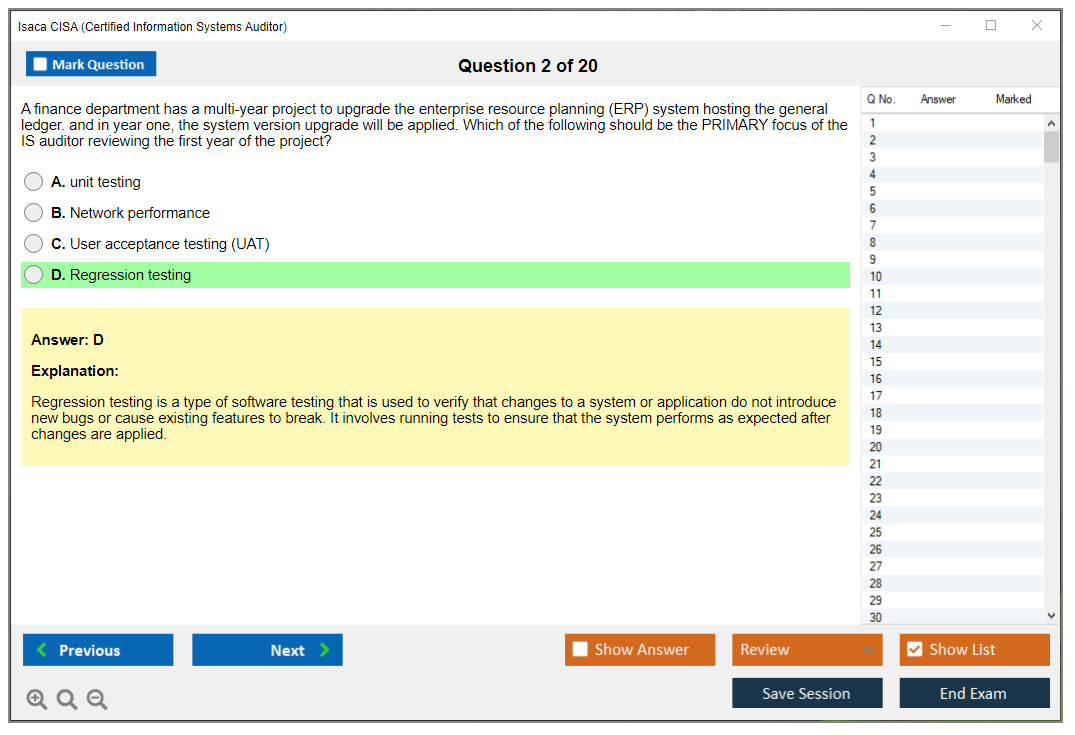
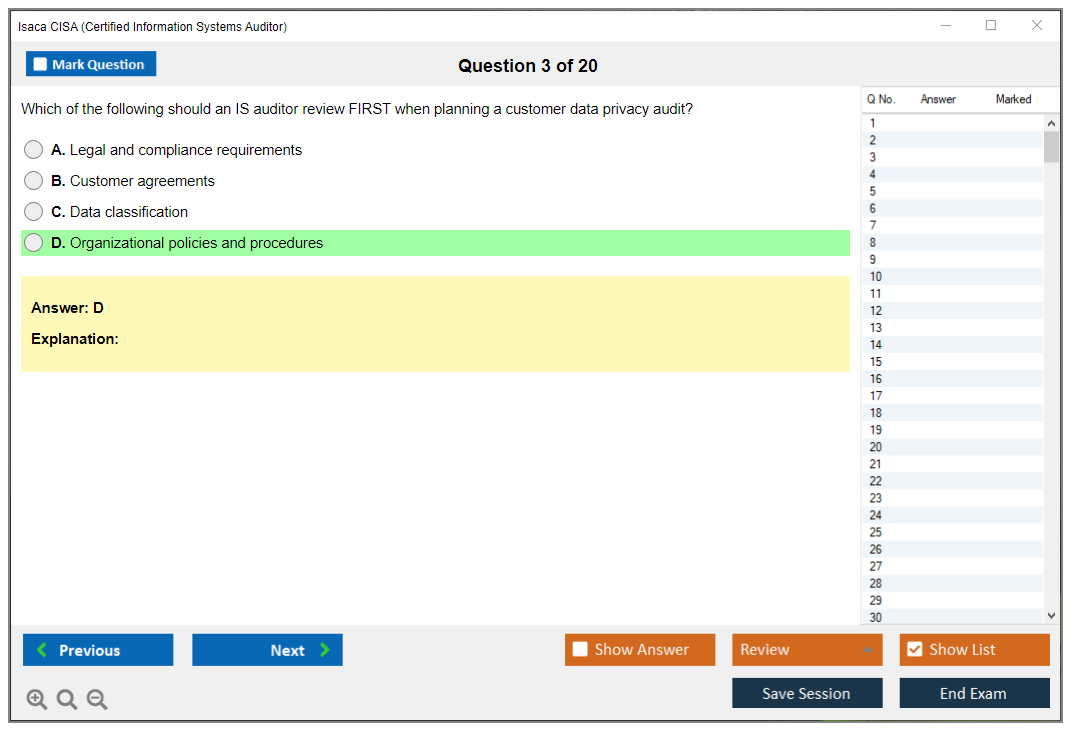
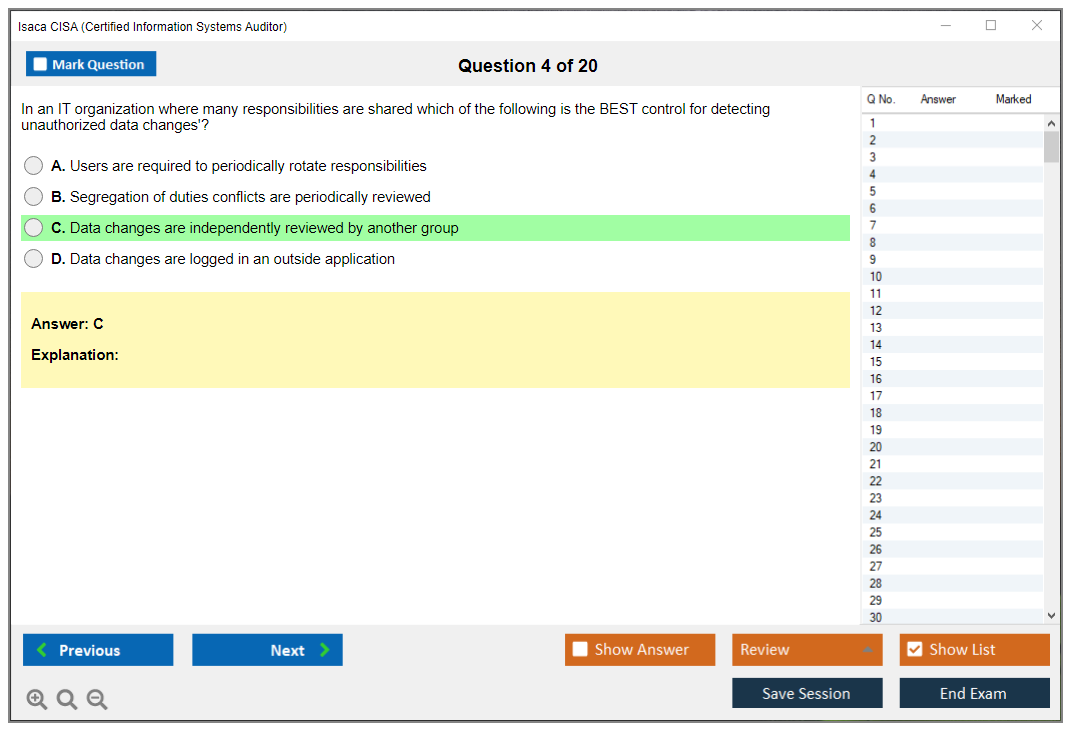
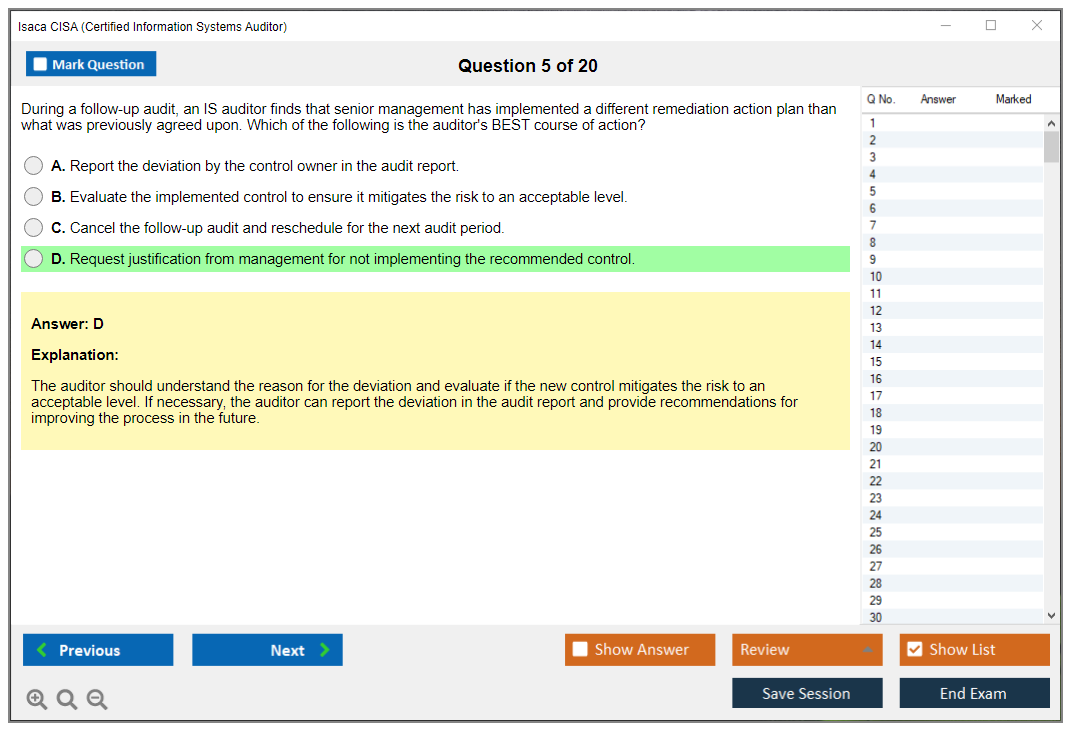
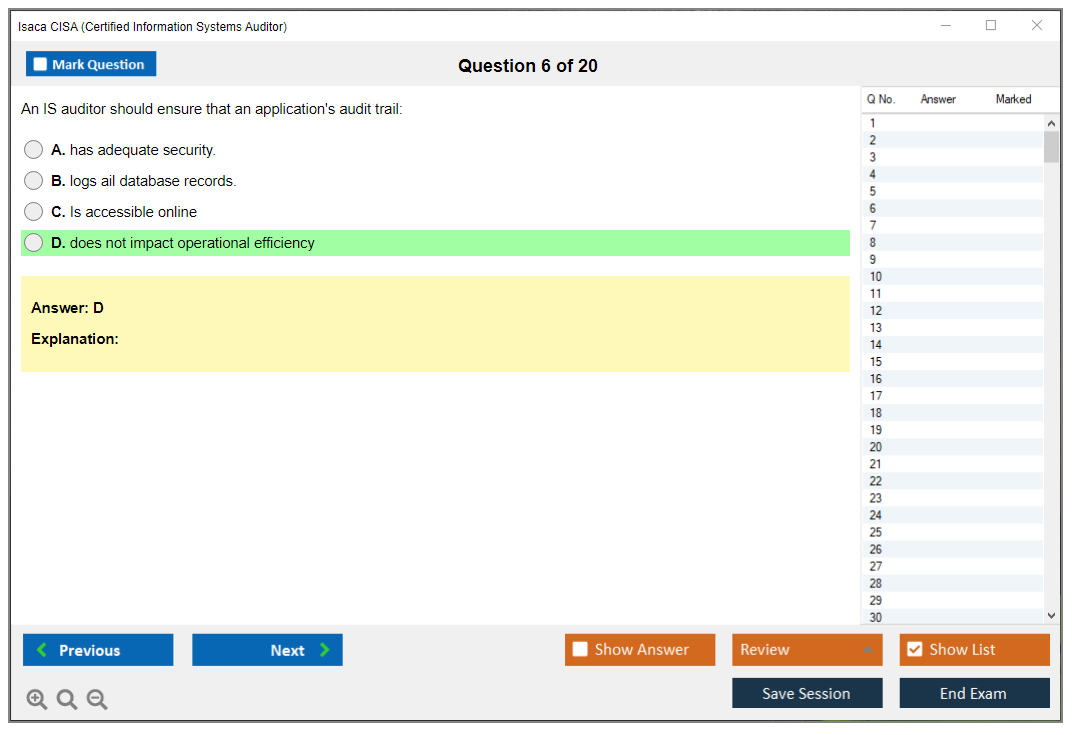
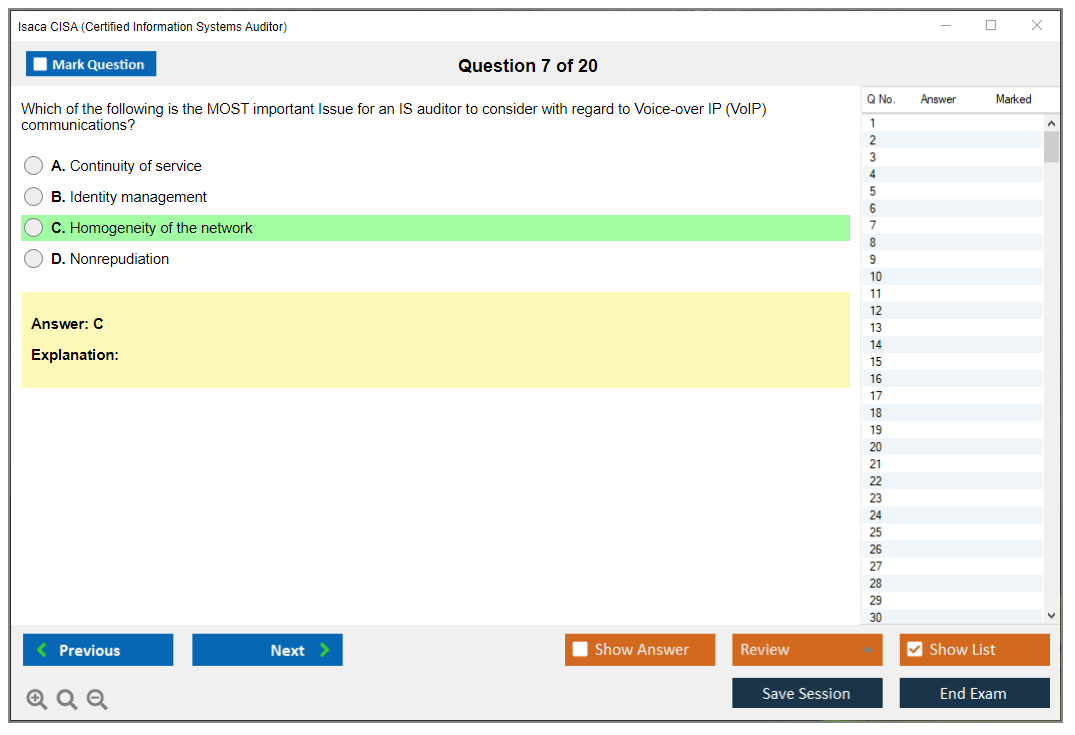
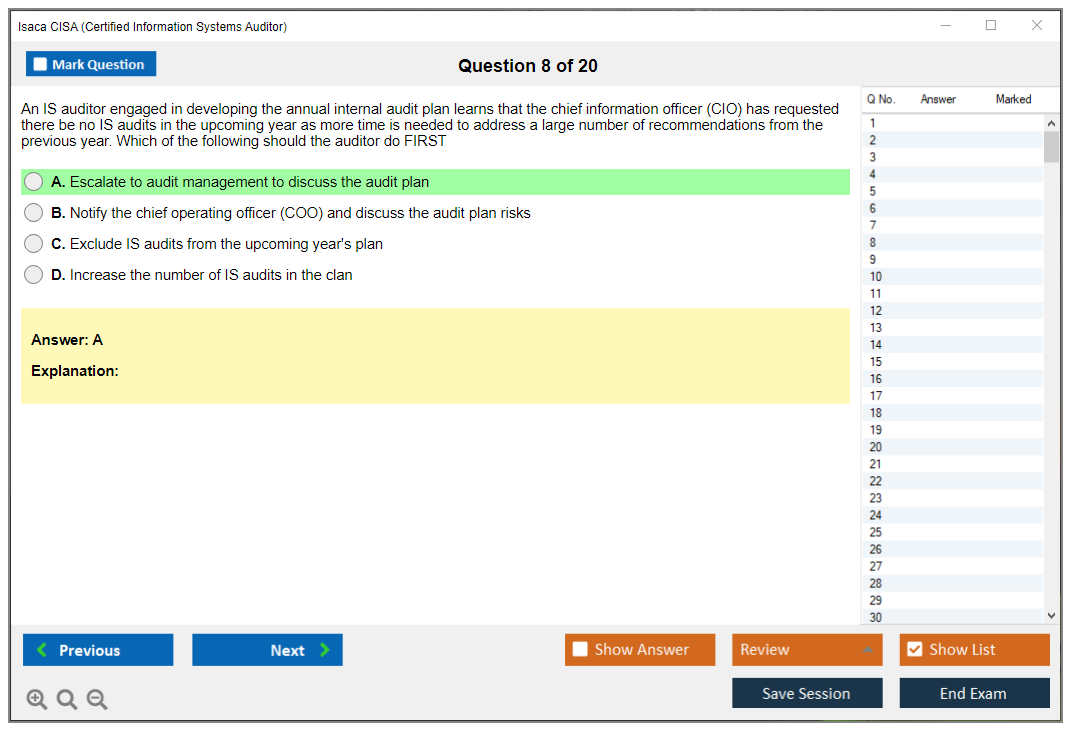
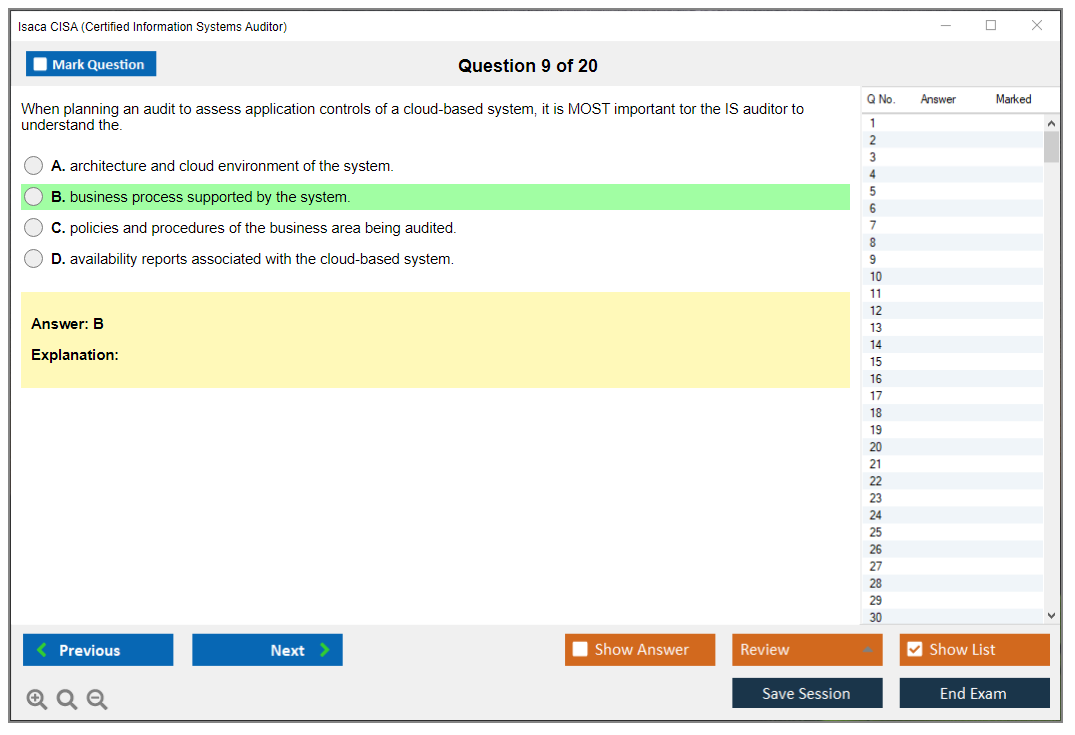
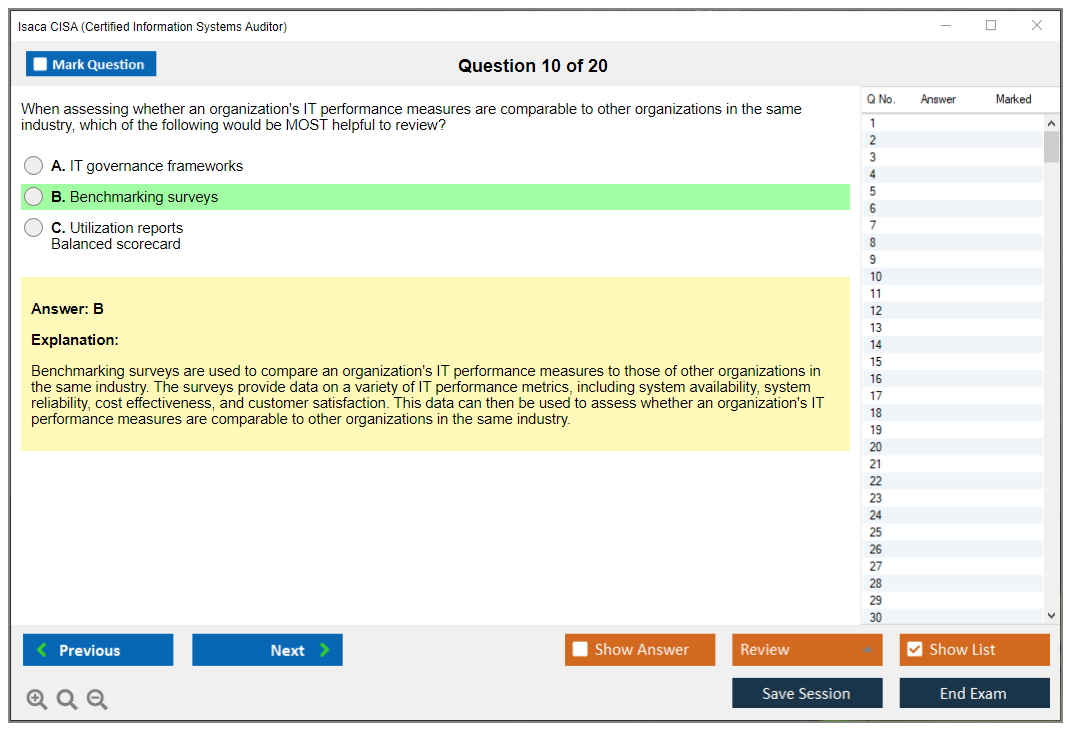
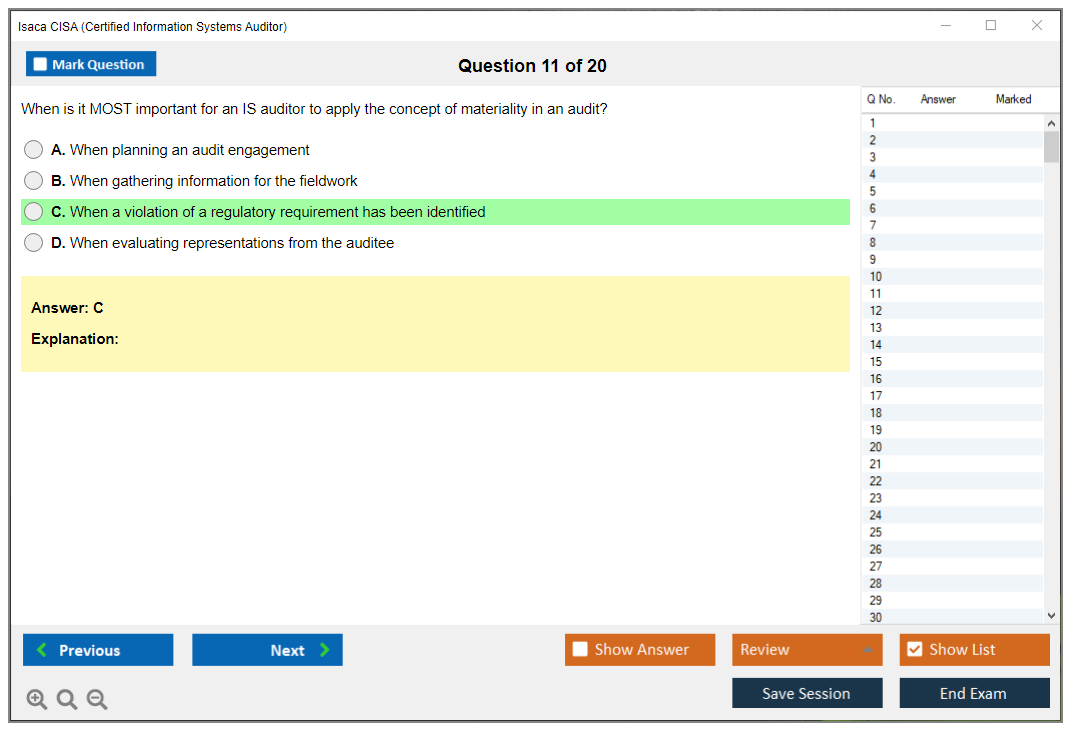
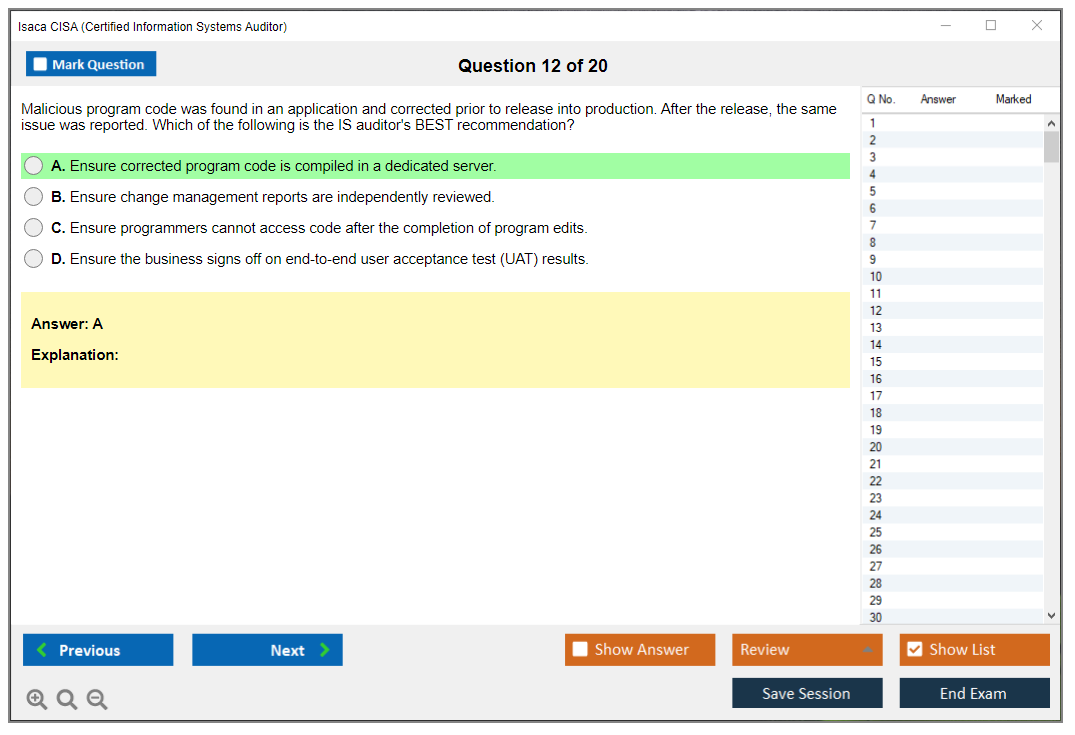
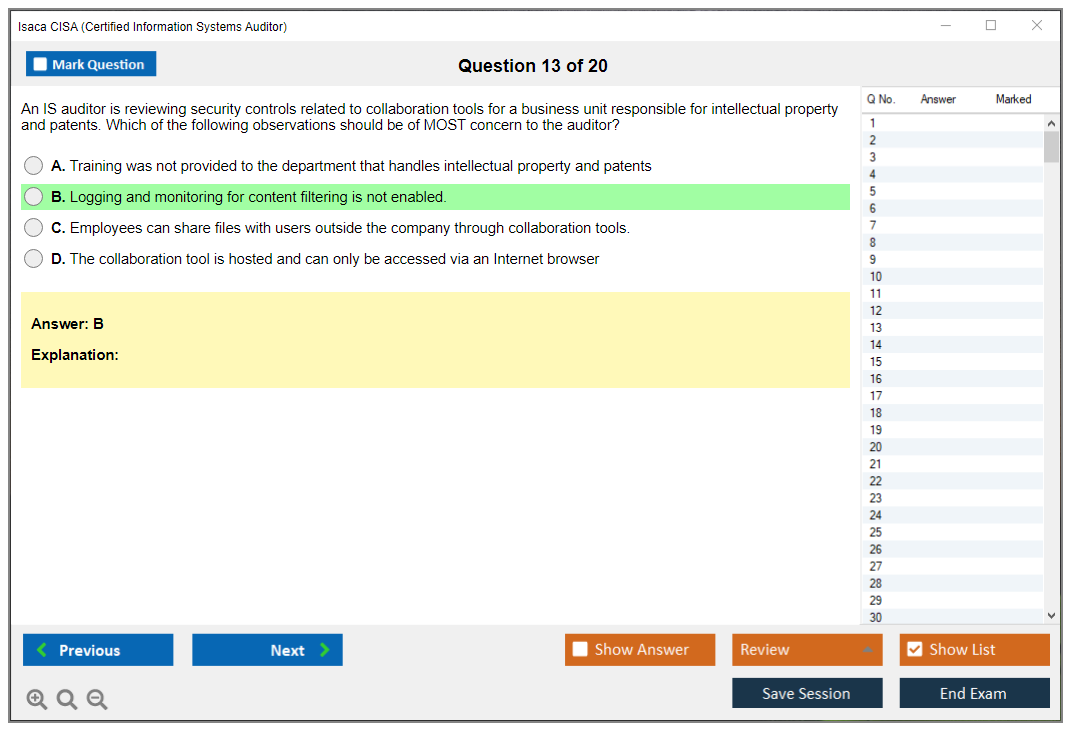
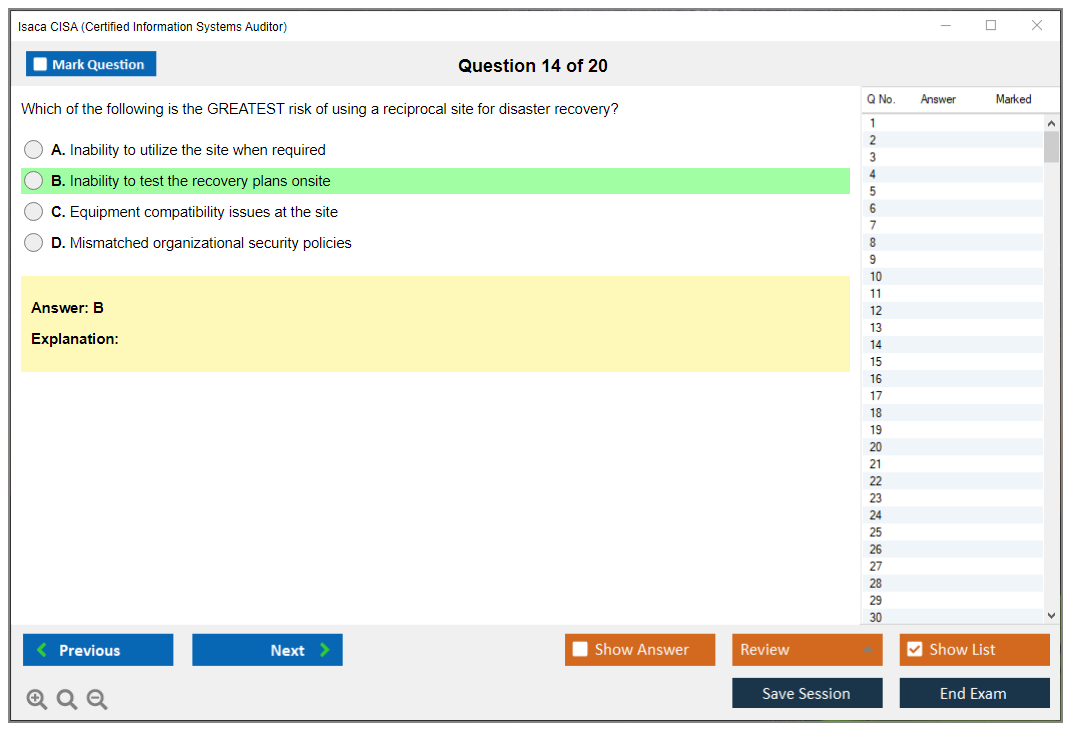
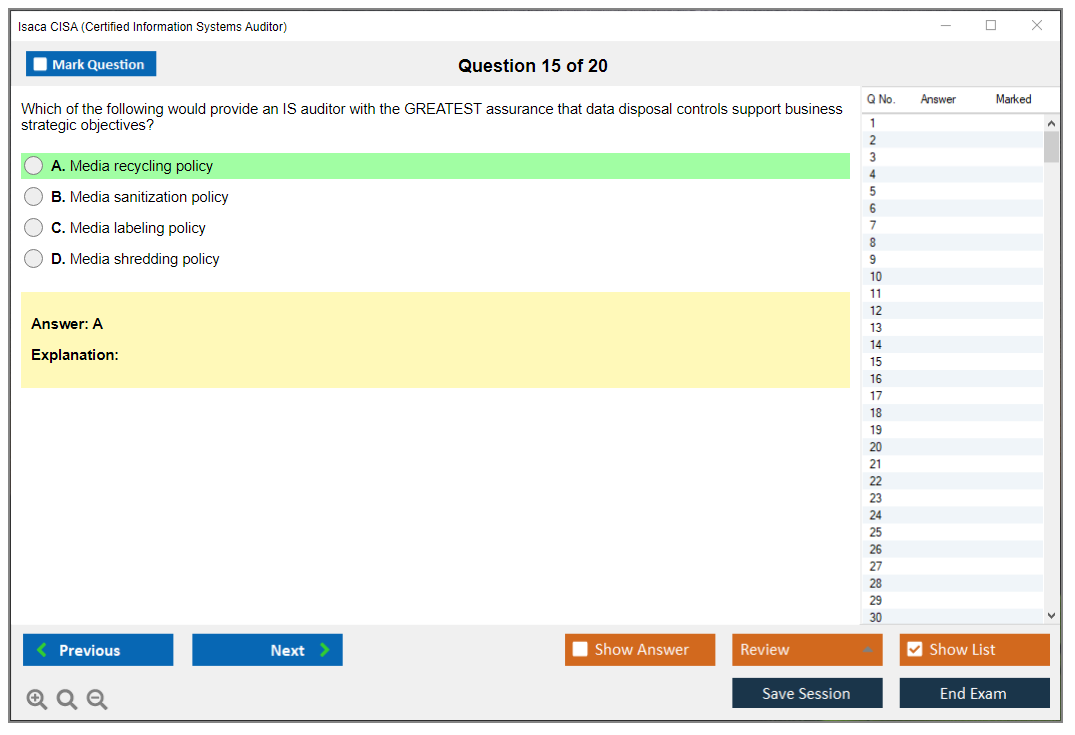
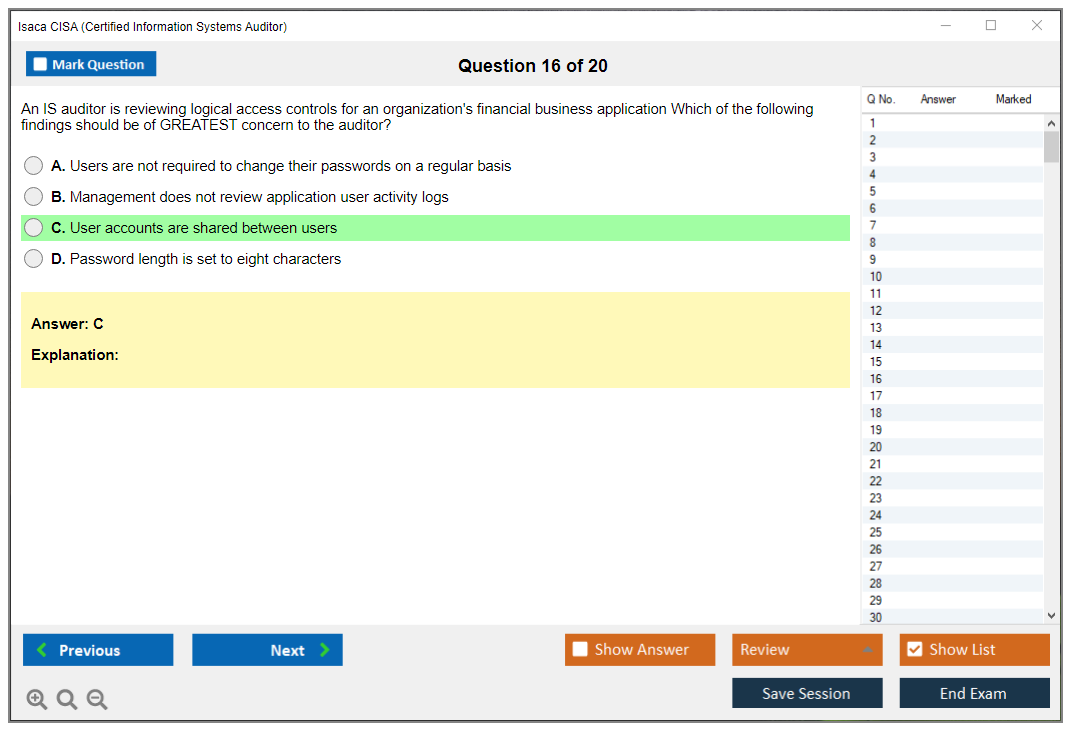
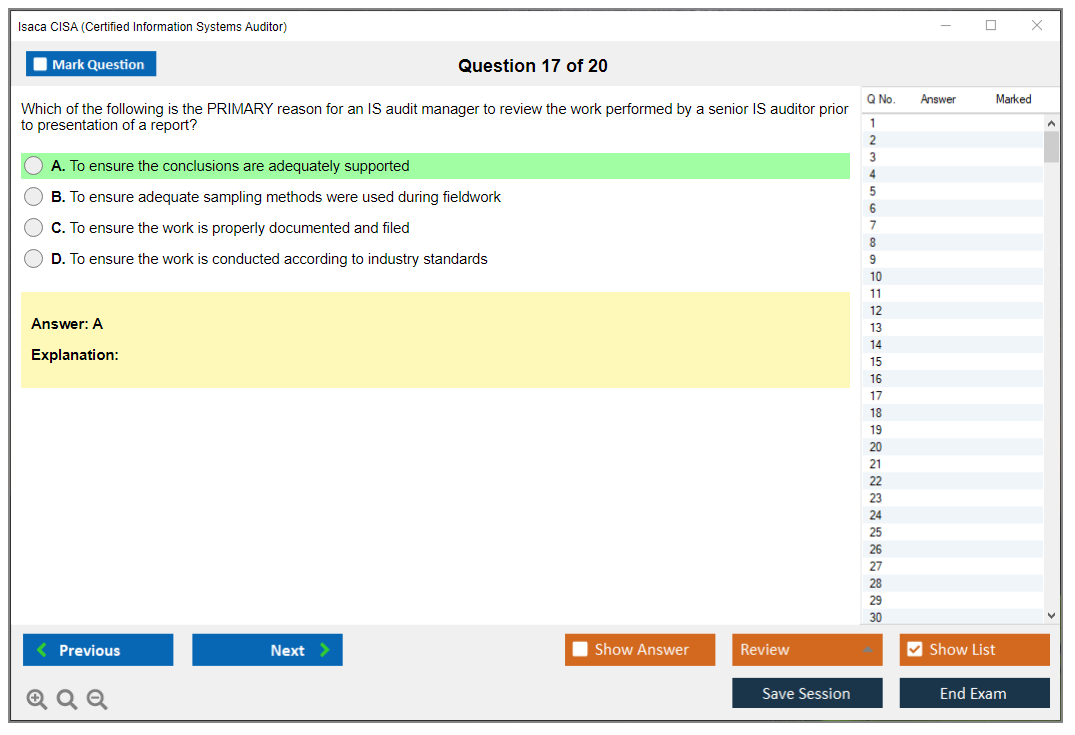
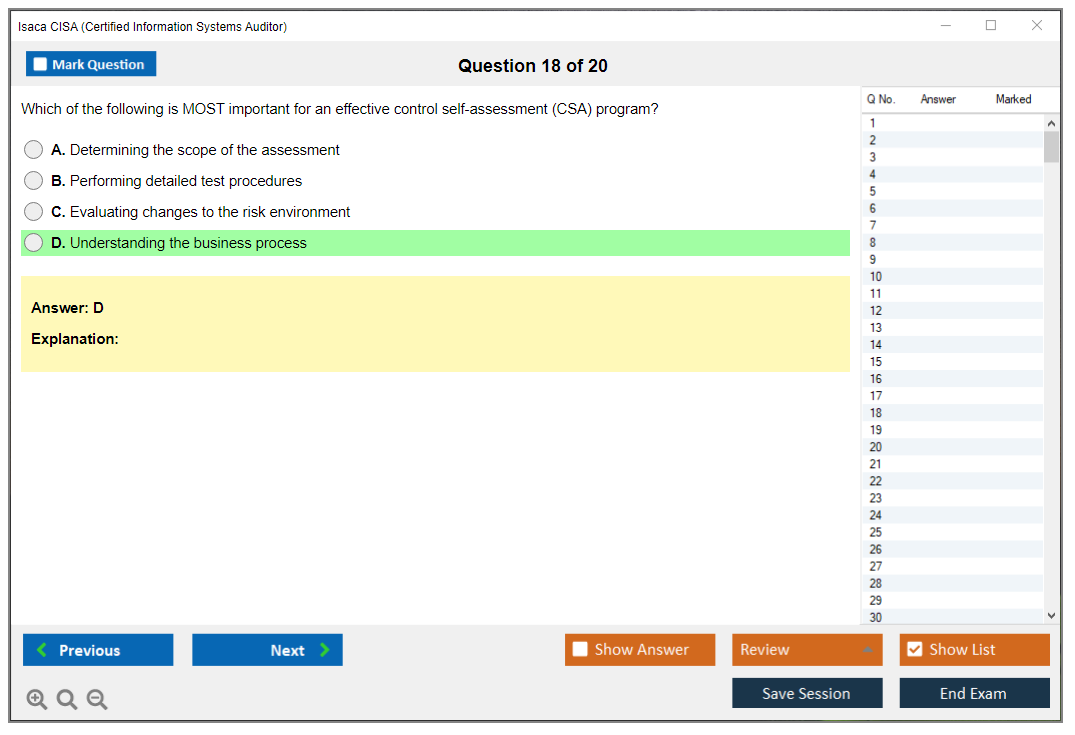
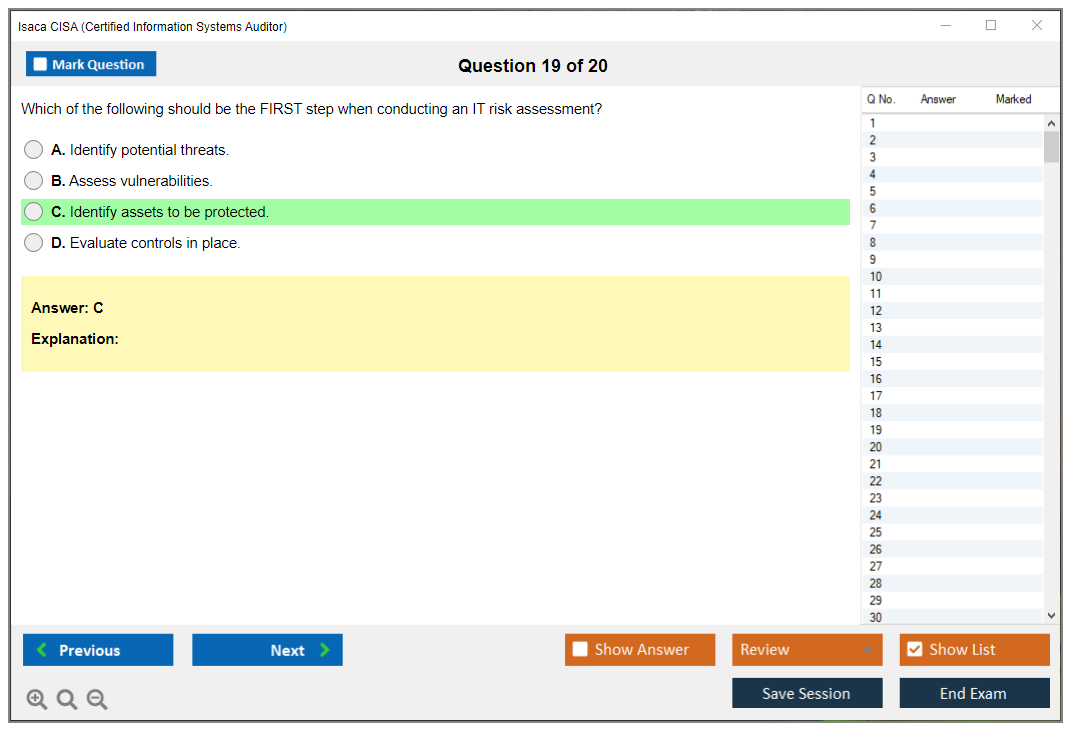
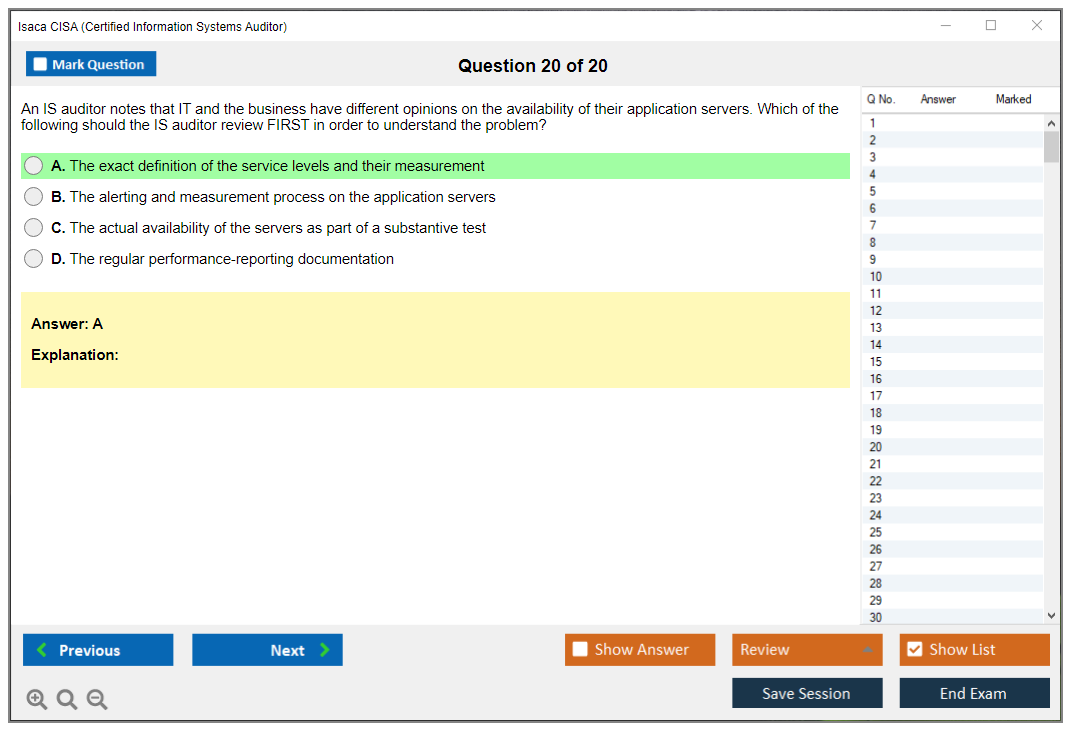
Isaca CISA (Certified Information Systems Auditor)
What Is ISACA CISA (Certified Information Systems Auditor)?
The ISACA CISA certification is the gold standard for IT audit professionals worldwide. Look, if you're serious about a career in information systems auditing, this is the credential everyone recognizes. It validates that you actually know how to assess IT controls, identify vulnerabilities, and report compliance issues in ways that make sense to both technical teams and executive leadership. Over 165,000 professionals hold this designation across 180+ countries, which tells you something about its reach and credibility.
ISACA (Information Systems Audit and Control Association) established this information systems auditing certification to create a standardized benchmark for audit, risk, and compliance work. The Certified Information Systems Auditor exam tests your mastery across five critical domains that cover everything from audit processes to information asset protection. Not gonna lie, this isn't just another IT cert. It's specifically designed for people who evaluate controls rather than implement them, positioning you as an independent assessor rather than someone building systems.
The certification proves you understand business processes, risk assessment methodologies, and governance frameworks like COBIT. Plenty of certs focus on technical security implementation, but CISA takes an audit perspective that bridges the gap between technical teams and C-suite executives. That's why regulatory bodies, Big Four firms, and enterprise organizations treat it as the standard qualification for audit positions. It's vendor-neutral too, so your knowledge applies across all technology platforms and industry verticals, whether you're auditing cloud infrastructure, legacy mainframes, or mobile applications.
Who CISA is for
IT auditors seeking formal recognition definitely need this. The audience is way broader though.
Internal audit professionals transitioning from financial or operational backgrounds into technology audit find CISA gives them the structured knowledge base they're missing. Risk management specialists use it to formalize their approach to identifying technology-related risks. Compliance officers dealing with SOX, HIPAA, GDPR, or PCI-DSS requirements get the frameworks and methodologies they need to actually verify controls rather than just check boxes. Information security professionals moving toward governance, risk, and compliance (GRC) career paths use CISA as their transition credential.
Consultants providing audit services to multiple clients need it for credibility. IT managers and directors pursuing it gain audit perspectives that help them build better controls from the start. Systems administrators and network engineers see it as their pathway out of hands-on technical work into strategic roles. Business analysts working with audit teams benefit from understanding control frameworks. Quality assurance professionals expand into control testing.
Cybersecurity analysts interested in compliance verification find it complements their technical skills. Project managers overseeing implementations need to understand control integration. I mean, forensic investigators require audit methodology knowledge. Governance professionals establishing IT control frameworks need the structured approach CISA provides. Anyone pursuing careers with Big Four accounting firms or regulatory agencies will find CISA listed as required or strongly preferred. Internal audit departments increasingly expect it for technology audit roles.
Benefits of CISA
The salary premium is real. We're talking $90,000 to $130,000+ on average, with CISA job roles and salary varying significantly based on experience, geography, and industry. IT Audit Managers, Information Security Managers, Compliance Managers, Risk Analysts, and IT Directors commonly hold this certification.
You gain better credibility when presenting audit findings to boards of directors. I've seen how executives respond differently when they know you hold a recognized credential rather than just claiming expertise. The competitive advantage in job markets is measurable. Many positions list CISA as preferred or required, which automatically filters out competition.
Global recognition means career mobility. ISACA's professional network includes local chapters, conferences, and continuing education resources that actually matter. You're demonstrating commitment to professional development and ethical standards, which sounds fluffy but really affects how audit committees and regulators view your work. It's also foundation for pursuing additional ISACA certifications. Many people follow CISA with CISM (Certified Information Security Manager) or CRISC (Certified in Risk and Information Systems Control) to round out their expertise.
The career pathway leads to Chief Audit Executive, Chief Information Security Officer, or Chief Risk Officer roles. Consulting opportunities expand, and you can command higher billing rates. Some positions requiring security clearances in government and defense contracting specifically look for CISA holders. I knew someone who got stuck doing compliance paperwork for three years before getting CISA, and within six months of certification they'd moved into an advisory role making 40% more. The cert didn't magically make them smarter, but it opened doors that experience alone couldn't.
CISA exam overview
The exam tests whether you can actually perform IT audit work, not just memorize definitions. You'll face 150 multiple-choice questions delivered over four hours in computer-based format at Pearson VUE testing centers. Remote proctoring is available too.
Questions aren't straightforward recall. They present scenarios requiring you to apply audit judgment, which is why people from purely technical backgrounds sometimes struggle. Honestly, you're not just identifying what a control is. You're determining whether it's adequate, what additional testing is needed, or what should be reported to management.
CISA exam objectives and what they cover
The five domains aren't weighted equally. Understanding the distribution helps you allocate study time better.
Information System Auditing Process covers 21% of the exam. This domain is all about planning audits, executing them properly, and communicating results. You need to understand audit standards, risk-based audit planning, evidence collection, sampling methodologies, and reporting requirements. If you've never conducted a formal audit before, this domain requires significant study because you're learning an entire professional methodology.
Governance and Management of IT represents 16% of questions. This gets into organizational structures, strategic planning, IT governance frameworks (hello COBIT-2019), and how IT fits with business objectives. You'll need to understand roles and responsibilities, policy development, and how governance differs from management. The framework knowledge here extends beyond just knowing COBIT exists. You need to apply it to scenarios.
Information Systems Acquisition, Development and Implementation makes up 18% of the exam. This covers system development life cycles, change management, project management, business continuity planning during implementations, and data conversion controls. The thing is, even if you're not a developer, you need to understand what controls should exist during development and how to audit them.
Information Systems Operations and Business Resilience accounts for 23% of questions, making it the largest domain. Service delivery, infrastructure management, incident response, disaster recovery, business continuity..all fair game. You're expected to understand operational controls, capacity planning, problem management, and how to verify resilience capabilities actually work.
Protection of Information Assets covers 22% of the exam. This is your information security domain: access controls, encryption, network security, physical security, data classification, privacy. Security professionals sometimes assume this domain will be easy, but the audit perspective differs from implementation perspective. You're not configuring firewalls. You're determining whether firewall rules are adequate and properly documented.
CISA exam cost
CISA exam cost varies significantly. Members pay $575 to register, while non-members pay $760. That $185 difference makes the $135 annual ISACA membership fee an obvious choice if you're planning to take the exam.
But exam registration is just the start. ISACA's official Review Manual costs around $70-90. The Question, Answer & Explanation (QAE) database runs about $100-120 and is basically required for practice. Review courses from ISACA or third-party providers range from $500 to $2,000+ depending on format and depth. Some people buy additional study guides at $50-100 each.
If you don't pass the first time, retake fees match the original exam cost. That's another $575-760 you definitely want to avoid spending. After passing, there's a $50 certification application fee, then annual maintenance fees of $45 for members or $85 for non-members.
Budget realistically. Between membership, exam, official materials, and maybe one supplemental course, you're looking at $1,000-1,500 minimum. Add another $500-1,000 if you want premium training.
What is the CISA passing score?
The CISA passing score is 450 on a scaled score range of 200-800. This trips people up because it's not a simple percentage.
ISACA uses scaled scoring to account for slight difficulty variations between exam forms. Your raw score (number of correct answers) gets converted to the scaled score through statistical analysis. This means the number of questions you need to answer correctly isn't fixed. It depends on which specific questions you receive.
Generally, you need roughly 70-75% correct answers to hit 450, but don't quote me on that exact percentage. ISACA doesn't publish the conversion formula, which is frustrating but standard for major certification exams. The scaling ensures fairness across different exam versions administered throughout the year.
How CISA scoring works
You receive preliminary results immediately. Pass or fail shows on screen, which is simultaneously relieving or devastating. Official results with your actual scaled score arrive via email within 5-10 business days.
The score report breaks down performance by domain, showing whether you scored below, near, or above the proficiency level for each. This diagnostic information helps if you need to retake the exam, showing exactly where to focus additional study. If you don't pass, you can retake after waiting for the next exam window.
ISACA offers exams year-round now, so you're not waiting months like with some certifications. You'll need to pay the full exam fee again and re-register through your ISACA account.
What makes CISA challenging
The CISA exam difficulty isn't about obscure technical details. It's about adopting an audit mindset and applying judgment to realistic scenarios.
Questions often present situations where multiple answers seem plausible. You're choosing the BEST answer from several defensible options, which requires understanding audit priorities, regulatory requirements, and risk-based thinking. I've talked to network engineers who crushed technical certs but struggled with CISA because they kept thinking about how to fix problems rather than how to audit controls around them.
Scenario-based questions describe complex situations with multiple control weaknesses, then ask what you should do first, what represents the greatest risk, or (wait, actually) what should be reported to management. These aren't textbook scenarios. They reflect messy real-world situations where perfect solutions don't exist. The audit process domain challenges people without formal audit backgrounds because you're learning professional standards and methodologies that aren't intuitive. The governance domain requires understanding organizational dynamics and strategic alignment that pure technologists sometimes find abstract.
Difficulty by background
Auditors with financial or operational backgrounds but limited IT experience find the technical content challenging. Understanding network architecture, database controls, and security technologies requires significant study.
Security and IT operations professionals face the opposite problem. The technical content feels familiar, but the audit perspective and formal audit process require mental adjustment. You're not implementing solutions or fighting fires. You're independently evaluating whether controls are adequate and properly documented.
People with both audit and IT backgrounds obviously have advantages. But I've seen career-switchers from both sides pass successfully. It's about adapting your thinking and putting in study time on your weak areas.
How long to study for CISA
Most people need 3-6 months of consistent study. That's assuming 10-15 hours per week.
If you're currently working in IT audit, you might compress this to 2-3 months. Complete beginners to either audit or IT should plan for 6+ months. Some people do intensive bootcamp-style preparation over 4-6 weeks, but that's brutal and requires taking time off work to study full-time. Your timeline depends on background, available study time, and how well you retain information.
Consistency matters more than cramming.
Work experience requirements
CISA prerequisites include specific work experience before you can receive certification. You need five years of professional information systems auditing, control, or security work experience. This isn't just any IT work. It must directly relate to the CISA job practice areas.
Experience must be within the 10-year period preceding your application or within five years from passing the exam. This flexibility lets you take the exam before completing all experience requirements, which many people do.
Experience waivers and substitutions
ISACA allows substitutions for up to three years of required experience. A maximum of one year waived for 60-120 completed university semester credit hours (or equivalent). Two years waived for a bachelor's or master's degree from an accredited university. Information systems or related degree work gets you the substitutions.
You can also substitute up to two years of experience with general IT work experience or two years of non-IT audit experience. One year of information systems experience as a substitute for one year of IS auditing, control, or security experience. Two years of instruction in a related field at an accredited university can substitute for one year. These substitutions help career-switchers and recent graduates enter the field.
But you still need minimum two years of actual audit, control, or security experience. No way around that core requirement.
Ethics and code of professional conduct
ISACA requires adherence to its Code of Professional Ethics. You're agreeing to support IT governance principles, perform duties with diligence and competence, maintain independence, avoid conflicts of interest, protect confidential information, and maintain competency through continuing education.
Violations can result in certification revocation. This isn't just bureaucratic nonsense. Audit work requires public trust and professional integrity. You're often accessing sensitive systems and information, and your reports influence major business decisions.
Official ISACA materials
The CISA Review Manual is the authoritative source. Updated annually to reflect exam content. It covers all five domains with explanations, diagrams, and sample questions. Most people consider this mandatory rather than optional.
The Question, Answer & Explanation (QAE) database provides 1,000+ practice questions with detailed explanations. This is probably the single most valuable study tool because it teaches you how ISACA phrases questions and what the exam expects. The explanations clarify why correct answers are right and why distractors are wrong.
ISACA offers instructor-led review courses and self-study online courses. These range from $1,000-2,000 but include structured learning paths and instructor support. Whether they're worth the cost depends on your learning style and budget.
Recommended books and courses
Third-party publishers offer review guides that some people find more readable than official materials. Popular options include books that condense content and provide additional practice questions. Look for recently published editions reflecting current exam content.
Online platforms offer video courses. Quality varies widely, so check reviews and publication dates. Video courses work well if you prefer structured lessons over reading. Some employers provide access to corporate training platforms with CISA preparation content. Check whether your organization offers this benefit before purchasing individual courses.
Study plan by domain
Start with the Information System Auditing Process domain even though it's not the largest. This foundation helps you understand the audit perspective that applies to all other domains. Spend 2-3 weeks here understanding audit standards, evidence, and reporting.
Move to Governance and Management of IT next, spending 2 weeks on frameworks, organizational structures, and strategic alignment. The COBIT-5 framework knowledge you build here supports multiple domains. Information Systems Acquisition, Development and Implementation deserves 2-3 weeks. Focus on SDLC phases, change management, and implementation controls.
If you're not familiar with development processes, allocate extra time. Information Systems Operations and Business Resilience is the largest domain, so plan 3-4 weeks. This covers broad territory from service delivery to disaster recovery. The operational and resilience topics require understanding how controls function in practice. Protection of Information Assets needs 3 weeks minimum.
Even security professionals should review this carefully because the audit perspective differs from implementation. Access controls, encryption, and security governance require thorough coverage. Reserve 2-3 weeks at the end for full review and full-length practice exams under timed conditions.
Best sources for CISA practice questions
The official QAE database is required. It provides the most accurate representation of actual exam questions and ISACA's approach to testing. Work through all 1,000+ questions, reviewing explanations carefully even when you answer correctly.
Third-party practice question banks supplement the QAE. Some offer 500-1,000 additional questions, though quality varies. Look for recently updated question sets with detailed explanations rather than just answer keys. Mobile apps work great. You can practice during commutes or downtime. Convenience matters when you're trying to fit study into busy schedules.
Practice test strategy
Start with untimed domain-specific question sets. Learn the content first. Once you're scoring 70%+ consistently on domain quizzes, move to full-length timed practice exams simulating actual test conditions.
Take at least 3-5 full-length practice exams before test day. The first one will probably humble you. That's normal. Track your scores and identify weak domains requiring additional review. Review every wrong answer to understand why you missed it.
Also review questions you answered correctly but guessed on. The explanations teach you how to think about audit scenarios and what ISACA expects.
What practice scores to aim for
Consistently scoring 75-80% on practice exams indicates readiness for the actual exam. Some people recommend waiting until you hit 85%+, but honestly, that might be overkill given that practice questions don't perfectly match exam difficulty.
If you're scoring below 70% on practice exams, you need more study time. Identify which domains are dragging down your score and focus review there. Don't take the actual exam until your practice scores show consistent readiness.
Registration steps
Create an ISACA account at isaca.org if you don't have one. Purchase ISACA membership if you want the lower exam fee and ongoing benefits. Complete the exam registration form, selecting your preferred exam window.
Pay the exam fee through the online system. You'll receive confirmation and eligibility to schedule your exam at Pearson VUE testing centers. This eligibility l
CISA Exam Overview
What is ISACA CISA (Certified Information Systems Auditor)?
ISACA CISA certification is the classic information systems auditing certification. It's the one hiring managers recognize when the job says IT audit, technology risk, controls testing, SOX ITGCs, or "security assurance" but they don't want a pure pentest person.
Who CISA is for (IT audit, risk, compliance, security assurance)
CISA fits people who live in the space between business and tech. Internal IT auditors. External auditors doing SOC reports. Risk and compliance analysts who keep getting pulled into control design conversations. Security folks who're tired of being told "cool finding, but what control failed and what's the business impact."
Not a deep vendor exam. More like, "given this situation, what should an auditor do next." No "click here in AWS."
Benefits of CISA (credibility, roles, career outcomes)
You get credibility fast, especially if your title's still "analyst" but you're already writing audit workpapers, arguing about evidence, and presenting to process owners who don't love being audited.
Common outcomes? IT auditor, technology risk consultant, IS compliance, controls assurance, sometimes GRC manager track. And yes, CISA job roles and salary tends to trend up when you can run an audit end to end and not just test a control someone else picked.
CISA exam overview
The Certified Information Systems Auditor exam is designed to test judgment. That's the theme. You can know definitions all day and still get smoked if you don't think like an auditor who has to prioritize, document, and communicate in the real world while everyone's busy and slightly defensive.
ISACA publishes an exam blueprint with domain weightings. They update content regularly as tech and audit practices change. Cloud, DevOps, and AI show up because auditors are being asked about them right now, not because it's trendy.
Exam format (question count, timing, delivery)
150 multiple-choice questions. Four hours. Single session. Computer-based testing through Pearson VUE worldwide, with an online proctored option if you wanna test from home.
Questions show one at a time. You can mark for review and come back before you submit. There's a built-in calculator, a countdown timer, text size adjustments, and basic highlighting. Testing centers give you scratch paper or an erasable board for notes and quick math. The tutorial at the start doesn't count against the four hours. There's an optional break, but the clock keeps running, so plan that like an adult.
Results are immediate for CBT. Great and mildly terrifying.
CISA exam objectives (domains) and what they cover
The CISA exam objectives cover five domains across the full lifecycle of information systems audit. Risk-based thinking is everywhere. The exam keeps pushing you toward "what matters most" versus "what's interesting."
ISACA loves qualifiers. "BEST." "FIRST." "MOST important." Those words are doing heavy lifting, and they're where people lose points because two answers can feel right.
Here are the five domains:
Information System Auditing Process This is audit methodology in practice: planning, audit charter and authority, audit universe and risk assessment, audit program design, evidence collection, sampling (statistical and judgmental), testing design vs operating effectiveness, documenting findings, reporting, and follow-up. Quality assurance for the audit function matters too. Peer reviews, metrics, professional ethics and independence. Audit project management pops up more than people expect, like scoping, resourcing, and timelines.
Governance and Management of IT COBIT thinking. Board oversight and audit committee reporting, org structure, separation of duties, authority matrices, policy hierarchy (policies vs standards vs procedures vs guidelines), IT strategy alignment, service metrics, portfolio management, and third-party oversight. Risk management frameworks and ERM integration show up, plus compliance obligations that affect IT operations across jurisdictions. If you've never read COBIT-2019 (COBIT 2019 Foundation) concepts, you'll feel the gap.
Information Systems Acquisition, Development and Implementation SDLC controls end to end. Business cases, feasibility, requirements, design controls, security architecture, secure coding and code review, testing types (unit through UAT), change management, implementation and cutover, post-implementation review, and data migration integrity. You'll see agile and hybrid delivery questions too, because auditors still have to audit fast teams without forcing waterfall paperwork.
Information Systems Operations and Business Resilience IT service management, SLAs, job scheduling, monitoring, database controls, network operations, incident and problem management, backup and restore. Then resilience: BCP/DR, crisis response, resilience testing (tabletops and full simulations), alternate sites, and RTO/RPO. Environmental and physical controls matter too. Power, cooling, fire suppression, and facility security.
Protection of Information Assets Security governance, security program management, awareness training, IAM provisioning and de-provisioning, authentication and authorization, network security controls, encryption, logging and monitoring, vulnerability management and penetration testing, incident response and investigation, forensics and evidence preservation, privacy and data protection. Emerging tech security shows up here: cloud, mobile, IoT, and yes, AI and DevOps pipelines.
Big exam "gotcha": the distinction between what an auditor should recommend versus what management should implement. The auditor assesses, concludes, and recommends. Management owns the fix.
Random observation: I once watched someone fail twice because they kept picking the "fix the control" answer instead of "escalate to management and document." Different mindsets.
CISA cost (exam fees + other expenses)
Money talk. The CISA exam cost depends on ISACA membership status, and ISACA changes pricing over time, so you should confirm in the current exam registration portal. Members pay less for the exam, but membership itself costs money. Do the math based on whether you'll also want discounts on materials and future maintenance fees.
CISA exam cost (ISACA member vs non-member)
Member pricing is lower. Non-member pricing's higher. That part's consistent. What isn't consistent is whether membership pays for itself for you, because it depends on whether you're buying the QAE, training, or other cert exams later like CRISC (Certified in Risk and Information Systems Control) or CISM (Certified Information Security Manager).
Additional costs (study guides, QAE, training, retakes, membership)
Real spend? Usually CISA study materials. ISACA Review Manual, the QAE question database, maybe an online course, maybe a bootcamp if your employer pays. Retakes happen (not gonna lie), so budget time and cash like that's a possibility.
Also if you're leaning into cloud audit, pairing CISA with CCAK (Certificate of Cloud Auditing Knowledge) can make you more marketable in places that're all-in on SaaS.
CISA passing score and scoring
What is the CISA passing score?
The CISA passing score is 450 on ISACA's scaled score model. Not 75%. Not "I got 110 correct." Scaled.
How CISA scoring works (scaled scoring basics)
ISACA uses scaled scoring to normalize difficulty across exam forms. All questions are equally weighted, and there's no penalty for wrong answers, so guessing's smart if you're stuck. Don't leave anything blank. Ever.
Score report and what to do if you don't pass
You get a score report with performance by domain area. If you miss, you don't "study everything again." You target the weak domains, then drill scenario questions until the audit logic's automatic. More practice sets, timed. Review why you were wrong, not why the right answer's right. Big difference.
CISA difficulty, how hard is the exam?
The CISA exam difficulty is mostly mindset. If you've done audits, written findings, argued about evidence sufficiency, and dealt with management responses, you'll recognize the patterns quickly. If you're coming from IT ops or security engineering, you'll know the tech but you'll sometimes pick the "fix it" answer instead of the "audit it" answer.
Scenario-based questions are the core. They test application, not memorization, and they force prioritization with those BEST/FIRST/MOST qualifiers. One more thing that trips people up is international standards and frameworks, because ISACA expects you to understand generally accepted practices, not your company's weird internal way of doing things.
Difficulty by background (auditors vs security/IT ops)
Auditors usually struggle less with domains 1 and 2. Tech folks usually like domains 4 and 5. Everybody's got a weak spot. For many people it's SDLC controls in agile environments, because the exam wants governance and evidence, not vibes and Jira screenshots.
How long to study for CISA (typical timelines)
Most working adults need a couple months of steady work, longer if you're new to audit. You can cram, but the exam punishes shallow familiarity because the answers are all plausible unless you understand the "auditor's next step."
CISA prerequisites and eligibility requirements
Work experience requirements (audit/control/security experience)
Passing the exam's not the same as being certified. CISA prerequisites include work experience in IS audit, control, assurance, or security, with specific rules set by ISACA. Verify the current requirement on ISACA's site because details matter and exceptions matter.
Experience waivers/substitutions (if applicable)
Some education and credential paths can reduce the required years. Not everyone qualifies. Read the policy carefully, keep documentation, and don't assume your helpdesk time counts as audit experience unless your duties really map to audit or control work.
Ethics and code of professional conduct
You also commit to ISACA's code of professional ethics. Independence and objectivity aren't optional in audit. The exam tests that vibe too, like when to escalate, when to withdraw, and how to avoid conflicts.
Best CISA study materials (official + third-party)
Official ISACA materials (Review Manual, QAE, training)
If you buy only one thing, many people pick the QAE because CISA practice tests teach you how ISACA thinks. The Review Manual's still the source of truth for terminology and domain coverage, but the question style is what you need to get used to.
Recommended books and courses (what to look for)
Third-party courses can be fine if they're scenario-heavy and map to the domain blueprint. Avoid anything that feels like flashcards of definitions. You need decision-making practice. Also, keep an eye on updates because ISACA refreshes content and older materials can drift.
Study plan by domain (weeks-based outline)
A simple plan? Week chunks. Domain 1 first, because it frames how to think, then 2, then rotate 3 to 5 depending on your background. If you're strong in security, don't ignore SDLC. If you're strong in audit, don't hand-wave operations and resilience.
CISA practice tests, how to use them effectively
Best sources for CISA practice questions (QAE and alternatives)
The QAE's the closest to the real style. Alternatives exist, but quality varies a lot. Some are too factual, some are too vendor-ish. The exam's broad and avoids specific platforms, so if your practice bank's asking "which AWS service," that's the wrong vibe.
Practice test strategy (timed sets, review wrong answers, weak domains)
Do timed sets early. Build endurance. Four hours is a long sit. Then review every miss and every lucky guess, and write a one-line reason like "auditor action vs management action" or "need more evidence before concluding." Fragments work. Quick notes.
What practice scores to aim for before test day
Aim for consistent scores that show you're not surviving on luck. Not one heroic 85% day after coffee, but repeatable performance across domains. If one domain's lagging, fix it before you schedule.
How to register and schedule the CISA exam
Registration steps (ISACA account, eligibility, payment)
Create an ISACA account, register for the exam, pay, then schedule with Pearson VUE. Straightforward. Keep your name matching your ID. Don't make test day weird.
Exam scheduling and test-day requirements
Testing center: arrive early, follow security rules, use the provided scratch materials. Online proctoring: clean desk, stable internet, and be ready for check-in steps that can feel picky. Either way, practice time management, because you can't "save time later" if you get stuck in a 10-minute spiral on one question.
After you pass: CISA certification, maintenance, and renewal
Applying for certification after passing (experience verification)
After you pass, you apply for certification and submit experience verification. This is where people get delayed because they didn't track their work history cleanly. Get a supervisor or verifier lined up.
CISA renewal requirements (annual maintenance fee)
CISA renewal requirements include an annual maintenance fee paid to ISACA. Budget it. Employers often reimburse, but don't assume.
CPE requirements and reporting cycles
You need CISA continuing professional education (CPE) hours and you report them on ISACA's cycle. Keep a simple log. Course title, date, hours, proof. Don't rely on memory.
Audit/verification and compliance tips
ISACA can audit your CPE claims. Save receipts, completion certificates, agendas. Boring admin. Still necessary.
CISA vs other certifications (optional comparison section)
CISA vs CISSP
CISSP's broader security management and architecture. CISA's audit and assurance. If you wanna lead security programs, CISSP might fit. If you wanna assess controls, write audit opinions, and talk to auditors without panicking, CISA's the move.
CISA vs CISM / CRISC
CISM is security management. CRISC's risk and control with a strong risk framing. CISA's the audit execution and reporting muscle. Pairing can be powerful depending on your path.
Which certification to choose based on goals
If your day-to-day's audits or controls assurance, pick CISA. If you're building the security program, look at CISM (Certified Information Security Manager). If you're living in risk registers and control design, CRISC (Certified in Risk and Information Systems Control) can line up.
CISA faq
Cost, passing score, difficulty (quick answers)
How much does the ISACA CISA exam cost? Member vs non-member pricing, plus materials and possible retake. Check current ISACA fees and plan beyond just the voucher. What's the passing score for the CISA exam? 450 scaled. How hard's the CISA exam compared to CISSP? Different hard. CISA's audit judgment and prioritization, CISSP's broader security concepts.
Best study materials and practice tests
Best CISA study materials? Usually the Review Manual plus QAE, then a course if you need structure. Best CISA practice tests are the ones that mimic ISACA wording and force you to pick the auditor's BEST next step.
Objectives, prerequisites, and renewal requirements
What are the CISA exam domains and objectives? Five domains across audit process, governance, acquisition/dev/implementation, operations/resilience, and protection of information assets. What're the CISA prerequisites? Work experience plus ethics commitments, with possible waivers. How do I renew my CISA certification and maintain CPEs? Pay the annual maintenance fee and report CPE on schedule, keeping proof in case of audit. Just keep your documentation clean.
If you want the official exam page and domain weights, start at CISA (Certified Information Systems Auditor) and then cross-check the latest blueprint, because ISACA tweaks content to match what auditors are actually seeing in cloud-heavy, fast-release environments.
CISA Cost (Exam Fees + Other Expenses)
CISA exam cost breakdown by membership status
Let's talk numbers.
The CISA exam cost for ISACA members sits at $575 USD, while non-members pay $760 USD. That's a $185 difference right there, and honestly, it's not insignificant when you're budgeting for professional development.
Now here's the thing. ISACA membership costs $135 annually for working professionals, so the membership basically pays for itself through the exam discount alone, and you get a bunch of other perks too like discounted study materials and access to member-only resources. I mean, it's kind of a no-brainer if you're serious about getting certified, though I've seen people overthink this decision way more than necessary.
Students? Even better deal.
Membership at just $45 USD makes the total cost significantly lower if you're still in school. And if you're retired but want to stay active in the field, there's a reduced rate for that too, which is nice considering most certification bodies don't even acknowledge that demographic exists.
The interesting part (well, the part that confuses people) is that if you register as a non-member, ISACA actually throws in a one-year membership at no additional cost. So you're paying $760 but you get that membership anyway, which means the actual price difference isn't quite as dramatic as it first appears. Still, if you join before registering, you save that $185 upfront and can access study materials at member pricing while you prepare. That matters when those resources aren't exactly cheap themselves.
Early registration and timing considerations
ISACA runs early registration periods that knock another $50 off the exam fee if you register at least three months before your chosen exam date. Not gonna lie, this requires some planning ahead, but that's $50 you could spend on additional study materials instead of just handing it over.
The exam's offered year-round at Pearson VUE testing centers, which gives you flexibility in scheduling. I mean, you can basically pick whatever date works for your study timeline and personal schedule without being locked into those old twice-a-year testing windows that used to make everything so stressful. But if you want that early bird discount, you need to commit to a date pretty far in advance, which can feel risky if you're not sure you'll be ready or if work suddenly gets crazy and derails your study plan.
What else you're paying for beyond the exam fee
The CISA exam cost is just the starting point, honestly.
Most people end up spending significantly more on preparation materials and resources, and this is where the real expenses start adding up faster than you'd expect if you're going into this blind. Let's break down what that actually looks like in practice.
ISACA's official Review Manual runs $95 for members and $125 for non-members. This is the core study guide that covers all five domains in detail, and pretty much everyone uses it as their primary resource because it's written by the same organization that creates the exam. The Question, Answers & Explanations database costs another $99 for members or $129 for non-members, giving you access to over 1,000 practice questions that closely mirror the actual exam format. These aren't just random questions, they're actually useful for identifying gaps in your knowledge.
If you want structured video training, ISACA's Online Review Course is $695 for members and $895 for non-members. That's a pretty significant investment, but it includes full video instruction, practice questions, and study planning tools that some people find invaluable. Some people find it worth every penny. Others feel the Review Manual and QAE database are sufficient and think the video course is overpriced for what you get.
The in-person or virtual instructor-led training jumps up to $1,495-$2,495 depending on format and location, which feels excessive to me personally but different learning styles require different approaches. Boot camps from third-party providers run even higher, typically $2,000-$4,000 for week-long intensive preparation programs that promise to get you exam-ready fast, though I've heard mixed reviews on whether that compressed timeline actually works for most people.
Third-party options exist too. Sybex, McGraw-Hill, and Pearson publish CISA study materials ranging from $40-$80, which is more budget-friendly. Video courses on Udemy, Pluralsight, and LinkedIn Learning range from $30-$300 depending on depth and platform. Practice exam simulators from various vendors cost $50-$150. You can find flashcard sets and mobile apps for $10-$30 if you're the type who learns well through repetition and mobile study.
For practice questions specifically, the CISA Practice Exam Questions Pack at $36.99 gives you additional question exposure at a reasonable price point, which helps when you're trying to identify weak areas before test day without breaking the bank on every single resource.
Retakes and the cost of not passing
Here's something nobody wants to think about but you need to budget for anyway. Failure isn't free.
The exam retake fee is identical to the original registration cost. No discount for second attempts. So if you're a member, that's another $575. Non-member? Another $760 out of pocket.
The pass rate hovers somewhere around 50% depending on the exam window, which means roughly half of test-takers don't pass on their first attempt. That's not meant to scare you, but it's reality and ignoring it doesn't make smart financial sense. If you're budgeting conservatively, you should probably factor in the possibility of a retake even if you're planning to study your butt off.
Most candidates who take the exam seriously and study properly for 3-4 months pass on the first try, which is the goal obviously. But if you're rushing it or not using quality preparation materials, you're gambling with that exam fee in a way that doesn't make sense mathematically. I've seen people try to cheap out on study resources and then end up paying for multiple exam attempts, which defeats the whole purpose of saving money upfront and actually costs them more in the long run.
Post-exam certification costs
Passing the exam isn't the end of the financial commitment, which surprises people who thought they were done spending money once they saw that passing score on the screen.
You need to apply for certification after passing, which costs $50 for ISACA members or $85 for non-members. This covers the experience verification process where ISACA reviews your work history to confirm you meet the requirements. They're actually pretty thorough about checking this stuff.
Once certified, you pay an annual certification maintenance fee of $45 for members or $85 for non-members. This keeps your credential active and in good standing, because certifications aren't a one-time achievement anymore in this industry. There's also a $20 annual CPE reporting fee when you submit your continuing education credits, though this is rolled into the maintenance process so it doesn't feel like a separate transaction.
The CISM and CRISC certifications have similar maintenance structures if you're considering multiple credentials, which many IT audit and risk professionals pursue over time as their careers evolve. The CGEIT is another popular choice for those moving into governance roles. Actually, funny story: I knew someone who racked up four ISACA certs in two years thinking it would fast-track his VP promotion, but his company just kept piling on more audit responsibilities without the title change. Took him three years and a job switch to finally get that bump. Anyway, the point is these ongoing costs add up over your career.
Hidden costs and opportunity considerations
Testing center availability matters more than people realize when they're doing initial budgeting.
If you don't have a Pearson VUE center nearby, you're looking at travel costs and possibly accommodation expenses that can easily add another $100-$300 to your total. Some rural areas require driving 2-3 hours to reach the nearest testing location, which adds gas money, potentially a hotel room, and definitely your time which has value even if you're not directly paying cash for it.
Lost wages represent another consideration that's harder to quantify but still real. You're taking at least a full day off work for the exam itself when you factor in travel time and the four-hour testing window, plus settling your nerves beforehand. Plus you'll likely need to reduce your work hours or use vacation time during your study period if you're working full-time while preparing. That's the reality for most candidates.
I mean, let's be realistic here. Most working professionals study 15-20 hours per week for 12-16 weeks, and that time has to come from somewhere in your already-busy schedule. That's time you're not spending on side projects, overtime opportunities, or other income-generating activities. Or honestly just relaxing with your family, which matters too. Some people call this opportunity cost, and while it's harder to quantify than direct expenses, it's still real and affects your quality of life during that preparation period.
Currency considerations for international candidates
The exam fee is set in USD regardless of where you're taking it, which creates some interesting financial dynamics for candidates outside the United States.
If you're paying from another country, currency exchange rates and international transaction fees can add 2-5% to your total cost depending on your bank and the current exchange rate. Doesn't sound like much until you're actually watching those fees pile up on your credit card statement.
Currency fluctuations matter too. The fee might be $575 USD when you start studying, but if your local currency weakens against the dollar over your three-month preparation period, you could end up paying more in your local currency than you initially budgeted for. I've seen people in emerging markets get hit with unexpected 10-15% increases just from exchange rate movements, which is frustrating when you've been saving up.
Employer sponsorship and tax deductibility
Many employers recognize the value of ISACA CISA certification and offer sponsorship programs that cover some or all certification costs, including the exam fee, study materials, training courses, or even paid study time during work hours which is honestly the most valuable benefit.
Worth asking. Seriously.
If your employer has a professional development budget, it's worth asking even if you feel awkward about it. Worst case they say no and you're in the same position you're already in. Best case they cover everything and you're getting certified on the company dime, which is how it should work anyway since they benefit from your increased expertise.
Tax deductibility varies significantly by jurisdiction and employment status, which makes it impossible to give blanket advice here. In some countries and situations, certification expenses are fully deductible as job-related education or professional development. In others, there are strict limitations or no deduction allowed at all, which seems unfair but that's tax law for you. You need to consult with a tax professional in your specific situation because I can't give you tax advice and the rules change frequently enough that whatever I say here might be outdated by next year anyway.
Total cost estimation and ROI
Most first-time candidates budget $1,000-$2,000 total for certification pursuit when you include the exam fee, membership, official study materials, and maybe one third-party resource or practice exam set. That's assuming you pass on the first attempt and don't go crazy buying every resource available.
If you go for premium training like a boot camp or instructor-led course, you're looking at $3,000-$4,500 total, which feels expensive but might be worth it depending on your learning style and how much your time is worth. Some people find this worthwhile because it increases their chances of passing on the first try and potentially shortens their study timeline from four months down to six weeks. Matters if you're trying to get promoted quickly.
The return on investment typically shows up pretty quickly through salary increases and career advancement opportunities that wouldn't have been available without the credential. CISA-certified professionals earn significantly more than their non-certified counterparts in similar roles, with salary increases of $10,000-$25,000 annually not uncommon after certification according to various salary surveys. At that rate, your certification investment pays for itself within the first few months, which makes the upfront cost easier to justify even if it feels painful when you're writing the check.
Cost comparison with other credentials
Within the IT audit and security credential market, CISA sits in the moderate price range. Not the cheapest, but definitely not the most expensive either.
The CISSP exam fee is similar at $749, though study materials and training tend to run slightly higher because the content is broader. The CDPSE and CCAK are newer certifications with comparable fee structures, though the market recognition isn't quite there yet for those.
Compared to project management certifications like PMP or technical certifications from vendors like Cisco or Microsoft, CISA is actually reasonably priced considering what you're getting. The value proposition is strong because the credential is globally recognized and not tied to any specific technology vendor, which means it won't become obsolete when some software company decides to change their product line.
Payment and refund policies
ISACA accepts credit card payment for exam registration, but they don't offer official payment plans or financing options. You pay the full amount upfront when you register, which can be tough if you're budgeting carefully. Some people use credit cards with 0% introductory APR periods to spread the cost over several months, but that's between you and your credit card company, not an official ISACA program, and you need to be careful about interest if you don't pay it off in time.
Refund policies are strictly enforced. The exam fee is non-refundable once registration is complete except in extraordinary circumstances like medical emergencies with proper documentation, and even then they're not generous about it. If you need to reschedule within 48 hours of your scheduled appointment, you'll pay a $50 rescheduling fee. No-show or late cancellation? You forfeit the entire exam fee. No exceptions.
This strict policy means you really need to be sure about your readiness and availability before registering. Don't sign up hoping you'll be ready or thinking you'll magically find the motivation once you've paid. Wait until you're consistently scoring 75%+ on practice exams and feeling confident in all five domains, because that $575-$760 is too much money to waste on wishful thinking.
CISA Passing Score and Scoring
What is ISACA CISA (Certified Information Systems Auditor)?
The ISACA CISA certification is the classic information systems auditing certification that hiring managers actually recognize without you having to explain it for five minutes. Vendor-neutral. Global. And it's aimed at proving you can audit, assess controls, and talk risk without sounding like you only know tool screenshots.
Who CISA is for (IT audit, risk, compliance, security assurance)
Look, CISA fits best when your day job touches IT audit, SOX, SOC reports, risk assessments, controls testing, GRC, or security assurance work where you're validating how things operate, not just building them. Internal auditors work with it. External auditors too. Security people who got pulled into evidence and controls love it. Also consultants who live in spreadsheets and interviews, though honestly, sometimes you're just drowning in documentation requests and trying to remember which framework applies where, and that's when having a standard approach actually saves you hours of second-guessing yourself.
Benefits of CISA (credibility, roles, career outcomes)
CISA helps because it's a common language, honestly. You can walk into a new org and understand how they frame audit scope, control design, testing, and reporting, even if their tech stack's totally different from your last place.
More job doors open. IT auditor, senior auditor, audit manager track, GRC analyst, security assurance, sometimes even risk manager roles. Salary bumps happen, but it's not magic. More like, you stop getting filtered out by HR bots and you get taken seriously by audit leadership faster.
CISA exam overview
Computer-based exam. Multiple choice. No labs, no essays. Pure "pick the best answer" energy.
Exam format (question count, timing, delivery)
CISA's 150 questions in 4 hours at a testing center (computer-based testing), and each question's scored as correct or incorrect. No partial credit, no "close enough," and ISACA doesn't do cute tricks like giving different point values per question in the way you'd expect, because the final outcome's a scaled score that uses psychometric conversion models to keep things fair across different exam forms.
Fast questions exist. Some are brutal. A few feel weirdly vague, and yeah, that's normal.
CISA exam objectives (domains) and what they cover
Five domains exist, and the exam objectives are basically the blueprint for what ISACA expects you to know. Not what your job does, what the role should know:
- Information System Auditing Process
- Governance and Management of IT
- Information Systems Acquisition, Development and Implementation
- Information Systems Operations and Business Resilience
- Protection of Information Assets
The middle domains are where a lot of candidates stumble because they want a "technical" answer, but CISA often wants the "audit and governance" answer. Frustrating? Absolutely. Also predictable once you practice enough.
CISA cost (exam fees + other expenses)
Money matters because this cert's not cheap, and the CISA exam cost is only the beginning if you go heavy on training.
CISA exam cost (ISACA member vs non-member)
ISACA pricing changes over time, so check the current fee on ISACA's site, but the pattern stays the same: members pay less than non-members. Membership itself costs money, so you do the math based on whether you'll also want discounts on study materials, retakes, or local chapter stuff.
Additional costs (study guides, QAE, training, retakes, membership)
Here's where people accidentally double the budget. Not even kidding.
- ISACA Review Manual, the official baseline. Dry but necessary.
- QAE database or question book, which is the closest thing to "real" CISA practice tests. This one I'd actually prioritize if budget allows because it teaches you how ISACA thinks, not just what the topic is.
- Training courses, which range from useful to overpriced, depending on instructor quality. I mean, bootcamps exist, YouTube exists, and your mileage varies wildly.
- Retake fees, because life happens.
- Membership and local chapter events, optional but sometimes worth it for networking.
CISA passing score and scoring
This is the section everyone obsesses over, and I get it. You want a number, you want certainty. ISACA gives you a number, but not the kind people assume.
What is the CISA passing score?
The official CISA passing score is 450, using a scaled score range of 200 to 800 points, across all five domains combined. That's the threshold.
Important: a scaled score of 450 does not mean you answered "450 points worth" of questions correctly, and it definitely doesn't mean 450/800 equals 56.25% correct. That's not how this exam reports results. Also, you do not need to hit 450 in each domain. Domain performance is feedback, not a set of mini pass/fail gates.
Historically, ISACA's kept the passing scaled score at 450 for many years even as exam content updates roll through, which tells you they're adjusting the scoring model rather than moving the goalposts every time they refresh objectives.
How CISA scoring works (scaled scoring basics)
CISA uses a scaled scoring system that converts your raw score (how many questions you got right) into a standardized scale, and the point's consistency. Different exam forms can be slightly different in difficulty, and scaled scoring's how ISACA avoids punishing you because you happened to get a tougher set of questions that day.
The methodology includes psychometric analysis and statistical equating. Translation: ISACA uses measurement science to account for difficulty variations between different exam forms, so candidates taking different versions face equivalent difficulty levels overall. That's also why the exact raw score needed to pass varies slightly between forms. Same passing standard, different conversion.
ISACA doesn't publish the full scoring algorithm. Scoring transparency's limited on purpose to protect exam security and to reduce teaching to specific questions. Not gonna lie, it's annoying when you want clean math, but I also understand why they do it.
A few scoring facts candidates miss:
All 150 questions are weighted the same in the final score calculation, and there's no partial credit. Also, the minimum 200 and maximum 800 are theoretical range points on the scale, not "you must get at least X questions right to avoid 200." It's a reporting scale.
Now the spicy part. People want to know "what percent do I need?" Based on training providers, candidate reports, and how scaled exams typically map, you're usually looking at roughly 72 to 75% correct to land around a passing scaled score of 450. That's not a guarantee, and it can move a bit because of equating, but it's a practical planning number.
Psychometrics also show up in how questions are developed and calibrated. Item Response Theory (IRT) or similar models can be used to estimate question difficulty and help with equating, and in some models harder questions can influence scaled outcomes slightly through the conversion process, even if your on-screen experience is "each question is one question." The key takeaway's simpler: you're being scored fairly no matter which form you get.
Also yes, pretest questions can appear. They're used for future exam development and aren't counted toward your final score, and you cannot tell which ones they are, so don't waste mental energy trying to guess. Just answer everything like it counts.
Computer-based testing means the score calculation's immediate and automated. No human judgment, no panel debate about your result. You finish, you submit, you get your outcome at the center, and then the official score report's typically emailed within 24 to 48 hours to the email on file.
Score report and what to do if you don't pass
Your score report includes your overall scaled score and domain-level performance indicators. You don't get raw counts of questions correct. Domain feedback's usually shown as "Above Target," "At Target," or "Below Target," not a numeric domain score.
If you fail, the domain indicators are your map. Most failing candidates reportedly land around 380 to 440, which is painful because it's close, but it also means a focused re-study can work fast if you target the weak domains instead of rereading everything.
If you pass, nobody cares if it was 450 or 800. There's no "honors CISA." Same certification either way. Candidates scoring above 600, though, usually show strong command across domains, and in my experience they also feel calmer on test day because they've trained for margin.
CISA difficulty. How hard is the exam?
The CISA exam difficulty is less about memorizing definitions and more about adopting an audit mindset. That's the trap.
What makes CISA challenging (audit mindset, scenario questions)
A lot of questions are scenario-based and ask what you should do first, what's the best evidence, what's the biggest risk, or which control matters most. That means you need priorities, not trivia. You can know tech cold and still miss points because you choose the engineer answer instead of the auditor answer.
Short question. Then a long one with multiple clauses and conditional logic that requires you to mentally map relationships between controls, risks, audit objectives, and evidence quality while the clock's ticking. Weird phrasing happens.
Speaking of weird phrasing, I once watched a study group spend 20 minutes arguing about what "most appropriate" meant in a question where three answers were technically correct. Welcome to CISA. You're not picking right versus wrong half the time, you're picking best versus second-best, and that distinction lives in how deeply you understand audit priorities and professional judgment. It's maddening until it clicks.
Difficulty by background (auditors vs security/IT ops)
Auditors often find Domain 1 and governance concepts more natural. Security and IT ops folks usually feel good in Protection of Information Assets and operations topics, but they can struggle with audit planning, sampling logic, and reporting expectations.
If you're coming from pure cybersecurity, you'll need to slow down and think like: "What evidence proves it?" and "What's the control objective?" rather than "How do I fix it?"
How long to study for CISA (typical timelines)
Most people I've seen succeed put in 8 to 12 weeks with consistent effort, longer if they're brand new to audit. If you already do IT audit daily, you might compress it. If you're learning governance from scratch, don't rush.
CISA prerequisites and eligibility requirements
Passing the exam's one thing. Getting certified's another.
Work experience requirements (audit/control/security experience)
CISA certification requires documented work experience in information systems auditing, controls, assurance, or security related work. This is the part tied to CISA prerequisites, and you'll want to read ISACA's current policy carefully because job titles vary but duties matter.
Experience waivers/substitutions (if applicable)
ISACA allows certain substitutions or waivers for parts of the experience requirement based on education or other credentials. The details change, so don't rely on forum posts from 2019. Check official requirements.
Ethics and code of professional conduct
You also agree to ISACA's Code of Professional Ethics. It's not fluff. If you work in audit, integrity's the whole deal.
Best CISA study materials (official + third-party)
Official ISACA materials (Review Manual, QAE, training)
The Review Manual explains what ISACA expects. The QAE teaches how ISACA asks. Those are different skills. I mean, you can pass without official stuff, but the QAE in particular reduces "why is that the answer?" moments.
Recommended books and courses (what to look for)
Pick materials that explain rationales, not just answers. If a course's all hype and no question breakdowns, skip it. Some people like video courses, some need books, some need a live instructor to stay accountable.
Study plan by domain (weeks-based outline)
Week 1-2: Domain 1 hard focus, because it frames the mindset. Week 3-4: Governance, then acquisition and dev. Week 5-6: Ops and resilience, then protection. Week 7-8: Mixed practice sets and review notes, and keep looping weak areas.
CISA practice tests. How to use them effectively
Practice questions are where you build your passing margin. Period.
Best sources for CISA practice questions (QAE and alternatives)
ISACA QAE's the gold standard. Alternatives exist, but quality varies a lot, and some third-party banks drift away from ISACA wording and priorities.
Practice test strategy (timed sets, review wrong answers, weak domains)
Do timed blocks. Review every wrong answer, then review the ones you got right for the wrong reason, because that's a sneaky failure mode on CISA.
Spend extra time on your "Below Target" areas, because the exam's overall-score-based and you can compensate, but only to a point.
What practice scores to aim for before test day
Aim for 70 to 75% on solid practice exams to feel comfortable. That lines up with the rough estimate that passing often maps to about 72 to 75% correct, and it gives you breathing room for nerves and tricky wording.
How to register and schedule the CISA exam
Registration steps (ISACA account, eligibility, payment)
Create an ISACA account, buy the exam, then follow the registration flow. Payment's straightforward, and you'll get instructions for scheduling through the testing provider.
Exam scheduling and test-day requirements
Pick a date you can actually keep. Bring the required ID, read the testing center rules. Boring stuff, but messing this up's a terrible way to lose a day.
After you pass: CISA certification, maintenance, and renewal
Applying for certification after passing (experience verification)
After passing, you submit the application with experience verification. Don't procrastinate. Managers change, emails disappear, and you want signatures while people still remember your work.
CISA renewal requirements (annual maintenance fee)
There's an annual maintenance fee to keep the credential active. That's part of the long-term cost planning, right alongside membership choices.
CPE requirements and reporting cycles
You'll need CISA continuing professional education (CPE) hours and you report them based on ISACA's cycle rules. Track them as you go. Waiting until the deadline's how people end up scrambling through random webinars.
Audit/verification and compliance tips
ISACA can audit your CPE reporting. Keep proof: certificates, attendance logs, course outlines. Simple folder. Future you'll be grateful.
CISA vs other certifications (optional comparison section)
CISA vs CISSP
CISSP's broad security management and architecture concepts. CISA's audit, controls, and assurance. If you want security leadership, CISSP can fit. If you want IT audit certification ISACA credibility, CISA hits harder.
CISA vs CISM / CRISC
CISM's security management. CRISC's risk. CISA's audit. They overlap, but the mindset differs. Pick based on the work you want to do next year, not the logo.
Which certification to choose based on goals
If you want to live in audits and assurance, CISA. If you want to run security programs, CISM. If you want risk ownership and analysis, CRISC. Simple.
CISA FAQ
Cost, passing score, difficulty (quick answers)
How much does the ISACA CISA exam cost? Member vs non-member pricing, plus study tools and possible retakes, so budget beyond just the exam fee. What's the passing score for the CISA exam? 450 scaled on a 200 to 800 scale, across all domains combined. How hard's the CISA exam compared to CISSP? Different hard. CISA's audit judgment and priorities, CISSP's breadth and security concepts.
Passing rate? ISACA doesn't publish it, and that's intentional. Candidate reports often estimate 50 to 60%, but treat that like vibes, not official stats.
Best study materials and practice tests
Start with the Review Manual for coverage and QAE for question style. Mix in third-party only if it adds explanations you're missing.
Objectives, prerequisites, and renewal requirements
What are the CISA exam domains and objectives? The five domains listed above, and you should read the latest ISACA outline because weights and wording can change. How do I renew my CISA certification and maintain CPEs? Pay the annual maintenance fee, earn and report CPEs, and keep documentation in case of audit.
One last thing. Score portability's real. The passing standard's the same globally, so your credential's recognized worldwide without regional "easier exam" rumors, which is part of why CISA keeps its reputation in the first place.
Conclusion
Wrapping up: is CISA worth your time?
Look, here's the deal. The ISACA CISA certification isn't some magical career bullet, but it's honestly one of the smarter plays you can make if you're actually serious about IT audit or governance work. Like, not just dabbling but really committing to that path. The exam's no joke. The CISA exam difficulty doesn't come from obscure trivia you'll never use. It comes from testing your judgment, your ability to think through messy scenarios like an actual auditor would, which is totally different headspace than pure security or operations roles.
The thing is, there's cost.
Real money involved.
The CISA exam cost runs around $575 for members and $760 for non-members, which isn't exactly pocket change. Toss in CISA study materials, maybe some training courses if you're serious, and you're staring down real investment here. But the return? Pretty solid, I've gotta say. This certification cracks open doors to roles that really pay well and hands you credibility that's hard to build otherwise in this field. Just don't forget the CISA prerequisites. You'll need that information systems auditing certification experience documented and verified before you can actually claim the credential, even after you pass the exam.
Passing score? 450 out of 800.
On that scaled system. Not gonna lie, first time I encountered "scaled scoring" I rolled my eyes hard, but basically you're looking at roughly 75% of questions correct depending on how the difficulty distribution shakes out. The Certified Information Systems Auditor exam covers five domains, and here's where people mess up: you can't just ace two domains and completely bomb three. You need balanced knowledge across governance, audit process, acquisition, operations, and asset protection.
Actually, funny story, I watched someone in a study group spend six weeks memorizing every single control framework acronym like some kind of alphabet soup champion. COBIT this, ITIL that, ISO everything. Test day comes around and they completely froze on the scenario questions because they'd never practiced applying any of it. Just raw memorization with zero context.
Here's what actually works in practice: start with official ISACA materials for the framework and that audit mindset they're obsessed with, then drill yourself stupid with practice questions until you're dreaming in audit scenarios. I mean it. The CISA practice tests? That's where you learn to decode those tricky scenario-based questions that trip people up every single time. You want to see hundreds of questions before test day arrives. No, scratch that. You need to see hundreds.
Don't sleep on CISA renewal requirements either. Twenty annual CPE hours, 120 over three years, plus that yearly maintenance fee that nobody warns you about. It's ongoing work to maintain your IT audit certification ISACA credential, not a one-and-done thing.
If you're ready to prep seriously (and I mean actually ready, not just thinking about it), the CISA Practice Exam Questions Pack gives you the question volume you legitimately need to build confidence and identify weak spots across all CISA exam objectives. Practice is what separates people who pass from people who retake, sometimes multiple times. Get your reps in.
Regards,
Arti