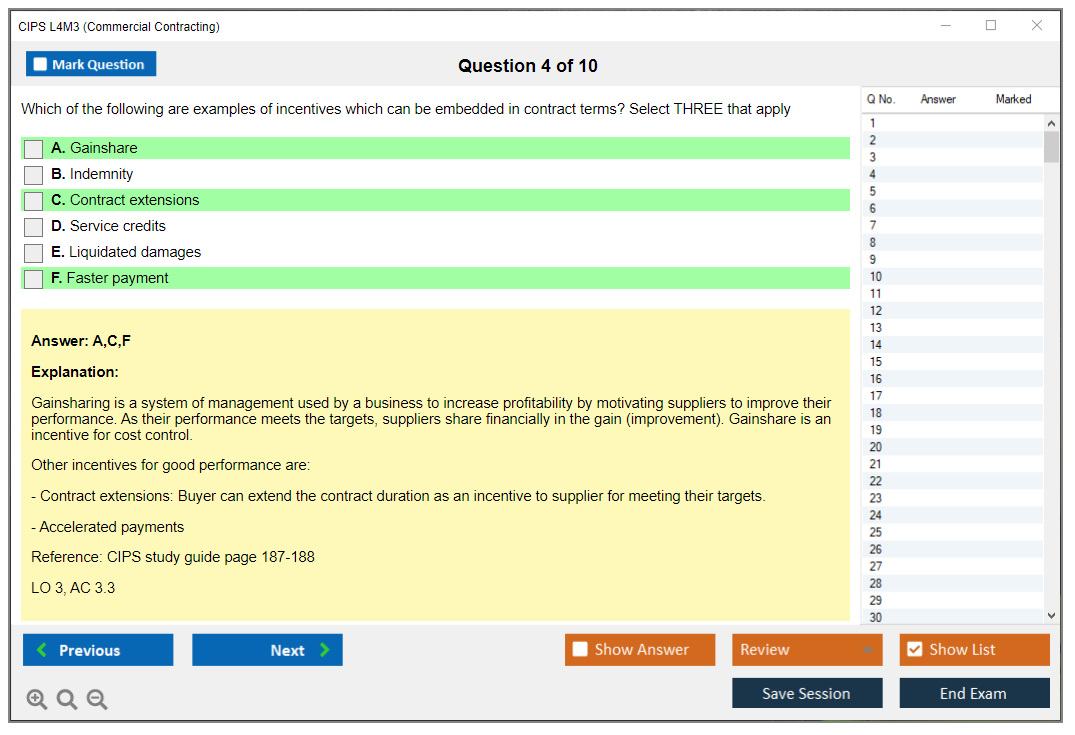
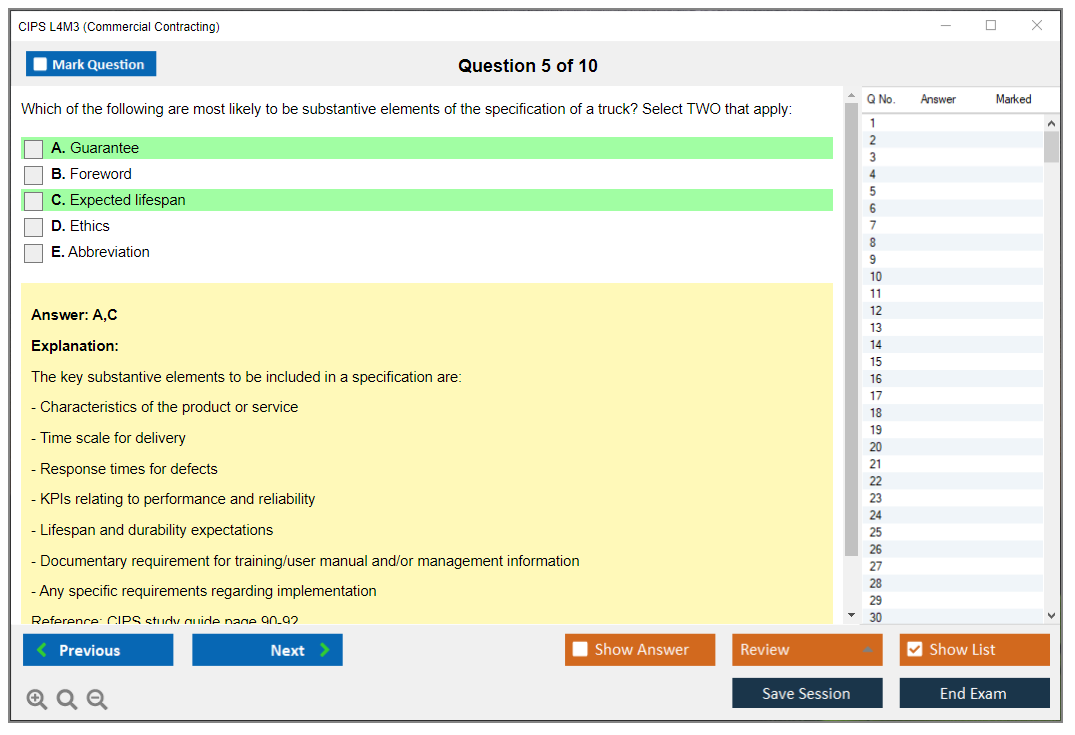
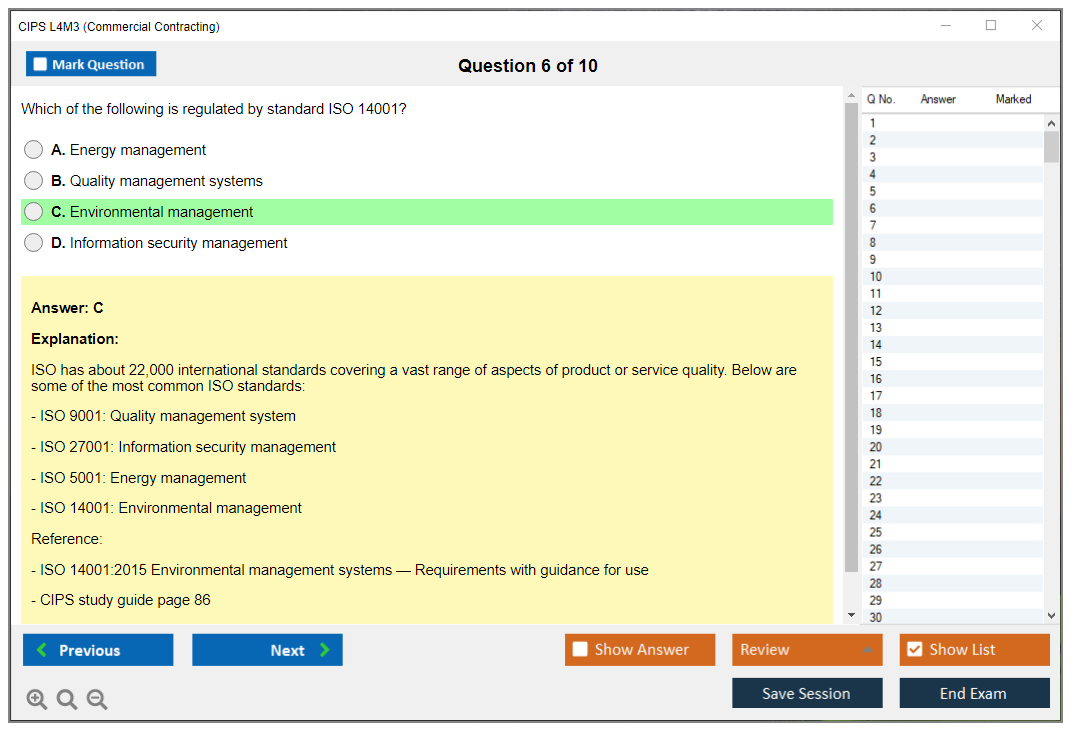
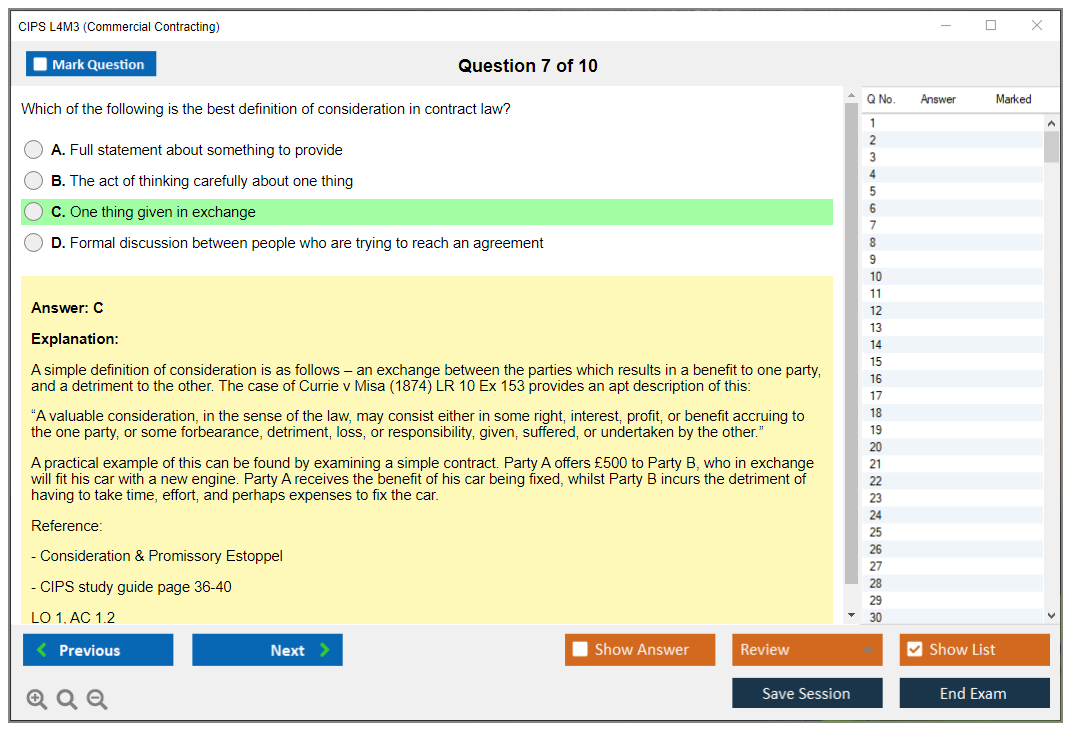
Overview of CIPS L4M3 Commercial Contracting and Its Role in Procurement Excellence
Okay, real talk here. If you're working in procurement or supply chain and you've ever felt that slight panic when someone mentions "contract law" or "breach remedies," CIPS L4M3 Commercial Contracting is basically designed for you. This isn't about turning you into a lawyer (honestly, we've got enough of those already), but it's about giving you the practical, grounded knowledge you need to handle the legal side of buying stuff without accidentally exposing your organization to massive risks or writing agreements that fall apart the moment something goes wrong.
This module sits right in the middle of the Level 4 Diploma in Procurement and Supply. It's one of those qualifications that directly changes how you do your job. Every purchase order you raise, every framework agreement you negotiate, every supplier partnership you manage relies on contracts. They're the foundation. And if you don't understand how they work (what makes them legally binding, what happens when suppliers don't deliver, how to protect your organization's interests), you're basically flying blind.
Why commercial contracting matters more than you think
Here's the thing. Procurement isn't just about finding suppliers and negotiating prices. Every single transaction creates legal obligations. That purchase order? Contract. That email where you accepted a quote? Probably a contract. That handshake agreement you made at a trade show after a few drinks? Yeah, potentially a contract, and good luck explaining that one to your legal team.
CIPS L4M3 Commercial Contracting covers the entire lifecycle of these agreements, from those early pre-contractual negotiations where you're still figuring out what you need, through the formation stage (where the magic happens and obligations become legally enforceable), into performance monitoring, handling variations when requirements change, dealing with disputes, and eventually terminating contracts when they've run their course or when things go spectacularly wrong.
The module equips you with knowledge of contract formation. The technical legal bits about offer and acceptance, consideration (that's the "what am I getting in return" part), and intention to create legal relations. You learn about contract terms, both the express ones you explicitly write into your agreements and the implied ones that get incorporated by law or custom whether you like it or not. You dig into performance obligations, understanding what "satisfactory quality" actually means legally, and you explore remedies for breach. What you can actually do when suppliers fail to deliver.
This directly impacts organizational risk management. I've seen procurement teams lose hundreds of thousands because they didn't understand limitation clauses. I've watched supplier relationships implode because nobody understood the termination provisions they'd agreed to. It's really painful to witness. One company I heard about lost a major client because their procurement person accidentally agreed to unlimited liability in an email exchange. They thought they were just confirming a delivery date.
Who actually needs this qualification
Commercial contracts in procurement knowledge isn't just for contract managers, though they obviously need it. The thing is, this module is designed for procurement practitioners, buyers, supply chain professionals, and basically anyone who touches supplier agreements. Maybe you're a category manager who needs to understand framework terms. Maybe you're a junior buyer who's tired of forwarding every contract question to the legal department. Maybe you're a procurement coordinator who needs to know when a variation requires formal amendment versus just an email confirmation.
You don't need formal legal qualifications or a law degree to tackle L4M3. That's actually the point. CIPS has designed this to bridge the gap between pure contract law (the stuff they teach in law schools with all those Latin phrases and centuries-old cases) and practical procurement application. It focuses on how contract principles apply specifically to buying organizations, whether you're in the public sector dealing with procurement regulations or the private sector managing commercial relationships.
The module forms part of the broader Level 4 Diploma. It sits at that intermediate competency level. Above the Level 3 foundational stuff but below the advanced Level 5 strategic content. If you're working toward Chartered status (MCIPS), this is part of your path. The Level 4 Diploma establishes that you've got solid, practical procurement knowledge across multiple areas. L4M3 handles the contracting piece.
How the syllabus has evolved for 2026
The CIPS Level 4 Commercial Contracting syllabus has been updated for 2026, and honestly, some of the changes reflect how much the contracting world has shifted in recent years. You've got content on digital contracts and electronic signatures, which is overdue considering how many organizations went fully remote during the pandemic and realized their paper-based processes were completely impractical.
There's expanded coverage of sustainability clauses because, look, ESG isn't going away and contracts need to reflect environmental and social commitments. I mean, force majeure provisions get serious attention post-pandemic. We all learned the hard way that "acts of God" clauses written decades ago don't necessarily cover global supply chain meltdowns and government-mandated lockdowns.
Evolving regulatory requirements also feature prominently. Particularly around data protection, modern slavery, and public sector procurement rules that seem to change every couple of years. The syllabus recognizes that contract law isn't static. It adapts to commercial reality and legal developments.
What successful completion actually demonstrates
When you pass CIPS L4M3 Commercial Contracting, you're telling employers you've got practical knowledge of contract fundamentals. Not theoretical legal philosophy, but applied understanding. You can identify and manage contractual risks. Spotting problematic terms in supplier proposals, understanding when your organization is exposed, knowing what protections to build in.
You understand remedies available when things go wrong. Which is huge. Too many procurement people panic when suppliers breach contracts because they don't know their options. Can you claim damages? Terminate immediately? Seek specific performance? Having this knowledge changes how you handle supplier performance issues and gives you confidence in difficult conversations.
You can contribute meaningfully to contract strategy. Instead of just implementing agreements someone else designed, you understand why certain terms exist, what alternatives might work better, and how contract structure impacts both legal risk and commercial outcomes.
How L4M3 connects with other Level 4 modules
This module doesn't exist in isolation. It complements L4M5 (Commercial Negotiation) perfectly. You need to understand contracts to negotiate them effectively, and negotiation skills help you achieve better contractual terms. L4M2 (Defining Business Needs) feeds into L4M3 because you need clear specifications before you can write enforceable performance obligations.
L4M6 (Supplier Relationships) and L4M3 intersect constantly since contracts form the legal framework for those relationships. L4M4 (Ethical and Responsible Sourcing) connects through contractual clauses that enforce ethical standards. L4M8 (Procurement and Supply in Practice) pulls everything together, showing how contract knowledge applies in real-world procurement scenarios.
Understanding contract formation and terms supports basically every procurement activity. Tender evaluation? You're assessing proposed contract terms. Supplier selection? You're negotiating contractual arrangements. Performance monitoring? You're checking compliance against contractual obligations. Dispute management? You're applying contract remedies. Continuous improvement initiatives? Often require contract variations or (wait, I'm getting ahead of myself) renegotiation.
The practical application that makes this module valuable
The L4M3 curriculum puts weight on both creation and ongoing management of contractual relationships. Creating a great contract is pointless if you don't manage it properly throughout its life. You learn to distinguish between different contract types and understand when each is appropriate.
Purchase orders work for straightforward, one-off purchases. Framework agreements make sense when you've got multiple users across your organization buying similar things. Call-off contracts under frameworks provide the flexibility to order as needed without renegotiating every time. Services agreements need different terms than goods contracts because you're managing ongoing performance rather than one-time delivery. Construction contracts have their own specialized requirements around variations, delays, and completion.
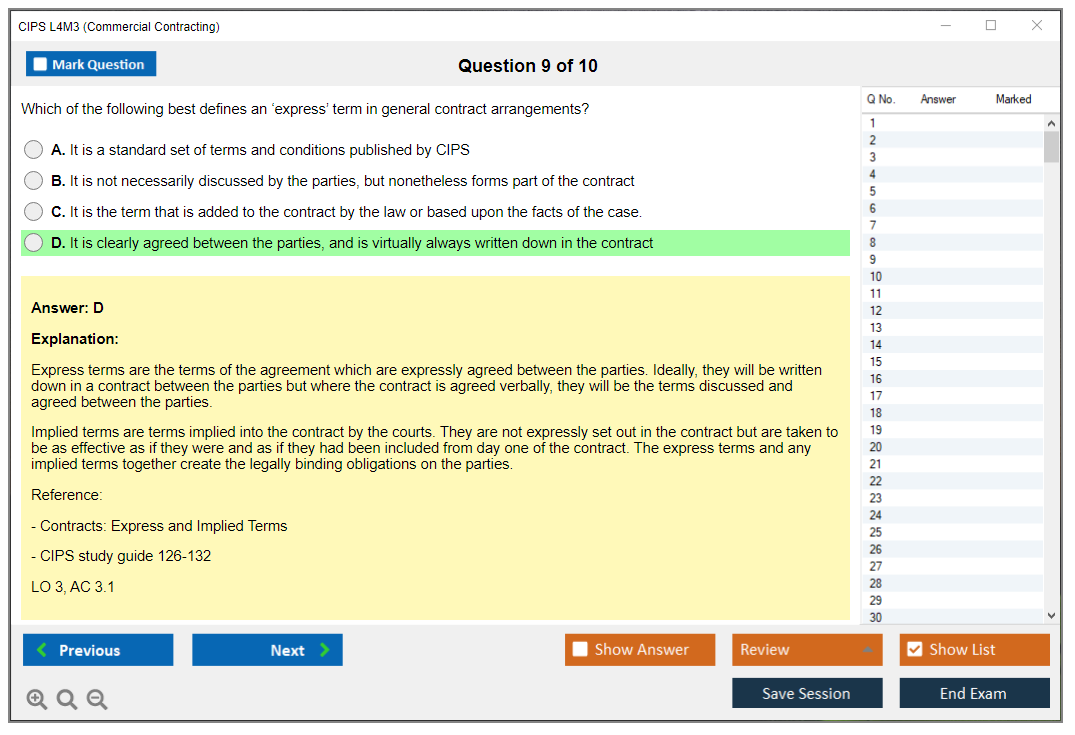
The module covers both express terms (the stuff explicitly stated in your contract documents, schedules, and specifications) and implied terms. Those implied ones catch people out constantly. Terms implied by statute (like the Sale of Goods Act provisions about quality and fitness for purpose). Terms implied by custom in particular industries. Terms implied by previous dealings between you and that supplier. You need to understand the full scope of contractual obligations, not just what's written in your formal agreement.
Contract law for buyers includes the technical formation requirements. You learn about offer and acceptance, which sounds simple until you're dealing with battle of the forms situations where your purchase order and their order acknowledgment contain conflicting terms. You understand consideration and why it matters legally. You grasp capacity to contract issues (can this person actually bind their organization?). You learn how misrepresentation, mistake, duress, and undue influence can affect contract validity.
Risk management through smart contract terms
Practical risk management through contract terms is where this gets really useful. Limitation and exclusion clauses can cap your liability exposure or protect you from consequential losses. Indemnities shift certain risks to the supplier. Warranties create enforceable promises about product quality or service standards.
Force majeure provisions (massively relevant after the past few years) define what events excuse non-performance and what notice and mitigation obligations apply. Termination rights give you exit routes when contracts aren't working, whether that's termination for cause (breach), termination for convenience, or termination due to specific trigger events.
Contract management and governance components ensure you don't just create contracts and forget about them. You need to monitor performance against contractual standards. Manage variations properly (not just informal scope creep). Handle disputes through negotiation or formal mechanisms like mediation or arbitration. Maintain proper documentation throughout the contract lifecycle. That documentation part saves you when disputes arise years later and nobody remembers what was actually agreed.
What the 2026 exam guide covers
The updated exam guide reflects latest assessment methodology and study resources. It covers eligibility and registration requirements, study planning approaches, resource selection guidance, practice testing strategies, exam technique tips, and post-qualification renewal requirements. Whether you're formalizing existing knowledge or learning contracts from scratch, the guide provides a roadmap.
Not gonna lie. Having a clear study plan matters more than most candidates realize. L4M3 covers substantial content, and trying to cram everything in the last two weeks rarely works. The exam guide helps you structure your preparation effectively. Identify your weak areas early. Build thorough understanding rather than just memorizing facts.
This qualification opens doors. It demonstrates competency that employers actively seek. And honestly, it makes you better at your job in ways you'll notice immediately. Understanding contracts changes how you read supplier proposals, how you negotiate terms, how you handle performance issues, and how you protect your organization's interests. That's why CIPS L4M3 Commercial Contracting consistently ranks as one of the most practically valuable modules in the Level 4 Diploma.
CIPS L4M3 Learning Outcomes and Detailed Syllabus Breakdown
What this unit is really about
CIPS L4M3 Commercial Contracting is where Level 4 stops being "procurement theory" and turns into contract law for buyers who actually have to sign stuff, manage suppliers, and explain to stakeholders why a clause matters. It's commercial contracts in procurement, but taught in a way that keeps dragging you back to outcomes, risk, and what happens when things go wrong.
Some people expect loads of case law. Not really. You need the principles, the vocabulary, and the ability to apply them to scenarios like framework agreements, purchase orders, and messy supplier T&Cs. Practical. Sometimes annoyingly so.
Who it's for and how it fits in Level 4
If you're working around sourcing, supplier management, or contract admin, this unit hits home fast. If you're more on the "I negotiate pricing" side, it still matters because contract formation and terms are where pricing arguments go to die when they're written badly.
Look, Level 4 is the point where CIPS expects you to act like someone who can run procurement, not just support it, and L4M3 is a big chunk of that because contracts are how procurement decisions become enforceable obligations across the business.
How the learning outcomes are set up
The CIPS L4M3 learning outcomes are structured around four main assessment criteria. That matters because the exam isn't asking "do you know contract law", it's asking "can you demonstrate the four things CIPS says you must be able to do", and each outcome maps to the CIPS Level 4 Commercial Contracting syllabus in a pretty predictable way.
Four buckets exist here. Formation. Terms. Performance and remedies. Risk and governance. If you revise by those buckets, you usually stop panicking.
Formation basics plus the stuff candidates forget
Learning Outcome 1 is contract formation and the different ways commercial agreements show up in the real world, including the difference between binding contracts and non-binding arrangements like heads of terms, letters of intent, or "subject to contract" emails. One sentence in an email can change everything. Annoying but true.
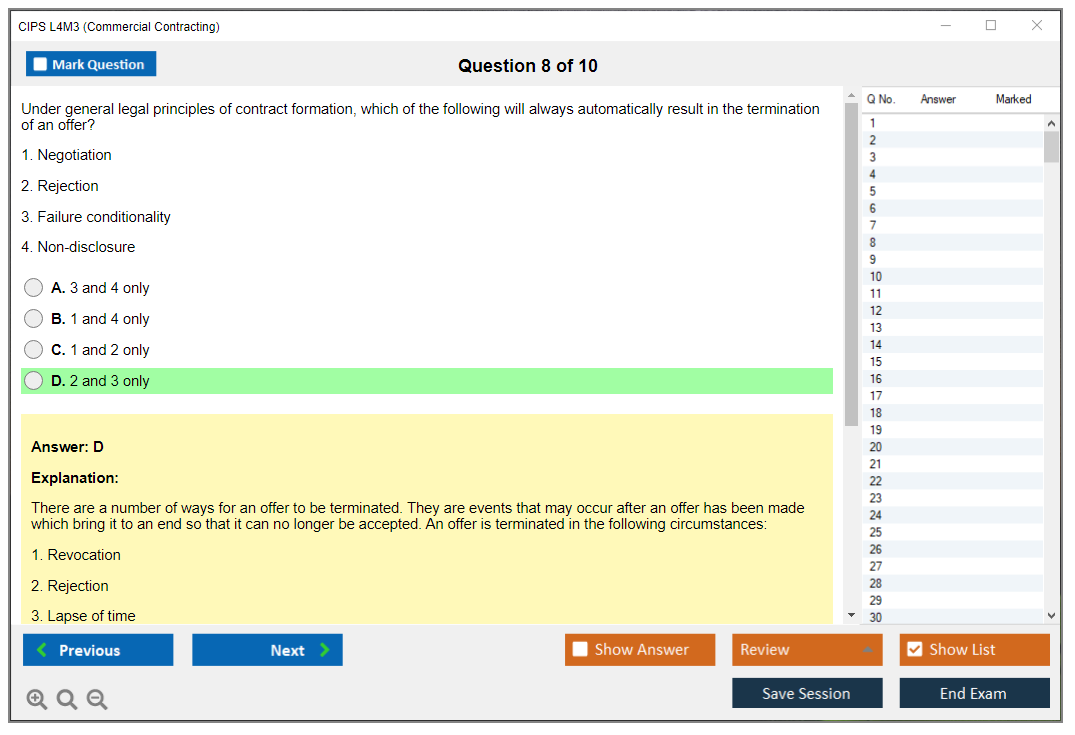
Offer and acceptance is the heart of it. Candidates need the rules around communicating offers, what counts as acceptance (and when it has to be communicated), and why a counter-offer kills the original offer rather than politely "modifying" it. Then you get the classic procurement headache, the battle of the forms, where buyer terms and supplier terms keep crossing and everyone acts shocked later when there's a dispute about whose terms applied. That's why you need to understand last shot arguments and why clear order of precedence clauses exist.
Consideration is the other piece people try to hand-wave, and the syllabus won't let you. I mean, consideration is the price paid for a promise, and you need to know the rules: it must be sufficient but doesn't need to be adequate, it must move from the promisee, and past consideration generally doesn't count except in limited situations. This pops up in procurement when someone wants a "free" concession with no corresponding promise, or when the business thinks a supplier is bound because "they said they'd do it" and there's no variation process or consideration supporting it.
Intention to create legal relations is in there too. In commercial contexts, intention's presumed, while social or domestic arrangements usually aren't intended to be legally binding. Capacity matters as well, because a contract with someone who lacks authority or legal capacity becomes a mess that procurement then has to clean up while the stakeholder says "but we already started the work". Yep. That.
I once saw a project manager sign off on £40k of consultancy work using what he thought was just a "preliminary discussion document". Turned out the consultant's standard practice was treating those as binding. Took three months and legal fees to sort out, and by then the project was behind schedule anyway. The kind of thing that makes you religious about checking signature authority.
Contract types and procurement tools you actually use
This outcome also expects you to know different contract types: bilateral contracts (promise for a promise), unilateral contracts (promise for performance), simple contracts (no special formalities), and contracts that must be in writing or executed as deeds depending on what they're doing. Short point. Big consequences.
Then it gets very procurement-flavoured with standard form contracts, framework agreements, call-off contracts, and purchase orders. Honestly, frameworks are great for speed and consistency, but they don't automatically guarantee volume unless you've written that commitment properly. Call-offs can become sloppy if your statement of work and change control are vague. Purchase orders are simple until they're used like full contracts without proper terms attached, and then you're back in battle-of-the-forms territory again, arguing over whose Ts and Cs were "on the back of the PO".
Terms: express, implied, and why wording wins
Learning Outcome 2 is contract terms. This is the "read what you signed" outcome, plus the legal safety nets that apply even when the contract is silent.
Candidates must distinguish express terms (explicitly agreed, written or verbal) from implied terms (brought in by statute, common law, custom, or previous dealings). In procurement, implied terms matter because buyers often assume quality, fitness, and reasonable care are "obvious", but if you're contracting across jurisdictions or using non-standard models, you still need to know what protections you get by default and what you must write yourself.
You also need the hierarchy of terms: conditions, warranties, and innominate terms. Conditions are fundamental. Breach allows termination and damages. Warranties are minor, breach generally gives damages only. Innominate terms depend on the seriousness of the consequences, which is exactly why scenario questions love them because the "right" answer hinges on impact, not labels in the contract.
The key clauses CIPS expects you to recognise
The syllabus highlights key contract terms you'll see constantly: price and payment provisions, delivery and acceptance, quality specs and standards, IP rights, confidentiality, and data protection requirements. Not glamorous. Very exam-friendly.
If I had to pick two to go deeper on, it's delivery/acceptance and IP. Delivery and acceptance is where disputes hide, because "delivered" isn't the same as "accepted", and acceptance criteria, inspection windows, and rejection processes are what stop you paying for something unusable. IP clauses matter because procurement regularly buys services and software where ownership, licensing, and background IP get mixed up. Then the business assumes it owns everything just because it paid an invoice.
Quality, confidentiality, data protection, pricing structures..they're all in play too, just don't expect the exam to let you ignore the boring bits.
Implied terms and statutory protections
Implied terms under the Sale of Goods Act 1979 and the Supply of Goods and Services Act 1982 (or equivalents outside the UK) show up as buyer protections: title, description, satisfactory quality, fitness for purpose, and reasonable skill and care. This is contract law for buyers in a nutshell. You're learning what the law inserts when the contract forgets to say it, and when parties can restrict those protections.
Exclusion clauses, limitation clauses, and the reasonableness test
Exclusion and limitation clauses get proper attention. You need common law rules on incorporation (was the term properly brought to the other party's attention) and construction (ambiguities are interpreted against the party relying on the clause), plus statutory controls like the Unfair Contract Terms Act 1977 and the Consumer Rights Act 2015. Most candidates are B2B, so you're mainly thinking UCTA reasonableness rather than consumer protections, but you need to recognise both.
The reasonableness test is a favourite because it's "is it fair". It looks at bargaining power, inducements, whether the customer knew or should've known about the term, and whether compliance was reasonably practicable. Basically procurement reality turned into legal factors, because you often can't justify a brutal exclusion clause when you forced it through on a take-it-or-leave-it basis and the supplier didn't price for it.
Penalties vs liquidated damages
You must distinguish penalty clauses (unenforceable) from liquidated damages (a genuine pre-estimate of loss). Liquidated damages are popular in commercial contracts in procurement because they give certainty and avoid arguing about actual loss later. But if you set a number that looks like punishment rather than estimation, you're asking for a fight in court.
Performance, breach, discharge, and remedies
Learning Outcome 3 is what happens when the contract's running, or failing, and how the law responds.
Performance obligations include conditions precedent (something must happen before performance is due), concurrent conditions (both parties perform together, like payment on delivery), and conditions subsequent (an event ends obligations). Then discharge: by performance (complete or substantial), by agreement (mutual release, accord and satisfaction, novation), by frustration (impossibility, illegality, radical change), or by breach. Frustration's rarer than people think. Courts don't love letting parties off the hook because the deal became inconvenient.
Breach types include actual breach (missed performance when due) and anticipatory breach (repudiation before the due date). Procurement people see anticipatory breach when a supplier basically admits they can't meet the schedule. You have to decide whether to accept the repudiation, terminate, and re-source, or hold them to performance and keep remedies open.
Remedies are a huge chunk. Damages are the primary common law remedy, aiming to put the innocent party in the position they would've been in if the contract had been performed. Remoteness limits recovery using Hadley v Baxendale principles: losses arising naturally, or losses in the parties' contemplation at formation. Mitigation's also central. You can't let losses pile up and then invoice the other side for your lack of action.
Equitable remedies include specific performance and injunctions, used when damages aren't adequate, but granted at the court's discretion. Quantum meruit comes up where no price was agreed or where the contract ends before completion, allowing recovery for the reasonable value of work done. It's not a free-for-all. It's a structured fallback.
Risk allocation, liability, and governance that keeps contracts alive
Learning Outcome 4 is risk allocation and governance. This is where the "commercial" part of CIPS L4M3 Commercial Contracting really shows, because it's not academic to say "allocate risk to the party best able to manage it". That's what you're doing when you decide who carries delivery risk, who owns IP infringement risk, or who pays if data protection goes sideways.
Indemnities shift liability, and you'll see them in IP indemnification, third-party claims, and sometimes tax or employment status issues in services contracts. Insurance requirements are there to make sure the party holding a risk can actually pay if it happens, and procurement should verify coverage levels rather than just accepting a certificate that doesn't match the contract.
Force majeure clauses excuse performance for extraordinary events beyond control, but their effect depends entirely on drafting. Generic force majeure wording can be worse than none because everyone assumes it covers things it doesn't. Termination rights also matter: for convenience, for cause, or automatic termination on specified events, plus consequences like return of property, payment for work done, and survival of confidentiality, IP, audit, or dispute clauses.
Contract management and governance is the operational layer: change control, performance monitoring, dispute escalation, and documentation requirements. This is where contracts stop being PDFs and start being managed. And yes, the syllabus pushes scenarios and case studies because CIPS wants you to spot issues and recommend actions, not just recite definitions.
Exam details, passing score, cost, and renewal questions people keep asking
Exam format changes over time and by delivery model, so check the current CIPS guidance for timing and question style, but expect scenario-based questions that test application across the four outcomes, not memory work. The CIPS L4M3 passing score is set by CIPS using their standard setting approach, so it isn't a fixed public number you can bank on. That's why aiming for "bare minimum" revision is a bad plan.
People also ask about the CIPS L4M3 exam cost. Usually includes the exam entry itself, plus CIPS membership, and optionally training provider fees if you're using a course. Your total cost depends on your route and whether you're paying for tuition or just self-study.
On CIPS Level 4 renewal requirements, the qualification doesn't "expire" like a software licence, but your membership status and any professional designations have ongoing requirements. Employers often care whether you're in good standing, so keep an eye on membership renewal and CPD expectations.
Study materials and practice tests that actually help
For CIPS L4M3 study materials, start with the syllabus and learning outcomes, then use a study guide that forces you to answer scenario questions in writing. Add a contract law reference if you're shaky on basics like offer/acceptance, consideration, and remedies. Keep it grounded. You're not training to be a solicitor.
A CIPS L4M3 practice test is useful if it makes you explain "why", not just pick options. Write short answers. Mark them harshly. Time yourself. Also, map every wrong answer back to an outcome and fix that gap, because the exam rewards structured thinking more than random facts.
Prerequisites and eligibility checks
CIPS L4M3 prerequisites depend on your entry route into Level 4 and your membership status. Exemptions can apply if you've got prior relevant learning. Don't assume. Verify with CIPS before booking so you don't waste time or money.
That admin stuff is boring. Still matters.
CIPS L4M3 Exam Format, Passing Score, and Assessment Methodology
Getting ready for the CIPS L4M3 Commercial Contracting exam? Look, this isn't about memorizing contract law definitions and hoping for the best. The assessment methodology CIPS uses here's actually pretty sophisticated, and understanding how it works can seriously change your preparation strategy.
The three-hour written paper that tests everything
The CIPS L4M3 exam follows a structured written assessment format that tests both your theoretical knowledge and your ability to actually apply commercial contracting principles in real procurement situations.
You're looking at one three-hour written paper.
Three hours might sound like plenty of time. But when you're working through complex case studies and trying to demonstrate nuanced understanding of contract law for buyers, those 180 minutes disappear fast. I mean, before you even realize you've barely touched Section B and there's still that massive case study analysis to polish up, you're down to your final thirty minutes.
You'll complete this under controlled conditions. That means either at approved test centers or, because CIPS has modernized things a bit, through CIPS-approved remote proctoring arrangements. The remote option's made the exam way more accessible for people who don't live near test centers or have scheduling constraints that make traveling difficult.
Breaking down the question structure
The exam structure isn't random. It typically includes a combination of question types that force you to demonstrate knowledge across different syllabus areas.
Section A usually contains one compulsory case study scenario worth approximately 60 marks. That's a massive chunk of your total score. This case study presents a realistic commercial contracting situation where you need to analyze issues, apply legal principles, identify contractual risks, and recommend practical solutions.
Not gonna lie here. This is where candidates either shine or completely crash.
Section B typically offers you a choice. You'll see several questions covering different aspects of the syllabus, and you answer a specified number from that larger selection. Each question's worth approximately 20 marks, and they test specific learning outcomes in more focused contexts. Some candidates prefer Section B because you can play to your strengths a bit. If you're stronger on remedies for breach of contract than on implied terms, you can choose accordingly.
The questions themselves are designed using Bloom's Taxonomy, which means they assess different cognitive levels. You'll see questions that just want you to define or list things (basic knowledge recall), others asking you to explain or describe concepts (comprehension), and then the harder ones requiring you to apply, analyze, evaluate, or recommend (application and analysis).
The higher-level questions? They're where the marks really separate passing from distinction-level performance.
How CIPS actually determines the passing score
Here's something that confuses a lot of candidates. The CIPS L4M3 passing score isn't a fixed percentage.
CIPS uses criterion-referencing, where examiners set the pass mark based on the difficulty of each specific exam paper. This ensures consistency of standards across different exam sittings, which's actually fairer than it might sound at first.
What this means practically's that the pass mark may vary slightly between exam sessions. Typically it ranges from 50-60% of available marks. If a particular exam paper turns out more challenging, the pass mark might be set at 52%. If another sitting has slightly more straightforward questions, it might be 58%. The goal's to maintain the same standard of competence regardless of when you sit.
CIPS employs standard-setting panels of subject matter experts who review exam papers before and after administration. They use methodologies like the Angoff method to determine appropriate pass marks that really reflect competence in commercial contracting. These aren't just arbitrary decisions. There's a whole process involving experienced procurement professionals and educators who evaluate what a minimally competent candidate should be able to demonstrate.
What examiners actually look for in your answers
The assessment criteria published in the CIPS Level 4 Commercial Contracting syllabus document specify what you need to demonstrate at pass level.
You need accurate knowledge of contract formation and terms. Ability to apply concepts to procurement scenarios. Analysis of contractual risks and issues. Formulation of appropriate recommendations.
Sounds straightforward, right? But there's a difference between knowing these requirements and actually delivering them under exam conditions. Most candidates know the content but freeze when they see that complex case study sitting there demanding practical application rather than textbook regurgitation. I've been there myself during a different professional exam where I knew everything cold but stared at the page for fifteen minutes because the question format threw me.
Marks are awarded for both content (accuracy and relevance of your legal knowledge) and application (your ability to use that knowledge to address the specific scenario presented). Higher marks require sophisticated analysis rather than simple description. I've seen candidates who knew the material inside and out still struggle because they just described concepts without applying them to the question's context.
Don't be that person.
Examiners use detailed marking schemes that allocate marks to specific points, arguments, and examples. There are indicative content guides that ensure consistency across different markers, but they also allow credit for valid alternative approaches. This's important because contract law and commercial contracts in procurement often have multiple defensible positions depending on the circumstances.
Decoding command words and what they're really asking
Pay attention to command words. They signal the required response level.
When you see "state" or "identify," they want brief factual answers. Don't waste time elaborating. "Explain" or "describe" requires fuller exposition with reasoning and maybe examples. "Analyze" means you need to break down complex issues, examine components, and show relationships between them. "Evaluate" requires weighing alternatives, making judgments, and justifying your conclusions.
The assessment tests practical procurement application rather than pure legal theory. Frame your answers in terms of procurement implications, organizational risks, and commercial outcomes rather than getting lost in abstract legal principles. Yes, you need to understand contract law, but the context's always procurement and supply chain management.
Real-world examples from procurement practice strengthen answers considerably. They demonstrate your ability to connect theoretical knowledge with practical situations, which's exactly what the CIPS L4M3 learning outcomes emphasize. Hypothetical examples work too if they're well-constructed and relevant, but drawing on actual procurement scenarios (even if anonymized) shows deeper understanding.
Time management can make or break your result
With 180 minutes for the complete paper, you need to allocate time proportionally to mark values.
A rough guide's approximately 1.8 minutes per mark, but you also need planning time and review time. For that 60-mark case study in Section A, you're looking at around 108 minutes. But I'd suggest planning for 15-20 minutes at the start to read carefully, outline your response, and identify the key issues.
Then write for about 80-85 minutes. Leave a few minutes to review.
The examination format's varied regarding materials you can bring in. Some exam sessions have been "open book" where candidates could bring CIPS L4M3 study materials, while others have been closed book. This varies by assessment mode and specific exam session, so verify the current rules during your booking process.
Don't assume anything.
Getting your results and understanding what they mean
Results typically come through 4-6 weeks after the examination date.
You'll receive a grade. Distinction, merit, pass, or fail.
You also get feedback on your performance across different learning outcomes, which's incredibly valuable if you need to resit or if you're continuing to other CIPS modules like L4M5 (Commercial Negotiation) or L5M3 (Managing Contractual Risk).
The pass/fail decision's based on total marks achieved across the entire paper. There's no requirement to pass each section separately, so stronger performance in some areas can compensate for weaker performance in others. That said, completely bombing the Section A case study makes it very difficult to pass overall just because of the mark weighting.
Candidates who fail can resit the examination at the next available session. No limit on resit attempts, which's good, though additional CIPS L4M3 exam cost applies for each attempt. The exam fee varies depending on your CIPS membership status and geographic location, but budget for several hundred pounds per sitting.
Using assessment knowledge to study smarter
Understanding the assessment methodology helps you prepare strategically.
Focus your study efforts on demonstrating the specific competencies that examiners are assessing rather than trying to memorize entire textbooks on contract law.
Work through scenarios. Practice applying concepts. Develop your analytical writing under timed conditions. There's just no substitute for simulating actual exam pressure because your brain functions differently when that clock's ticking and you're staring at a blank answer booklet.
The L4M3 Practice Exam Questions Pack at $36.99 gives you exposure to the question styles and difficulty levels you'll actually face. Doing practice questions's probably more valuable than reading another chapter of theory at a certain point in your preparation. You need to internalize the assessment patterns.
If you're working through the full Level 4 qualification, modules like L4M2 (Defining Business Needs) and L4M8 (Procurement and Supply in Practice) connect closely with L4M3 content. The contracting knowledge you develop here becomes foundational for later modules, especially if you progress to Level 5 where L5M4 (Advanced Contract & Financial Management) builds on these principles.
The criterion-referenced approach means your success isn't about beating other candidates or scoring within a certain percentile. It's about demonstrating genuine competence in commercial contracting for procurement contexts.
That's actually more meaningful. Even if it feels less predictable when you're preparing.
CIPS L4M3 Exam Cost, Registration Process, and Financial Planning
What this module is really about
CIPS L4M3 Commercial Contracting is where procurement stops being "get three quotes" and turns into "can you actually write, read, and manage commercial contracts in procurement without stepping on a legal landmine". Short module name. Big consequences. Real money.
This unit's aimed at buyers, contract managers, and anyone who touches supplier agreements and needs to understand contract formation and terms, contract law for buyers, and what happens when things go wrong. You'll spend time on remedies for breach of contract, plus the less glamorous stuff that keeps organisations safe like contract management and governance, approvals, and who's got authority to sign what.
Where it sits in Level 4
L4M3 is one module inside the Level 4 Diploma structure, so it's not "the whole qualification". It is one of the ones that changes how you work day-to-day because it forces you to think in clauses, risks, and obligations, not vibes. One sentence warning here. Don't wing it.
If you're planning multiple Level 4 exams, cost planning matters because membership discounts stack up and resits aren't cheap. The admin side of CIPS becomes easier when you treat it like a mini project. Booking windows, deferral fees, portal logins, all that stuff.
I've seen people spend more time choosing a phone case than planning their exam calendar, then act surprised when they're racing a deadline at 11pm on a Thursday. Not great.
What you're expected to learn (and why people get tripped up)
The CIPS Level 4 Commercial Contracting syllabus is published by CIPS and is the source of truth. Read it like a spec. It maps directly to CIPS L4M3 learning outcomes, and those outcomes are what the examiner's paid to test you on.
Contract formation and contract types
This is the "do we even have a contract" part. Offer. Acceptance. Consideration. Intention. Capacity. Authority. That sounds simple until you're dealing with emails, POs, frameworks, call-offs, and someone saying "we agreed it on a call". Contract formation and terms are where sloppy procurement creates disputes later.
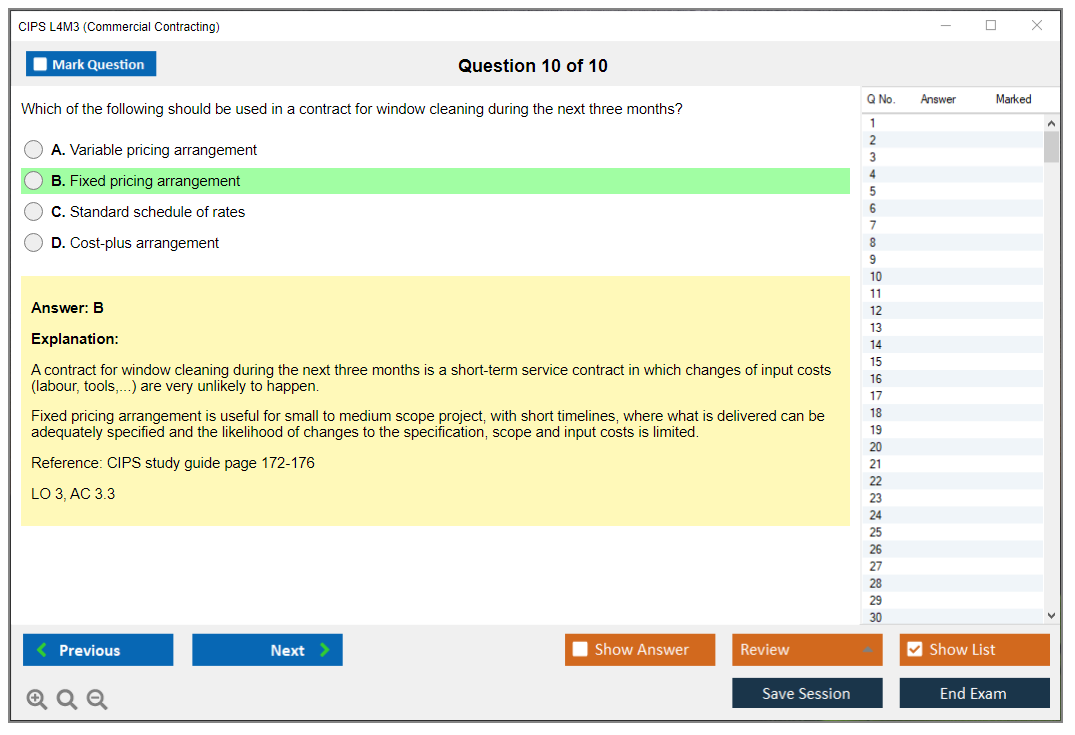
You need to be able to explain contract types in a procurement context, like fixed price against cost reimbursable, and why you'd pick one when risk, scope clarity, and supplier incentives are all messy.
Key terms that matter in real contracts
Express terms. Implied terms. Conditions against warranties. Limitation of liability. Indemnities. Liquidated damages. Termination. Change control.
Here's the annoying bit: you can't just memorise definitions and hope. The exam tends to push scenarios where you decide what term applies, what it does, and what the buyer should do next. If you've never looked at a real contract clause, it feels abstract fast.
Performance problems and dispute routes
This is where remedies for breach of contract shows up: damages, specific performance, termination rights, and what "material breach" tends to mean commercially. You'll also cover dispute resolution paths like negotiation, mediation, arbitration, and litigation. Not fun. Very testable.
Risk, liabilities, and governance
Risk allocation's the whole point of contracting, really. Who carries what risk. Who insures what. What governance exists so people don't sign nonsense. Contract management and governance is where procurement people either shine or get ignored, because the best contract in the world's useless if nobody monitors performance, KPIs, change requests, and supplier obligations.
Exam format, passing score, and how grading feels
The format can change over time and by delivery method, so always confirm in the candidate portal for your session. Still, expect a timed exam with scenario-based questions that force you to apply contract law for buyers, not recite it.
What to expect on exam day
Time pressure's real. Reading carefully is half the exam. Another short sentence. No hero moves.
If you're doing a test centre sitting, you're dealing with travel and check-in rules. Remote proctoring brings room scans, camera rules, and the stress of "what if my internet drops", which is a real planning consideration, not a throwaway.
CIPS L4M3 passing score
People ask this constantly: CIPS L4M3 passing score is set by CIPS using their grading approach for that exam series, and the pass mark's typically published for the specific assessment once results are released or through CIPS guidance for that unit and session. Don't assume it's the same forever. Don't assume it's always 60%. Check the official communication for your exam session.
Results and resits
Results timelines depend on the assessment window. Plan for it. If you fail, resit fees are generally the same as first attempt fees, which is why "I'll just see how it goes" is an expensive strategy.
Some training providers sell "exam guarantee" options that include one free resit, but read the conditions because it's often tied to attendance, completing their mock exams, or hitting a practice score threshold.
CIPS L4M3 exam cost and what drives it
The CIPS L4M3 exam cost varies depending on membership status, where you're sitting the exam, whether you self-study or use an accredited provider, and whether it's a first attempt or a resit. That's the headline.
As of 2026 pricing ranges people actually see, CIPS members typically pay about £135 to £165 per individual module exam, while non-members often pay £200 to £250 per exam. That difference adds up fast if you're doing multiple Level 4 modules, so membership's usually the cheaper route even if you don't love paying another annual fee.
Membership fees (and the option most people use)
CIPS membership itself's got annual fees that vary by grade. Affiliate membership, which is the common one for students and candidates working toward qualifications, is roughly £80 to £120 per year. Higher grades cost more, and for Level 4 study they're not required, so don't overbuy membership status just because you think it looks nicer on LinkedIn.
One sentence reality check. Membership's a math problem.
Training provider against self-study costs
If you go through an accredited training provider, the total investment for completing L4M3's commonly £800 to £2,500, depending on online or classroom or blended delivery, how much tutor support you get, and whether the package includes exam fees and materials.
Provider packages often include tuition, access to a learning platform, study materials, tutor Q&A, and sometimes the exam fee. That bundle can be better value than buying everything separately if you benefit from structure, deadlines, and someone marking your practice answers, because commercial contracting's one of those topics where you can misunderstand a concept and not realise until you hit a scenario question.
Self-study can be cheaper. Many candidates can keep it to about £300 to £400 total by paying for CIPS membership, the exam fee, and a small set of official materials and books. The trade-off's self-discipline and time. Time's money if you're stretching the module across six months because you didn't have a plan.
Study materials and what's free
Official CIPS L4M3 study materials include the syllabus and module guidance. The detailed syllabus document's available free to members through the CIPS website, and you should download it and keep it open while you revise because it tells you what can be tested.
Recommended textbooks usually cost £30 to £60 each, and most candidates end up buying 2 to 3 key texts depending on confidence with legal concepts and commercial contracts in procurement. You don't need a full law library. You do need at least one solid contract law reference plus something that frames contracting in a procurement context.
How to book the exam (and where people mess up)
Booking's done in the CIPS candidate portal. You log in, select your unit, pick an exam session, choose location, then pay. CIPS typically runs multiple sessions each year, commonly around March, June, September, and December.
Registration deadlines usually close 6 to 8 weeks before the exam date. That's for admin processing, venue planning, and any distribution rules around the sitting. Late registration may exist, but it can carry extra fees and limited availability, and you don't want to be the person trying to find an open seat in London two days before the window closes.
Book early. Popular test centres hit capacity during peak periods when multiple cohorts are sitting.
During booking you'll confirm your personal details, select test centre or remote proctoring (if offered in your region), and agree to CIPS exam regulations. That includes conduct rules and malpractice policies. Read them. Another short sentence. Don't risk it.
Payment methods typically include credit or debit card, bank transfer, and organisational purchase orders for employer-sponsored candidates. You'll get confirmation emails with the important stuff like date, time, location, and ID requirements.
Deferrals, cancellations, and refunds
Deferrals are usually allowed up to a deadline, often around 4 weeks before the exam, with an admin fee in the £35 to £50 range. If life happens, that option's the difference between losing your full fee and just paying a manageable admin charge.
Cancellations and refunds follow CIPS policy. Typically you might get a partial refund if you cancel well in advance, often more than 8 weeks before the exam, but late cancellations and no-shows usually mean no refund. Harsh but normal.
Special arrangements
If you've got a disability, learning difference, or medical condition, you can request special arrangements during registration. Supporting documentation's normally required. CIPS can provide reasonable accommodations like extra time, separate rooms, or assistive tech. Ask early, because these requests take time to process and you don't want to be stuck arguing about paperwork near the deadline.
Financial planning that doesn't feel fake
If you're paying yourself, build a simple budget with three buckets: membership, exam fee, and learning support. Add a resit buffer even if you're confident, because resit fees are usually the same as the first attempt, and failing's expensive.
Check internal funding too. Some employers sponsor CIPS qualifications through professional development budgets. They might cover membership, exam fees, training provider costs, and sometimes even study time. That last one matters. Two hours a week of protected study time's a pay rise when you're juggling work and revision.
International candidates should watch currency conversion and how fees are quoted. Some prices appear in GBP, others might be shown in USD, EUR, or local currency, and non-UK locations can have extra admin fees. Small variation. Big surprise if you didn't plan for it.
Difficulty: how hard L4M3 feels in practice
This module isn't impossible. It's picky.
The hardest topics tend to be contract formation and terms when the scenario's ambiguous, limitation of liability and indemnities because the wording's subtle, and remedies for breach of contract because candidates confuse commercial responses with legal remedies. Another pain point's governance, where people treat it like "process fluff" and then the exam asks who's got authority, what approvals are needed, and what the buyer should document.
Typical workload depends on background. If you already work with commercial contracts in procurement, you might study lighter but still need to learn CIPS-style phrasing. If you're new to contract law for buyers, plan more time and do more question practice.
Common failure mistake. Reading too fast.
Practice tests and how to use them without lying to yourself
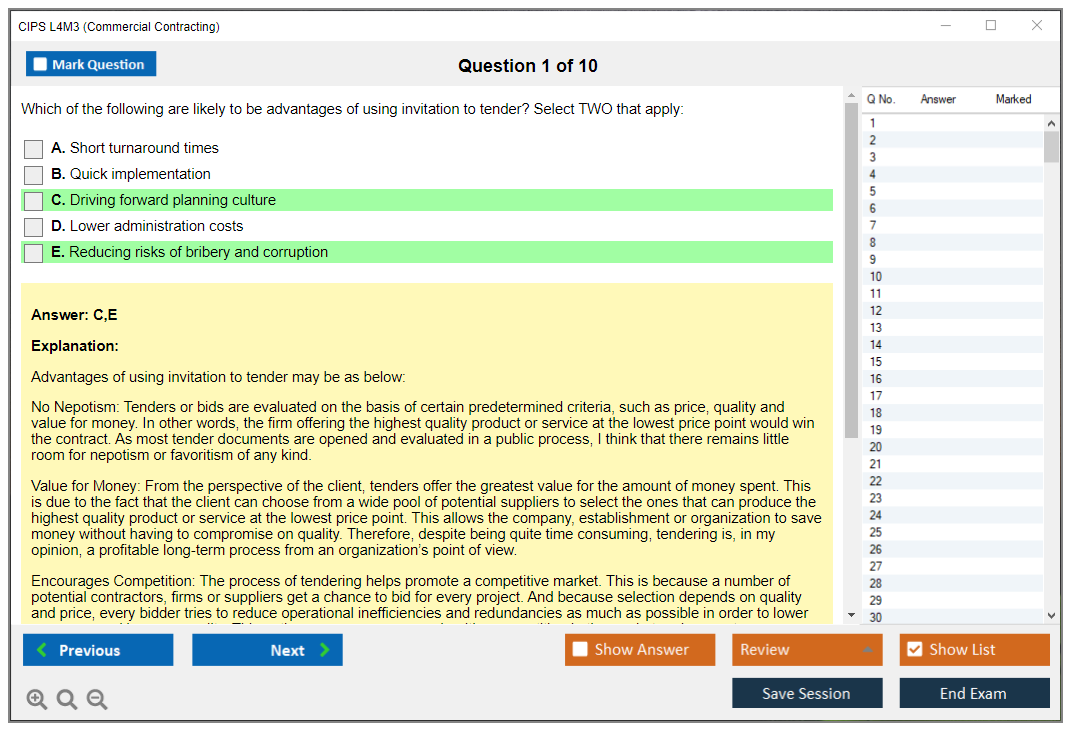
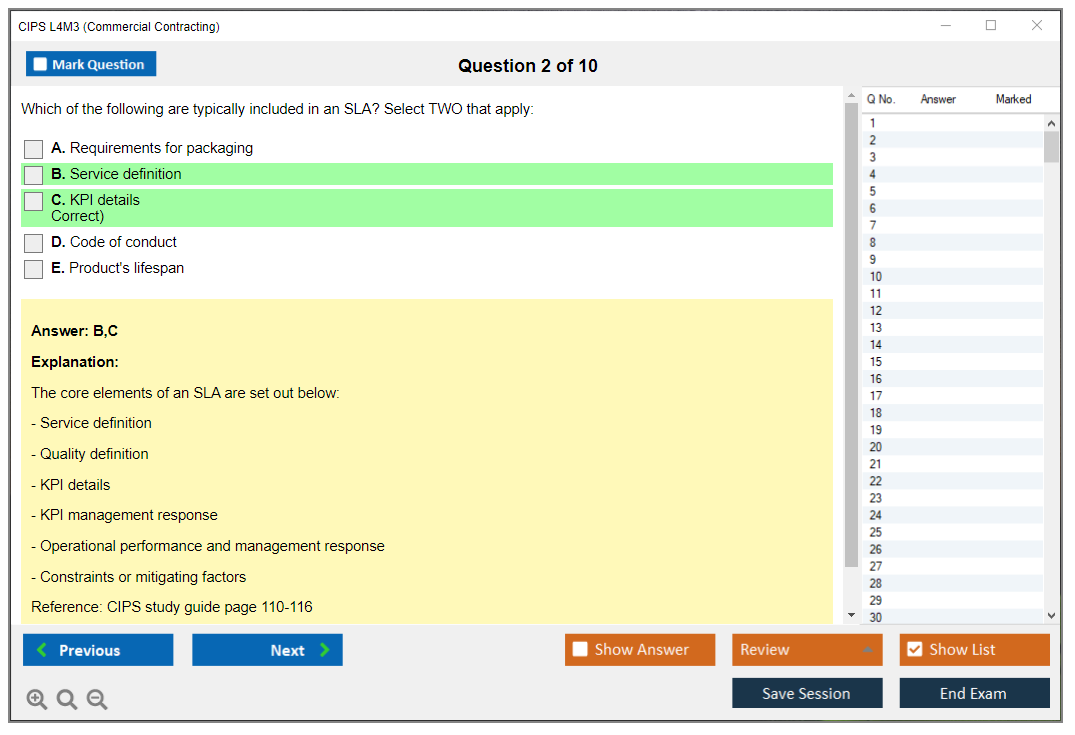
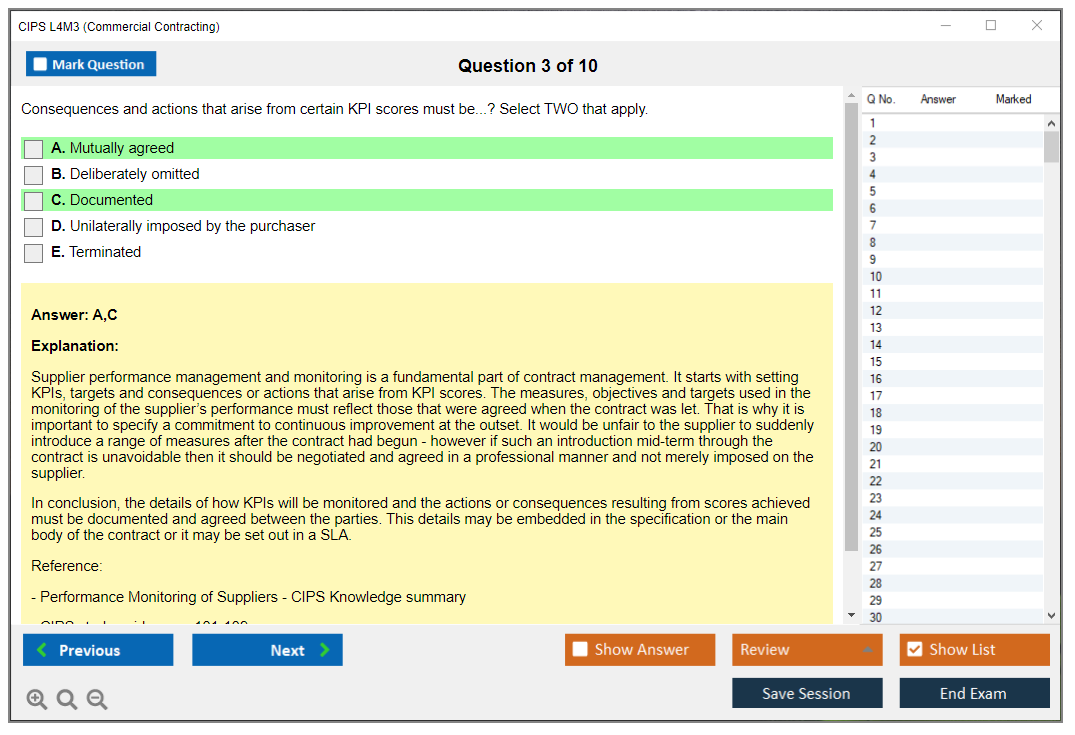
A CIPS L4M3 practice test is useful only if you review your wrong answers properly. Do a mock under time pressure, mark it, then write short notes on why each wrong option was wrong. That's where the learning is.
Past paper style questions and mock exams from training providers can help, but make sure they map to the current syllabus and assessment style. If the syllabus changes, old questions can teach you outdated emphasis.
For the last two weeks, go heavy on: revisiting the learning outcomes list, drilling definitions that affect decision-making like conditions against warranties, and doing timed scenario questions. Exam-day technique matters too. Don't get stuck on one question. Move on. Come back.
Prerequisites and eligibility
CIPS L4M3 prerequisites are mostly about being registered correctly as a candidate and following the entry route rules for the qualification. In most cases, having the right CIPS membership category and being enrolled for the unit's what matters for exam booking.
If you've got prior learning, exemptions might apply in some cases for other units, but don't assume. Check with CIPS directly if you think your previous qualifications match.
Renewal and keeping your status
People mix this up. Passing L4M3's one thing. Keeping membership status is another.
CIPS Level 4 renewal requirements typically relate to maintaining CIPS membership and, for some grades, meeting CPD expectations. The qualification doesn't "expire" like a food label, but your membership can lapse, and that affects things like how you appear on CIPS registers and how easily employers can verify status. If you care about the professional signal, keep membership current.
Quick FAQs people search
How much does the CIPS L4M3 exam cost? As of 2026, members often pay around £135 to £165. Non-members often pay around £200 to £250, plus any membership or admin costs.
What's the passing score for CIPS L4M3? It depends on the assessment series and CIPS grading approach for that sitting. Confirm for your session through official CIPS communications.
How hard's CIPS L4M3 Commercial Contracting? Moderate to tough if you're new to contract law concepts. Very manageable with consistent practice and syllabus-based revision.
What are the objectives (learning outcomes) for CIPS L4M3? They cover contract formation and terms, key clauses, performance and remedies, dispute routes, risk allocation, and governance in commercial contracts.
Does CIPS certification require renewal, and how's it work? Membership renewal's annual and may include CPD expectations depending on grade. The qualification stays, but your active membership status can lapse.
Next steps checklist
Pick self-study or provider. Confirm your budget. Download the syllabus. Book early in the portal. Then study like you don't want to pay the exam fee twice.
Conclusion
Putting it all together for your L4M3 success
Look, I've walked you through everything about CIPS L4M3 Commercial Contracting here. Exam costs. Passing score mechanics. The syllabus breakdown. Study materials you'll actually need. Honestly, this module isn't exactly easy, but it's absolutely manageable if you approach it systematically rather than cramming contract law principles the night before like some caffeine-fueled maniac.
Here's the thing. Commercial contracts in procurement? They're literally everywhere in your actual work. Once you understand contract formation and terms properly, breach of contract remedies, and how contract management and governance really function, you'll notice this stuff coming up in every single supplier negotiation you touch. That's what makes L4M3 different from some of the other CIPS Level 4 modules. It's got immediate practical application that goes way beyond just passing an exam and forgetting everything two weeks later.
The prerequisites aren't demanding and the CIPS Level 4 renewal requirements are straightforward enough that you shouldn't let administrative concerns hold you back from starting. The real challenge? Carving out consistent study time over 8-12 weeks and actually working through practice questions rather than just reading notes passively while Netflix plays in the background. Or YouTube. Whatever your procrastination poison happens to be.
Next steps. First, map out your study calendar backward from your exam date. Second, get the official syllabus and learning outcomes document printed out and tick off topics as you master them (weirdly satisfying, honestly). Third, don't skip the contract law for buyers fundamentals even if they seem basic. That foundation matters when you hit the complex stuff later. I learned this the hard way during a module where I thought I could skim the intro chapters and then spent three frustrated weeks backtracking because nothing made sense without those building blocks.
And here's what I've found about CIPS L4M3 study materials. You need variety. Reading textbooks builds knowledge. Sure. Making flashcards reinforces memory. But nothing exposes your weak spots quite like working through realistic exam questions under timed conditions when your brain's screaming at you.
That's where our L4M3 Practice Exam Questions Pack becomes really useful. It gives you that exam-style question practice in the exact format you'll face, covering contract terms, formation issues, remedies for breach scenarios, all the critical areas. You'll quickly figure out whether you actually understand express versus implied terms or if you've just convinced yourself you do.
The certification's worth it. Commercial contracting knowledge opens doors in procurement roles across every sector. Start preparing now rather than waiting for the "perfect" time, because that never comes anyway.