

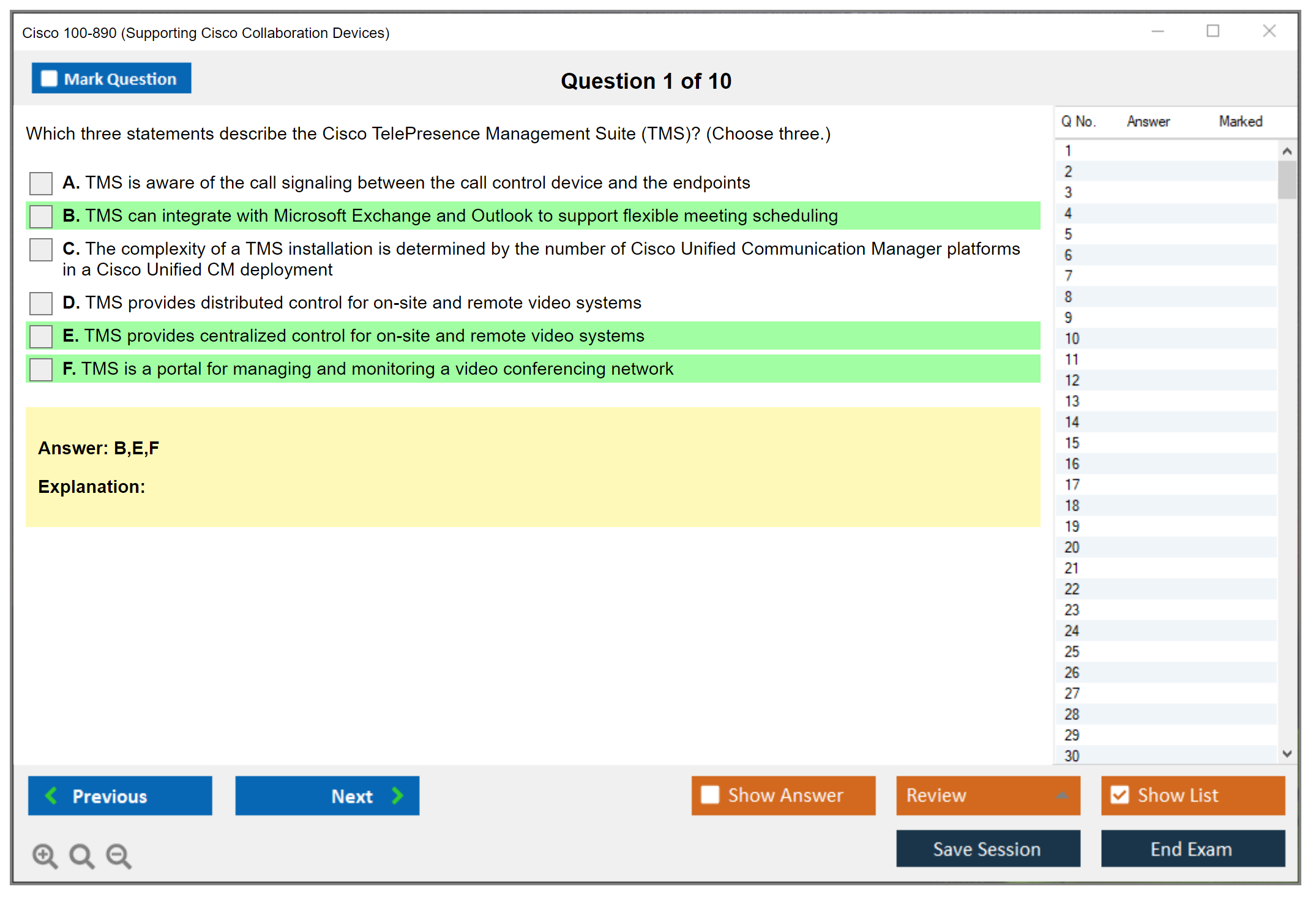
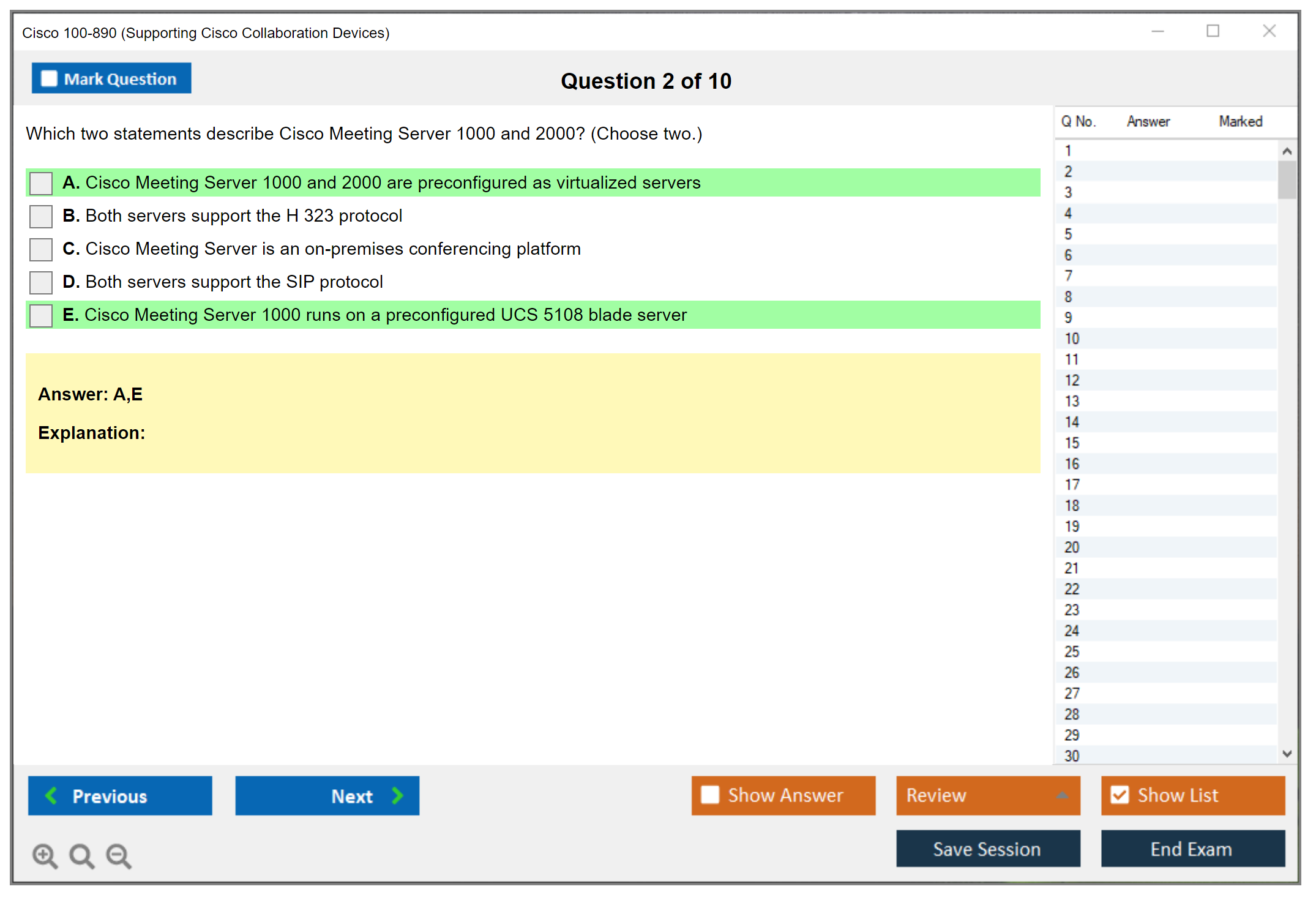
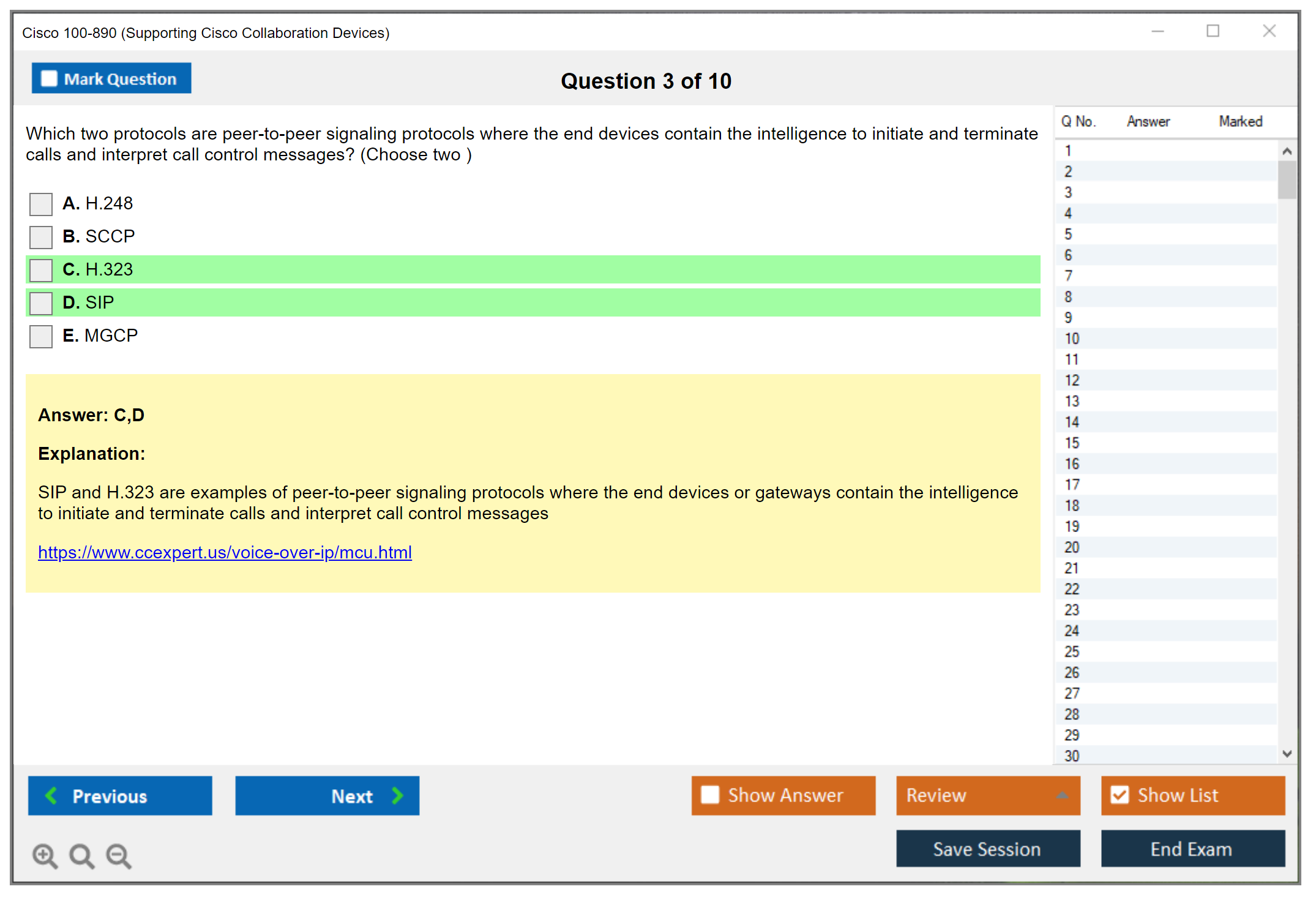
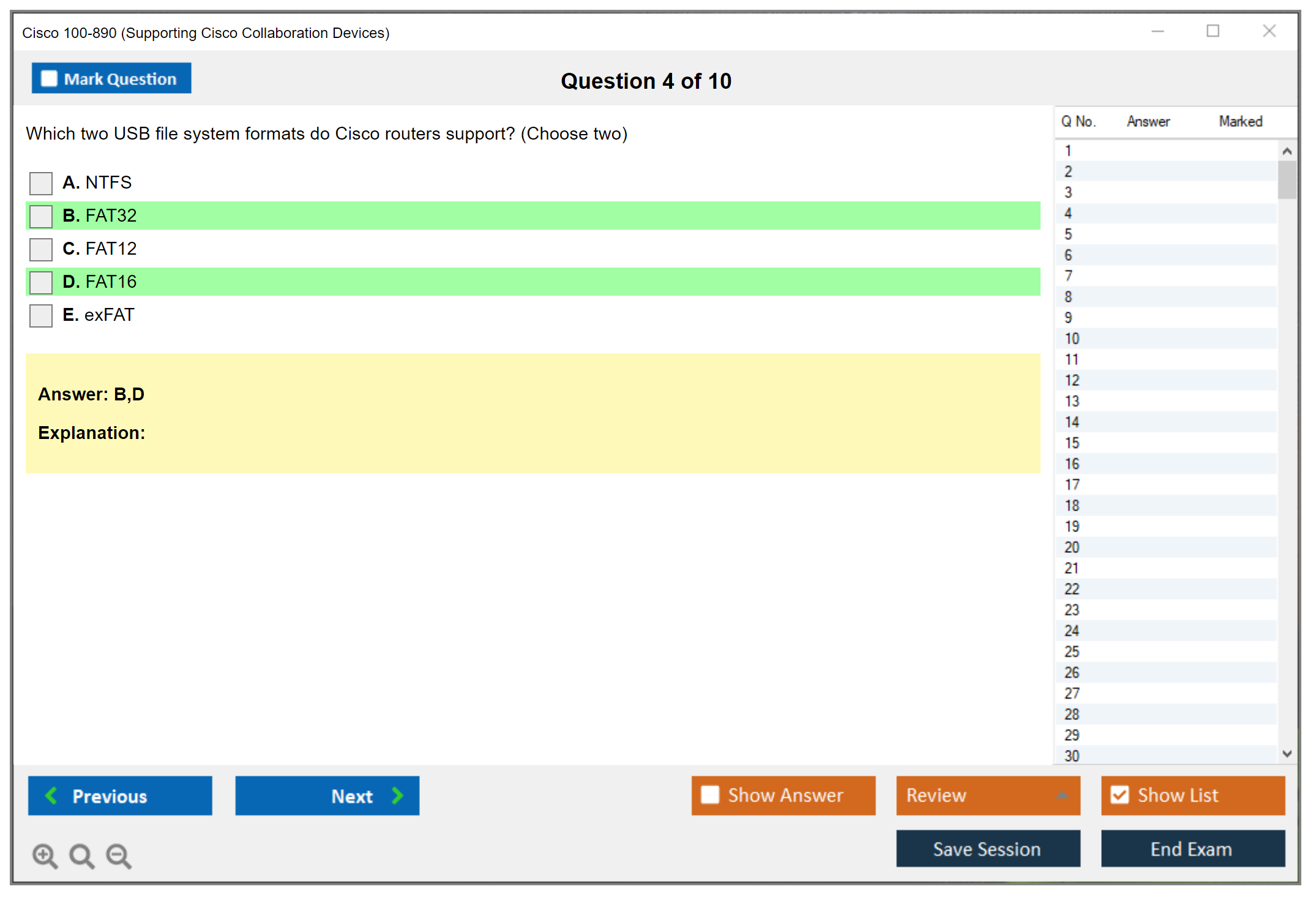
Cisco 100-890 (CLTECH) Exam Overview
Understanding what this exam actually tests
So here's the deal. The Cisco 100-890 CLTECH exam is basically your entry ticket into the collaboration support world. It validates that you can handle day-to-day troubleshooting and support for Cisco collaboration endpoints. We're talking IP phones, video endpoints, Webex Devices, all that stuff. This isn't about designing massive collaboration architectures or configuring CUCM from scratch, honestly. It's about keeping devices running when users call the help desk because their phone won't register or their video quality looks like a potato.
This exam replaced some older collaboration support tests, and it needed to happen. The collaboration space changed so much with cloud services and hybrid deployments that the old tests felt outdated. I mean, now you're dealing with scenarios that mix on-premises CUCM with cloud-based Webex services, which is what most enterprises actually run these days anyway.
Who's sitting for this thing
Help desk folks? They make up a huge chunk of CLTECH candidates, which makes sense when you think about it because user calls in, phone's not working, you need to figure out if it's a registration issue, network problem, or they just unplugged it. Field service engineers take this one too since they're physically deploying and maintaining collaboration endpoints at customer sites.
IT support technicians who handle first and second-level support find this certification super relevant. If you're the person troubleshooting why Conference Room B's video endpoint keeps dropping calls, you need exactly what this exam covers. Network administrators expanding their skillset into collaboration device support take it as well. Makes sense since you already understand networking fundamentals, now you're just adding collaboration endpoints to your toolkit.
Career changers entering unified communications use CLTECH as a starting point, which honestly is smart. No prerequisites means you can jump in if you've got some basic IT knowledge and willingness to learn collaboration technologies. Students and recent graduates pursuing collaboration careers also target this exam since it opens doors without requiring years of experience first.
The technical skills you're validating
Understanding Cisco collaboration endpoint architectures comes first. You need to know how these devices actually work. Components, boot processes, how they communicate with CUCM or Webex cloud services. Not just theoretical knowledge either, the thing is you'll need to perform initial device configuration and handle provisioning workflows, which means understanding TFTP, DHCP options, configuration files, all that networking stuff that makes endpoints actually function.
Troubleshooting device registration issues? That takes up significant exam real estate because devices not registering with CUCM could be network connectivity, wrong TFTP server, certificate problems, firmware mismatches. Wait, cloud-based Webex registration adds another layer since you're dealing with internet connectivity and cloud service authentication too.
Interpreting device logs and diagnostic information separates people who actually fix problems from those who just reboot things and hope. You need to read console output, understand syslog messages, pull diagnostic data from endpoints. I once spent three hours tracking down a registration failure that turned out to be a single misconfigured DNS record. Supporting user-reported issues means handling the vague tickets like "video doesn't work" and narrowing down whether it's a codec issue, bandwidth problem, or user error.
Cisco troubleshooting tools and methodologies get tested too. Real-Time Monitoring Tool (RTMT), device web interfaces, CLI commands for diagnostics. Basic security practices for collaboration devices matter more now than ever. Not gonna lie, too many deployments skip fundamental security steps. Understanding network requirements for optimal endpoint performance ties everything together since QoS, VLAN configuration, and bandwidth directly impact device functionality.
Why this certification matters in 2026
The exam content reflects current Cisco collaboration portfolio including latest Webex Devices and IP phone models, which matters because if you studied old collaboration material, half of it wouldn't apply to modern deployments. Hybrid scenarios get heavy coverage. Combining on-premises CUCM with cloud-based Webex services represents how most organizations actually operate now.
Modern collaboration features? They show up everywhere. Conference room technology evolved way beyond basic speakerphones. Now you're supporting touch-enabled control panels, room kits with AI-powered cameras, integrated whiteboards. Organizations expanded video conferencing and collaboration capabilities massively over the past few years, driving demand for qualified support professionals who actually know this stuff.
The hybrid work model changed everything for collaboration device support, honestly. More endpoints, more complex deployments, more users depending on these tools for daily work. Companies need people who can keep collaboration infrastructure running smoothly.
Career pathways this opens up
CLTECH is foundation for advancing to Cisco Certified Specialist - Collaboration certifications. You could move toward 350-801 CLCOR which covers implementing Cisco collaboration core technologies at a professional level. It's an entry point for collaboration-focused career tracks within IT support organizations.
The credential demonstrates competency to employers seeking collaboration support staff. I've seen job postings specifically mention CLTECH or equivalent experience, which tells you something. It's a stepping stone toward more advanced collaboration certifications like CCNP Collaboration if you want to go deeper into design and implementation. You can also use it to specialize in collaboration device support within broader IT roles. Maybe you're primarily a network admin but you become the go-to person for collaboration endpoints.
How it fits Cisco's certification structure
This is a specialist-level certification within Cisco's restructured certification program, and here's what's nice: no prerequisite certifications required, which makes it accessible if you're entering the field. It can contribute to recertification requirements for higher-level Cisco certifications through continuing education credits. Complements other Cisco credentials too. If you already have 200-301 CCNA covering networking fundamentals, adding CLTECH gives you collaboration specialization.
Cisco's modular certification approach lets you validate focused skills without committing to massive certification tracks. Want to prove collaboration device support skills? Take CLTECH. Want broader collaboration implementation skills? Add 300-815 CLACCM or other specialist exams. The flexibility actually works pretty well for building targeted skillsets.
Exam delivery logistics
You'll take this through Pearson VUE testing centers worldwide. Available for online proctored delivery too, which means you can test from home if you've got a quiet space and reliable internet. Scheduling's pretty flexible with testing center availability in most major cities.
You need a Cisco.com account and Pearson VUE profile for registration, but the process is straightforward: schedule your exam, pay the fee, show up with proper ID. Accommodations available for candidates with special testing requirements, just request them during registration.
The exam's primarily offered in English with potential for additional languages in select markets. Available globally with consistent content across regions. Testing centers are accessible in North America, Europe, Asia-Pacific, Latin America. Online proctoring expands access significantly if you don't have a nearby testing center.
What makes this certification valuable right now
Growing enterprise adoption of Cisco collaboration solutions drives real demand for certified support professionals. Not just marketing hype. Organizations deploying these technologies need people who can support them, period. Hybrid work models increase reliance on collaboration devices requiring skilled support, and when everyone's working remotely or hybrid, collaboration infrastructure becomes business-critical.
Vendor-specific certification? It demonstrates specialized knowledge that employers value over generic IT support backgrounds because it validates practical troubleshooting skills applicable to real-world support scenarios, not just theoretical knowledge. Provides competitive advantage in the job market for collaboration support roles since many candidates lack formal collaboration credentials. It's a recognized credential within the IT industry and by Cisco partners, which matters when you're job hunting or trying to advance internally.
Cisco 100-890 Exam Cost and Associated Expenses
Quick snapshot of what this exam is
The Cisco 100-890 CLTECH exam tests whether you've got the Supporting Cisco Collaboration Devices (CLTECH) certification skills, and honestly, Cisco's basically asking: "Can you keep collaboration endpoints running when phones refuse to register or video gear gets stuck in that awful provisioning loop?"
This isn't networking. Not really. It's endpoint-focused, workflow-driven, and kinda messy in the best way. You're expected to handle real Cisco IP phone situations, video endpoint support that actually happens in the wild, Webex Devices troubleshooting certification scenarios, and the CUCM endpoint registration troubleshooting problems that devour helpdesk time like nobody's business.
What you're really being tested on
Devices. Provisioning workflows. Log interpretation. Call flow symptoms.
Lots of "what's your next move" questions.
The thing is, exam objectives matter way more than folks realize, because the Cisco 100-890 exam objectives literally map to production nightmares you'll face: getting devices onboarded without losing your mind, endpoint registration headaches, user complaints that make zero sense until you check firmware. All the collaboration device provisioning and logs tooling that separates functional support from chaos. Real fragments of actual work.
Exam registration fee (the number everyone wants)
Official Cisco 100-890 CLTECH exam registration fee sits at $300 USD as of 2026. That's your standard cost. If you're stateside you can basically lock that number in as what you'll pay at checkout.
Cisco determines pricing. Pearson VUE handles delivery. The fee stays consistent across testing centers, so don't expect bargains just because you picked some random suburban location instead of downtown. One attempt. Score report immediately after.
Discounts? Almost never for individual bookings. I mean, people search for promo codes like they're hunting treasure, and it's usually pointless unless you've got employer programs or corporate vouchers in play.
Regional pricing variations (why your friend pays a different number)
US pricing? Easy. $300 USD.
Europe gets "equivalent EUR pricing," and then VAT crashes the party uninvited, which means your credit card statement shows a bigger hit than expected even when base pricing theoretically aligns to $300. Frustrating but typical.
Asia-Pacific adjusts for local currencies and market realities, so you might encounter different local pricing even when it roughly matches USD value. Developing markets sometimes get adjusted pricing through Cisco regional programs, though don't assume eligibility just because your economy's cheaper. Currency fluctuations between budgeting day and payment day can mess with final costs in non-USD territories too.
Check Cisco.com and Pearson VUE for your region's exact pricing. Seriously, the checkout page doesn't lie.
Paying for it and registering (hidden fees or nah)
Registration happens through Pearson VUE. Credit card's the standard expectation, though some regions accept debit cards and other electronic payment depending on local banking regulations.
Corporate vouchers exist, but they're designed for organizations buying bulk exam slots. If you're paying individually out of pocket, you typically won't see random "extra" Pearson VUE charges for standard registration. Online proctoring generally costs the same as testing center delivery, so you're choosing convenience and risk comfort, not price differences.
One more thing: rescheduling rules can absolutely wreck you if you procrastinate, so actually read the Pearson VUE policy when booking. Not technically an "expense" until suddenly it is.
Training and study materials (where budgets go to die)
Here's where Supporting Cisco Collaboration Devices (CLTECH) certification gets expensive ridiculously fast, because that exam fee's the tiniest number you'll encounter if you want structured learning.
Official Cisco training courses? $1,500 to $3,000 depending on format and delivery method. Self-paced e-learning usually lands around $500 to $1,200. Third-party training providers run cheaper, like $300 to $1,500, and quality's wildly inconsistent. Ranges from really helpful to "why am I still watching this garbage."
Books and study guides are the rational purchase. Usually $40 to $80. A Cisco CLTECH study materials setup that's just official docs plus one decent guide works totally fine for experienced people.
Practice exam platforms offering a Cisco 100-890 practice test commonly cost $30 to $100 for CLTECH-specific content. Personal take here: practice tests earn their price when they explain why you bombed a question, because memorizing flawed logic does more damage than skipping practice entirely.
Video training subscriptions like Pluralsight or CBT Nuggets run $300 to $600 annually, which can be solid value if you're also studying adjacent topics like CUCM basics or Webex Control Hub administration. But it's wasted money if you binge two weekends then cancel immediately. Actually, I knew a guy who paid for a full year of CBT Nuggets, watched maybe four hours total, then forgot he'd even subscribed until the renewal charge hit. Don't be that guy.
Lab costs (the part nobody wants to price out)
You can pass without assembling some hardware museum at home, but hands-on practice helps massively because endpoint issues are tactile and really messy in ways documentation can't fully capture.
Physical Cisco collaboration devices for home labs can cost $500 to $2,000 in used equipment, especially when you start hoarding phones, video endpoints, and whatever gear you need for reproducing provisioning failures. Used IP phones and video endpoints float around the secondary market, but availability and firmware states create headaches. Random availability. Genuine time sink.
Cloud-based lab platforms offering CUCM access often run $50 to $200 monthly. Not terrible if you plan a compressed study window and cancel fast, but costs accumulate if you "kinda sorta study" across six months.
Cisco DevNet sandbox? Budget hero. Free limited lab access. Not always available exactly when you want it, honestly sometimes it's constrained, but it's real enough for practicing workflows. Webex trial accounts also provide free access to cloud collaboration features, which matters when your weakness is cloud-managed device behavior.
Virtualized CUCM environments are their own cost nightmare. You'll need server resources or cloud hosting, which is how people accidentally transform a $300 exam into a $900 infrastructure obsession.
Retake fees and policies (plan for this like an adult)
Retakes cost the full exam fee. That's $300 per attempt. Zero discounted retake pricing.
Waiting periods affect your schedule too. You must wait 5 calendar days after failing before the first retake. Second and subsequent failures require 14-day waiting periods. No limit on total retakes, but each attempt means separate registration and payment.
Budget emotionally too. A retake isn't just money, it's lost momentum.
Passing score and exam format (what people ask, what Cisco actually does)
"What is the Cisco 100-890 passing score?" gets asked constantly, and the annoying truth is Cisco exams typically report results as pass/fail with section feedback, and the exact passing score might not appear as one simple public number in official marketing materials.
What should you do? Focus on coverage. If you're shaky on endpoint registration, provisioning flows, or interpreting endpoint logs, it'll show. The format's typically multiple-choice and scenario-style questions, and the timer becomes your enemy if you haven't practiced reading Cisco's peculiar wording patterns.
Difficulty level (who struggles and why)
Is the Cisco CLTECH exam difficult? Depends entirely on background.
Already doing Cisco collaboration endpoints support exam-type work? Feels fair. Coming from pure routing and switching? Feels bizarre because you'll stumble over operational details, "what tool do you check" decisions, and device-side behavior that isn't solvable with subnet calculations.
Common stumbling blocks? Provisioning sequences. Firmware and device packs. CUCM endpoint registration troubleshooting steps. Webex Devices troubleshooting certification-style cloud details. Usual suspects.
Total cost estimation (what you'll actually spend)
Minimum cost, self-study: $300 exam + $100 materials = $400. Realistic if you're already working the job and reading docs recreationally.
Moderate cost, structured self-study: $300 exam + $500 training/materials + $100 practice tests = $900. Sweet spot for most wanting guidance without dropping $2,000 on classes.
Premium cost, formal training: $300 exam + $2,000 instructor-led training + $200 materials = $2,500. Add lab access and you climb higher, fast.
Also budget $300 to $600 for potential retakes. Lab access adds $0 to $500 depending whether you stick to DevNet/Webex trials or rent CUCM lab access for a month or two. So yeah, plan for $400 to $3,000 total depending on approach.
Cost-saving strategies that actually work
Start with free resources before paying anything. Cisco documentation and white papers go surprisingly far, and DevNet sandboxes cover more hands-on practice than people expect.
Study groups help. Online communities too. I mean, honestly, employer training benefits are the real cheat code when available.
Seasonal promos from third-party providers sometimes happen, but don't build plans around hoping. Consider bundled training packages if they're really relevant, though. Buying random pieces individually is how you spend more than the official course anyway.
Renewal and recertification costs (don't ignore future you)
Cisco certifications typically stay valid three years from earning date. Cisco 100-890 renewal and recertification planning matters if you're stacking certs or using this as part of bigger Cisco paths.
Recertification can mean passing current exam versions or earning CE credits. Continuing Education credits often require paid training or conference attendance, so even if you "only" pay $300 today, long-term maintenance costs more later. Budget now. Future you experiences less annoyance.
FAQs people ask out loud
How much does the Cisco 100-890 CLTECH exam cost?
$300 USD as of 2026, with regional currency differences and possible VAT in some countries.
What is the passing score for the Cisco 100-890 exam?
Cisco typically reports pass/fail with section feedback. Don't count on a public fixed number, plan around mastering exam objectives.
Is the Cisco CLTECH exam difficult?
Moderate if you've supported endpoints before, rougher when you're new to collaboration devices and provisioning workflows.
What are the best study materials for Supporting Cisco Collaboration Devices (CLTECH)?
Cisco docs plus solid study guide, then add quality practice test and hands-on labs where you reproduce endpoint registration and provisioning problems.
Does Cisco 100-890 CLTECH count toward recertification or renewal?
Cisco certs have three-year cycles and renewal options via exams or CE credits, so treat CLTECH as part of broader renewal planning and price that in.
Cisco 100-890 Passing Score, Exam Format, and Policies
Look, if you're planning to take the Cisco 100-890 CLTECH exam, you need to know what you're actually signing up for. The passing score isn't published exactly by Cisco, which honestly drives people nuts, but I'll break down what actually matters and what you can expect when you walk into that testing center or fire up that webcam for online proctoring.
What the score actually means
Cisco scores exams differently.
Their scale runs 300 to 1000 points. This isn't like your college exams where you needed 70% to pass, or even those straightforward certifications where everything's transparent from day one. The passing threshold typically falls somewhere in the 750 to 850 range based on what candidates report after taking the exam, but here's the thing: Cisco doesn't publish the exact number for a reason, and honestly it's frustrating when you're trying to prepare because you don't have a concrete target to aim for. They use scaled scoring, which means your raw score (the actual number of questions you got right) gets converted through an algorithm that accounts for question difficulty.
Think of it this way. Different exam forms might have slightly different raw score requirements to pass because some versions are harder than others. The scaling keeps things fair. You might take a version with tougher simulations and your buddy takes one with easier drag-and-drop questions, but the scaled score evens it out so you're both held to the same standard.
What really impacts your score is how you perform on the heavily weighted sections. The exam objectives aren't all created equal. Some domains count more than others. Crushing the troubleshooting workflows will boost your score more than just memorizing device models. This is a support exam, so naturally the hands-on troubleshooting stuff carries more weight.
I remember talking to someone who bombed the exam twice because they focused entirely on memorizing CLI commands without understanding the actual troubleshooting methodology. Don't be that person.
How you'll actually see your results
Instant feedback. That's what you get.
The second you finish clicking through that last question, you'll know. The screen displays your pass/fail status immediately at the testing center or during your online proctored session. You'll see your scaled score right there, something like 825/1000 or whatever you managed to pull off.
The score report breaks down your performance by exam section. This is really useful if you didn't pass because at least you'll know where you went wrong instead of just wondering what happened. You'll see which domains you crushed and which ones wrecked you. This diagnostic information shows up as something like "needs improvement" or "proficient" for each objective area. If you passed, you can download your official certificate from the Cisco portal, and they'll issue a digital badge within five business days.
Your results also get logged in the Cisco Certification Tracking System automatically. No waiting around for mail or email confirmations like the old days.
What you're walking into format-wise
The exam throws approximately 55 to 65 questions at you. The exact count varies between exam forms, so don't freak out if your neighbor says they had 58 questions and you had 63. That's just how Cisco operates with different exam versions floating around. You get 90 minutes to complete everything, which sounds tight but most candidates finish with time to review.
Multiple-choice questions dominate.
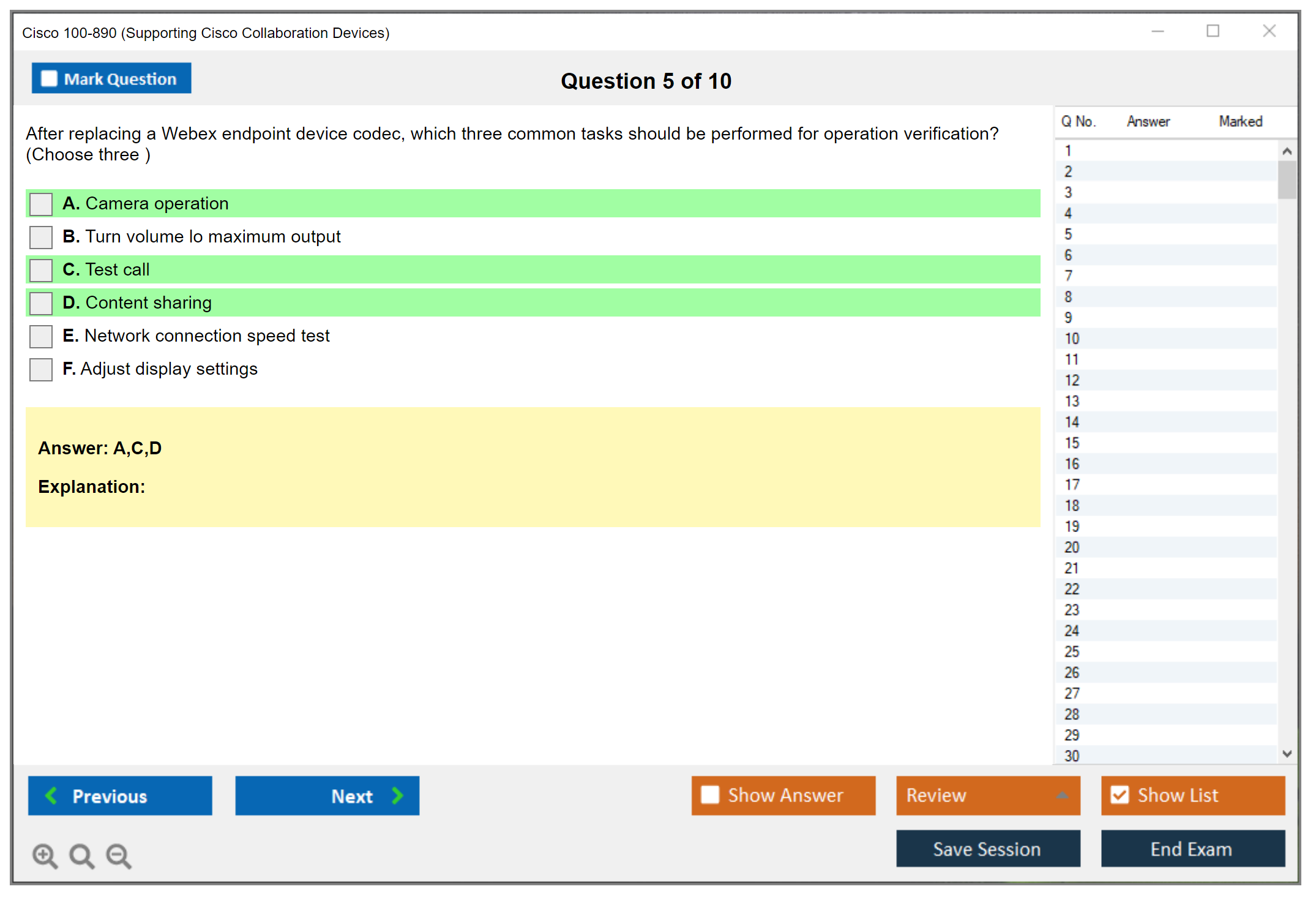
The question types mix it up more than you'd expect, honestly. Standard multiple-choice single answer questions where you pick one correct option. Then there's multiple-choice multiple answer questions, the dreaded "select all that apply" type where you need to know exactly which options are correct because partial credit doesn't exist for these. Get one wrong in your selection and the whole question is marked incorrect.
Drag-and-drop matching questions show up too, where you're pairing concepts or matching device types to their characteristics. Fill-in-the-blank questions require you to enter specific commands or parameters, which means you better know the exact syntax. No autocomplete saving you here. Exhibit-based questions display logs, configurations, or screenshots and ask you to interpret what you're seeing, which is realistic for a support role.
The simulation questions are where things get interesting. The thing is these require actual device configuration or troubleshooting in a simulated environment that mirrors what you'd encounter in real network operations. You might need to check registration status on CUCM or troubleshoot why a Webex device isn't provisioning correctly. These simulations may award partial credit depending on how many steps you complete correctly, unlike the multiple-choice questions.
Where you can take this thing
Two options here.
You've got in-person at a Pearson VUE authorized testing center or online proctored from your home or office. The exam content is identical regardless of which method you choose. Online proctoring requires a compatible computer, working webcam, microphone, and a quiet private space where you won't be interrupted. I mean truly private, because the proctor watches you through the webcam the entire time, which feels weird at first but you get used to it.
Testing centers provide a more controlled environment with a dedicated workstation. They give you an erasable whiteboard or notepad for notes since you can't bring anything personal into the testing area. You'll also get an on-screen calculator tool if needed for any calculations, though honestly the CLTECH exam doesn't involve much math.
Rules you absolutely need to follow
Bring valid government-issued photo ID.
Or you're not getting in, period. Testing centers use biometric verification like palm scans or photos to confirm your identity. You'll need to accept a non-disclosure agreement before starting, which means you cannot share exam content publicly or discuss specific questions. Cisco takes this seriously, and violating NDA leads to certification revocation and potentially legal action.
No breaks are scheduled during the 90-minute period, but you can take a restroom break if needed. The clock keeps running though, so make it quick. All personal items stay outside the testing area. No phones, no smartwatches, no notes, nothing. The testing center provides everything you need.
Using braindumps or unauthorized exam materials violates Cisco policies big time, and honestly it's just not worth the risk because they employ sophisticated security measures to detect cheating. Getting caught means permanent certification ban plus possible legal consequences. Proxy testing where someone else takes the exam for you is also detected and prosecuted. Just don't do it.
If you don't pass the first time
Failed your first attempt?
You've got to wait five calendar days before retaking. That's calculated from your exam date, not when you got your results. Failed the second time? Now it's 14 calendar days before your next attempt. Third and all subsequent failures also require 14-day waiting periods between each retake.
Here's something people don't realize: if you pass, you cannot retake the same exam for 180 days, which seems counterintuitive but makes sense from Cisco's perspective. You might want a higher score, but Cisco doesn't allow retakes just to boost your number during the validity period. The 100-890 Practice Exam Questions Pack at $36.99 helps you prepare properly the first time so you're not dealing with retake policies.
Keeping up with exam changes
Cisco updates exam content periodically.
They do this to match current technologies, which means what you studied six months ago might not reflect today's blueprint. The exam blueprint published on their website shows the current objectives and domains. When version changes happen, Cisco announces them with transition periods where both old and new versions are available. Eventually the older version gets retired with advance notice.
Always verify you're studying for the current exam version before scheduling. If you're also working toward professional-level certs like 350-801 CLCOR, make sure your study materials align with current blueprints for all your exams. Version mismatches waste your time studying outdated content.
Getting accommodations if you need them
Candidates with special needs can request additional testing time or other accommodations. You'll need proper medical documentation submitted through Pearson VUE during registration, which requires a bit of planning but they're generally pretty accommodating. Separate testing rooms are available for people requiring quiet environments, and screen readers plus other assistive technologies are supported.
Request accommodations at least two weeks before your desired test date because the approval process takes time. Pearson VUE reviews your documentation and coordinates with the testing center to make sure your needs are met.
The 100-890 Practice Exam Questions Pack simulates the actual exam environment so you know what to expect on test day. Getting familiar with question formats and time pressure makes a huge difference, particularly if you're coming from associate-level exams like the 200-301 CCNA where the format might be different.
Focus on mastering all the exam objectives rather than just targeting the minimum passing score. The collaboration support skills you build preparing for this exam translate directly to real-world troubleshooting scenarios with endpoints, CUCM registration issues, and Webex device provisioning problems.
Cisco 100-890 Difficulty Level and Study Time Requirements
Quick exam overview, minus the marketing fluff
The Cisco 100-890 CLTECH exam is Cisco's endpoint support test for collaboration devices, the stuff people actually touch when the meeting is broken. Phones. Room kits. Desk video endpoints. A bit of CUCM. A bit of Webex Control Hub. Lots of "why won't it register" and "why is audio trash".
Look, it sits in that entry-to-intermediate zone inside Cisco collaboration certifications. Not CCNP Collaboration hard. Not even close. But it still expects you to have a real technical foundation, because the exam keeps pulling you back to practical troubleshooting, and that's where people who only read slides start sweating.
Who should take it (and who will hate it)
If you're doing Cisco IP phone and video endpoint support on a help desk, in a NOC, or as the "collab person" on a small IT team, this exam fits. If you've been living in CUCM tickets, firmware pushes, and endpoint resets, you'll probably find it manageable.
If you're brand new to collaboration tech, honestly, the learning curve is steeper than people expect. VoIP has its own logic. SIP has its own drama. Certificates fail in ways that look like networking issues until you realize it's the phone clock. That kind of thing.
Short version. Hands-on wins. Reading-only loses.
The exam validates that you can support endpoints in the real world. That includes CUCM endpoint registration troubleshooting, provisioning, interpreting logs, and separating "the network is down" from "this device is misconfigured".
Some theory exists. But the vibe is practical. You're expected to recognize patterns, follow a troubleshooting flow, and know where to look when users give you useless symptoms like "it's not working".
Cisco 100-890 exam cost (and the sneaky extras)
People ask, "How much does the Cisco 100-890 CLTECH exam cost?" Cisco exam pricing can vary by region and currency, so check the official Cisco/Pearson page for your country. The thing is, the bigger cost isn't the exam fee. It's everything around it.
Training subscriptions. Lab gear. CUCM access. Retakes if you rush it. If you want a cheap way to pressure-test your knowledge, a practice pack can help you find holes fast, like this 100-890 Practice Exam Questions Pack at $36.99. Just don't treat any practice product like a magic shortcut. Use it like a mirror.
Passing score and format expectations
"What is the Cisco 100-890 passing score?" Cisco typically reports scores in a way that can shift over time, and they don't always give a single simple number that stays consistent forever. So you plan like this instead: aim to be comfortably above the line, not barely alive on exam day.
Expect scenario-heavy questions. Multi-step thinking. Some items that reference device models you haven't personally touched. And yes, sometimes simulation-style questions where you need to recognize interface paths and options without panicking.
Time management matters. But 90 minutes is generally adequate if you're not stuck rereading every question twice.
Difficulty level: what to expect, and why it varies a lot
Overall difficulty rating for CLTECH? I'd call it moderate. It's considered entry-to-intermediate within Cisco collaboration certifications, and it's less challenging than CCNP Collaboration exams, but here's the catch: it still requires a solid baseline in networking and VoIP behavior.
Here's the big swing factor: hands-on experience. Candidates with collaboration device support experience usually find the exam manageable, because they've already been burned by registration failures, provisioning weirdness, one-way audio, and "it worked yesterday" stories. Those new to Cisco collaboration technologies face a steeper ramp because you're learning both the tools and the troubleshooting mindset at the same time, and honestly that's a lot to juggle when you've never stared at endpoint logs before.
Practical troubleshooting is the advantage. If you've done real tickets, you'll recognize symptoms fast.
How it compares to other Cisco certs
Compared with CCNA, it's easier in one sense and harder in another. Easier because the scope is narrower and focused on device support, and it requires less networking depth than CCNA. Harder because it's more specialized, and if you've never touched collaboration endpoints, you can't "generic network knowledge" your way through everything.
Difficulty is similar to other Cisco Specialist certifications. Also, it's more practical and less theoretical than routing and switching exams. That sounds nice until you realize purely theoretical learners struggle here, because CLTECH keeps asking, "what would you do next" not "what's the definition of X".
Common challenges that trip people up
The most common pain points are very specific. Device registration processes and troubleshooting failures. Interpreting device logs and diagnostic outputs without chasing the wrong clue. Differentiating between network issues and device configuration problems, which is harder than it sounds because both can produce the same symptom.
Provisioning workflows also get people. Different device types behave differently. Menu paths differ. Web pages move. And the exam expects you to know the general flow even if you don't remember every pixel of the UI.
Quality issues are another trap. Audio and video troubleshooting requires a method, not vibes. Codec choices. Media path. Negotiation failures. I mean, for cloud-managed gear, working through Webex Control Hub matters, which ties directly into the whole Webex Devices troubleshooting certification angle of this exam.
The technical areas most people find hardest
Log analysis is the big one. Cisco collaboration device provisioning and logs is not a friendly topic when you're new, and correlating symptoms to root cause is a skill you build by messing up repeatedly in a lab.
Security and certificates come right after. Encrypted signaling problems can look like "registration failed" with barely any context, and troubleshooting device authentication and authorization failures can turn into a rabbit hole if you don't know what "normal" looks like.
Also worth calling out: network requirements. QoS, VLANs, power delivery, and how those show up as endpoint symptoms. Firmware upgrades and rollback. SIP versus SCCP differences, especially when you're trying to reason about signaling behavior. Codec negotiation and media path issues. None of this is impossible. It's just picky.
What changes the difficulty for you personally
Prior hands-on experience with Cisco endpoints is the cheat code. Knowing your way around CUCM admin workflows helps a lot. A background in VoIP fundamentals and SIP protocol helps more than people expect.
Networking knowledge still matters. Switching, VLANs, QoS concepts. Not CCNP Enterprise depth, but enough to avoid blaming CUCM for a VLAN mismatch. Experience reading logs. Comfort with troubleshooting step by step. Exposure to Webex Devices and cloud collaboration platforms. All of those can drop your study time massively.
Study time recommendations (realistic, not fantasy)
Time estimates assume study plus hands-on practice. If you're only reading, add time.
Complete beginners with no collaboration experience: 3 to 4 months, 10 to 15 hours weekly. IT pros with basic networking knowledge: 2 to 3 months, 8 to 12 hours weekly. Experienced help desk technicians: 6 to 8 weeks, 6 to 10 hours weekly. Current collaboration support engineers: 4 to 6 weeks, 5 to 8 hours weekly. Cisco collaboration specialists: 3 to 4 weeks focused review, 4 to 6 hours weekly.
Accelerated prep is possible if you go intense and have lab access. But if you don't have devices or a CUCM environment to poke, your timeline stretches fast. That's just reality.
Stuff that reduces study time (and stuff that blows it up)
Daily hands-on work with Cisco collaboration devices reduces study time a ton. Access to a production CUCM environment for practice helps, if you can do it safely. Previous Cisco cert experience helps because you already know how Cisco asks questions. Strong troubleshooting habits help. Being comfortable with Cisco docs structure helps. Community participation helps too, because you see weird issues you haven't hit yet.
On the flip side, limited lab access hurts. No prior Cisco product experience hurts. Weak networking fundamentals means you're studying VLANs and QoS in parallel. Language barriers can slow reading-heavy topics. Limited daily study time is brutal. Some learning styles need repetition. That's fine, just plan for it.
What exam day feels like
Expect scenario-based questions requiring multi-step analysis. Some questions will reference unfamiliar device models or features. Sim questions can test whether you're confident with navigation paths, not just memory work.
You'll hit questions you're less confident about. I'd expect 5 to 10 that feel annoying. Passing is still possible without being perfect across all objectives. Scaled scoring means you don't need 100 percent.
If you want a quick confidence check late in your prep, you can run something like the 100-890 Practice Exam Questions Pack to identify weak domains, then go back to docs and labs to fix the actual skill gap.
Signs you're ready to schedule
You're consistently scoring 85 percent or better on quality practice exams. You're comfortable troubleshooting common device issues in a lab. You can explain the registration process and troubleshoot failures without guessing. You can read log output and pull out what matters. You've practiced with the major device types on the blueprint and reviewed the Cisco 100-890 exam objectives end to end.
Also important. You can work scenario questions without just clicking around randomly in your head. If you're still doing that, wait a bit.
If the exam feels too difficult mid-flight
Don't panic if the first few questions feel rough. Use process of elimination. Flag uncertain questions for review if time permits. Trust your prep and your troubleshooting instincts.
If you fail, it happens. Use the score report to target weak areas, then restudy with focus. Add hands-on time. Rework logs. Redo provisioning flows. Then retake. If you're building a longer-term plan, also check how Cisco 100-890 renewal and recertification works for your track, because sometimes the exam fits into a bigger recert plan better than people realize.
And yeah, if you're collecting resources, keep your prep honest. A practice product like the 100-890 Practice Exam Questions Pack can be useful for drilling and timing, but the win comes from actually being able to troubleshoot endpoints when they misbehave. That's what CLTECH is really measuring.
Cisco 100-890 Exam Objectives and Blueprint Breakdown
Okay, real talk. If you're eyeing the Cisco 100-890 CLTECH exam, you've gotta understand what you're actually walking into before dropping your cash and scheduling this thing. Sure, it's not one of those sprawling professional-level tests like the 350-801 CLCOR, but don't let that fool you. You're dealing with real-world collaboration endpoint support, troubleshooting, and the kind of stuff that'll literally make or break someone's ability to join a Webex meeting when they need to. I once spent two hours on a ticket where the issue turned out to be a mismatched time zone causing certificate validation errors, which taught me more about patience than any training course ever did.
The Supporting Cisco Collaboration Devices (CLTECH) certification validates you can actually support IP phones, video endpoints, Webex Devices, and all those little things that go sideways when Karen from accounting says "my phone won't register" for the third time this week. It's really about demonstrating you've got the practical chops to keep endpoints running smoothly in production environments.
What Cisco actually publishes about exam structure
Cisco publishes the official exam topics outline directly on their certification website. Grab that PDF first. Not gonna lie, way too many people skip this step and wonder why they bomb sections they didn't even know existed, which is just setting yourself up for failure.
The blueprint's organized into major domains with weighted percentages attached to each one. These weightings tell you exactly where Cisco thinks you should spend your study time. If a domain's worth 30% of your exam score, you better know that material cold. Inside and out, backwards and forwards. The 100-890 typically breaks down into areas like troubleshooting collaboration endpoints, understanding device provisioning workflows, working with logs and diagnostics, and knowing your way around CUCM endpoint registration plus Webex Control Hub device management. I've seen people obsess over minor domains worth 10% while ignoring the heavy hitters, then act surprised when it doesn't go well.
Each domain contains specific objectives. Some are straightforward like "describe how to factory reset a device" while others get into nastier territory like "troubleshoot SIP registration failures using packet captures and device logs." The devil's in these details. The blueprint doesn't always spell out every single sub-topic you'll see. Frustrating but typical Cisco. They love leaving gaps you're supposed to fill in yourself through hands-on work.
How domain weights actually matter when you study
Here's the thing nobody tells you: those percentage weights are basically your study roadmap. Your entire strategic plan for exam prep. If troubleshooting's 35% of the exam and basic device features are 15%, guess where you should spend most of your lab time? I've watched people spend weeks memorizing codec lists when they should've been pulling logs from Cisco IP phones and understanding why a device shows "unregistered" in CUCM. Just backwards.
The weightings also hint at question volume, right? A 30% domain probably means you're seeing 15-20 questions on that topic in a 50-60 question exam. Miss most of those and you're done, even if you nail the smaller sections. Do the math. My buddy failed twice before he figured this out, kept obsessing over the easy stuff because it felt safer than diving into protocol troubleshooting.
Breaking down the actual exam domains
The 100-890 usually covers around 5 to 6 major domains, though Cisco tweaks these occasionally. Annoying, but whatever. You're looking at collaboration endpoint fundamentals (what devices exist, basic configs), provisioning and deployment (how devices grab their settings, DHCP options, TFTP servers), troubleshooting methods (reading logs, using built-in diagnostics, spotting common failure points), and how everything hooks into call control platforms.
One domain drills into Webex Devices specifically. How they differ from traditional CUCM-registered phones, how Control Hub works, what happens when cloud connectivity tanks. Another chunk focuses on traditional Cisco IP phones and video endpoints registered to CUCM. You need both worlds. Real environments often run hybrid setups, so you can't just pick one and pretend the other doesn't exist.
The troubleshooting domain usually carries the most weight and demands actual hands-on experience rather than just theory. I've seen people with zero lab time completely bomb this section because they memorized slides but never touched a physical endpoint. Expect scenarios where you get symptoms and need to identify root causes. Can you read a device's console output and spot a TFTP timeout? Do you know what "SEP" files are and why they matter? Can you tell the difference between a DHCP issue and a DNS problem when a phone refuses to register?
What the blueprint doesn't tell you (but you need to know)
The official objectives list topics but don't always reveal depth. "Describe device provisioning" could mean anything from "name the three methods" to "walk through an entire zero-touch deployment scenario with DHCP options 150 and 66, TFTP server paths, and device-specific load files." That ambiguity's intentional.
From what I've seen, Cisco expects you to go beyond memorization and actually understand workflows, processes, the logical flow of operations. When a Webex Room device can't make calls, do you check network connectivity first, then Control Hub registration status, then SIP settings? Or do you jump straight into factory resetting because that's what worked last time? The exam wants to know you follow logical troubleshooting steps, not just random guessing.
You also need familiarity with actual tools and interfaces. The CUCM admin portal, device console pages, Control Hub device management, built-in diagnostics on endpoints. These aren't just theoretical concepts. If you've never logged into a Cisco IP phone's web interface or pulled problem report logs from a video endpoint, you're missing practical context that makes exam questions way easier to parse and answer correctly.
I spent maybe two hours once just poking around the diagnostics menu on a DX80 that was sitting unused in a conference room. Learned more about packet loss thresholds and jitter reporting than any slide deck ever taught me. Sometimes you just need to break things a little.
How this exam fits with other Cisco collaboration certs
The 100-890 sits in the specialist category. It's not a prerequisite for anything. Unlike the 200-301 CCNA where passing opens doors to professional tracks, this one validates technicians and support engineers who work directly with collaboration devices.
That said, if you're planning to tackle the CLCOR or other collaboration professional exams later, the CLTECH gives you solid endpoint fundamentals that actually help. You can't really troubleshoot collaboration architectures at scale if you don't understand how individual devices behave, register, and fail. Seems obvious but people miss this connection all the time. I mean, knowing SIP trunking theory is great, but when someone's Webex Board won't join meetings, you need device-level troubleshooting skills to fix the problem. Not theory.
I've noticed people who skip this foundational stuff end up struggling with larger implementations. They know the architecture diagrams but can't explain why a specific endpoint keeps dropping registration. Kind of backwards.
Some folks use this exam for recertification credits under Cisco's continuing education program, though you should verify current policies since Cisco changes those rules periodically (they love doing that). It's not a primary renewal path like the professional-level exams, but it can contribute to your credit totals if you're close to expiration.
Study strategy based on blueprint weights
Start with the heaviest domain. Build your lab skills there first, focusing on practical application rather than passive reading. If troubleshooting's 35%, spend 35% of your study time doing actual troubleshooting in a lab environment, not just reading about it in study guides. You need muscle memory for where to find logs, how to interpret error messages, what commands show device status. All that hands-on knowledge.
For provisioning topics, set up your own CUCM lab (or use Cisco's dCloud demos, which are free and pretty decent) and walk through the entire device onboarding process from start to finish. Register a phone manually. Then via auto-registration. Then with BAT imports. Break things on purpose. Misconfigure DHCP options and watch what fails. Change TFTP server settings and see what happens. That's real learning.
The lighter-weighted domains still matter but don't deserve equal time. Basic device features and specifications? Yeah, you should know what a Cisco 8800 series phone offers versus a 7800 series, but you don't need to memorize every single button layout or cosmetic difference. Focus on differences that affect troubleshooting, like which models support certain protocols or which require specific firmware for features.
I spent way too long once trying to figure out why a customer's 7821 phones wouldn't support a particular display feature, only to realize I was thinking of the 8821 specs. Embarrassing, sure, but it taught me to actually verify model capabilities instead of assuming.
Common traps in the blueprint
Cisco loves to test edge cases. And exceptions. The blueprint might say "describe device reset procedures," and you'll get a question about what happens to network settings during a factory reset versus a restart. Completely different operations. Or they'll ask about the specific order of operations when a phone boots up and contacts multiple servers in sequence.
Another trap: assuming all Cisco collaboration devices work the same way. They absolutely don't. Webex Devices behave differently than CUCM-registered phones. DX series endpoints have quirks. Video conferencing systems have different diagnostic tools than desk phones. The blueprint groups these together, but you need to know the distinctions or you'll blow questions.
Also watch for questions that blend multiple domains into single scenarios. A troubleshooting scenario might require you to know provisioning concepts, understand log formats, and recognize network requirements all in one question, testing multiple competencies simultaneously. That's why studying domains in isolation doesn't really work. Real support issues cross boundaries and so do exam questions.
I've seen people waste weeks memorizing commands for one device type, then panic when the exam throws them a scenario about equipment they've barely looked at. Don't be that person.
The Cisco 100-890 CLTECH exam blueprint's your literal test roadmap, but only if you actually use it strategically rather than just glancing at it once. Download it, map your study plan to the weights, and build hands-on skills in every domain instead of just reading docs passively. That's how you turn that blueprint into a passing score instead of just another failed attempt.
Conclusion
Wrapping this up
Alright, real talk.
The Cisco 100-890 CLTECH exam's definitely not gonna be some breezy afternoon activity, but it's manageable if you're willing to grind through the material properly. The exam objectives spell out pretty clearly what territory you've gotta cover. Endpoint troubleshooting, provisioning workflows, log analysis, CUCM registration headaches, Webex Devices integration, all that stuff. You'll spend serious hours knee-deep in actual devices and logs, which honestly ends up being the most rewarding part because that hands-on time pays off directly when you're dealing with real production environments.
The Cisco CLTECH 100-890 cost hovers around $300, maybe more or less depending where you're testing. Yeah that stings a bit. But stack it against some higher-tier Cisco exams and it's actually reasonable. Passing score's around 825 out of 1000. Sounds scary, right? Until you figure out Cisco scales these weird and partial credit's a thing on certain question types. What really counts? Actually getting how collaboration endpoints function in live environments, not just regurgitating commands like some robot.
Still debating difficulty? Here's how I see it. Someone who's already wrestled with IP phones, video endpoints, or Webex Devices in support roles, you're probably looking at 4-6 weeks of solid study. Complete newbies might want 8-10 weeks, especially if CUCM basics and troubleshooting methodologies feel foreign. The thing is, provisioning and log interpretation sections wreck people. You've gotta really understand what you're staring at when devices refuse to register or call quality tanks.
Your study strategy needs heavy hands-on practice. Official Cisco CLTECH study materials work fine for theory, but you need actual lab time with devices, Control Hub, CUCM environments. I can't stress this enough. Dive into Cisco's admin guides and troubleshooting docs because the exam yanks scenarios straight from real-world support tickets. I've seen people who know the theory cold completely bomb because they'd never touched an actual phone provisioning workflow. Weird how that happens, but muscle memory matters more than you'd think.
Before scheduling the Cisco 100-890 CLTECH exam, grab the 100-890 Practice Exam Questions Pack and cycle through it repeatedly. Practice tests reveal weak spots faster than anything else, and this pack mirrors actual exam format surprisingly well. Use it for readiness checks, not as some magic shortcut. You want to understand why answers work, especially for those nasty troubleshooting scenarios.
The Supporting Cisco Collaboration Devices (CLTECH) certification proves to employers you can legitimately support collaboration infrastructure, not just configure it.
That's valuable. Get after it.
