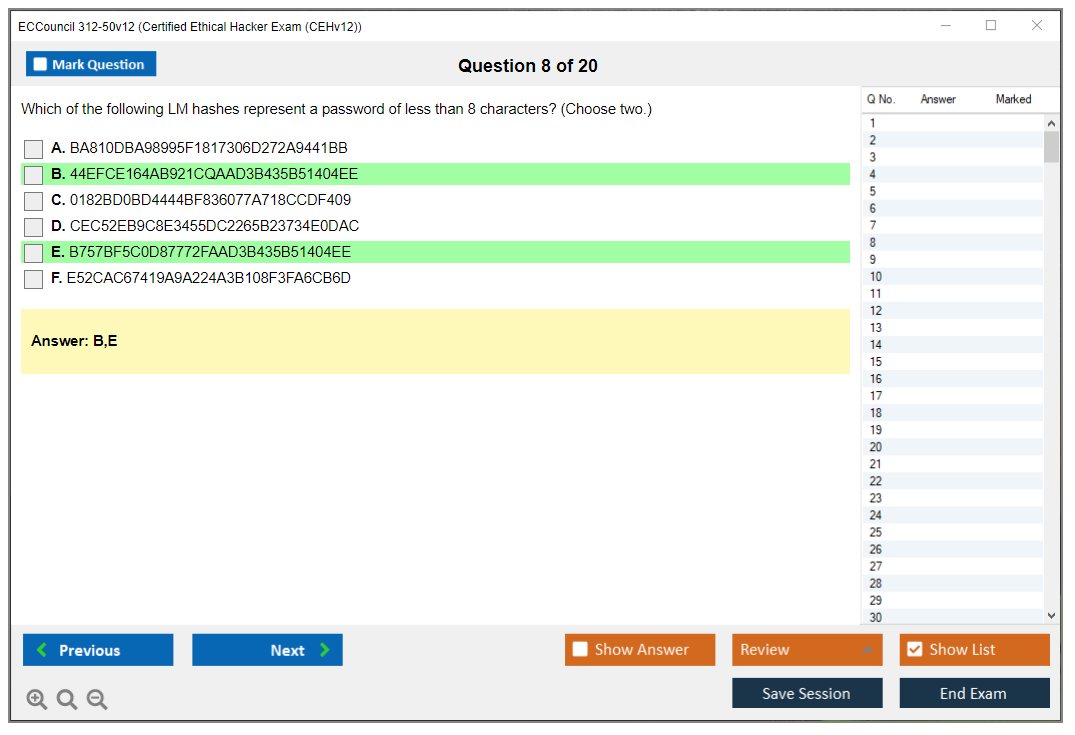
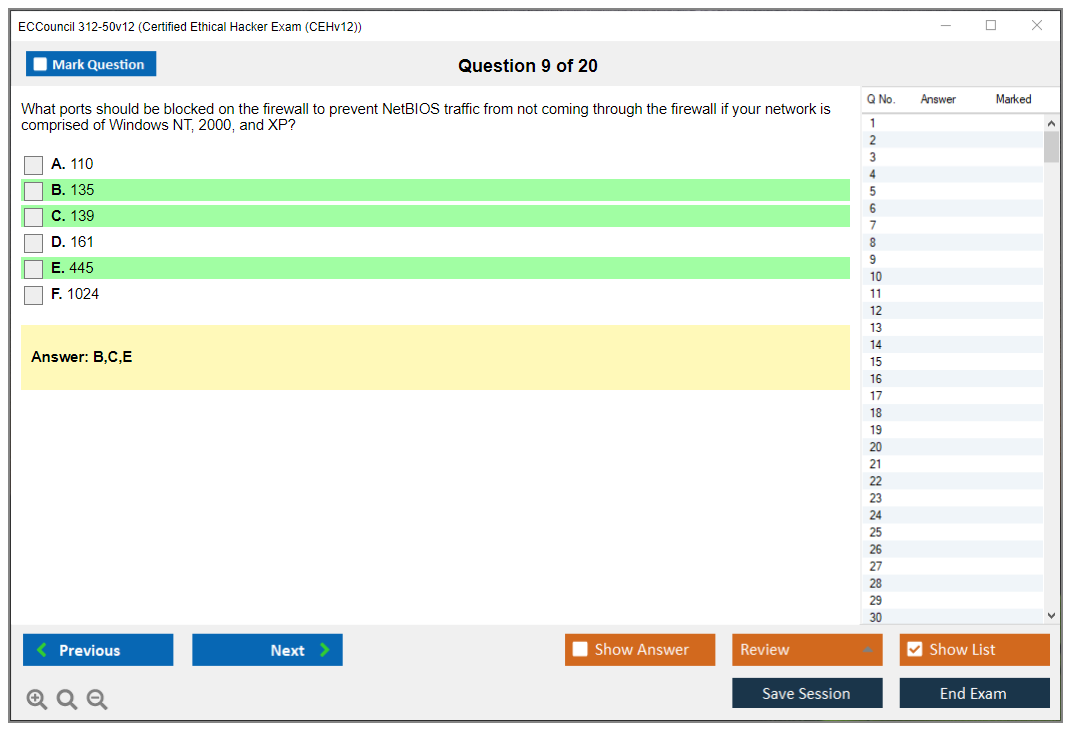
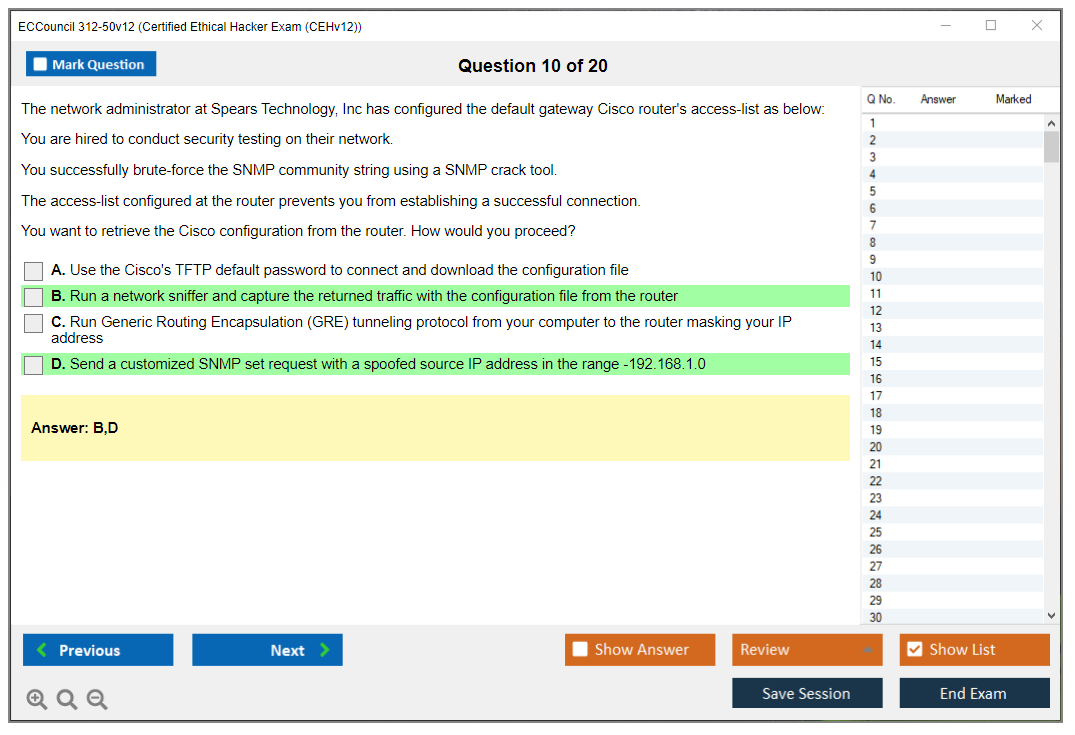
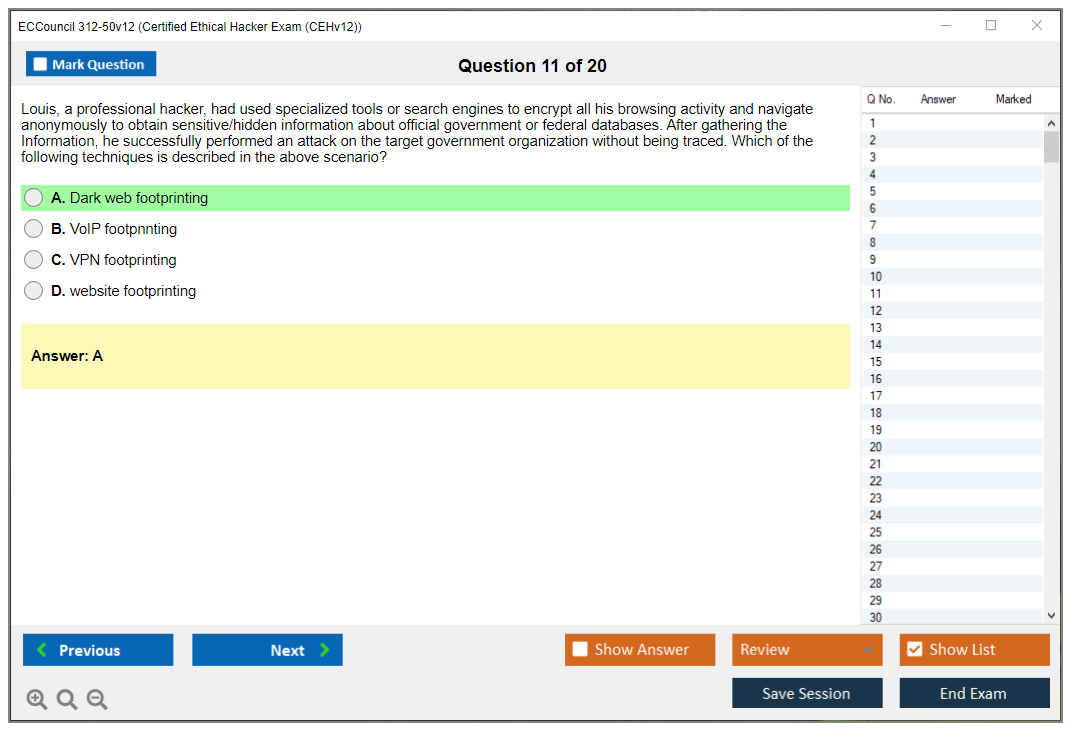
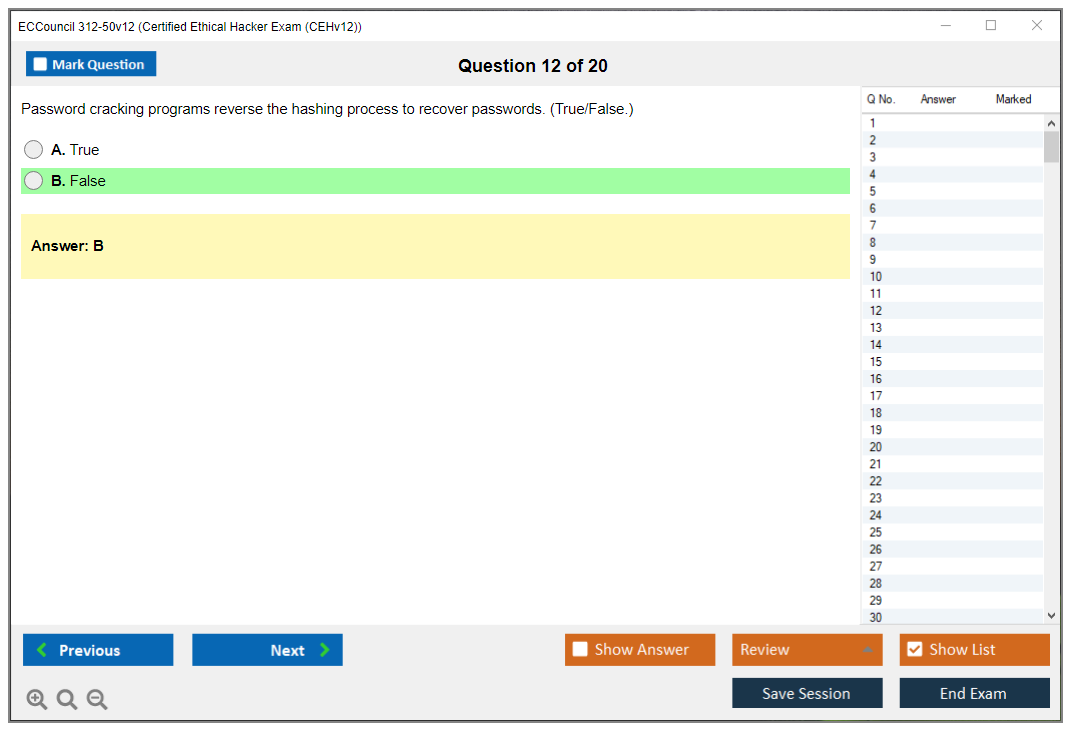
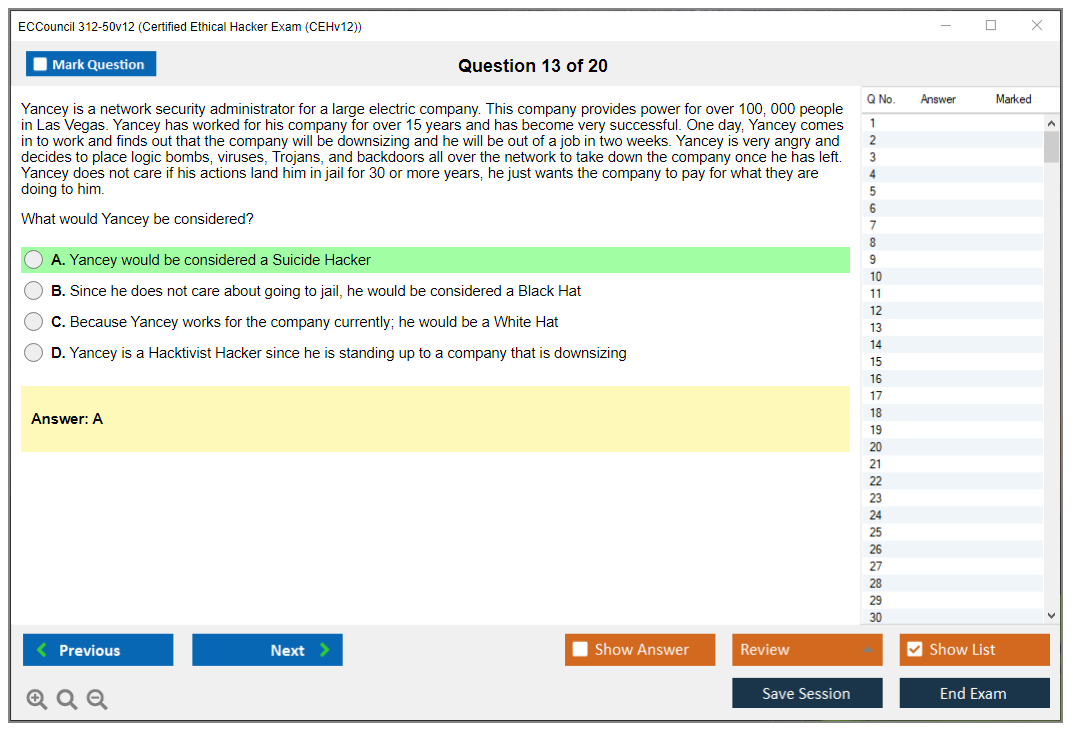
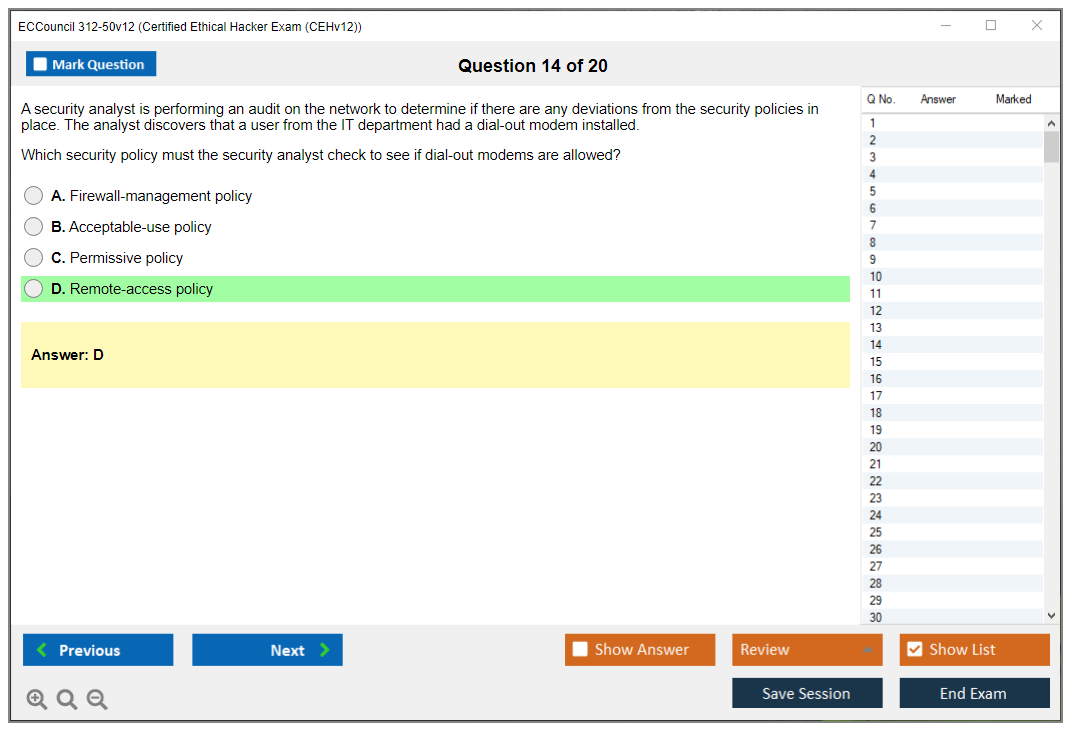
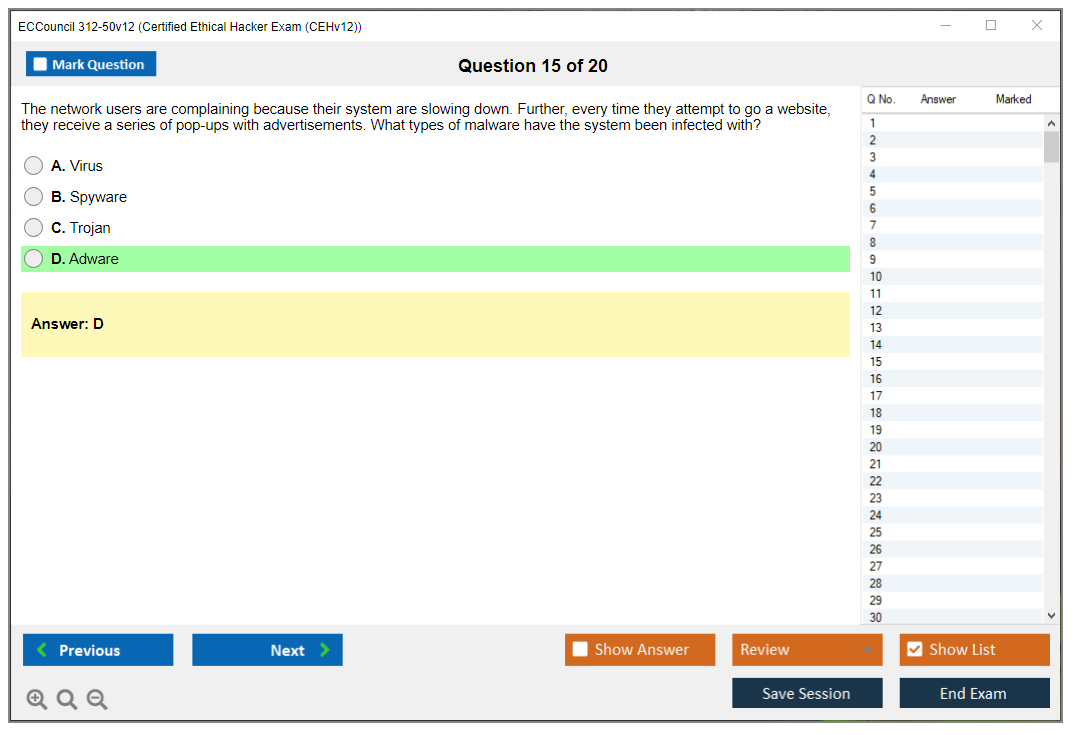
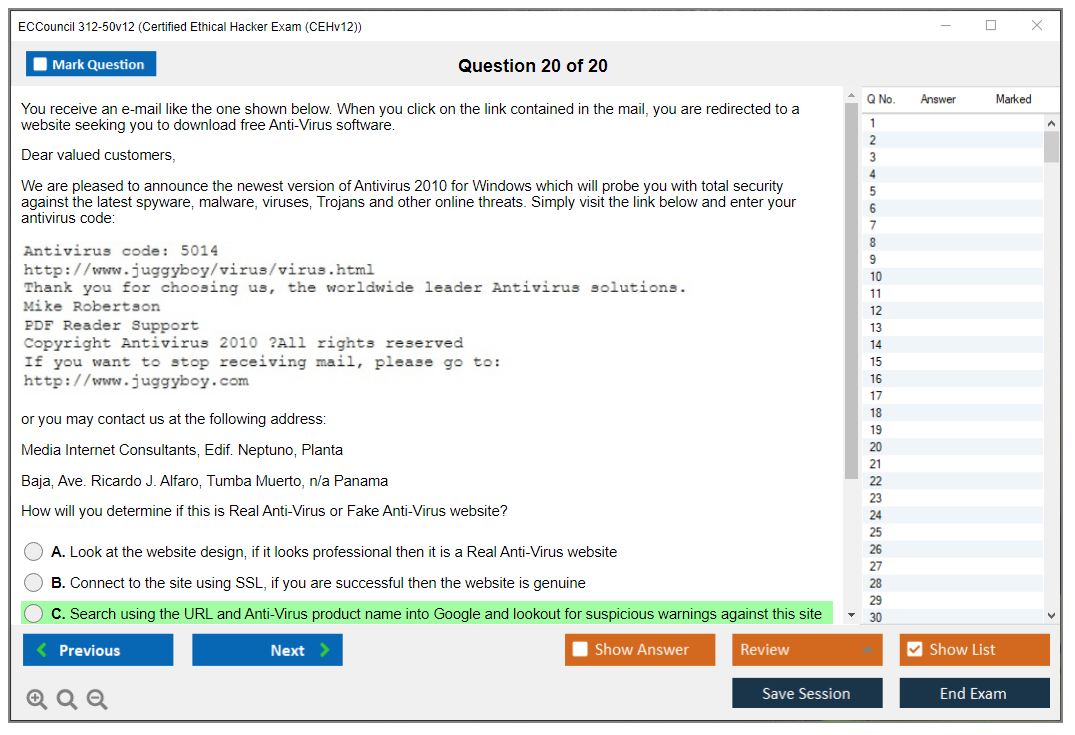
ECCouncil 312-50v12 (Certified Ethical Hacker Exam (CEHv12))
EC-Council 312-50v12 (CEHv12) Exam Overview
The ECCouncil 312-50v12 CEH exam is the industry-recognized certification for ethical hacking professionals
Breaking into offensive security? The ECCouncil 312-50v12 CEH exam's probably on your list already. This credential validates skills in penetration testing, vulnerability assessment, and security analysis across modern attack vectors. Basically proving you can think like a hacker while staying on the right side of the law, you know?
The Certified Ethical Hacker v12 demonstrates you're capable of identifying weaknesses in target systems using identical knowledge and tools as malicious hackers, except lawfully and legitimately. Running Nmap isn't enough here. You've gotta understand reconnaissance methodologies, exploitation techniques, post-exploitation activities, plus documentation standards for client deliverables.
Honestly, the CEH ANSI accreditation makes this way more valuable than most people think. It ensures the certification meets rigorous standards set by the American National Standards Institute, making it compliant with ISO/IEC 17024 requirements and recognized by the U.S. Department of Defense Directive 8570.01-M. What's that mean? Government contractors and defense-related organizations actually require this for certain positions. That's massive if federal work or DoD contracts are what you're after.
What you're actually being tested on
The ethical hacking certification exam tests candidates on 20 full domains. Reconnaissance, scanning, enumeration, system hacking, malware threats, sniffing, social engineering, denial of service, session hijacking, web application attacks, SQL injection, wireless network hacking, mobile platform attacks, IoT vulnerabilities, cloud computing security, cryptography. The list keeps going.
Some domains get more weight than others based on current industry needs and emerging threat landscapes, which is why the EC-Council CEH blueprint weights different sections differently. Web application security and cloud stuff? You'll spend way more time there than on older attack vectors that aren't as prevalent anymore. I spent probably three times longer on web app security compared to wireless attacks, and that ratio made sense when I saw the actual exam.
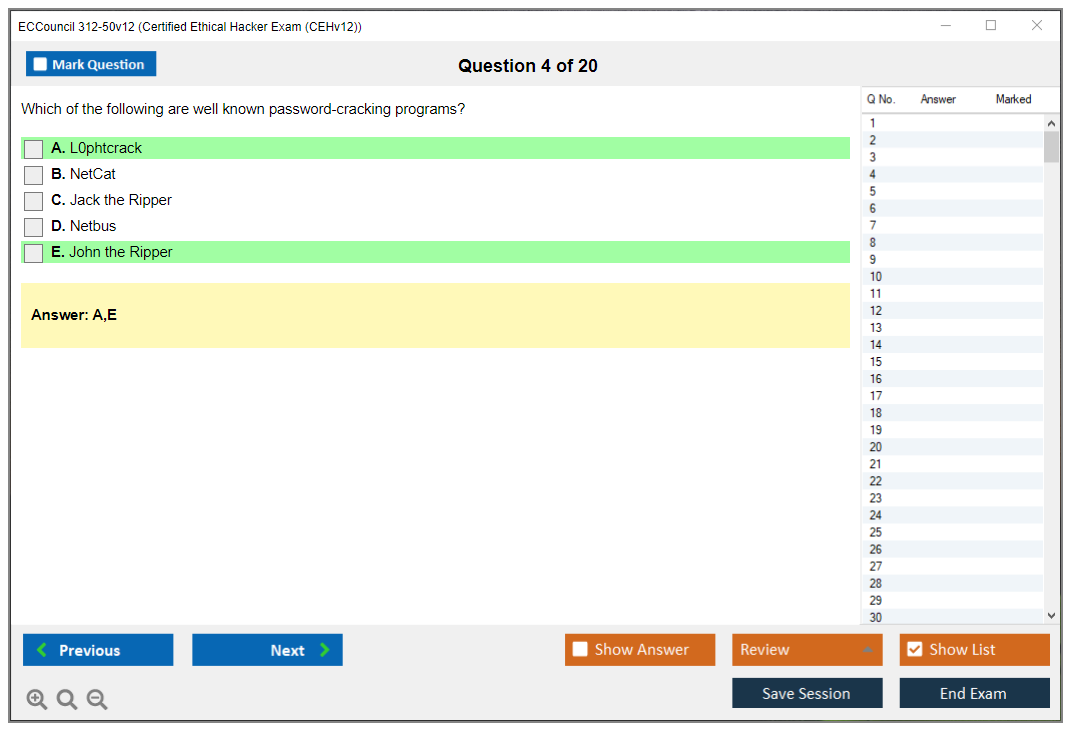
The certification validates practical knowledge of security tools including Nmap, Metasploit, Wireshark, Burp Suite, SQLMap, John the Ripper, Aircrack-ng, and a bunch of other reconnaissance, exploitation, and post-exploitation frameworks. You don't need expert-level mastery of every single tool, but you'd better understand what each one does, when you'd use it, and how to interpret the output it gives you.
Exam format and what to expect on test day
Four hours. 125 questions.
The CEH exam duration and questions consist of 125 multiple-choice questions to be completed within a four-hour time limit. You can take it through Pearson VUE testing centers or via online proctoring if you prefer testing from home. Four hours sounds like plenty of time, except some of those scenario-based questions will really make you think hard.
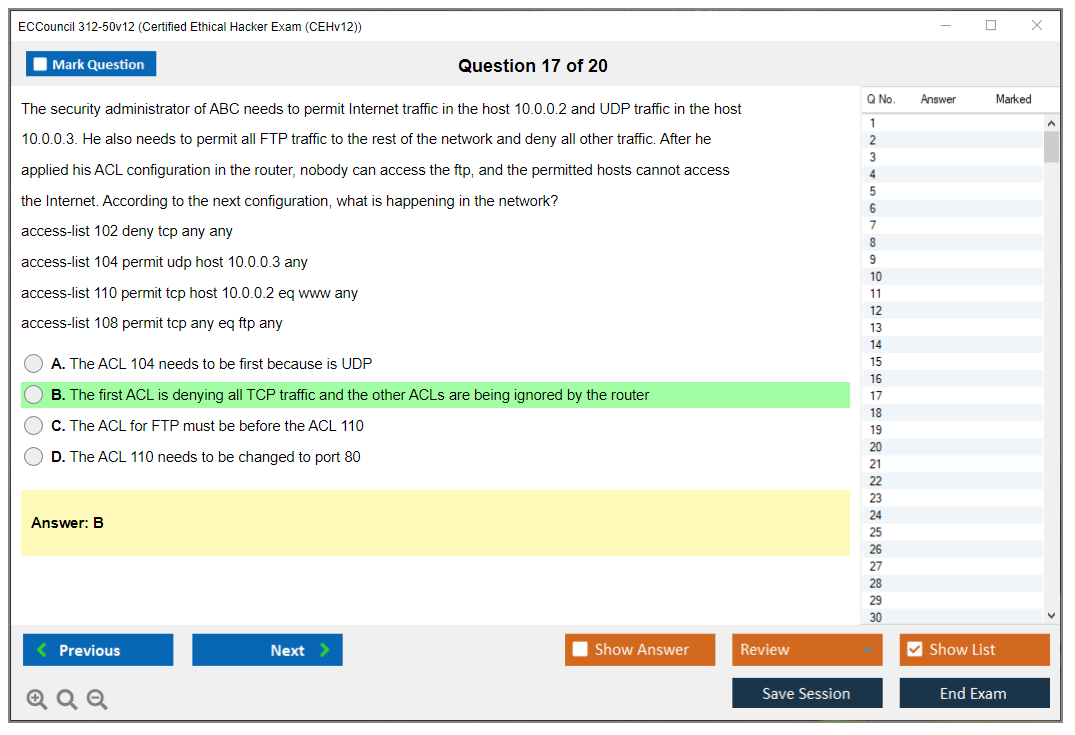
The exam format includes scenario-based questions that require candidates to analyze security situations, identify vulnerabilities, recommend appropriate countermeasures, and demonstrate understanding of attack methodologies. This isn't "what port does HTTP use?" level stuff. You'll get network diagrams, log excerpts, command outputs, and multi-part scenarios where you need to think through the entire attack chain from start to finish.
You receive immediate pass/fail notification upon completing the exam. Fail? You get detailed score reports indicating performance by domain to guide your next attempt. At least they tell you where you messed up so you can focus your study efforts for the retake.
Why CEHv12 matters right now
CEHv12 specifically addresses contemporary security challenges including cloud security misconfigurations, container vulnerabilities, API security weaknesses, artificial intelligence in cybersecurity, operational technology (OT) and industrial control system (ICS) security, and tactics used in advanced persistent threats (APTs). Previous versions were solid, don't get me wrong, but v12 updated the content to match what attackers are doing in 2023 and beyond.
Want to compare it to earlier versions? Check out the 312-50v11 exam breakdown. The differences are pretty significant. EC-Council keeps updating this to stay relevant, which is both annoying (your study materials might be outdated) and valuable (the cert stays current).
The exam targets IT professionals seeking to transition into offensive security roles. Network administrators, security administrators, security engineers, network engineers, security analysts. Basically anyone responsible for network infrastructure security who wants to level up. I've seen people come from helpdesk backgrounds and pass this, though they usually have solid networking fundamentals first.
The ethical part actually matters
Organizations benefit from CEH-certified professionals who can conduct authorized simulated attacks to identify vulnerabilities before malicious actors exploit them, thereby strengthening overall security posture. Here's the thing: the certification demonstrates commitment to ethical standards, as candidates must agree to EC-Council's Code of Ethics pledging to use their knowledge only for defensive purposes and authorized security assessments.
It's a checkbox during registration. But it's also legally binding. People have lost their certifications (and faced legal consequences) for using CEH knowledge inappropriately. Don't be that person, seriously.
What makes v12 different from older versions
CEHv12 updates from previous versions include expanded coverage of emerging technologies, updated attack techniques reflecting current threat actor methodologies, and alignment with the latest security frameworks and compliance requirements. The cloud security section got a massive overhaul. Honestly, container security wasn't even really covered in v10, now it's got dedicated objectives.
The exam focuses on hands-on skills through scenario-based questions that simulate real-world security challenges rather than simple memorization of facts or definitions. You can't just memorize the OSI model and call it done. You need to understand how attacks work at each layer and what defensive measures apply where.
Looking at other EC-Council certs? The 212-82 (CCT) is positioned as the entry-level option before CEH, while 312-39 (CSA) focuses more on defensive SOC analyst skills. Different career paths. Different knowledge domains.
Career impact and job market value
The ECCouncil 312-50v12 CEH exam credential carries significant weight in the cybersecurity job market. It often appears as a preferred or required qualification in penetration tester, security consultant, and ethical hacker job postings. Just search Indeed or LinkedIn for "CEH required." You'll see what I'm talking about.
Passing the exam demonstrates mastery of the five phases of ethical hacking: reconnaissance, gaining access, enumeration, maintaining access, and covering tracks. That's the methodology you'll use in actual penetration testing engagements, which explains why employers value it.
The certification complements other security credentials such as CompTIA Security+, CISSP, OSCP, and GIAC certifications. Security+ gets you in the door for entry-level roles. CEH proves you can do offensive work. OSCP shows you can actually exploit systems in a hands-on environment. Stack them strategically based on your career goals.
CEHv12 maintains relevance through EC-Council's continuous updates to exam content, ensuring the certification reflects current attack vectors, defensive techniques, and industry best practices. They refresh the exam content regularly, which means your cert stays valuable longer than some other credentials that haven't been updated in years.
CEHv12 Exam Cost and Registration
EC-Council 312-50v12 (CEHv12) exam overview
What the CEH certification validates
Certified Ethical Hacker v12? It's basically EC-Council's stamp saying you can think like an attacker, talk like a defender, and not panic when someone drops "enumeration" mid-meeting. This ethical hacking certification exam sprawls across security topics: recon, web apps, malware fundamentals, cloud-ish security angles. Parts are practical thinking. Other parts? Vocabulary drills and process memorization.
Who should take 312-50v12
Look, if you're eyeing SOC analyst positions, junior pentester gigs, security analyst roles, GRC folks needing offensive vocabulary, or even sysadmins pivoting toward security, the ECCouncil 312-50v12 CEH exam becomes that checkbox HR actually recognizes. It's common in government work and contracting where "CEH" pops up on job requirements even when daily tasks lean more blue-team than red-team. Not some magical career elevator. But useful, depending on your path.
Exam format (questions, time, delivery)
The ECCouncil 312-50v12 CEH exam gets delivered through the EC-Council Exam Portal for scheduling, and you'll sit it either at Pearson VUE testing centers or via online proctoring. Multiple-choice questions throughout. You're managing time constantly. CEH exam duration and question counts can shift based on version updates and policy tweaks, so confirm details inside your exam portal. Plan like it's a marathon session where mental stamina matters way more than people want to admit.
CEHv12 exam cost and registration
Exam voucher price and what's included
CEHv12 exam cost? First question everyone throws out, and it's definitely not cheap. The exam voucher alone typically falls between $950 to $1,199 USD when bought directly through EC-Council, and that final number bounces around based on your geographic region plus whatever promotional window's running at the time.
One standard voucher usually covers one attempt at the ECCouncil 312-50v12 CEH exam, portal access for scheduling, and eligibility to book either a Pearson VUE center seat or online proctoring. That's the package. One shot. Zero freebies if life derails your plans.
Vouchers typically expire 12 months from purchase date, which sounds generous until you've procrastinated 10 months, work gets chaotic, and suddenly you're cramming CEH v12 exam objectives at midnight with cold coffee. Book early. Reschedule later if needed.
Training bundle vs voucher-only options
Want official training bundled? Pricing jumps dramatically. Training bundles combining official courseware with the voucher typically land somewhere between $3,500 and $4,500, depending on delivery format: self-paced, instructor-led virtual, or in-person sessions. Expensive? Yeah. For some employers it's standard operating procedure. For individuals paying out of pocket, the thing is, it can really sting financially.
The iLearn bundle represents the common self-paced pathway. You're getting official EC-Council courseware, video lectures, hands-on labs through EC-Council's Cyber Range, practice questions, plus the exam voucher. The labs component is what people actually pay for, because reading about tools is one experience, but actually witnessing why a particular scan result matters? That's completely different. I once spent three hours troubleshooting why a scan wasn't returning what I expected, only to realize I'd configured the wrong subnet mask. Stupid mistake, but those errors teach you more than any clean lab walkthrough ever will.
Instructor-led training (ILT) bundles usually mean 5 days (40 hours) of live teaching, official courseware, lab access, and the voucher packaged together. Many ILT packages also include extended lab access after class ends, which matters tremendously because that week blows by fast and you'll forget half the tooling unless you practice again immediately. Fast sessions. Intense. Coffee-powered survival.
If you're self-studying and already meet CEH prerequisites through documented work experience, you can purchase the voucher separately and bypass the training requirement entirely. That's the cleanest cost-reduction approach, assuming you've got discipline and you're not starting from absolute zero knowledge.
Retake fees and rescheduling policies
Retakes? Where budgets go to die, honestly. If you don't pass attempt one, retake fees typically run $450 to $550, roughly half the original voucher price. EC-Council also sells an Exam Retake package during initial registration, bundling the first attempt with one retake at a lower combined price than purchasing a retake later separately. Not gonna lie, if you're anxious about CEH v12 difficulty levels, that bundle can be a genuine sanity purchase.
Rescheduling's straightforward but strict as hell. You can reschedule without penalty if you do it at least 72 hours before your appointment. Within that 72-hour window? You may forfeit the entire voucher. No-show policies are brutal too: miss the appointment and you lose the voucher, no refund, no transfer option. Confirm your timezone twice. Double-check your ID requirements. Show up early, seriously.
Cost reduction tactics people overlook: EC-Council occasionally runs promotional pricing during cybersecurity awareness months, conference periods, or through authorized training partners. Corporate training programs and volume purchases can qualify for discounts if an organization's putting multiple candidates through at once. Government and military personnel sometimes access special pricing through public sector workforce programs. And membership discounts exist too. Certain professional organizations like ISC², ISACA, or ISSA may offer discount codes dropping costs by 10 to 15%.
Payment-wise, you'll usually see major credit cards accepted, purchase orders for corporate buyers, and sometimes financing arrangements through third-party providers for individuals covering costs themselves. Authorized Training Centers (ATCs) can also price bundles competitively and add extras like boot camps, additional practice sets, or mentorship opportunities. Students enrolled in degree programs may qualify for academic pricing on training bundles, but you'll need proof like transcripts or an enrollment verification letter.
Passing score for 312-50v12
How CEH scoring works (variable cut score)
The 312-50v12 passing score isn't some single fixed number applying to everyone forever. CEH uses a variable cut score model, meaning the passing threshold can shift depending on the specific exam form you receive. So if you're hunting for one magic number online, you'll see ranges scattered everywhere, but the practical takeaway's simple: treat preparation like you need a strong margin, not barely squeaking by.
What to aim for in practice exam scores
For CEH practice tests, I like seeing consistent scores well above your personal comfort zone before you book anything. Aim higher than "barely passing" because test-day stress is absolutely real, wording can be really annoying, and a couple weak domains can drag your score down fast. If you're hitting solid scores across multiple full-length practice attempts, you're probably ready. Or at least as ready as you'll get without overthinking it.
CEH v12 difficulty, how hard is the exam?
Difficulty factors (breadth vs depth, scenario questions)
CEH v12 difficulty stems from breadth more than depth. It's a wide exam. You might face questions about web attacks, then pivot to wireless concepts, then touch incident response-ish scenarios, then bounce into cryptography basics. Some questions are scenario-flavored and want the "best next step," which gets tricky if you only memorized tool names without understanding workflows. The exam rewards people who understand attack sequences and defensive logic, not just terms isolated from context.
Common reasons candidates fail
Big one: treating it like trivia night at a bar. Another major issue: skipping hands-on repetitions entirely. People read CEH v12 study materials, nod along feeling confident, then completely freeze when questions describe actual scan output or a reconnaissance sequence. Also, candidates underestimate time management pressure, then rush the last chunk of questions and bleed points unnecessarily.
Who finds it easiest/hardest (IT, security, networking backgrounds)
Network and sysadmin folks usually handle fundamentals and protocol questions fine. Security analysts often excel at attack chains and defensive context questions. Total beginners struggle unless they've completed real labs, because the EC-Council CEH blueprint assumes you can interpret basic networking and OS behavior without stopping to Google every single acronym that appears.
CEH v12 exam objectives (blueprint / domains)
Domain-by-domain breakdown (mapped to official objectives)
CEH v12 exam objectives are published directly by EC-Council, and you should read them like a literal checklist for preparation. The EC-Council CEH blueprint lays out domains covering reconnaissance, scanning, enumeration, vulnerability analysis, web application attacks, system hacking concepts, wireless security, cloud security, cryptography, and operational/security process topics. Grab the official objective list and map your weak areas deliberately. Don't guess your coverage.
High-weight topics to prioritize
Prioritize content that shows up everywhere across domains: reconnaissance methodology, scanning concepts, web application basics (authentication, sessions, injection attacks), and common defensive controls. Also, spend quality time on "why this step comes next in the sequence" because that's where scenario questions actually live and test real understanding.
Tools and techniques commonly tested
You'll encounter tool names and what they accomplish, not necessarily how to execute every command-line flag. Think scanners, intercepting proxies, password attack concepts, and common enumeration approaches. Know what each tool category accomplishes. Know the purpose and workflow, not just memorized names.
Prerequisites and eligibility requirements
Work experience vs official training route
CEH prerequisites are non-negotiable, period. You qualify either by completing official EC-Council training, or by submitting an application documenting at least two years of verified information security work experience. That application route includes an extra fee around $100, so factor it into total cost calculations.
Required documentation (if applicable)
If you pursue the application route, you'll need documentation proving work experience, employer verification letters, and EC-Council approval before you can even purchase the voucher. Paperwork. Waiting periods. Plan accordingly.
Recommended prior knowledge (networking, OS, scripting)
You want solid networking fundamentals, comfort working through both Windows and Linux environments, and enough scripting literacy to understand what a payload or a one-liner's actually doing when executed. You don't need developer-level skills. You do need to read technical text without your brain melting.
Best study materials for CEHv12
Official EC-Council materials (courseware, iClass, labs)
Official courseware combined with Cyber Range labs provides the most direct match to actual exam content and format. If your employer covers costs, it's an easy decision. If you're paying personally, you can still mirror significant value with a home lab setup plus targeted reading, but the official path remains the straightest line to exam readiness.
Books and reference guides (what to use and how)
Pick one solid reference covering networking and web security basics, then use the CEH blueprint to keep yourself honest about coverage gaps. Random internet notes are fine for supplementing, but they scatter your attention if they become your primary source.
Hands-on labs (home lab, VMs, legal practice platforms)
Run VMs locally. Break things legally in isolated environments. Use practice platforms explicitly designed for training purposes. The goal's comfort: seeing ports, services, headers, and logs and knowing immediately what they mean without hesitation.
Study plan (2-week / 4-week / 8-week options)
Two weeks is a sprint only for experienced folks already living in security daily. Four weeks is realistic for most working professionals if you study most days consistently. Eight weeks is safer if you're newer to the field, because repetition's what makes tool output stop looking like incomprehensible noise.
CEH practice tests and exam prep strategy
What makes a good CEH practice test
Good practice tests match objective coverage accurately and explain why answers are correct, not just marking right or wrong. Bad ones just dump questions without context. Explanation quality matters tremendously because you're building judgment and pattern recognition, not creating flashcards.
Practice test cadence (diagnostic, targeted, full-length)
Start with a diagnostic exam to identify gaps. Then complete targeted quizzes by individual domain. Finish preparation with full-length timed sets so your brain adapts to the actual pace and mental endurance required.
Review method (missed-question log, objective mapping)
Keep a missed-question log religiously. Map each miss back to a specific objective. Fix the underlying cause, not just the symptom. Sometimes the cause is "I don't actually understand HTTP request structure." Sometimes it's "I rushed and misread."
Final-week checklist and exam-day tips
Final week? Tightening weak domains, prioritizing sleep, and completing one or two realistic timed practice runs. Exam day itself, read carefully, watch the clock without obsessing, and don't second-guess everything into complete oblivion.
CEH renewal (maintaining certification)
Renewal cycle and continuing education (ECE) credits
CEH renewal requirements tie directly to EC-Council's continuing education program, where you earn ECE credits over the renewal cycle. Track your credits as you accumulate them, not at the last possible minute when panic sets in.
Renewal fees and deadlines
There are renewal fees and strict deadlines, and missing them is an annoying way to lose active certification status. Put reminders on your calendar now. Seriously, do it.
Activities that count toward renewal (training, conferences, teaching)
Training courses, attending conferences, and teaching or presenting on security topics can count toward ECE credit, depending on EC-Council's current rules. Save proof documentation as you go: receipts, certificates, attendance confirmation emails.
FAQ (quick answers)
CEHv12 cost, passing score, and difficulty summary
How much does the CEHv12 (312-50v12) exam cost? Usually $950 to $1,199 for a voucher alone, with training bundles significantly higher. What is the passing score for the EC-Council 312-50v12 exam? It's a variable cut score system, so aim for strong practice results with margin. Is the CEH v12 exam hard for beginners? It can be challenging, mostly because it's broad in scope and tool-heavy in focus.
Best study materials and practice tests recap
Official courseware and Cyber Range labs match the exam most closely. Add a home lab environment and high-quality CEH practice tests with detailed explanations for missed questions.
Objectives, prerequisites, and renewal recap
What are the CEH v12 exam objectives and domains? Follow the EC-Council CEH blueprint and study by domain coverage. What are CEH prerequisites? Official training completion or a verified two-year work experience application (plus approximately $100 fee). How do I renew my CEH certification and keep it active? Earn ECE credits through approved activities, pay renewal fees on time, and meet all deadlines. CEH ANSI accreditation also means the maintenance process is taken seriously by employers and regulators, so treat it like a real part of the certification, not some annoying afterthought.
312-50v12 Passing Score and Scoring Methodology
312-50v12 passing score and scoring methodology
Okay, here's what drives people nuts. EC-Council doesn't publish a fixed passing score for the 312-50v12. Like, at all. They could make it simple, but nope, because the scoring system's way more complex than just "nail 70% and you're certified."
The exam uses scaled scoring. Zero to 1000. Most folks who pass report scaled scores floating between 600 and 850, though that threshold actually shifts depending on which specific questions land on your exam. So yeah, two people testing the same afternoon might face completely different passing bars. Seems unfair until you understand why.
How the scaled scoring actually works
IRT. Item Response Theory.
Fancy terminology for saying not all questions carry identical weight. Harder questions pump up your final score more than easier ones, and this isn't some random decision. It's rooted in psychometric analysis tracking how thousands of test-takers perform on each individual question over months, honestly years sometimes.
When a question proves brutal for most candidates (low pass rate across the board), it gets weighted more heavily in the algorithm. Easy questions that nearly everyone answers correctly? Those barely budge your final score. I mean, they contribute something but not much.
This actually creates a fairer system across different exam versions, which is the whole point. If you happen to draw a particularly nasty set of questions, you won't need to answer as many correctly in raw terms to hit the passing threshold. Someone who gets an easier version needs a higher raw score to reach that same scaled score. The system adjusts for difficulty automatically so everyone's held to the same competency standard regardless of which specific questions they face.
My cousin failed this exam twice before finally figuring out the scoring wasn't about memorizing answers but actually understanding the concepts deeply enough to handle whatever variation showed up. Took him three tries and probably a thousand dollars in fees before that clicked.
What you see when you finish
Immediate results. Done.
No waiting weeks for some letter in the mail or refreshing your email obsessively. Soon as you submit that final question at the Pearson VUE center (or through online proctoring if you went that route), the screen tells you pass or fail along with your scaled score right there.
Pass and you'll get your digital certificate within 5-7 business days via email, plus access to EC-Council's certification portal where you can download the official certificate and grab those digital badges for LinkedIn or wherever you want to flex.
Fail and you actually get something useful: a detailed score report breaking down your performance across all 20 exam domains. It won't tell you exactly how many questions you missed in each area (they protect that data), but it categorizes your performance as "below proficient," "proficient," or "above proficient" for each domain.
This domain breakdown's really helpful for planning your retake, honestly. You can see if you completely bombed cryptography or if web application hacking was your weak spot. Much better than just getting a fail notice with zero context about where you struggled.
Why practice scores matter differently
I always tell people to aim for 85-90% consistency on 312-50v12 practice tests before booking the real exam. Not gonna lie, that might seem overly conservative, but here's the thing: practice exams don't perfectly mirror the difficulty distribution of the live test.
Most practice materials lean easier. Period. They also don't use IRT scoring, so you're seeing raw percentage scores that don't translate directly to scaled scores. Getting 75% on a practice test doesn't mean you'd score 750 on the real thing. Could be higher, could be lower, depends entirely on which questions you missed and their relative difficulty weights.
When you're consistently hitting 85-90% on quality practice materials, you've built enough buffer to handle the difficulty curve and question variations you'll face on exam day. The CEH-v11 materials can supplement your prep too, since core concepts haven't changed drastically between versions, though obviously newer attack vectors and tools get added.
Time management and the scoring reality
Four hours. 125 questions.
That's roughly 1.9 minutes per question, which sounds generous until you hit those scenario-based questions presenting a three-paragraph case study followed by four answer choices that all seem equally plausible if you're not 100% confident in the underlying concept.
Every single question counts toward your final score. There aren't any experimental or unscored questions mixed in like you see with some other certifications. All 125 questions directly impact whether you pass or fail, which cranks up the pressure honestly.
No negative marking though, which is huge. If you're stuck between two answers and time's running out, guess. You lose absolutely nothing by guessing wrong except the opportunity to have picked the right answer. Leaving it blank has the exact same outcome as selecting the wrong choice, so always bubble something in.
You can mark questions for review and circle back before submitting. Smart strategy: blast through the questions you're confident about first, mark the tough ones, then allocate your remaining time to work through those carefully. Don't get stuck on question 23 for eight minutes when you've got 102 questions still waiting. That's a fast track to running out of time.
The minimum correct answer mystery
EC-Council won't tell you how many questions you need to answer correctly in raw terms, and honestly that number's meaningless anyway because of the weighted scoring. You might need to answer 90 questions correctly if they're mostly easy ones. Or maybe just 75 if you drew a harder set.
This bothers some people. A lot.
But I actually think it makes sense once you accept the philosophy behind it. The focus shifts from "memorize enough to hit 70%" to "actually learn this material thoroughly across all domains." You can't game the system by identifying supposedly low-weight topics to skip, because question weights aren't published and shift based on ongoing performance data.
Fairness across exam versions
Statistical analysis ensures no exam version is significantly easier or harder overall. EC-Council runs extensive validation to maintain consistent standards across thousands of exam administrations. When they detect a question performing oddly (too easy, too hard, or not discriminating well between strong and weak candidates), they adjust its weight or retire it entirely.
The passing standard itself comes from job analysis studies and subject matter expert panels. These groups determine what minimum competency level an entry-level ethical hacking professional should demonstrate in real-world scenarios. So the exam isn't arbitrarily difficult. It's calibrated to actual job requirements from organizations hiring ethical hackers.
Partial credit doesn't exist here
Each question is binary. Correct or incorrect.
You pick the single best answer from the multiple-choice options. No partial credit for being "kind of right" or selecting the second-best answer when two choices seem reasonable.
This makes question design absolutely key, and EC-Council writes distractors (wrong answers) that are really plausible if you have incomplete knowledge. The correct answer isn't just technically accurate. It's the best answer given the specific scenario presented, which sometimes means the "most correct" rather than the "only correct" option.
Comparing with other EC-Council exams
If you're looking at the broader EC-Council certification path, the 212-82 for CCT uses similar scaled scoring methodology. So does the 312-39 for SOC Analyst. Once you understand how one EC-Council exam scores, you basically understand them all, which is nice if you're planning to stack certifications.
The 312-50v13 continues this same approach too, though obviously with updated content reflecting newer tools and techniques. The scoring methodology remains consistent across versions, so your experience with v12 prepares you for how v13 will work if you eventually update.
What your score report won't tell you
You won't see which specific questions you missed. You won't get explanations for the correct answers. You won't see question-by-question feedback showing where you went wrong.
Just the domain-level performance breakdown and your overall scaled score. That's it.
Some people find this incredibly frustrating, and I get it, but it protects exam integrity. If candidates got detailed feedback on specific questions, those questions would leak immediately and lose their effectiveness for future test-takers. The exam pool would become compromised within months.
Bottom line for exam prep
Aim high on practice materials. Like, really high. Build thorough knowledge across all 20 domains rather than trying to calculate minimum passing requirements or identify "safe" areas to ignore. Use the 312-50v12 practice exam pack to assess readiness, but don't obsess over predicting your exact scaled score based on practice percentages.
Focus on actually learning the material deeply, understanding why answers are correct rather than just memorizing them, and the score takes care of itself. Honestly, that's the only reliable strategy with scaled scoring systems.
CEH v12 Difficulty. How Hard Is the Exam?
EC-Council 312-50v12 (CEHv12) exam overview
The ECCouncil 312-50v12 CEH exam is the multiple choice version of Certified Ethical Hacker v12, and honestly it's designed to prove you can think through attacks and defenses without needing to pop shells live like a practical exam would demand. It's an ethical hacking certification exam that tries covering the whole "hacking methodology" arc from recon all the way to reporting, with enough tool awareness that you're not sitting there guessing what Nmap or Wireshark even does.
What CEH validates. A broad, job-ish understanding of how attackers approach networks, hosts, apps, and users, plus what defenders should see and do about it when things go sideways.
Who should take 312-50v12. Security analysts, SOC folks, junior pentesters, sysadmins who keep getting pulled into vuln management, and I mean anyone who wants a recognized checkbox cert without committing to a full practical-only grind where you're hacking boxes for 24 hours straight.
Exam format. You're looking at CEH exam duration and questions that typically show up as 125 questions in 240 minutes. Four hours sounds generous on paper, but it really isn't because many items are mini-stories with logs, scan output, and "what next" decision points that actually make you think, not just spit back trivia you memorized. I once spent three minutes on a single Wireshark question trying to spot the one malicious packet in a sea of normal HTTP traffic, and that's the kind of rabbit hole that eats your time if you're not careful.
CEHv12 exam cost and registration
The CEHv12 exam cost depends on how you buy it, and the thing is, voucher-only is the cheapest path if you already know your stuff. EC-Council often pushes bundles that include official courseware, iLabs, and attempts though.
Exam voucher price and what's included. Usually you're paying for the voucher plus proctoring. Sometimes a retake option if you bought a package deal upfront.
Training bundle vs voucher-only options. Look, if you're newer to security work, the bundle hurts the wallet but reduces chaos because you get aligned CEH v12 study materials and labs that match the EC-Council CEH blueprint perfectly. If you're already in security work daily and know your tools? Voucher-only can be totally fine.
Retake fees and rescheduling policies. Not gonna lie, this is where people get burned hard. Read the fine print before you schedule your test date. Changing dates late can cost real money, and retakes aren't "cheap oops" buttons in most regions.
Passing score for 312-50v12
People want a clean number for the 312-50v12 passing score, like "you need 70%" or whatever. CEH doesn't really give you that comfort.
How CEH scoring works (variable cut score). It's a variable cut score model, which basically means the pass mark can shift based on the form you get. Same exam, different question pools, different cut line. So you plan like you need to comfortably clear it, not squeak by with the bare minimum and hope.
What to aim for in practice exam scores. I'd aim for consistent 80%+ across timed CEH practice tests. Test day nerves plus weird wording and second-guessing can drop your score fast, trust me.
CEH v12 difficulty. How hard is the exam?
CEH v12 difficulty is usually rated "intermediate to advanced", but not because it's insanely deep on one topic like exploit development. It's hard because it's wide as hell. The exam expects you to connect concepts to real-world situations, like a real ticket where you've got five clues and a deadline and somebody asking you what broke and what you're doing about it.
Breadth vs depth. The exam covers 20 domains in the CEH v12 exam objectives, and honestly the pain point is context switching. Recon, scanning, enumeration, web vulnerabilities, wireless, cloud-ish stuff, containers, IoT, malware basics, cryptography, and incident-ish thinking. You rarely go super deep into exploit dev or writing shellcode. You do need to know what you're looking at and what you'd do next, which is different.
Scenario questions matter. A significant chunk is scenario-based, so you're interpreting what a scan implies, picking the next logical step, or identifying a likely vuln based on tool output you're seeing. This is where pure memorization falls apart completely. You're not being asked "what port is HTTPS", you're being asked "given this Nmap output with these flags and services, what service is exposed, what's the actual risk, and what should you test next to confirm". Same deal with Wireshark captures, Metasploit console snippets, SQLMap results, or a web server log excerpt that hints at injection attempts.
Tool output interpretation. Expect questions that show Nmap flags and results, Wireshark filters or packet captures, and web testing flow that maps to OWASP categories. You don't have to be a wizard with every switch and option. You do have to be fluent enough that you can read it under time pressure and not freeze up wondering what you're even looking at.
Time pressure is real. 125 questions in 240 minutes works out to about 2 minutes each. Many questions want more than that because the scenario text is dense and the distractors are "kinda plausible if you misread one word". The difficulty curve is also pretty flat throughout. No warmup section. No victory lap at the end. You're on the clock the whole time, and yeah, it's exhausting.
Compared to other certs. This Certified Ethical Hacker v12 exam is more accessible than OSCP because you're not required to exploit live machines in a lab for points and write a penetration testing report. But it's definitely more challenging than Security+ because it expects hacking workflow understanding, tool awareness, and attacker thinking patterns, not just security vocabulary and acronym soup.
Common reasons candidates fail
Inadequate hands-on practice is number one. People read about tools but never actually run them in a lab environment. Then the exam drops a screenshot-like snippet with real output and they can't tell what matters or what's just noise, so they guess and hope.
Over-reliance on dumps. Look, trying to memorize brain dumps is a trap that catches people every cycle. EC-Council updates question pools, the wording changes between versions, and anti-cheating measures are definitely a thing now. Also, scenario questions punish shallow recall because they ask when and why you'd do something, not just what the tool name is.
Bad time management. Four hours disappears fast when you overthink early questions or get stuck on one weird item. Running out of time is a super common fail story, along with misreading tricky wording and missing key qualifiers like "best next step" versus "most likely cause" versus "what should you do first".
Weak fundamentals. Candidates without solid networking knowledge, Windows/Linux basics, and light scripting literacy tend to struggle across multiple domains. TCP/IP, DNS, DHCP, HTTP/HTTPS, basic ports and protocols. You need that foundation or you're guessing on half the questions.
Who finds it easiest or hardest
If you've got 2 to 3 years in security ops, vulnerability assessment, or network administration, the exam usually feels moderate to manageable. You've seen ports and services, read logs, dealt with auth problems, handled patch issues, debugged web app weirdness. That background makes the scenarios feel familiar, which matters way more than knowing every single acronym.
Career changers with non-technical backgrounds often struggle hard. Especially if they learned from videos only and didn't build a home lab or get hands-on practice. Pure theory doesn't hold up when the question is basically "here's evidence from three different tools, what do you do and why". Foundations help a lot. So does muscle memory from repetition.
CEH v12 exam objectives (blueprint / domains)
The CEH v12 exam objectives map to the official domains published by EC-Council. Some areas show up way more than others in practice. Web application security, network attacks, and system hacking tend to be heavier weighted than niche topics like IoT or certain cloud edge cases, even though emerging tech like containers and cloud security can still appear and surprise people who only worked traditional on-prem networks their whole career.
Tools and techniques commonly tested. Nmap for scanning, Wireshark for packet analysis, Metasploit for exploitation concepts, SQLMap for injection testing. Also password attacks and cracking, enumeration patterns, basic malware concepts, and mapping actions to frameworks like OWASP Top 10, NIST guidelines, and MITRE ATT&CK tactics. You might see CVE references too. You need to know what a CVE identifier is and what it implies for risk, not memorize random CVE numbers like it's trivia night.
Prerequisites and eligibility requirements
CEH prerequisites depend on your route into the exam. If you go through official EC-Council training, you typically meet eligibility automatically through that channel. If you don't take their training? You may need to document security-related work experience depending on EC-Council policy at the time you apply, which changes periodically.
Recommended prior knowledge. Networking fundamentals for sure. Windows and Linux command line comfort, and basic scripting logic in something like Python or Bash. Not pro-level coding. Just enough to read a one-liner and understand what it's actually doing when it runs.
Best study materials for CEHv12
Official EC-Council materials. If you can get the official courseware plus iLabs access, it aligns really well with the EC-Council CEH blueprint and reduces the "study the wrong stuff for three months" risk. iLabs style practice is especially useful for building familiarity with tool output and command syntax.
Books and reference guides. Pick one primary book and stick with it cover to cover, then use official docs and RFCs as needed for deep dives. Too many resources at once becomes procrastination disguised as productivity.
Hands-on labs. Home lab with VMs. Just do it. Legal practice platforms like HackTheBox or TryHackMe work too. Recreate Nmap scans against your own VMs, capture packets with Wireshark, run SQLMap against intentionally vulnerable training targets, and read the output until it feels boring and automatic. Boring is actually good here.
Study plan options. 2-week cram is rough and usually fails because the breadth is overwhelming and you can't absorb scenario thinking that fast. 4-week plan? Doable if you already have solid IT fundamentals and you're studying multiple hours daily. 8 to 12 weeks with consistent daily lab time is where most people start feeling calm and confident. That's when the ECCouncil 312-50v12 CEH exam stops feeling like a lottery and starts feeling like something you can actually pass on merit.
If you want targeted drill practice under time pressure, I've seen people pair their studies with a question pack like the 312-50v12 Practice Exam Questions Pack because it forces realistic timing and exposes weak domains fast. At $36.99 it's an easy add-on compared to the exam fee itself.
CEH practice tests and exam prep strategy
What makes a good practice test. Explanations matter more than the score you get. If the practice test doesn't teach you why an answer is right and why the others are wrong, it's just a dopamine machine giving you false confidence.
Cadence. Start with a diagnostic test early to see your gaps. Do targeted question sets by domain to shore up weak areas, then full-length timed runs to build pacing and endurance. Log every missed question. Map them back to the objectives. Fix the root cause knowledge gap, not just the symptom of getting one question wrong.
Review method. Keep a missed-question log with three fields: what the question was really asking (not what you thought it asked), what clue or keyword you missed that would've pointed you to the right answer, and what you'll do differently next time you see that pattern. That last part is literally the whole exam strategy.
Final-week tips. Do at least one full 125-question timed run in realistic conditions. No breaks, no phone, just you and the clock. Practice reading carefully while moving fast, which sounds contradictory but it's the skill that matters most. Sleep properly. Seriously, don't cram the night before.
If you need more timed reps without overcomplicating your study plan, the 312-50v12 Practice Exam Questions Pack is a straightforward way to pressure-test your pacing and recall without setting up yet another lab rabbit hole that eats your time.
CEH renewal (maintaining certification)
CEH renewal requirements are based on EC-Council's continuing education program, which runs on cycles. You renew on a schedule, earn ECE credits through approved activities, and pay renewal fees by deadlines that they set. Miss deadlines and things get annoying and expensive fast.
Activities that count. Training courses, conferences and events, teaching or speaking, and some work activities depending on the rules that year. Track your credits as you earn them. Don't "save it for later" because you'll forget and scramble at the deadline.
FAQ (quick answers)
How much does the CEHv12 (312-50v12) exam cost? CEHv12 exam cost varies by voucher versus bundle, your region, and whatever promos are running. Budget extra for potential retakes and reschedules just in case.
What is the passing score for the EC-Council 312-50v12 exam? The 312-50v12 passing score uses a variable cut score model, so aim for strong margins in practice. Like 80%+ instead of a razor-thin target score.
Is the CEH v12 exam hard for beginners? For true beginners with no IT background? Yes, it's hard. CEH v12 difficulty spikes way up if you lack networking and OS fundamentals and haven't touched the actual tools in a lab.
What are the CEH v12 exam objectives and domains? They span 20 domains across the ethical hacking workflow from recon to reporting. The CEH v12 exam objectives often weight web app security, network attacks, and system hacking more heavily than IoT or mobile.
How do I renew my CEH certification and keep it active? Meet CEH renewal requirements with ECE credits, pay the fees on time, and don't wait until the last month to figure it out. If you're prepping for the exam now, practice under time pressure early and often. If you want extra timed reps to build confidence, the 312-50v12 Practice Exam Questions Pack is a decent way to keep yourself honest without burning out on lab setup.
CEH v12 Exam Objectives and Domain Breakdown
CEH v12 exam objectives and what they actually test
The CEH v12 exam objectives span 20 domains that follow the ethical hacking methodology from initial reconnaissance through maintaining access and covering tracks. This breadth is why people find the ECCouncil 312-50v12 CEH exam challenging. No getting around it. Each domain targets specific phases you'd encounter in real penetration testing engagements, though the exam weights them differently based on what EC-Council thinks matters most in actual security work.
Some domains get maybe 2-3 questions. Others dominate entire sections. The EC-Council CEH blueprint doesn't publish exact percentages anymore (stopped that practice a while back), but anyone who's taken it knows web application security and system hacking eat up a big chunk of your 125 questions. Probably close to 35% combined if I had to guess. You're looking at scenario-based questions that describe an attack vector or security issue, then ask you to identify the technique, select the appropriate tool, or recommend a countermeasure.
Domain 1 sets the foundation (and tests compliance knowledge)
Domain 1: Introduction to Ethical Hacking covers terminology that sounds basic but trips people up when worded carefully on exam questions. Distinguishing between vulnerability assessments and penetration tests? Not the same thing, even though people use them interchangeably in casual conversation. Vulnerability assessments identify weaknesses. They catalog them, rate them, document them. Penetration tests actively exploit them to demonstrate impact.
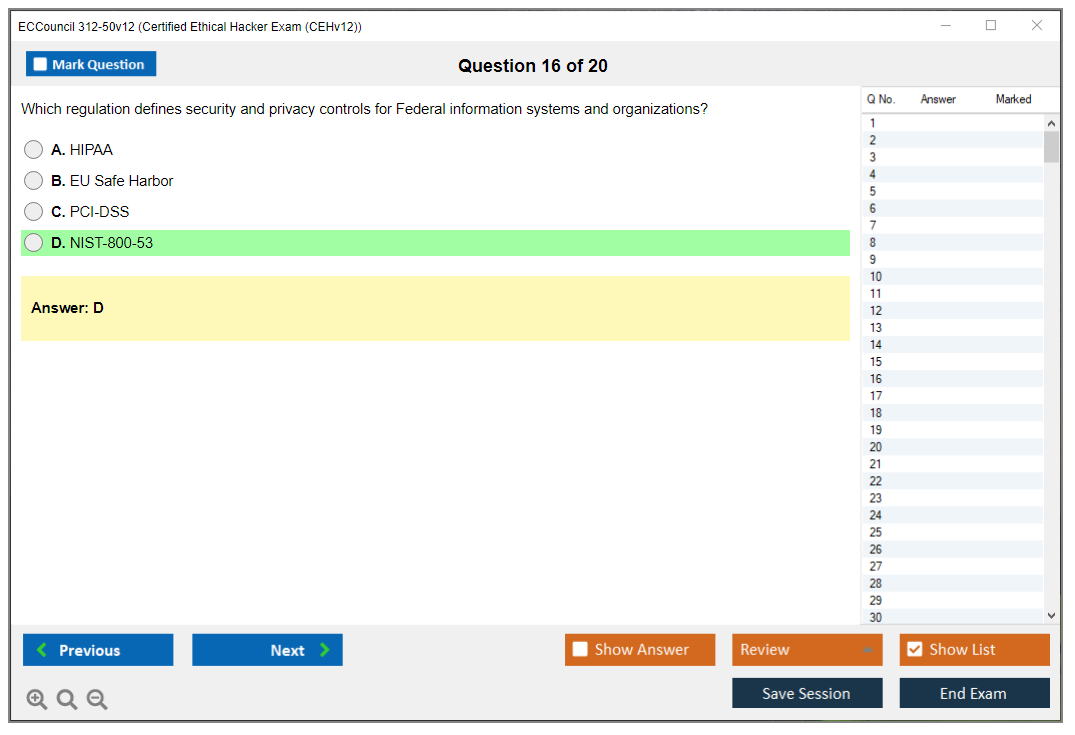
The domain covers security testing types, ethical hacking phases (reconnaissance, scanning, gaining access, maintaining access, clearing tracks), and security controls categorized as administrative, technical, and physical. Compliance requirements like GDPR, HIPAA, and PCI-DSS appear here too. This catches IT folks off guard because they expect pure technical content. I mean, you're studying hacking and suddenly there's regulatory framework questions. You need to know what data protection regulations require and how ethical hackers fit within organizational security frameworks, including documenting scope and obtaining proper authorization. This domain also addresses the scope of ethical hacking engagements and legal considerations before testing begins. Rules of engagement, NDAs, that whole side of things.
Reconnaissance and footprinting techniques
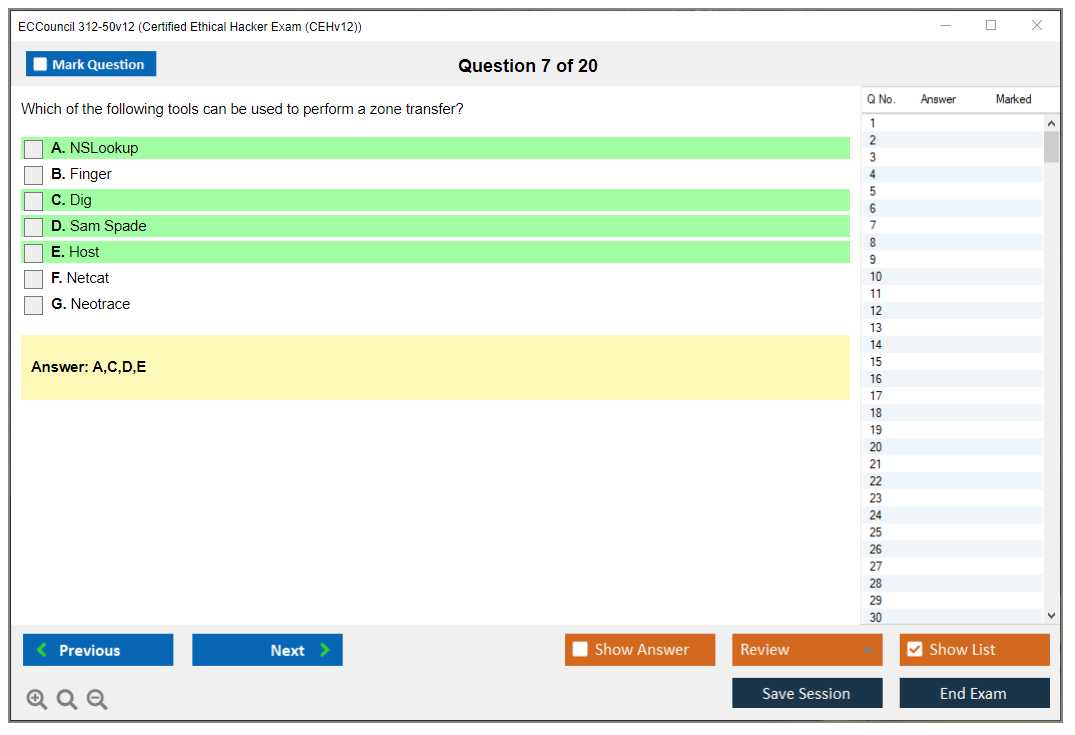
Domain 2: Foot Printing and Reconnaissance separates passive information gathering (no direct target interaction) from active reconnaissance (direct queries that might trigger logging). Search engine dorking with Google operators, website footprinting through archive sites and metadata extraction, email tracking, DNS interrogation using nslookup and dig, network reconnaissance via traceroute. All fair game here.
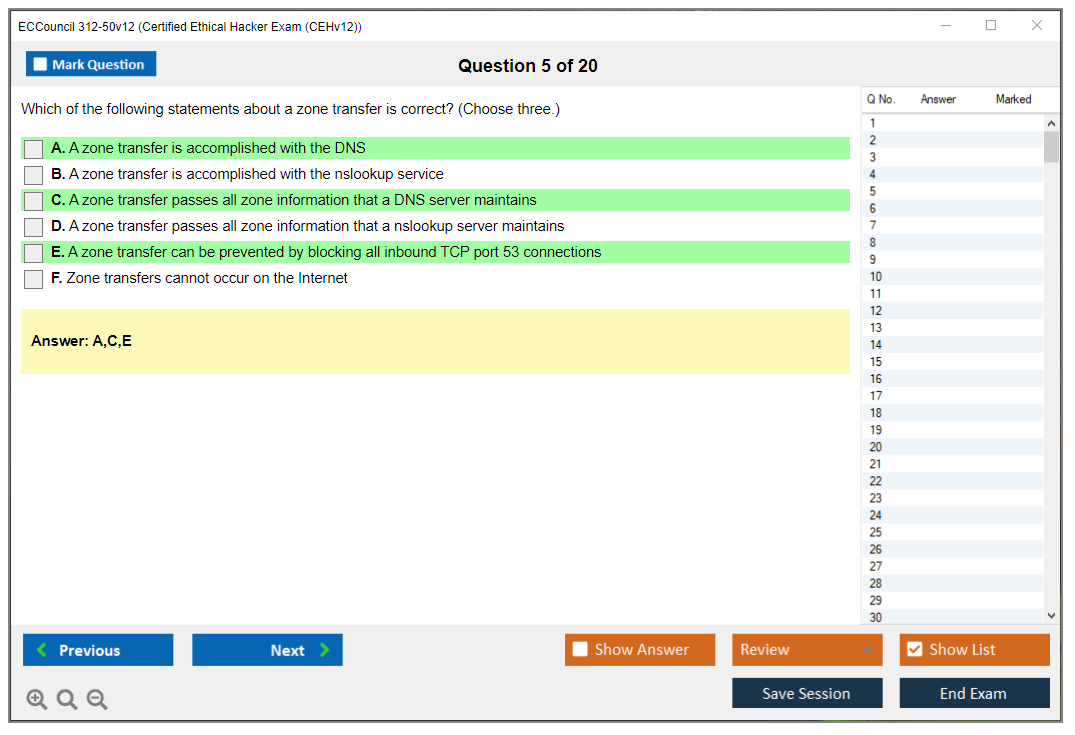
Social media intelligence gathering's expanded significantly in v12. Honestly way more than previous versions. Tools like Maltego for relationship mapping, theHarvester for email and subdomain enumeration, and Recon-ng for modular reconnaissance frameworks appear frequently. The exam tests whether you understand which techniques leave footprints versus which stay under the radar. There's a big difference operationally. Querying WHOIS records is passive, but performing zone transfers directly contacts the target's DNS servers and gets logged.
Network scanning methodologies and tool interpretation
Domain 3: Scanning Networks goes deep on Nmap because honestly that's what everyone uses for port scanning in the real world, whether they're pentesters or threat actors. You'll see questions on TCP connect scans versus SYN stealth scans, when to use ACK scans for firewall rule mapping, and what XMAS and NULL scans accomplish (which is less than you'd think on modern systems). The exam shows Nmap output and asks you to interpret the results. Closed ports versus filtered ports mean different things for attack planning and subsequent penetration testing phases.
Vulnerability scanning with Nessus and OpenVAS comes up here. You need to understand scan configuration, authenticated versus unauthenticated scans (credentialed scans find way more issues), and how to interpret vulnerability severity ratings that consider both exploitability and potential impact. Scanning countermeasures? Intrusion detection systems, rate limiting, and firewall rules that drop packets from scanning sources.
Enumeration extracts actionable intelligence
Domain 4: Enumeration takes discovered services and extracts detailed information about users, shares, configurations. Moving from "what's there" to "how's it configured." NetBIOS enumeration using nbtstat and enum4linux, SNMP enumeration with snmpwalk to grab device configurations (which sometimes contain passwords in plain text, no joke), LDAP enumeration for Active Directory reconnaissance, NTP and NFS enumeration. Each protocol leaks different information when queried properly.
SMTP enumeration using VRFY and EXPN commands to verify email addresses exists. DNS enumeration through zone transfers and DNS cache snooping. The exam tests which enumeration technique applies to which service and what information you'd extract. Like knowing RPC enumeration reveals running services on Windows systems while LDAP queries dump Active Directory user accounts. This domain overlaps with reconnaissance but focuses on active interrogation of identified services rather than passive collection.
Vulnerability analysis and risk prioritization
Domain 5: Vulnerability Analysis addresses how to assess and prioritize findings after scanning, which is where technical skills meet business decision-making. CVSS scoring methodology appears here. You should understand base score components like attack vector (network versus local), attack complexity (high versus low), privileges required, and user interaction needed. The difference between CVE identifiers (unique vulnerability names) and vulnerability databases like NVD (National Vulnerability Database) that aggregate vulnerability data with additional context.
Vulnerability scanning tools configuration, false positive identification (happens more than you'd think), and risk-based prioritization considering exploitability, asset criticality, and existing compensating controls that might reduce actual risk. This domain connects technical findings to business risk. That's where security assessments actually provide value beyond just running automated scanners and generating reports nobody reads. I've seen organizations spend thousands on scans only to ignore remediation because nobody explained what the findings actually meant for their operations.
System hacking covers the full attack lifecycle
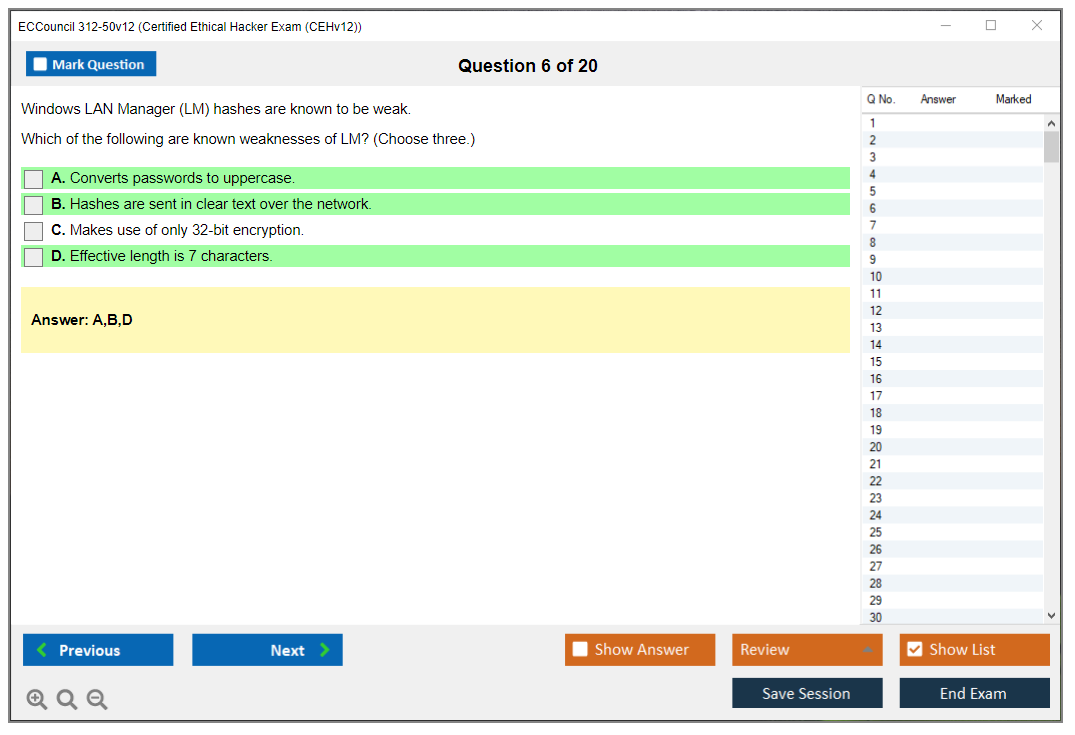
Domain 6: System Hacking represents a high-weight domain (probably 15% of questions) covering password cracking with John the Ripper, Hashcat, and rainbow tables for reversing hashed credentials. Privilege escalation techniques on Windows and Linux differ significantly between OS families. Executing applications through various methods, hiding files using alternate data streams or steganography, covering tracks by clearing logs and manipulating timestamps to avoid detection.
Maintaining access through backdoors, rootkits, and persistent mechanisms that survive reboots gets tested here. The exam tests tool selection for specific scenarios. Like when to use pass-the-hash versus cracking passwords offline, which depends on your objectives and available time. You'll see questions on Windows SAM database extraction, Linux shadow file attacks, and keylogger deployment for credential harvesting.
Malware analysis and APT tactics
Domain 7: Malware Threats covers malware classification. Viruses versus worms versus trojans versus ransomware, which have distinct propagation and payload characteristics. Static malware analysis examining code without execution (safer but limited), dynamic analysis using sandboxes like Cuckoo to observe runtime behavior and network connections. Malware detection techniques and removal procedures that restore system integrity.
Advanced Persistent Threat tactics deserve attention here because APT questions appear across multiple domains, not just this one. Understanding how APT groups establish persistence (often multiple redundant mechanisms), move laterally through compromised networks, and exfiltrate data over extended timeframes using low-and-slow techniques that avoid detection thresholds. Not just theoretical either. The exam references specific malware families and their characteristics, like Emotet's modular architecture or, wait, the thing is, they rotate which malware families appear based on current threat landscapes.
Network sniffing and man-in-the-middle attacks
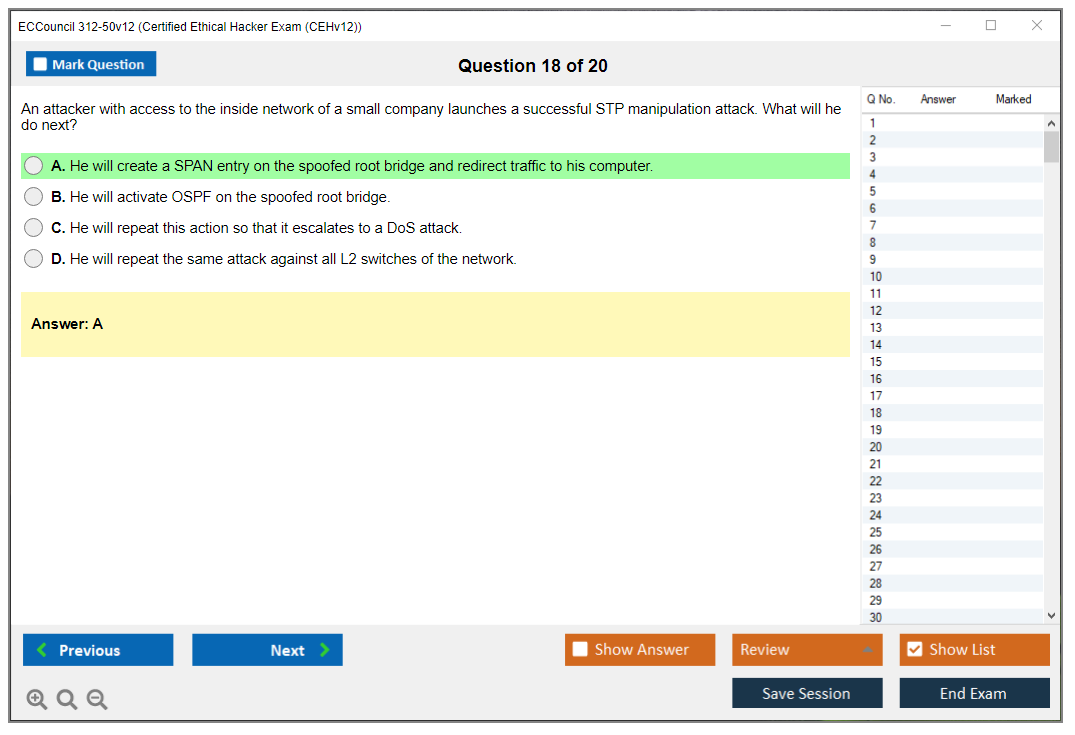
Domain 8: Sniffing focuses on capturing network traffic using Wireshark, tcpdump, and other packet capture tools that intercept data traversing network segments. ARP poisoning to redirect traffic through attacker systems (classic MITM), MAC flooding to force switches into hub mode where they broadcast to all ports, DNS poisoning to redirect users to malicious sites masquerading as legitimate services. The exam shows packet captures and asks you to identify attack signatures or extract credentials from unencrypted protocols like FTP or HTTP basic authentication.
Detecting sniffing attacks by identifying promiscuous mode network adapters and recognizing ARP cache poisoning through inconsistent MAC-to-IP mappings. Countermeasures include encryption (which makes sniffing way less valuable), port security, dynamic ARP inspection, and DHCP snooping that validates network traffic sources.
Social engineering exploits human vulnerabilities
Domain 9: Social Engineering tests your knowledge of psychological manipulation techniques that bypass technical controls entirely by targeting people instead of systems. Phishing email characteristics (urgency, authority, familiarity), pretexting scenarios where attackers create plausible stories to elicit information, baiting using infected USB drives left in parking lots, quid pro quo attacks offering fake IT support in exchange for credentials. The exam presents social engineering scenarios and asks you to identify the technique or recommend countermeasures through security awareness training that makes users the first line of defense.
High-impact domains that deserve extra study time
Domain 14: Hacking Web Applications carries significant weight (maybe 12-15% of questions) covering OWASP Top 10 vulnerabilities in detail with exploitation scenarios. SQL injection gets its own domain (Domain 15, which we'll get to) but cross-site scripting, broken authentication, security misconfigurations, sensitive data exposure, broken access control get tested heavily here with code samples and attack scenarios. You need to understand attack vectors, identify vulnerable code patterns, and know exploitation tools like Burp Suite and OWASP ZAP that automate web application security testing.
The 312-50v13 version has updated some content (newer attack techniques, updated tools), but v12 remains heavily focused on these web application security concepts that haven't fundamentally changed. If you're coming from a CEH v11 background, the core concepts haven't changed dramatically but tool versions and some attack techniques have evolved, especially around API security and containerized applications.
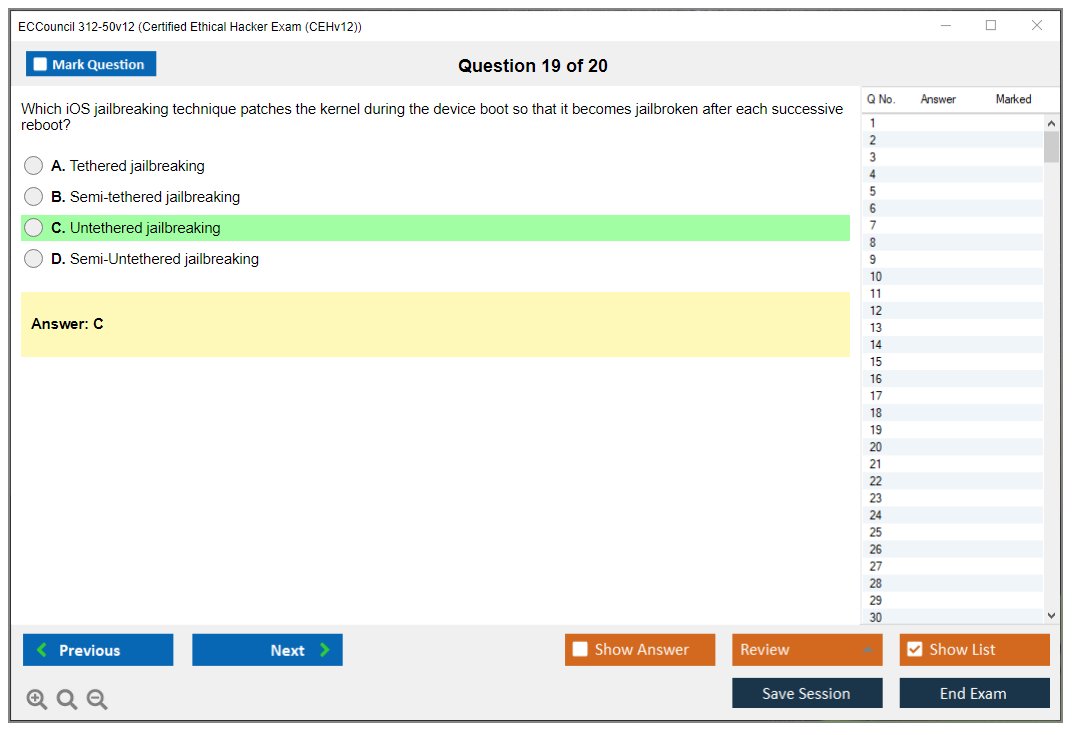
Wireless network hacking (Domain 16) covers WEP/WPA/WPA2/WPA3 attacks with tools like Aircrack-ng, evil twin access points that mimic legitimate networks, and WPS vulnerabilities that still exist on older hardware. Mobile platform security (Domain 17) addresses iOS and Android vulnerabilities, app security, and mobile device management bypasses. Cloud computing security (Domain 18) has expanded significantly with AWS, Azure, and GCP-specific attack vectors like misconfigured S3 buckets and overly permissive IAM roles. This reflects real-world security concerns organizations face today. Cryptography (Domain 19) covers encryption algorithms, hashing functions, PKI infrastructure, and SSL/TLS vulnerabilities including downgrade attacks. IoT security (Domain 20) rounds out the domains with connected device vulnerabilities that often lack basic security controls.
That's 20 domains covering maybe 6-8 hours of exam prep content each if you're thorough and actually understand the material rather than just memorizing. The Certified Ethical Hacker v12 exam tests breadth more than depth. You can't skip domains hoping they won't appear. They will, trust me.
Conclusion
Wrapping up your CEH v12 path
Look, passing the ECCouncil 312-50v12 CEH exam isn't just about memorizing tools or cramming attack vectors the night before. It's about proving you can think like an attacker while understanding the defensive side of the house, which honestly is way harder than most people realize going in. The exam tests breadth more than depth. That trips up tons of folks who go way too deep into one domain and completely ignore the rest.
You've seen the CEHv12 exam cost breakdown and the passing score requirements. Yeah, it's not cheap. And the variable scoring model means you can't just aim for 70% and call it a day. The thing is if you're strategic about your prep, using the right CEH v12 study materials and actually getting hands-on time with the tools instead of just reading about them, you're setting yourself up to crush it on exam day.
The CEH v12 exam objectives? They cover everything from reconnaissance to cloud security to IoT hacking, which is a lot to digest in one sitting. But don't let that intimidate you. Most candidates who fail do so because they skip practice tests entirely. Or they ignore the scenario-based questions until it's too late. Those questions will wreck you if you haven't practiced thinking through multi-step attack chains. That's just reality. I knew a guy who studied tools for six months straight but couldn't piece together a basic attack scenario on the actual test. Bombed it hard.
The prerequisites aren't as strict as some other certs, but that doesn't mean you should walk in unprepared or anything. Whether you meet the work experience requirement or you took the official training route, make sure you've got solid networking fundamentals and basic scripting knowledge before you even think about scheduling your ethical hacking certification exam. Just trust me on this one.
And after you pass? Don't forget about CEH renewal requirements. You'll need those ECE credits every three years, which actually isn't hard if you stay active in the field, but it's something people forget about until their cert's about to expire and they're scrambling.
Final push time. I'd recommend checking out the 312-50v12 Practice Exam Questions Pack at /eccouncil-dumps/312-50v12/. Real exam-style questions with detailed explanations help you identify weak spots way better than just rereading study guides for the fifth time. Quality practice questions make a big difference between walking into that testing center confident versus hoping you studied the right stuff.
The Certified Ethical Hacker v12 credential? Opens doors. Put in the work now and you'll thank yourself later when you're actually doing this stuff for a living.