

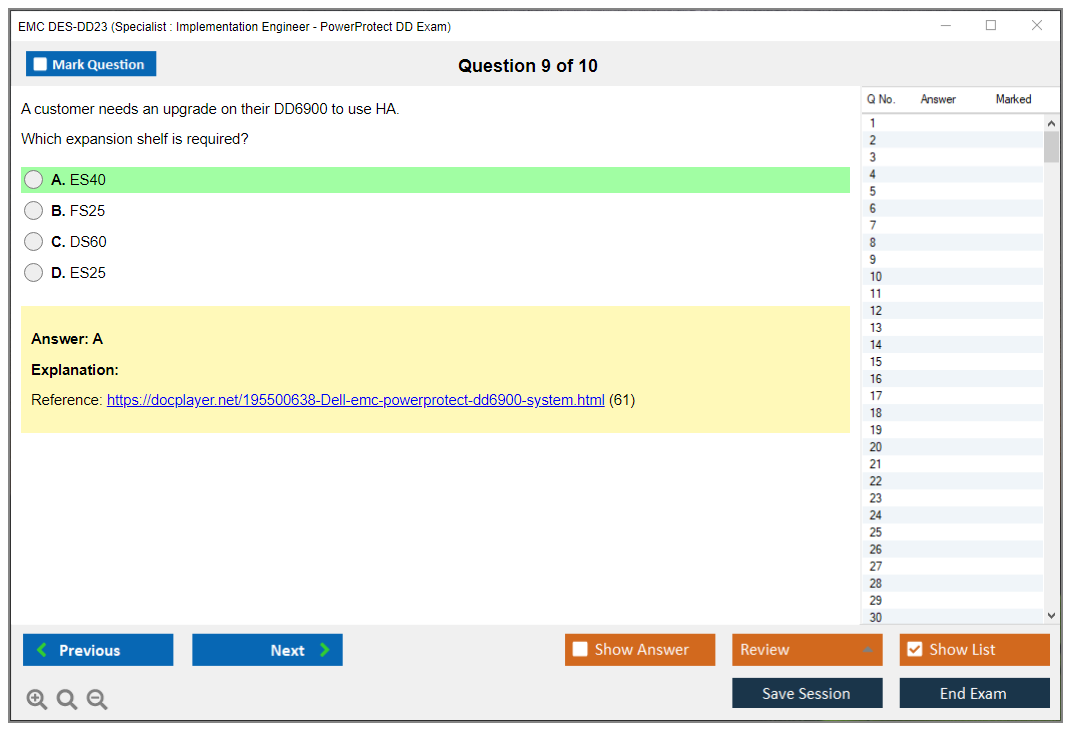
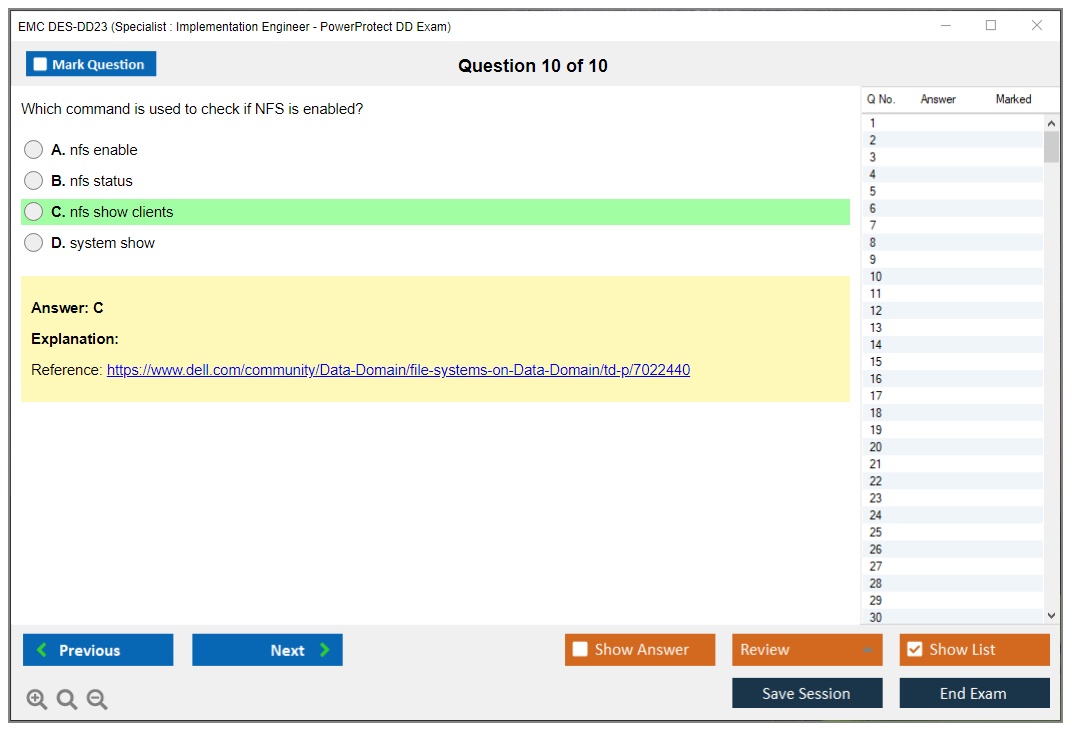
EMC DES-DD23 Exam Overview: PowerProtect DD Specialist Implementation Engineer Certification
What DES-DD23 actually validates
Real-world skills matter here.
The Dell EMC DES-DD23 exam tests whether you can implement and manage PowerProtect DD appliances in actual production environments. Not just theory. It validates you know how to install these deduplication boxes, configure them properly, integrate with backup software like Avamar or Veeam, and actually troubleshoot when things go sideways. The exam covers everything from initial setup through replication topologies, DD Boost protocols, and retention management. You're basically showing Dell EMC you can walk into a data center and deploy their Data Domain technology without breaking stuff.
Who Dell designed this for
This is a mid-to-advanced certification aimed at implementation engineers, backup admins, storage engineers, and data protection specialists. If you're the person actually racking hardware, configuring network interfaces, and setting up backup jobs, well, this is your exam. Not gonna lie, Dell expects you've touched PowerProtect DD systems before. Maybe you've done some installations, managed capacity, or at least worked with similar backup infrastructure. The Specialist - Implementation Engineer, PowerProtect DD credential works great if you're already managing Dell EMC backup environments or planning to specialize in data protection architecture.
Why this certification still matters
PowerProtect DD dominates the deduplication appliance market.
Honestly, every enterprise backup shop I've seen runs Data Domain or something competing against it. Getting certified proves you understand not just the appliance itself but how it fits into broader data protection workflows. Physical deployments, virtual editions, cloud integration, hybrid architectures. Dell updates this exam regularly to match current PowerProtect DD OS versions, so you're learning features that actually matter today, not outdated stuff from five years ago.
The certification pathway makes sense too. You can stack this with other PowerProtect credentials like DES-DD33 (Systems Administrator PowerProtect DD) or broader data protection certs like DES-3611 (Technology Architect, Data Protection). Similar to how E20-385 (Data Domain Specialist) worked before the rebrand, DES-DD23 establishes you as someone who knows Dell's backup ecosystem inside out. It differentiates you in job markets where everyone claims backup experience but few have vendor-validated implementation skills.
I've noticed most candidates who pass this thing already have at least six months working directly with DD appliances. The exam isn't impossible without that experience, but you'll struggle with the practical scenarios if you're only book-learning the material.
What the hands-on emphasis means
Real scenarios dominate.
The exam questions reflect actual situations you'd face during implementations. Capacity planning decisions, backup application integration problems, replication configuration mistakes. You need practical experience beyond reading admin guides, which makes this certification credible when working with customers or within Dell partner organizations.
What the DES-DD23 Certification Validates
The EMC DES-DD23 exam is Dell's way of telling employers you can walk into a data center (or some remote rack) and get a PowerProtect DD box from "new hardware" to "backup target that actually works" without fumbling through it. Not theory. Real admin muscle.
Setup and first boot competence
The DES-DD23 PowerProtect DD exam validates Data Domain implementation and configuration skills. Initial appliance setup, system initialization, and the stuff that always bites people later: IPs, DNS, routing, MTU, making sure the network design actually matches the backup window you promised. Storage provisioning's in scope too, plus knowing what "done" looks like after day one. Quick checks, clean handoff, zero drama.
Backup integration that works in the real world
A big chunk's DD Boost and backup integration. You connect backup apps using DD Boost, NFS, CIFS, and VTL, and this is where candidates get exposed because integration's never "click next." It's credentials, firewall rules, naming, stream counts, and figuring out why the media server can see the share but can't write to it. Drives people nuts, honestly.
Configuration and access control habits
You also need configuration mastery here. Building MTree structures, mapping retention policies, setting up authentication, managing access controls. Small details, but important ones. This maps tightly to the DES-DD23 exam objectives, and it's also the core of being a PowerProtect DD Specialist Implementation Engineer on a project timeline where nobody's giving you extra weeks. You know how that goes. Clients expect production readiness yesterday, documentation's half-finished, and the backup window shrinks every time someone adds another VM to the environment.
Replication, performance, monitoring, troubleshooting
Replication matters: MTree replication, collection replication, DR configs, and PowerProtect DD replication and retention choices, plus data movement strategy that won't kill your WAN link. Performance optimization's tested too, like tuning DD Boost and network settings to maximize dedupe efficiency without overthinking it. Monitoring proficiency shows up via DDMC, metrics, reporting, and capacity trends, which is straight Dell EMC backup appliance administration work.
Troubleshooting's part of the deal. Logs, connectivity, when to escalate. Maintenance and security are covered as well: upgrades, patches, hardware health, encryption, and secure protocols, all aligned with Dell EMC PowerProtect DD certification best practices.
You'll see people asking about DES-DD23 exam cost, DES-DD23 passing score, DES-DD23 practice test, DES-DD23 study materials, and renewal. Fair questions, but the cert's real value is proving you can implement, integrate, and keep PowerProtect DD stable when backups are failing at 2 a.m. and management's already awake sending Slack messages.
Target Audience and Ideal Candidates
Who actually needs this certification
Look, here's the deal. The EMC DES-DD23 exam? Not for everyone.
This one targets implementation engineers who deploy PowerProtect DD appliances at customer sites every week. That's who Dell built it for, though I've seen plenty of folks from different backgrounds tackle it successfully. If you're the person physically showing up to configure these backup targets in data centers, then yeah, this is absolutely your exam.
Backup administrators running daily operations with PowerProtect DD as their target storage should seriously consider this too. You're already working with the platform constantly anyway. Might as well get official validation for that knowledge. Storage engineers dealing with enterprise infrastructure, especially those juggling backup and recovery systems, find this certification fits naturally into expanding their skillset. It's not some weird tangent.
Data protection architects designing full DR solutions love this cert. Why? Because it proves you actually understand implementation details, not just whiteboard theory. System administrators looking to expand beyond general IT into specialized data protection work find this a solid entry point, honestly.
Then you've got the partner ecosystem. The thing is, Dell EMC partners implementing data protection solutions for clients basically need technical staff with this certification to maintain competency requirements. Managed service providers supporting backup infrastructure across multiple customers find it especially valuable since you're constantly touching different environments. That credibility with prospects matters.
IT consultants advising on backup solutions (whether independent or working at consulting firms) use this to demonstrate actual hands-on capability beyond slideware recommendations. Not gonna lie, career changers transitioning into data protection from other IT domains can use DES-DD23 as their proof of specialization. I once knew a network engineer who pivoted entirely based on this cert, ended up running backup operations for a Fortune 500. Wild career arc.
Experience requirements you should know about
Here's the thing about experience requirements. Dell typically recommends somewhere between 6-12 months of legitimate hands-on work with PowerProtect DD or equivalent backup appliance technology before attempting this exam. Can you pass without it? Maybe. If you're really good at cramming study materials and have strong adjacent skills from storage administration or backup technologies, possibly. But you'll definitely struggle with implementation scenarios.
The exam assumes you've actually configured DD Boost integrations in production environments. Dealt with replication headaches at 2am. Troubleshot real-world issues that documentation doesn't cover. If you're coming from related Dell EMC areas like VxRail implementation or Unity solutions, you'll find some foundational concepts familiar but the PowerProtect DD specifics still require actual product exposure to really grasp. Honestly.
DES-DD23 Exam Details and Logistics
The EMC DES-DD23 exam is the official DES-DD23 PowerProtect DD exam for the PowerProtect DD Specialist Implementation Engineer track, and it's Dell's litmus test for whether you can handle real Data Domain implementation and configuration when nobody's looking over your shoulder. You're gonna face a mix of practical decision-making scenarios and those nitpicky "do you actually know where this product knob lives" type questions. Short clock. No notes allowed. Stay focused.
Where and how you take it
Dell EMC Education Services owns the exam, but delivery runs through Pearson VUE, so you've got two paths: sit at a testing center or choose the online proctored option from home. Look, online's convenient, but the thing is, those rules are ridiculously strict and the check-in process can turn into a nightmare if your webcam's acting up, your desk isn't pristine, or your network decides to hiccup at exactly the wrong moment. Testing center? Boring as hell. But it's predictable, which honestly matters more than you'd think.
Language is primarily English, with other options sometimes available depending on region, so definitely check the Pearson scheduling page before you lock a date.
Format, timing, and what the exam feels like
You'll usually see about 60 questions. Though versions can vary a bit. You get 90 minutes total, and the question pool throws multiple-choice, multiple-select, and these scenario prompts at you where you've gotta reason through implementation situations like DD Boost and backup integration choices, PowerProtect DD replication and retention behavior, and Dell EMC backup appliance administration basics. The retention scenarios can get weirdly specific, so don't gloss over those. Actually, I've seen people who nailed the technical config stuff completely bomb on retention policy questions because they assumed it was all common sense. It's not. Closed book means really closed book, so no docs, no notes, no second screen lurking off to the side.
Basic on-screen calculator's included. Nice for quick capacity math. Mark-for-review's available too, so you can flag time-sinks and circle back when you're not panicking.
Results, scoring, and the stuff everyone asks
Pass/fail shows immediately after submission, and you'll get a domain-by-domain score report so you can see if you got clipped on PowerProtect DD troubleshooting and monitoring or configuration decisions. Official email confirmation typically lands within five business days after you pass.
People always ask about DES-DD23 exam cost and DES-DD23 passing score. Dell and Pearson can change both without much warning, so I mean don't trust random forum numbers you stumble across. Just check the live listing when you schedule. Same deal for DES-DD23 exam objectives.
Prep notes you should not ignore
If you're shopping for a DES-DD23 practice test, be picky. Some are absolute junk. Stick close to official DES-DD23 study materials, and honestly, spend serious time on backup integration flows, replication gotchas, and retention behavior because scenario questions love those edge cases.
DES-DD23 Exam Cost and Registration
What you'll actually pay
The DES-DD23 exam cost runs about $230 USD for most areas. Standard pricing.
But here's where it gets messy. Pricing actually fluctuates based on your physical location during registration, which honestly caught me off guard initially. Dell EMC doesn't use one fixed global rate. Your real cost could swing higher or lower depending on local currency conversions and how they've structured regional pricing. You should definitely verify the Dell EMC Education website for your specific location's pricing before committing, because assumptions here can cost you.
Failed? You're paying again
Not gonna sugarcoat it. The retake policy's harsh.
Fail your first attempt? You're stuck waiting through a mandatory cooling-off period before scheduling round two. And yeah, you'll pay the complete exam fee again. No discounts for retakes whatsoever. Plenty of people assume there's some grace attempt or at least reduced pricing for a second shot. There isn't.
Vouchers can save you money (sometimes)
Exam vouchers exist through Dell EMC authorized training partners, and this is honestly where you might find relief. These vouchers sometimes get bundled with official training courses, which cuts your total expenditure if formal training was already in your plans anyway. If your employer's covering training costs, definitely ask whether the course package includes the exam voucher. The thing is, it frequently does.
Corporate accounts with Dell EMC might hold volume purchasing agreements or accumulated training credits. Larger organizations occasionally negotiate bulk exam vouchers at discounted rates. Worth asking your training coordinator or manager about. I spent a good 20 minutes on the phone once trying to figure out if our company had any unused credits sitting around, and turns out we did. Saved me the out-of-pocket expense entirely.
Booking through Pearson VUE
Registration flows through Pearson VUE. You'll create an account there, search for the DES-DD23 PowerProtect DD exam code, then choose your format. Physical testing center or online proctoring. Scheduling's quite flexible, actually. Most testing centers offer appointment slots throughout normal business hours, and online proctoring opens up additional options including evenings and weekends in many regions.
Payment methods? Credit cards, debit cards, and those exam vouchers I mentioned earlier. Pearson VUE's system processes everything during registration.
The 24-hour rule
Here's something really useful: you can reschedule or outright cancel up to 24 hours before your scheduled appointment without any penalty. Miss that window and you forfeit the entire fee.
Once registration's complete, you'll receive a confirmation email containing all your appointment details. Time, physical location for in-person tests, or technical requirements and proctor instructions for online delivery. Keep that email accessible because you'll absolutely need those details on exam day.
If you're also exploring other Dell implementation certifications, the DES-DD33 Systems Administrator exam follows similar registration procedures but evaluates different skill sets.
DES-DD23 Passing Score and Scoring Methodology
The EMC DES-DD23 exam uses a scoring setup that's simple on paper, but it trips people up because the report looks "mathy" even when the grading is pretty straightforward. You need a DES-DD23 passing score of 63%, which typically works out to about 38 correct out of 60 questions.
No secret tricks here. Just raw points.
What "63%" really means here
The exam is pass or fail. Hitting 63% gets you the same Dell EMC PowerProtect DD certification result as someone who crushes it with a near-perfect run, so don't waste energy chasing an imaginary "higher tier" outcome. There isn't one. That said, 63% sits close enough that sloppy mistakes hurt, especially if you're shaky on Data Domain implementation and configuration basics or haven't drilled down into the scenarios where backup workflows intersect with storage protocols in ways that feel almost counterintuitive until you've actually configured a few live environments.
I remember a guy who passed at exactly 63% and another who scored somewhere in the low 70s, and both walked away with identical credentials. The second guy spent an extra week cramming. Not sure it mattered much in hindsight.
How the scaled score works
Results come back on a 200 to 800 scale, and 500 is the minimum passing score.
Wait, that sounds confusing.
It doesn't mean you "need 500 points worth of questions" or anything like that. Your raw score (how many you got right) gets converted into a scaled score to account for slight difficulty differences between versions of the DES-DD23 PowerProtect DD exam, so one form isn't accidentally harsher than another when you're dealing with DD Boost and backup integration or PowerProtect DD replication and retention details.
Question scoring rules that matter
Each question is either right or wrong. No partial credit, even on multiple-select questions. Brutal, especially when you've narrowed it down to two choices and second-guess yourself. Everything's equally weighted too, so a tricky troubleshooting scenario in PowerProtect DD troubleshooting and monitoring counts the same as a basic admin question in Dell EMC backup appliance administration.
Different objectives do have different domain weighting, though. Some DES-DD23 exam objectives matter more than others overall, which makes prioritizing your prep a bit easier if you're strategic about it. Your score report shows a percentage by domain. That's gold if you fail, because it tells you where your DES-DD23 study materials and DES-DD23 practice test time should go next.
Retake and test-day strategy
No negative marking.
Wrong answers don't subtract points, so answer everything. Even if you're guessing on scenarios involving retention policies you've never actually configured in production.
And yeah, people ask about DES-DD23 exam cost, renewal, difficulty. All valid questions. But passing usually comes down to fixing the weakest domains, not rereading everything or memorizing every CLI command you'll probably never use.
Exam Delivery Experience
Walking into the testing center
Check-in's straightforward. Pretty thorough, though.
You'll need government-issued photo ID that matches your exam registration exactly. I mean exactly, middle initials and all, which honestly seems excessive but that's how they roll. They verify your identity, take your photo, and then you're storing everything in a secure locker. Phone, wallet, watch, even your jacket if it's got pockets.
Get there 15 minutes early. This whole song and dance takes time, and nobody wants to start their EMC DES-DD23 exam stressed.
The testing room itself? Quiet. Cameras everywhere. You get a clean workspace with a computer, and that's it. No notes, no water bottle, nothing. If you need something on-screen like a calculator or whiteboard, it's built into the testing software.
Taking it from home with online proctoring
Online proctoring requires a 15-minute system check before your scheduled start time, not gonna lie. You'll install their secure browser, test your webcam and microphone, show your workspace to the proctor via camera. Feels like you're preparing for some spy mission except you're just trying to prove you know PowerProtect DD configuration.
They're watching and listening the whole 90 minutes. Weird at first but you forget about it once you're deep into PowerProtect DD Specialist Implementation Engineer questions.
Clean desk policy? Enforced hard here too.
Nothing on your desk. Nothing on the walls behind you that might look like notes. I've heard of people getting flagged for having a second monitor visible, even if it's off. Wait, really? Yeah, apparently they're that strict about it. My cousin had to unplug hers and physically turn it around before they'd let her start, which ate up another ten minutes of stress she didn't need.
What happens during the exam
No scheduled breaks. None.
During the 90-minute DES-DD23 PowerProtect DD exam, if you leave your seat at a testing center, you might get your exam terminated. Seriously. Plan your bathroom breaks accordingly.
Technical issues? The proctor can help if the software crashes or your screen freezes, which is reassuring at least. But they absolutely can't answer anything about exam content, Dell EMC PowerProtect DD certification topics, or whether your answer looks right. They're there for tech support only, similar to what you'd experience with other Dell exams like DES-6321 or DES-1221.
After you finish
Pass/fail status shows immediately on screen. That moment's either amazing or crushing. Honestly, there's no in-between with these things.
Your official Dell EMC backup appliance administration certification processes within about a week, though I've seen it come through in three days. The actual score report with your performance breakdown takes a bit longer, which is useful if you need to retake and want to focus on weak areas like Data Domain implementation and configuration or DD Boost integration.
DES-DD23 Exam Objectives and Content Domains
How the blueprint is laid out
The EMC DES-DD23 exam is structured like an actual implementation project. The exam blueprint gets carved up into major content domains that mirror the PowerProtect DD implementation lifecycle, from initial setup all the way through day-2 operations. Some domains are pretty short. Others sprawl out with way more depth than you'd expect at first glance, covering everything from baseline configuration to troubleshooting weird edge cases you'll definitely hit in production. The DES-DD23 exam objectives feel like that checklist you'd actually run during a customer rollout.
How domains affect your score
Domain weighting matters way more than most people realize. Each domain drops a specific percentage into your overall score, and it's tied to what you're actually doing on the job as a PowerProtect DD Specialist Implementation Engineer, not some random trivia nobody uses. Some areas carry heavy weight because you're touching them daily, like Data Domain implementation and configuration and core Dell EMC backup appliance administration tasks. Other topics show up lighter. More "confirm you know it" style.
How questions map to objectives
Questions align directly to the published objectives in the official exam description. Sounds obvious, right? But it changes how you study: you can map every practice question back to a bullet in the objective list, and if it doesn't map, it's probably junk. This is why I like using a focused pack like the DES-DD23 Practice Exam Questions Pack when I'm pressure-testing readiness. It helps you catch gaps fast without reading 900 pages of docs first.
Version relevance and what "current" means
The exam content reflects current PowerProtect DD OS versions and features you'd see in production environments. Not gonna lie, version drift is where candidates get absolutely burned, especially around PowerProtect DD replication and retention, newer workflows, and what the UI vs CLI expects today. Keep your notes tied to what's shipping now, not what you remember from an older Data Domain build. I spent two weeks once debugging a customer issue that turned out to be a deprecated command from the old docs. Painful lesson.
Practical and scenario-based focus
This test is hands-on in spirit. You'll get scenario-based questions that force you to combine concepts, like tying DD Boost and backup integration decisions to network config, security access, and troubleshooting signals from logs and alerts, then choosing the best next step rather than the "technically true" answer.
Quick FAQs people ask anyway
"How much does the DES-DD23 exam cost?" Varies by region, and Dell changes pricing. "What is the DES-DD23 passing score?" Dell doesn't always publish a fixed number. If you want reps, the DES-DD23 Practice Exam Questions Pack is $36.99, and yeah, I'd rather do that than guess.
Domain 1: PowerProtect DD Installation and Initial Configuration
Getting your hands dirty with DD hardware
Okay, real talk here.
Before you even think about powering on a PowerProtect DD appliance, you've gotta understand what you're actually working with. The physical side of this whole thing catches more people off guard than you'd expect. The DD3300's your entry-level box, good for smaller environments, nothing fancy. DD6900 sits in the middle. DD9900? That's your big boy for massive enterprise deployments where you're dealing with just ridiculous amounts of data flowing through constantly. Each one's got different rack mounting requirements and you'd better check the weight specs because some of these units need reinforced rails. I've literally seen people underestimate the physical installation part and then scramble when the appliance shows up.
Network planning isn't optional.
You need IP addresses mapped out before you start. Management interface, data movement interfaces, maybe VLANs if your network team's particular about segmentation (and let's be honest, they usually are). DNS and NTP setup might seem boring but trust me, screwing up time synchronization'll haunt you later when replication starts failing mysteriously and you're pulling your hair out trying to figure out why.
Initial configuration and the setup wizard
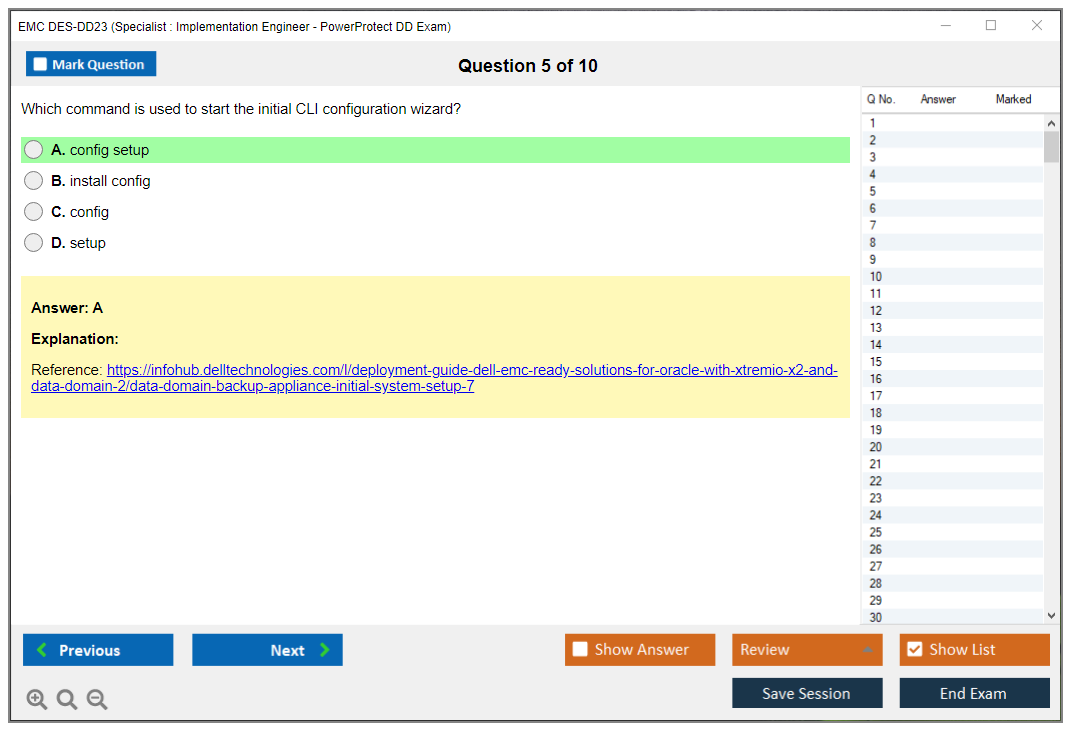
The initial setup wizard in DD System Manager's pretty straightforward, but some people prefer CLI 'cause it's faster once you know the commands. You'll set the system name, configure management interfaces, basically get the appliance talking to your network.
Not complicated.
But you can't skip steps.
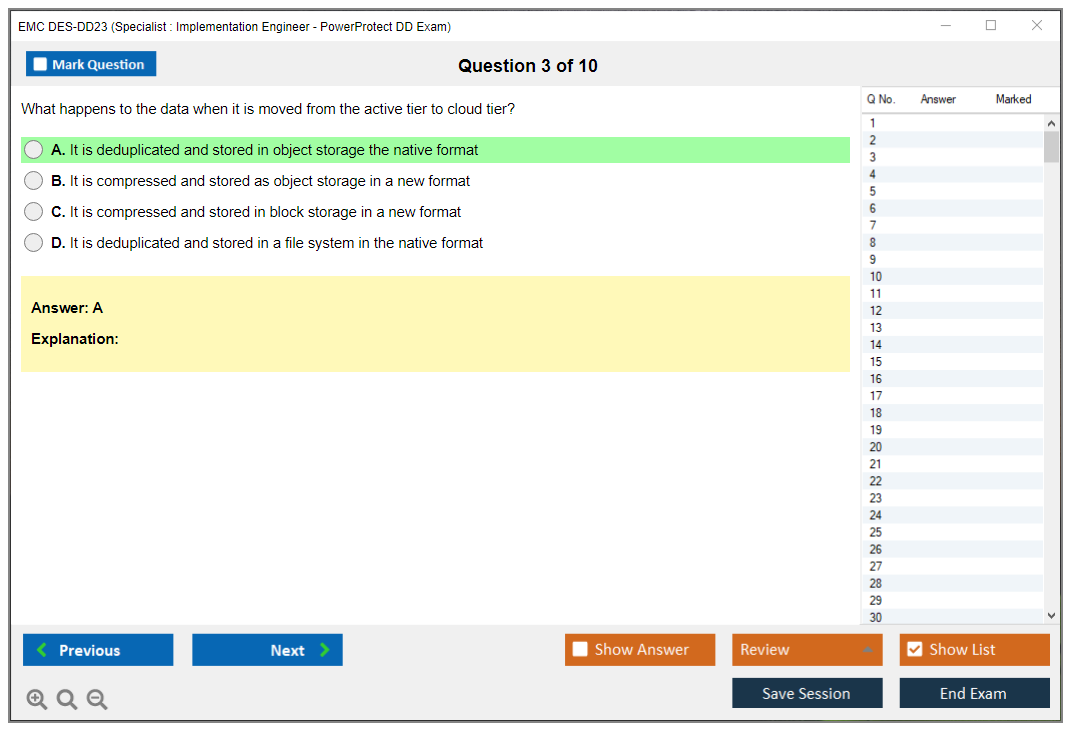
Storage provisioning's where it gets interesting. Active tier's your fast storage, cloud tier extends to object storage, archive tier's for long-term retention. Configuring storage pools properly from the start matters because reconfiguring later's a pain, honestly it's one of those things where doing it right the first time saves you hours down the road. The DES-DD23 PowerProtect DD exam will definitely test whether you understand these tier concepts and when to use each.
Licensing trips people up constantly. It's almost guaranteed someone on your team won't get this right initially because capacity licenses versus feature licenses are different animals entirely. You might have enough capacity but still can't enable replication 'cause you're missing that feature license. Managing license expiration's just good housekeeping, but it's on the exam objectives for a reason.
Random thought: I once watched an entire team spend three hours troubleshooting backup failures only to discover their trial license expired the night before. Check your dates, people.
Filesystem initialization and user access
Filesystem initialization takes time.
Like, real time.
Don't panic when it's running for hours on larger systems. That's completely normal, the process creates the dedupe filesystem structure and you just gotta wait it out, maybe grab coffee or catch up on documentation you've been avoiding.
User authentication setup means configuring local users at minimum, but most enterprises want Active Directory or LDAP integration because nobody wants to manage local accounts scattered everywhere. Role-based access control lets you limit who can do what, which's critical for environments where you've got multiple teams touching the system.
Network interface configuration needs attention. Separate your data movement interfaces from management, don't mix 'em. Bonding or teaming options give you redundancy and bandwidth, and honestly if you're not using them in production you're doing it wrong, like that's just asking for problems. If you're looking at related Dell EMC certifications, the DES-DD33 covers ongoing administration tasks that build on these installation fundamentals. The Dell EMC PowerProtect DD certification path makes more sense when you understand how initial config affects daily operations.
Domain 2: PowerProtect DD Administration and Configuration
Where most of your points come from
Domain 2 in the EMC DES-DD23 exam is where you prove you can actually run the box. Not just talk about it. MTrees are the star here, and the thing is you create them, name them sanely, map them to tenants or apps. Know why you'd separate workloads. Different retention needs exist. Different chargeback models apply. Honestly, different blast radius considerations matter more than people think. Short version? MTrees keep your mess organized. I mean really organized. Also, quota work lives here, and the DES-DD23 exam objectives love details: hard quota stops writes dead, soft quota nags you until someone escalates it. You should know how to monitor usage. What do alerts look like when the backup team calls at 2 a.m. because storage filled faster than projected?
Retention, immutability, and the stuff you can't undo
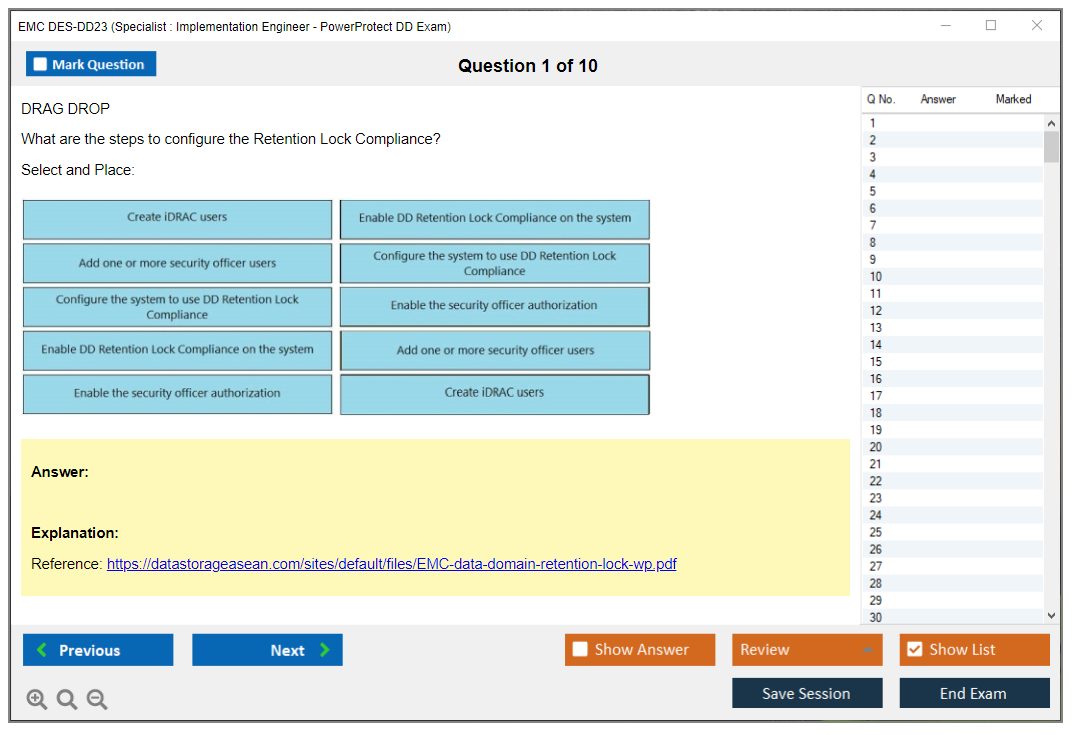
Retention Lock in Compliance mode is serious business. Look, once you turn on immutability behaviors you're signing up for operational discipline. No shortcuts. No exceptions. The PowerProtect DD replication and retention questions tend to check whether you understand that admins can't casually delete data early, even if a VIP asks nicely. Changing retention policies later can get weird depending on configuration. And legal holds that weren't documented properly in the first place make everything worse.
File system operations show up too, which.. the thing is, cleaning is not "set it and forget it" like vendors pretend. There are phases. It burns resources during execution. If you schedule it during peak ingest your backup windows get ugly fast. Understand the DD filesystem layout at a high level. What maintenance tasks exist beyond the obvious ones? What does "filesystem full" troubleshooting feel like in real life when everyone's panicking?
I once watched a junior admin schedule cleaning right before month-end backups started. That was a long night.
Protocols and integrations you must be fluent in
Protocol configuration is pure Data Domain implementation and configuration territory. Enable what you need, nothing more: DD Boost, NFS, CIFS/SMB, VTL if you're stuck supporting legacy. DD Boost means storage units, users, and distributed segment processing, plus DD Boost and backup integration basics with whatever backup app you're picturing. Networker, Avamar, Veeam. Doesn't matter. Know the handshake. VTL is for legacy shops that haven't modernized yet. CIFS/SMB shares and NFS exports are permission traps waiting to happen, so expect access control questions that test whether you've debugged authentication failures at 3 a.m. before.
Encryption at rest matters more now, along with key management. Data-in-flight setup that compliance teams suddenly care about.
Compression is automatic. No knobs. But you should explain why it changes capacity planning assumptions.
Snapshots? Quick. Useful for recovery scenarios.
System maintenance windows matter. Plan them or regret it.
And yeah, people will ask about DES-DD23 exam cost, DES-DD23 passing score, DES-DD23 practice test, and DES-DD23 study materials once they realize how hands-on the PowerProtect DD Specialist Implementation Engineer role actually is under the Dell EMC PowerProtect DD certification track.
Domain 3: Backup Application Integration and DD Boost
Why DD Boost beats traditional protocols
Okay, real talk here.
Still using NFS or CIFS for backup traffic? You're literally leaving performance on the table. DD Boost handles deduplication work directly on the backup server before data even hits the wire, which means way less network traffic and backups that actually finish when you need them to. Distributed segment processing is the key part: instead of making the DD appliance do all the heavy lifting by itself, your backup servers actually help out with the workload. Load balancing spreads the work across multiple interfaces automatically, so you're not creating some ridiculous bottleneck on a single NIC.
The DES-DD23 exam tests you pretty hard on knowing when to use DD Boost versus falling back to file protocols, because not every backup app supports it equally. Here's the catch though.
Avamar and NetWorker play nicely
Avamar integration? Honestly straightforward since Dell owns both products now. You configure the DD as a target in Avamar, create DD Boost users with the right permissions, and you're mostly done. Avamar-specific features like encryption happen at the source, which is different from how some other apps handle it.
NetWorker integration requires setting up storage nodes that talk DD Boost protocol. Create storage units on the DD side, then point NetWorker at them. The exam wants you to know sizing considerations for those storage units. Too small and you run into issues. Too large and management gets messy.
The other big players
NetBackup uses the OST plugin model. Install the DD Boost plugin on media servers, configure it with your DD credentials, and it shows up as available storage. Not gonna lie, Veritas has some quirks around how it handles multiple streams.
Veeam's gotten really popular, and setting up a DD Boost repository in Veeam is pretty simple through the GUI. But you need to understand how Veeam's specific implementation differs. It uses its own job parallelism settings that interact with DD Boost settings in ways that aren't always obvious. I've seen people max out those job slots thinking more is always better, then wonder why their dedupe ratios tank.
Commvault calls their components MediaAgents. The configuration process mirrors NetBackup somewhat. IBM Spectrum Protect (formerly TSM) can connect using DD Boost or fall back to NFS/CIFS if needed.
Multi-tenancy saves your sanity
When you're running multiple backup apps or serving different departments, MTrees become your best friend for keeping things separated. Each backup application gets its own MTree. Its own DD Boost user. Its own quota. Performance tuning varies wildly between applications, though. Some handle high parallelism great, others choke. The DES-DD33 systems administrator exam covers ongoing management, but implementation engineers need to set this foundation correctly from day one.
Troubleshooting? Usually comes down to authentication problems or network connectivity, honestly.
Domain 4: Replication, Data Movement, and Disaster Recovery
What replication looks like on DD
Honestly, for the EMC DES-DD23 exam, Domain 4's where candidates absolutely lose their minds because it throws pure configuration details right alongside disaster recovery process thinking, and you're expected to juggle both simultaneously without dropping context or directionality concepts that define how data actually flows between appliances. The thing is, you need to think like the system does while also thinking like an operator would during an outage at 2 AM.
Short answer: know your objects. Know directionality cold.
MTree replication's the bread and butter. You're configuring replication per MTree, which means a single app team, one retention policy, or one backup stream can fail over independently without dragging the entire box along for the ride. You absolutely need to understand replication contexts because that's the mechanism tying source, destination, and the replicated namespace together when you're deep in troubleshooting weird "why isn't this MTree moving" issues in Dell EMC backup appliance administration.
Collection replication's when you want multiple MTrees moving as one packaged unit. Like a bundled workload. Sounds straightforward until you realize scheduling and lag get reported at the collection level while failures might still be one stubborn MTree acting up. Annoying, honestly. Super common scenario that trips people up.
Topologies, seeding, and schedules
Replication topologies show up constantly in DES-DD23 exam objectives: one-to-one, one-to-many, many-to-one, bidirectional. Bidirectional especially forces you to think hard about operational discipline. Split brain's a human mistake, not some feature Dell engineered.
Initial replication? That's the "seeding" phase. Huge undertaking. Bandwidth math actually matters here because dedupe helps but only after you've got shared segments established, and if you underestimate the pipe you'll miss RPO for literal days while your PowerProtect DD troubleshooting and monitoring dashboard screams bloody murder at you.
Replication scheduling's where RPO theory meets messy reality. You set schedules based on change rate and bandwidth availability, and here's the thing: don't forget throttling and WAN optimization knobs. Replication that absolutely crushes the WAN? That's replication your network team'll shut off without asking permission. I've seen it happen twice in production environments where backup admins got a little too aggressive with their intervals.
Security, monitoring, and DR moves
Encryption for replication protects data in flight. There's a performance hit, though. Depends on model and CPU headroom, so you plan it carefully. You don't "just turn it on" during an outage situation. Monitor states, progress, replication lag constantly, then react before you hit an RPO breach.
Failover's promoting the replica to production. Clean process when documented. Failback's re-establishing replication after DR, usually reversing direction, then returning to steady state without breaking PowerProtect DD replication and retention expectations downstream.
Directory replication and Managed File Replication (MFR) cover non-MTree data movement scenarios. Niche stuff. Still testable, unfortunately.
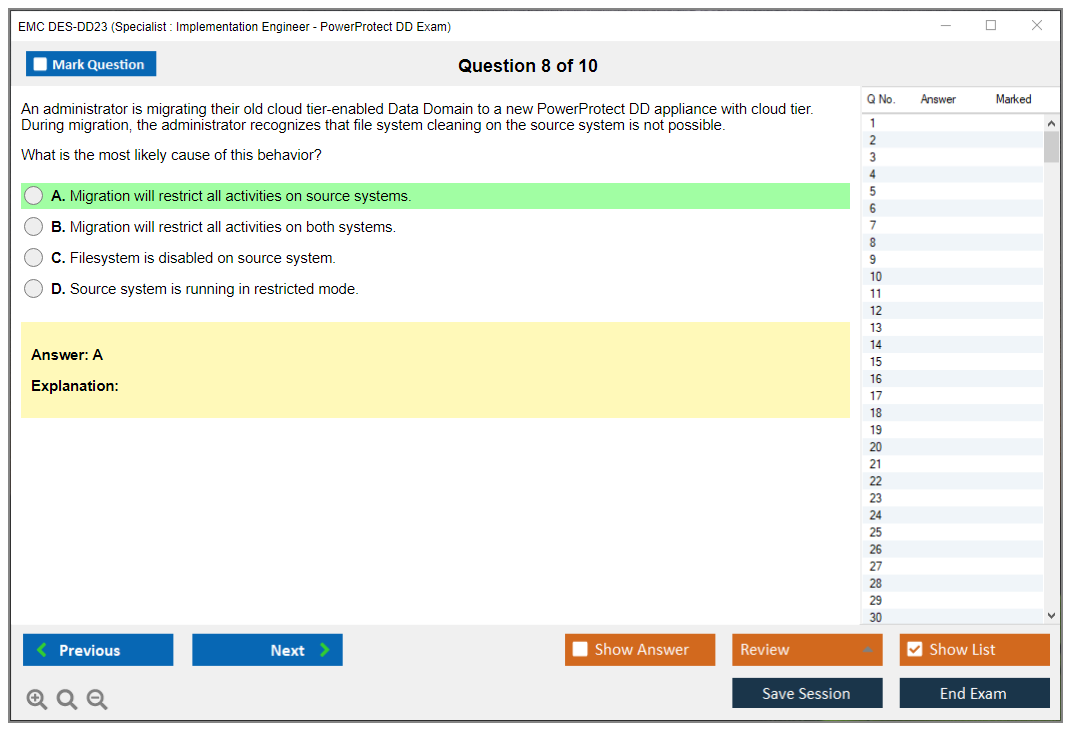
Cloud Tier and Cloud Disaster Recovery matter too. Active tier stays local, cloud tier holds long-retention data in AWS or Azure, and a cloud-based DD target fundamentally changes your DR playbook. Plus retention policies must align perfectly so replicas don't expire early and leave you scrambling. People constantly ask about DES-DD23 exam cost and DES-DD23 passing score, but honestly this domain's really about getting hands-on with Data Domain implementation and configuration, not memorizing random numbers from DES-DD23 study materials or some DES-DD23 practice test you downloaded.
Domain 5: Monitoring, Reporting, and Performance Management
Getting visibility into what your DD systems are doing
Monitoring isn't sexy. But it matters for the EMC DES-DD23 exam and real-world implementations. DD System Manager gives you that web-based interface where you check system health constantly. It's your first stop when something feels off or when management wants to know why backups are taking longer than expected.
Data Domain Management Center? That's where things get interesting for larger environments. DDMC centralizes monitoring across multiple DD systems, which saves you from jumping between individual boxes constantly (thank god). You can configure dashboards to show exactly what matters to your environment. Maybe you care more about replication lag than throughput, or vice versa, depending on your priorities.
I spent three months once tracking down what I thought was a performance issue, only to realize our monitoring thresholds were set for a completely different workload pattern. The system was fine. Our alerts were just stupid.
The metrics that actually matter
Compression ratio and deduplication ratio are the numbers everyone asks about. They matter, sure. But throughput and IOPS tell you if your system keeps up with backup windows. Those determine whether you meet SLAs or scramble at 3 AM. The DES-DD23 PowerProtect DD exam tests whether you understand what affects these ratios. Data type, client-side dedup configuration, whether you use DD Boost or not.
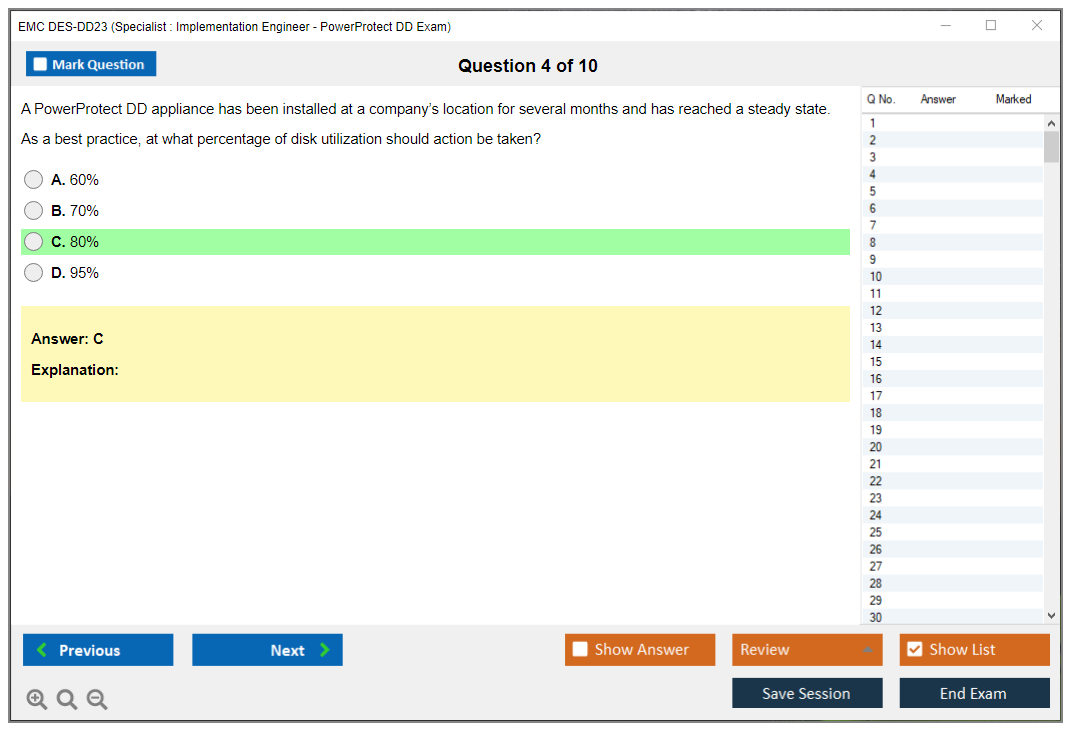
Capacity monitoring is straightforward but critical. Track used capacity. Watch available space. Look at growth trends so you're not scrambling when you hit 80% full. Forecasting capacity needs based on historical data shows up on the exam, and your boss will ask about it during budget season.
Setting up alerts before things break
Alert configuration equals proactive monitoring.
Email alerts for critical events like disk failures, capacity thresholds, replication issues. Set your thresholds intelligently though, not just at default values. Otherwise you drown in noise.
SNMP monitoring lets you integrate DD systems with enterprise tools like SolarWinds or PRTG, which makes life easier. Syslog integration sends logs to centralized servers. Huge for compliance and troubleshooting, especially when auditors come knocking. For anyone also looking at storage administration, the DES-1B31 covers similar monitoring concepts for ECS environments.
Reports and analysis that actually help
Reports generation covers capacity reports, performance reports, replication reports. The usual suspects. Stream analysis helps you identify which backup jobs are hogging resources or performing poorly. Can be eye-opening sometimes when you see what actually consumes bandwidth.
Bottleneck identification is diagnostic work. Is it network bandwidth? Disk performance? CPU? Protocol limitations?
Historical trending uses past data to predict future needs. Sounds obvious but you'd be surprised how many environments don't use this properly. Health checks verify system status, and interpreting those results correctly matters for troubleshooting. it's "green means good." Custom dashboards in DDMC let you create views for specific requirements. Maybe executives want high-level capacity trends while operations needs per-stream performance details. The DES-DD23 Practice Exam Questions Pack at $36.99 includes scenarios testing your ability to interpret monitoring data and recommend actions, which mirrors what you face on exam day and in production environments.
Domain 6: Troubleshooting, Maintenance, and Best Practices
Where troubleshooting shows up on test day
Domain 6 on the EMC DES-DD23 exam is where people who just clicked through wizards get completely exposed. Real environments break constantly. Cables fail. DNS acts up. MTU mismatches appear out of nowhere, certs expire, time drift causes authentication headaches.
The exam wants you thinking like an actual PowerProtect DD Specialist Implementation Engineer, not someone touring the GUI, and that means you prove basic reachability between your backup server and the appliance before blaming DD Boost and backup integration or whatever app plugin you're running. This is pure PowerProtect DD troubleshooting and monitoring, plus you need solid Dell EMC backup appliance administration muscle memory baked in.
Common connectivity issues between backup servers and DD
Start with the boring stuff. Ping. Route tables. Then dig deeper into specifics. If your backup server can't resolve the DD hostname properly, you'll see these bizarre "connection refused" or "cannot connect" errors that superficially look like auth problems, so confirm both forward and reverse DNS are working, check /etc/hosts if the shop runs old-school setups, and validate you're using the correct interface after any Data Domain implementation and configuration changes got applied.
Ports and firewalls come next. This is where people burn hours troubleshooting phantom issues that turn out to be simple blocks. Verify which ports your backup app actually requires, test connectivity with telnet or nc, and confirm nothing's silently blocked between VLANs or security zones. When you're using DD Boost specifically, confirm ddboost is enabled on the appliance, the user account is mapped correctly, and the backup server can actually reach the DD over the intended network path. "It works from my laptop" means absolutely nothing when the media server sits in another subnet with completely different ACLs applied.
Check MTU settings. Duplex mismatches too. Jumbo frames that're half-configured cause flaky backups, random timeouts, replication stalls that people later blame on PowerProtect DD replication and retention settings when the root cause was network config all along. (I once watched a guy spend three days blaming deduplication overhead before someone finally noticed the switch port was locked at 100Mbps.)
Maintenance and best practices you should memorize
Patch levels matter a lot. NTP too.
Keep logs clean and readable. Document every network change. Fragments of knowledge won't cut it here.
For prep, tie this domain directly back to the DES-DD23 exam objectives and drill scenarios repeatedly with a DES-DD23 practice test. I like using the DES-DD23 Practice Exam Questions Pack when I'm hunting for pattern-based traps that show up on the real exam, and at $36.99 it's an easy addition next to your DES-DD23 study materials and Dell EMC PowerProtect DD certification notes you're already using. Use the DES-DD23 Practice Exam Questions Pack again during your last week specifically for speed drills.
Quick FAQs people keep asking: DES-DD23 exam cost and DES-DD23 passing score both vary depending on your region and current Dell policy, so verify those details in your candidate portal, then practice like the scoring threshold is tight on the DES-DD23 PowerProtect DD exam.
Conclusion
Wrapping this up
Look, the EMC DES-DD23 exam isn't something you just breeze through on a weekend. Seriously. It's a proper technical certification that tests whether you actually know how to implement and manage PowerProtect DD systems in real-world scenarios, not just regurgitate vendor slides you half-read the night before while scrolling through your phone. Dell EMC built this exam to filter out people who've just skimmed documentation from those who can actually configure Data Domain implementation and configuration, handle DD Boost and backup integration, and troubleshoot when things inevitably go sideways at 3 AM.
The DES-DD23 PowerProtect DD exam hits you with questions that require hands-on thinking. You need to understand PowerProtect DD replication and retention mechanics, not just memorize menu locations. The Dell EMC PowerProtect DD certification validates that you can walk into a data center and actually implement these appliances without calling support every five minutes, which is what employers are paying for when they see this cert on your resume. Let's be real about that.
Here's the thing about the DES-DD23 exam cost and time investment: it's significant enough that you don't want to fail. The DES-DD23 passing score requires you to demonstrate solid competency across multiple domains, from initial deployment through ongoing Dell EMC backup appliance administration and PowerProtect DD troubleshooting and monitoring. That's a lot of ground to cover. Like, a lot.
Your study strategy matters more than how many hours you log. Wait, that's not entirely true because you do need decent time investment, but the approach matters equally. Quality DES-DD23 study materials beat random YouTube videos every time. Focus on the DES-DD23 exam objectives systematically. Don't skip the boring stuff like retention policies or MTree management because those topics absolutely show up. Build a lab if you can. Break configurations. Fix them. That muscle memory will save you when you're staring at a tricky scenario question.
I once spent two hours troubleshooting why replication kept failing in my test environment, only to realize I'd fat-fingered the destination IP address. Felt like an idiot, but you know what? I never made that mistake again, and a similar scenario showed up on the actual exam.
Practice tests? Non-negotiable at this point in your prep. I'm talking about quality question banks that mirror the actual exam format and difficulty, not those sketchy brain dumps that teach you nothing. A good DES-DD23 practice test shows you where your knowledge gaps are hiding and forces you to think through scenarios under time pressure, which is exactly what you'll face on exam day.
If you're serious about passing on your first attempt and not wasting money on retakes, check out the DES-DD23 Practice Exam Questions Pack. It's built specifically for the PowerProtect DD Specialist Implementation Engineer exam and covers all the technical domains you'll actually see. The explanations help you understand why answers are correct, which matters way more than just memorizing responses.
You've got this. But prepare properly. This certification can really advance your career in backup and data protection, just treat the prep with the respect it deserves.
