

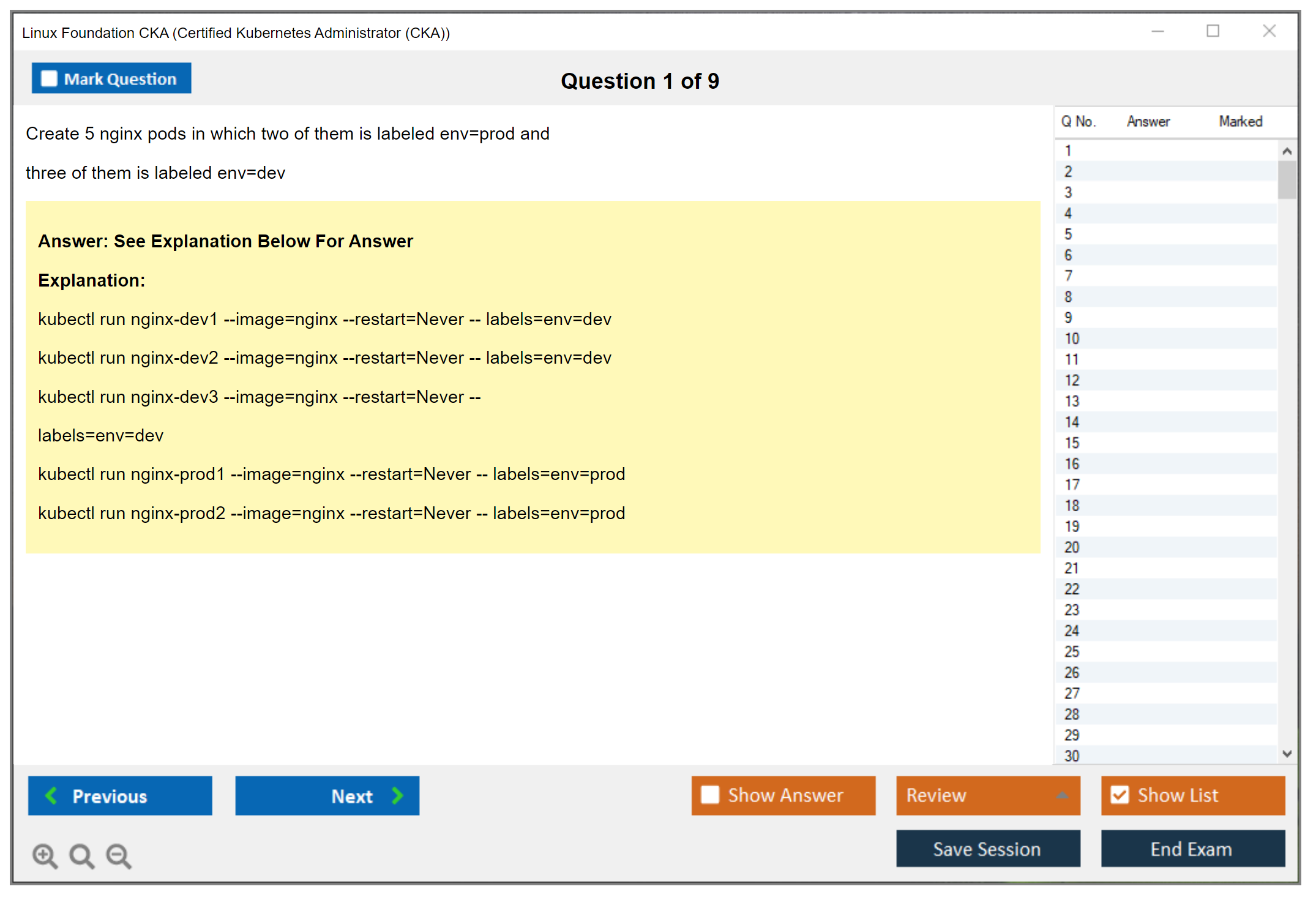
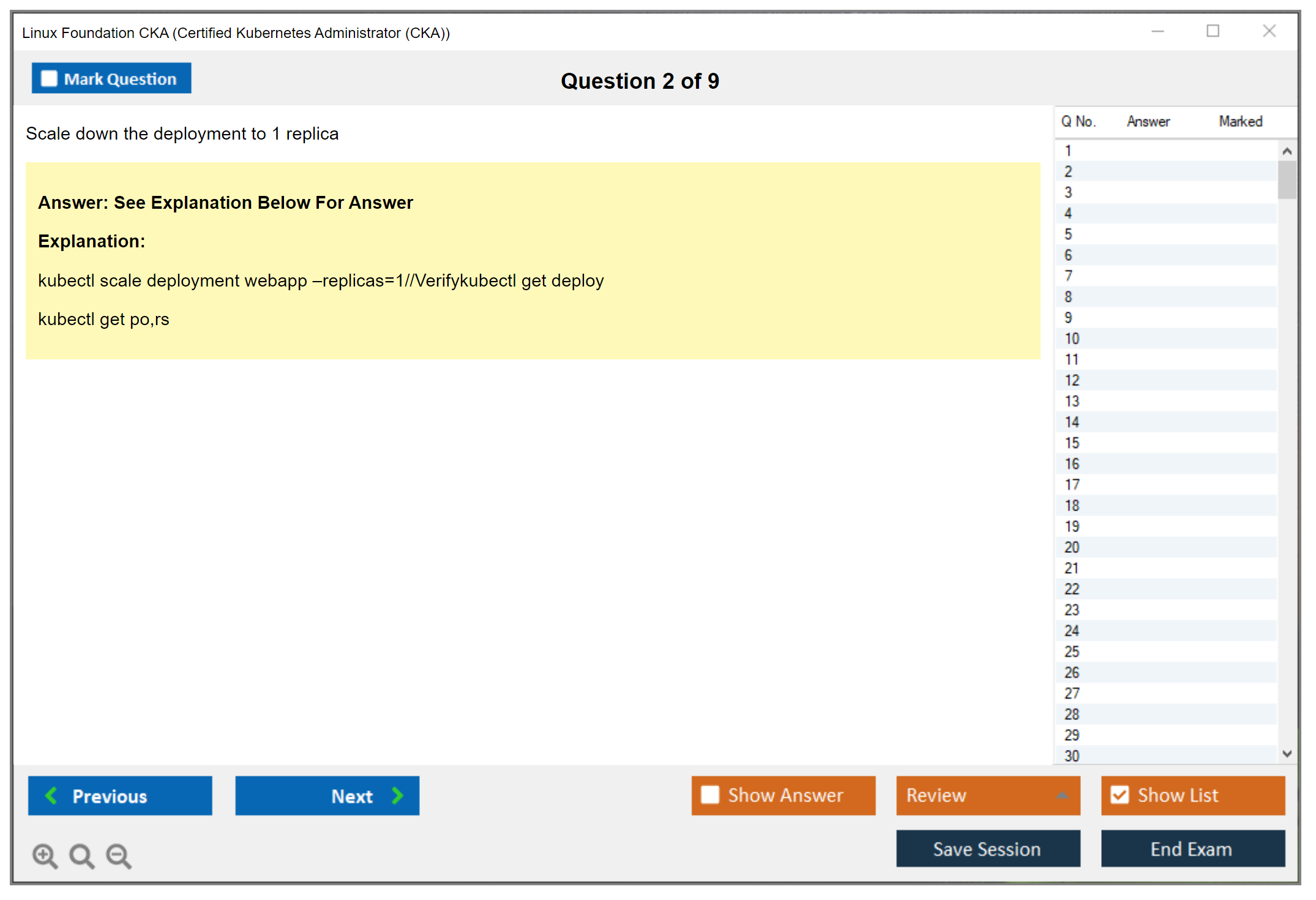
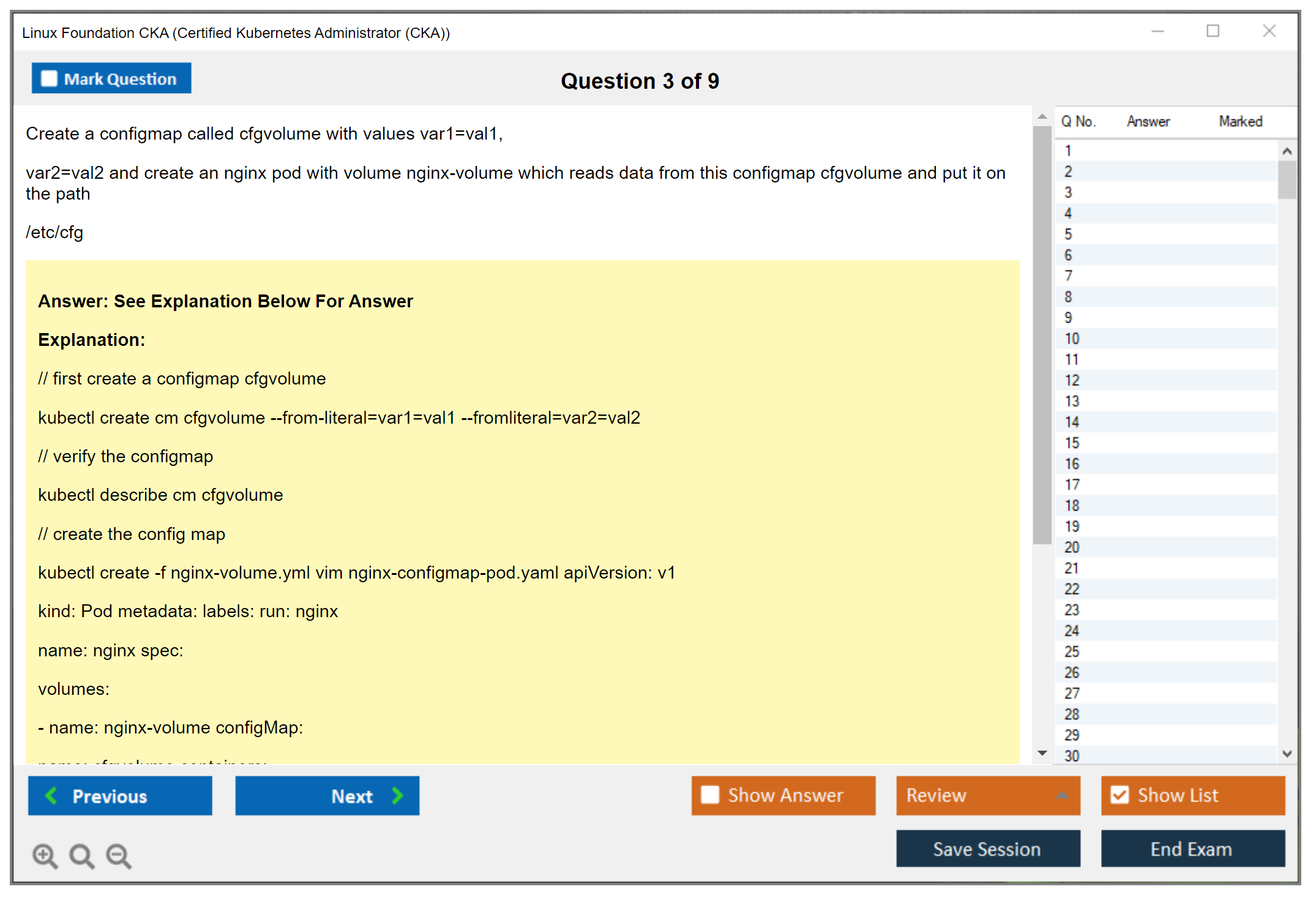
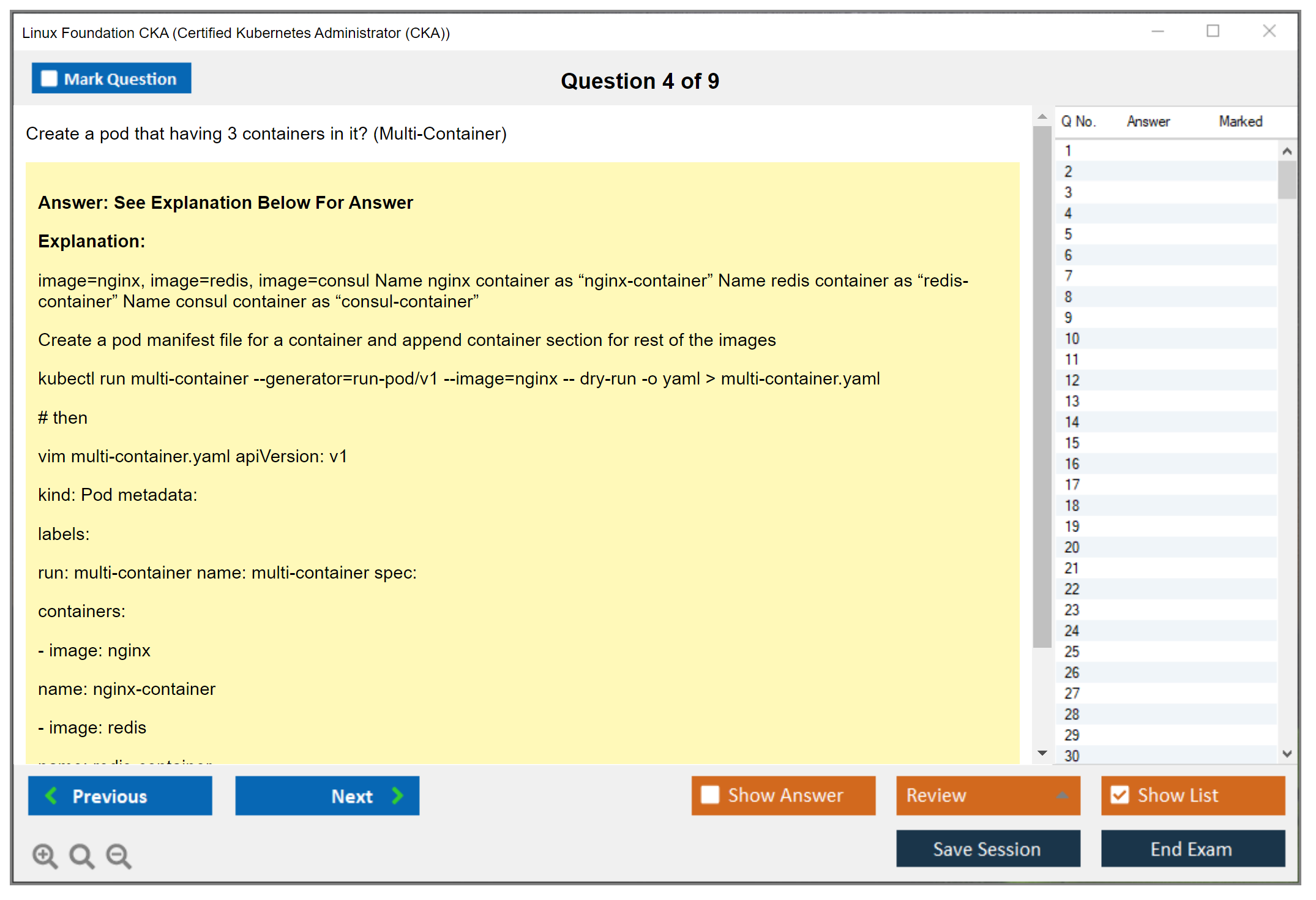
Linux Foundation CKA (Certified Kubernetes Administrator) Overview
What exactly is the Certified Kubernetes Administrator certification
The CKA thing? It's legit.
The Certified Kubernetes Administrator (CKA) certification is an industry-standard credential proving you can actually run Kubernetes clusters in production environments, not just talk about them at meetups while drinking overpriced coffee. Developed jointly by the Linux Foundation and the Cloud Native Computing Foundation (CNCF), this thing validates hands-on ability to deploy, manage, and troubleshoot Kubernetes clusters when stuff inevitably goes sideways at 3 AM and your phone won't stop buzzing.
Honestly, this isn't some multiple-choice knowledge dump. It's a performance-based certification requiring real-world problem solving during a proctored hands-on exam where they give you broken clusters and basically say "fix it." Enterprises adopting container orchestration recognize this certification globally because it actually means something: you've demonstrated production-ready Kubernetes administrator certification skills under pressure, not theoretical fluff.
The CKA differentiates administrators from developers who hold the CKAD (Certified Kubernetes Application Developer) credential and security specialists pursuing CKS (Certified Kubernetes Security Specialist). Employers see CKA as a clear signal you're capable of Day 2 operations, not just deploying hello-world containers that do absolutely nothing useful.
What you're actually proving when you pass
Core cluster architecture understanding? Key.
You need to know how etcd, the API server, scheduler, and controller manager interact, because the exam will absolutely test whether you can diagnose which component's causing a particular failure. Installation and configuration of production-grade Kubernetes clusters means you're comfortable with kubeadm, understanding networking requirements, and getting control plane nodes operational without breaking into a cold sweat.
Workload deployment goes way beyond simple pod creation. You're managing Deployments, DaemonSets, StatefulSets, Jobs, and CronJobs while understanding scheduling constraints, resource limits, and how to troubleshoot when pods won't start or keep crashing mysteriously.
Network configuration including Services, DNS, and Ingress controllers gets tested extensively. Honestly, if you can't explain the difference between ClusterIP, NodePort, and LoadBalancer services or debug CoreDNS issues, you're gonna struggle hard. Storage provisioning with Persistent Volumes and StorageClasses is another area where candidates often stumble because the abstraction layers can be confusing until you've worked with them enough to internalize the patterns. I spent probably two weeks just getting comfortable with the way PV claims bind to volumes before it finally clicked.
Cluster maintenance operations matter more than people think. Upgrades, backups, certificate renewal.. these aren't glamorous but they're absolutely critical for keeping production environments stable. Security fundamentals including RBAC and network policies show up throughout the exam because you need to demonstrate you won't accidentally give cluster-admin to every service account. We've all seen that disaster.
The kubectl troubleshooting tasks test command-line proficiency under time pressure, and here's something important: you can reference official Kubernetes documentation during problem-solving. Knowing where to find answers quickly is actually part of the skill being validated, which feels more realistic than memorizing everything.
Who this certification is designed for
Kubernetes administrators managing production clusters? Primary audience.
If you're responsible for keeping clusters running, scaling them, and responding when things break spectacularly, this validates those exact skills. DevOps engineers responsible for container orchestration platforms need this because you're often the bridge between development teams who want features yesterday and infrastructure teams who want stability.
Site Reliability Engineers operating Kubernetes infrastructure benefit hugely. SRE work is all about reliability and this certification focuses heavily on operational concerns rather than just theoretical architecture diagrams. Cloud engineers working with managed services like EKS, GKE, or AKS might think those abstract away administration, but you still need to understand what's happening under the hood when troubleshooting weird networking issues at scale.
System administrators transitioning to container-based infrastructure find CKA valuable for demonstrating you've made that leap successfully. Platform engineers building internal Kubernetes platforms absolutely should pursue this. Infrastructure architects designing Kubernetes solutions need deep technical knowledge beyond just drawing boxes and arrows on whiteboards.
Technical leads requiring credibility when making cluster administration decisions use CKA to back up their recommendations with actual proven skills. Not gonna lie, IT professionals seeking career advancement in cloud-native technologies see real ROI from this certification in terms of opportunities and compensation bumps.
Why employers actually care about this credential
High demand exists. Period.
High demand for certified Kubernetes professionals exists across industries because Kubernetes has become the de facto standard for container orchestration whether people love it or hate it. There's a salary premium for CKA-certified administrators in most markets. We're talking meaningful differences, not just token increases that barely cover inflation.
Many Kubernetes-focused positions list CKA as a prerequisite or strong preference because hiring managers are tired of interviewing people who claim Kubernetes expertise but can't actually troubleshoot a failing pod or explain what an init container does. The certification demonstrates commitment to professional development in the cloud-native space, which matters when companies are investing heavily in these technologies and need confidence you'll stick around.
It opens opportunities with CNCF member organizations and cloud providers who value vendor-neutral credentials over proprietary ones. CKA also is the foundation for advanced certifications like CKS, creating a clear progression path instead of random credential collecting. The skills align with real-world production requirements rather than theoretical knowledge. It complements cloud provider certifications from AWS, Azure, and Google Cloud nicely without duplicating them.
How CKA compares to other Kubernetes credentials
The CKAD focuses on application development and deployment from a developer perspective: creating manifests, debugging application issues, understanding how apps run in Kubernetes environments. CKA covers broader cluster administration versus these specialized domains. The CKS requires CKA as a prerequisite and focuses exclusively on security hardening, admission controllers, and threat detection stuff that keeps security teams happy.
CKA's more infrastructure-focused. That's the key difference.
It emphasizes operational tasks over development workflows like CI/CD pipeline integration. If you're managing clusters rather than deploying apps, CKA makes more sense than CKAD as your first certification, though eventually you might want both depending on your role.
CKA Exam Details (Format, Duration, and Delivery)
Hands-on, performance-based format (what you're really signing up for)
Look, the Certified Kubernetes Administrator (CKA) certification is a hands-on Kubernetes exam. That one detail? It changes everything about how you prep and honestly, how you'll feel when test day hits. No multiple-choice here. No "pick two answers" games either. You get tasks and you've gotta make a real cluster actually do the thing.
It's a proctored performance-based exam delivered with live Kubernetes clusters. The problems mirror what a stressed-out on-call admin deals with when deployments won't roll out, Services point at nothing, or control plane configs are off by one tiny flag. Expect roughly 15 to 20 performance-based scenarios. Each one's got its own objective. You complete them by working in terminal environments using kubectl plus whatever standard tools they give you.
Some items? Quick wins.
Others are total time sinks, and here's where it gets tricky: tasks are weighted differently based on complexity and how important that skill is to day-to-day Kubernetes work, so the whole "I'll just skip the hard ones" strategy can absolutely backfire if you're dodging a high-weight scenario. The thing is, you're being tested on Kubernetes cluster administration skills, not trivia memorization, so you'll be creating resources, editing YAML, troubleshooting broken objects, and proving it works by getting the expected output in the actual cluster. Real implementation. Real consequences.
Production-ish vibes. Troubleshooting pressure. Lots of YAML.
One thing people miss: partial credit exists. If you're halfway there and you've created the right objects but didn't finish that last step, you can still score something. I mean, that's why I tell people to avoid perfection spirals. Spending 18 minutes polishing one task while three easy points sit untouched? That's how candidates fail the Linux Foundation CKA exam even when they "know Kubernetes."
You'll also see classic kubectl troubleshooting tasks mixed in with configuration and maintenance work. Not every scenario's a puzzle, but many are, and the exam rewards people who can keep a calm workflow while switching contexts, namespaces, and clusters without fat-fingering commands.
Timing: 120 minutes and the clock doesn't care
The exam window's two hours. 120 minutes. That's it.
No breaks. No pausing. No "brb."
If you spread time evenly, you're looking at around 6 to 8 minutes per question. That math's a little fake because some tasks take two minutes and some take fifteen, but it's still the right mental model for how aggressive your pacing needs to be. Time pressure's the biggest challenge for most candidates. Not because they can't do the work, but because they can't do it fast while staying accurate.
The timer stays visible throughout the exam. It's both helpful and mildly terrifying, honestly. You need a plan for when you get stuck, because staring at a broken Pod for ten minutes hoping inspiration strikes? Losing strategy. Flag the difficult questions, move on, come back if time permits. I mean, it feels wrong the first time you do it, but it's how you finish enough objectives to pass.
A long rambling truth here, and I learned this the hard way after watching too many friends bomb perfectly passable attempts: the CKA doesn't reward people who know every command by heart as much as it rewards people who can execute a repeatable workflow under pressure. Like "read task, set context and namespace, draft YAML fast, apply, verify, fix errors, verify again, move on." That rhythm's what keeps you from losing half your exam to small mistakes that pile up. Also weirdly I've found that practicing while slightly hungry or after a bad night's sleep is sometimes helpful because it mimics that awful exam-day adrenaline fog better than doing mock tests when you're fresh and caffeinated, but maybe that's just me being weird about prep strategies.
Practice time management before exam day. Timed labs. Timed CKA practice tests. Speed drills for common patterns like creating a Deployment, fixing selectors, editing a kubeconfig, or repairing a broken Service. Your CKA study materials should include at least some "do it fast" work, not just slow tutorials.
Remote proctoring rules (PSI Bridge) and what your room needs to look like
Delivery's remote. PSI Bridge platform. You're watched the whole time, and webcam and microphone are required for identity verification and monitoring. You'll need a government-issued photo ID at check-in.
Clean desk. One screen only. No extra gear.
You'll do a room scan before the exam begins, and the proctor will expect a workspace with no unauthorized materials visible. No additional monitors allowed, so if you're used to docs on one screen and terminal on the other, adjust now. The proctor monitors via webcam for the entire exam. You can't leave the camera view. Bathroom breaks aren't permitted during the two-hour window, so handle that upfront.
Stable internet matters more than people admit. If your connection flakes, you risk losing time or getting stressed out, and the exam's already a sprint. Do the system compatibility check before scheduling, and if you can, test from the exact machine, network, and room you'll use on exam day. Boring prep. Worth it.
Allowed tools and documentation (yes, docs are open, but don't get cute)
You can access official Kubernetes documentation during the exam, including kubernetes.io/docs and subdomains. GitHub Kubernetes repositories? Also permitted. Third-party sites are not allowed, so no blog posts, no random cheat sheets, no forums.
No personal notes. No bookmarks. No "my private gist."
That "no bookmarks" part gets people. You've gotta work through documentation in real time, which is why familiarity with doc structure's a skill, not an afterthought. Copy-paste from the docs is permitted and encouraged. Honestly you should do it, especially for long manifest snippets or exact API fields you don't wanna mistype under pressure.
In the environment, you'll have kubectl and typical terminal tools. Text editors like vim and nano are available for YAML editing. Get comfortable editing fast, validating quickly, and using kubectl explain when it's faster than hunting pages.
Also, don't forget the meta stuff: your prep should track the CKA exam objectives, because the exam's mapped to domains, and those domains are what the tasks come from. People ask about CKA prerequisites and there's no formal gate, but if you can't move around Linux comfortably, parse YAML errors, and work in a terminal without panic, you're gonna feel the clock. And yes, folks ask about CKA certification cost, CKA passing score, and the CKA renewal process too, but format and delivery are the part you can't "study" your way out of at the last minute, so get your environment, speed, and doc navigation locked down early.
Linux Foundation CKA Exam Cost and What's Included
What you're actually paying for
The CKA certification cost sits at $395 USD as of 2026. Not pocket change. It's pretty standard for industry certs that actually mean something, though. The pricing structure's straightforward with no weird hidden fees sneaking up on you later.
Here's what makes it less painful: you get one exam attempt plus one free retake included. That retake saved me from having to shell out another $395 when I completely blanked on a networking task during my first attempt. Your exam voucher stays valid for 12 months from purchase, which gives you breathing room to schedule when you're ready instead of forcing you into some arbitrary timeline that doesn't match your prep schedule.
Payment works through standard credit card or whatever approved methods the Linux Foundation accepts in your region. Prices might shift slightly based on currency conversion, but there's no regional price gouging happening. One thing to remember though: the exam fee's completely separate from any training courses. If you want the official Linux Foundation training, that's a different line item.
Everything bundled in your registration
When you drop that $395, you're getting more than just access to a two-hour stress session.
The exam runs through PSI Bridge's proctoring platform with a real person watching you fumble through kubectl commands via webcam. Feels invasive until you realize it's necessary to keep the certification's credibility intact. You'll have access to the official Kubernetes.io documentation during the exam, which sounds generous until you realize you need to know exactly where to find stuff because you don't have time to browse casually.
Pass the thing? You get a digital badge that actually looks decent on LinkedIn. I see hiring managers mention these in job descriptions now. The official certificate comes from both the Linux Foundation and CNCF, and you can opt into their certification directory if you want recruiters finding you (or skip it if you prefer staying under the radar). Your certification stays valid for three years, which is reasonable given how fast Kubernetes evolves.
You also get access to some exclusive CKA community resources, though I haven't explored those as much as I probably should. The 12-month access period to schedule your exam means you're not panicking to book a slot the week you buy the voucher. I once spent a whole weekend trying to decide between morning and afternoon slots before realizing the time of day matters way less than actually being prepared.
How the retake situation works
That included retake is clutch.
You have to wait 24 hours before scheduling it, which gives you just enough time to figure out what went wrong without losing all your prep momentum. It's like a forced cooling-off period that actually helps. The retake must happen within your 12-month voucher window though, so don't sit on it forever thinking you'll get around to it eventually.
If you somehow fail twice? You're buying a completely new exam at full price. There's no limit on total attempts if you keep purchasing, but at that point you might wanna step back and reassess your study approach. Same format, same proctoring setup, same performance-based tasks. The retake doesn't magically get easier just because you've seen it before.
Finding deals that actually save money
Look, the Linux Foundation runs promotions pretty regularly.
Cyber Monday and Black Friday typically feature discounts in the 20-40% range, which can save you over $100 if you time it right. KubeCon events often drop discount codes too, and if you're subscribed to their newsletter you'll get early heads-up on sales.
Training bundles are where things get interesting. You can grab combined packages that include official courses plus the exam for less than buying separately. I've seen CKA bundled with CKAD or CKS at reduced rates, which makes sense if you're planning to pursue multiple Kubernetes certs anyway. Some bundles throw in extended access to practice environments, which's actually useful unlike most bundle "bonuses" that feel like filler.
Student discounts exist if you qualify.
Corporate bulk purchases get price breaks for teams, which's worth exploring if your employer's footing the bill. Just verify expiration dates on any bundle before buying. Some packages have shorter validity windows than the standard 12-month voucher.
One thing I wish I'd known earlier: the exam-only price versus training bundles. If you're already comfortable with Kubernetes cluster administration skills from work experience, you might not need the official training course. But if you're newer to hands-on Kubernetes work, those bundled courses can fill gaps faster than piecing together random YouTube videos and blog posts. The LFCS cert teaches you Linux fundamentals that help with CKA if you're coming from a less technical background.
The proctored performance-based exam format means you're not just memorizing answers. You're actually running kubectl troubleshooting tasks in real clusters. That's why the cert holds weight, but it also means your prep needs to focus on speed and accuracy with actual commands, not theory.
CKA Passing Score and Grading
What the CKA certification validates
The Certified Kubernetes Administrator (CKA) certification is Linux Foundation's way of checking you can run a Kubernetes cluster without flailing. Not theory. Not multiple choice. You touch a real cluster, you change real objects, and the grader checks what you did.
It's a Kubernetes administrator certification that maps to day-to-day ops work. Think upgrades, networking, storage, scheduling, and the stuff that breaks at 2 a.m. Real cluster administration skills. Real consequences. Also, yes, lots of YAML.
Who should take the CKA program (target roles)
If your job title's anywhere near platform engineer, SRE, DevOps, or "the person who owns the cluster," the Linux Foundation CKA exam fits. I mean, it's also good for sysadmins trying to move into Kubernetes work, because it forces you to learn the defaults and the failure modes.
New to containers entirely? You can still pass. But honestly, you'll spend more time on basics than exam skill, and the timer won't be kind.
Performance-based exam format (hands-on Kubernetes tasks)
CKA's a proctored performance-based exam. That phrase matters. You're doing hands-on Kubernetes exam tasks in a live terminal with kubectl, and the questions are basically "make the cluster look like this."
Some tasks are fast. Some're multi-step. A few are the classic kubectl troubleshooting tasks where you chase a broken pod through events, logs, and a misconfigured Service, and you can feel the minutes draining away.
Online proctoring requirements and testing environment
Online proctoring's strict. Clear desk. One monitor. Webcam on. No second device. Look, follow their rules and you won't have drama, but if you like reading notes off a tablet, don't.
The environment's browser-based with a terminal connection. You'll be switching between question text and the shell a lot, so get used to that rhythm before exam day.
Allowed tools and documentation policy
You get kubectl, typical Linux CLI tools, and access to official Kubernetes docs. Not every random blog. This's why your CKA study materials should include doc navigation practice, not just labs.
Also, practice editing YAML quickly. Vim, nano, whatever. Pick one and stop switching.
CKA exam price (cost) and typical bundle inclusions
People always ask about CKA certification cost. Pricing changes, discounts happen, and bundles come and go, so check the Linux Foundation page for the current number. Usually it includes one exam attempt plus a free retake, and sometimes training's bundled if you buy during promos.
If you want extra drilling, I've seen folks pair official training with a question pack like CKA Practice Exam Questions Pack when they need more timed reps. Not magic. Just more reps.
Retake policy and any additional fees
You get a retake included most of the time, but there's a time window and scheduling rules. Miss your window or no-show and you can burn attempts. Read the fine print in the portal, because nothing feels worse than failing due to admin mistakes.
Discounts, vouchers, and training bundles (what to look for)
Sales're common around conferences and holidays. If you're budget-sensitive, wait. If your employer pays, schedule soon and move on with life.
Also, don't overbuy. One good lab platform plus something like CKA Practice Exam Questions Pack is plenty for many candidates.
The number you need
The CKA passing score is 66% as of 2026. That's the official bar. You must correctly complete tasks worth at least 66 points out of 100, and I mean correct in the way the grader defines it.
Not "I almost got it." Not "my YAML was close." The grader checks the cluster state. If the expected objects aren't there with the expected settings, you don't get the points.
How scoring actually works
Scoring's automated. No human reads your work and decides you "basically understood it." The system verifies the cluster state and whether required objects exist with correct specifications. Configuration accuracy matters, and close doesn't count as correct.
Tasks're weighted based on difficulty and importance. Those weights're published in the curriculum, usually ranging from about 2% to 8% per task area. Partial credit's a thing, which is huge. If a question wants three resources and you correctly create two, you can still earn some points, depending on how that task's defined.
The thing is, this's why I'm opinionated about workflow. Don't perfect one task for 12 minutes if you can lock in 70% of it in 4 minutes, mark it, and move. You're playing points, not pride. The exam's grading outcomes, not effort.
Actually, here's something nobody talks about enough. The mental trap during performance exams isn't the hard questions, it's the ones you "almost" solved. I've watched people burn 15 minutes trying to fix a tiny syntax error on a 3-point task while ignoring two 7-point questions sitting right there. It's ego more than strategy. You want to be right, I get it. But the scoreboard doesn't care about your feelings.
The best test-takers're the ones who keep shipping correct cluster state changes while the clock keeps punching them in the face, because anything less and you're leaving easy points on the table.
How tasks are weighted in the exam
The exam blueprint also publishes domain weights. As of the current breakdown: Cluster Architecture, Installation & Configuration is 25%, Workloads & Scheduling is 15%, Services & Networking is 20%, Storage is 10%, and Troubleshooting is 30%.
Troubleshooting tends to be heavy, and storage plus troubleshooting often feels "expensive" in points because the scenarios're multi-step and easy to mess up. Simple config tasks might be fewer points. Complex scenarios're worth more toward passing. So if you're planning your CKA study materials and your weekly schedule, spend time where the points are. Studying evenly's comforting but it's not efficient, and comfort doesn't pass exams.
Result timelines and score report details
Results're available within 24 hours after you finish, usually. You get an email when it's ready, and you pull the report from the Linux Foundation portal.
The report shows pass/fail clearly and breaks down performance by domain area, which's useful if you need a retake because it points at weak spots. No question-by-question breakdown though, so you won't get "you missed question 7." Once you pass, your digital badge's issued right away and your certificate becomes available for download soon after. Yeah, you can slap the badge on LinkedIn, resumes, and even email signatures if that's your thing.
If you do fail, use that domain report to focus your retake prep. Grab more labs, fix your timing, and if you need structured reps, something like the CKA Practice Exam Questions Pack can help you stop bleeding points on the same patterns.
How Hard is the CKA Exam and How Long Should I Study?
The real challenge isn't the concepts
Okay, so here's the deal. The Certified Kubernetes Administrator (CKA) certification? It's somewhere between moderately tough and absolutely soul-crushing, depending on where you're starting from. Most people who've actually sat through this thing agree on one point: time pressure destroys you. You've got two hours to bang out performance-based tasks in live Kubernetes clusters, and honestly, that window evaporates way faster than seems physically possible.
The hands-on format cranks up difficulty like crazy compared to multiple-choice tests. No lucky guessing here. There's zero room to BS your way through kubectl commands or fumble YAML configurations. Either your pod spins up and runs, or it just sits there mocking you. Either your RBAC policy does what it's supposed to, or you've burned eight minutes on something worth 4% while the clock just keeps eating away at your remaining time.
The troubleshooting scenarios? That's where candidates really fall apart under pressure. I mean, when you're staring at a broken cluster and you've gotta systematically figure out why nodes won't join or why some deployment keeps face-planting, that methodical approach you use at your day job gets squeezed into maybe five minutes tops. The exam doesn't give a damn that normally you'd have Slack open to ping a teammate or just Google the exact etcd restore syntax you use like twice a year and immediately forget.
What actually trips people up
Speed matters.
Really matters.
If you're constantly hunting through documentation for basic flags or command structure, you're already drowning. The exam environment does let you access official Kubernetes docs, which sounds like a lifeline until you realize searching those docs efficiently is itself a skill you need to drill beforehand. The thing is, knowing where to look is half the battle.
Switching contexts between multiple clusters? That adds complexity that blindsides people constantly. You'll be working on cluster A for one task, hop over to cluster B, and if you forget to switch contexts you've just configured the completely wrong environment. YAML syntax errors devour time because Kubernetes won't politely tell you "hey there, your indentation's borked on line 47." Nope, it just fails and leaves you guessing.
Network policy configuration trips up tons of candidates. Storage provisioning with PV, PVC, and StorageClass components requires understanding how these three pieces actually fit together. ETCD backup and restore tasks demand exact procedures because one wrong flag and congrats, you've corrupted your backup. Kubeadm cluster upgrades need specific sequences or you'll wind up with a half-upgraded disaster.
Command-line proficiency isn't optional. There aren't any GUI tools during the exam. No kubectl dashboard, no fancy IDE with autocomplete, just you, a terminal, and vim or nano for YAML editing.
How long you actually need to prepare
Been running production Kubernetes clusters for six months or more? You can probably squeeze by with 2-4 weeks of focused prep. An hour or two daily reviewing exam objectives and drilling specific tasks should cut it. You already know kubectl backwards and forwards, understand the architecture. You mainly need practice with exam format and cranking up your speed.
For intermediate users with some Kubernetes exposure but limited production experience, most people need 4-8 weeks, honestly. That's assuming 2-3 hours daily mixing learning with hands-on practice. You're building both knowledge and that muscle memory for command-line work. A structured training course helps tremendously here, and you absolutely need significant lab time. I mean, reading about Deployments doesn't prepare you to actually create one in 90 seconds flat.
Beginners new to Kubernetes cluster administration? Budget 8-12 weeks minimum. I've watched people try rushing it in four weeks and they're just not ready. You need 2-4 hours daily including foundational learning, and if you're shaky on Linux command-line basics, fix that first before anything else. My cousin tried cramming the whole thing in three weeks last summer and bombed hard. Turned out he'd been mostly watching videos on 1.5x speed thinking he could absorb it passively. Consider whether you should get actual cluster experience before attempting this exam. The CKA Practice Exam Questions Pack can help identify knowledge gaps early, but it won't replace genuine hands-on experience.
Why people fail this thing
Insufficient hands-on practice.
That's the killer.
People watch videos, read documentation, convince themselves they understand everything, then completely freeze when facing an actual terminal. Theory doesn't translate to performance under time pressure. Two totally different skills.
Poor time management destroys exam attempts constantly. Spending 20 minutes on a question worth 7% while leaving three questions worth 25% combined completely untouched? That's a fast track to failing. You've gotta practice flagging difficult questions and moving on, which feels incredibly wrong but is necessary for passing.
Not practicing with official Kubernetes documentation navigation is another massive mistake. During the exam you can access docs, but if you don't know where to find the RBAC examples or the kubeadm upgrade procedure quickly, you're hemorrhaging precious minutes. Some candidates neglect troubleshooting skills entirely and focus only on configuration tasks, then get absolutely destroyed by the diagnostic questions.
Attempting the exam without real cluster administration experience? Rarely works out well. The CKAD certification might suit you better if you're primarily a developer, while CKS builds on CKA for security specialists.
Not simulating exam conditions during practice is a critical error. Practice on a single monitor, practice with time pressure breathing down your neck, practice verifying your work quickly before moving forward. Use realistic CKA practice tests that actually mirror exam difficulty and timing constraints.
The exam doesn't award partial credit for close-but-incorrect solutions on many tasks, which, honestly, this is brutal. Your network policy either allows the correct traffic or it doesn't. Your persistent volume either mounts successfully or it fails. That binary success/failure model is completely unforgiving compared to exams where you might scrape together points for showing your work.
CKA Exam Objectives (Domains and Skills Measured)
Why these objectives matter for the Certified Kubernetes Administrator (CKA) certification
The Certified Kubernetes Administrator (CKA) certification is hands-on. Full stop. You're working on actual clusters, fixing real problems, no multiple choice safety net.
The Linux Foundation CKA exam isn't your typical cert where you bubble-in answers and call it a day. It's proctored, it's performance-based, and that fundamentally reshapes your entire prep strategy. When you've got a pod stuck in Pending status and the timer's eating your remaining minutes, suddenly all those definition flashcards you memorized feel useless. The grader's looking for functional resources, properly formatted YAML, and actual solutions that work. Not your ability to regurgitate textbook explanations.
The CKA exam objectives break down into five main domains. Each one's weighted differently. You can't just skip the tedious stuff and coast through on instinct alone. Objectives also shift periodically to stay current with Kubernetes releases, and for 2026 you're almost certainly looking at exam content based on Kubernetes 1.29 or newer versions. I've seen this trip people up: some older blog posts and outdated screenshots you find online will straight-up mislead you at the worst possible moment. Every single task happens on live Kubernetes clusters during the exam itself, so you've gotta demonstrate actual hands-on competency in each domain area. Not that "yeah I watched a tutorial once" surface-level familiarity. That's the entire philosophy behind a hands-on Kubernetes exam.
How the five domains are organized and scored
Five domains total. Weighted differently. One final score.
I think about the weighting like a time budget. You invest effort where the points actually live, but you can't completely abandon the smaller sections either. The heavyweight you'll notice immediately is Cluster Architecture, Installation & Configuration sitting at 25%. It blends foundational knowledge with procedures that are surprisingly easy to botch under exam pressure. Cluster upgrades and etcd restore workflows, where one incorrect flag can send you down a 20-minute rabbit hole chasing phantom issues.
Here's the breakdown of domains you'll encounter in the published CKA exam objectives:
Cluster architecture, installation & configuration (25%). I'm gonna dig deeper into this one below because it's packed with "execute it perfectly or else" tasks.
Workloads & scheduling (15%). Tons of YAML editing and kubectl troubleshooting scenarios.
Services & networking (20%). Debugging connectivity problems. DNS quirks. Ingress configs. Network policies.
Storage (10%). PV/PVC/StorageClasses and the classic "why won't this thing bind" frustrations.
Troubleshooting (30%). Worth calling out separately because it bleeds into literally every other domain, even when the question superficially looks like networking or workloads.
Core cluster architecture, installation, and configuration (25%)
This domain feels like genuine ops work. Real admin stuff. You're expected to know RBAC inside-out, kubeadm workflows, control plane and node components, upgrade procedures, backup/restore operations. Zero fluff.
RBAC shows up constantly. Like, everywhere. You'll create and configure Roles and ClusterRoles, then bind them to users and service accounts using RoleBindings (and ClusterRoleBindings when you need cluster-wide scope instead of namespace-limited). The tricky bit is understanding namespaced versus cluster-wide permissions. People constantly grant a ClusterRole when a simple Role would've sufficed, or they bind in the wrong namespace and then scratch their heads wondering why the pod's service account keeps getting Forbidden errors. When you're stuck, kubectl auth can-i becomes your best debugging friend for quickly confirming what a specific user or service account can actually do. You should be comfortable configuring service account tokens and permissions without just guessing and praying.
Cluster installation and configuration is kubeadm territory. You should be able to use kubeadm to install and configure Kubernetes clusters from scratch. Also understand what you're actually installing under the hood: control plane components like the API server, scheduler, controller manager, plus etcd for state storage. You're expected to configure and manage an etcd cluster at a practical operational level. Understand node components like kubelet and kube-proxy well enough to troubleshoot situations when a node suddenly goes NotReady or networking inexplicably breaks.
High availability for the control plane is in scope too. You probably won't build a complete production HA stack within exam time constraints, but you need to know the moving parts and adopt that "what breaks if I lose this specific node" mindset. Cluster networking requirements show up here as well, because kubeadm setups still fundamentally depend on a working CNI plugin and sane pod/service CIDR configurations.
Upgrades are another classic scenario. You'll perform kubeadm cluster upgrades following proper step-by-step procedures. Upgrade control plane nodes sequentially without breaking things, then upgrade worker nodes with minimal disruption to running workloads. You absolutely must respect version skew policies between different components. After upgrading's done, you verify cluster health thoroughly. That means you don't just glance at kubectl get nodes, see "Ready" statuses, and declare victory. Check system pods. Verify core services. Confirm workloads still schedule correctly.
Backup and restore is the "don't panic under pressure" section. You'll back up etcd data using etcdctl, restore etcd from snapshot files, understand the actual implications of restore operations (not just the mechanics), and verify cluster state afterward to confirm everything came back properly. The implication part isn't academic fluff. Restoring can roll back cluster objects to earlier states, break operational expectations, and force you to reconcile what the control plane thinks exists versus reality.
Actually, speaking of etcd snapshots, I once watched someone during a training session restore from a backup they'd made six hours prior, completely forgetting about all the deployments they'd created in between. Entire afternoon of work just gone because they panicked when one pod wouldn't start and decided a full restore was the nuclear option they needed. Sometimes the cure really is worse than the disease.
Workloads & scheduling (15%)
This domain's where speed with YAML really pays off. Fast edits. Accurate field names. Minimal typos.
Deployments and scaling are absolutely central. Create and configure Deployments from scratch, scale replicas up or down, perform rolling updates and rollbacks when needed, and choose appropriate strategies like RollingUpdate or Recreate when the scenario demands it. You also need to understand ReplicaSets and how they relate hierarchically to Deployments, because troubleshooting often means noticing the ReplicaSet is stuck while the Deployment superficially looks fine at first glance. Expect kubectl troubleshooting tasks like describing pods for detailed state, checking events for errors, spotting image pull failures, and verifying readiness/liveness probes are configured correctly.
Jobs and CronJobs show up for batch workload scenarios. Create Jobs for one-time task execution, configure CronJobs with proper schedule syntax, set completion and parallelism parameters appropriately, and troubleshoot failures while respecting different restart policies.
ConfigMaps and Secrets are everyday admin tasks you'll see. Create ConfigMaps from literals, files, or entire directories. Mount them as environment variables or volumes into pods. Manage different Secret types and understand common use cases for each. Update application configuration without rebuilding container images.
Resource management matters significantly too: setting requests and limits correctly, namespace-level ResourceQuotas, LimitRanges for defaults, and then identifying resource-constrained pods when everything just feels randomly slow with no obvious cause.
Pod scheduling is a whole toolkit. Node selectors are the simple starting point. Then you've got node affinity and anti-affinity rules, pod affinity and anti-affinity for co-location or separation, taints and tolerations for node restrictions, and manual scheduling techniques when you absolutely must pin a pod to a specific node. If a pod's stuck in Pending status, you need to actually read the events and reason logically about scheduling constraints. Not just re-apply the same YAML repeatedly and hope something magically changes.
Services & networking (20%)
Networking's where people hemorrhage time. DNS issues. Selector mismatches. Port confusion. Network policies. Small mistakes create massive symptoms.
Service types and configuration includes ClusterIP for internal access, NodePort for external access on static ports, LoadBalancer (with cloud provider assumptions included), and ExternalName for DNS-based routing to external services. You need to use label selectors correctly so the service actually targets the right pods. Troubleshoot service connectivity issues systematically using endpoints inspection, label verification, and basic in-cluster testing from debug pods.
Ingress controllers and resources are also in scope. Deploy and configure an Ingress controller (usually NGINX in practice environments). Create Ingress resources for HTTP/HTTPS routing rules. Implement path-based and host-based routing patterns. Handle TLS termination at the Ingress level with proper certificate configuration. Troubleshoot when routing behavior doesn't match what you think you wrote in your YAML.
NetworkPolicies are the infamous "why can't anything talk to anything anymore" section. Create policies that explicitly control pod-to-pod communication patterns. Configure ingress and egress rules with proper selectors. Use pod selectors and namespace selectors appropriately. Understand default allow versus deny behavior (this catches everyone at least once). Debug connectivity issues with policies applied by systematically testing assumptions.
DNS and service discovery ties everything together. Understand CoreDNS configuration basics and where it lives. Troubleshoot DNS resolution issues when pods can't find services. Use service DNS names properly with correct namespace syntax. Set custom DNS policies for specific pods when needed. Verify actual behavior using temporary test pods so you're not debugging based on incorrect assumptions about "how it should work."
Quick notes people always ask about
CKA certification cost, CKA passing score, and the CKA renewal process all change periodically, so I always tell people to confirm current details on the official Linux Foundation portal the exact week they're planning to purchase or schedule their exam. Same goes for CKA prerequisites: there's no formal gatekeeping or required prior certifications, but if you aren't comfortable with Linux command-line operations, editing YAML without constant syntax errors, and using kubectl effectively under time pressure, your entire study plan is gonna be mostly suffering.
If you're gathering CKA study materials and hunting for CKA practice tests, optimize ruthlessly for realism. Timed lab environments. Pre-broken clusters. Messy symptoms with unclear causes. That's what the actual exam feels like.
Conclusion
Wrapping up your CKA path
Okay, so here's the thing. The Certified Kubernetes Administrator (CKA) certification? It's definitely not some walk-in-the-park multiple-choice test you can cram for the night before. It's a hands-on Kubernetes exam that actually proves you can do the work, not just memorize definitions like some college kid regurgitating textbook answers for a midterm. You'll be building clusters, troubleshooting broken pods, configuring storage, and fixing networking issues under time pressure with a proctor watching your every move.
Real skills required.
The Linux Foundation CKA exam demands actual Kubernetes cluster administration skills. I mean, honestly, you're literally SSH-ing into nodes and using kubectl troubleshooting tasks to fix real problems in a live environment. No hand-holding, no "select A, B, or C" nonsense. That's why the CKA passing score sits at 66%. They expect you to show actual competency, not just theoretical knowledge. And honestly? That performance-based format is what makes this certification worth the CKA certification cost, which currently runs around $395. Bundles with training can push that higher, but often include a free retake, which.. yeah, not the worst insurance policy if we're being real.
Your study approach matters more than how many months you spend, and I've seen this play out differently for everyone. Some experienced admins crush it in two weeks, others need eight to ten. Focus hard on the CKA exam objectives. Cluster architecture and troubleshooting consistently trip people up. Practice speed with kubectl commands until they're muscle memory. Use the Kubernetes documentation during practice sessions exactly like you will during the real proctored performance-based exam.
Tons of options out there.
The CKA study materials space is massive, maybe overwhelming if you're just starting. Official Linux Foundation training is solid but pricey. Community courses vary wildly in quality, and documentation-only studying leaves gaps in your speed and confidence. What you actually need is realistic practice that mimics exam conditions. Wait, let me back up. You need practice that doesn't just test knowledge but builds that finger-speed automation you'll desperately need when the clock's ticking. Kind of like how I spent three weeks drilling kubectl get commands only to realize I'd been typing "get pos" instead of "get pods" half the time under pressure. Muscle memory cuts both ways.
Not gonna lie, the CKA prerequisites are technically minimal, but you'll suffer without solid Linux command-line experience and basic networking knowledge. The renewal process is straightforward. Your cert lasts three years, then you retake whatever the current exam version is.
Before you schedule that exam, make sure you've done enough CKA practice tests under timed conditions. Our CKA Practice Exam Questions Pack gives you the realistic, hands-on scenarios you need to build both speed and accuracy. It's designed to expose your weak spots before exam day does.
