

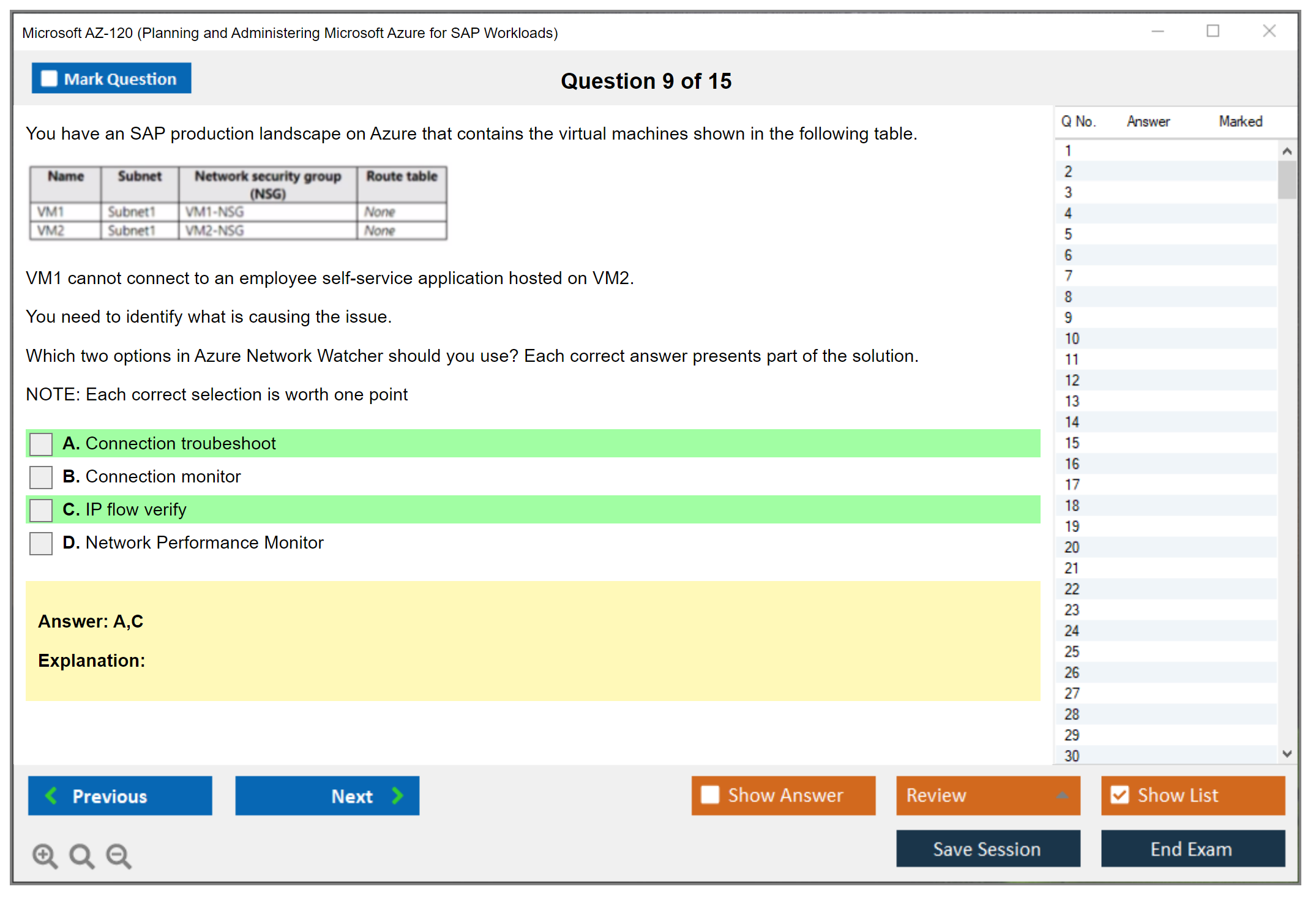
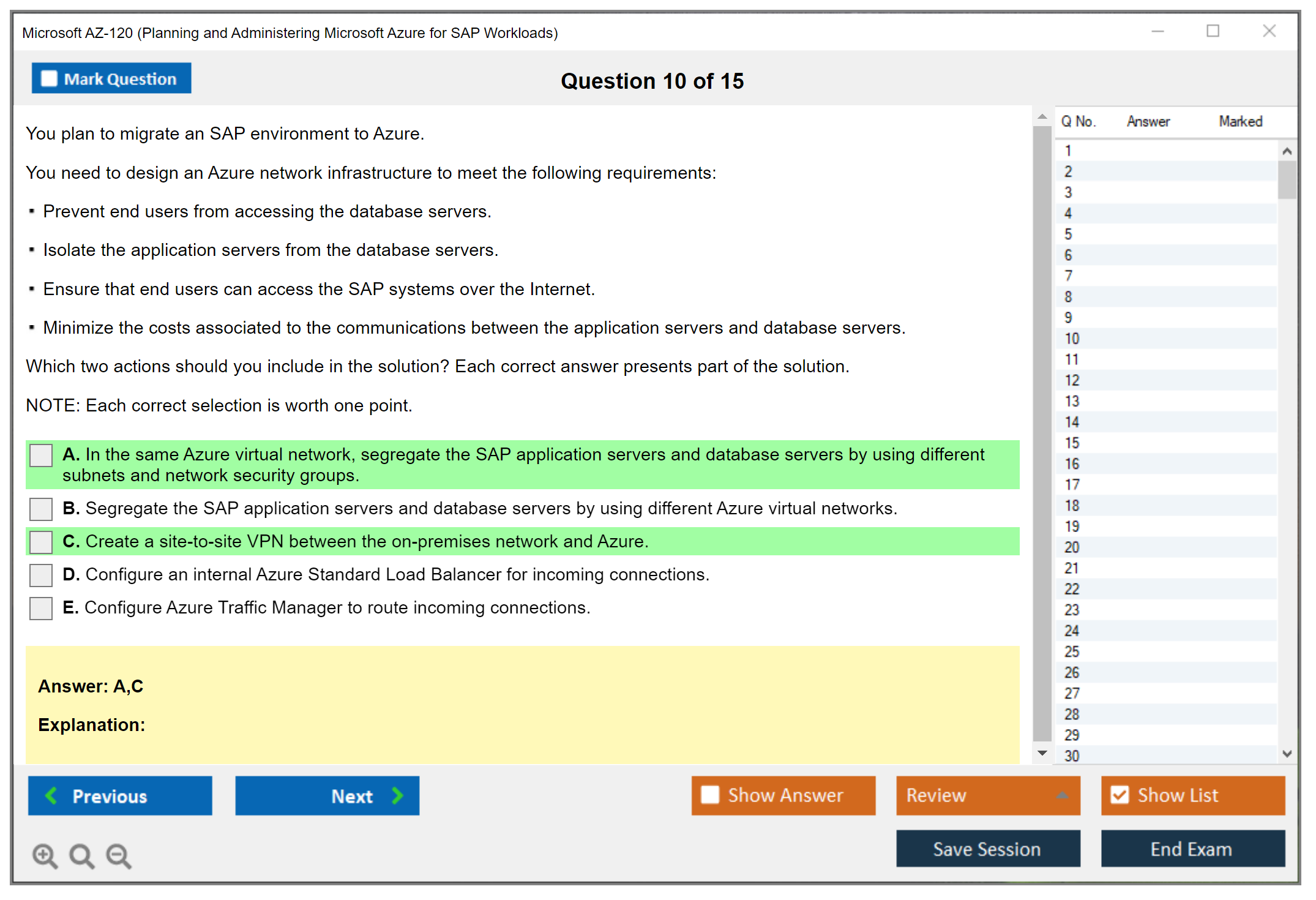
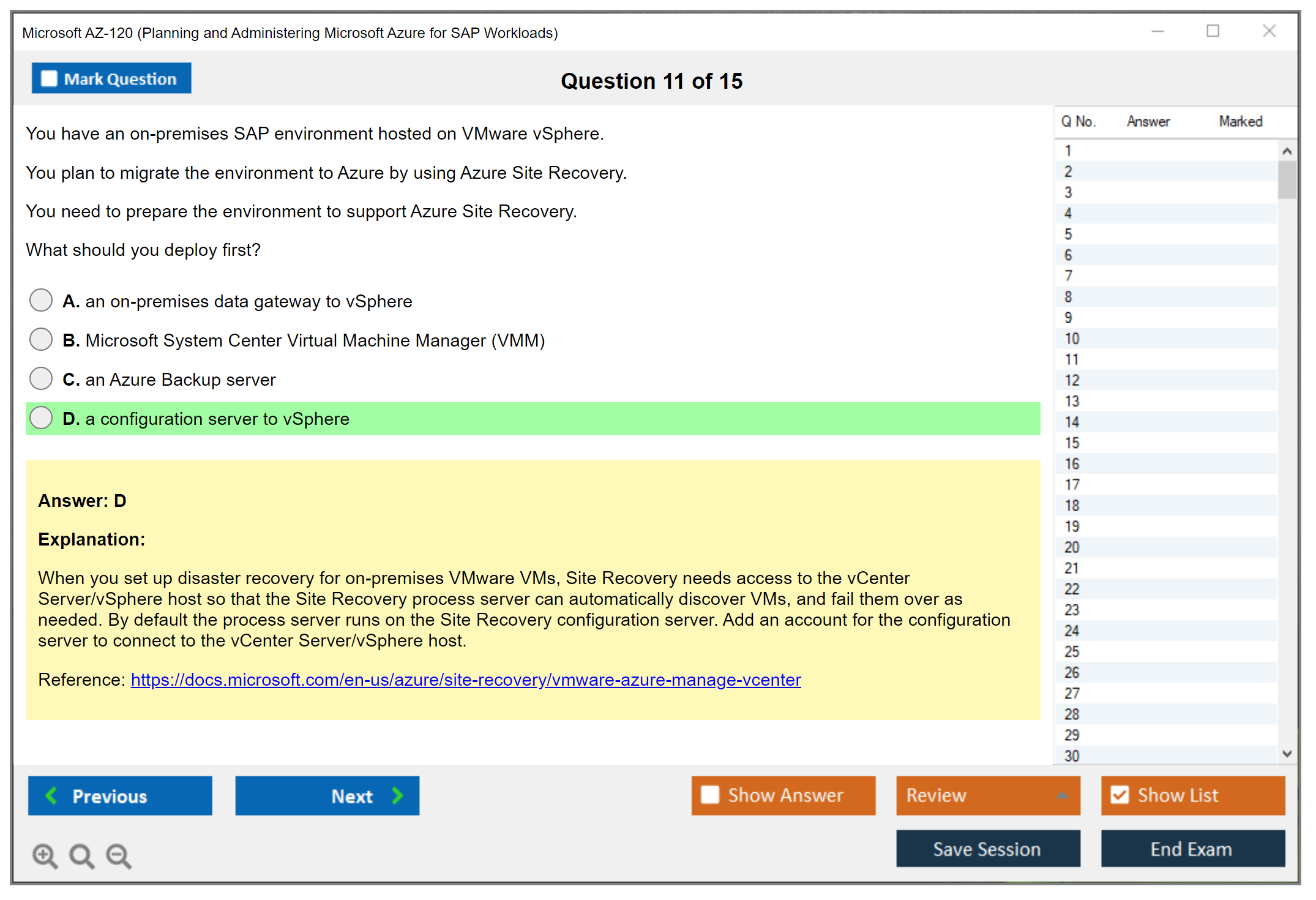
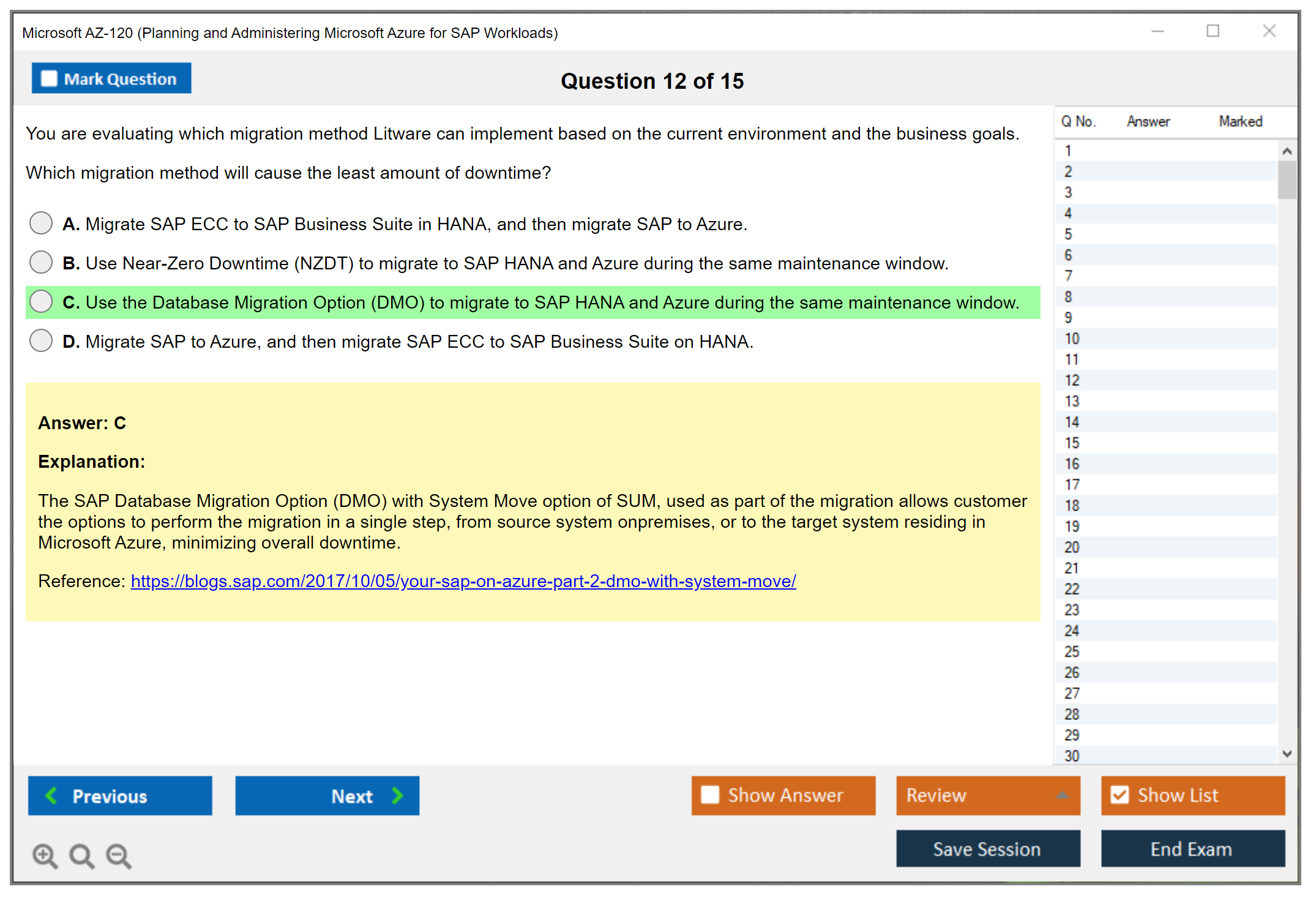
Microsoft AZ-120 (Planning and Administering Microsoft Azure for SAP Workloads)
What is the Microsoft AZ-120 Certification?
The Microsoft AZ-120 certification validates your expertise in planning and administering Azure for SAP workloads. Basically proving you know how to deploy, migrate, and manage SAP solutions on Microsoft's cloud infrastructure. It's niche, honestly. You're not just an Azure person or just an SAP person after this. You're both.
Who this certification is actually for
Look, this exam targets IT professionals who architect, deploy, and manage SAP applications on Azure. We're talking solution architects, cloud engineers, SAP Basis administrators, and infrastructure specialists who need to bridge two complex worlds. You need experience in both domains. If you've only touched Azure or only worked with SAP on-premises, you'll struggle. Not gonna lie. The sweet spot? Someone who's done Administering Relational Databases on Microsoft Azure work and has SAP exposure, or vice versa.
The exam focuses specifically on the intersection of Azure cloud services and SAP workload requirements. You're diving into unique considerations for SAP HANA, NetWeaver, and other SAP components running in Azure environments. It's not generic cloud stuff. It's about understanding why SAP systems behave differently than typical application workloads and how Azure accommodates those quirks.
What skills AZ-120 actually validates
This credential proves proficiency in designing resilient SAP architectures using Azure virtual machines for SAP. High availability configurations? Check. You're optimizing performance for mission-critical SAP systems that can't just "go down for maintenance." Companies run their entire business on these systems.
The certification demonstrates understanding of SAP on Azure certification exam requirements. This includes knowledge of SAP-certified VM types (not all Azure VMs are certified for SAP production), storage configurations that meet SAP's IOPS and latency demands, and networking topologies specific to SAP workloads. You can't just spin up random VM sizes and call it done. SAP has requirements. Microsoft has requirements. You've gotta satisfy both.
Candidates learn to use Azure-native services for SAP monitoring, backup, disaster recovery, and automation while maintaining SAP support requirements and compliance standards. That last part? Honestly trips people up all the time. You can architect something brilliant in Azure, but if it violates SAP support boundaries, you're on your own when things break. And they will break.
Why AZ-120 matters differently than other Azure certs
The AZ-120 credential complements other Azure certifications but provides specialized knowledge that general Azure architects may lack regarding SAP-specific requirements and best practices. Someone with Designing Microsoft Azure Infrastructure Solutions skills doesn't automatically know SAP workload characteristics. Memory-intensive databases. High IOPS requirements. Low-latency networking needs that make or break performance.
Organizations seeking to migrate SAP workloads to Azure or optimize existing SAP deployments value professionals holding this certification for their demonstrated expertise. SAP migrations are expensive, risky projects. Companies want proof you know what you're doing before they let you touch production systems processing millions in transactions daily. I mean, can you blame them?
The role-based nature means the certification fits with job responsibilities of Azure SAP architects, SAP cloud administrators, and infrastructure engineers supporting SAP environments. It's practical. The exam tests what you'd actually do in the job, not just theory. I've seen plenty of paper-certified folks freeze up when an SAP system goes down at 2 AM and you need to actually fix it, not recite memorized best practices.
What you're proving you can do
Professionals with AZ-120 can design and implement solutions addressing SAP workload characteristics. We're talking about systems that need massive amounts of memory, consistent disk performance, and network configurations that minimize latency between application and database tiers. Get the network topology wrong? Your SAP system crawls.
The credential demonstrates capability to work with SAP-certified configurations, understand SAP Notes relevant to Azure deployments (yes, SAP Notes are still a thing in the cloud, unfortunately), and implement solutions meeting both Microsoft and SAP support requirements. This dual-vendor support model is unique and honestly kind of annoying, but it's reality.
AZ-120 holders understand the complete lifecycle of SAP on Azure. From initial sizing and architecture through deployment, migration, optimization, and ongoing administration. You're not just standing up systems. You're sizing them correctly based on SAPS benchmarks, planning for growth, implementing monitoring that catches problems before users notice. The whole nine yards, really.
The certification proves expertise in integrating Azure services like Azure NetApp Files (huge for SAP HANA shared storage), Azure Monitor (for SAP-aware monitoring), Azure Site Recovery, and Azure Backup specifically for SAP workload scenarios. Similar to how Administering Microsoft SQL Server 2012/2014 Databases focuses on database-specific admin tasks, AZ-120 zeros in on SAP-specific Azure integration patterns.
Real-world application scenarios
Professionals pursuing this certification typically work in enterprise environments running business-critical SAP applications requiring cloud expertise combined with SAP-specific knowledge. These aren't small deployments. We're talking multi-million dollar SAP landscapes with development, quality assurance, and production systems deployed across Azure regions and availability zones.
The credential validates understanding of SAP space architectures and how to properly distribute them in Azure. You need to know when to use availability sets versus availability zones, how to configure Pacemaker clusters for Linux-based SAP systems, when to use Azure Load Balancer versus application-level load distribution. The thing is, these choices have downstream impacts you can't easily reverse.
AZ-120 certification demonstrates knowledge of cost optimization strategies specific to SAP on Azure. Reserved instances for predictable workloads. Spot VMs where appropriate (careful with this for SAP). Right-sizing recommendations based on actual usage patterns. SAP licensing alone is complex enough. You don't want to overprovision Azure resources on top of that.
The certification covers both greenfield SAP deployments on Azure and brownfield migrations from on-premises or other cloud platforms to Azure infrastructure. Migration strategies differ significantly. Lift-and-shift? Replatform to HANA? These decisions have massive implications.
Technical depth and practical expertise
Professionals with this credential understand compliance, security, and governance requirements specific to SAP workloads. Data residency. Encryption at rest and in transit. Access controls that satisfy both IT security teams and auditors. SAP systems contain sensitive business data. Financial records. HR information. You can't mess around with security.
The certification validates expertise in troubleshooting SAP-specific issues in Azure environments, working with both Azure support and SAP support when necessary. This dual-support model means you need diagnostic skills that cross platform boundaries. Is it an Azure issue or an SAP issue? You need to figure that out fast. Or wait, sometimes it's both, which is even more fun.
AZ-120 holders can implement automation for SAP deployments using Azure Resource Manager templates, PowerShell, Azure CLI, and infrastructure-as-code approaches. Manual deployments don't scale. You need repeatable, documented deployment processes, especially when you're managing multiple SAP landscapes.
The credential demonstrates understanding of SAP licensing considerations in Azure environments and how to properly configure systems for license compliance. SAP licensing? It's its own nightmare, and Azure doesn't make it simpler. You need to understand processor-based licensing, named user licensing, and how virtualization affects both.
Professionals with AZ-120 certification can advise organizations on Azure region selection based on SAP workload requirements, data residency needs, and service availability. Not all Azure services are available in all regions. Not all regions have the VM types SAP requires. Geography matters.
AZ-120 Exam Overview and Format
What is the Microsoft AZ-120 certification?
The Microsoft AZ-120 certification exam's officially called Planning and Administering Microsoft Azure for SAP Workloads (exam code AZ-120), and it lives inside Microsoft's role-based certification program, which is their way of saying "this actually maps to a real job" instead of being some kind of trivia night for cloud nerds who memorize service limits at parties.
Who should take it? SAP Basis folks, definitely. Azure architects. Infrastructure admins who keep getting dragged into SAP projects because "you did that one migration once, right?" You know who you are. Also people who already understand that SAP on Azure isn't one tidy product. It's this whole constellation of compute, storage, networking, identity, monitoring, HA/DR configurations, and a massive pile of trade-offs that'll make your head spin if you're not careful.
What it validates is planning and administering Azure for SAP workloads across the entire lifecycle, and yeah, that includes both Windows and Linux deployments because Azure supports SAP on both and the considerations can be wildly, I mean wildly different depending on whether you're running HANA, what clustering setup you've inherited, and what ops tooling your team's already married to. Real work.
AZ-120 exam overview
The AZ-120 exam is 120 minutes. Two hours. It goes fast. The thing is, it really goes fast when you're stuck on a case study.
Microsoft doesn't publish exact question counts officially because the exam's dynamically generated, but you should expect roughly 40 to 60 questions. That range matters more than people think because if you mentally pace yourself for 40 and you get 60, you're gonna feel it deep in your soul around minute 80 when panic sets in.
The exam's scenario-first. Hard stop. You're not getting rewarded for memorizing some textbook definition of Accelerated Networking. You're getting rewarded for knowing when it matters, what it actually changes in throughput and latency conversations, and how it interacts with VM choices you'd actually run for SAP in production. Same vibe for Azure Large Instances (HLI), M-series VMs, and Write Accelerator: you need to know why they exist, what they're legitimately good at, and when they're a terrible fit that'll bite you later.
Also? Expect diagrams. Network topologies. SAP space sketches that look like someone's whiteboard after three espressos. Resource configuration snippets. You'll read a scenario and then pick a recommendation that matches Azure SAP architecture best practices while still respecting constraints like "must stay in region X" or "no downtime longer than Y minutes" or "we already bought reserved instances and finance will murder us if we don't use them."
I once watched a colleague spend seventeen minutes on a single case study question about disaster recovery configurations because he kept second-guessing whether the RTO requirement was realistic given the proposed budget. Sometimes you just have to commit and move on, even when your brain's screaming that the business requirements don't make sense.
Exam format, question types, and what to expect
Look, the question types are the usual Microsoft mix, but the way they're deployed on AZ-120 is more intense because SAP stacks are inherently messy and the exam absolutely leans into that complexity instead of sanitizing it.
You'll see:
- Multiple-choice and multiple-response questions, where the truly annoying part is that more than one answer looks reasonable at first glance and you're being tested on judgment calls, not trick wording or gotcha clauses.
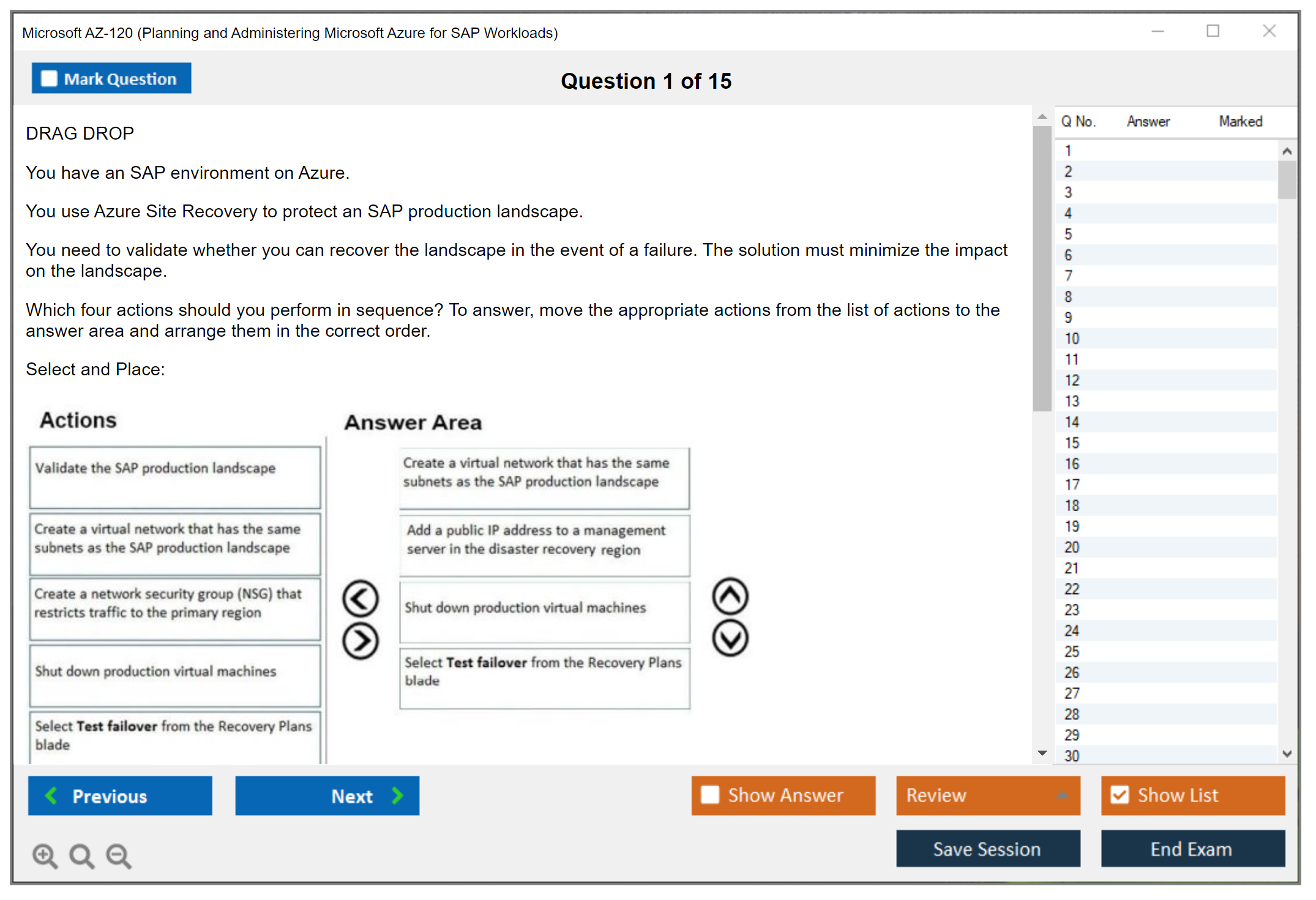
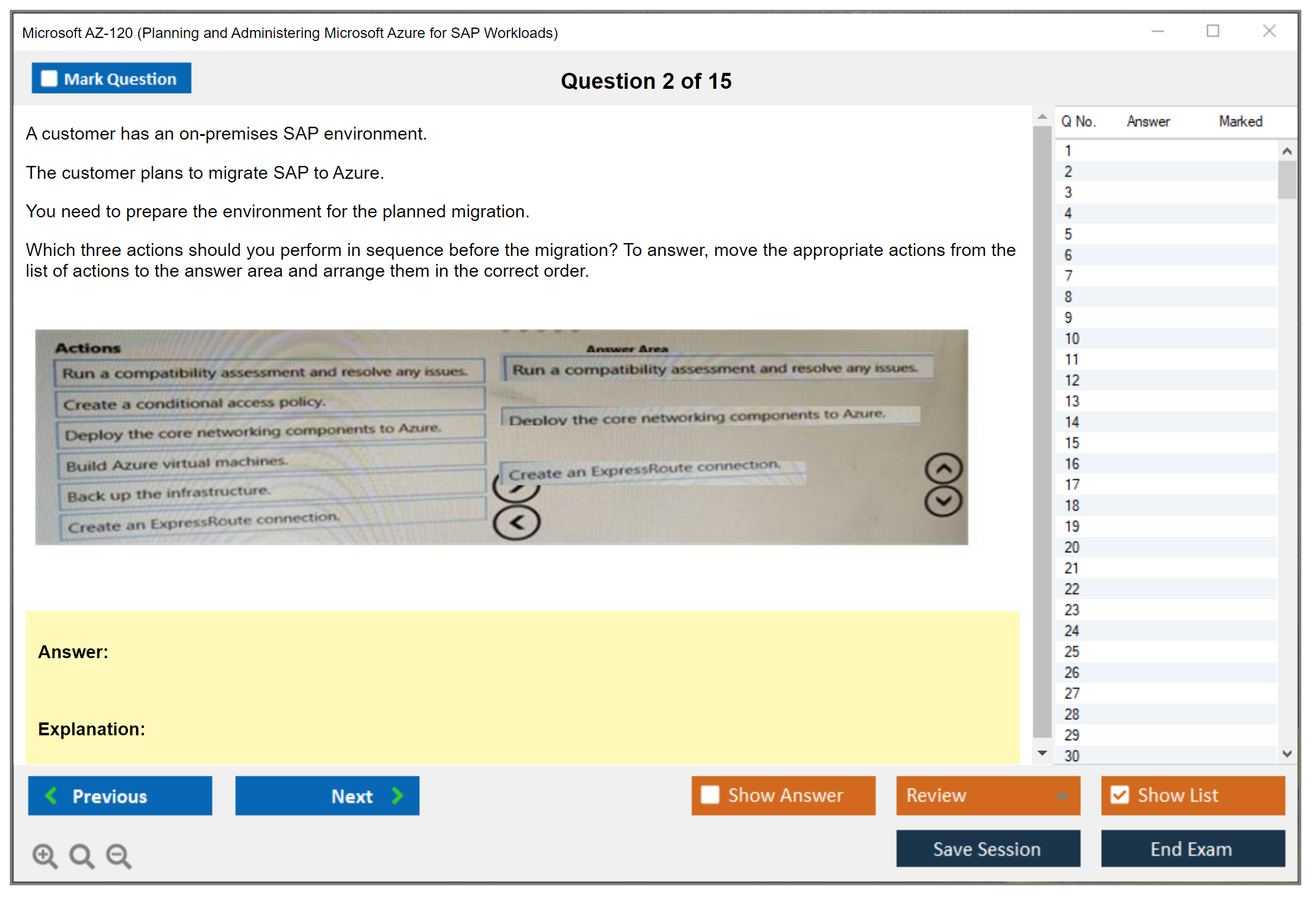
- Drag-and-drop sequences. Sometimes it's ordering migration steps or mapping components like SAP HANA, NetWeaver app servers, and SAP Fiori frontends to the right Azure services in the right order.
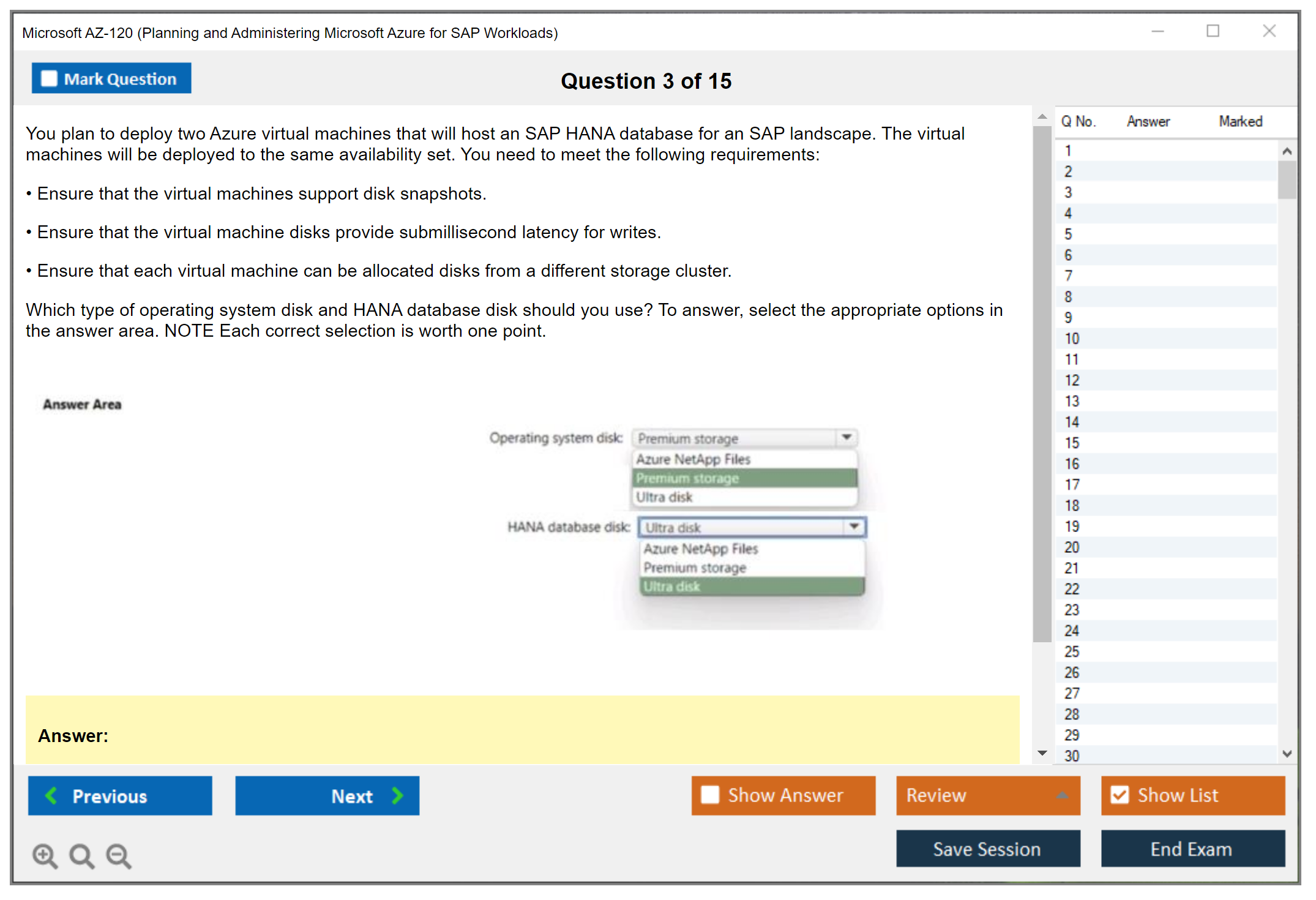
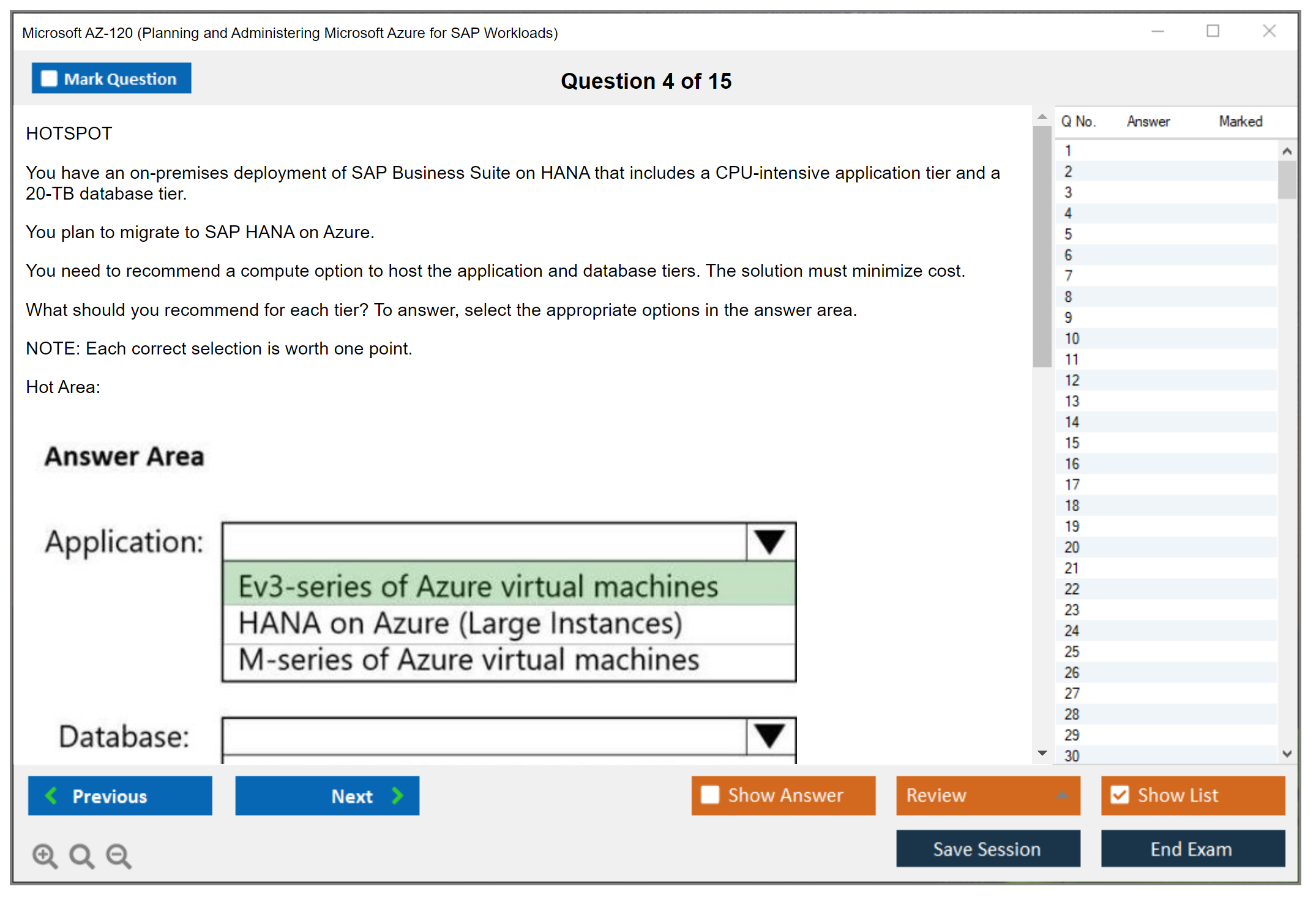
- Hot area (click-to-select) questions, often paired with architecture diagrams, where you pick the correct subnet, storage option, or HA placement by literally clicking the picture. Sounds easy until you realize three zones look identical.
- Case studies and scenario-based blocks that really feel like mini consulting engagements where someone's paying you to not screw this up.
Case studies are huge here. Massive, actually. Microsoft will hand you a detailed org story: current SAP space, business requirements, technical constraints, sometimes even "political" constraints like standardized OS images, mandated monitoring tools your CTO's weirdly attached to, or a strict cost ceiling that makes M-series VMs a fantasy. Then you answer multiple questions all tied to that one scenario. Read it slowly. I mean it. Slowly. Take mental notes. Because once you finish a case study section, you can't go back to it. No second pass. No "let me double-check the requirements real quick." That one-way door's brutal if you skim.
The interface itself? Pretty normal, honestly. You can mark questions for review, jump around within allowed sections, and you've got a countdown timer staring at you the whole time. Use the mark-for-review feature hard, but don't kid yourself that you'll have tons of time at the end, because case studies and long scenarios eat minutes like they're getting paid commission.
Scoring, passing, and the stuff Microsoft doesn't spell out
AZ-120 uses scaled scoring. Your score's between 100 and 1000, and you need a minimum passing score to earn the certification. People always hunt for an exact "AZ-120 passing score" number like it's the Da Vinci Code, but Microsoft's scoring approach is intentionally not something you reverse-engineer during the exam, so just focus on getting the best answers consistently instead of trying to game some imaginary curve.
Not every question's necessarily scored, either. Microsoft may include unscored items for future exam development, and they're completely indistinguishable from scored questions, which is kind of evil but also pretty standard in psychometric testing if you've ever talked to an exam developer at a conference.
Microsoft also does psychometric analysis on results, with questions reviewed by subject matter experts and statistically analyzed for performance. Fancy way of saying they try to keep the exam fair, and they throw out or rework items that don't behave the way a good question should. Still. You'll absolutely hit at least a couple questions that feel like "I could legitimately argue two answers here," because SAP architecture decisions in the real world often have multiple viable options depending on priorities.
Delivery options: testing center vs online proctored
You can take AZ-120 through Pearson VUE at a testing center or as an online proctored exam from home.
Testing center's the low-drama option. You show up, use their computer, and don't worry about your webcam dying mid-exam or your neighbor's dog having an existential crisis. You do have to arrive early for check-in, identity verification, and locking up your personal stuff in a locker. That part feels uncomfortably like airport security designed specifically for IT people.
Online proctored's convenient when it works, but it's ridiculously picky. You need a private space, reliable internet, a working webcam, and you must pass the proctoring software system checks. No second monitor lurking in the corner, no random papers on your desk, no "my cat walked across the keyboard and now the proctor thinks I'm cheating." If your environment isn't boring and controlled, really don't risk it.
Updates, objectives, and where to go next
Microsoft updates exam content periodically to match current Azure services, SAP versions, and evolving best practices. They usually announce bigger changes with a transition period, so check the official AZ-120 exam objectives before you commit to a study plan or buy AZ-120 study materials that might already be stale because someone wrote them eighteen months ago.
If you're building a broader Azure cert path around this, I'd also look at DP-300 (Administering Relational Databases on Microsoft Azure) for the data platform angle, AZ-700 (Designing and Implementing Microsoft Azure Networking Solutions) if networking's your weak spot and you know it, and AZ-305 (Designing Microsoft Azure Infrastructure Solutions) if you want more architecture coverage outside the SAP bubble. And if you want the exam page itself, here's AZ-120 (Planning and Administering Microsoft Azure for SAP Workloads).
Cost, prerequisites, practice tests, renewal process, and the AZ-120 difficulty level all matter, sure. But the format's the first real hurdle. If you can't manage the scenarios and that brutal case-study one-way door, it doesn't matter how many flashcards you made or how many acronyms you memorized.
AZ-120 Exam Cost and Registration Details
How much does the AZ-120 exam cost?
The Microsoft AZ-120 certification exam runs $165 USD as of 2026 when you book through Pearson VUE in the United States. That's your baseline number.
Pricing gets messier once you step outside US borders. Different countries throw their own currency conversions and regional adjustments into the mix, which means candidates in Europe might fork over around 99 EUR while folks throughout Asia-Pacific regions encounter varying amounts tied to local economic factors. Microsoft tweaks these prices depending on currency fluctuations and market conditions, so what you pay today could shift slightly come next quarter. Always double-check the current price when you're actually ready to register. Don't just rely on numbers from some blog post you stumbled across six months ago.
That exam fee covers exactly one attempt. Fail to hit the passing score on your first go, and you'll pay that same amount again for a retake. No discount for round two, which is why proper preparation matters so much. Related Azure credentials like the AZ-104 (Microsoft Azure Administrator) follow a similar pricing structure, and if you're juggling database workloads alongside SAP systems, the DP-300 (Administering Relational Databases on Microsoft Azure) might complement your skill set.
Academic pricing and special discounts
Students currently enrolled in qualifying educational institutions can access academic pricing that typically slashes the cost by about 50%. You'll need to verify your student status during registration, but that discount makes a real difference if you're still in school or doing part-time coursework.
Microsoft Certified Trainers (MCTs), Microsoft employees, and participants in certain partner programs sometimes qualify for free or discounted exam vouchers. Employer-sponsored programs let organizations purchase vouchers in bulk, often at reduced rates for training initiatives. I've seen companies buy these in batches of 20 or 50 to support certification goals across entire teams.
Microsoft Learn Cloud Skills Challenge participants occasionally score free exam vouchers as rewards for completing learning challenges during promotional periods. Microsoft Ignite, Microsoft Build, and similar major events sometimes toss free vouchers to attendees as conference perks. These promotional vouchers typically come with expiration dates, commonly 90 days to one year, so you can't just sit on them indefinitely.
Speaking of vouchers, I once let a perfectly good one expire because I kept pushing off my exam date. Thought I had all the time in the world until I logged in one day and saw it was already 10 days past the expiration. That was $165 down the drain. Don't be like me.
Retake policy and rescheduling fees
The retake policy requires a 24-hour waiting period after your first failed attempt before you can try again. Gives you at least a day to decompress and figure out what actually went wrong. For the third attempt and beyond, you're looking at a 14-day waiting period. If you somehow fail five times (and let's hope it doesn't come to that), you must wait a full 12 months from that fifth attempt before trying again. Microsoft really wants you to take preparation seriously.
Exam rescheduling is free if you do it more than 6 business days before your scheduled appointment. But reschedule within that 6-business-day window, and Pearson VUE charges a rescheduling fee, typically $25-50 depending on your region. Cancellations made within 6 business days or no-shows mean you forfeit the entire exam fee without refund. Plan accordingly.
Exam insurance and bundled options
Pearson VUE offers exam insurance products like Exam Replay or Exam Replay with Practice Test. These bundle a retake voucher with your initial exam purchase at a package price. Costs more upfront, sure, but it provides savings if you need that second attempt plus peace of mind if you're not feeling confident about passing on the first try.
Practice test bundles include official Microsoft practice exams along with the exam voucher. One purchase, both preparation materials and the actual attempt. If you're already planning to buy practice tests anyway, the bundle sometimes makes financial sense, though you'll wanna do the math yourself.
Payment methods for individual registrations include credit cards, debit cards, and PayPal through the Pearson VUE website. Organizations purchasing volume vouchers can use purchase orders, invoicing, and other enterprise payment methods through Microsoft or authorized resellers. Some countries require additional identity verification or have specific registration requirements beyond standard Pearson VUE procedures, which can be a hassle.
Hidden costs to consider
Tax and VAT may apply depending on local regulations, potentially bumping your total cost beyond that base exam price. Currency conversion fees might hit you when paying in a currency different from your local one, depending on your payment method and financial institution. Those little charges add up.
Microsoft Learning Partners and training providers sometimes bundle exam vouchers with training courses, offering package pricing for combined training and certification. These packages can be convenient if you're already planning to take instructor-led training. Just compare the bundled price against buying separately to make sure you're actually saving money.
If you're pursuing multiple Azure certifications, look into the AZ-305 (Designing Microsoft Azure Infrastructure Solutions) or AZ-500 (Microsoft Azure Security Technologies) to round out your cloud architecture skills. The AZ-700 (Designing and Implementing Microsoft Azure Networking Solutions) also pairs well with SAP workload knowledge since networking plays such a critical role in SAP on Azure deployments.
Bottom line: budget $165 USD plus potential retake costs, factor in any available discounts, and schedule with enough buffer time to avoid rescheduling fees.
AZ-120 Passing Score and Results Interpretation
What is the Microsoft AZ-120 certification?
The Microsoft AZ-120 certification is the SAP-on-Azure specialist badge for people who actually have to make SAP workloads behave in the cloud. It's aimed at cloud architects, Azure admins, and SAP Basis folks who are tired of vague "cloud migration" talk and want to prove they can plan, build, and run SAP systems on Azure without guesswork.
Look, if your day includes sizing Azure virtual machines for SAP, picking storage layouts for SAP HANA, and arguing about zones versus regions, this is your exam. And if it doesn't yet, but you want that job, AZ-120 is a pretty direct signal to employers that you can speak both Azure and SAP without freezing up.
Who should take AZ-120 (job roles and experience level)
Cloud solution architects. SAP Basis admins moving to Azure. Infra engineers supporting SAP landscapes. Consultants who get dragged into HA/DR meetings.
What skills AZ-120 validates for SAP on Azure
Planning and administering Azure for SAP workloads, plus Azure SAP architecture best practices like HA pairs, storage throughput math, networking design, and monitoring. Real stuff. Not trivia.
AZ-120 exam overview
Exam name and code: Planning and Administering Microsoft Azure for SAP Workloads (AZ-120)
That's the full name, and yeah it's a mouthful. The SAP on Azure certification exam angle is obvious: you're expected to connect Azure building blocks to SAP requirements, not treat SAP like just another app server.
Exam format, question types, and duration (what to expect)
Expect a mix. Multiple choice, multiple response, case studies, and scenario questions where one small constraint changes the whole design. Time feels tight if you overthink, especially on networking and HA/DR. Case studies can be long. I mean, they're written like the emails you wish you didn't get on Friday afternoons.
AZ-120 exam cost
AZ-120 exam price by country/region (how pricing works)
AZ-120 exam cost depends on your country and currency. Microsoft sets local pricing, so two people in different regions can pay different amounts for the same exam, which is normal for their role-based certs.
Discounts, vouchers, and employer-sponsored options
If you work at a place that runs SAP, honestly, ask them to pay. Lots of employers have training budgets, Microsoft vouchers, or partner credits. Students and some events also offer discount codes, but they come and go.
Retake policy and additional fees to consider
Retakes cost money again. The rules can vary by exam program updates, so check Microsoft's current retake policy before you schedule, because "I'll just retake next week" gets expensive fast.
AZ-120 passing score and results
What is the AZ-120 passing score?
The AZ-120 passing score is 700 on a scale of 100 to 1000, consistent with most Microsoft role-based certification exams. That number is the line. 700 and up is a pass, 699 is heartbreak.
How scoring works (scaled score basics)
Scaled scoring is where people get confused. Your raw score, meaning how many questions you got right, gets converted into a standardized scaled score that accounts for difficulty differences across exam versions, because not everyone gets the same set of questions on the same day.
That's why the passing score of 700 doesn't mean you got 70% correct. The relationship between raw scores and scaled scores isn't linear, it varies by exam form, and harder questions can contribute more toward your scaled score than easier ones. Also, partial credit isn't awarded, so on multiple-response questions you need all correct options selected to get credit. Miss one checkbox. Zero points for that item. Case study questions are weighted similarly to standalone questions, even though the format feels heavier because it tests integrated decisions across compute, storage, and networking for SAP HANA.
When and how you receive your score report
You get your score immediately after finishing. At a testing center it pops on-screen, and in online proctoring it shows in the exam interface. The score report shows your overall scaled score plus a breakdown by major AZ-120 exam objectives, reported as percentages per domain, so you can see strengths and weaknesses without being told exactly which questions you missed.
Failed attempts show the scaled score achieved below 700 and the same domain feedback to guide your retake plan. Passed attempts show a congratulatory message and pointers for accessing your digital certification and badge in the Microsoft Certification dashboard. No, you won't see which specific questions you got right or wrong, and that's intentional for exam security.
Within 24 hours the score report shows up in the dashboard, where you can download transcripts and share credentials. Digital badges are issued through Credly (formerly Acclaim), so you can post them on LinkedIn, add them to an email signature, or stick them on a personal site. Your official Microsoft transcript shows all attempts, including failed ones, with dates and scores, which some orgs use for verification. Score reports stick around indefinitely, and employers can verify via the Microsoft Certification verification portal using your certification number or email, so keep that info handy for job applications.
The thing is, you can't appeal scores. Microsoft's psychometric process is what it is. Not gonna lie, it's annoying when you miss by a hair, but that's the system.
If you score 650 to 699, you usually don't need a total reset. One or two weak domains are dragging you down, so drill those with targeted notes and a lot of scenario practice. If you're in the 500 to 600 range, that's a different story, and it usually means you need more hands-on time with Azure storage and networking for SAP HANA, plus more repetition on architecture choices, especially the ones involving availability zones. Actually, funny thing about zones. I spent three hours last month troubleshooting a HANA replication lag that turned out to be zone-to-zone latency nobody measured during planning. Obvious in hindsight, but nobody caught it until production. Anyway, point is, the exam loves zone trade-offs because real deployments trip over them constantly.
AZ-120 difficulty: how hard is it?
AZ-120 difficulty level feels higher than many general Azure exams because SAP adds constraints. Memory sizing, IOPS, latency, quorum, zones, ASCS/ERS patterns, and recovery objectives show up fast, and the questions assume you can choose designs under pressure.
People with Azure infra plus SAP Basis background find it fair. People who only know Azure services names tend to struggle. If you want extra reps, I mean, a focused question bank like the AZ-120 Practice Exam Questions Pack can help you spot patterns, especially around HA/DR and storage performance tradeoffs.
AZ-120 prerequisites and recommended experience
No hard prerequisites, but AZ-120 prerequisites in practice are "you should already know Azure fundamentals and SAP basics." Azure compute, storage, networking, identity, and monitoring are assumed. SAP HANA, NetWeaver concepts, and HA/DR terminology too.
AZ-120 exam objectives (skills measured)
Plan and implement Azure for SAP workloads
Subscription and landing zone decisions. Resource organization and governance stuff. Basic sizing considerations.
Design and implement compute for SAP on Azure
Azure virtual machines for SAP sizing. Availability sets vs zones. OS and image choices.
Design and implement storage for SAP workloads
Disk types and performance planning. Backup and snapshot thinking. Layout decisions for HANA volumes.
Design and implement networking for SAP on Azure
VNet design and routing. Private connectivity and name resolution. Security controls that don't break SAP.
Design and implement high availability and disaster recovery (HA/DR)
HA patterns for ASCS/ERS and HANA. Replication and failover concepts. RTO/RPO alignment.
Monitor and optimize Azure for SAP workloads
Azure Monitor and logging basics. Performance bottleneck identification. Cost watch-outs.
Best AZ-120 study materials
Microsoft Learn is the base. Then docs. SAP on Azure guides and reference architectures matter more than random videos, honestly, because the exam likes "best practice" defaults.
Hands-on labs help. Build a VNet, set up storage, think through HA. And if you want more exam-style repetition, the AZ-120 Practice Exam Questions Pack is a decent way to pressure-test your weak domains without hunting for questions all over the internet.
AZ-120 practice tests and exam prep strategy
AZ-120 practice tests are useful when you review why you missed something, not when you speed-run for a score. Track weak domains from your report, then drill those topics. Focus on sizing, HA/DR design choices, storage throughput, and networking layouts that support SAP without weird bottlenecks.
Common mistake. Memorizing service names. The exam wants decisions.
If you're close to passing, grab targeted practice like the AZ-120 Practice Exam Questions Pack and hammer the objective areas where your percentage was lowest.
AZ-120 renewal and certification maintenance
Does AZ-120 require renewal?
Yes. Microsoft certs typically have a renewal process.
How Microsoft certification renewal works (assessment-based renewal)
Renewal is done through an online assessment in the certification dashboard, and it's meant to keep skills current without paying for the full exam again.
Renewal timeline and what happens if you miss the window
There's a renewal window before expiration. Miss it and you may have to retake the exam, so set a calendar reminder.
AZ-120 FAQs
How much does the AZ-120 exam cost?
It varies by region, so check the exam page pricing for your country.
What is the passing score for Microsoft AZ-120?
700 on a 100 to 1000 scaled score.
Is AZ-120 difficult compared to other Azure exams?
Usually yes, because SAP constraints force deeper architecture thinking.
What are the prerequisites for the AZ-120 certification?
No formal requirement, but Azure infra knowledge and SAP basics are expected.
How do I renew the AZ-120 certification?
Through the Microsoft Certification dashboard via the renewal assessment during the renewal window.
AZ-120 Difficulty Level and Study Time Requirements
AZ-120 difficulty: how hard is it really?
Okay, real talk here.
The Microsoft AZ-120 certification sits somewhere between intermediate and advanced, and honestly that's being generous depending on where you're coming from. This isn't your standard Azure exam. The Planning and Administering Microsoft Azure for SAP Workloads test demands you actually understand two completely different technology stacks and how they mesh together. Most Azure certs focus on Azure itself, right? AZ-120 throws SAP workload requirements into the mix, and that's where things get really spicy.
If you're coming from a strong Azure infrastructure background but you've barely touched SAP systems, the SAP-specific terminology alone will trip you up. Terms like SAP HANA scale-out, application server pools, ASCS/ERS instances.. none of this shows up in general Azure training. The architecture patterns for SAP deployments follow conventions that honestly don't make sense unless you've lived in the SAP world. Why does SAP HANA need such specific memory-to-CPU ratios? Why do latency requirements between application and database tiers matter so much more than typical three-tier apps? You'll need to learn this stuff from scratch.
Now flip it.
You're an SAP Basis admin who knows NetWeaver inside and out but Azure is new territory. Now you're wrestling with VNet peering, ExpressRoute configurations, and Azure-native high availability patterns that work completely differently from on-premises clustering. The DP-300 (Administering Relational Databases on Microsoft Azure) exam covers some database concepts, but AZ-120 goes deeper into SAP-specific storage performance requirements that general database admins never see.
The sweet spot? You've got 1-2 years working with both stacks. Hands-on experience deploying SAP systems on Azure infrastructure. That's the candidate who finds AZ-120 challenging but achievable. Everyone else is fighting uphill, honestly.
I remember my first time trying to explain proximity placement groups to a veteran SAP admin. He kept asking why we couldn't just rack the servers closer together like on-prem. That's when it clicked for me how different the mental model really is.
What makes AZ-120 really difficult
The exam difficulty stems from needing deep knowledge of both technologies and their integration points. You can't just memorize Azure services or SAP terminology. Questions test whether you understand SAP-specific Azure configurations that literally don't exist for other workloads. Azure Large Instances (HLI)? That's SAP-only infrastructure. Write Accelerator for managed disks? Designed specifically for SAP HANA transaction log volumes. M-series and Mv2-series VMs with certified memory configurations? SAP HANA demands this stuff.
The networking questions kill people.
ExpressRoute latency requirements for distributed SAP landscapes, VNet peering topologies for multi-region deployments, proximity placement groups to ensure application servers stay close to database tiers.. if you haven't configured this in production, theoretical study won't cut it. The AZ-700 (Designing and Implementing Microsoft Azure Networking Solutions) covers networking broadly, but AZ-120 dives into SAP-specific network architecture that's way more prescriptive.
Storage configuration questions require detailed technical knowledge. Premium SSD performance tiers, Ultra Disk IOPS and throughput requirements for SAP HANA, Azure NetApp Files for shared file systems in high availability setups. You need to know not just what these services do but which performance characteristics match SAP workload demands. The exam throws scenarios at you with specific throughput requirements and existing configurations, then asks you to optimize or troubleshoot.
Scenario-based questions demand real judgment
AZ-120 doesn't test simple recall.
Not gonna lie, the scenario-based questions are brutal. You get detailed requirements, existing infrastructure constraints, business goals around cost or performance, then multiple technically viable approaches. Your job? Pick the optimal solution. Not just a working solution, but the best one given all the constraints.
These questions require careful analysis. Read the scenario. Note the requirements. Check the constraints. Evaluate each option systematically. Candidates who rush through get wrecked because three answers might technically work but only one balances cost, performance, and operational complexity appropriately for the specific situation.
Case studies add another layer, honestly. You can't return to review case study details once you move to the next section, so take notes and write down key facts. The time pressure is real. People who over-analyze every question run out of time before finishing, and you need efficient reading skills plus the ability to extract relevant information quickly.
Study time estimates by background
How long to study for AZ-120?
Depends entirely on what you already know. Candidates with solid experience in both Azure infrastructure and SAP administration typically need 40-60 hours of focused study. You're mainly filling gaps, learning SAP-specific Azure services, and practicing scenario-based decision-making.
Azure pros who are new to SAP? Budget 80-100 hours minimum. You're learning an entire application stack. Its terminology. Architecture patterns. High availability approaches. Operational requirements. The AZ-120 Practice Exam Questions Pack helps tremendously here because it exposes you to SAP scenarios you wouldn't encounter in general Azure work.
SAP experts entering Azure need 60-80 hours to master cloud-native services, networking concepts, and infrastructure-as-code approaches. On-premises SAP deployments work fundamentally differently from cloud architectures. Shared storage via Azure NetApp Files versus traditional SAN. Load balancers instead of hardware appliances. Availability zones versus datacenter clustering. It's a mindset shift.
Complete beginners to both stacks?
Honestly, get foundational experience first. The exam assumes intermediate knowledge of both domains, so trying to learn Azure fundamentals, SAP basics, and their integration simultaneously is setting yourself up for failure and wasted exam fees.
Hands-on practice isn't optional
Here's the thing. Theoretical study alone won't get you through AZ-120.
You need 20-30 hours of practical lab time deploying SAP-related Azure resources. Configure storage accounts with specific performance tiers. Set up proximity placement groups. Deploy VMs with Write Accelerator enabled. Build high availability configurations with load balancers and Pacemaker clusters.
The exam's difficulty increases dramatically for candidates without Azure subscription access. You can read documentation about Azure NetApp Files all day, but until you've actually provisioned capacity pools, created volumes, and tested NFS mounts for SAP shared directories, you won't really understand the operational details questions test.
Questions requiring cost optimization decisions challenge you to balance technical requirements with business considerations. Azure pricing models are complex, and SAP workloads can get expensive fast with large memory-optimized VMs and premium storage. You need to know when Standard SSD suffices versus when Premium or Ultra Disk is necessary, when to use managed disks versus Azure NetApp Files. These aren't just technical decisions. They're business decisions with cost implications.
Common failure points
People who fail AZ-120 typically cite insufficient hands-on experience as the main issue.
Reading about high availability configurations isn't the same as building them. The exam tests practical implementation knowledge you only gain from doing the work. Others underestimate the SAP-specific requirements, thinking general Azure knowledge transfers completely. It doesn't.
Gaps in Azure networking and storage knowledge sink candidates from the SAP side. You can't fake understanding of VNet peering topologies or storage performance characteristics. The exam digs into these areas with detailed scenario questions that expose theoretical knowledge gaps immediately.
The pass rate isn't publicly disclosed, but anecdotally it's lower than general Azure certifications. The specialized knowledge requirement creates a higher barrier. Microsoft updates Azure services regularly and SAP support statements change, so studying current documentation matters. Outdated materials will teach you configurations that no longer represent best practices or aren't supported anymore.
Comparable to other Azure specialty certifications like AZ-140 (Configuring and Operating Windows Virtual Desktop on Microsoft Azure) or AZ-600 (Configuring and Operating a Hybrid Cloud with Microsoft Azure Stack Hub), AZ-120 requires deep knowledge in a specific domain. The difference? AZ-120 spans two domains, making it uniquely challenging.
AZ-120 Prerequisites and Recommended Experience
The Microsoft AZ-120 certification is the one Azure exam that assumes you already speak SAP. Not "I installed SAP once" SAP. Real Basis or infra SAP, with opinions about HANA memory, I/O patterns, and why one tiny network rule can ruin your weekend.
What is the Microsoft AZ-120 certification?
AZ-120 is a SAP on Azure certification exam aimed at people planning and administering Azure for SAP workloads. Think cloud architects, SAP Basis admins moving to Azure, and infra engineers who keep getting pulled into "can we run this on Azure" meetings.
Some folks try treating it like another Azure test. Bad move. This exam's about Azure SAP architecture best practices, and it keeps circling back to how SAP behaves when you place it on Azure virtual machines for SAP, wire up storage, then add HA/DR without breaking performance.
Who should take AZ-120 (job roles and experience level)
SAP Basis. Cloud solution architect. Senior sysadmin supporting SAP. Consultants who keep inheriting half-built landing zones too. You know who you are.
Junior cloud engineers can study it. But the AZ-120 difficulty level ramps up fast if you've never owned a production SAP space, and honestly, you'll spend more time translating SAP quirks than learning Azure mechanics.
What skills AZ-120 validates for SAP on Azure
Sizing and placement. Storage choices for databases. Network design that respects SAP traffic flows. HA/DR patterns that match SAP HANA and NetWeaver expectations. Lots of "what would you do here" thinking, not just regurgitating docs.
AZ-120 exam overview
Exam name and code: Planning and Administering Microsoft Azure for SAP Workloads (AZ-120)
The code's AZ-120, the name's long, and the scope isn't subtle. Planning and administering Azure for SAP workloads is basically the whole point.
Exam format, question types, and duration (what to expect)
Expect multiple choice. Case studies. Scenario-heavy items where you pick the best architecture choice, not the only possible choice. Which trips people up because there's detail everywhere. Time limits vary a bit, but plan for a typical Microsoft exam sitting with review time, and honestly, practice reading fast because SAP scenarios get wordy and dense.
AZ-120 exam cost
AZ-120 exam price by country/region (how pricing works)
How much does the AZ-120 exam cost? The AZ-120 exam cost depends on your country and currency. Microsoft prices exams by market, so you'll see different numbers in the checkout flow for Pearson VUE or Certiport.
Discounts, vouchers, and employer-sponsored options
Many people never pay retail. Employers often cover it. Some training providers include vouchers. Sometimes Microsoft events hand out discounts. Check your employer benefits first. I once had a manager who'd approve any cert cost under $300 without blinking, but anything over needed three approval layers and a business case document. Made zero sense since the effort of writing that justification probably cost more in billable hours than the exam fee itself, but bureaucracy doesn't care about irony.
Anyway, explore your options before pulling out a credit card.
Retake policy and additional fees to consider
Retakes cost money unless your voucher says otherwise. Factor in time cost too, because if you fail AZ-120 you usually don't need "more Azure." You need better SAP-on-Azure judgment and maybe a deeper understanding of why certain architecture decisions matter in production.
AZ-120 passing score and results
What is the AZ-120 passing score?
What is the passing score for Microsoft AZ-120? The AZ-120 passing score's typically 700 on Microsoft's scaled score model.
How scoring works (scaled score basics)
It's not "70% correct." It's scaled. Different questions can carry different weight, and some items are experimental and not scored, which honestly feels unfair but that's how they calibrate future exams.
When and how you receive your score report
You see results right after you finish, plus a domain breakdown that points at weak areas tied to the AZ-120 exam objectives.
AZ-120 difficulty: how hard is it?
Difficulty factors (SAP workload complexity, architecture depth)
Is AZ-120 difficult compared to other Azure exams? Usually yes. Because SAP adds a second knowledge stack. Azure alone's manageable. Azure plus SAP sizing, storage performance, and HA/DR tradeoffs is where people slip.
Who finds AZ-120 easiest vs hardest
Easiest: experienced SAP Basis folks who already deployed HANA, tuned storage, and dealt with HA. Hardest: Azure engineers with little SAP background, because the questions assume you know what SAP HANA cares about. And it cares about everything.
How long to study for AZ-120 (time estimates by background)
Strong in SAP, okay in Azure? Maybe a few weeks of focused study. Strong in Azure but weak in SAP? It can take longer because you're learning behaviors, not commands. That takes repetition plus lab time and honestly some trial-and-error pain.
AZ-120 prerequisites and recommended experience
Required prerequisites (if any) vs recommended prerequisites
What are the prerequisites for the AZ-120 certification? Here's the honest part: AZ-120 prerequisites don't include mandatory certifications or formal requirements. No gatekeeping cert. No "must pass AZ-104 first" rule.
But Microsoft strongly recommends you show up with real knowledge and experience before attempting the exam, because the content assumes you can connect dots across SAP and Azure without being coached. You can book the exam tomorrow, sure. You might also light your exam fee on fire. Technical prerequisites matter more than credential prerequisites here.
Recommended Azure knowledge (compute, storage, networking, identity)
On compute, you should be comfortable with Azure compute services, especially virtual machines and VM scale sets. You need to know what "SAP-certified" VM families are and why that matters for production supportability.
This is where people get tripped up.
The exam expects you to recognize when a VM type's appropriate for HANA memory needs, when to separate app and DB tiers, and how to think about availability sets, availability zones, and maintenance behavior in a way that matches SAP uptime expectations. Not generic web app patterns. Those are completely different animals with different SLAs and recovery behaviors.
Storage's a big deal. You should understand managed disks, Premium SSD, Ultra Disk, and Azure NetApp Files, plus storage performance characteristics for database workloads like SAP HANA. If you can't reason about IOPS, throughput, latency, and how striping or disk layout impacts HANA log and data volumes, you'll guess a lot. Knowing when Azure NetApp Files makes sense, when Ultra Disk fits, and when Premium SSD's enough is exam-grade knowledge, not trivia.
Networking's essential. You need comfort with virtual networks, subnets, network security groups, Azure Load Balancer, Application Gateway, and ExpressRoute. SAP landscapes are chatty and segmentation-heavy, and the exam likes scenarios where one subnet design choice impacts routing, security, and load balancing all at once. Name resolution and traffic flow matter more than people expect. Tiny misconfigurations equal big outages.
Identity shows up, but it's not the star. Know the basics of Azure AD integration patterns and access control. Focus your energy on compute, storage, and networking first.
Recommended SAP knowledge (SAP HANA, NetWeaver, HA/DR concepts)
Microsoft recommends advanced experience with SAP applications including SAP HANA, SAP NetWeaver, SAP BusinessObjects, and a solid understanding of SAP space architectures. That means you recognize typical DEV, QA, PRD layouts, understand app servers versus central services, and can talk HA/DR concepts without googling. Like HANA system replication, clustering patterns, and what "RPO/RTO" means when the business's serious.
AZ-120 renewal and certification maintenance
Does AZ-120 require renewal?
How do I renew the AZ-120 certification? Yes. Microsoft role-based certifications typically require renewal.
How Microsoft certification renewal works (assessment-based renewal)
You renew by completing an online renewal assessment. Open book-ish. Shorter than the main exam. No exam center drama, just you, your browser, and some scenario questions.
Renewal timeline and what happens if you miss the window
There's a renewal window before expiration. Miss it and you may have to retake the full exam, which's annoying and avoidable.
AZ-120 FAQs
Can I pass AZ-120 without SAP experience?
Possible, but painful. You'll rely on memorizing patterns instead of understanding why they exist. The exam punishes that.
What's the best next certification after AZ-120?
If you're architect-leaning, go for an Azure architecture cert track next. If you're ops-leaning, deepen Azure admin plus SAP operations. Keep it practical.
Conclusion
Wrapping up your AZ-120 path
Okay, real talk. The Microsoft AZ-120 certification? Not your typical Azure exam. It sits right at the intersection of two massive enterprise worlds: Azure cloud infrastructure and SAP workload management. That's what makes it both challenging and insanely valuable for your career trajectory. You're not just proving you can spin up virtual machines or configure storage accounts, you know? You're showing employers you actually understand how to architect, deploy, and maintain mission-critical SAP systems on Azure infrastructure. A skill set companies are actively hunting for right now.
The AZ-120 exam cost is reasonable compared to what you'll gain. Most people spend around $165 USD (varies by region). Given that SAP on Azure roles often command salaries well into six figures, that's a solid investment in yourself. The passing score sits at 700 out of 1000, which might sound generous until you're staring at complex scenario questions about high availability configurations for SAP HANA or disaster recovery topologies across Azure regions. Then it feels different.
The AZ-120 difficulty level really depends on your background situation. Coming from pure Azure without SAP exposure? Expect to study hard on SAP architecture basics, NetWeaver landscapes, and HANA-specific requirements that'll feel totally foreign at first. If you're SAP-focused but new to Azure, you'll need to get comfortable with Azure virtual machines for SAP, Azure storage and networking for SAP HANA, and how Azure services map to SAP deployment patterns in production environments.
I mean the AZ-120 exam objectives cover a lot of ground here. Planning and administering Azure for SAP workloads means you need solid knowledge of compute sizing (memory-optimized VMs matter here), storage performance characteristics (premium SSDs vs ultra disks for database workloads), networking configurations that support SAP's strict latency requirements, and HA/DR strategies using availability zones and Azure Site Recovery across regions. The Azure SAP architecture best practices from Microsoft documentation should basically become your bedtime reading material. Honestly.
Your study approach matters more than you think. Not gonna lie, good AZ-120 study materials make a huge difference between passing and failing. Microsoft Learn paths are free and full, but you'll want hands-on time building actual SAP-compatible infrastructure in Azure subscriptions where you can break things safely. AZ-120 practice tests help you identify weak spots in your knowledge, especially around those tricky scenario-based questions where multiple answers seem plausible but only one follows Microsoft's recommended patterns for SAP on Azure certification exam success.
(Side note: I once spent three hours troubleshooting why an SAP HANA deployment kept failing, only to realize I'd misconfigured a single network security group rule. The error messages were completely unhelpful. Azure logs can be weird like that.)
Mixed feelings here. The AZ-120 prerequisites aren't officially enforced by Microsoft, but realistically you need some Azure fundamentals and at least conceptual SAP knowledge to avoid feeling completely lost during study sessions. Think about the AZ-120 renewal process too. Microsoft's moved to annual renewals through free online assessments, which keeps your cert current without retaking the full exam or spending more money.
When you're ready to test your knowledge before scheduling the real thing, the AZ-120 Practice Exam Questions Pack gives you realistic scenarios that mirror what you'll face on exam day with actual difficulty levels. It's built around the current exam objectives, so you're not wasting time on outdated content or generic Azure questions that don't reflect SAP workload complexity in enterprise environments.
This certification opens doors. To specialized roles that blend infrastructure expertise with enterprise application knowledge nobody else has. Go build something.
