

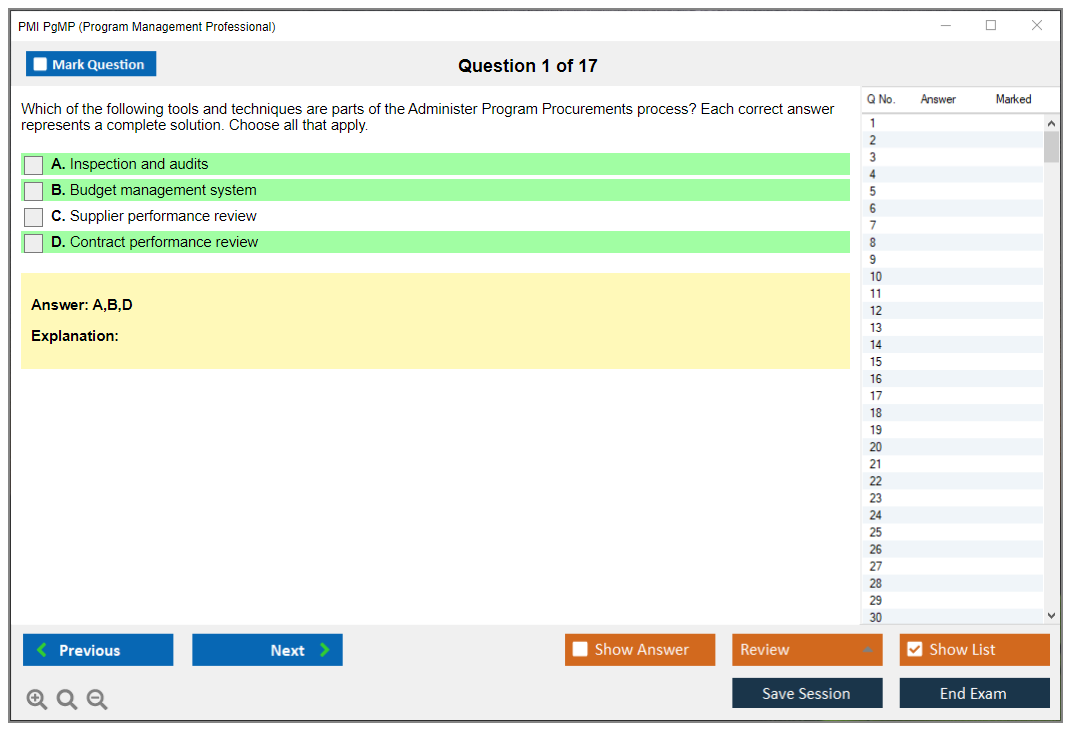
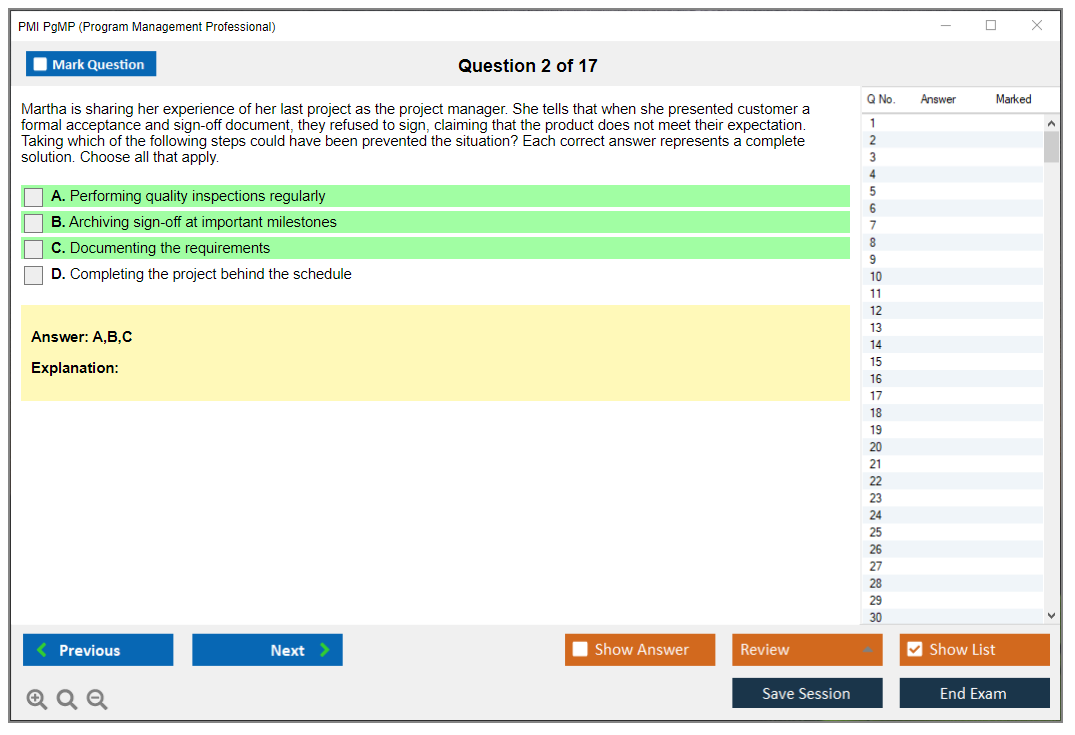
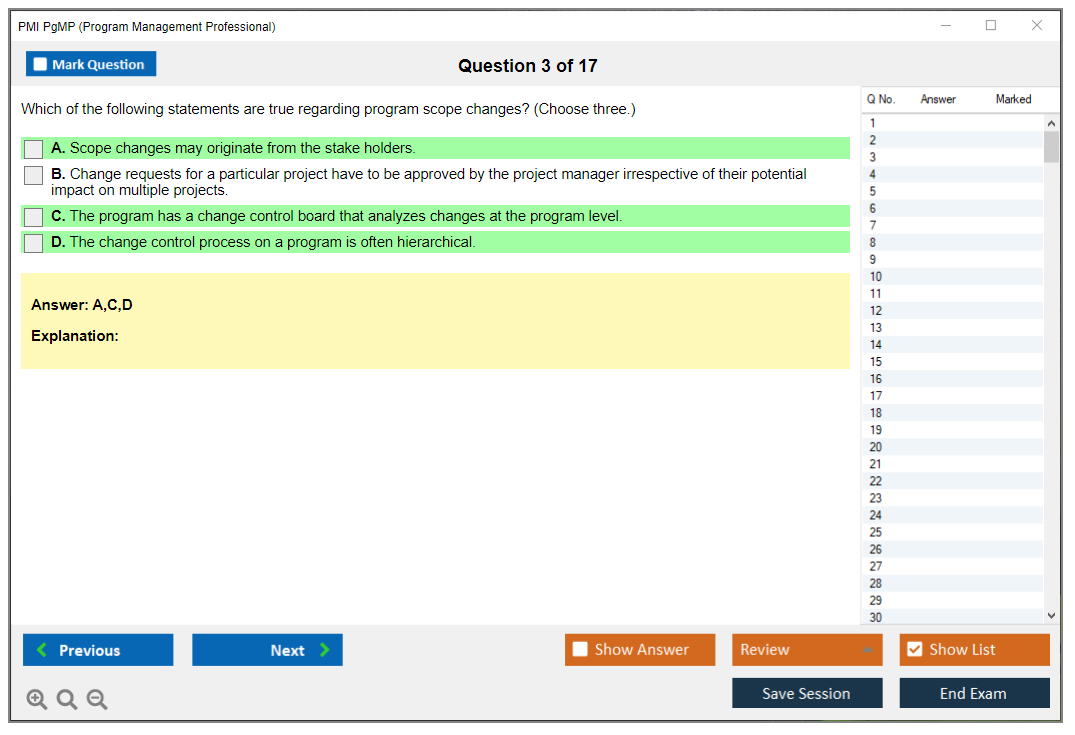
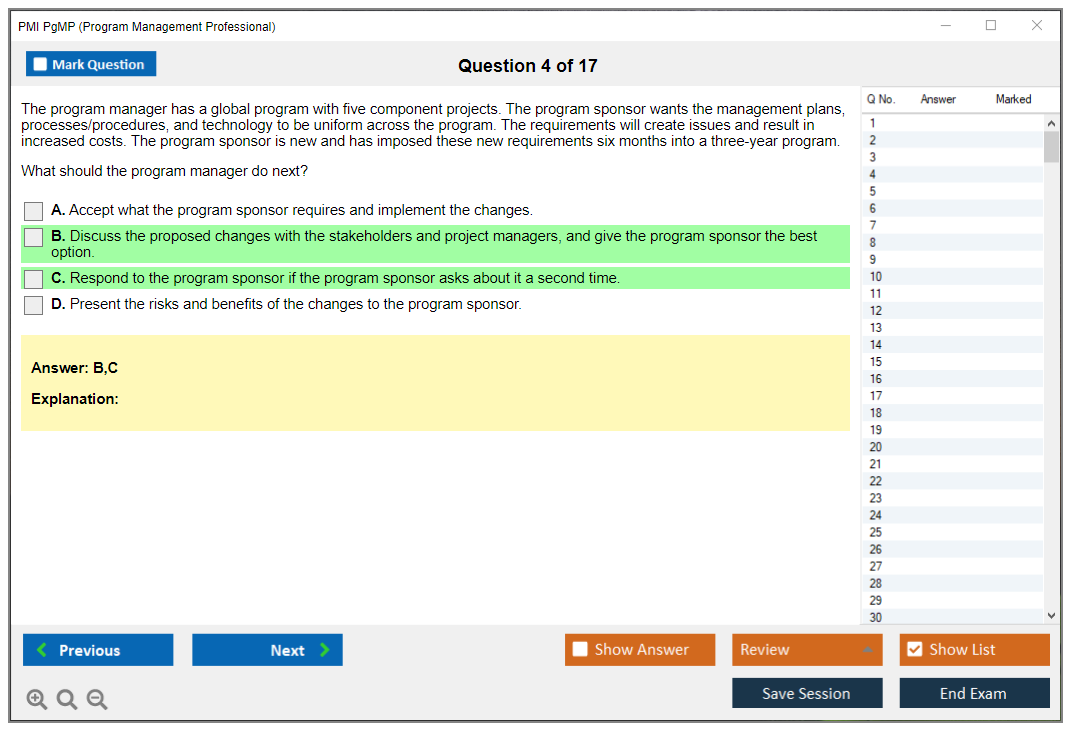
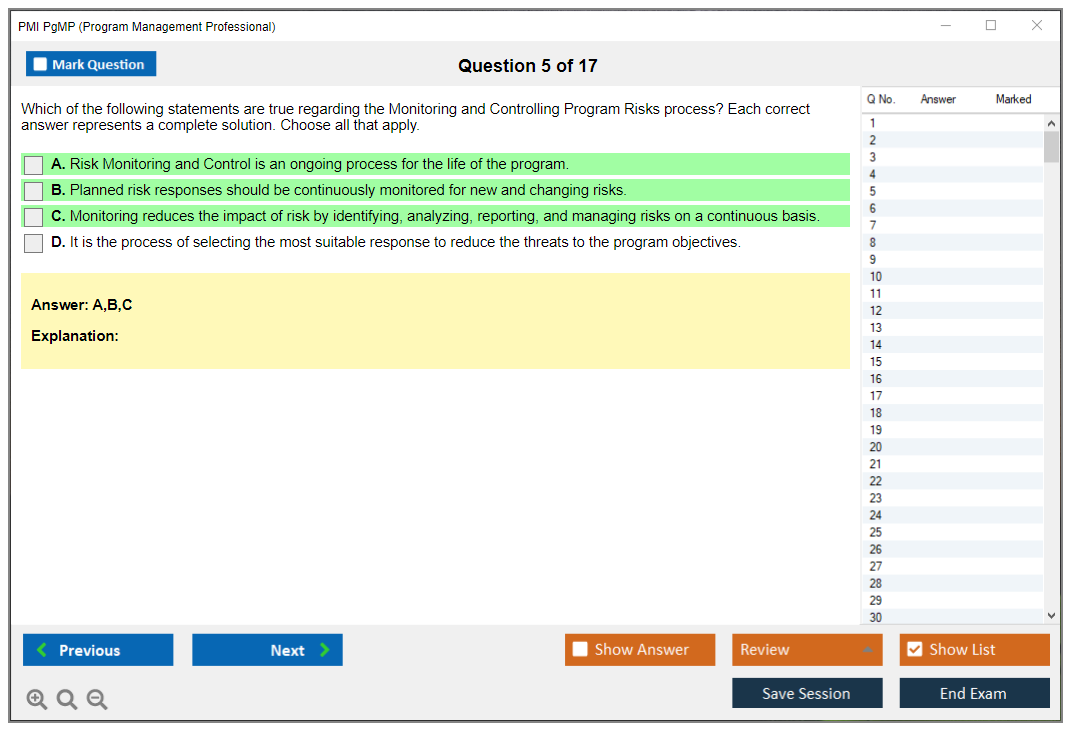
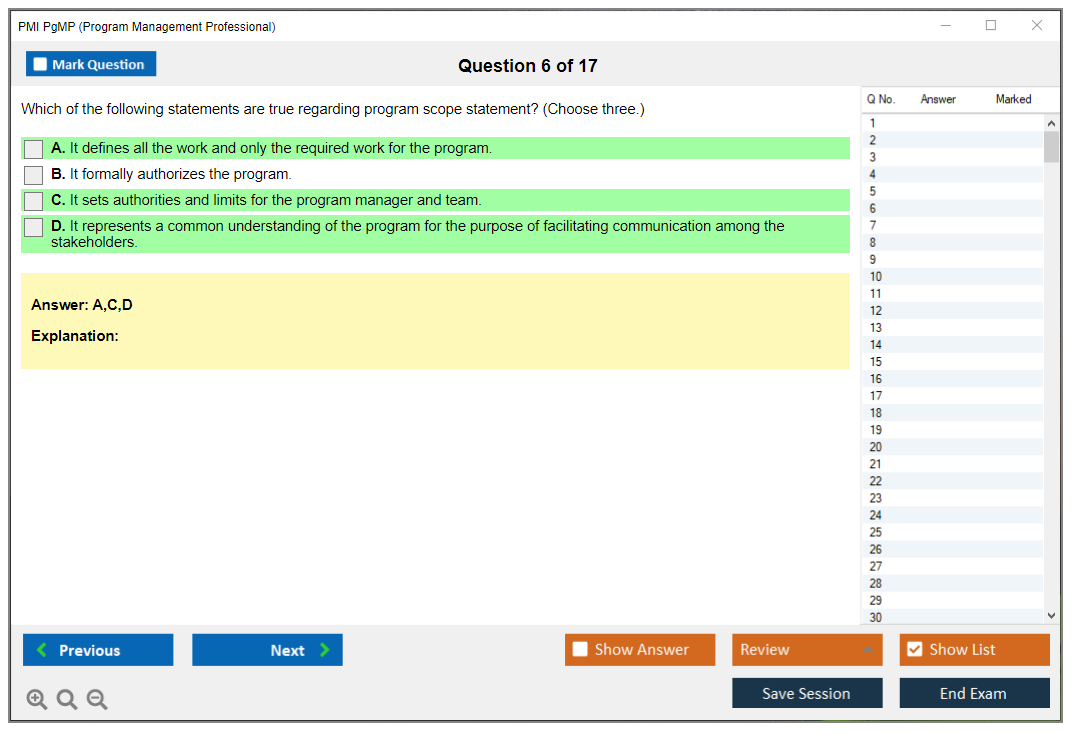
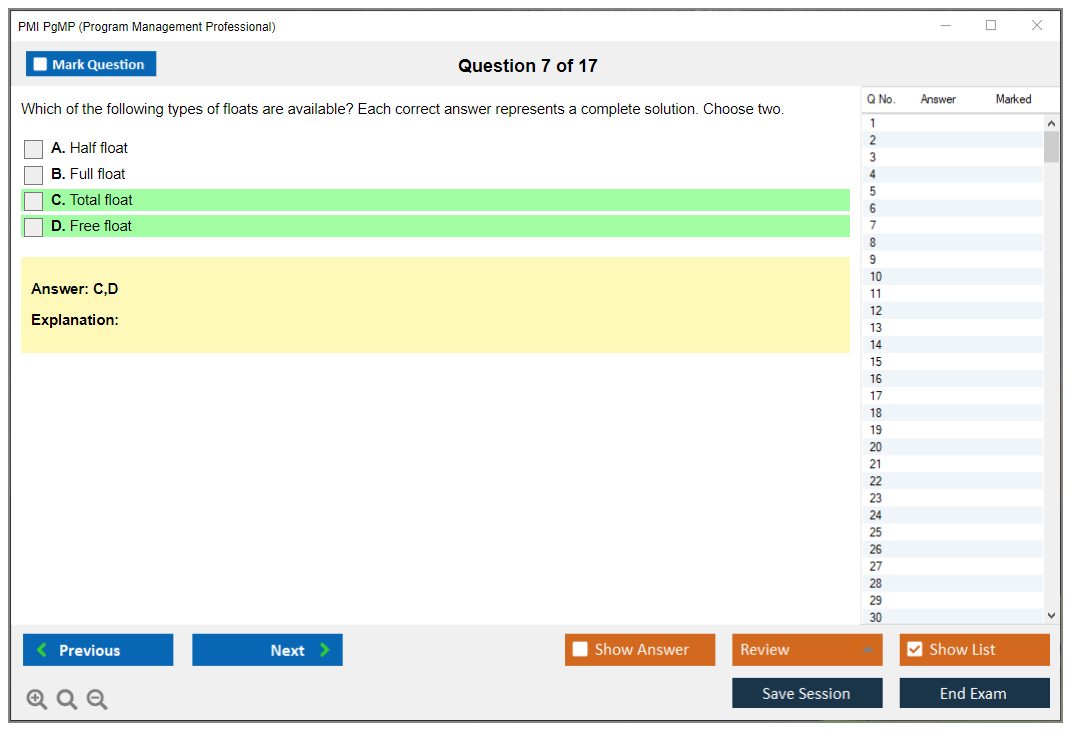
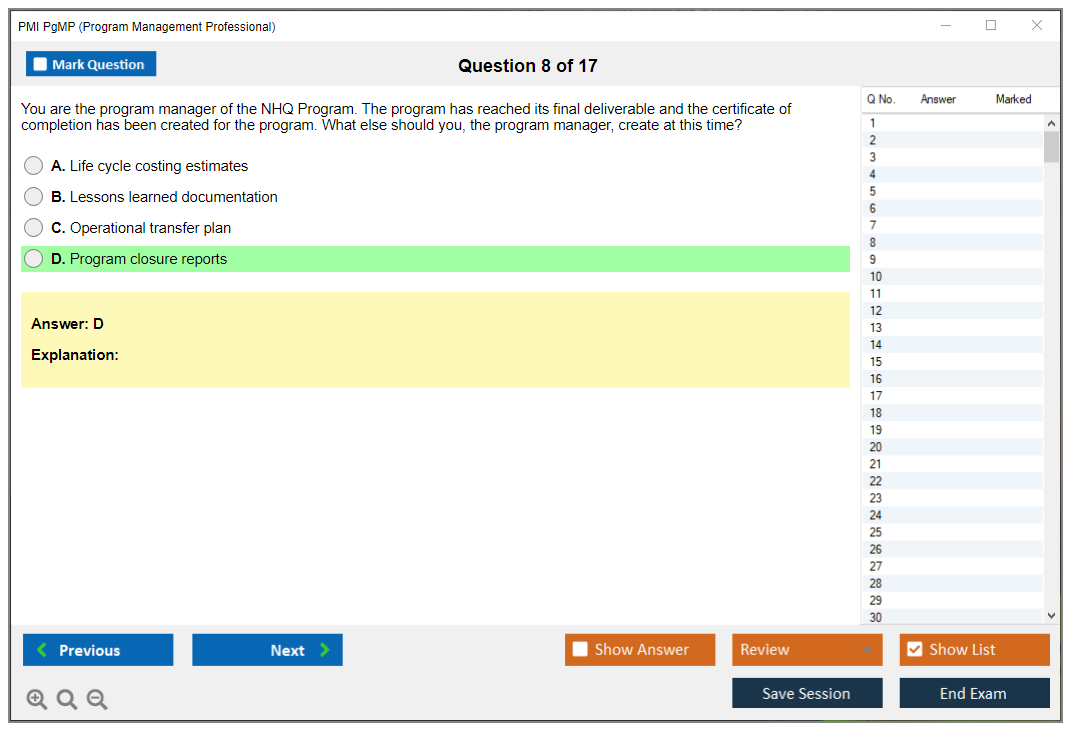
PMI PgMP (Program Management Professional (PgMP))
What Is the PMI PgMP Certification?
What the Program Management Professional credential actually is
The PMI PgMP certification is PMI's advanced credential that validates your ability to manage programs. Not just individual projects, but multiple related projects working together to achieve strategic business objectives that no single project could deliver on its own. A lot of people think project management and program management are basically the same thing with different titles. They're not.
Program management's about coordinating interdependent projects, managing shared resources, working through executive-level politics, and making sure all those moving parts actually deliver business value instead of just checking off deliverables. The PgMP proves you can handle that complexity. It's designed for senior project managers who've moved beyond managing one thing at a time, portfolio directors who need to execute strategic initiatives, program coordinators dealing with multi-project nightmares, and executives overseeing transformation programs where failure means millions down the drain.
The value here? Demonstrating mastery of governance frameworks that actually work. Benefits realization, not just "we finished on time." Stakeholder engagement at levels where people can fire you or kill your budget. Strategic alignment across projects that might have competing priorities. It's recognized globally across industries as the top credential for program-level leadership. Fewer than 3,000 people worldwide hold an active PgMP compared to over a million PMPs. That scarcity has value.
Who should actually pursue this thing
Senior project managers transitioning to program leadership roles. That's the core audience. If you've been managing projects for years and you're ready to coordinate multiple project managers instead of doing the work yourself, PgMP makes sense. Portfolio directors who need to prove they can execute strategic initiatives, not just talk about them. Program coordinators already managing complex multi-project initiatives who want the credential to match their responsibilities.
Executives overseeing strategic transformation programs also pursue PgMP, though that's less common. They usually have the authority already and don't need the certification for credibility. But if you're in technology transformation programs, infrastructure megaprojects, enterprise system implementations, merger integration programs, product portfolio launches, or regulatory compliance initiatives, PgMP directly applies to what you're doing. Some of these roles overlap more than HR departments want to admit.
Career differentiation is real. PgMP distinguishes you from project managers by proving you can manage interdependencies that break lesser managers, optimize resources across competing projects, and deliver actual business value beyond the tired scope-schedule-cost triangle. Studies show PgMP holders command 20-35% salary premiums over non-certified program managers in comparable roles. That's not guaranteed for everyone, but the market recognizes the credential. I've seen people get promoted just for having it on their resume, which seems backward but that's corporate life.
How PgMP differs from PMP and PfMP
The PMP focuses on single-project delivery. Initiating, planning, executing, monitoring, closing one thing at a time. Tactical stuff. PgMP addresses program strategy, benefits management throughout the program lifecycle, governance structures that span multiple projects, and managing other project managers instead of managing tasks yourself. You're working at a higher altitude.
The PfMP operates at the organizational strategy level, selecting and prioritizing which programs to fund and kill. PfMP holders decide what gets resources. PgMP holders execute the programs that PfMP holders selected, delivering them through coordinated project work. Different jobs entirely. Different focus.
People ask how hard PgMP is compared to PMP. It's harder, but not because the exam's artificially difficult. It's harder because the work itself is more complex. You're dealing with governance issues, benefits that materialize over years, stakeholders with conflicting agendas at executive levels, and interdependencies that cascade across your entire program when one project slips. The exam reflects that reality with scenario-based questions that test judgment, not memorization.
When you should actually go for PgMP
After accumulating substantial program management experience. PMI requires at least four years of project management experience plus four years of program management experience for bachelor's degree holders (more without a degree). That's not arbitrary gatekeeping. You need that experience to understand what the exam's testing. You'll struggle without it. Typically candidates have 6+ years managing programs before they're ready.
Your career goals matter. If you want executive program leadership roles, strategic initiative ownership, or organizational transformation positions, PgMP opens those doors. If you're happy managing individual projects or you're early in your career, stick with PMP or even PMI-ACP if you're in agile environments.
The actual credential process
PgMP isn't just an exam. You submit a detailed application documenting your program management experience. PMI conducts a panel review where actual practitioners evaluate whether your experience qualifies. Some applications get rejected at this stage. If you pass panel review, you're eligible to take the computer-based exam covering strategic program management, benefits realization management, stakeholder engagement, program governance, and program lifecycle management.
After you earn it, you maintain the credential through ongoing professional development. You need PMI talent triangle PDUs every three years to keep your certification active. That's education, giving back to the profession, or working in program management. Same basic system as PMP renewal but at the program level.
PgMP isn't for everyone. It's expensive, time-consuming, and demands real experience. But if you're operating at the program level already or you're ready to make that transition, it's the credential that proves you can handle the complexity that breaks most managers.
PgMP Prerequisites and Eligibility Requirements
PgMP prerequisites and eligibility requirements (the part people mess up)
Look, the PMI PgMP certification isn't some "I ran a big project once" badge. It's the Program Management Professional credential for folks who've already been living in the messy middle where multiple projects share goals, share resources, fight over schedules, and still have to land actual business benefits. Senior level stuff. The paperwork's brutal.
PMI uses an education and experience matrix, and honestly that matrix is where confusion starts because people hear "10,500 hours" and just stop reading. The thing is, the rule's really about proving two things: you can manage individual projects (baseline competence) and you can manage programs (the harder, cross-project, governance-and-benefits kind of work). Oh, another thing. Hours must be within the last 15 years. That window matters a ton.
Education and experience requirements (the matrix)
PMI's PgMP prerequisites boil down to combinations of education level plus verified hours, and there're two common pathways. Both requiring the same hour counts, which surprises people every single time.
Got a four-year degree (bachelor's or higher)? You'll need 6,000 hours of project management experience plus 10,500 hours of program management experience, all earned within the last 15 years.
If you've got a secondary degree (high school diploma or associate degree), it's still 6,000 hours of project management plus 10,500 hours of program management in the last 15 years.
Yes, the totals match. Not gonna lie, it feels weird. But PMI's basically saying education changes how they view your background, not how much leadership time you need to show for PgMP.
How PMI expects you to calculate experience hours
Hours must be non-overlapping. Period.
If you ran two projects in the same week, you can't double count those hours because PMI wants time, not "number of things you touched." Part-time counts. Full-time counts. And volunteer program management can count too, as long as you can document it like real work with dates, responsibilities, and someone who can verify it if you get audited.
One sentence reality check. This is where applicants get burned.
If you were a consultant splitting time across clients, that's fine, but you still have to show clean start/end dates and explain your role without turning it into a blur of "supported leadership." Career break? Also fine. You just need the remaining experience to fit inside that 15-year window, which can mean you're digging up older supervisors, old statements of work, or at least enough artifacts to prove the program existed and wasn't just something you mentioned once in a performance review. I once watched someone try to reconstruct three years of program work from email signatures and LinkedIn endorsements. It didn't go well.
What "program management" means for PgMP eligibility
PMI's definition is pretty specific: program work is managing multiple related projects that share objectives, coordinated resources, interdependent schedules, and a unified governance structure. I mean, if your "program" was really just three unrelated projects you happened to oversee because your boss trusted you, that's management, but it's not program management in PMI's eyes.
Program experience usually looks like leading or contributing to a program management office, directing multi-project initiatives, coordinating multiple project managers, managing program budgets, overseeing benefits realization, and helping with governance boards where decisions get made above the single-project level. The benefits piece matters a lot. Governance too. Strategy alignment, not just delivery.
What does not count is just as important, and I mean this is the trap. Managing unrelated projects at the same time without integration. Being a functional manager with no program structure. Portfolio selection activities (that's more PfMP territory). A single large project, no matter how complex or expensive, is still a project. One big thing isn't automatically a program.
The 6,000-hour project management requirement (why it's there)
PMI wants 6,000 hours managing individual projects because PgMP assumes you already know how to do the basics. Scope, schedule, cost, risk, stakeholders, all that foundational stuff that keeps projects from imploding. Program work adds layers. Dependencies across projects. Governance structures. Benefits tracking after delivery. Resource fights. Vendor politics. So the project hours are your proof you've done the fundamentals before you claim you're running the orchestra.
Experience documentation standards (write it like you'll be audited)
Real talk here.
Each project or program entry needs start and end dates, your role, organization name, and responsibilities written in a way that maps to PMI frameworks. Specifics win. "Managed program governance cadence with quarterly steering committee and decision logs" is better than "oversaw governance." Same idea, different credibility entirely.
Keep it readable. Use PMI-ish terms without forcing it. And don't describe project tasks under a program header, because the PgMP panel review will spot it fast and you'll be rewriting everything in three weeks wondering where you went wrong.
PgMP application process overview (two phases)
The PgMP application process has two gates: you submit your eligibility application online in the PMI certification system, then PMI runs a panel review of your program management experience. After you pass the panel, you can schedule the exam and start caring about PgMP exam objectives, program management exam prep, and which PgMP study materials and PgMP practice tests are actually worth your time and which ones are just glorified flashcard decks.
Application submission is straightforward mechanically, but mentally it's annoying because you're basically writing mini case summaries for multiple programs. Don't rush it. Dates, scope, governance, benefits, stakeholders. Those themes should show up repeatedly, because that's what program management is.
Panel review (what it is, timeline, outcomes)
The panel review is a group of experienced program managers evaluating whether your submitted experience meets PMI's program standards. They look for depth, strategic alignment, governance participation, benefits management, and stakeholder engagement at the right organizational level. Not just "I coordinated stuff" or "I helped help with meetings sometimes when my director couldn't make it."
Timeline is usually 5 to 10 business days, but it can stretch toward 30 during busy periods or if they need clarification, which honestly happens more than you'd think. Outcomes are: Pass (you're eligible to schedule), Fail (you can resubmit after 90 days), or Additional Information Required (you respond within 90 days and pray your examples land better the second time).
Common rejection reasons are predictable. Your "programs" read like projects, you don't show governance or benefits ownership, you don't demonstrate strategic responsibilities, or the documentation is vague and hard to validate.
If you get rejected, don't spiral. Reframe using PMI terminology, add clearer governance and benefits examples, pull in more recent program work if you can, and keep artifacts handy. Also, once you're approved, you've got one year to pass the exam before you need to reapply, so plan your study window with that clock in mind.
Fees, audits, and the questions everyone asks
The application fee covers the panel review, separate from the exam fee. Current numbers: $800 USD for PMI members and $1,000 for non-members, and yeah that feeds into your overall PgMP exam cost planning pretty heavily.
PMI also does random audits. If you're selected, you'll need verification forms signed by supervisors or HR. Keep contact info for sponsors handy, save dated program docs, and org charts help, especially for government, military, international work, or consulting setups where program structure isn't obvious on paper.
People ask about PgMP passing score and PgMP exam difficulty a lot. PMI doesn't publish a simple cut score, and difficulty is real because questions are scenario-heavy and governance focused. Wait, I should clarify. The bigger hurdle for many candidates is still eligibility and panel review, not test day. Renewal later ties into PMI talent triangle PDUs, but first you've got to get through the gate.
PgMP Exam Objectives and Content Domains
Exam blueprint foundation
The PgMP exam doesn't just test textbook knowledge. It's built on the PMI Standard for Program Management (Fourth Edition) plus a role delineation study that surveyed practicing program managers across the globe. PMI actually went out and asked hundreds of real program managers what they do day-to-day, then mapped those tasks into exam objectives. That's why the test feels less academic and more like "have you actually done this job before?" The thing is, it's designed around what program managers encounter in the wild, not just what sounds good in theory.
Five performance domains structure
The exam breaks everything into five domains. Strategic Program Management. Program Life Cycle Management. Benefits Management. Stakeholder Management. Program Governance. These aren't random categories. They represent how programs actually work when you're coordinating multiple projects toward a unified business outcome, and each domain carries different weight on the exam, which tells you what PMI thinks matters most when you're operating at the program level rather than just managing a single project like you would with PMP certification.
Strategic Program Management domain (~20% of exam)
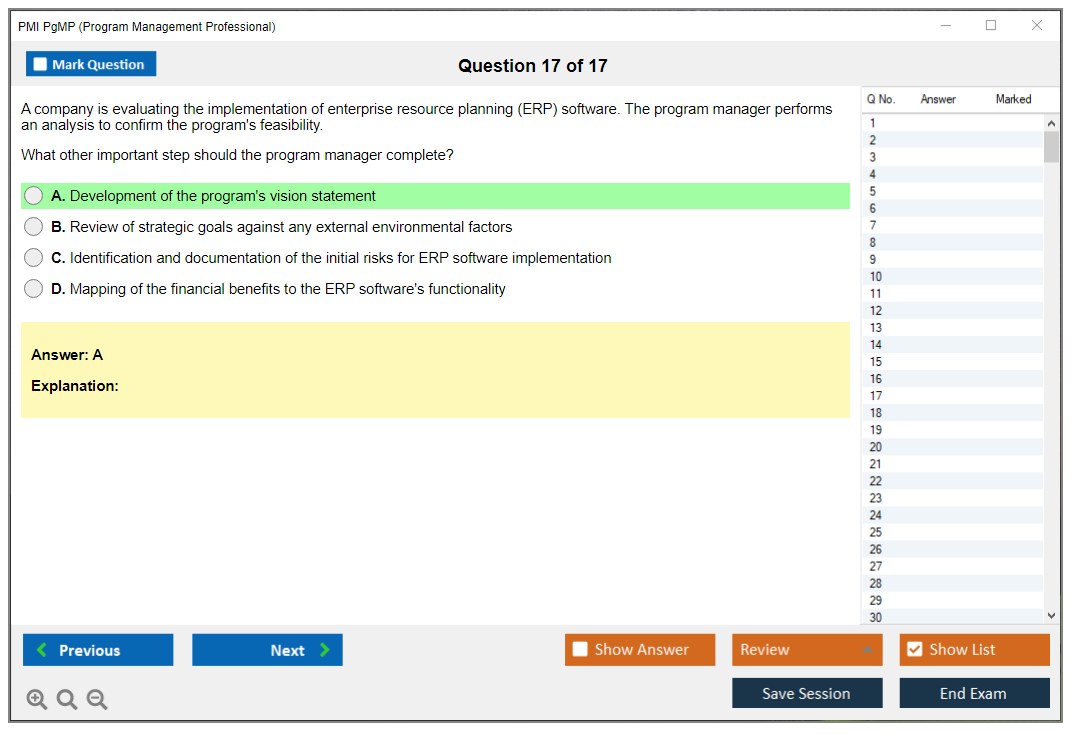
This domain is all about alignment. You're connecting programs to organizational strategy, running feasibility studies, building business cases that executives actually care about, and establishing vision and objectives that make sense across multiple component projects. This is where a lot of project managers struggle when they first step into program management. You can't just focus on deliverables anymore. You need to understand why the program exists in the first place and how it fits into the bigger strategic picture.
Strategic alignment tasks get specific. You assess whether the organization is even ready to take on a program. Map program outcomes to strategic goals (not just outputs, but actual business results). Evaluate environmental factors that could tank program success. Position your program within the portfolio context so it doesn't compete with or duplicate other initiatives. You're also developing program roadmaps, which are integrated schedules that span component projects. Establishing milestones that matter at the program level. Defining phase gates and decision points where governance can say go or no-go. Planning how resources get allocated across the entire program timeline. It's planning, but at a completely different altitude than project planning.
Program Life Cycle Management domain (~25% of exam)
This domain covers the full lifecycle. Initiating programs through proper governance channels. Planning program components so they actually integrate. Executing coordinated delivery across projects. Transitioning benefits to operations. Closing programs systematically instead of just letting them fade away.
Program initiation differs from project initiation. You're getting formal authorization through governance structures, defining scope and boundaries for the entire program (not just one project), identifying component projects and mapping their interdependencies, establishing program management infrastructure like reporting systems and collaboration tools. Then integrated program planning kicks in. You develop program management plans that cover all the components. Create integration strategies so projects don't work in silos. Plan resource sharing because projects will compete for the same people. Establish common processes and tools. Define escalation paths for when things go sideways.
Program execution and monitoring is where you earn your money. Coordinating component project managers who each have their own priorities. Managing program-level risks and issues that no single project owns. Helping with cross-project dependencies so one project's delay doesn't cascade into chaos. Tracking integrated program performance instead of just looking at individual project dashboards. Adjusting program plans based on component feedback. What looks good on paper rarely survives contact with reality, and you'll spend half your time recalibrating.
Benefits Management domain (~30% of exam, highest weighting)
Benefits Management gets the biggest chunk of the exam at 30%, which tells you everything about what separates program management from project management certification. Programs exist to deliver benefits, not just outputs.
Benefits identification starts with mapping program outcomes to actual business value. Revenue growth, cost reduction, market share, customer satisfaction, whatever matters to your organization. You quantify tangible benefits (the numbers) and intangible benefits (the fuzzy stuff that still matters), establish benefits ownership with business stakeholders who'll actually realize those benefits, create benefits registers to track everything.
Benefits realization planning gets tactical. Defining benefits metrics and KPIs that you can actually measure. Establishing measurement methods that don't require a PhD in statistics. Creating timelines for when benefits should materialize (some come early, some take years). Assigning accountability for benefits delivery to specific business owners. Planning the transition to operations because programs end but benefits need to continue. I once saw a program deliver everything on time and still get labeled a failure because nobody planned who'd maintain the benefits after closeout. Don't be that person.
Benefits monitoring and reporting runs throughout the program lifecycle. You track whether benefits are actually showing up as promised. Report status to governance bodies who control your funding. Adjust the program approach when benefits are at risk, which happens constantly. Validate actual versus planned benefits after delivery to prove the program was worth the investment.
Stakeholder Management domain (~15% of exam)
Stakeholder management at the program level? Exponentially more complex. You're identifying stakeholders across multiple projects and organizational levels, analyzing their influence and impact on the entire program, planning engagement strategies, managing expectations that often conflict, communicating status to audiences ranging from team members to C-suite executives.
Stakeholder identification maps stakeholders across organizational hierarchies. Executive sponsors. Governance members. Inter-project dependencies. External communities. Engagement strategies include developing communication plans for wildly diverse audiences, managing competing interests (finance wants cost cuts while operations wants more features), helping with alignment on program objectives, resolving conflicts, building support when stakeholders would rather kill your program.
Executive-level communication deserves special attention because you're presenting to governance boards who control your fate. Preparing dashboards that executives can consume in 30 seconds. Escalating strategic issues that require their intervention. Obtaining continued authorization when programs hit rough patches. Managing C-suite expectations which shift with quarterly priorities.
Program Governance domain (~10% of exam)
Governance establishes who decides what. You design frameworks that define decision-making authority. Establish steering committee composition. Create phase gate review criteria. Set approval thresholds. Document processes so everyone knows the rules.
Governance board operations are practical. Preparing meeting agendas. Presenting status and issues clearly. Helping with go/no-go decisions at phase gates. Documenting decisions for traceability. Implementing governance directives even when you disagree. Compliance and assurance ensure programs follow organizational standards, manage audits without panic, implement quality processes, maintain documentation that survives turnover, conduct lessons learned that actually get used.
Cross-domain integration themes
All domains interconnect constantly. Strategic alignment drives benefits definition. Governance enables stakeholder decisions. Lifecycle phases structure benefits delivery. The exam uses scenario-based questions that require applying multiple domains at once. Testing situational judgment on prioritizing competing demands. Selecting best approaches when multiple options could work. Applying judgment to ambiguous situations. Balancing stakeholder needs that can't all be satisfied.
Common scenarios? Multi-project resource conflicts. Governance escalations. Benefits realization delays. Stakeholder alignment challenges. Program scope changes. Component project failures. Organizational change impacts. Prepare by translating exam domains into actual program challenges you might face, because the test isn't asking "what's the definition of X." It's asking "what would you do when X goes wrong and you've also got limited time and budget to fix it?"
PgMP Exam Cost and Total Investment
What the PMI PgMP certification is (and who it's for)
The PMI PgMP certification? It's for people who already run programs, not just projects. Cross-project outcomes. Benefits tracking. Governance. The stuff that makes executives ask "why" every five minutes.
If you're mostly doing schedules and RAID logs, you're still in PMP territory. PgMP is what you chase when you're coordinating multiple project managers, shaping roadmaps, arguing about funding models, and trying to keep benefits alive after the delivery party ends. Programs either prove value there or quietly die. Mixed feelings on that.
PgMP versus PMP versus PfMP? Quick take. PMP is project execution. PgMP is program coordination and benefits. PfMP is portfolio selection and investment mix. Different altitude, different politics.
PgMP prerequisites and what the application really costs
Before you even think about PgMP exam cost, remember the gatekeeping: PgMP prerequisites are serious. The PgMP application process? It's its own mini project. You document education, program experience, and leadership time, then PMI runs a PgMP panel review where actual humans read your submission and decide if you're legit.
Here's the part people miss. The application fee isn't the exam fee. Separate. Additional. Paid earlier. For 2026 pricing, the PgMP application fee is $800 for PMI members and $1,000 for non-members. That's basically paying for the panel review and the whole eligibility workflow.
Paperwork takes time. Annoying time. Also, if you pay someone for application review help, that's another line item, and it adds up faster than you'd think when you're already spending evenings rewriting experience bullets so they sound like program management instead of "I ran a big project." I once spent four hours on a single achievement statement because I kept second-guessing whether "facilitated stakeholder alignment" sounded too generic. It probably was.
PgMP exam cost and required fees (2026)
Once the panel approves you, then you pay the exam fee and schedule at Pearson VUE. The base PgMP exam cost for PMI members is $800 USD for computer-based testing at Pearson VUE centers worldwide, pricing as of 2026. Non-members? $1,000 USD for the same computer-based exam at authorized testing centers.
PMI membership costs $139 per year, and first year also includes a $10 application fee, so $149 total up front. Membership saves $200 on the exam fee, so yeah, even if you only take PgMP once, it's cost-effective on math alone.
Here's the clean minimum math for a first attempt:
- Members: $149 (membership) + $800 (application) + $800 (exam) = $1,749 USD minimum.
- Non-members: $1,000 (application) + $1,000 (exam) = $2,000 USD minimum.
Short version? Member path's cheaper. Still not cheap.
PMI doesn't really discount exam fees much. Membership promos happen sometimes, and PMI Flash Sales pop up, but don't build your budget on wishful thinking.
Retakes, timing, and the "oops" budget
Retakes hurt. If you fail, retake fees are $600 for PMI members and $800 for non-members per attempt. Maximum attempts is three within the one-year eligibility period after panel review approval. Strike out three times? You reapply. New application, new panel review, new money.
Timing matters too. You pay the application fee when you submit for panel review. You pay the exam fee later when you schedule the exam after approval. Two transactions. Helps if you're spacing costs across paychecks, or trying to get employer reimbursement approved before you drop the bigger payment.
International note: fees are quoted in USD, and you pay the equivalent in local currency based on exchange rates. Pricing's basically consistent globally, but your bank's FX fees might sneak in.
Study materials and training costs (realistic numbers)
Now the prep spend. This is where people either go smart or go chaotic.
Self-study basics: the PMI Standard for Program Management runs about $70 to $90. Commercial study guides? $50 to $80 each. Practice exam simulators are often $100 to $200. Flashcards and random reference stuff can be $30 to $100. A sane PgMP study materials budget is $300 to $500 if you want a thorough self-study setup with a solid guide plus good PgMP practice tests and a couple of backups.
If you want something low-friction, I'd rather see you buy one credible practice platform and actually review misses than hoard five books you never finish. Error log. Re-read the domain you blew. Repeat. Boring? Yes. Works? Also yes.
Formal courses are a different tier entirely. PgMP prep training usually lands $1,500 to $3,500 depending on self-paced versus live virtual versus in-person bootcamp. Coaching's the spicy add-on: $150 to $300 per hour for one-on-one help. Application review services are often $300 to $800 for panel review prep.
If you want extra reps without going full bootcamp, the PgMP Practice Exam Questions Pack at $36.99 is the kind of small spend that can plug gaps. Especially if you're trying to map PgMP exam objectives to scenario questions and keep momentum on weeknights.
Total investment ranges (most people vs premium prep)
Most candidates land around $2,200 to $2,800 all-in. That usually covers membership, application, exam, and decent materials and practice tests. Plus a little buffer for printing, note apps, or a second question bank when your brain starts pattern-matching.
Premium prep? $4,000 to $5,000 when you add a formal course, a few coaching sessions, multiple resources, and a contingency for a retake. Not everyone needs that. Some people do, especially if they haven't lived in governance and benefits land recently, and their program management exam prep needs structure.
Hidden costs? They're real. Time off work. Travel to a testing center. Parking. Maybe a hotel if Pearson VUE's far away. Childcare. The "I can't take meetings today because my brain's toast" cost.
Quick answers people keep asking before they pay
Passing score first: PMI doesn't publish an official PgMP passing score. You get performance levels by domain, not a simple "you needed 72%." So for readiness, use practice tests to target consistency, not perfection. Don't ignore weak domains.
Difficulty: PgMP exam difficulty is usually higher than PMP because it's broader, more governance-heavy, and more scenario-based. More ambiguity and fewer "plug the formula" moments. Experience matters. A lot.
Renewal: PgMP renewal is $60 every three years, plus you need 60 PDUs aligned to the PMI talent triangle PDUs model. People spend $300 to $800 earning PDUs unless they're intentional about free webinars and internal training credit.
Is it worth it (money talk, not hype)
Cost-benefit is the only part I'm opinionated about. If you're already operating at program level, the Program Management Professional credential can turn into a comp bump or a better role faster than you'd think. People commonly cite $15,000 to $30,000 annual increases tied to new opportunities. That pays back a $2K to $3K investment quickly.
Get employer sponsorship if you can. Ask before you submit the application. Some companies reimburse the PMI program management certification costs, but only if you follow their process. Yes, they may want you to use approved training vendors.
If you want a simple way to pressure-test your readiness without spending bootcamp money, start with strong practice questions and ruthless review. Like the PgMP Practice Exam Questions Pack for $36.99. Then decide whether you actually need coaching or just more reps and better notes.
PgMP Passing Score and Scoring Methodology
What makes PgMP scoring different from other certification exams
PMI doesn't publish a specific passing score for the PgMP exam. Not gonna lie, this drives candidates crazy because everyone wants that magic number to aim for. The methodology's proprietary and confidential, which means you won't find an official cut score anywhere. Not in the exam handbook, not on PMI's website, nowhere. This isn't PMI being difficult for the sake of it. They're protecting exam integrity and preventing people from targeting minimum scores rather than actually mastering program management concepts and real-world application.
The PgMP uses what's called a proficiency-based scoring system. Instead of getting a simple percentage like "you scored 78% correct," you receive performance ratings across the five exam domains. This is different from how most people think about test scores. Understanding this system helps interpret your results whether you pass or fail, which matters more than you'd think going in.
The four performance levels you'll see
Your score report shows one of four ratings for each domain: Above Target, Target, Below Target, or Needs Improvement. These ratings apply to Strategic Program Management, Program Life Cycle, Benefits Management, Stakeholder Management, and Governance domains separately.
Above Target means you crushed it. You're showing expertise beyond what's required for professional practice. Target means solid competency, meeting the standards expected of working program managers. This is passing-level performance, by the way. Below Target means you're close but not quite there, falling short of the minimum competency threshold. Needs Improvement? Way below where you need to be. Major gaps in that domain.
The thing is, passing requires showing proficiency across all domains, not just hitting some overall average. You can't bomb one domain and make up for it by acing another. Weak performance in a single domain can tank you even if your other domains are strong. This approach reflects how program management actually works. You need competency across the board, no shortcuts.
Why you don't get a numerical score
You receive only Pass or Fail. No percentage. No "you got 145 out of 170 questions correct." Just domain-level performance indicators showing where you stood in each area. This can feel frustrating if you're used to traditional grading, but there's reasoning behind it that actually makes sense once you dig into the mechanics.
The exam uses Item Response Theory (IRT) for psychometric scaling. Sounds fancy but here's what it means: different candidates receive different question sets with varying difficulty levels. Some questions are statistically harder than others based on how thousands of previous test-takers performed on them. IRT makes fair comparison possible regardless of which specific questions you happened to get. A harder exam form is scaled differently than an easier form, so passing on either requires showing the same level of competency.
This scaled scoring approach is necessary because PMI maintains multiple exam forms to protect security and test validity over time. Questions are weighted by difficulty and discrimination values. How well they differentiate between competent and less-competent candidates. A difficult question that you answer correctly counts more than an easy slam-dunk question. Without seeing the actual weights assigned to your specific questions, calculating your own score is impossible.
I remember talking to a colleague who passed the PgMP last year, and she mentioned spending way too much time trying to reverse-engineer her practice test scores into some kind of prediction model. Total waste of energy. She would've been better off just working through more scenarios.
What's the actual passing threshold
Industry experts estimate roughly 65-70% correct responses are needed, but this is educated guesswork, not official guidance. The actual requirement shifts based on which questions you receive and their difficulty weights. I've seen candidates who felt they nailed 80% of questions fail, and others who thought they barely scraped by end up passing. The scaling makes self-assessment unreliable.
When you're working through PgMP practice tests, aim for consistent 75-80%+ scores before scheduling your actual exam. This buffer accounts for the difference between practice questions and the real thing, plus nerves on test day. Quality practice exams should feel similar in difficulty to the actual PgMP. If you're consistently scoring 80% or higher, you're likely ready.
Reading your score report after the exam
You'll see a preliminary Pass/Fail result right there on the testing screen when you finish. That moment's nerve-wracking regardless of the outcome. The official score report with domain-level breakdown becomes available through your PMI account within 24-48 hours.
If you pass, the report shows your performance level in each domain. Even passing candidates often see a mix of Target and Above Target ratings, maybe with one Below Target in a weaker area that didn't sink the overall result. This feedback helps you understand your relative strengths as a program manager.
Failed exam score reports provide detailed diagnostic information. You'll want to use this to focus your remediation efforts for a retake. If you scored Below Target or Needs Improvement in Benefits Management, that's where you concentrate your study time. The domain breakdown is really useful, much more so than just knowing "you got 62% overall."
Preparing without knowing the cut score
Check your practice test performance by domain, not just overall scores. You need 70%+ in every domain to avoid weak spots that could fail you. The PgMP Practice Exam Questions Pack for $36.99 helps identify these domain-specific gaps before test day.
Unlike credentials like CAPM or PMI-ACP which focus on foundational or agile-specific knowledge, PgMP tests scenario-based judgment at the program level. Memorization won't cut it. You need to apply governance frameworks, benefits realization approaches, and stakeholder strategies to complicated situations. Your practice tests should reflect this application focus, not just recall of definitions.
Set your practice test targets around 75-80% minimum across all domains. If you're hitting that consistently, schedule your exam. If one domain keeps dragging you down, dig deeper into that area using the Standard for Program Management and real-world scenarios.
What to do if you don't pass
Focus remediation on domains rated Below Target or Needs Improvement first, but review everything. Sometimes weak foundational understanding in one domain affects your ability to answer questions in related domains. Program governance connects to stakeholder management which connects to benefits realization. It's all intertwined.
PMI's approach to scoring might seem opaque, but it keeps standards consistent across thousands of test-takers over time. The proficiency-based system measures what matters: can you actually manage programs at a professional level, or are you just good at test-taking? Your score report, whether passing or failing, provides actionable feedback for your growth as a program management professional. That's more valuable than knowing you got exactly 68.4% correct.
PgMP Exam Difficulty and What Makes It Challenging
What is the PMI PgMP certification?
The PMI PgMP certification is PMI's program credential for people who run multiple related projects as one coordinated program, with benefits and strategy in the driver's seat. Not "I delivered the scope" energy. More "did this program actually move the business?"
Who it's for. Program managers, senior PMs acting like program managers, and PMO leaders who already sit in messy cross-functional decision spaces.
PgMP vs PMP vs PfMP, quick take: PMP's hard, but it's more tactical project execution. PgMP's significantly harder because you're dealing with governance, benefits, and executive tradeoffs. PfMP's in the same pain zone as PgMP, just aimed higher toward portfolio selection and investment balancing. Different muscles.
PgMP prerequisites and eligibility requirements
The PgMP prerequisites are where PMI signals this isn't an entry-level badge. You need a mix of education plus serious project and program management experience, including a chunk of program hours where you actually led or directed program activities.
What counts. Program experience isn't "I managed a big project." It's coordinating multiple projects, managing interdependencies, shaping a roadmap, tracking benefits, and dealing with governance bodies. Portfolio or project work can support your story, but the application wants program leadership.
The PgMP application process is also part of the difficulty, honestly. You document experience, then PMI can audit, and after that comes the PgMP panel review where humans evaluate whether your experience reads like real program management. This is where vague write-ups die. Concrete outcomes, governance touchpoints, benefits decisions. Short, specific, believable.
PgMP exam objectives (what the exam covers)
The PgMP exam objectives are broad, and that breadth is a big reason the test feels heavy. PMI breaks it into domains and tasks that map to the program lifecycle, but the exam doesn't feel like a checklist. It feels like you're dropped into a steering committee meeting mid-argument.
Common objective areas you see again and again. Governance and decision rights, like who approves what and when. Benefits definition, delivery, and sustainment. Stakeholder engagement, especially executive-level. Program lifecycle planning, integration, and change control across components.
Mapping objectives to real life matters. If you've never had to kill a component project because the benefits case changed, the questions feel weird. If you've done it, the "least bad" answer is easier to spot.
PgMP exam cost and fees
People ask about PgMP exam cost because it's not pocket change. The exam fee differs for PMI members vs non-members, and then you stack on the stuff candidates forget to budget for.
Extra costs show up fast. PMI membership, a prep course if you want structure, books and references, and retake fees if the first attempt goes sideways.
Total budget? Most candidates end up spending anywhere from "I bought the standards and did self-study" to "I paid for training plus question bank plus a retake." Plan for the higher end if your program experience is thin. I once knew someone who budgeted $500 and ended up closer to $2800 after two retakes and a bootcamp, which kind of wrecked their Q3 but that's another story.
PgMP passing score (how scoring works)
The PgMP passing score is the annoying part. PMI doesn't publish a fixed cut score you can target, so you can't do the comforting math like "I need 72%."
Instead you get performance levels by domain on your score report. Useful, but only after the fact.
So how do you set targets? For most people, you want practice-test performance high enough that you're not relying on luck on exam day. I mean, if your PgMP practice tests are hovering in the low 60s and you're guessing a lot, you're probably not ready.
PgMP exam difficulty (what makes it challenging)
Let's talk PgMP exam difficulty. It's consistently rated among the most challenging PMI certifications, and yeah, it's significantly harder than PMP. I'd put it comparable to PfMP in overall difficulty, just aimed at a different altitude.
Pass rates are fuzzy because PMI doesn't publish them, but industry estimates commonly put first-attempt pass rates around 50 to 60%, compared to 60 to 70% for PMP. Many experienced project managers fail the first time, and not because they're bad at PM work. They're answering like a project manager when the exam wants a program leader.
Scenario complexity is the core problem. Questions are multi-layered, competing priorities everywhere, partial information, stakeholders pulling in opposite directions, and no clearly perfect answer. You're picking the best next move that protects benefits, governance, and strategic alignment. Not the move that makes your schedule look pretty.
Strategic thinking is mandatory. PMP rewards "do the process, manage the plan." PgMP asks "why does this program exist, and how do your decisions keep it aligned with organizational objectives even when individual projects suffer?" Look, sometimes the right answer is to pause, re-baseline, or even terminate a component because the benefits case shifted. That feels wrong if you grew up on deliverables-first thinking.
Benefits management trips people up. A lot. Benefits realization isn't the same as delivering outputs. Outputs are things you produce. Benefits are the measurable value the organization gets, often later, often owned by operations, and often threatened by change fatigue and poor adoption. Candidates struggle because they're used to success criteria like scope, cost, schedule, and quality. PgMP keeps pushing you toward adoption, value tracking, transition to sustainment, and making sure benefits owners are actually accountable. The thing is, most people have never tracked whether a deliverable actually changed behavior six months out.
Governance adds another layer of pain. Program governance is committees, decision hierarchies, escalation paths, stage gates, and tradeoff authority. Books can describe it, but real governance feels like politics plus structure, and the exam assumes you can operate in that world without panicking. Steering committee dynamics show up constantly. Who do you brief. What do you escalate. When do you ask for a decision. When do you stop trying to negotiate and go formal.
Stakeholder engagement is executive level. The exam assumes you can manage C-suite expectations, communicate in outcomes, and keep sponsors aligned when priorities shift. Not gonna lie, if your stakeholder muscle is mostly "I updated the project status report," the questions are going to feel brutal.
Best PgMP study materials (books, courses, and references)
For PgMP study materials, start with PMI's program standards and any official references PMI lists for your exam version. Then add one solid prep book and a question bank.
A few things help a lot. An error log where you write why you missed a question, not just the right answer. Also, short notes on governance and benefits patterns, because those repeat.
A study plan can be 4 to 12 weeks depending on experience. If you've actually run programs, you can go faster. If you're translating from project-only work, take the longer runway.
PgMP practice tests and question banks
Good PgMP practice tests feel like the exam. Long scenarios, ambiguous constraints, governance and benefits tradeoffs, executive stakeholders. Avoid banks that are just vocabulary quizzes.
Do enough questions that patterns emerge. Hundreds, usually.
Review method matters more than volume. Missed questions by domain, then go back to that domain's concepts and redo similar items until your reasoning changes.
PgMP renewal requirements (maintaining your credential)
Renewal is on PMI's cycle, and you maintain the Program Management Professional credential through PMI talent triangle PDUs plus the renewal fee. Keep your PDUs simple. Work-related learning counts, giving back counts, and you don't need to make it a second job.
PgMP preparation FAQs
How much does the PMI PgMP exam cost? It depends on membership status and add-ons like training and retakes. Budget beyond the exam fee.
What's the passing score for the PgMP exam? PMI doesn't publish a fixed PgMP passing score, so treat readiness as consistent practice performance plus strong domain coverage.
How hard is the PgMP compared to the PMP? Harder, by a lot, mainly because of strategy, governance, and benefits focus.
What are the prerequisites for the PgMP certification? Education plus documented project and program experience, plus the application and panel review.
How do I renew my PgMP and how many PDUs do I need? Renew through PMI's CCR process using PMI talent triangle PDUs during the cycle, then pay the renewal fee.
Conclusion
So where does that leave you?
Look, the PMI PgMP certification isn't something you casually pick up on a weekend. Honestly, you're staring down a multi-stage gauntlet that kicks off with proving you've actually done program management work (not just project work) through the application and panel review, then hitting the books hard for an exam that tests strategic thinking, governance frameworks, and benefits realization in ways the PMP never touches. The PgMP exam difficulty is real. It's not about memorizing formulas or throwing together a network diagram.
But here's the thing. If you've got the prerequisites locked down and you're ready to invest in this credential, the return's tangible. Better roles, higher compensation, and honestly, the kind of recognition that opens doors at the executive table. I mean, the PgMP application process alone forces you to document and reflect on your program management experience in a way that makes you better at the job, even before you sit for the exam.
Which reminds me of a colleague who spent three weeks just on the application essays, kept rewriting the same project narrative over and over. He was furious about the time sink. But later he told me that process actually helped him land a VP role because he could finally articulate his strategic impact instead of just listing deliverables. Funny how that works.
Getting your prep strategy right
You'll need a solid mix of PgMP study materials. Start with the official PMI standards, add a good prep book, and then layer in scenario-based learning because the exam objectives are all about applying knowledge, not reciting it. The PgMP exam cost runs around $800 for PMI members and $1,000 for non-members, plus you'll probably drop another few hundred on courses or books, so budget accordingly. Not gonna lie, it adds up fast.
Real talk? The PgMP passing score isn't published as a hard number, but your score report shows performance levels across domains, and you need to hit "above target" or "target" consistently to pass. That's where PgMP practice tests become your best friend. They're the only way to gauge readiness and identify weak domains before exam day. Do a few hundred questions minimum. Maybe more. Build an error log. Review every single wrong answer until you understand not just what's correct, but why the other options were tempting but wrong.
The final push before exam day
Once you've worked through the content and you're scoring consistently well on practice exams, you're in the home stretch, but don't skip the final review phase. Go back to the exam objectives, map them to your practice performance, and drill the areas where you're still shaky. Program governance and stakeholder engagement tend to trip people up because they're less concrete than schedule or cost management. The thing is, those "soft" domains carry just as much weight.
If you want a thorough question bank that mirrors the real exam's scenario-based format and covers all the domains, check out the PgMP Practice Exam Questions Pack. It's built specifically to prep you for the kind of thinking the PgMP demands, and honestly, the more realistic practice you get, the less intimidating exam day becomes. You've already done the hard work in the field. Now it's just about proving it on paper.
