Salesforce Certified OmniStudio Consultant (OmniStudio-Consultant) Overview
OmniStudio's everywhere now. I mean, if you're touching industry-specific implementations (communications, healthcare, insurance, whatever vertical) these tools just keep popping up in every project scope. The Salesforce Certified OmniStudio Consultant exam proves you've actually got the chops to build those guided experiences everyone's demanding from their vendors these days.
What you're actually proving when you pass
This certification shows you can design, build, and deploy industry-focused solutions using OmniStudio's complete toolkit: OmniScripts, FlexCards, Integration Procedures, DataRaptors. All of it working together. It's not some superficial "click here, done" situation. You've gotta demonstrate real skills around gathering requirements from stakeholders who literally change their minds mid-sentence, architecting stuff that won't collapse when usage scales, implementing patterns that survive production loads, and delivering those experiences sales teams promise in demos.
The exam digs deep. Can you design a FlexCard that retrieves data without killing performance? Do you know when a DataRaptor Extract makes sense versus a Transform? Can you orchestrate multiple data sources through an Integration Procedure without smashing into governor limits?
That's what they're testing. It's about understanding how everything connects, not just memorizing features.
Who this certification's really for
Consultants doing implementation work. Obviously. If your projects involve Industry Clouds, you probably need this credential eventually. Solution architects designing OmniStudio implementations, business analysts who aren't afraid of technical details, developers pivoting toward declarative approaches. All solid candidates.
Not gonna lie, I've watched traditional Salesforce devs pursue this because the market's shifting hard toward low-code delivery. Companies want speed, and OmniStudio builds complex functionality without endless Apex classes. If you're in communications, healthcare, insurance, financial services, or energy sectors? This becomes almost non-negotiable. Those industries benefit most from OmniStudio's pre-built components and industry-aligned patterns, which honestly save months compared to custom development from scratch.
The ideal candidate's already debugged DataRaptors returning mysterious nulls. You've optimized OmniScripts that loaded slower than molasses. Real project experience (not just Trailhead badges) translates to exam success.
The Vlocity connection you need to understand
Here's what trips people up: OmniStudio evolved from Vlocity after Salesforce's 2020 acquisition. The architectural patterns, design philosophy, guided experience approach? All rooted in Vlocity's industry cloud DNA. If you worked with Vlocity before, tons of concepts feel familiar, though Salesforce rebranded and polished things.
This history matters. Sometimes documentation or community discussions reference Vlocity terminology, which can be confusing at first. The underlying principles stayed pretty consistent though, which helps if you learned this during the Vlocity era. These tools were purpose-built for industry clouds from day one, not bolted onto Salesforce as an afterthought.
Funny how marketing rebrand cycles work. One day you're a Vlocity expert, next day you're expected to say "OmniStudio" in every client call even though you're configuring the exact same components.
Why this certification actually matters for your career
Specialist positioning. That's the payoff. Industry Cloud implementations are exploding, and companies desperately need consultants who understand OmniStudio without a learning curve. Digital transformation projects requiring sophisticated data integration and guided journeys? You're the solution.
Market demand's legitimate. Enterprises are adopting Industry Clouds faster every quarter. Financial services firms want wealth management accelerators. Healthcare providers need patient engagement that doesn't suck. Communications companies are building digital-first customer portals. All demand OmniStudio expertise, and certified consultants are scarce.
I've watched consultants with this credential command premium billing rates and land high-visibility engagements. It signals you're not just another general Salesforce person. You've got specialized capabilities directly tied to revenue-generating implementations.
How OmniStudio fits into Industry Clouds
OmniStudio powers Industry Clouds. Whether it's Communications Cloud, Health Cloud, Financial Services Cloud, Manufacturing Cloud, or Energy & Utilities Cloud, these tools build industry-specific workflows. Claims submission in insurance? OmniScript handles it. Service qualification wizard in telecom? OmniScript plus FlexCards. Patient intake in healthcare? Same toolkit.
This makes certification valuable across verticals. You're not trapped in one industry. Skills transfer because tools remain consistent even when business requirements shift dramatically. That flexibility's rare among Salesforce certifications.
What makes this different from other Salesforce certs
Unlike platform-focused certifications like Platform App Builder or the ADM-201 Administrator credential, OmniStudio Consultant emphasizes declarative, configuration-driven tools purpose-built for industry scenarios. You're not writing code. You're configuring components designed to handle complex, vertical-specific situations right out of the box.
Sales Cloud Consultant or Service Cloud Consultant certs focus on those specific clouds and their feature sets. OmniStudio cuts across everything because it's a horizontal toolset powering vertical solutions. Different mindset entirely. You're thinking data orchestration, experience flows, and integration patterns more than standard Salesforce objects like leads, opportunities, or cases.
Beyond just technical know-how
Way more than configuration. The exam validates whether you can gather requirements effectively. Can you translate messy, contradictory stakeholder needs into coherent OmniStudio designs? Can you explain why one approach outperforms another to non-technical project sponsors who just want results?
Solution design matters enormously. You need performance optimization instincts. Avoiding OmniScripts that crawl, caching data appropriately, choosing between Integration Procedures and remote actions wisely. Deployment strategies count too. Understand versioning? Can you package OmniStudio components for cross-org deployment? What about troubleshooting complex integrations when production breaks at ungodly hours?
These combined skills separate tutorial-followers from architects who deliver production solutions that actually work.
Who should actually take this certification
Implementation consultants already neck-deep in OmniStudio work. Functional consultants configuring solutions alongside business teams. Technical consultants bridging developers and business analysts. Solution designers mapping architecture before anyone builds anything.
Salesforce developers transitioning to declarative tools should seriously consider this. I've worked with devs who initially dismissed "point-and-click" approaches but then realized they could deliver complex functionality in a fraction of traditional development time. Business analysts with technical aptitude (the ones comfortable with JSON or debugging API calls) can absolutely succeed here. Architects designing industry cloud solutions need this knowledge for informed decisions about when OmniStudio beats custom development.
Experience expectations and career stage
Hands-on experience required. Not toy projects. Real customer implementations where things broke and you fixed them under pressure.
You need Salesforce platform fundamentals: object model, security, governor limits. OmniStudio sits atop the platform. Integration pattern familiarity's basically mandatory since Integration Procedures are central to OmniStudio architecture.
Typically mid-level to senior consultant territory. Got 1-2 years OmniStudio-specific experience? Probably ready. Maybe you've done Salesforce consulting 3+ years and recently completed several OmniStudio projects. That combination works. Fresh admins or developers without OmniStudio exposure? You'll struggle hard. This isn't entry-level.
Certifications that complement this one
Pairs well with JavaScript Developer I if you're building custom Lightning Web Components within OmniStudio. Integration Architect certification meshes nicely since integration's such a massive part of OmniStudio work. Industry-specific credentials like Financial Services Cloud or Health Cloud are natural companions. You're already operating in those domains.
Even standard Salesforce Administrator or Platform App Builder certifications help because they cover foundational platform knowledge essential for OmniStudio effectiveness.
Why companies are demanding this expertise
Industry Cloud adoption's skyrocketing. Digital transformation initiatives requiring industry-adjusted solutions are everywhere. Companies don't want generic CRM anymore. They want workflows matching their industry's unique processes. The shift toward low-code and declarative development means more organizations are betting heavily on OmniStudio rather than building everything from scratch.
The pandemic accelerated this massively. Remote customer engagement, digital-first experiences, self-service portals. All lean heavily on OmniStudio capabilities.
What's actually in scope for this exam
Laser-focused on core tools. OmniScripts, FlexCards, DataRaptors, Integration Procedures, Document Generation. You won't see deep questions about broader Industry Cloud features like Health Cloud care plans or Communications Cloud product catalogs. Apex development's completely out of scope. This is purely declarative tools.
The exam covers design patterns, best practices, performance considerations, security models, and deployment strategies specific to these components. It's tightly scoped, which helps because you know exactly what to study. But you've gotta go deep on these specific tools rather than spreading yourself thin across the entire Salesforce ecosystem.
OmniStudio Consultant Exam Details
What the certification actually proves
Look, the Salesforce Certified OmniStudio Consultant exam isn't about memorizing where buttons live. It's way more than that. Honestly, Salesforce wants to know if you can take messy, real-world business requirements and turn them into working OmniStudio solutions that won't make everyone regret their life choices six months later when volumes spike or when Janet from the other team has to touch your work.
You're proving design thinking here. Real consulting stuff. Tradeoffs, constraints, the kind of judgment calls you only nail after you've absolutely wrecked a few sandboxes and learned the hard way. Can you pick the right OmniStudio tool? Wire it to data without creating a security nightmare? Explain why your approach won't collapse under pressure? That's the test.
Who should take it (and who shouldn't yet)
This cert fits people already neck-deep in FlexCards, OmniScripts, DataRaptors, and Integration Procedures on actual projects. Also folks supporting Industry Cloud implementations where OmniStudio does the heavy lifting. Consultants, solution designers, senior admins who got dragged into OmniStudio delivery.. that's your crowd.
Not gonna lie. If you've only done Trailhead demos? Never troubleshot a failing Integration Procedure at 4:45 PM before a client demo? This exam's gonna feel mean. Not impossible, but sharp around the edges, you know? Experience matters because the questions lean hard into "best option given constraints" instead of simple "what does this button do" stuff. I mean, the thing is, Salesforce doesn't care if you can recite features. They want to see if you've actually been in the trenches making real decisions under fire.
Exam format and how it feels in the chair
You'll face 60 questions with multiple-choice and multiple-select mixed together. That multiple-select part? Where people bleed points. There's no partial credit whatsoever. Miss one checkbox and the whole thing tanks. Brutal, right? Also completely normal for Salesforce exams, so don't act surprised.
Time allocation is 105 minutes (1 hour 45 minutes). Roughly 1.75 minutes per question. Sounds fine until you hit a long scenario describing an insurance enrollment flow with three backend systems, caching requirements, and a "must be reusable across LOBs" constraint, and suddenly you're chewing through four minutes on one question. Anyway, most people finish, but you can't daydream through this thing. Read fast, decide, move.
Delivery happens through Kryterion Webassessor (online proctored) or at a test center. The vibe's identical either way: closed-book, no notes, no second screen, no "let me just check a doc real quick" moments. You and your memory. That's it. Currently offered in English, and Salesforce might expand languages if demand justifies it regionally, but don't plan your timeline around that possibility.
Registration basics people mess up
You need a Webassessor account connected to your Trailblazer profile before scheduling. Got multiple emails floating around from old jobs? Clean that up early. Random account mismatch issues the night before an exam are the absolute worst kind of self-inflicted pain, honestly.
Online proctoring requirements aren't optional: stable internet, webcam, microphone, valid government ID, private room. Also a compatible computer with no prohibited software running. No weird background processes, no corporate lockdown tools blocking the proctoring app. Do the system test ahead of time. Seriously, do it.
Cost and what you're really paying for
Standard exam fee is $200 USD (varies slightly by country and currency conversion). Retake is $100 USD each time. Payment options: credit card, debit card, or voucher codes you might snag through an employer training program, a Salesforce partner, or internal enablement budgets.
This sits mid-tier on Salesforce's pricing ladder. Cheaper than Architect-level exams (often $400), pricier than some Associate-level certs. So the OmniStudio Consultant certification cost isn't "cheap", but it's not premium tier either.
The hidden cost? Prep. People drop $30 to $100 on OmniStudio Consultant practice tests, or $500 to $2000 on courses, or Trailhead Plus at $25/month for structured paths and tracking. Most candidates land around $200 to $500 total when you add exam fee plus a couple paid resources. And yeah, many consulting partners reimburse this. Ask, don't be shy, getting reimbursed is literally part of the consulting world.
Passing score and how scoring works
The OmniStudio Consultant exam passing score is 63%, which works out to 38 correct answers out of 60. Each question carries equal weight. Again, multiple-select has no partial credit. "Mostly right" is still wrong. There's no penalty for guessing, so answer everything. Don't leave blanks. Ever.
You'll get immediate pass/fail results after finishing, plus a domain-by-domain breakdown showing where you crushed it and where you face-planted. No conditional pass exists. Land exactly 63%? You pass. If Salesforce adjusts passing scores later based on psychometric analysis, they communicate it ahead of time, but you take the rules that exist on your test date.
Difficulty level and why it trips people up
The OmniStudio Consultant exam difficulty usually gets described as moderate to challenging, and that tracks with what I've seen from teams. The hard part isn't memorizing definitions. It's picking the BEST option when multiple approaches could technically work.
The exam pushes breadth and depth simultaneously. You need to know all four big tools, plus integration patterns, security considerations, and deployment/versioning practices. And you need to reason about them in context, like a consultant defending decisions to an architect, a developer, and a client stakeholder who keeps changing requirements mid-sprint.
Common high-miss areas show up repeatedly:
Integration Procedure error handling. People build happy-path orchestrations all day, then the exam asks what you do when a downstream callout fails, how you surface messages, and what belongs in the IP versus the OmniScript.
DataRaptor performance tuning. Caching, minimizing queries, shaping output, avoiding unnecessary transforms. This is where "it works in dev" stops being enough.
FlexCard state management and data loading choices. Which data source, when to refresh, what to cache, how to keep it snappy.
OmniScript conditional logic: branching, validations, reusable components, and not painting yourself into a maintenance corner.
Deployment and versioning strategy. Not sexy, but the exam cares, and real projects definitely care.
Salesforce doesn't publish pass rates, but community chatter usually lands around 60 to 70% first-time pass for prepared people. Got hands-on project time? You'll recognize the patterns. Don't? You'll be guessing which "best practice" they want.
Exam objectives that show up everywhere
Your OmniStudio Consultant exam objectives map to the platform's core tools and the decisions around them.
FlexCards: design, data sources, when to use which, and how to keep cards maintainable. Also expect questions tied to real UI constraints and performance expectations.
OmniScripts: guided flows, step design, actions, conditional views, and how to keep a script reusable. Also how scripts interact with Integration Procedures and DataRaptors in sane ways.
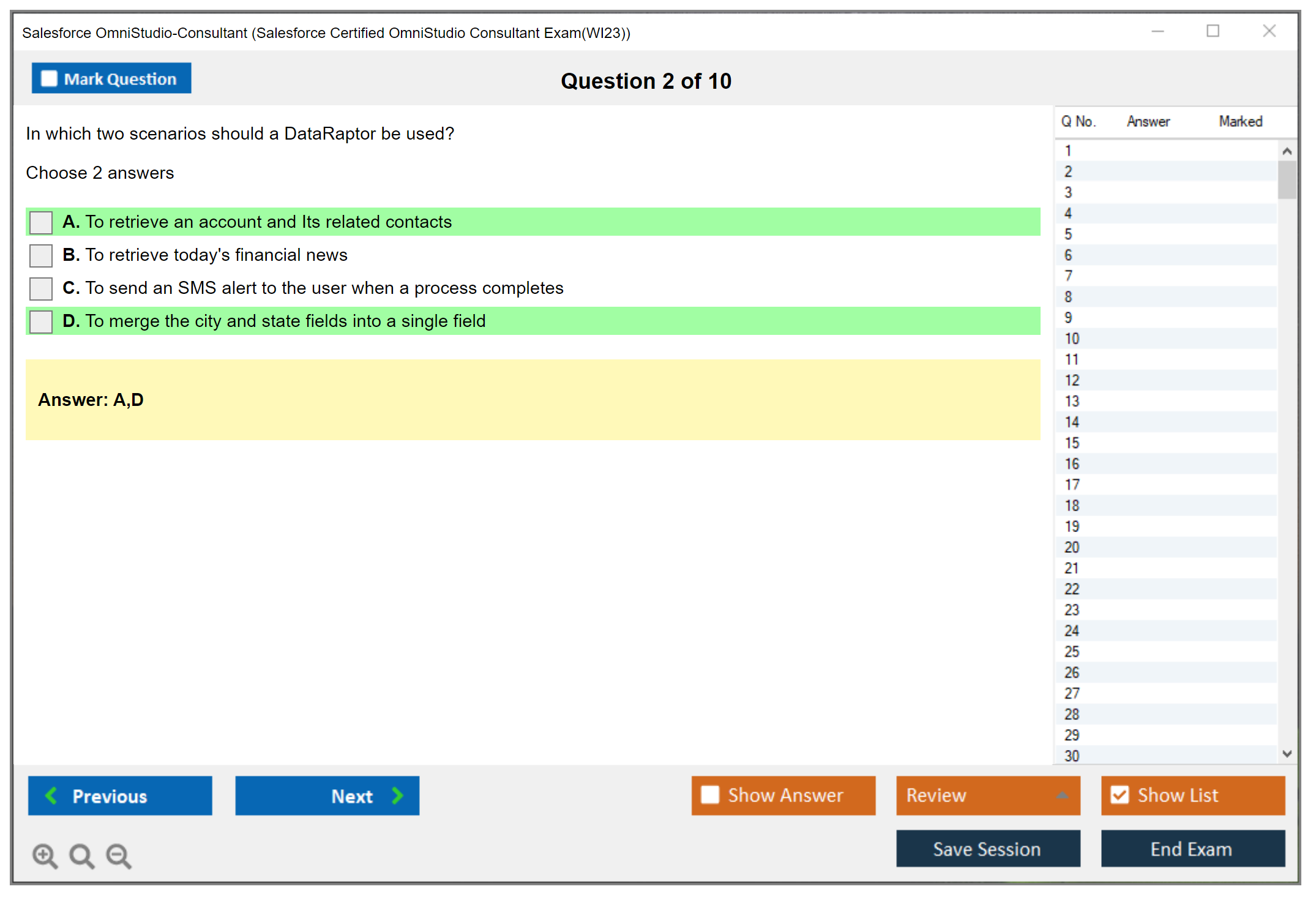
DataRaptors: Extract/Load/Transform, mapping, and performance. The exam loves "what's the best way to shape data for a UI" style questions, and it expects you to think about limits and efficiency.
Integration Procedures: orchestration, calling multiple services, response handling, and especially error handling patterns. Never debugged an IP with multiple steps and weird response payloads? Practice that.
Data and integration best practices: caching, limit awareness, when to call Apex, when not to. You're being tested on restraint as much as capability.
Deployment and lifecycle: versioning, packaging approaches, and CI/CD considerations. Not every team has perfect pipelines, but you should know what "good" looks like and why.
Security and governance: access control, data exposure, and safe design choices. Not just "profiles and permission sets", but the concept of not leaking data through UI and integration design.
Prerequisites and recommended experience
Officially, Salesforce doesn't always enforce hard prerequisites the way universities do. But OmniStudio Consultant prerequisites in the real world are crystal clear: you should already know Salesforce basics and you should've built OmniStudio components outside of a tutorial.
Recommended Salesforce foundation: objects, relationships, security model basics, integrations at a conceptual level, and comfort reading requirements like a consultant. Don't understand sharing and CRUD/FLS implications? OmniStudio can accidentally turn into a data exposure machine. Quick.
Recommended OmniStudio experience: build a few OmniScripts end-to-end, connect them to Integration Procedures, use DataRaptors properly, and troubleshoot failures. Build, break, fix. That loop matters.
Study materials that don't waste your time
An OmniStudio Consultant study guide should start with official resources: Trailhead modules and Salesforce documentation for OmniStudio. Prioritize docs explaining when to use each tool, how data flows, and performance guidance, not just click-by-click build steps.
Want a hands-on practice plan? Build a mini app in a dev org. One OmniScript that collects data and branches based on user input, then calls an Integration Procedure. One Integration Procedure that calls multiple steps, handles an error path, and returns a clean response for the UI. One DataRaptor Extract that shapes output specifically for a FlexCard, because UI-friendly JSON matters. Other stuff too, like versioning practice and basic security review, but those three pieces are the core loop you'll see in the exam's scenarios.
Practice tests and a prep strategy that works
For OmniStudio Consultant practice tests, pick sources that explain why an answer's correct, not just "A is right." If the provider can't justify decisions using OmniStudio best practices, it's probably junk.
Build your own question bank from the objectives. Topic-by-topic drills work because OmniStudio concepts stack, and confusion in one area (like DataRaptor transforms) bleeds into others (like FlexCard data shaping). Keep notes on what you got wrong and why. Not a novel, just patterns.
Common pitfalls: overusing DataRaptors where an Integration Procedure makes more sense, misunderstanding caching, ignoring error handling, and choosing solutions that work technically but are lousy for maintainability. The exam punishes "it works" thinking. It rewards "it works and won't hurt later" thinking.
Scheduling and retakes
Scheduling happens in Webassessor after your account's linked. Online proctoring is convenient, but your environment has to be clean and quiet. Test centers remove a lot of home-network risk, but you're at the mercy of travel and appointment availability.
Don't pass? You pay the $100 retake fee and schedule again. The score breakdown helps you focus. Don't just rebook immediately and hope luck changes. Fix the weak domains, then go again.
Renewal and maintenance
OmniStudio Consultant renewal requirements are handled through Salesforce maintenance, usually Trailhead-based maintenance modules tied to the release cycle. Salesforce changes the exact process over time, but the pattern's consistent: complete the required maintenance by the deadline to keep the cert active.
Miss the maintenance window and your certification expires? You typically lose active status and may need to meet whatever Salesforce requires at that time to regain it. That can mean catching up on maintenance or, in some cases across the program, retesting. Don't let it lapse. Put a calendar reminder in the same place you track client renewals. Same energy.
How much does the Salesforce OmniStudio Consultant exam cost?
$200 USD for the exam, $100 USD per retake, with some country-based price variation. Extra prep costs can push most people into the $200 to $500 total range.
What is the passing score for the OmniStudio Consultant exam?
63%, which is 38 out of 60 questions. No partial credit on multiple-select, and guessing doesn't hurt you.
How hard is the Salesforce OmniStudio Consultant certification?
Moderate to challenging. The hard part's scenario judgment across FlexCards and OmniScripts exam topics, Integration Procedures and DataRaptors questions, and picking the best design under constraints.
What are the best study materials for the OmniStudio Consultant exam?
Start with Trailhead and OmniStudio docs, then add hands-on builds in a dev org. Add practice exams only if they include real explanations and map back to the objectives.
How do I renew the Salesforce OmniStudio Consultant certification?
Complete the required Salesforce maintenance modules by the stated deadline for the release cycle. Miss it and you risk losing active status, which is annoying to fix later.
OmniStudio Consultant Exam Objectives and Domains
Okay, real talk here. If you're eyeing the Salesforce Certified OmniStudio Consultant exam, you gotta understand what you're actually signing up for. This isn't your typical admin cert where you memorize a few formulas and call it a day, you know? OmniStudio came from the Vlocity acquisition. It's essentially Salesforce's toolkit for building industry-specific guided experiences. We're talking communications, healthcare, insurance, financial services. These sectors have wildly complex processes, and OmniStudio gives you the building blocks to automate and simplify them.
The certification validates that you can design, build, and deploy complete OmniStudio solutions. Not just click around in FlexCards or throw together an OmniScript. You've gotta understand when to use which component, how they interact, and honestly, when to tell a stakeholder "look, OmniStudio isn't the right tool for this particular use case."
What this exam actually tests
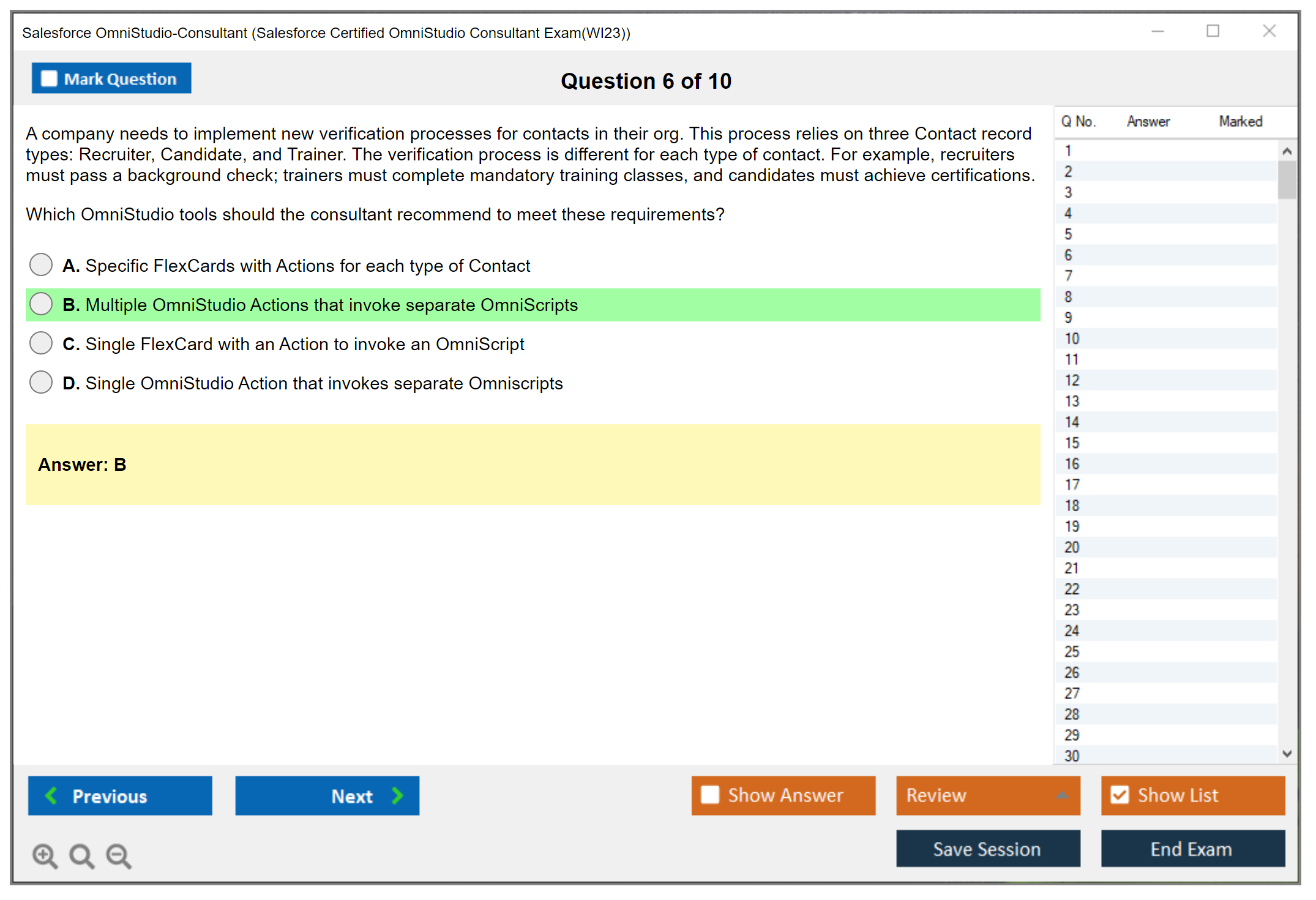
The exam breaks down into domains that mirror real consulting work, which makes sense when you think about it. You'll face questions on requirements gathering, which means translating what a business user says ("we need a faster way to onboard members") into technical specs that actually make sense. Then there's solution design: picking between OmniScripts, Flows, maybe even Lightning Web Components, and explaining why you chose what you chose.
User experience? Huge.
It matters more here than in other Salesforce exams I've taken. You're building interfaces that front-line workers use all day. Make it clunky, and you've failed. The exam tests whether you understand mobile responsiveness, how to minimize clicks, and industry-specific UX patterns. Insurance claims workflows look different from telecom ordering, you know?
One thing that trips people up is scoping. Not everything needs OmniStudio. Sometimes a simple Flow does the job. Sometimes you need Apex. The exam'll throw scenarios at you where the "obvious" OmniStudio answer's actually wrong because there's a simpler platform capability that fits better. This is where hands-on experience separates people who pass from people who memorize Trailhead modules.
OmniScript fundamentals and why they're not just Flows
OmniScripts are guided, multi-step experiences for complex processes. Think of a mortgage application or a healthcare enrollment form that spans 10 screens with conditional branches. Yes, Flow can do some of this, but OmniScripts shine when you need that polished, step-by-step UI with embedded data from multiple sources.
Deep dive here.
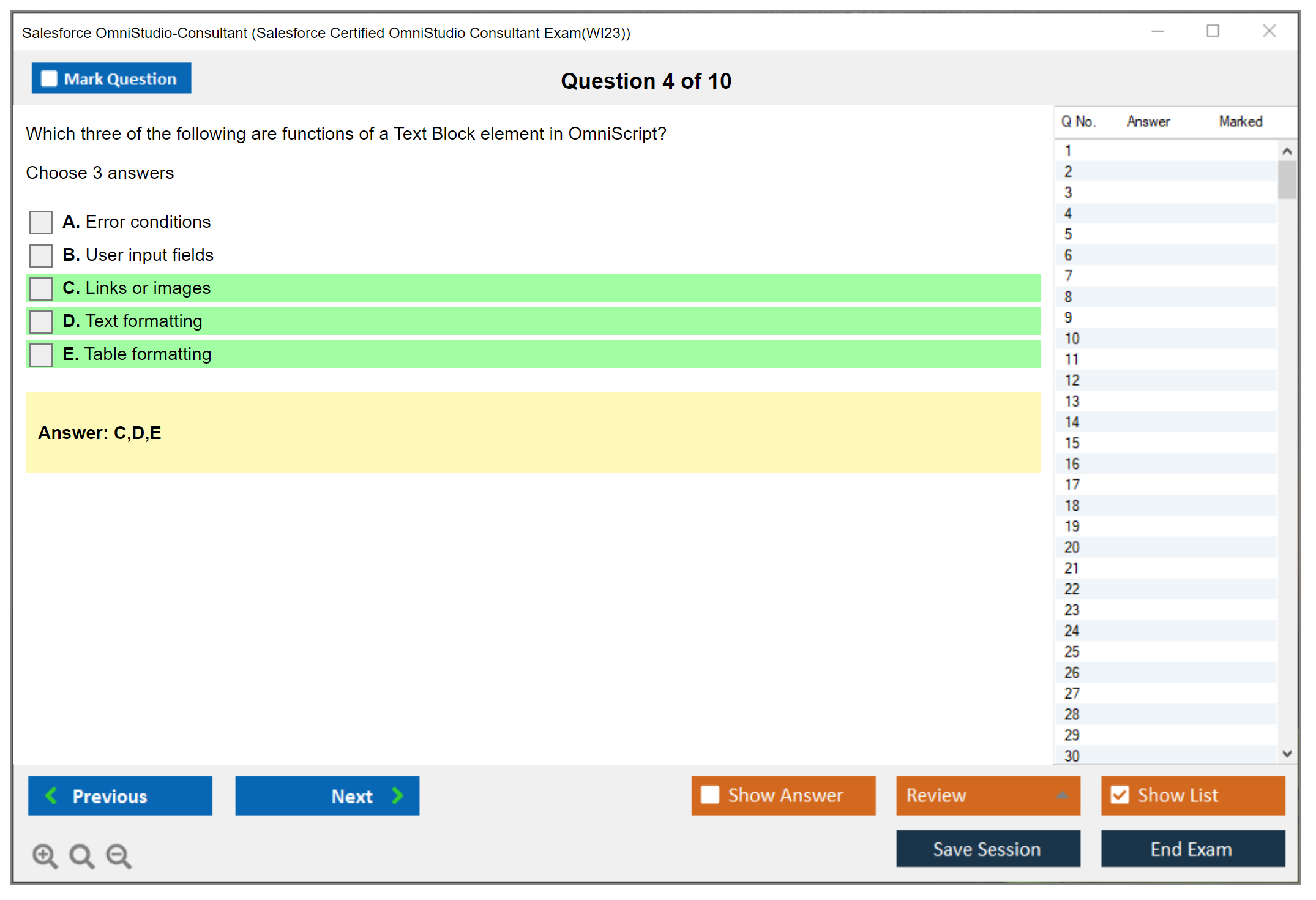
The exam digs into structure: configuring steps, using element types like Text, Number, Select, Multi-Select, Radio buttons, Checkboxes. You've gotta know when to use each. Then there's conditional logic, showing or hiding elements based on what the user selected three steps ago. Step branching gets complex fast when you're building decision trees that account for 15 different scenarios.
Data handling is where people get stuck, honestly. You're setting variables, using merge fields, passing data between steps. The underlying data JSON structure matters because you'll need to reference it in formulas and validation rules. And integration? You'll embed FlexCards inside OmniScripts, call Integration Procedures to fetch or update data, trigger DataRaptors for transformations. It's orchestration work.
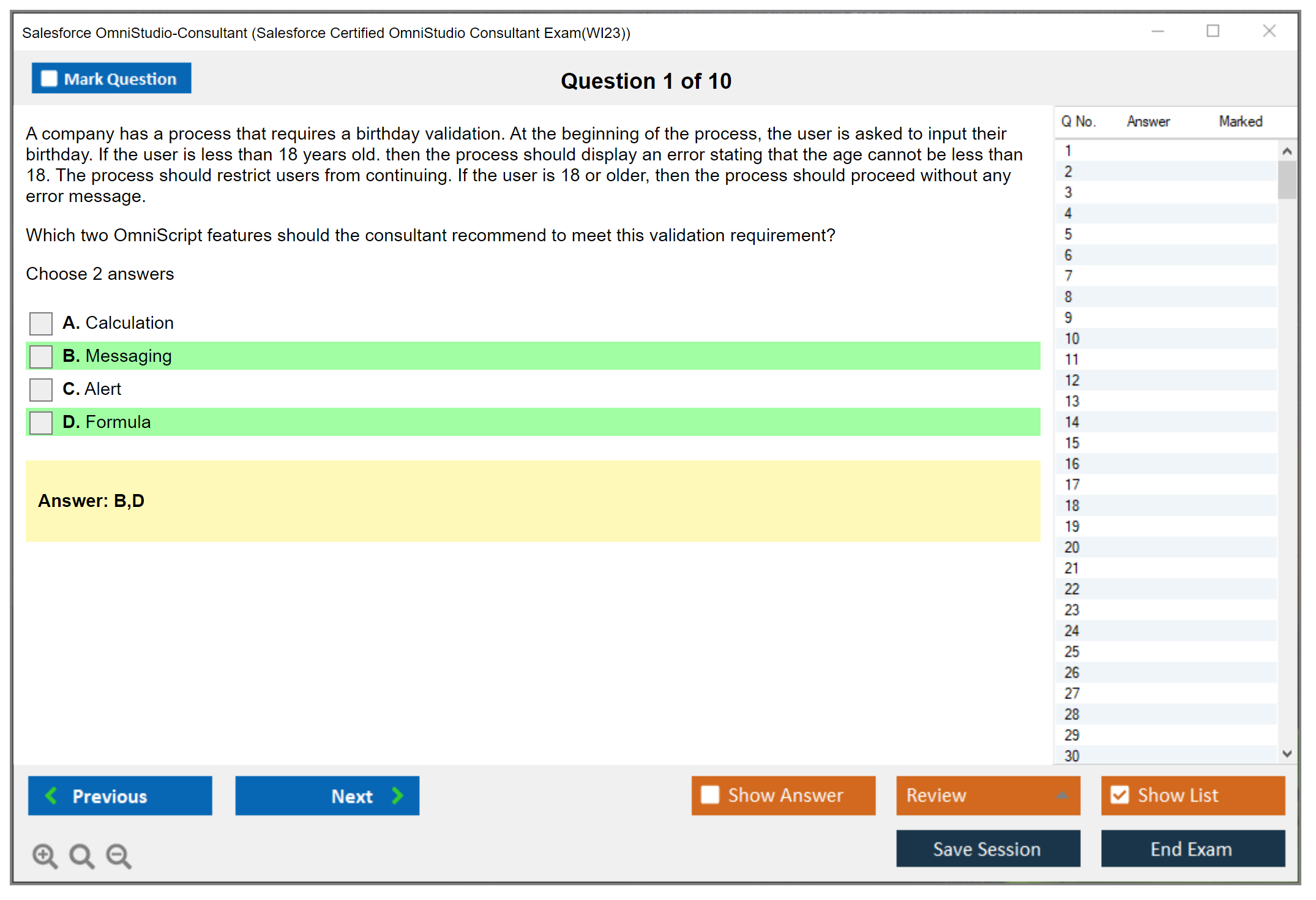
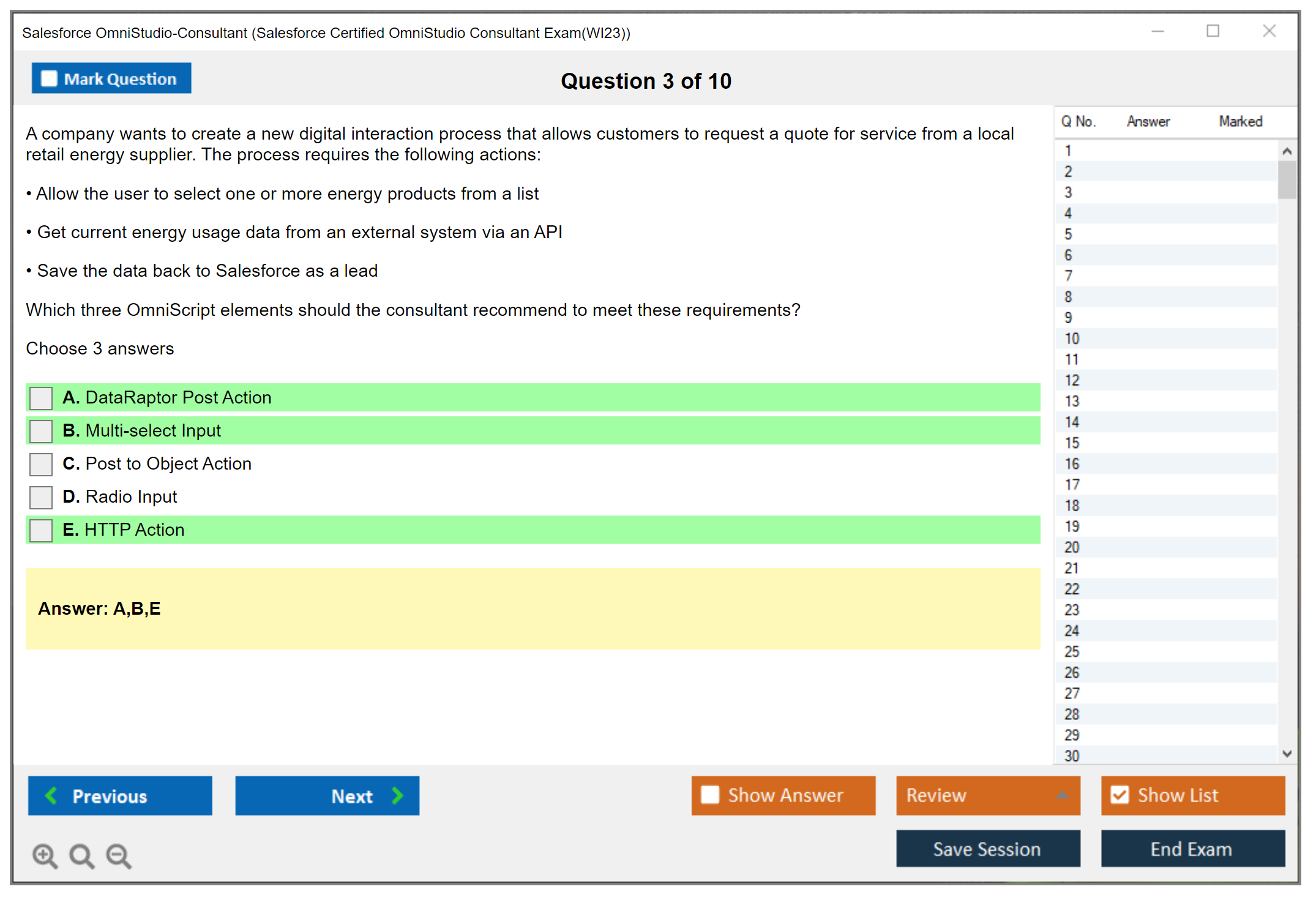
Actions are huge. DataRaptor Post Actions save data, Integration Procedure Actions coordinate complex operations. You'll configure these to handle everything from simple record updates to multi-system transactions. Formula fields let you do real-time calculations like insurance premium calculations based on user inputs. Validation and error handling ensure users get helpful messages when something breaks, not cryptic errors.
Performance optimization shows up on the exam more than you'd think. Minimize data calls. Use caching. Lazy-load data when you can. And mobile responsiveness isn't optional. Your OmniScripts need to work on tablets and phones, not just desktops. Accessibility standards matter too, especially in healthcare and government contexts. I once watched a whole project get delayed six weeks because nobody thought about screen reader compatibility until UAT.
FlexCards for contextual data display
FlexCards display information in card format. Sounds simple, but the use cases are everywhere: member dashboards, policy summaries, account overviews. You're giving users at-a-glance information without making them dig through records.
Card anatomy includes parent-child relationships, states, fields, actions, data sources. States are powerful because you can create multiple card views and transition between them based on user actions or data conditions. A "policy summary" state might flip to a "detailed coverage" state when the user clicks "View Details."
Data source configuration's critical. You can connect to DataRaptors, Integration Procedures, or direct SOQL. Each has performance implications. SOQL's fast for simple queries but doesn't transform data. DataRaptors handle transformations but add processing time. Integration Procedures coordinate multiple data sources but increase complexity. The exam tests whether you know which approach fits which scenario.
Field types and formatting let you display text, numbers, dates, images, custom fields. Conditional formatting changes styling based on data values. Red for overdue claims, green for approved policies. Actions in FlexCards include navigation, launching OmniScripts, opening records, making API calls. You can chain multiple actions together for complex workflows.
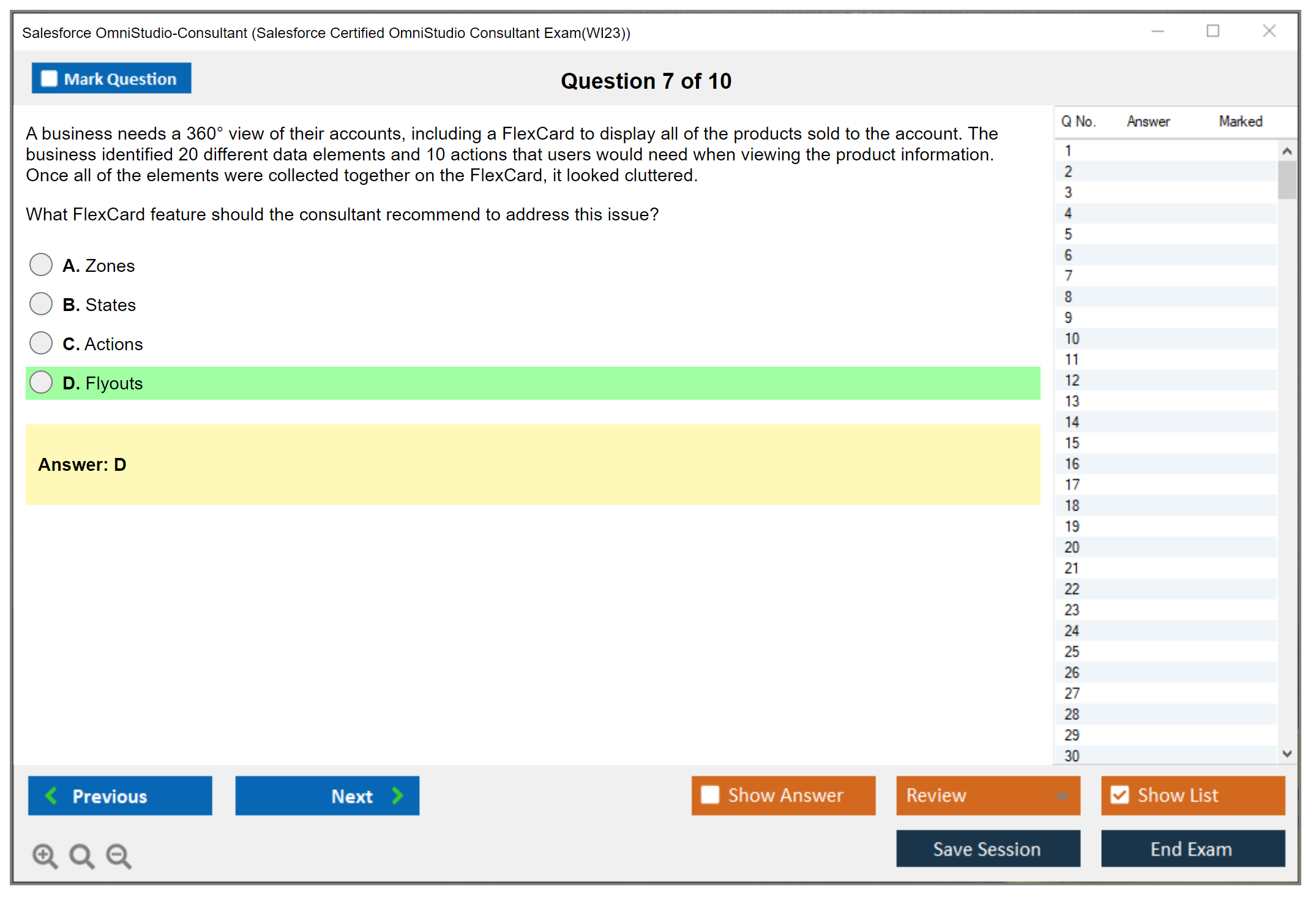
Nesting FlexCards creates hierarchies. Parent card shows account summary, child cards show related policies or claims. Flyouts provide detailed information without leaving the main view. Styling and branding ensure everything matches corporate identity, which matters more than you'd think in client-facing solutions.
Performance considerations here? Optimize queries, limit child card records, use pagination. Test data and preview functionality help you troubleshoot during development, which's essential because debugging FlexCards in production is miserable.
DataRaptors for data operations
DataRaptors come in four types: Extract retrieves data from Salesforce, Load creates or updates records, Transform manipulates data structures, Turbo Extract is optimized retrieval for high-volume scenarios. You need to know when to use each.
Extract configuration involves building formulas, filtering records, aggregating data, formatting output for FlexCards or OmniScripts. Load configuration maps input data to Salesforce objects, handles upserts, creates related records, manages lookup relationships. I've seen people struggle with Load DataRaptors when they're trying to create parent and child records in one operation. The mapping gets complex.
Transform DataRaptors convert between data formats, manipulate JSON, flatten or nest data structures, prepare data for external systems. Formula functions handle string manipulation, date calculations, conditional logic, data type conversions. Relationship handling lets you work through parent-child relationships and extract related records across multiple objects.
Error handling in DataRaptors's testable material. Configure error responses. Log failures. Provide clear error information. Performance optimization means minimizing SOQL queries, using bulk operations, avoiding pointless transformations. And testing, always test with realistic JSON input before you integrate with other components. Version management affects dependent components, so understand how updating a DataRaptor version impacts the OmniScripts and FlexCards that call it.
Integration Procedures for orchestration
Integration Procedures orchestrate complex operations. You're coordinating multiple DataRaptors, external callouts, Apex code, all in sequence or parallel. Action types include DataRaptor actions, HTTP actions for REST/SOAP callouts, Apex actions, Response actions to structure output.
Data flow and mapping between actions matters. You extract values from one action's response and pass them to the next action. The thing is, conditional logic lets you branch based on response data. If the credit check fails, skip the account creation step. Error handling and retry logic use try-catch blocks, handle failed callouts, implement retry mechanisms.
External system integration's common in real projects. Making REST/SOAP calls. Handling authentication with Named Credentials. Parsing responses. Managing timeouts. Security considerations include managing credentials properly and handling sensitive data according to compliance requirements.
Performance considerations: minimize action chains, use parallel processing when possible. Testing Integration Procedures requires validating execution paths, checking error handling, ensuring proper data transformation. Versioning strategy affects dependent components, just like with DataRaptors.
Deployment, lifecycle, and governance
Deployment methods include change sets, Salesforce DX, managed packages, or OmniStudio-specific tools. Environment management best practices cover development, testing, UAT, production. Data dependencies across environments trip people up. Your test data might not match production data structures.
Activation and deactivation affect the component lifecycle. Dependency management identifies what breaks when you update a component. Documentation requirements include design docs, technical specs, user guides. Governance and compliance involve approval processes, audit trails, organizational standards.
Profile and permission set configuration grants access to OmniStudio components, which's pretty standard. Data security respects object-level, field-level, and record-level security, but you've gotta understand when security's enforced versus bypassed in certain contexts.
How this compares to other Salesforce certifications
If you've done the Salesforce Certified Administrator or Salesforce Certified Platform App Builder, you've got foundational knowledge. But OmniStudio's specialized. It's closer to Salesforce Certified Integration Architect in terms of complexity but focused on guided UI experiences rather than pure integration patterns.
Industry consultants might also pursue Salesforce Certified Sales Cloud Consultant or Salesforce Certified Service Cloud Consultant certifications, depending on their focus. OmniStudio sits at the intersection of configuration, integration, and industry-specific process design.
Prep strategy that actually works
Not gonna lie here. Hands-on practice matters more than reading docs. Build complete solutions in a dev org. Create an insurance claims OmniScript with multiple DataRaptors, embed FlexCards, call Integration Procedures. Break things. Fix them. Understand why they broke because that's where the real learning happens, honestly.
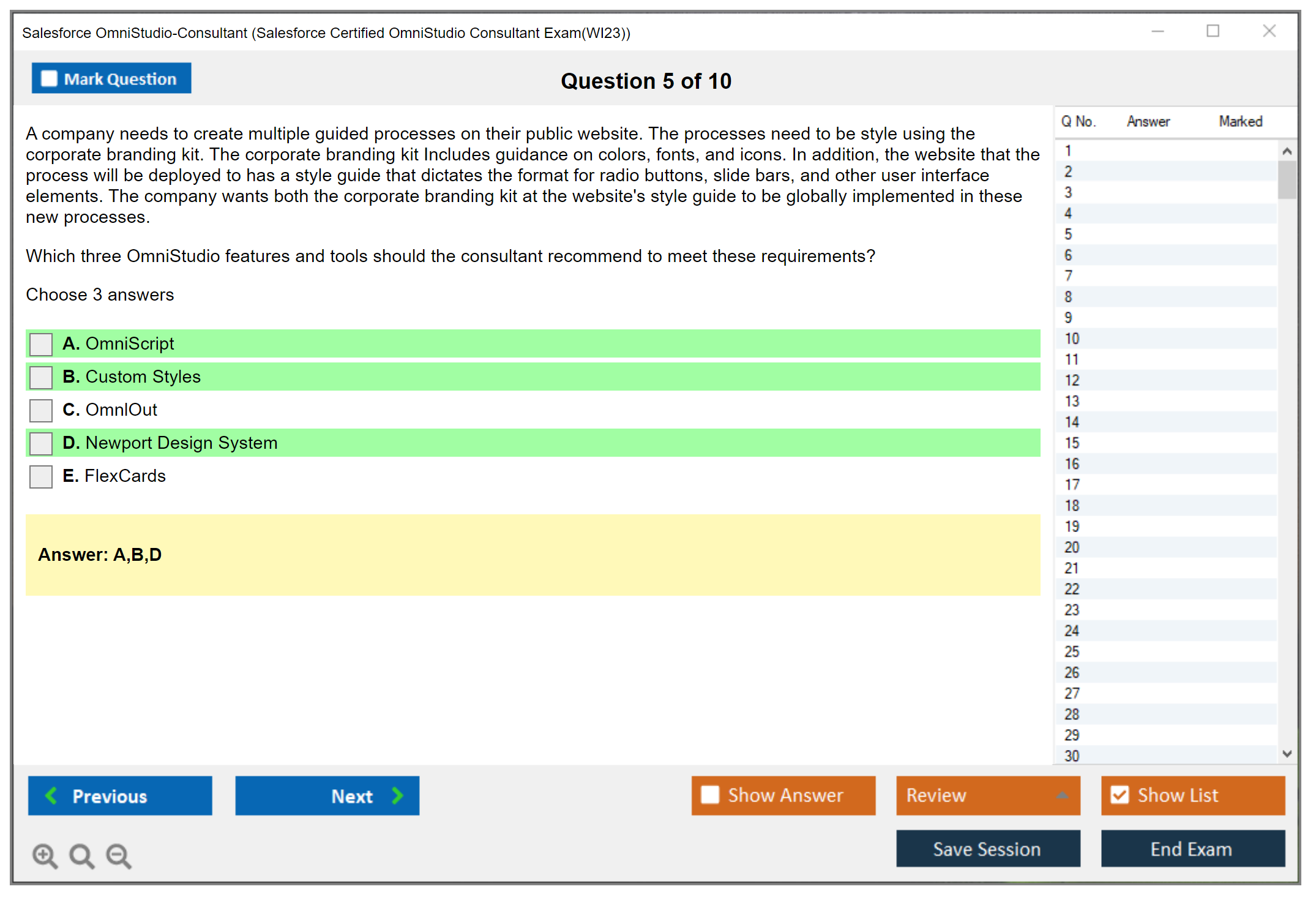
The OmniStudio-Consultant Practice Exam Questions Pack at $36.99 gives you realistic questions mapped to exam objectives. Practice tests expose gaps in your knowledge before the actual exam does. Use them to drill weak areas. Integration, performance optimization, security tend to be high-miss topics.
Trailhead modules cover basics, but product documentation goes deeper. Focus on DataRaptor formula functions, Integration Procedure action types, OmniScript element properties. Build a question bank from objectives and drill topic-by-topic.
The exam costs around $200, passing score's 63%, and yeah, it's challenging. Performance optimization, data flow between components, knowing when not to use OmniStudio, these separate passing from failing. Plan for 60 questions, 105 minutes, online proctoring or test center. Retake policy lets you try again after 14 days if needed.
Renewal requires maintenance modules every release cycle. Stay current or your cert expires and you'll need to re-certify from scratch. Set calendar reminders because it's easy to forget until too late.
Prerequisites (official vs. recommended)
Salesforce doesn't mandate prerequisites. None. You can literally wake up tomorrow, schedule the Salesforce Certified OmniStudio Consultant exam, and go for it. No training required, no cert gatekeeping, nothing.
But here's the thing. "No prerequisites" doesn't mean you can waltz in unprepared and crush it. OmniStudio's opinionated as hell, moves fast, and it's tied to real-world delivery scenarios where things break under pressure. The exam's testing whether you've actually built stuff that survives production, not whether you crammed an OmniStudio Consultant study guide the night before and hoped your memorization skills would carry you through multiple-choice purgatory.
Worth mentioning: no prior certifications required either. Unlike those advanced Salesforce credentials where you're stacking certs like you're building a pyramid scheme of badges, the OmniStudio (Vlocity) consultant certification stands alone. Honestly awesome if you're already neck-deep in Industries work and don't wanna waste months collecting prerequisites like Pokémon cards.
Recommended Salesforce knowledge (Admin/Platform fundamentals)
Never touched standard Salesforce config? You're gonna hurt. Not because the exam officially requires "Admin cert or bust" (it doesn't), but because OmniStudio solutions sit on top of the platform, and platform rules always win that fight. Always.
Having Salesforce Administrator or Platform App Builder is what I'd call a strong baseline. Those certs signal you understand the foundational stuff OmniStudio assumes you already know. How data connects, how security blocks things randomly, where Setup hides that one setting that's destroying your entire day.
Here's platform knowledge I'd treat as non-negotiable, even though these aren't official OmniStudio Consultant prerequisites.
Salesforce data model fundamentals matter. Like, a lot. You should be comfortable with objects, fields, relationships (lookup versus master-detail), record types, and the basic concept of data architecture. Why do some models completely explode when you hit reporting or try integrating with anything external? If you can't look at a schema and immediately predict where you'll need record types, or where a master-detail relationship's gonna change sharing behavior and create rollup chaos, you're building OmniScripts that "work" in your developer sandbox. Then they spectacularly fail during UAT when the data's messy and the sharing model reflects actual business complexity.
Security model knowledge gets underestimated constantly. Profiles, permission sets, sharing rules, object-level security, field-level security. The whole nightmare. OmniStudio components don't magically bypass Salesforce security (shocking, I know), and the exam expects you to understand how access impacts what users actually see and what integrations can do. Classic example: your FlexCard appears "blank" for a user, not because the FlexCard configuration's broken, but because the DataRaptor's running in a context that can't read a specific field. Or the underlying object isn't shared properly. Or the user can't access a record type and the UI just quietly gives them nothing instead of a helpful error message.
SOQL matters too. You don't need to be some query wizard writing nested relationship monsters from memory, but you need basic SOQL understanding so you can read queries and understand what they're actually doing. WHERE clauses. Relationship queries. Aggregate functions at a "yep, I know what GROUP BY accomplishes here" level. Because even though OmniStudio hides some complexity behind configuration, you still end up troubleshooting data pulls, filters, and performance problems. They look exactly like "your query's way too broad" or "your filter logic's fundamentally wrong."
UI familiarity helps more than people admit, honestly. You should be comfortable working through Setup, Lightning App Builder, standard configuration tools. Not because the OmniStudio exam's testing where every button lives in the interface, but because real implementations are always mixed. You're jumping between an OmniScript, an object modification, a permission set update, a named credential fix, and a Lightning page assignment. If you get lost in Setup, you waste time and make questionable decisions under pressure.
Process automation awareness is another "soft prerequisite." Flow's the main event now, but you'll still encounter Process Builder and Workflow in existing orgs. Exam context sometimes assumes you know what those are and why they matter. Knowing when to use Flow against an OmniScript against "don't automate this at all, just fix the data model" is judgment that shows up indirectly in scenario questions. Not gonna lie, if you've never debugged a Flow interview or hit a recursion issue that locked up an entire object, some integration and orchestration questions will feel weirdly abstract and disconnected.
Quick aside: I once spent four hours debugging what I was convinced was a broken DataRaptor. Turned out someone had casually updated a Process Builder rule three weeks earlier that was now interfering with my Integration Procedure. The error message? Completely useless. Just a timeout. That's the kind of cross-tool chaos you deal with constantly in production orgs, and it's why knowing how these automation pieces interact matters way more than most study materials let on.
And yeah, candidates ask about logistics while thinking through readiness, so quick reality check: the OmniStudio Consultant certification cost is typically the standard Salesforce exam price in your region, and the OmniStudio Consultant exam passing score is defined by Salesforce in the exam guide. Exact numbers shift sometimes, so don't trust random blogs (including mine, honestly) over the official listing. Check the current exam page before you schedule.
Recommended OmniStudio project experience (build and troubleshoot)
Salesforce recommends practical experience implementing OmniStudio solutions before attempting the exam, and I agree with that more than I agree with most Salesforce recommendations. OmniStudio's one of those toolsets where you can "know the features" in theory and still completely bomb the exam, since it leans heavily into how these parts connect in complex scenarios and what breaks when you scale or integrate with unpredictable systems.
Hands-on experience matters.
Period.
What kind of experience though. Not "I clicked through a Trailhead module once and got my badge." I mean you've built FlexCards and OmniScripts that pull real data, handle unhappy paths where users do unexpected things, and survive changes when requirements shift mid-implementation. You've configured DataRaptors and Integration Procedures, then watched them fail spectacularly, then fixed them, then optimized them because the first version was painfully slow and couldn't handle production volume.
If you've worked through FlexCards and OmniScripts exam topics in an actual project with actual stakeholders, you already know the vibe. Requirements change mid-sprint, the business suddenly wants conditional steps they never mentioned, you need a reusable component because three teams are building similar flows, and your clean demo configuration turns into a complicated guided flow with branching logic, data dependencies, and error handling that actually matters.
That's the real prep.
The exam questions reward people who've lived that complexity.
Here's what "ready" experience looks like in plain terms:
You've built at least one guided interaction end to end. A real OmniScript. Multiple steps. Conditional visibility based on previous answers. Actions that call DataRaptors or Integration Procedures. Save for later functionality, or at least a coherent strategy for persistence. Error handling that doesn't just dump a generic red toast message and call it a day.
You've used DataRaptors for more than a single object fetch. Extract, Load, Transform. You understand when a DataRaptor should be your primary data access method and when it's absolutely the wrong tool for what you're trying to accomplish. You've thought about performance implications, like trimming unnecessary fields, filtering early in the process, and not dragging back the entire database because you were too lazy to add proper criteria.
You've built Integration Procedures that orchestrate multiple calls, and you've dealt with failures. This is where a lot of Integration Procedures and DataRaptors questions come from, honestly. Timeouts, misconfigured inputs, response mapping that breaks when an upstream API unexpectedly adds a field, caching considerations, governor limits. Knowing when to call an Apex REST service against a DataRaptor against a standard integration pattern against "just use Platform Events."
You've deployed OmniStudio assets between environments. Versioning. Activation. Dependencies that aren't obvious until deployment fails. The stuff nobody wants to talk about until release week when everything's on fire. This is the difference between "I studied" and "I can actually deliver," and it's also why people describe OmniStudio Consultant exam difficulty as higher than expected. The exam isn't only about building components, it's about building in a way that can be managed, scaled, and maintained.
Self-assessment is the missing piece for most candidates, the thing is. Salesforce can say "recommended experience," but you're the one who knows whether you've actually done the work or just watched someone else do it. Before you register, be brutally honest with yourself about your reps. Have you debugged a DataRaptor where the output's mysteriously empty and you had to trace whether it was the input JSON structure, the context ID, the object permissions, or a filter expression with a typo? Have you tuned an Integration Procedure because it was too slow, not because it was functionally "broken"? Have you been the person who got paged when a configuration change caused the guided script to fail for an entire call center team during peak hours?
If the answer's no, that doesn't mean "don't take it." It means adjust your plan, honestly. Spend time building and intentionally breaking things. Use an OmniStudio Consultant study guide as a roadmap, then build a mini project that forces you to touch every major objective. Add your own checkpoints. Write down what you got wrong and why. That's how working consultants actually do it in the real world.
Practice tests help, but only if you treat them like diagnostics, not like some cheat code that'll carry you through. OmniStudio Consultant practice tests can show you the shape and style of the exam, but they won't replace the instincts you get from real configuration work and actual troubleshooting. If you take a practice question about an Integration Procedure retry strategy and you're guessing based on what "sounds right," that's your signal to go build one and watch how it actually behaves when the downstream service returns garbage data or times out randomly.
One more thing people forget: the exam doesn't exist in a vacuum. The OmniStudio Consultant exam objectives touch data architecture, security models, UI configuration, and automation context across the platform. So if your experience is "I only built FlexCards for one team," you may feel confident until the questions pivot to governance, access control, and lifecycle management. That's where people get surprised, then they start frantically googling "OmniStudio Consultant prerequisites" after they already paid the exam fee.
Don't be that person.
If you want a simple gut-check before scheduling, ask yourself this: could you walk into a project tomorrow, get assigned a story like "build a guided flow that updates multiple related records, respects sharing rules, integrates to an external system with authentication, and performs well under load," and not panic? If yes, you're close. If no, keep building until that scenario sounds manageable instead of terrifying.
And since people ask early in their planning: OmniStudio Consultant renewal requirements follow Salesforce's maintenance model, meaning you'll keep the cert active through required maintenance modules within specific timelines. Exact module names and release dates change annually, so again, check the official maintenance page when you're planning your certification calendar. Don't guess based on outdated forum posts.
Conclusion
Putting it all together for exam success
Look, here's the thing. The Salesforce Certified OmniStudio Consultant exam isn't something you can wing with just Trailhead badges and good intentions. I've seen plenty of experienced Salesforce folks stumble on this one because they underestimated how deep the questions go into Integration Procedures error handling or DataRaptor performance optimization. The exam objectives cover a lot of ground, and honestly, the 60-question format means every topic matters for hitting that passing score.
Your study plan needs actual hands-on work. Build FlexCards that pull from multiple data sources. Create OmniScripts with conditional logic and complex actions. Break things on purpose in your dev org so you understand how OmniStudio behaves under weird conditions. You'll learn way more from watching something fail than from reading about best practices in a vacuum. The official documentation? Dense. Super dense. But it's where you'll find answers to those tricky scenario questions about caching strategies or deployment versioning that show up on test day.
The OmniStudio Consultant certification cost is reasonable compared to other Salesforce credentials, but failing and having to retake adds up fast. The difficulty level catches people off guard, especially around security and governance topics that don't get as much attention in typical implementation work. You might crush the FlexCards and OmniScripts sections based on project experience but then hit a wall with questions about enterprise-scale integration patterns or CI/CD considerations you've never actually implemented. I once watched a colleague with five years of Vlocity experience blank on a straightforward question about permission sets because he'd always just cloned existing configs.
Practice tests? Huge for this exam. They expose gaps in your knowledge before you're sitting in front of a proctor wondering why you can't remember the difference between Extract and Load DataRaptor use cases. Working through realistic practice questions helps you internalize the exam objectives in a way that reading documentation alone never will. It's basically the secret weapon most people skip.
If you're serious about passing on your first attempt, the OmniStudio-Consultant Practice Exam Questions Pack gives you the question practice you need mapped directly to exam topics. It's built specifically for the current exam format and includes detailed explanations that actually teach you the concepts instead of just giving you answers to memorize. Combined with your hands-on lab work and the official study guide, it's the prep strategy that works.
The renewal requirements aren't terrible once you're certified. Just stay current with maintenance modules. Get after it.