

SAP C_MDG_1909 Certification Overview
What is SAP Certified Associate, SAP Master Data Governance?
SAP Master Data Governance? Central command center.
It's where you create, manage, and distribute master data across your entire enterprise system space. You've got customer records floating in CRM, vendor data buried in procurement, material master living in logistics, and financial account data scattered everywhere like confetti after a wedding. MDG corrals all that chaos under one roof with proper governance, workflows, and quality controls that actually make sense.
The SAP C_MDG_1909 certification validates you know how to configure, implement, and maintain this beast. It's positioned as an Associate-level credential in SAP's certification hierarchy, testing foundational to intermediate knowledge. Not entry-level stuff. But you're not expected to architect solutions from scratch either. The 1909 in the name? September 2019 release. You're working with that specific version's features.
What competencies matter here? Data modeling's huge. You need to understand how to structure master data objects, staging areas, and active data repositories. Change request management's another big chunk. I mean, the entire governance process revolves around change requests, approvals, and workflow routing, so you can't escape it.
Workflow configuration itself is critical (BRFplus rules, agent determination, all that fun stuff). UI customization using Floorplan Manager or Web Dynpro concepts. Integration scenarios, especially Data Replication Framework and key mapping. Data quality management covers duplicate checks, search configurations, validation rules, derivations. The list goes on.
Business value? Not theoretical.
Ensuring data consistency across ERP, CRM, SCM, and other systems directly impacts compliance, reporting accuracy, and operational results in ways that executives actually care about when budgets get tight. Bad master data means bad analytics, compliance failures, and process breakdowns that cost real money. SAP MDG addresses all that by enforcing central governance policies, quality gates, and approval workflows before data ever hits your production systems.
This certification differentiates you in roles like data governance consulting, master data management, and SAP MDG-specific project work. If you're competing for MDG implementation gigs or want to position yourself as a data governance specialist rather than just another functional consultant, this credential matters. It signals you understand not just the business processes but the technical configuration behind MDG's governance engine. And that's where most people fall short.
Who should take the C_MDG_1909 exam?
SAP consultants specializing in master data management? Obvious candidates.
But it's broader than that. Data architects designing enterprise data models need this knowledge. Data stewards responsible for maintaining data quality standards across business units benefit from understanding how MDG enforces those standards technically. Not just conceptually, but down in the configuration where rubber meets road.
Business analysts working with master data processes and change management workflows should consider it. Especially if they're involved in requirements gathering or process design for MDG projects. SAP Basis and technical consultants supporting MDG implementations need to grasp the architecture, replication mechanisms, and monitoring aspects. Project managers overseeing MDG rollouts or data migration initiatives gain credibility when they understand what their teams are actually configuring.
Not gonna lie, it's also perfect for IT professionals transitioning into SAP master data governance roles who want a structured learning path. If you're an existing SAP consultant in modules like MM, SD, or FI, expanding into the MDG domain opens new project opportunities because clients increasingly want integrated governance solutions rather than siloed functional expertise that doesn't talk to anything else.
SAP recommends 1-2 years hands-on experience. That's realistic.
You could probably pass with less if you're laser-focused and have strong adjacent SAP experience, but understanding governance processes, workflow details, and replication scenarios takes real-world exposure. The kind you get when something breaks at 3 AM and you've gotta fix it. I once spent an entire weekend troubleshooting a replication failure that turned out to be a single misconfigured filter step. You learn fast when a go-live depends on it.
Career scenarios where this adds value? Consulting firms staffing MDG implementations obviously. Enterprise SAP teams building internal governance capabilities. Implementation partners bidding on master data consolidation projects. If your company's running SAP S/4HANA and dealing with data quality issues or compliance requirements (and who isn't?), MDG expertise becomes critical rather than nice-to-have.
Benefits of SAP C_MDG_1909 certification
Better credibility? Most immediate benefit.
When you're sitting in a project kickoff meeting and the client asks about your MDG background, certification provides third-party validation. it's "I've worked with MDG," it's "SAP verified I know this stuff" and that distinction matters more than consultants like to admit.
Validation of technical and functional MDG skills supports career advancement in tangible ways. Whether you're moving from developer to lead consultant or from functional consultant to solution architect, demonstrated expertise in a specialized area like master data governance strengthens your positioning. You get access to SAP's certified professional network and resources. Some documentation, early access to certain materials, and the ability to display the credential on SAP's certification directory where recruiters actually look.
Competitive advantage in the job market? Real.
Search LinkedIn for SAP MDG consultant positions, and you'll see certification listed as preferred or required. Employers use it as a screening filter, so having the certification gets your resume past that initial cut before anyone even reads your experience section.
It's also foundation for advanced SAP certifications and specializations that open doors later. Once you've got the Associate level, you can pursue Professional-level credentials or specialize in adjacent areas like SAP S/4HANA or data integration with tools covered in certifications like C_DS_42 (SAP Data Services). If you're already certified in related areas like C_TS410_2020 (Business Process Integration), adding MDG creates a more complete profile that consulting firms actually want.
Showing commitment to staying current with SAP technologies matters more as the ecosystem keeps changing. SAP's pushing cloud, S/4HANA, and modern data management approaches hard. MDG skills position you for those conversations rather than being stuck maintaining legacy ECC systems that nobody wants to touch anymore.
Salary impact varies by region and role, obviously.
But certified SAP consultants typically command 10-20% premiums over non-certified peers in similar positions. For MDG specifically, the specialization scarcity drives that higher in some markets because there just aren't enough qualified people. Project opportunities expand because you're qualified for implementation work, not just support or maintenance that pays less and gets boring after a while.
How this credential fits the SAP ecosystem
The C_MDG_1909 certification sits alongside other governance and data-focused credentials in SAP's lineup. If you compare it to something like C_MDG_90 (an earlier MDG certification), the 1909 version covers newer features and updated UI frameworks. It's more current, which matters when clients are running recent SAP releases and don't want consultants fumbling around with outdated knowledge.
It complements technical certifications well. Things like C_TADM55a_75 (HANA System Administration) or P_TSEC10_75 (System Security Architect) because MDG implementations require cross-functional knowledge that spans boundaries. You're not just configuring workflows. You're dealing with database replication, authorization concepts, and system integrations that break in creative ways. Understanding how MDG fits into the broader technical space makes you more valuable and harder to replace.
For functional consultants? Big opportunity.
If you're in areas like finance or sales, pairing this with credentials like C_TS4FI_2021 (Financial Accounting) or C_TS462_1909 (Sales) creates a powerful combination that few people have. You understand both the functional domain and how to govern that domain's master data centrally. That's the sweet spot where consulting rates go up.
Look, master data governance isn't going away. If anything, regulatory requirements keep tightening and data quality expectations keep increasing because everyone's tired of reports that don't match and audits that find embarrassing gaps. Companies need professionals who can design and implement governance solutions that actually work in production, not just look good in PowerPoint. The SAP Master Data Governance certification proves you're one of those professionals, not just someone who's heard about MDG in passing at a conference once.
C_MDG_1909 Exam Details: Format, Cost, and Passing Score
What this certification is, really
The SAP C_MDG_1909 certification is the associate badge for SAP Master Data Governance on the 1909-era stack, aimed at people who can explain governance concepts and also click around the config without panicking. It's not a "read a slide deck and vibe" exam. You need to know how MDG hangs together across data modeling, change requests, workflow, UI, and replication.
Hard truth. MDG is picky. The exam is too.
Functional consultants who've touched MDG and want proof. Technical folks who got dragged into MDG integration (DRF, key mapping, replication) and want to stop being "the helper." And honestly, data governance leads who live in workshops all day but need to show they understand the system side of SAP MDG governance processes.
If you've only watched demos, wait. If you've configured a data model, debugged a workflow agent issue, and had at least one "why is replication stuck" moment, you're in the right neighborhood for SAP Certified Associate MDG 1909.
Exam format and duration (what to expect)
This is a computer-based, closed book exam delivered through the SAP Certification Hub, and yes, they mean closed book: no notes, no browser, no second screen, no "but it's just the SAP Help Portal." You get 80 questions, a mix of multiple-choice and multiple-response, and you get 180 minutes. That's 3 hours, which sounds generous until you hit multi-select questions where four answers look "sort of right" if you haven't done the config yourself.
Single-select shows up a lot. Multi-select too, where you must identify all correct answers. No partial credit there, which is brutal because one missed checkbox turns a mostly-correct thought into a full zero. Also, no negative marking, so you're never punished for guessing. Mark that. It changes how you manage time.
You can flag questions for review and move around. Do it. Look, the best SAP exam strategy is to take the sure points first, then come back to the "replication detail" stuff when your brain is warmed up. I once watched a colleague burn 45 minutes on three workflow questions at the beginning and then rush through the easy data model stuff at the end. Don't do that.
Language is typically English, and sometimes SAP offers additional languages depending on region. Don't assume. Verify at booking. The interface includes a basic calculator, but physical notes aren't allowed, and you should plan like you'll have nothing but the screen and your memory.
Question distribution is weighted by exam objectives. That's SAP-speak for "some topics matter more," and the scoring follows that weighting. So if you bomb a heavy section like data modeling or change request governance, your score feels it.
Cost of the C_MDG_1909 exam
The SAP MDG certification cost for C_MDG_1909 usually lands around €500,€600 (roughly USD $550,$650) depending on region and whatever SAP's current pricing structure is in the Training and Certification Shop. Europe often sees pricing anchored in EUR, North America in USD, Asia-Pacific varies widely, and Latin America can have local pricing that looks cheaper until taxes and exchange rates do their thing.
Taxes matter. Currency conversion hurts. Budget extra.
Payment methods are generally credit card, purchase order, or SAP training credits. If you're working at a partner, ask about SAP PartnerEdge discounts because corporate and partner pricing can be real, and it's one of the few times being "in the ecosystem" pays off directly.
Retakes cost the same as the first attempt. No discount. Not gonna lie, that alone is why I tell people not to book this exam until they're consistently scoring well on a C_MDG_1909 practice test style set of questions and can explain why each option is wrong, not just why the right one is right.
Refunds and cancellations usually require about 14 days notice for a full refund, but policies can vary by region and exam delivery option. Read the fine print in the portal because "I forgot" isn't a policy category.
Compared to other SAP associate-level exams, this sits in the same general price band. The bigger "total investment" is almost always exam fee plus C_MDG_1909 study materials plus optional training courses or SAP Learning Hub access. Sometimes SAP Learning Hub subscriptions are bundled with training packages, and that can be cost-effective if you're also doing other certs or need lots of official content for a few months.
Passing score for C_MDG_1909
The minimum passing score is commonly listed as 63%, which works out to about 50,51 correct answers out of 80, depending on SAP's scoring and rounding. One caveat: SAP can adjust cut scores based on difficulty and psychometric analysis. That's a fancy way of saying the exam is standardized, and they reserve the right to tweak pass thresholds slightly to keep it fair across versions.
Scoring is your raw correct answers converted to a percentage, but remember the multi-select rule: no partial credit. You either nail the set or you don't. That's why SAP MDG exam questions can feel harder than they look, because they test completeness, not vibes.
You usually get pass/fail immediately after finishing. Then you get a detailed topic breakdown showing strengths and weaknesses, which is super useful if you fail because it tells you where you leaked points. Digital certificate delivery is typically within 2,3 business days via the SAP Training and Certification Shop.
Validity question. SAP certifications generally don't "expire" in the old-school way, but SAP pushes "Stay Current" assessments for newer releases in many tracks. Translation: your badge might stay visible, but employers and SAP itself care whether you kept up or let it gather dust on LinkedIn.
Failing isn't the end. Review the report, hit weak areas, then schedule a retake after you've actually closed the gaps. Don't rage-book the next slot for next week unless you know exactly what you're fixing.
Exam booking and scheduling (how it works)
Registration happens in the SAP Training and Certification Shop portal. From there you'll book through SAP's delivery flow, often tied to Pearson VUE logistics for test centers and online proctoring options, depending on your region and what SAP's offering at the moment.
You can usually schedule up to 6 months in advance, which is great if you need a deadline to study. Rescheduling is typically allowed up to 14 days before the exam without penalty, but again, confirm the exact rule in your region.
Test center versus online proctoring is a real choice. Test center is boring but stable. Online proctoring is convenient but picky: you need a webcam, microphone, stable internet, and a clean workspace, and if your setup's weird (multiple monitors, noisy room, corporate VPN quirks), it can turn into a stress event before you even see question one.
Bring only your government-issued photo ID, and make sure the name matches your registration exactly. All other materials are prohibited. Accessibility accommodations exist if you have documented needs, but you must request them ahead of time.
What the exam is actually testing (topic weighting reality)
SAP won't hand you the exact per-topic percentages in a nice chart inside the exam room, but the weighting follows their published objectives, and you should expect the big blocks to show up repeatedly.
Master data governance concepts and overall MDG approach, plus SAP MDG governance processes basics. MDG data modeling and UI configuration, including staging, validations/derivations, and how the model connects to UIs. This one deserves extra attention because questions often mix "where do you configure it" with "what happens at runtime," and that combo trips people. Workflow and change request in SAP MDG, including approvals, agents, and BRF+ basics. Honestly, workflow questions are where people lose easy points because they remember the diagram but not the exact behavior when steps, rules, and agents collide.
Data quality and search, duplicate handling, plus data quality and consolidation in MDG concepts. Integration topics like SAP MDG integration (DRF, replication), key mapping, and distribution. Mentioning casually: authorizations/roles, monitoring, error handling, and operations are also in play, and they're sneaky because they feel "secondary" until the exam asks you exactly where to check a stuck process.
Quick prep opinion: how to pass C_MDG_1909 without wasting money
Hands-on beats reading. Every time. You can read a C_MDG_1909 exam guide and still blank out when they ask which framework piece controls UI behavior or where a replication setting actually lives, because MDG has a lot of "sounds similar" configuration points.
Study window depends on background. Two weeks if you've implemented MDG recently and you're just mapping terms to SAP's wording. Four to six weeks if you're new to workflow, DRF, or the data model mechanics. Make your C_MDG_1909 study materials mix include official SAP courses or Learning Hub content, SAP Help Portal docs for MDG, and a practice set that mimics SAP's multi-select style. The thing is, avoid brain-dump sites. They train you to recognize patterns, not to answer questions with actual understanding behind them.
FAQs people keep asking me
What is the passing score for the SAP C_MDG_1909 exam?
Usually 63%, around 50,51 correct out of 80, with SAP retaining the option to adjust slightly.
How much does the SAP C_MDG_1909 certification cost?
Typically €500,€600 or $550,$650, plus local taxes and currency conversion, and retakes cost the same.
How hard is the C_MDG_1909 exam and how long should I study?
Moderately hard if you've only read theory, easier if you've configured MDG. Plan 2,6 weeks depending on hands-on experience.
What are the main topics/objectives for SAP Master Data Governance (C_MDG_1909)?
Expect data modeling, change request governance, workflow, UI concepts, data quality/duplicate handling, consolidation ideas, and DRF replication/integration, plus security and operations.
What study materials and practice tests are best for C_MDG_1909?
Official SAP Learning Hub content plus SAP Help docs, plus a legit C_MDG_1909 practice test source that explains answers. If it just gives letters, skip it.
Checklist before you book
Confirm your exam language. Verify cost in your region. Pick test center or online proctoring based on your setup. Then do one last reality check: can you explain data model pieces, CR steps, workflow agent logic, and DRF replication without guessing? If yes, book it. If no, you're not far, but don't donate €600 to the retake fund.
C_MDG_1909 Exam Objectives and Topic Breakdown
What you're actually signing up for with C_MDG_1909
Look, SAP's C_MDG_1909 certification? It's not some resume filler. This validates you actually get Master Data Governance in real SAP environments. Not textbook stuff, but the chaotic reality of change requests, workflow approvals, and those data quality disasters that haunt consultants at 3 AM.
The exam tackles MDG fundamentals through 1909 release specifics, meaning you're wrestling with on-premise architecture, Web Dynpro interfaces, and classic Floorplan Manager methods before everything shifted to Fiori.
This certification targets people configuring, implementing, or supporting MDG systems. I mean, if you're just maintaining material masters occasionally, skip this one. But if you've gotten pulled into an MDG implementation or you're trying to jump from traditional master data work to governed processes, then yeah C_MDG_1909 makes total sense. The exam assumes basic SAP literacy (navigation, IMG customizing, maybe workflow fundamentals), though you don't need hardcore ABAP chops.
Breaking down the heavyweight topics
Master Data Governance overview and key concepts? Grabs roughly 8-12% of exam real estate. Sounds minor, honestly, but it's foundational base. You've gotta understand what separates MDG from just editing materials via MM01 or customers through XD02. The staging versus active area concept is absolutely critical here. Staged data chills in temporary tables during approval workflows, then migrates to active tables post-activation.
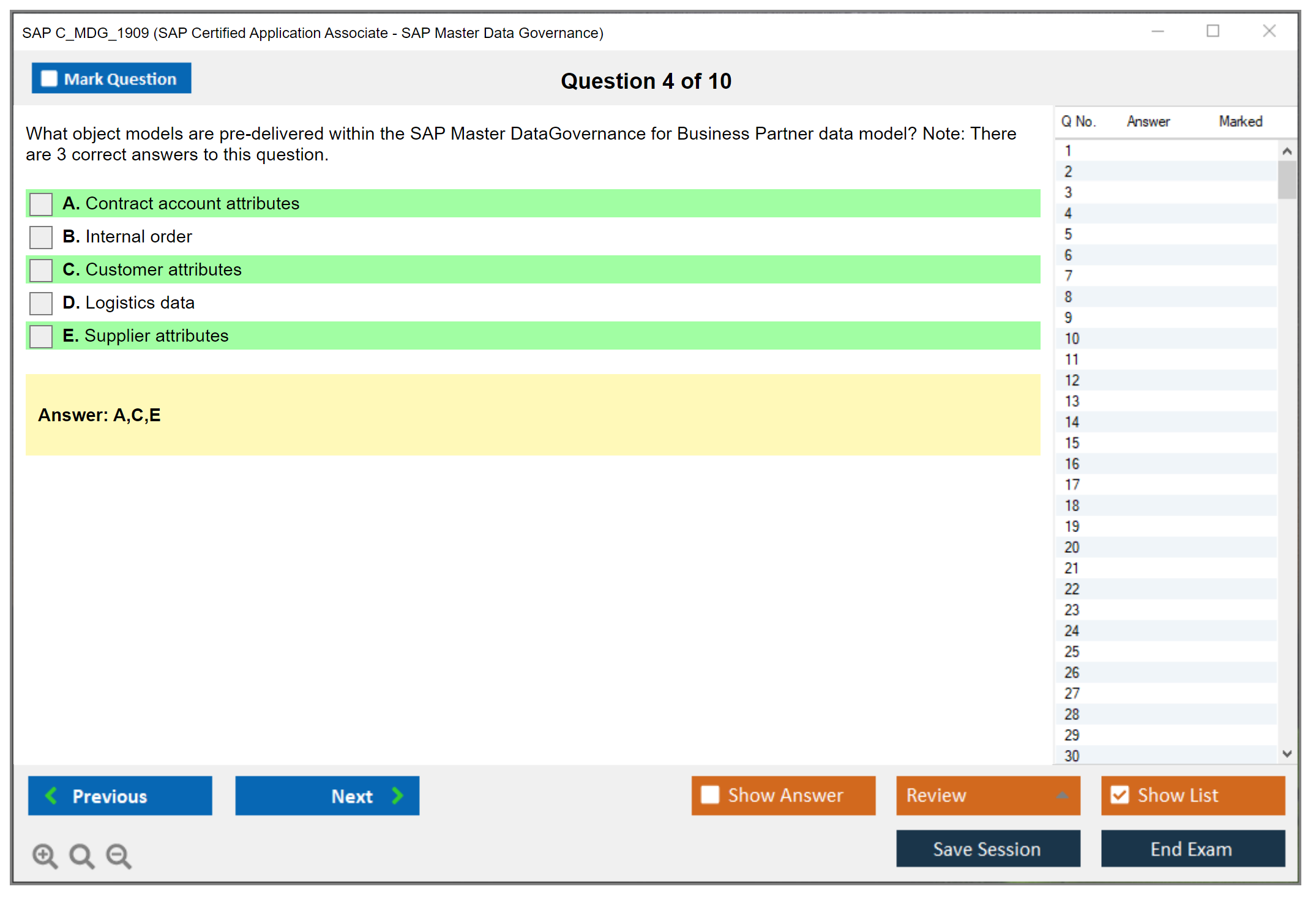
Central governance, hub consolidation, co-deployment scenarios..these aren't marketing fluff, they're actual architectural patterns you'll encounter on projects. The thing is, each data domain (Material, Customer, Supplier, Finance like GL accounts and cost centers) has unique quirks and configuration pathways. Custom domains exist but most companies extend standard domains rather than building from scratch because, honestly, it's dramatically less painful. Integration touchpoints with ECC, S/4HANA, BW, third-party systems appear throughout because MDG rarely operates solo. You're constantly pushing data somewhere or pulling from elsewhere.
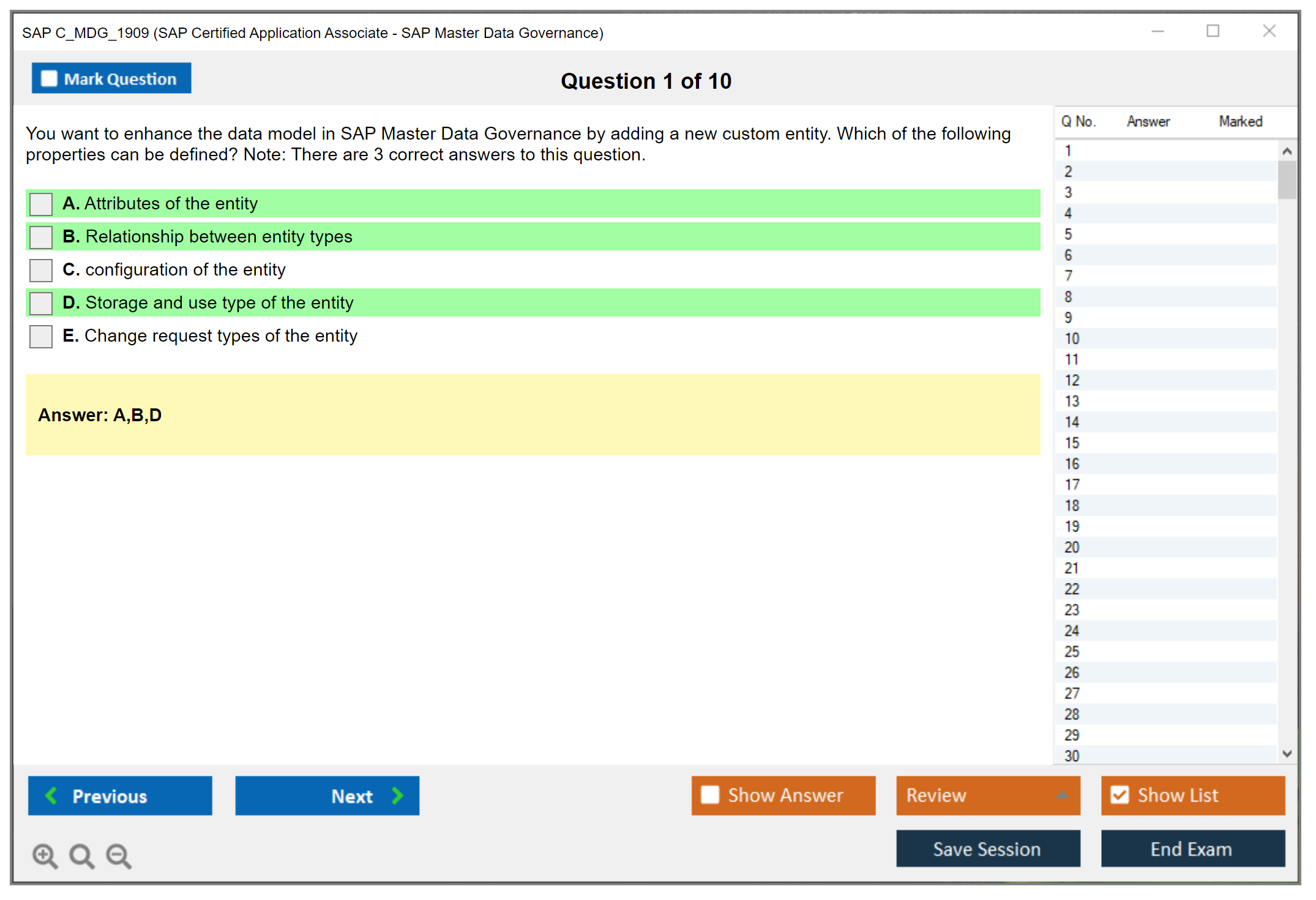
Data modeling grabs 15-20% and here's where technical depth kicks in. Entity types, attributes, key structures, relationships..this forms your MDG implementation's skeleton. That staging vs. active area concept resurfaces because understanding data flow through governance lifecycle? Absolutely critical. You'll need knowledge of creating and extending data models using MDGIMG, SAP's customizing hub for everything MDG-related.
Attribute properties get detailed. Data elements, domains, value helps, check tables..if you've done ABAP dictionary work, this feels familiar, except MDG layers additional complexity on top. The reuse area maps standard SAP objects to MDG structures, and nailing those mappings prevents downstream headaches. Edition concept (logical grouping of changes within change requests) confuses people because it's not immediately obvious why you need both CRs and editions until you're managing complex multi-entity modifications.
I once watched a consultant spend three days debugging an activation error only to discover a single misconfigured reuse mapping. That kind of pain sticks with you.
Change requests and governance workflows
Change Request management consumes 18-22% of the exam, the single heaviest topic. CR lifecycle (create, edit, submit, approve, activate, reject) sounds straightforward but each step contains configuration hooks and business logic you must understand. The exam loves questioning parallel processing and locking mechanisms because preventing conflicts when multiple users edit identical materials is genuine operational concern.
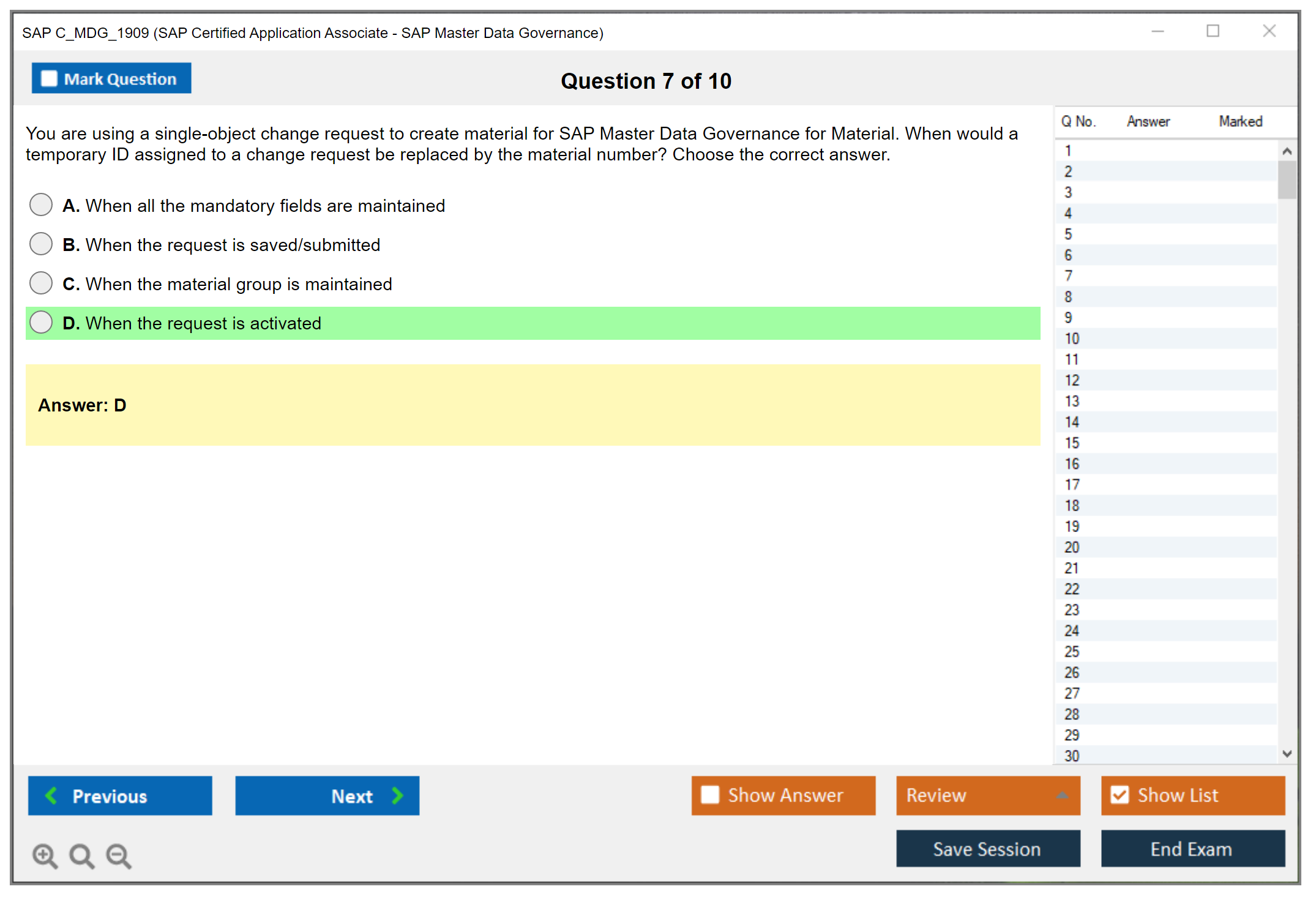
Change request structure covers header data, steps, entities, editions. Steps let you group related activities within CRs, which becomes important in complex approval scenarios. Activation logic is where staged data finally moves to active area, and understanding activation events (validation checks, derivations, error handling) separates people who've actually implemented MDG from documentation skimmers.
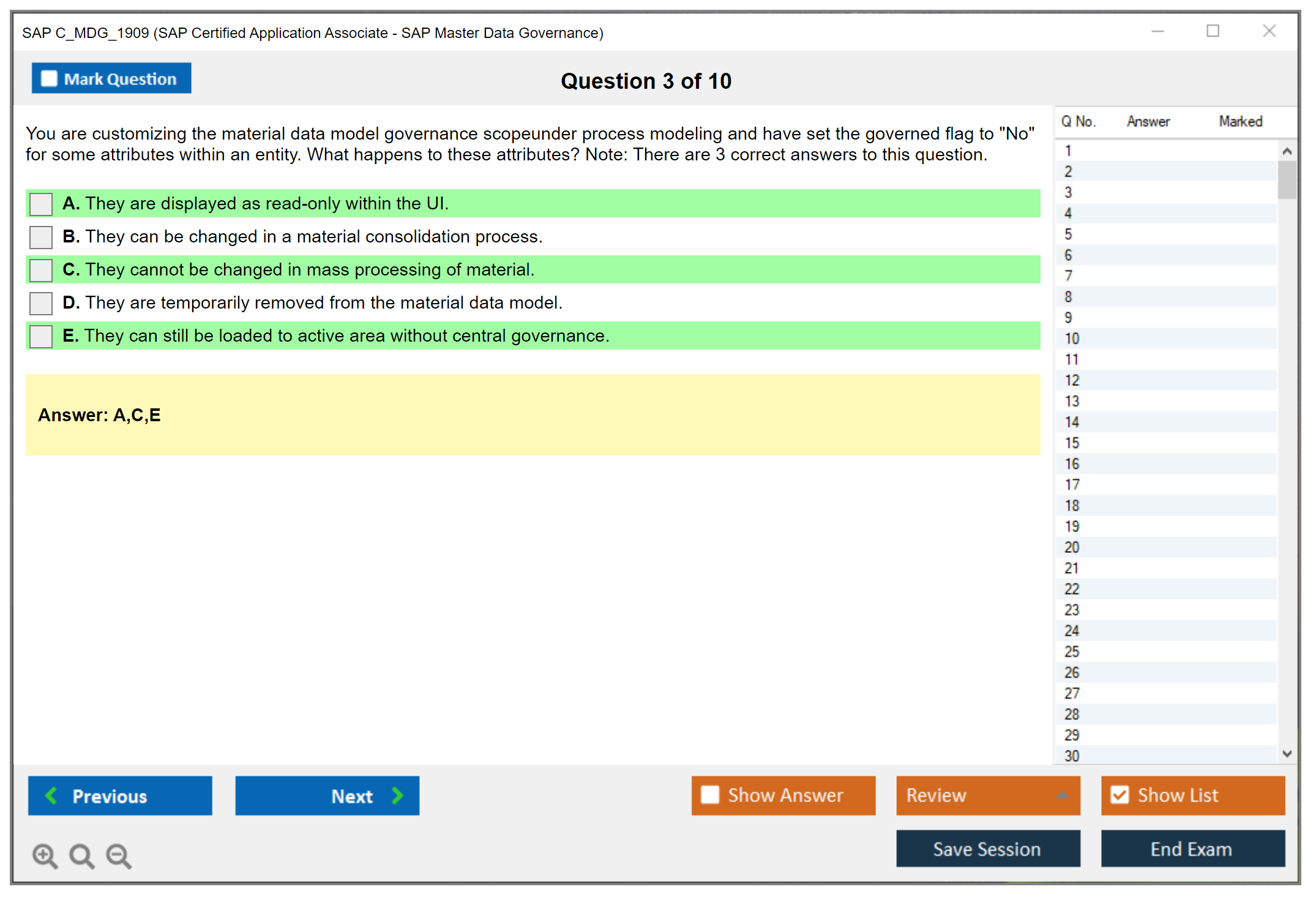
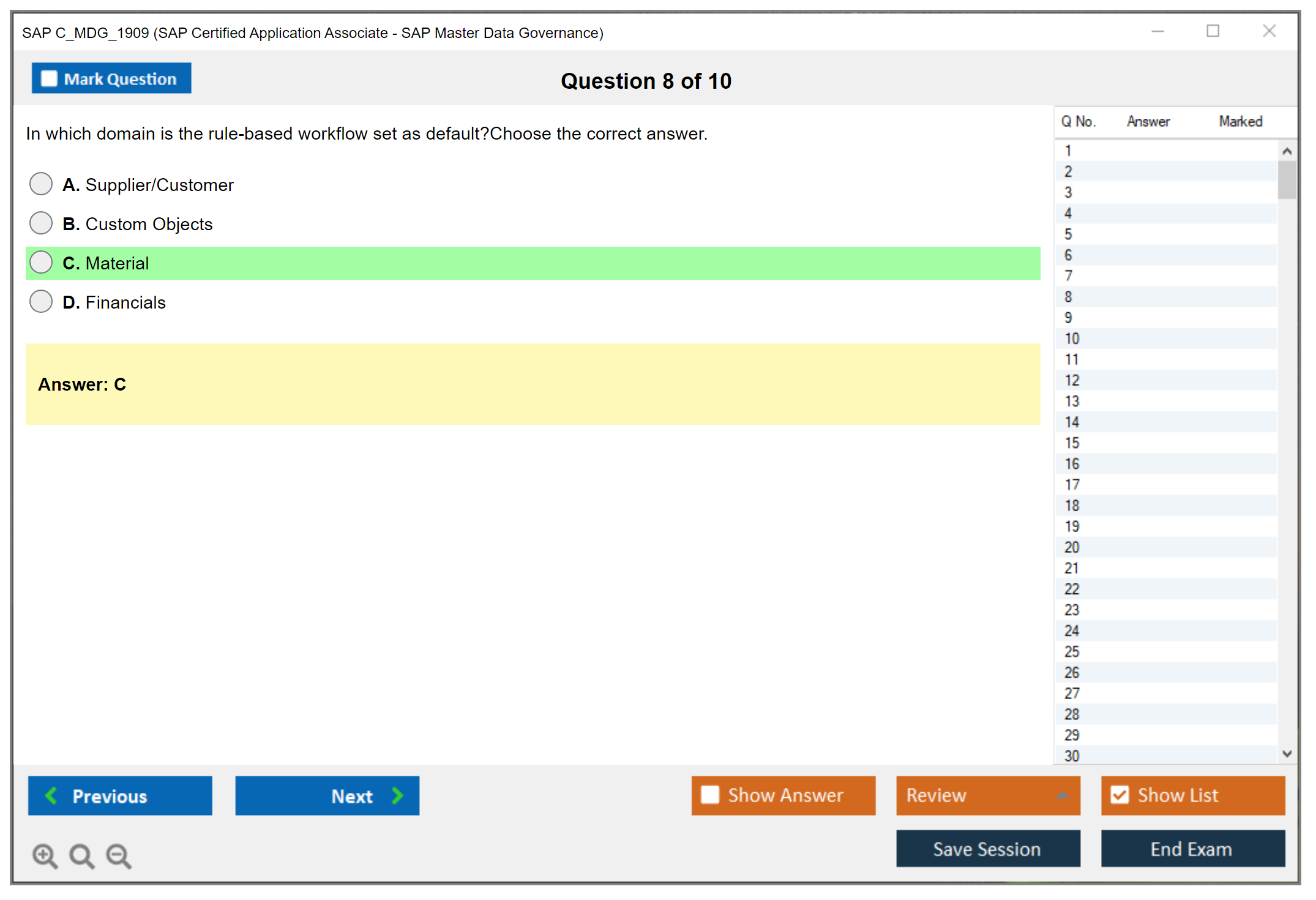
Workflow and approval processes grab 12-16%. Honestly? This trips up candidates frequently. SAP Business Workflow integration with MDG isn't modern technology. It's classic workflow engine mechanics, but configuring correctly demands understanding agent determination, responsibility rules, organizational structure mapping. Single-step versus multi-step approval, parallel versus sequential paths..you need knowing when each pattern applies and configuration methods.
BRFplus appears here as the business rules framework for decision automation. Not gonna lie, BRFplus isn't SAP's most intuitive tool ever built, but it delivers power for defining complex approval logic without custom code. Wait, I should clarify. The exam tests basic BRFplus understanding, not deep development, but you should recognize how rules evaluate during workflow processing.
User interfaces and data quality
User interface configuration takes 10-14%, focusing heavily on Floorplan Manager (FPM) and Web Dynpro components. This is 1909, remember. You're not dealing with Fiori apps as primary UI approach. UI modeling means configuring search screens, detail screens, mass maintenance interfaces through customizing tables and configuration nodes in MDGIMG.
Field properties. Display, required, read-only, hidden..these control what users see and can modify. The distinction between personalization (user-level changes) versus customization (system-level configuration) matters because you don't want users destroying carefully designed UIs through excessive personalization. Search and query configuration defines how users locate master data records, and getting search criteria plus result layouts right dramatically impacts user adoption.
Data quality, search, and duplicate handling grabs 12-16%, and this showcases MDG's real value over traditional maintenance. Duplicate check configuration requires defining match strategies and thresholds. Too strict and you miss duplicates, too loose and you flag legitimate records as duplicates. Match profile setup includes field weighting, matching algorithms, similarity scoring. Honestly, tuning these demands both technical knowledge and business understanding.
Best Record Calculation (BRC) determines golden records when consolidating duplicates, which becomes critical in data migration projects or ongoing consolidation scenarios. Data quality rules (validation at field level, entity level, cross-entity) enforce business standards before data activation. The exam tests both configuration knowledge and conceptual understanding of when applying different rule types.
Consolidation, integration, and operations
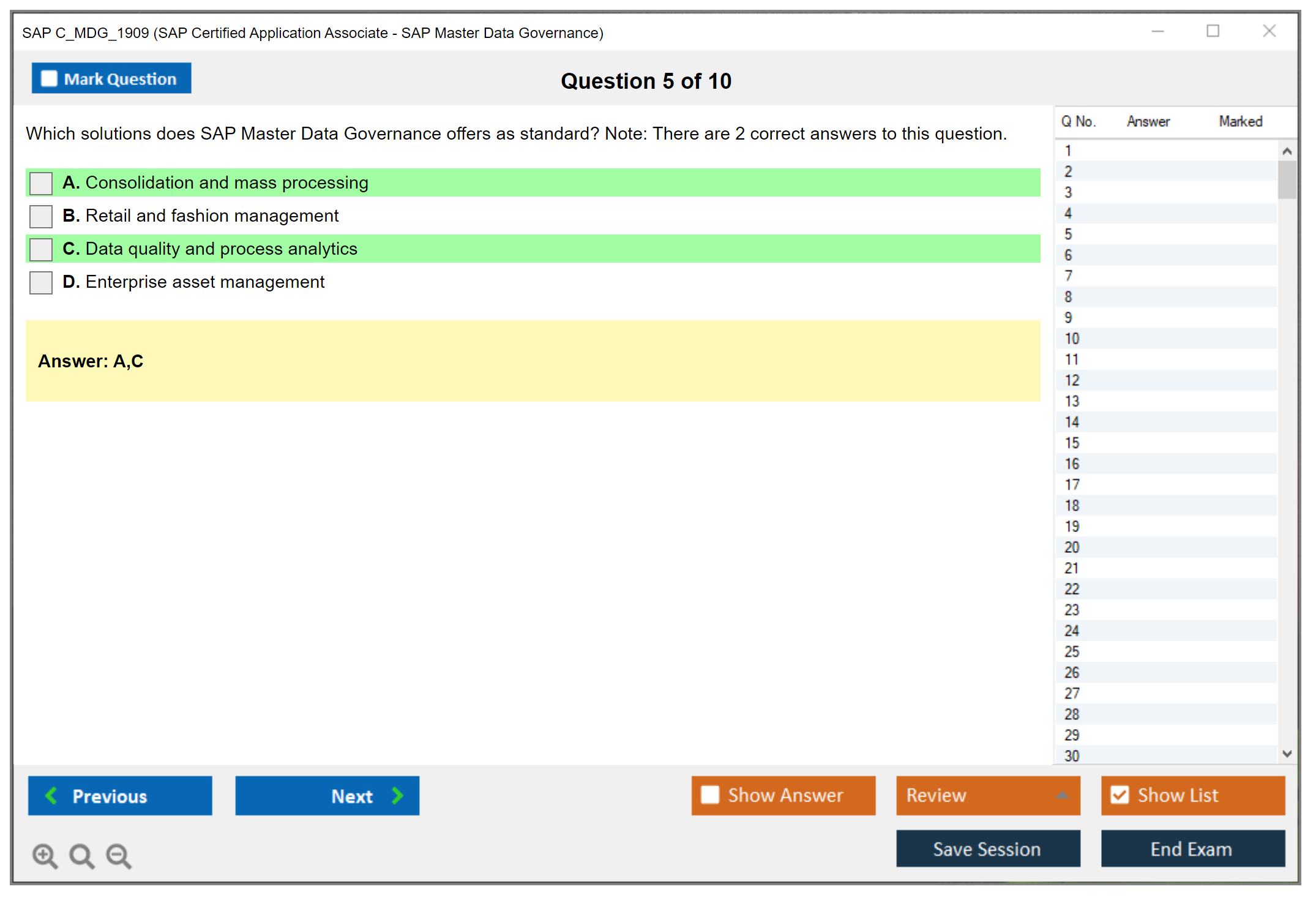
Consolidation and mass processing takes 8-12% but punches above its weight in real implementations. The consolidation scenario (bringing external data into MDG governance) represents how many companies first adopt MDG. Process flow goes import, match, merge, activate, with each step containing configuration and operational considerations. Mass processing capabilities for handling large data volumes efficiently matter because nobody processes 50,000 material masters individually.
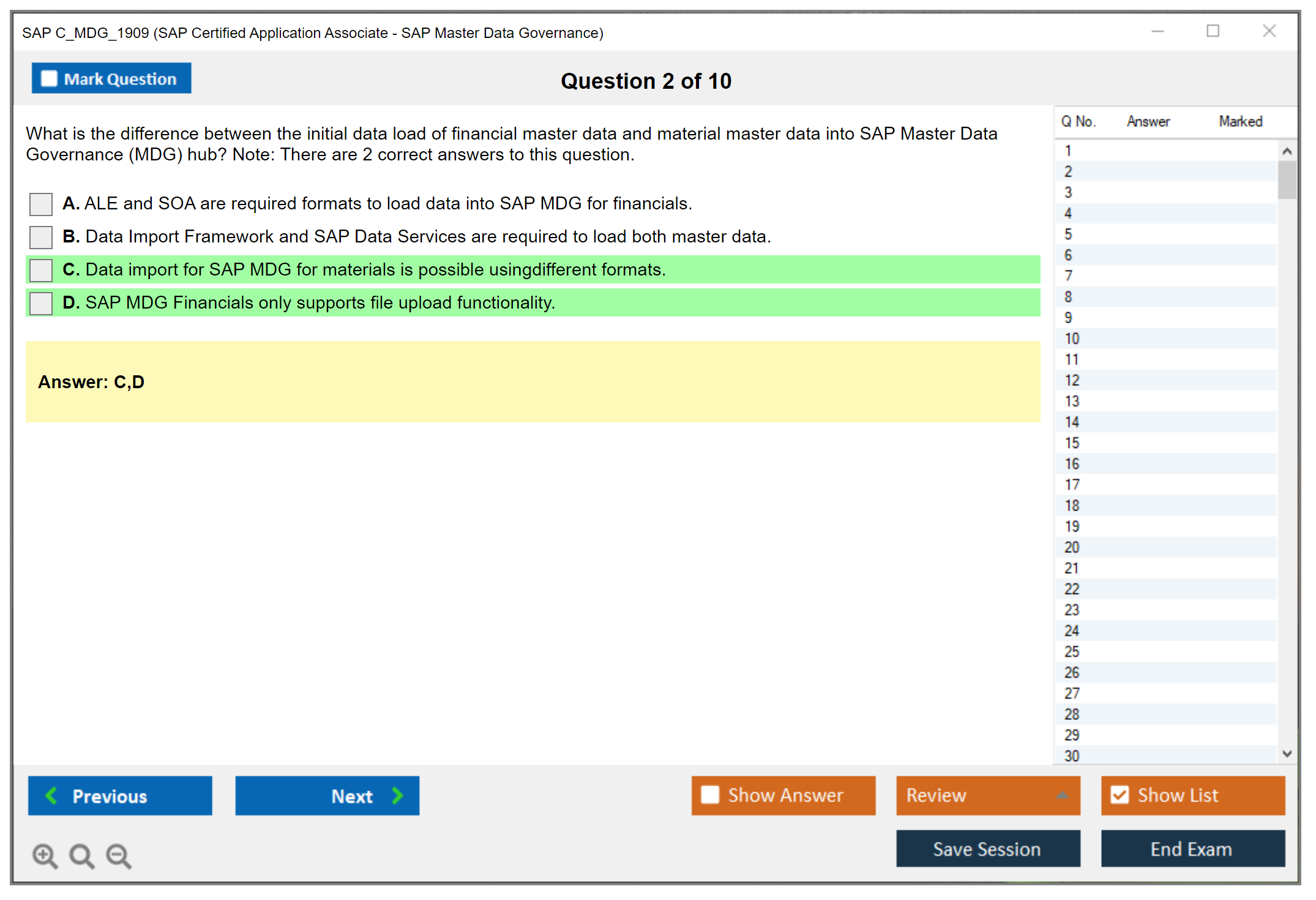
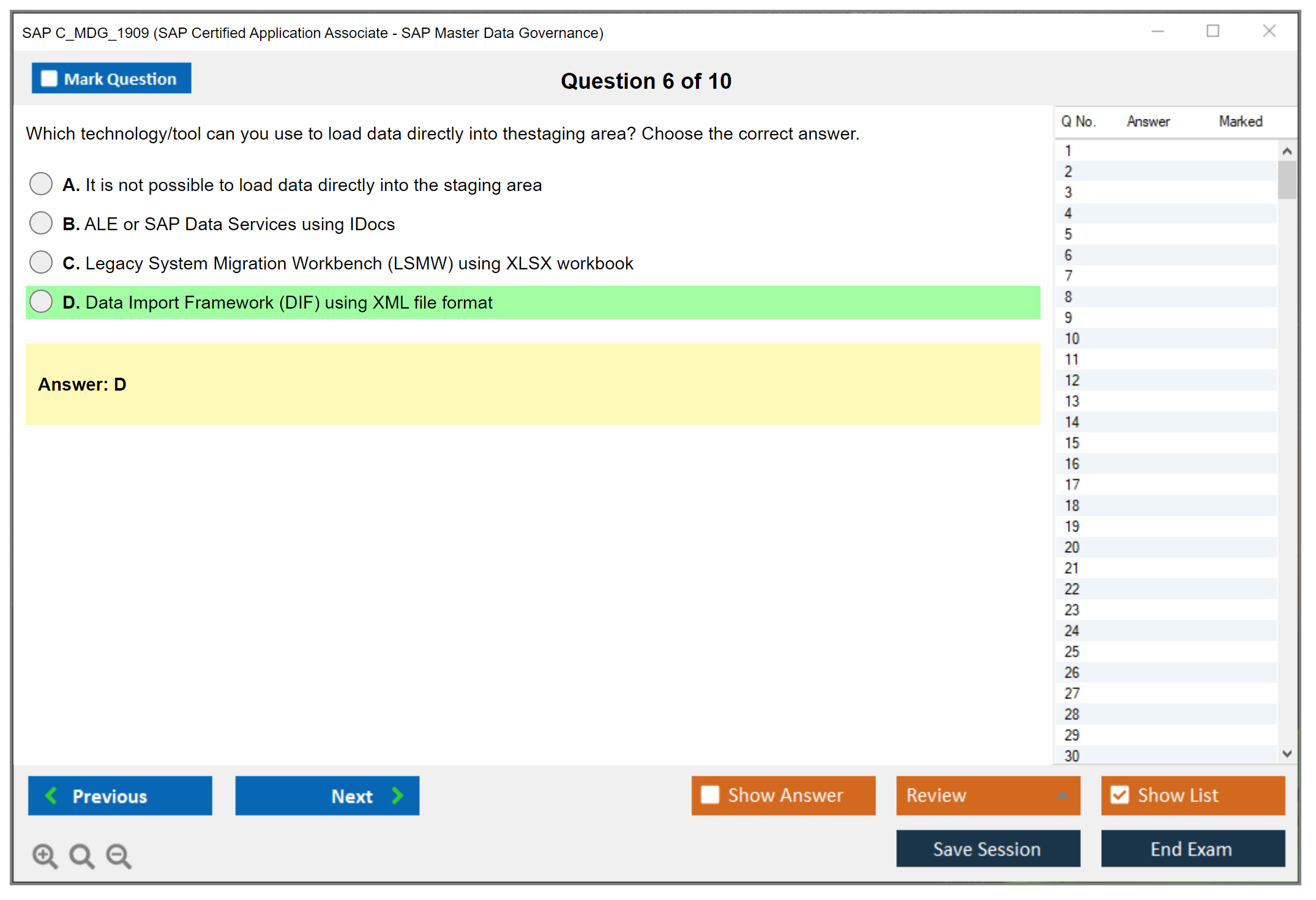
Integration and replication grabs 10-14%, centering on Data Replication Framework (DRF). Outbound replication distributes master data from MDG to target systems, inbound replication receives changes from source systems. Key mapping maintains relationships between system-specific identifiers, which gets messy fast in multi-system landscapes. Filter configuration controls which data replicates where. Getting filters wrong means either missing data or flooding systems with irrelevant records.
If you're also exploring SAP system administration, the C_TADM55a_75 certification covers technical foundation aspects complementing MDG knowledge. For broader process integration context, C_TS410_2020 helps understand how MDG fits into S/4HANA business processes.
Authorization and security takes 6-10%, which seems small but security's never optional. MDG-specific authorization objects control access at granular levels (by data domain, organizational unit, field level). Role design for data stewards, approvers, viewers requires understanding both MDG security model and standard SAP authorization concepts. Field-level security restricts access to sensitive attributes like pricing or payment terms, which matters in regulated industries.
Monitoring, error handling, and operations rounds out the final 6-10% with practical troubleshooting knowledge. Application log monitoring, change request monitoring tools, workflow monitoring..these aren't glamorous topics but they separate functional systems from ones constantly needing support tickets. Error message analysis and troubleshooting common issues (activation failures, workflow errors, replication problems) test whether you've actually operated an MDG system or just configured one in sandbox.
How the exam actually tests you
C_MDG_1909 runs 80 questions across 180 minutes. Just over two minutes per question. Passing score sits at 63%, meaning you need roughly 51 correct answers. That sounds generous until you encounter scenario-based questions requiring knowledge synthesis across multiple topic areas. Exam format mixes straightforward definition questions with complex scenarios where multiple answers might seem partially correct.
Honestly? The difficulty stems from topic breadth more than any single area's depth. You can't just master data modeling and improvise the rest. You need solid understanding across governance processes, workflow, UI configuration, data quality, integration, operations. Questions often combine concepts, like asking about validation rules during change request activation or workflow agent determination based on organizational structure.
The cost runs approximately $570 USD for exam vouchers, though regional pricing varies and SAP Education occasionally runs promotions. You can take it through Pearson VUE at test centers or via online proctoring if you prefer testing at home. Retakes follow SAP's standard policy. You can attempt again after a waiting period if unsuccessful, but obviously passing initially saves both money and time.
Preparation strategies that actually work
Most candidates need 6-8 weeks of focused study with some MDG exposure, maybe 10-12 weeks starting fresh. Hands-on experience beats passive reading every single time. If you can access an MDG system (even trial or sandbox), actually creating change requests, configuring data models, setting up workflows..that's worth more than hours of documentation reading.
Official SAP training courses like MDG100 cover fundamentals but they're expensive and time-intensive. SAP Help Portal documentation for MDG 1909 is full but dense. You need knowing what to focus on rather than attempting to read everything. Community resources like SAP Community blogs and forums help with practical tips and common pitfalls that official docs don't always cover.
The C_MDG_1909 Practice Exam Questions Pack at $36.99 delivers realistic question formats and helps identify weak areas before the actual exam. Practice tests work best when you thoroughly review wrong answers. Understanding why you missed a question matters more than just seeing correct answers. For related data management concepts, the C_MDG_90 certification covers an earlier MDG version with overlapping but distinct content.
Time management during exams matters. Two minutes per question sounds reasonable but complex scenarios consume time rapidly. Practice eliminating obviously wrong answers quickly, flag uncertain questions for review, keep moving. Running out of time with 15 questions unanswered? That's a terrible way to fail an exam you might've otherwise passed.
What happens after you pass
The SAP C_MDG_1909 certification doesn't expire traditionally, but SAP's delta certification approach means you might eventually want certifying on newer MDG versions if working with current releases. The 1909 knowledge remains relevant (core concepts don't change dramatically between versions) but newer releases add features and change some configuration approaches.
Career-wise, MDG certification signals you understand data governance beyond basic master data maintenance. Companies implementing MDG or running existing installations need people who can configure, troubleshoot, optimize these systems. Certification alone won't land you jobs, but combined with project experience it significantly strengthens your profile. Salary impact varies by market and role, but MDG skills generally command premium rates because the talent pool's smaller than mainstream SAP modules.
If you're building broader SAP technical skills, C_FIORDEV_21 covers Fiori development which increasingly intersects with MDG as UIs modernize. For security-focused roles, P_TSEC10_75 provides deep security architecture knowledge complementing MDG authorization concepts.
The bottom line? C_MDG_1909 certification validates real-world MDG knowledge across governance processes, data modeling, workflow, integration, operations. It's not an easy exam, but it's passable with structured preparation and hands-on practice. Focus on understanding concepts rather than memorizing configuration paths, practice with realistic questions, and make sure you can explain how different MDG components interact during actual governance scenarios.
Prerequisites and Recommended Experience for C_MDG_1909
what sap expects on paper
For the SAP C_MDG_1909 certification, SAP keeps the "official prerequisites" part simple. There are no mandatory prerequisites for Associate-level exams, and that includes this one. No gatekeeping. No "must have completed X course" checkbox before you can book.
There's also no requirement for prior SAP certifications. If you've never sat an SAP exam before, you're not blocked. Same deal with training courses: there are no mandatory training courses, even though SAP training is honestly a good idea if you don't have a system to practice on.
Now the part SAP won't force, but you'll feel immediately if you skip it. Foundational SAP knowledge is strongly recommended, because MDG is not a self-contained app you can treat like a random SaaS product. It lives inside SAP, speaks SAP, and assumes you understand how SAP thinks about data, processes, and transportable configuration.
the "soft" prerequisites that matter a lot
Look, you can try to brute force a C_MDG_1909 exam guide and memorize terms. People do. But the exam's way easier if you already have SAP basics in your muscle memory.
Understanding SAP NetWeaver platform basics helps, mainly because MDG (in the 1909 world) is deeply tied to classic SAP architecture concepts like ABAP backend behavior, Web Dynpro/FPM UI patterns, and the way configuration's organized and transported. You don't need to be a Basis admin. You do need to not panic when someone says "client," "workbench vs customizing," or "where do I check the log."
SAP GUI navigation and transaction codes? Another quiet requirement. MDG work happens in different places, and you bounce between customizing, monitoring, workflow inboxes, and data model tooling. If you're still hunting through menus every time, you'll burn time during prep and you'll miss the "obvious" answers in SAP MDG exam questions.
Basic understanding of master data concepts in SAP ERP is the big one. Material master. Customer master. Vendor and supplier. Financial master data like G/L accounts, cost centers, profit centers. If those are just words to you, then SAP Master Data Governance certification prep turns into learning ERP fundamentals and MDG at the same time, which is not fun.
recommended background knowledge (what actually pays off)
SAP ERP fundamentals? Best foundation.
Navigation, transaction processing, and organizational structures. Company code, plant, purchasing org, sales org, controlling area. Not because MDG tests org structure trivia, but because governance decisions are always tied to how the business is structured, and MDG data models and validations often reference those org levels.
Master data concepts should be second nature. You should know what a view is, what a field group means in practice, why some attributes are required for one process but optional for another, and how duplicate records happen in real life. If you've ever cleaned up customer masters after a merger, you already "get" SAP MDG governance processes more than someone who only read about them.
A basic understanding of modules helps a lot, especially MM, SD, and FI. You don't need to configure pricing procedures. But you should understand that a material master affects procurement and inventory, customer master impacts order-to-cash, and FI master data supports record-to-report. Those business process anchors make MDG change requests feel logical instead of abstract.
Data management principles matter more than people expect. Data quality, governance, lifecycle. What gets created, who approves, what gets activated, what gets replicated, and what gets retired. This is where data quality and consolidation in MDG starts to click: you stop seeing it as "extra steps" and start seeing it as controls that prevent downstream mess.
Helpful extras: basic SQL and database concepts, because it improves your intuition about data structures, keys, and why "staging vs active area" exists. Workflow concepts, because approval processes, task routing, and escalation are the whole point of governance. Basic HTML and HTTP concepts matter too, because UI configuration discussions often touch web behavior, even if you never write a line of HTML. I once watched someone spend twenty minutes troubleshooting a UI issue that turned out to be browser cache. Not MDG at all. Just web basics.
Integration concepts deserve special mention. APIs, web services, and replication patterns. MDG's rarely alone. It publishes mastered data outward. If you don't understand the idea of "source of truth" and distribution patterns, SAP MDG integration (DRF, replication) will feel like magic, and not the good kind.
hands-on experience that makes the exam feel fair
Minimum 6 to 12 months working with SAP MDG in a project or operational role? Sweet spot.
Could you pass with less. Maybe. But most people who say the exam was "weirdly hard" were missing actual system time, especially around configuration paths and troubleshooting.
Practical configuration experience in at least one MDG domain is what I'd aim for. Material, Customer, Supplier, or Finance. Pick one. Go deep enough that you've touched data model pieces, a change request type, and replication. Even better if you saw how requirements change midstream, because that's real life.
You want exposure to the full change request lifecycle: creation, approval, activation. Not just "I clicked submit once." I mean understanding what happens when validations fail, when an approver's missing, when activation throws an error, and how you investigate it without guessing.
Experience with data model configuration and customization helps because MDG data modeling and UI configuration is where the exam can get specific. Entity types, attributes, relationships, staging tables, and how derivations and validations plug in. It's not pure theory. It's "where would you configure this" and "what happens if you do it wrong."
Workflow configuration and testing? Can't fake it.
Workflow and change request in SAP MDG is a constant theme, and you should be comfortable with the idea of step sequences, agent determination, and the difference between a process that's designed well versus one that dead-ends in someone's inbox forever.
Other experience that helps: participating in an MDG implementation or rollout, monitoring and troubleshooting, data quality rules and duplicate check configuration, DRF configuration and replication monitoring, UI tweaks using MDGIMG, consolidation process exposure, mass processing and object lists.
skills checklist before you book the exam
If you can't do these without notes, delay booking. Not forever. Just until it's not stressful.
- Explain MDG architecture and key components from memory. This comes up a lot, and the wording can be tricky in SAP Certified Associate MDG 1909 style questions.
- Work through MDGIMG customizing comfortably. Fast. No wandering.
- Create and configure a basic data model with entity types and attributes, and explain how it ties to staging and activation.
- Set up a complete change request type with workflow, including understanding where the steps live and how it's triggered, because that's the heart of governance.
- Understand staging area vs active area. You should be able to explain it in plain English, and also in "what does the system do" terms.
- Configure basic validations and derivations. Not every edge case. The baseline.
- Duplicate check configuration and match profiles, at least enough to understand what's being compared and when.
- Set up and monitor replication using DRF, and recognize typical failure points in logs and queues, because DRF's one of the most MDG-specific parts of the exam.
- Troubleshoot common activation errors, including knowing which monitor or log to check first.
- Authorization concepts. Roles, authorizations, why a user can see a UI but can't execute an action.
- UI configuration basics in FPM. You don't have to love it. You do have to recognize where changes are made.
- Consolidation process flow and key steps, plus mass processing and object list capabilities.
- Use standard monitoring tools and logs without guessing.
If you want a quick reality check before booking, a decent C_MDG_1909 practice test can expose gaps fast. Just be picky about what you use, because trash dumps teach you bad patterns. If you're shopping, I've seen people use this kind of pack as a drill tool alongside real config practice: C_MDG_1909 Practice Exam Questions Pack ($36.99).
accelerated prep if you're already an sap consultant
If you have 3+ years of SAP experience in MM, SD, or FI, your advantage is huge. You already know master data structures and the business processes behind them, so you can focus your study time on the MDG-specific layer: architecture, change request management, and governance workflow behavior.
Spend extra time on DRF and replication. Honestly, that's where experienced functional folks still stumble, because it feels "technical," but it's also where many real implementations succeed or fail. Review UI configuration concepts if FPM or Web Dynpro's new to you, because the UI questions can be annoyingly specific even if you're great at process design.
Could you prep in 3 to 4 weeks with intensive study? Yes, especially if you can get hands-on practice daily and you're using targeted C_MDG_1909 study materials instead of reading everything ever written about MDG. Hands-on beats theory here. Every time.
If you want structured drilling alongside your own notes and system time, a focused question pack can help you spot patterns in how SAP asks things, and it's also a way to simulate pressure. Something like the C_MDG_1909 Practice Exam Questions Pack can be useful for that, and if you combine it with your own mini labs you'll learn faster than passively reading an ebook.
The people who pass fastest are the ones who build and break a small MDG setup on purpose, then fix it, then repeat, and then use a practice set like C_MDG_1909 Practice Exam Questions Pack to confirm they can answer cleanly under time. That combo's how to pass C_MDG_1909 without turning it into a multi-month grind.
How Hard is C_MDG_1909 and Study Strategies
Look, I'm not gonna lie to you about the SAP C_MDG_1909 certification. It's not a walk in the park, but it's also not some impossible nightmare exam that'll wreck your confidence. Honestly, it falls somewhere in the middle of SAP's certification difficulty scale, which means you'll need to actually understand what you're doing instead of just memorizing a few slides.
Real talk?
If you've taken basic SAP navigation exams or something like C_ACTIVATE13, this one's definitely harder. But compared to heavy development certifications like ABAP or BTP work, it's less technically demanding. The real challenge? It's the breadth of topics combined with detailed configuration knowledge. You need both the conceptual understanding of how Master Data Governance works AND the practical know-how of how to actually configure the damn thing, which honestly trips people up more than they'd expect going in.
What actually makes this exam challenging
The difficulty comes from several angles. First, the questions aren't just "what button do you click" type stuff. They're scenario-based, which means you need to apply your knowledge to real-world situations. I mean, they'll give you a business scenario and ask you to identify the best approach for governance processes or workflow configuration.
Time pressure is manageable but real.
You get 80 questions in 180 minutes, which breaks down to about 2.25 minutes per question. That's doable if you know your stuff, but if you're second-guessing every answer, you'll run out of time.
The trickiest aspects? Workflow configuration details will get you every time. Understanding agent determination versus parallel versus sequential approval paths can be confusing. BRFplus integration adds another layer of complexity. DRF setup details are incredibly specific. You need to know filter configuration, key mapping strategies, and error handling scenarios in detail. Data model relationships? Yeah, those questions require you to actually understand how entities, attributes, and staging areas interact, not just memorize definitions.
Where most people stumble
Workflow configuration complexity is probably the number one killer.
You need to understand not just how workflows function but how agent determination actually works in different governance scenarios. The difference between parallel and sequential approval isn't just academic. It changes how the entire process executes.
Data replication and DRF (Data Replication Framework) is another massive pitfall. The exam gets super detailed here. Filter configuration isn't intuitive. Key mapping has edge cases you need to know. Error handling scenarios require you to understand what happens when replication fails, not surface-level stuff.
Governance process variations trip people up constantly. The differences between central governance, hub consolidation, and co-deployment aren't minor. They're fundamental architectural decisions that affect everything downstream. If you don't have hands-on experience with at least a couple of these approaches, you'll struggle.
UI configuration details can be surprisingly confusing. FPM concepts aren't something you just "get" from reading documentation. Field properties, screen customization, how UI elements map to backend data models.. this requires actual practice. Similar challenges exist if you've worked with Fiori apps, though that's a different beast entirely like C_FIORDEV_21.
How to actually prepare without wasting time
Start with official SAP training materials.
I know they're expensive and sometimes dry as hell, but they cover exactly what SAP thinks is important. The learning journeys give you structure. SAP Help Portal documentation is your friend. Prioritize the configuration guides and process flows over marketing fluff.
You absolutely need hands-on practice. Reading about DRF configuration is completely different from actually setting up a filter and watching it work (or break). If you can get system access through your company or a trial environment, use it heavily. Configuration labs where you actually build change request processes, set up validations, configure workflows.. that's where real learning happens.
Study plan depends on your background. If you're already working with MDG daily, maybe 2-3 weeks of focused study. If you're coming from a different SAP area like C_TS462_1909 sales or C_TS4FI_2021 finance, plan for 4-6 weeks minimum. You need time to absorb the governance mindset, which is different from transactional processing.
The C_MDG_1909 Practice Exam Questions Pack at $36.99 is honestly one of the better investments you can make. Real exam questions expose your knowledge gaps way better than just reading documentation. When you miss a question, don't just look at the right answer. Understand WHY the wrong answers are wrong. That's how you build real understanding versus just pattern matching.
Quick tangent here: I once spent three days troubleshooting a DRF filter that kept failing validation. Turns out I had the key mapping reversed. Would've been a ten-minute fix if I'd actually understood the logic instead of copying examples. That kind of mistake teaches you more than any documentation ever will.
Topics that deserve extra attention
Data modeling is foundational.
You need to understand the data model structure, how staging works, and how validations and derivations actually execute. This isn't optional knowledge. It's tested repeatedly.
Change Request management and governance processes are core to everything MDG does. Know the CR lifecycle inside and out. Understand when different governance types apply and why.
Workflow and approvals deserve serious study time. Rules, agents, BRFplus basics where relevant. These questions separate people who've actually configured workflows from people who've just read about them. If you've done work with C_ACTIVATE12 project management, some workflow concepts might feel familiar, but MDG workflows have their own quirks.
Integration and replication is heavily tested.
DRF, key mapping, distribution models. Know these cold. Error scenarios, retry logic, monitoring. All fair game.
Don't skip authorization and roles. Security basics come up more than you'd think. Monitoring plus error handling is practical knowledge they love to test.
The exam day reality
The passing score for C_MDG_1909 isn't publicly disclosed by SAP in exact percentages, but it's typically in the 60-65% range for Associate level certifications. SAP uses adaptive scoring, so not all questions carry equal weight. You'll get your pass/fail result immediately, along with a breakdown by topic area showing where you were strong or weak.
Cost varies by region but expect around $550-$600 USD.
SAP Learning Hub subscriptions sometimes include exam vouchers, which can save money if you're taking multiple certifications. Regional pricing in some countries might be lower.
Retake policy is straightforward but painful. You can retake after a waiting period, but you pay full price again. So yeah, prepare properly the first time.
Online proctoring versus test center is personal preference. Online is convenient but requires a clean workspace and stable internet. Test centers eliminate technical risks but require travel. I've done both, honestly the test center removes one variable you don't want to worry about on exam day.
What comes after certification
The SAP C_MDG_1909 certification doesn't expire in the traditional sense, but SAP has introduced "Stay Current" assessments for newer certification tracks. For now, this older exam code doesn't have mandatory renewals, but staying current with newer MDG versions is smart for career purposes. If a newer version exam comes out, your older certification still counts but employers prefer current versions.
Mixed feelings here.
If you're building an SAP certification portfolio, consider complementary certifications. C_MDG_90 is the older version if you want to compare content. Or branch into related areas like C_TS410_2020 for S/4HANA business processes or C_TADM55a_75 if you're interested in the technical administration side.
Bottom line: C_MDG_1909 is moderately difficult, requires both conceptual and practical knowledge, and rewards hands-on experience over pure memorization. Give yourself adequate study time, use quality practice materials like the practice exam pack, and focus on understanding workflows and DRF configuration deeply. You'll be fine.
Conclusion
Wrapping up your C_MDG_1909 path
Getting your SAP C_MDG_1909 certification is way more than just another checkbox. This proves you really get SAP Master Data Governance certification at a depth where actual companies will hand you their critical data architecture without sweating it. Master data is literally the backbone of every SAP system, and if you mess that up, you're staring down cascading nightmares across finance, supply chain, customer records. Everything falls apart.
The exam itself? Covers tons of ground. You've got data modeling and UI configuration, workflow and change request management, data quality and consolidation in MDG, plus the integration stuff with DRF and replication. That's not even.. wait, there's also governance processes and authorization layers. It's full, testing whether you actually know MDG or you're just clicking around hoping things magically work.
Here's what I've seen succeed for people preparing: don't just memorize answers like some robot. Actually understand why SAP MDG governance processes flow the way they do. Why certain validation rules fire at specific points. How workflow and change request in SAP MDG interact with approvals. The C_MDG_1909 exam guide gives you topics, sure, but real comprehension? That comes from hands-on work or really solid practice scenarios.
Budget-wise? The SAP MDG certification cost runs a few hundred bucks depending on your region. Not cheap but pretty standard for SAP exams. You'll need to hit that passing score (usually around 63-65% though SAP adjusts this), and time management matters since you're looking at 80 questions in 180 minutes. Some questions on SAP MDG integration or complex data replication scenarios can eat up serious time if you're not ready.
My brother actually failed his first MDG attempt because he thought skimming documentation would be enough. Spent the next two months actually building out test scenarios in a sandbox and passed easily the second time. Sometimes you need that reality check.
If you're wondering how to pass C_MDG_1909, combine official SAP training with real practice. Read the documentation on MDG data modeling and UI configuration, absolutely, but also test yourself repeatedly. Work through scenarios until the logic clicks. The workflow questions trip up tons of people because they require thinking through the entire approval chain, which gets messy fast.
For your final prep push, the C_MDG_1909 Practice Exam Questions Pack is worth checking out. It's built around exam objectives and gives you that repetition with SAP MDG exam questions that mirrors what you'll face. Practice tests don't replace understanding, but they sharpen your recall and speed when it counts.
You've got this. Put in the work, focus on weak spots, and that SAP Certified Associate MDG 1909 credential's within reach.
