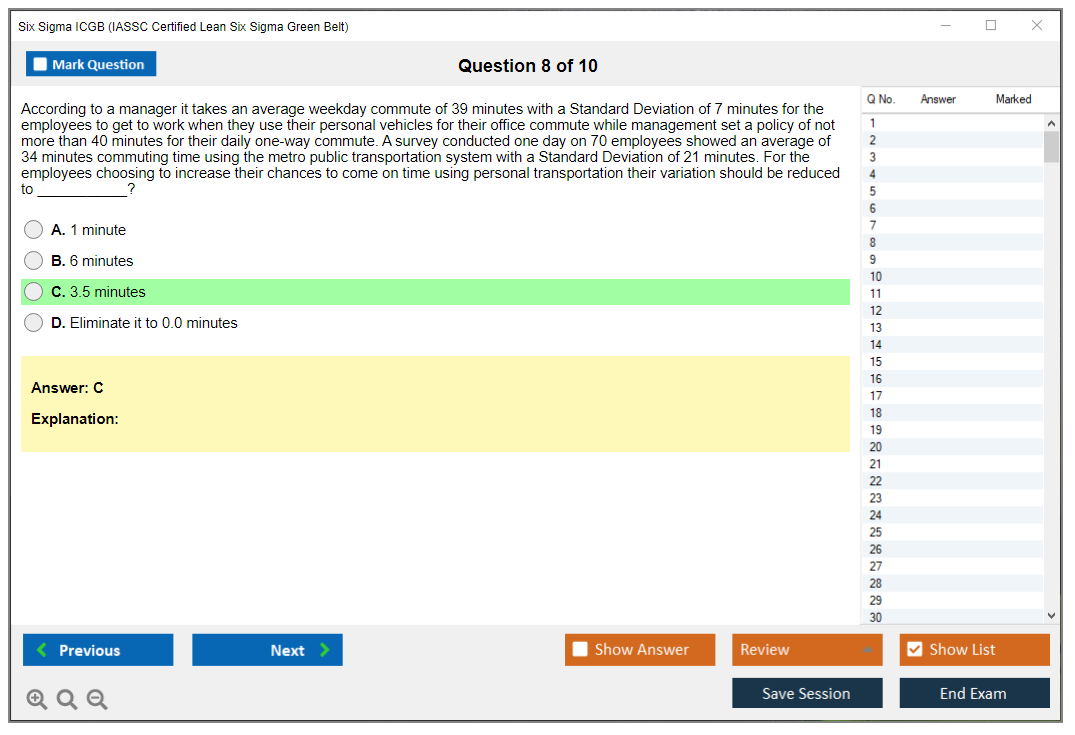
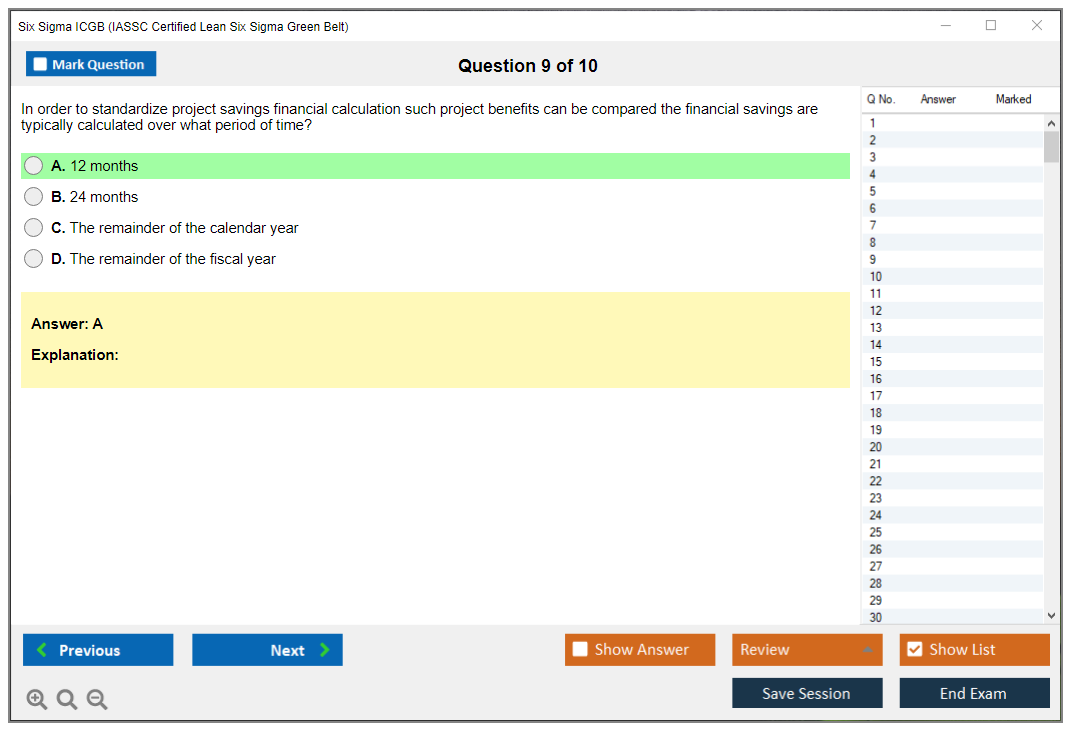
Six Sigma ICGB (IASSC Certified Lean Six Sigma Green Belt) Overview
The credential that actually matters in process improvement
I've watched professionals hoard certifications like they're collecting baseball cards, but the IASSC Certified Lean Six Sigma Green Belt (ICGB) is one that HR departments and hiring managers really respect. The International Association for Six Sigma Certification issues it. They're an independent third-party testing body. What sets IASSC apart? They don't force you through their training courses before you sit for the exam, which eliminates so much certification industry garbage where you're required to drop thousands on mandatory classes.
The ICGB proves you understand DMAIC methodology (Define, Measure, Analyze, Improve, Control) and can actually apply it to real process improvement work, not just talk about it in meetings. This is the certification you need if you're legitimately serious about leading small to medium-sized improvement projects or contributing on larger initiatives. It's vendor-neutral. Accepted across manufacturing, healthcare, finance, IT, basically any industry where quality and efficiency matter.
What employers see when you list ICGB on your resume
When you pass the ICGB exam, you're demonstrating thorough understanding of the entire DMAIC framework, not just that surface-level familiarity people fake in interviews. Data collection methods, statistical analysis techniques, process measurement systems. You know them. The exam tests your ability to conduct root cause analysis, perform hypothesis testing, and implement actual control mechanisms that prevent improvements from backsliding into old habits.
Green Belts need Lean tools too. Value stream mapping, 5S workplace organization, waste elimination strategies. These're all part of the ICGB Body of Knowledge. You're expected to understand quality management principles from a customer-focused perspective, document projects properly, and work in team environments without causing drama.
The certification also positions you for advancement opportunities. Many organizations won't let you pursue Black Belt training without Green Belt certification first, so ICGB becomes your foundation for moving into full-time quality or continuous improvement roles where you're not just attending meetings and nodding along when someone mentions p-values. Or, frankly, pretending to understand what "heteroscedasticity" means while you're secretly Googling it under the conference table.
Who actually needs this certification
Process improvement team members wanting formal recognition should consider ICGB. Quality analysts. Engineers. Coordinators in manufacturing settings. Project managers who incorporate Lean Six Sigma into their delivery methodology find it valuable. Operations professionals responsible for efficiency metrics and waste reduction programs benefit from having this credential on their resume.
Business analysts working on data-driven initiatives use this to demonstrate statistical competency. Healthcare administrators optimizing patient flow, finance professionals simplifying transaction processing, IT folks reducing defect rates in software delivery, supply chain analysts cutting inventory waste. They all pursue ICGB for career advancement.
Recent graduates entering quality management careers sometimes get this right out of school to stand out from the crowd of identical resumes, which makes total sense in today's competitive job market. If you already hold a Yellow Belt certification), the Green Belt's your logical next step. Some employers just require it as a condition of employment for certain roles, so you don't really have a choice if you want the job.
Why ICGB beats other Green Belt options
That no mandatory training requirement? Huge from a cost perspective. Other certification bodies force you through their expensive courses before you can even attempt the exam. Feels like a money grab. IASSC lets experienced practitioners who already know the material certify quickly without jumping through bureaucratic hoops. If you've been doing process improvement work for years, why should you sit through 40 hours of lectures covering stuff you already apply daily?
The exam's standardized across all candidates worldwide. Consistent competency validation. There's no wondering if someone's Green Belt from another provider means the same thing as yours or if they just paid for a participation trophy. IASSC publishes their Body of Knowledge openly, so you know exactly what to study. No secrets, no surprise topics that weren't in the prep materials.
Here's something people overlook: ICGB's a lifetime certification with no renewal fees or continuing education requirements. You pass once, you're certified forever. Refreshing in an industry full of annual dues and recertification schemes. Compare that to certifications requiring annual fees or CEU accumulation just to maintain what you already earned. The credential's portable too. If you got trained through your employer's program but want to prove your skills elsewhere, ICGB gives you that flexibility to take your expertise anywhere.
Where Green Belt fits in the belt system
The ICGB sits between the foundational Yellow Belt) and the expert-level Black Belt). Yellow Belts understand basic concepts and support improvement efforts from the sidelines. Green Belts lead smaller projects independently and function as subject matter experts on larger initiatives where complexity increases. Black Belts mentor Green Belts, tackle complicated statistical challenges that make your head spin, and often work full-time in improvement roles rather than balancing it with other responsibilities.
In most organizations, Green Belts work under Black Belt guidance when projects get complicated or when the statistics start looking like calculus. You might dedicate 20-50% of your time to improvement projects while maintaining your regular job responsibilities. Can feel like juggling sometimes. You're the bridge between frontline workers who see problems daily and senior improvement leaders who need data to drive strategic decisions and convince executives to allocate resources.
Green Belts often serve as the go-to resource. Yellow Belts and team members need help with data collection or analysis, they come to you. You're not expected to design advanced experiments or build complex statistical models (that's Black Belt territory), but you should competently handle process capability studies, basic hypothesis tests, and control chart interpretation without constantly asking for help.
The exam itself and what it costs
The ICGB exam fee typically runs around $295 to $395 depending on regional pricing and any promotional periods IASSC offers. That covers your exam attempt. If you fail, retake fees apply, usually similar to the original exam cost. Stings. Training's optional but can range from free self-study using books and online resources to several thousand dollars for instructor-led courses with fancy certificates and catered lunches.
The exam consists of 100 multiple-choice questions administered over three hours. Sounds generous until you're actually sitting there. It's closed-book, meaning you can't reference materials during the test. Your brain's gotta do all the work. You'll need to know formulas, understand when to apply specific tools in different scenarios, and interpret situations correctly. The passing score's 70%, so you need 70 correct answers out of 100.
How hard is it? Depends entirely on your background. People with statistics coursework and hands-on improvement experience often pass after a few weeks of focused study and maybe some late-night cramming. If you're new to statistics or haven't worked on actual projects, expect to invest 60-100 hours of preparation time, possibly more if math isn't your strong suit. The hypothesis testing section trips people up most frequently, along with measurement system analysis concepts and control chart selection. Can feel arbitrarily complicated until it suddenly clicks.
Study resources that actually work
IASSC publishes an official Body of Knowledge document outlining every topic covered on the exam. Start there. Many candidates use "The Certified Six Sigma Green Belt Handbook" or similar textbooks covering DMAIC methodology in excruciating detail. You'll find study guides specifically written for ICGB preparation that map directly to the exam objectives, which saves you from guessing what's important.
Practice tests are critical. Not the kind where you memorize answers and fool yourself into thinking you're prepared, but timed practice sets that simulate exam conditions and help you identify weak areas you've been avoiding. Track which question types you miss consistently, then review those concepts until they stick in your long-term memory. Formula sheets help for memorizing statistical calculations, though understanding when to apply each formula matters more than rote memorization of symbols you'll forget immediately after the test.
Online forums and study groups provide support, though quality varies wildly. Some folks benefit from flashcards for terminology and tool definitions. The best preparation combines reading thorough materials, working through practice problems until you're sick of them, and reviewing your mistakes until patterns become clear and you stop making the same errors repeatedly.
The renewal situation (spoiler: there isn't one)
Does IASSC require renewal for ICGB? Nope. Once you pass, you're certified for life with no recurring fees or mandatory continuing education hoops to jump through. Your credential doesn't expire like milk in your fridge. This differs from some other certification bodies that require annual dues or periodic recertification exams just to keep what you already earned.
That said, keeping your skills current matters for career progression. Participate in actual improvement projects. Read updated materials on Lean and Six Sigma developments as methodologies evolve. Consider pursuing Black Belt certification) or specialized credentials in your industry if you want to advance further. But from a pure certification maintenance perspective, ICGB requires nothing after you pass. No paperwork, no fees, no compliance deadlines.
This makes ICGB particularly attractive for professionals who want credential recognition without ongoing administrative burden eating into their schedule. You demonstrate competency once through a rigorous exam, then focus on applying those skills in the real world rather than collecting CEUs to maintain a certificate that should already prove you know what you're doing.
ICGB Exam Details: Format, Duration, and Delivery
The IASSC Certified Lean Six Sigma Green Belt (ICGB) is one of those process improvement credentials that hiring managers actually recognize across industries, mostly because it maps cleanly to DMAIC and doesn't require you to "prove" it with a mystery project that nobody can verify. Quality management belt certification. It says you can run a Green Belt level project, talk statistics without panicking, and pick the right tool at the right time.
Vendor neutral, too. That matters more than you'd think. Some belts are tied to a training company's slides, and that can get weird when you switch jobs and suddenly your "method" doesn't match anyone else's workflow or terminology.
What ICGB certification validates
You're being tested on the entire Green Belt Body of Knowledge, which is Define to Control, plus Lean basics, plus enough stats to be dangerous. All rolled into one test that covers practical application alongside theory. Expect DMAIC tools and techniques, not just definitions. Real work. Actual decisions.
Who should pursue the IASSC Green Belt
If you're in ops, QA, manufacturing, healthcare admin, analytics, IT service management, or any role where work arrives messy and leaves late, this process improvement certification fits. Also if you're trying to pivot into continuous improvement without going back for another degree. It's not magic, but it's a decent signal that you've got the foundational knowledge employers want.
ICGB Exam Details (Format, Duration, and Delivery)
This is the part most people get wrong. They study like it's a textbook exam, then show up and realize half the questions are "what would you do next" style scenarios that test judgment, not just memory. The ICGB exam format is simple on paper and sneaky in execution.
Question types and exam structure
The exam is 100 multiple-choice questions covering the full Green Belt Body of Knowledge. Four answer options per question. A, B, C, D. No tricks like "select all that apply." No essays. No short answer. No project submission component. Just you, the clock, and a question bank that'll test whether you actually understand this stuff.
Questions are distributed across Define, Measure, Analyze, Improve, and Control phases. Cramming only stats is a trap, and cramming only Lean tools is also a trap. You'll get hit with both tool knowledge and practical application judgment across the whole DMAIC flow without mercy.
Some items are conceptual, like "which chart fits this data type," and some are scenario-based application problems. You're reading a mini case and deciding what a Green Belt should do next in that situation. A few require calculation using statistical formulas. Capability stuff. Control limits. Basic sample size logic. The math isn't terrifying, but the pressure makes people sloppy with arithmetic they'd normally nail.
All questions are weighted equally in scoring, so spending five minutes wrestling one gnarly calc question can cost you three easy conceptual points later if you're not managing your time. Questions are randomized from a larger bank for exam security, so you can't rely on your friend's "I saw this exact question" story. No adaptive testing. Everyone gets 100 questions.
Exam duration and time management considerations
You get 3 hours (180 minutes) for all 100 questions. That's about 1.8 minutes per question on average. Sounds fine. Then you hit a multi-step capability calculation and suddenly your brain is doing dial-up noises while precious seconds tick away.
Closed-book format. No reference materials. No scheduled breaks during the 3-hour window. Can you survive without water for three hours? Yes. Will you be annoyed about it? Also yes.
You can flag questions for review and come back, which is a lifesaver when you're stuck on something that's eating your time. Time remaining is displayed the whole session. Use that. My take: do a first pass fast and clean, flag anything that needs a second look, then come back when the easy points are locked in and you're not bleeding time on uncertainty.
Calculation-heavy questions deserve extra time, but only after you've secured the simpler ones that're just sitting there waiting for you to claim them. Practice timed exams isn't optional if you want to feel calm on test day instead of panicked and scrambling. Use ICGB practice tests and run them under real timing. Most candidates finish with 15 to 30 minutes remaining, which is a nice buffer for re-checking flagged items. Rushing through questions increases error rate a lot, and not in a cute way. Tiny mistake. Wrong answer. Next question, no points.
I once watched someone in a certification forum argue for twenty minutes about whether 1.8 minutes per question was "enough" for a Green Belt exam, like the test writers were going to change the clock based on his opinion. They won't. Work with the time you've got.
Open-book vs closed-book rules (what to expect)
The ICGB is strictly closed-book. No notes. No books whatsoever. No digital resources. No "quick peek" at a formula sheet you've got bookmarked on your phone. Proctors monitor the testing environment, and violating the closed-book policy can end the exam immediately with zero appeal.
Also, and this trips people up, no calculators or formula sheets permitted. That's the part people argue with online. Argue all you want, the rule is the rule and you've gotta work within it. You need to memorize key formulas for process capability, control limits, and sample size concepts. And you need enough mental math skill to not fall apart on simple arithmetic under pressure.
Scratch paper depends on delivery mode. In many online setups you get a virtual whiteboard or whatever the platform provides, and at a test center they'll tell you what materials are allowed there when you arrive. Plan as if you'll have minimal help. Memorize DMAIC tools, definitions, and when to apply them. Focus your Lean Six Sigma Green Belt exam prep on both formula retention and concept understanding, because memorizing without knowing when to use it is how people miss the scenario questions that make up a big chunk of the exam.
Remote proctoring vs test center options (if available)
You can usually take ICGB via online proctored exams through IASSC-approved platforms, and there're test center options in select locations worldwide depending on where you live. Both delivery methods use identical exam content and difficulty, so don't overthink "which one is easier." Same exam. Same standards.
Remote proctoring needs a webcam, microphone, and stable internet that won't drop mid-session. You'll do identity verification and a room scan before you start, and you need a quiet private space with no interruptions for three straight hours. Test centers give you a controlled environment with an on-site proctor, which is boring but reliable and eliminates most technical headaches.
Online is flexible, often 24/7 across time zones, and that's great if you're working full time and can't take a day off to drive somewhere. But technical issues can delay or interrupt the session, and that stress alone is why some people pick a test center even though it's less convenient. Test centers may charge facility fees on top of the exam cost. Candidates choose the delivery method when scheduling.
ICGB certification cost
People ask about ICGB certification cost early, because they're comparing it to a training bundle or trying to budget this thing out before committing. The exam fee varies by provider and region since IASSC works with authorized exam partners, so check the current price where you register instead of relying on outdated forum posts. Sometimes you're buying a voucher, sometimes you're paying at checkout. Normal stuff.
Training's optional. You can self-study with an IASSC Green Belt study guide and good practice questions, or you can pay for an IASSC Green Belt training course through a provider that'll walk you through everything. Courses range from "cheap video library" to "corporate program with coaching," so costs swing a lot depending on what you need. Retakes, voucher expiration, and rescheduling policies are the things to verify before you pay, because those details are where people get surprised and frustrated later.
ICGB passing score and scoring
The question "What is the IASSC Green Belt passing score?" comes up constantly. IASSC doesn't always publish a single fixed percentage in a way that applies to every testing form, so treat any random forum number with caution and skepticism. What you should know is this: scoring's based on the 100 questions, all equally weighted, and your result is typically reported right after you finish so you're not waiting in suspense.
If you fail, you can retake, but retake rules and waiting periods depend on the provider's policy tied to IASSC administration, which varies more than you'd expect. Check that when you schedule. Don't guess. Read the fine print.
ICGB exam objectives (DMAIC topics)
The ICGB exam objectives track the Lean Six Sigma Green Belt Body of Knowledge across DMAIC.
Define covers project selection, basic charter content, VOC, CTQs, SIPOC, and stakeholder stuff that sets up the whole improvement effort. Measure hits data types, measurement system thinking (MSA basics), baseline performance, and capability concepts. Analyze goes into root cause tools and the intro layer of hypothesis testing and correlation style thinking without getting too deep into advanced stats. Improve is solution selection, piloting, mistake-proofing, and Lean tools like waste identification and flow optimization. Control is control plans, SPC basics, sustainment, and response plans that keep gains from disappearing.
That's the map. Follow it.
Prerequisites for IASSC ICGB
People overcomplicate IASSC Green Belt prerequisites way more than necessary. IASSC generally doesn't require formal training or signed project affidavits just to sit the exam, which is a big reason career switchers like it compared to other certification paths. Recommended background helps though: basic algebra, comfort with graphs, and at least some exposure to real process work so the scenario questions feel like work, not trivia you're guessing on.
ICGB difficulty: how hard is the IASSC Green Belt exam?
How hard is it? Medium, leaning hard if you hate stats or you've never made decisions with imperfect data in a real work environment. The common pain points are hypothesis testing basics, capability interpretation, control chart logic, and knowing which DMAIC tool fits a situation without second guessing yourself into a wrong answer.
Candidates fail because they read but don't practice, they skip timed work, or they memorize terms without learning application in context. Study time varies wildly. If you've done quality or analytics work, you might be fine with 30 to 50 hours. If you're new, plan more and use practice tests early to identify gaps.
Best ICGB study materials (books, courses, and references)
Start with IASSC's published Body of Knowledge outline. Use it like a checklist that guides every study session. Pair it with a decent Green Belt handbook from a known publisher, and build your own formula notes for memory work that sticks. Free resources help too: templates for SIPOC, fishbone, FMEA, control plans, plus glossaries for stats terms that you'll need to know cold.
Flashcards are underrated here. Short. Repeatable. Good for drilling definitions and formulas until they're automatic.
ICGB practice tests and exam prep strategy
Get ICGB practice tests that match the A/B/C/D style and include scenario questions that mirror the real exam's format. Do timed sets. Review every miss and write why you missed it, not just the right answer, because understanding your mistakes is how you actually improve. Spend extra time on calculation questions without a calculator, since that's the real exam condition you'll face.
Final week, I like a light plan: two timed half-exams, formula recall drills, and quick review of DMAIC tool selection. Sleep matters. Don't cram the night before.
ICGB renewal / recertification policy
People ask about the IASSC ICGB renewal policy pretty often. IASSC certifications are generally issued without a recurring renewal requirement like annual fees or continuing education submissions, but policies can change and providers sometimes add their own badge platform rules, so verify on IASSC's site for the latest official guidance. Even without formal renewal, keep your skills current by doing projects, revisiting SPC, and staying sharp on DMAIC thinking so your credential stays meaningful.
Frequently asked questions (FAQ)
How much does the IASSC Lean Six Sigma Green Belt (ICGB) cost? It depends on the authorized provider, plus optional training and any test center fees that might apply.
What's the passing score for the IASSC ICGB exam? Your score's based on 100 equally weighted questions, and results are typically immediate, but don't trust random fixed-percent claims without checking IASSC guidance directly.
What're the ICGB exam objectives? Define, Measure, Analyze, Improve, Control, with both Lean and stats basics across the full Green Belt Body of Knowledge.
Does ICGB require renewal? Usually no recurring renewal, but confirm current policy before you plan around it long-term.
ICGB Certification Cost: Fees, Training, and Total Investment
What you're actually spending on the IASSC Green Belt
The ICGB exam runs you $295 to $395. Depends on your authorized provider and where you're purchasing. That's baseline cost. One attempt at 100 questions, digital certificate upon passing, plus IASSC digital badge for your LinkedIn profile. No renewal fees, ever. Way better than certifications that drain your wallet every three years, honestly.
Here's what people miss, though. That exam fee is literally just the test itself, nothing else included like training materials, study guides, or practice exams that help you actually prepare. Some providers occasionally run promotions (save maybe 20-30 bucks if you're lucky), and bulk voucher purchases through employers sometimes unlock discounts. Students occasionally snag deals through educational institutions. Fee's non-refundable, but rescheduling once is typically allowed by most providers if emergencies happen.
I've watched people obsess over which provider to choose. Just compare prices across IASSC's authorized list and grab whoever's cheapest that month. Simple.
Training or no training, that's the real question
IASSC doesn't mandate formal training before your ICGB attempt. You could purchase the exam voucher right now and schedule it for next week if that's your jam. Different approach compared to other Six Sigma providers that force candidates through mandatory courses before certification attempts.
Training courses? All over the map, price-wise and format-wise.
Instructor-led classroom bootcamps run $1,500 to $3,000 for those grueling 4-5 day sessions where you're trapped in conference rooms absorbing DMAIC phases until your brain feels like mush. Live virtual training costs less at $800 to $2,000, and you attend from home in pajamas, which honestly beats commuting. Self-paced online courses start around $300, climbing to $1,200. Quality fluctuates wildly between providers. Some deliver fantastic real-world examples with interactive simulations that actually stick. Others feel like glorified PowerPoint presentations with end-of-chapter quizzes slapped on.
Employer-sponsored training? Take it without hesitation. Free training beats paid training every time. But self-funding changes the equation. Consider your current knowledge level carefully before committing. Statistics background or prior Lean Six Sigma Green Belt concept exposure? Self-study might be perfectly adequate. Brand new to process improvement methodologies? Training provides structure and expert guidance when hypothesis testing makes your head spin.
I passed primarily through self-study since I'd already participated in several improvement projects at work. Saved probably two grand that way. My coworker took the bootcamp route and complained about the early morning starts, but he did pass on his first try, so maybe the forced structure helped him.
Books, practice tests, and what actually helps
Smart self-study budgets run $50 to $200 total. Lean Six Sigma Green Belt textbooks cost $40-$80 each. Grab one or two solid options. The IASSC official Body of Knowledge? Free on their website, and it's literally your exam blueprint. Download it immediately. Read twice, minimum.
Practice exam packages deserve your investment dollars. Quality question banks cost $50-$150 and help tremendously with exam format familiarity plus identifying knowledge gaps. Our ICGB Practice Exam Questions Pack runs $36.99 with questions mirroring actual exam style. Honestly the best prep during those final weeks before test day.
Flashcard sets are budget-friendly. $15-$30 for purchased sets, or completely free making your own through Quizlet or similar platforms. Online video tutorials range from zero-cost YouTube content to $200 courses on Udemy-type sites. Formula sheets and quick reference guides? Often free if you know where to search. Reddit and Six Sigma forums constantly have people sharing resources and study materials.
Statistical software enters the consideration list too. Minitab offers free trials, and Excel handles most Green Belt-level calculations just fine. Already using these tools professionally? Perfect. Not familiar with them? Might need budgeting for software access, though I've watched plenty of candidates pass without touching statistical software during preparation phases.
Total self-study budget typically lands $100-$300 for full preparation. Library cards can slash textbook costs further if you're really pinching pennies.
When you don't pass the first time
Failed attempts aren't uncommon. Retake fee matches the original exam cost, another $295 to $395 hit to your wallet. No attempt limits, no mandatory waiting periods between tries either. Technically you could fail Monday and retake Tuesday, though that's probably terrible strategy.
Some providers bundle combo deals with a discounted retake voucher included in the initial purchase. Worth considering if confidence is shaky going in. Exam vouchers typically expire 12 months post-purchase, so don't procrastinate indefinitely. Most aren't refundable if you change your mind about pursuing certification.
Score reports break down which domains caused struggles, letting you focus retake preparation on weak areas instead of reviewing everything from scratch again. Most candidates pass within 1-2 attempts when they prepared adequately the first time. Budget for one potential retake when calculating total investment, especially if you're self-studying or being completely new to Six Sigma frameworks.
Failing sucks financially and emotionally. Not gonna sugarcoat it. But the IASSC Certified Lean Six Sigma Green Belt credential delivers solid ROI if you're really serious about process improvement career paths.
The full financial picture
Self-study pathway total: $350-$700 (exam plus materials plus practice tests combined). Training pathway total: $1,200-$3,500 (training plus exam plus materials). That's a massive financial difference between approaches.
Employer-paid training drops your personal cost to basically just exam fees, maybe some supplemental study materials. That's the dream scenario, honestly. Self-funding requires careful ROI thinking, though. Will this certification unlock promotions? New job opportunities? Salary increases covering costs within six months? Then investment makes sense. Just checkbox-ticking for resume padding? Maybe choose the cheaper pathway instead.
Time investment varies significantly too. Self-study typically demands 40-80 hours spread across several weeks or months depending on pace. Training condenses content into 30-40 hours over days or weeks, but additional study time is still necessary afterward. Consider opportunity cost here. Those hours could fuel side projects, networking events, or alternative career development activities instead.
Training potentially reduces retake risk for candidates completely unfamiliar with Six Sigma or those struggling with self-directed learning styles. I've watched people waste $600 on multiple retakes because they attempted winging it with minimal preparation. Sometimes upfront training investment prevents that expensive mistake.
Self-study works great for experienced professionals. Anyone with statistical backgrounds. People who've participated in improvement projects previously. If you grasp basic statistics and can read the Body of Knowledge without eyes glazing over, self-study probably works fine.
Compare ICGB against certifications like the ICBB (IASSC Lean Six Sigma, Black Belt) or LSSBB (Lean Six Sigma Black Belt). Those demand deeper knowledge and typically much pricier training programs. Green Belt hits the sweet spot for most professionals balancing cost versus career advancement benefits. You could start with ICYB (IASSC Certified Lean Six Sigma Yellow Belt) if wanting something cheaper for testing waters, but Green Belt is where employers really start paying attention to your resume.
The thing is, budgeting for certification is deeply personal. Some people have employers covering everything. Lucky them. Others scrape money together between paychecks to afford self-study materials. Figure out your pathway based on current knowledge, preferred learning style, and financial reality. The credential looks identical regardless of whether you invested $400 or $3,500 reaching that finish line.
ICGB Passing Score and Exam Scoring System
What this certification actually proves
Look, the IASSC Certified Lean Six Sigma Green Belt (ICGB) is a knowledge-based credential. That actually matters.
It validates you understand DMAIC, common Lean tools, and the core stats you're expected to use in real projects, even if your employer hasn't handed you a perfect Green Belt project yet. Honestly, in hiring, this one plays well because IASSC's vendor-neutral, so it reads like a quality management belt certification instead of "I took a course from Company X." Big difference there.
Who usually goes for it
Some people chase it for promotion. Others want a clean process improvement certification to get past HR filters.
If you're in ops, QA, manufacturing, healthcare, logistics, analytics, or any role where "why's this process like this" is part of your weekly stress, the ICGB makes sense. Developers or IT engineers? It still fits, especially if you touch incident reduction, change failure rate, or service desk flow. The thing is, IT's full of processes. We just pretend it isn't, which is kinda hilarious when you think about it. I once watched a DevOps team spend three sprints arguing about deployment windows while their actual process looked like something drawn by a caffeinated squirrel, but nobody wanted to admit they needed structure.
What the test feels like day-of
The ICGB exam format seems simple on paper: 100 multiple-choice questions. No partial credit whatsoever. No "close enough."
You either picked the right option or you didn't. Every question counts the same, meaning getting tripped up by one weird definition question hurts exactly as much as missing a full-on capability calculation, which honestly feels unfair but that's how they've designed it.
Also, expect a mix. Some questions are definition-level. Some're scenario-based, and the scenario ones're where people panic because they require applying DMAIC tools and techniques, not just memorizing what a fishbone diagram is.
Open-book vs closed-book rules
This part depends on how you test. Some proctored setups're strict, and you should assume closed-book unless your specific delivery rules explicitly allow reference material.
Not gonna lie, people waste energy trying to "game" this. If your prep's solid, you won't need to flip through a binder mid-exam. If your prep's weak, you won't have time to look up half the stuff you're missing anyway.
Remote proctoring vs test center
Remote's convenient. It's also pickier.
Rooms, desk, camera angles, system checks. Test centers're less flexible but more predictable. Either way, the scoring rules don't change, and the passing threshold stays the same across administrations, so you're not walking into a "harder month."
What you'll pay (and what people forget)
The ICGB certification cost is usually the exam fee plus whatever you spend preparing, and that second part ranges from "free PDFs and grit" to "full IASSC Green Belt training course with instructor support."
Also, retakes aren't bundled by default. You fail? You buy another voucher. That catches people off guard because they budget for one shot, then feel rushed, then fail again. If you're planning costs, plan like a grownup: include a retake buffer and your study materials.
I mean, if you want prep that feels like the exam, I'd rather see you spend $36.99 on realistic questions than $500 on a course you don't finish. The ICGB Practice Exam Questions Pack is one of the cleaner "practice-first" options I've seen, and it's easy to plug into a two-week sprint.
The passing score isn't a mystery
Here's the part everyone searches for: the IASSC Green Belt passing score requirement for the ICGB's 70%, meaning 70 correct answers out of 100.
That's it. No curve whatsoever. No scaling. No "it depends."
IASSC publishes the requirement transparently, and the passing threshold's consistent across exam administrations. There's also no partial credit awarded for any questions. All 100 questions're weighted equally in the scoring calculation, so you can't "make up" for missed stats questions by crushing Define. You just need 70 right, anywhere they appear.
Another detail people overthink. There's no distinction between barely passing and crushing it on the certificate. Your credential shows Pass status, not a numerical score, which is kinda refreshing because it keeps people from turning it into a weird flex contest.
How scoring works and what results look like
The exam's computer-scored. Simple. You finish, you submit, you get your Pass/Fail on-screen immediately after the final question. Quick.
After that, you typically get a detailed score report showing your total number of correct answers, plus a breakdown by DMAIC phase: Define, Measure, Analyze, Improve, Control. That domain-level performance's super useful because it tells you where you're weak, even if you passed and want to tighten up before you lead bigger projects.
One thing you won't get is question-by-question feedback. Security. Content pool protection. Totally normal for certification exams, even though it annoys everyone. Score reports're usually available for download from the candidate portal. Passing candidates receive the certificate in about 5 to 7 business days, plus digital badge credentials you can slap on LinkedIn.
If you fail, here's the real deal
Failing means you purchase a new exam voucher for a retake. No automatic retake included with your initial fee.
There's typically no mandatory waiting period before scheduling again, but scheduling immediately isn't the same as being ready immediately, and I mean that in the most practical way possible. Most people should take 2 to 4 weeks, use the score breakdown to build a targeted plan, and drill the weak DMAIC domains until they stop being weak.
Retake exams pull different questions from the same content pool, so memorizing what you saw last time's a bad plan. Better plan: do practice sets focused on your worst areas, keep an error log, and rework the specific tools you keep missing. If you need structured reps, the ICGB Practice Exam Questions Pack is a straightforward way to force that discipline without spending your life hunting random PDFs.
Most candidates pass on the second attempt with focused preparation. Not magic. Just fewer repeated mistakes.
How to interpret your score like a hiring manager would
70 to 75 correct's minimal competency. You met the bar. Cool.
80+ correct usually means strong Green Belt knowledge. You're not just surviving definitions, you're applying tools with some confidence. 90+ is rare mastery, and it often shows up in how quickly you can move through scenario questions without second-guessing every stat choice, which honestly separates the people who really get this stuff from those who've just crammed effectively.
Domain scores matter more than people admit. Measure and Analyze're typically the hardest, mostly because stats and data thinking separate "I watched videos" from "I can run a project." Define and Control're often higher-scoring because they're more process and planning heavy, less math-painful. Statistical questions often become the pass/fail separator. Scenario-based questions test application vs memorization, which's exactly what you'll do at work.
If your ICGB practice tests are consistently 75%+, your first-attempt pass odds go way up. Consistency beats the one-off "I got an 82 once."
What the exam actually covers (DMAIC, high level)
The ICGB exam objectives map to DMAIC. No surprise there.
Define includes project selection, VOC, CTQs, stakeholder basics. Measure hits data types, MSA basics, and capability. Analyze's root cause analysis and hypothesis testing basics. Improve's solution selection, piloting, Lean tools. Control's control plans, SPC basics, sustainment.
If you're building a plan, use an IASSC Green Belt study guide that tracks the Body of Knowledge, then work through timed questions. That combo's boring. It works.
Prereqs and eligibility, without the drama
IASSC Green Belt prerequisites are basically not a thing in the way some other orgs do it. No mandatory project affidavit to sit for the exam. You can be a first-time tester.
That said, you should have some comfort with basic algebra, reading charts, and thinking in processes. If stats makes you sweat, don't ignore it. Address it early, or you'll regret it around question 45 when your brain starts melting.
A blunt take on difficulty
People ask "How hard is it?" Depends on your background.
If you've done project work and you're okay with basic statistics, it's very doable. If you're trying to brute-force memorize terms, the exam'll feel slippery because the scenario questions push you to pick the best tool, not the most familiar one. Honestly, that's the point.
Score-maxing tactics that actually help
Answer every question. There's no penalty for wrong answers, so blanks're just wasted points.
Flag the tough ones and come back after you bank the easy wins. Eliminate obviously wrong options to improve guessing odds. Watch for EXCEPT and NOT in the stem because those little words wreck people. Double-check calculations for stats and capability questions, then manage time so you can review flagged items at the end.
Trust your first instinct unless you spot a clear error during review. Second-guessing's how prepared candidates talk themselves out of correct answers, which drives me crazy when I see it happen.
If you want reps that feel close to the real pacing, do timed sets from the ICGB Practice Exam Questions Pack and track what you miss by DMAIC phase. That's how you turn "I studied" into "I pass."
Renewal policy, quick and clear
People also ask about the IASSC ICGB renewal policy. As of the current published approach, IASSC certifications don't require periodic recertification the way some other bodies do, but you should still verify current policy on IASSC's site because programs change.
Even without renewal, staying sharp matters. Run projects. Revisit your weak domains. Keep your stats from getting rusty. That's the real maintenance plan.
ICGB Exam Objectives: Lean Six Sigma Green Belt Body of Knowledge
Breaking down what you're actually tested on
The ICGB exam objectives follow the classic DMAIC framework, but here's the thing: not all phases get equal weight. Measure and Analyze phases eat up roughly half your exam questions. Makes total sense when you consider where the statistical heavy lifting actually happens. You'll see maybe 25-30% of questions from Measure, another 20-25% from Analyze. The Define phase sits around 15-20%, Improve takes another 20-25%, and Control brings up the rear at 10-15%.
This distribution isn't random, though. I mean, Measure and Analyze require you to really understand stats concepts. Not just memorize definitions like you're cramming for a high school quiz. You've gotta know when to use which test, how to interpret MSA results, what a p-value actually means in the context of your data.
Define and Control are more conceptual, less calculation-heavy. You still need to know them cold, but the cognitive load's different.
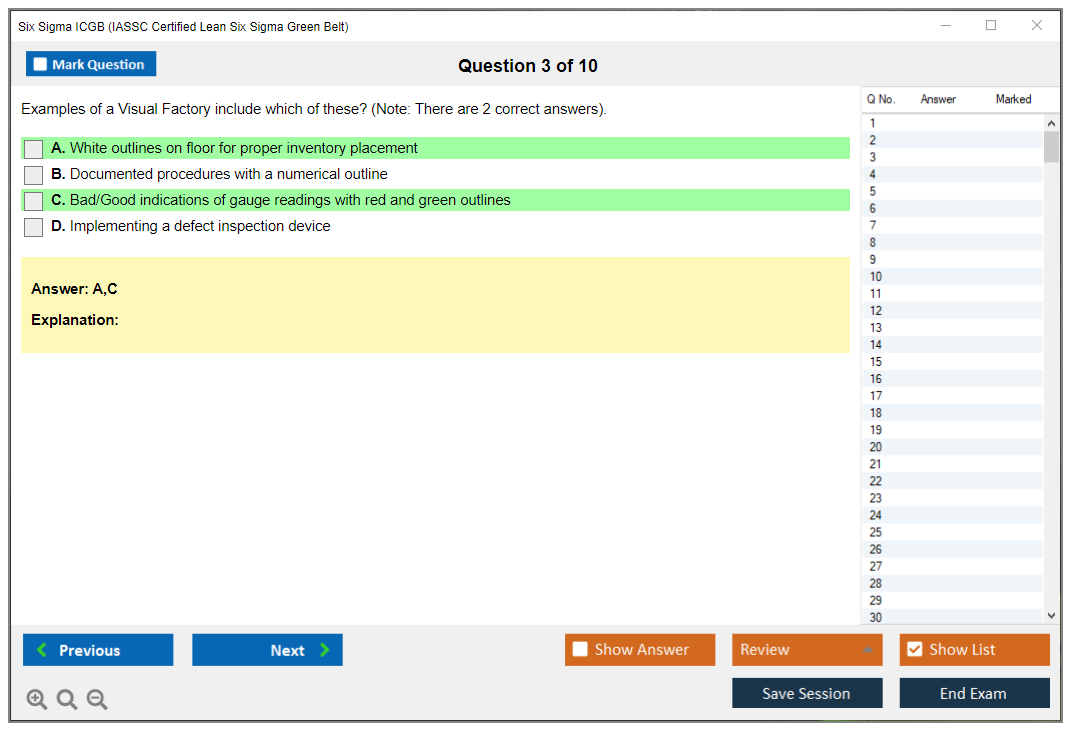
The exam weaves Lean tools throughout all five phases rather than treating them as some separate thing. You'll see value stream mapping show up in Define. Waste identification in Measure. Root cause analysis blending traditional Six Sigma with Lean thinking in Analyze. It's all integrated. Project management concepts pop up everywhere. You might get a question about stakeholder communication in Define, then boom, resource allocation in Improve.
What Define phase questions actually look like
Define questions test whether you understand how projects get selected and scoped. Real talk: you need to know the difference between a problem statement and a goal statement, why SIPOC diagrams matter, how to translate what customers say into CTQ characteristics. Voice of Customer methods include surveys, interviews, focus groups, direct observation. But the exam wants you to know when each method makes sense, y'know? You wouldn't use a survey when you need deep qualitative insights, right?
Project charter components show up constantly. Problem statement, goal, scope, timeline, team roles. The usual suspects. You need to identify what's missing from a weak charter or spot scope creep in a scenario question. SIPOC diagrams map processes at the highest level (Suppliers, Inputs, Process, Outputs, Customers), and you should be able to build one from scratch or identify errors in existing ones.
Stakeholder analysis and communication planning matter way more than most candidates expect, honestly. Who's your Champion? What's the Sponsor's role versus the Process Owner's? How do Black Belts and Green Belts work together? The exam absolutely loves role definition questions. Like, really loves them.
Process mapping basics include flowcharts, swim lane diagrams, value stream maps. You'll need to read these diagrams and extract information from them. Defining defects, units, and opportunities for DPMO calculations starts here too. If you mess up your operational definitions in Define, I mean, your entire project metrics become garbage. No way around it.
Measure phase is where statistics begins
Data types form the foundation of everything else in Measure. Continuous data (also called variable data) versus discrete data (attribute data). You absolutely must know the difference. Continuous data includes measurements like time, temperature, weight. Discrete includes counts, pass/fail, yes/no. The exam'll give you scenarios and ask which data type applies.
Measurement scales build on this: nominal (categories with no order), ordinal (ranked categories), interval (equal spacing, no true zero), ratio (equal spacing with true zero). Honestly? Most candidates gloss over this, then get completely tripped up on exam questions about which statistical tests apply to which scales. Don't be that person.
Measurement System Analysis deserves serious study time. Can't emphasize this enough. Gage R&R studies for continuous data, attribute agreement analysis for discrete data. You need to understand accuracy versus precision versus bias versus linearity versus stability. Not just definitions. Actual interpretation of MSA output. If your Gage R&R shows 35% of variation comes from measurement error, what does that mean for your project? That's what they're testing.
Descriptive statistics are your bread and butter: mean, median, mode, range, standard deviation, variance. You'll calculate these or interpret them from data sets they give you.
Graphical analysis includes histograms, box plots, scatter plots, run charts. Know what each graph type reveals about data. What patterns mean.
Process capability indices trip up tons of people, not gonna lie. Cp, Cpk, Pp, Ppk. What's the difference? Cp and Pp look at process spread relative to specification width. Cpk and Ppk account for centering. The "p" versions use long-term variation. You'll get questions asking you to calculate these from given data or interpret what a Cpk of 0.85 means for process performance.
DPMO and sigma level calculations connect defects to process capability. If you've got 15 defects out of 200 units with 3 opportunities per unit, what's your DPMO? What sigma level does that represent? These calculations show up repeatedly.
My first Green Belt project involved measuring call center wait times, and I spent maybe three weeks just validating that our timing system was actually accurate. Felt like overkill at the time. But turns out our phone system rounded everything to the nearest 15 seconds, which completely threw off our baseline metrics. Would've built the whole project on bad data if we hadn't caught it during MSA.
Analyze phase separates casual test-takers from serious candidates
Root cause analysis tools include the 5 Whys, fishbone diagrams (Ishikawa diagrams), Pareto charts. But here's what gets people: the exam doesn't just ask for definitions. You'll see a scenario with data and need to identify which tool makes sense, or interpret a Pareto chart to determine where to focus improvement efforts.
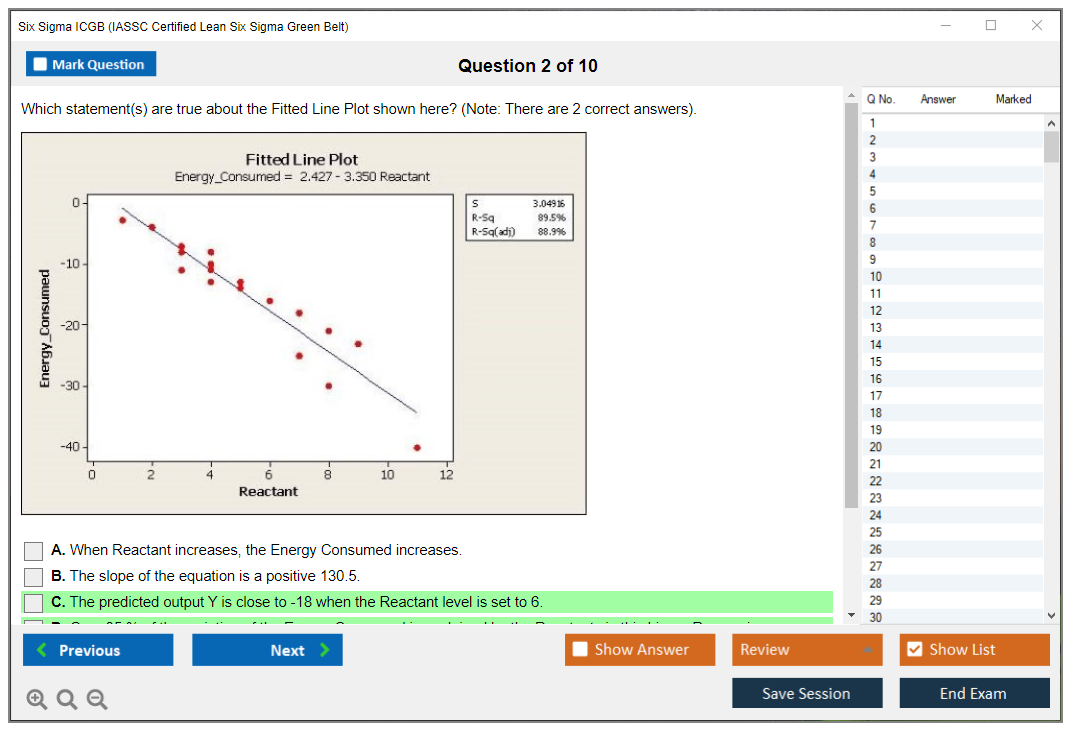
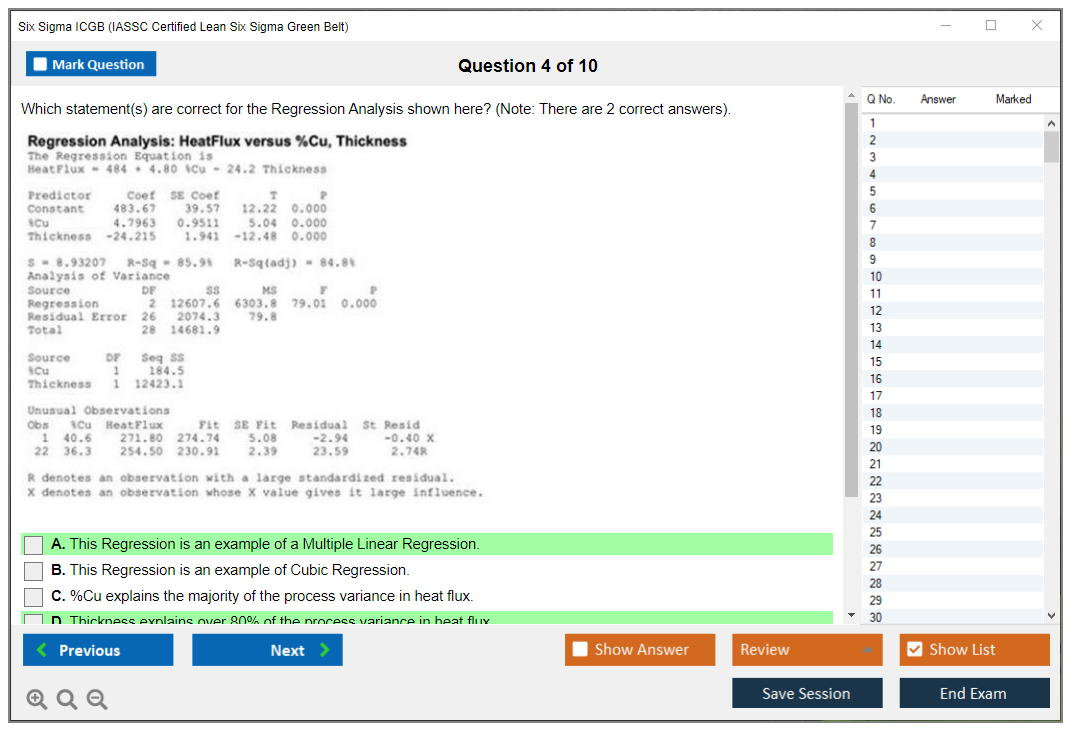
Correlation versus causation understanding's critical. Just because two variables move together doesn't mean one causes the other. Basic stuff, but people forget under pressure. Scatter plots help visualize correlation. Simple linear regression gives you the equation of the line, R-squared values, but you need to interpret what these mean in context, not just calculate them.
Hypothesis testing's where many candidates struggle. The framework includes null hypothesis (usually "no difference" or "no effect"), alternative hypothesis (what you're trying to prove), test statistic, p-value, decision rule. Type I error means rejecting a true null hypothesis. False positive. Type II error means failing to reject a false null hypothesis. False negative.
P-values tell you the probability of seeing your results if the null hypothesis is true. If p is less than 0.05 (common alpha level), you reject the null. But statistical significance doesn't guarantee practical significance. A difference might be statistically real but too small to matter operationally. The exam tests whether you get this distinction.
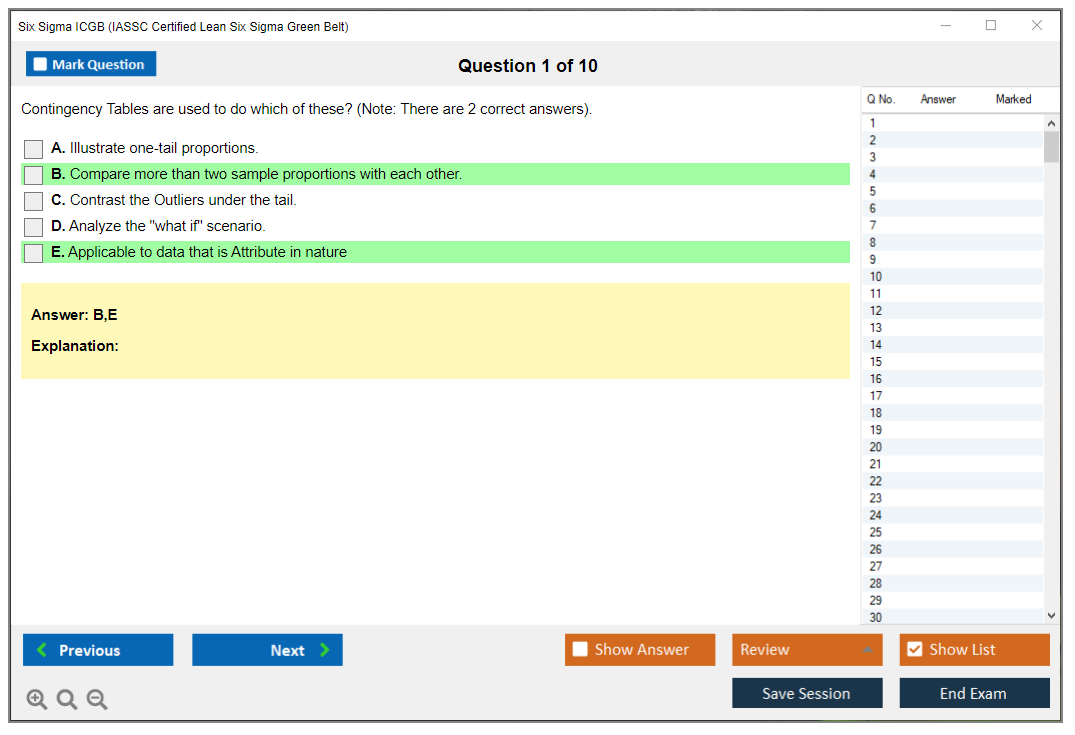
Tests for continuous data include 1-sample t-test (comparing sample mean to target), 2-sample t-test (comparing means of two groups), paired t-test (comparing before/after on same units). For discrete data you'll see chi-square tests, proportion tests. ANOVA compares means across multiple groups.
Confidence intervals give you a range where the true population parameter likely falls. A 95% confidence interval for the mean tells you there's 95% probability the true mean lies within that range, assuming your sampling was done right.
The exam connects theory to DMAIC application
What makes the ICGB certification different from entry-level options like the ICYB or LSSWB is this emphasis on application. You're not just memorizing that ANOVA exists. You need to know when to use it versus a t-test. How to interpret the F-statistic and p-value. What to do with the results in your project.
The Measure and Analyze concentration makes sense when you consider what Green Belts actually do in real life. You're collecting data, validating measurement systems, running statistical tests, identifying root causes. That's the job. Define and Control are important, sure, but they're more conceptual. The math lives in Measure and Analyze.
Not gonna lie, if your stats background's weak, you'll feel it in these sections. The exam assumes you can read statistical output tables, understand what degrees of freedom mean, interpret residual plots. Self-study candidates sometimes underestimate how much stats knowledge the test actually requires.
This connects to the broader certification space
Understanding these exam objectives helps you decide if ICGB's the right cert for your career stage. Compared to LSSGB or other provider Green Belts, IASSC puts heavier emphasis on statistical rigor. Just being honest here. If you're eyeing eventual ICBB or LSSBB certification, the ICGB foundation matters because you're building skills that Black Belt exams expect you to already have mastered.
The DMAIC framework with its weighted distribution reflects real-world project work. You spend more time in Measure and Analyze because that's where data-driven decisions happen. Where the rubber meets the road. Control's shorter because once you've improved the process, control plans are relatively straightforward compared to figuring out root causes. The exam mirrors this reality.
Conclusion
Wrapping up your ICGB prep
Alright, real talk. The IASSC Certified Lean Six Sigma Green Belt exam? You can't wing it. There's 100 questions spanning the entire DMAIC methodology, statistical tools, process improvement techniques, and real-world application scenarios. You've gotta demonstrate genuine understanding of Lean Six Sigma Green Belt concepts, not just regurgitate memorized definitions that you crammed the night before. The ICGB certification cost is reasonable compared to other process improvement certifications, but honestly, the real investment's your study time and mental energy you'll dump into mastering hypothesis testing, measurement system analysis, and control plan development.
Here's my take. Understanding ICGB exam objectives inside-out matters most. The DMAIC tools and techniques aren't just test fodder. They're what you'll actually use in quality management belt certification roles once you've passed. Some people obsess over the IASSC Green Belt passing score (70%, FYI), but the thing is, if you're hitting 75-80% on ICGB practice tests consistently, you're golden.
The exam format's closed-book. Can't rely on reference sheets. Your IASSC Green Belt study guide stays home during the actual test.
Not gonna sugarcoat it. The IASSC Green Belt prerequisites are minimal (no mandatory training course, no specific work experience requirement), but that doesn't translate to "easy." I've watched people with years of process improvement experience crash and burn because they underestimated the statistical rigor. Honestly pretty frustrating to witness. And yeah, the IASSC ICGB renewal policy's one of the better parts: no renewal required, your certification doesn't expire. Thank goodness. Saves you from the CEU treadmill some other certifications demand. I spent three years collecting CEUs for a project management cert once and it felt like a part-time job just tracking webinars and approved courses.
Look, if you're serious about passing on your first attempt and not hemorrhaging money on retake fees, you need quality Lean Six Sigma Green Belt exam prep materials that mirror the real test environment. That means timed practice sessions, detailed explanations for wrong answers, and coverage of every exam objective from Define through Control. The ICGB Practice Exam Questions Pack gives you exactly that. Realistic questions, scoring feedback, and the repetition you need to internalize concepts like hypothesis testing and capability analysis.
It's not about memorizing dumps. It's about building pattern recognition and confidence that gets you past that 70% threshold without second-guessing every statistical question.