

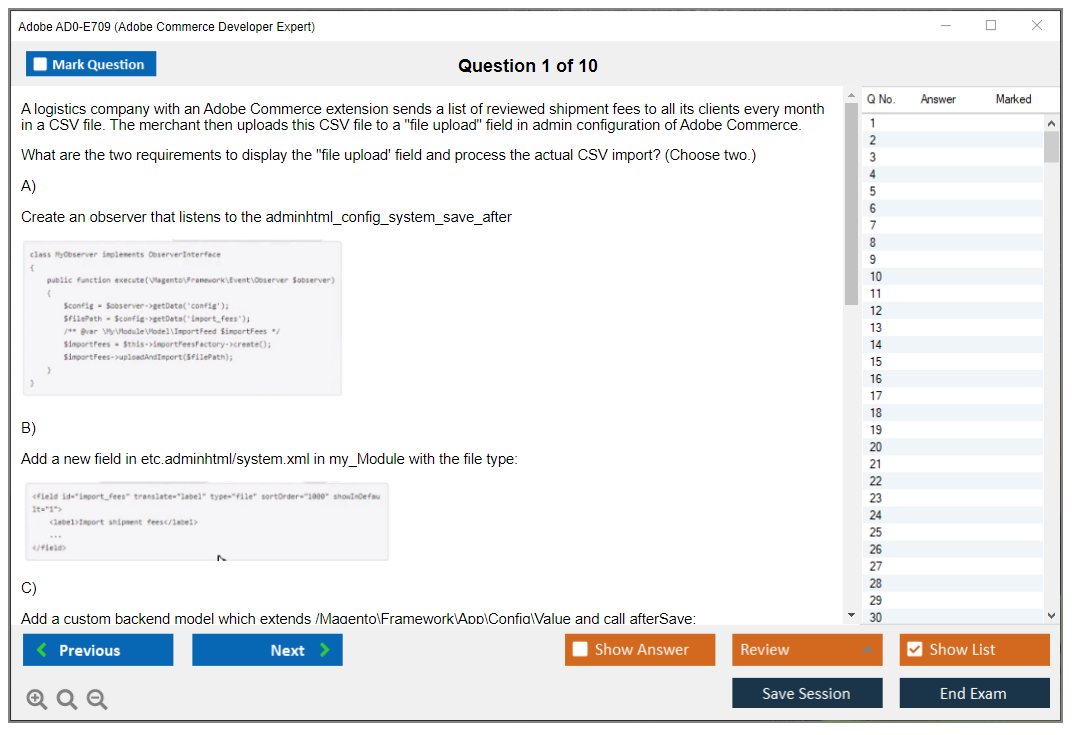
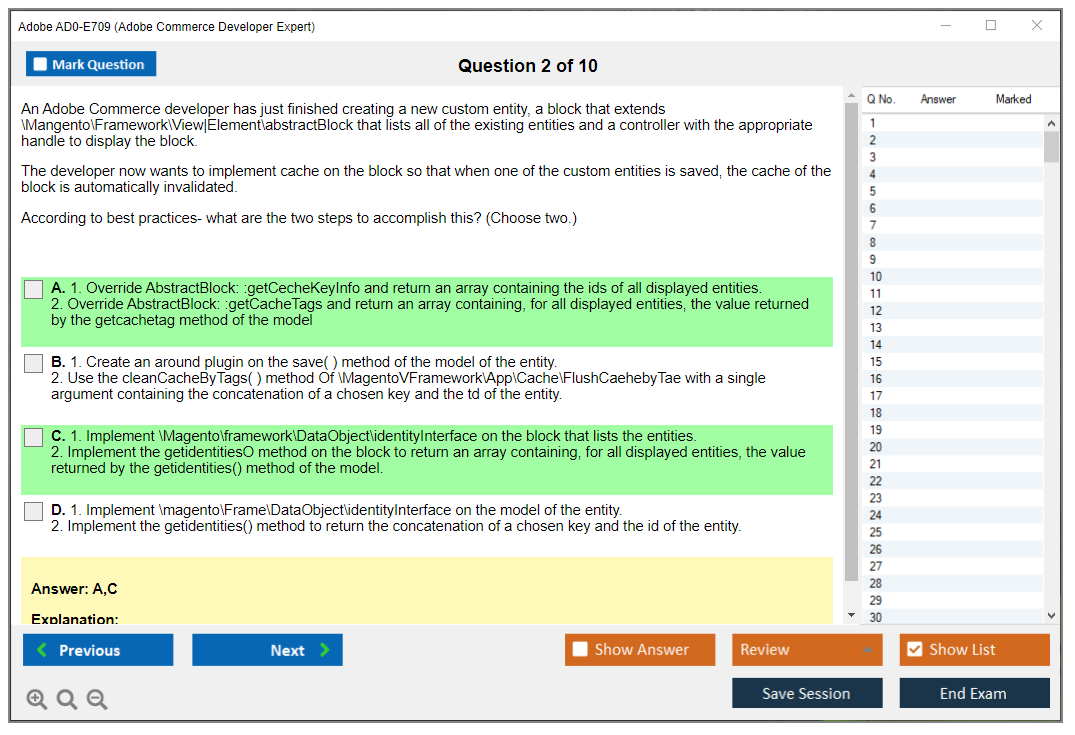
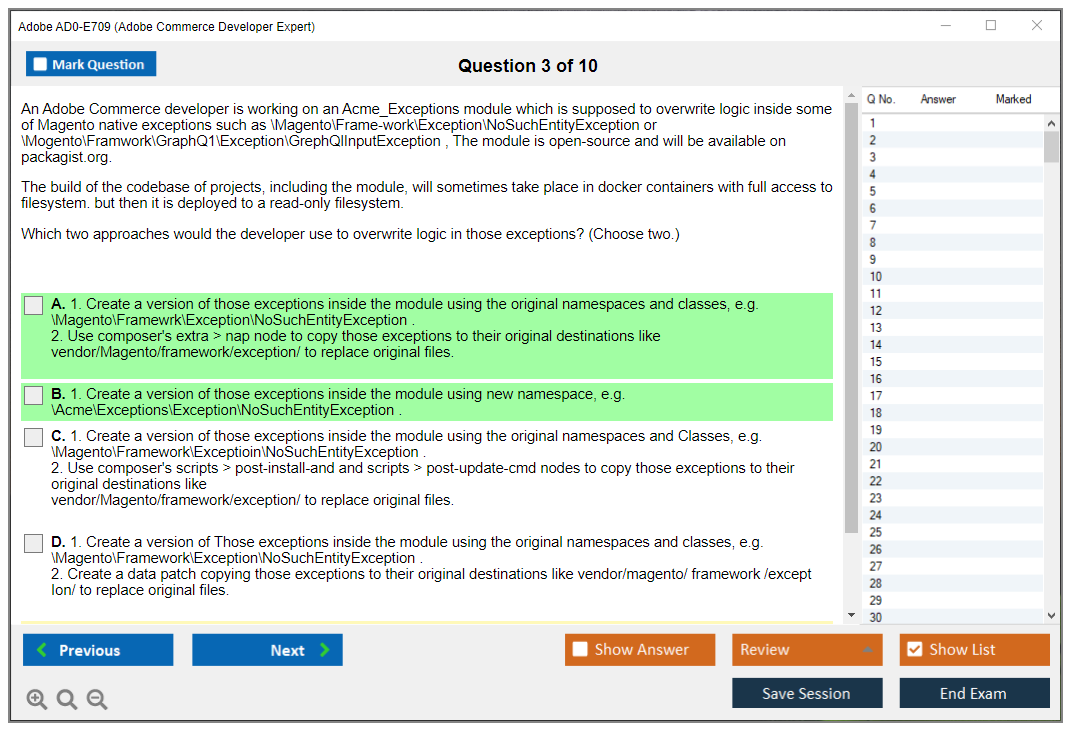
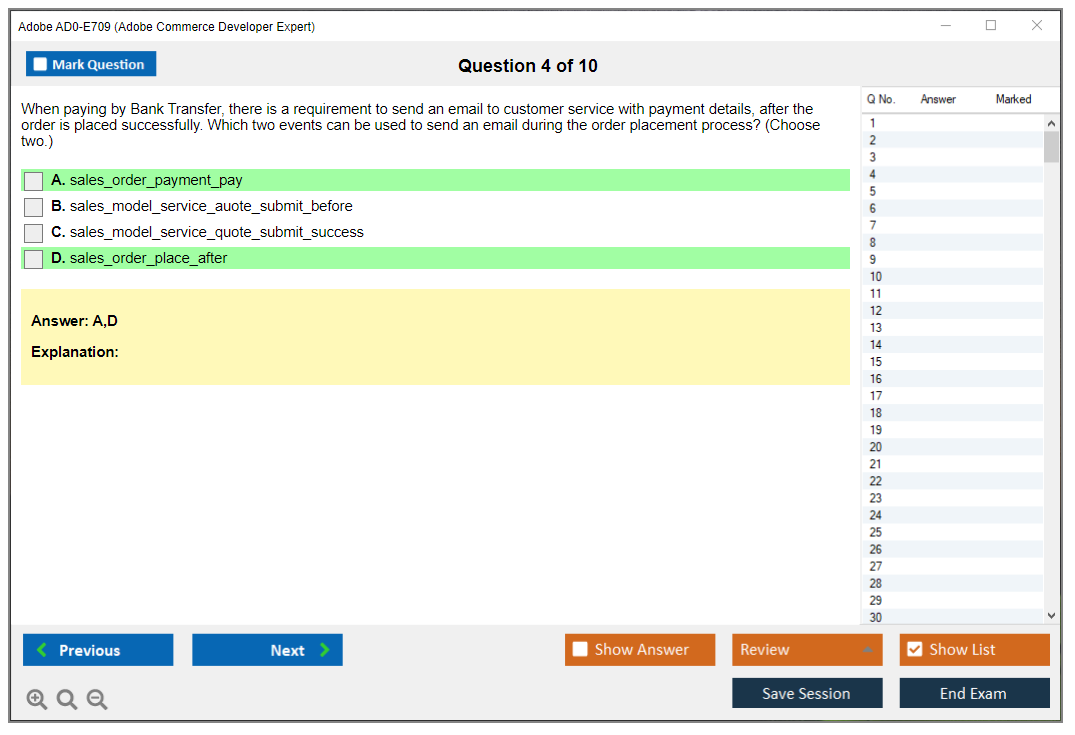
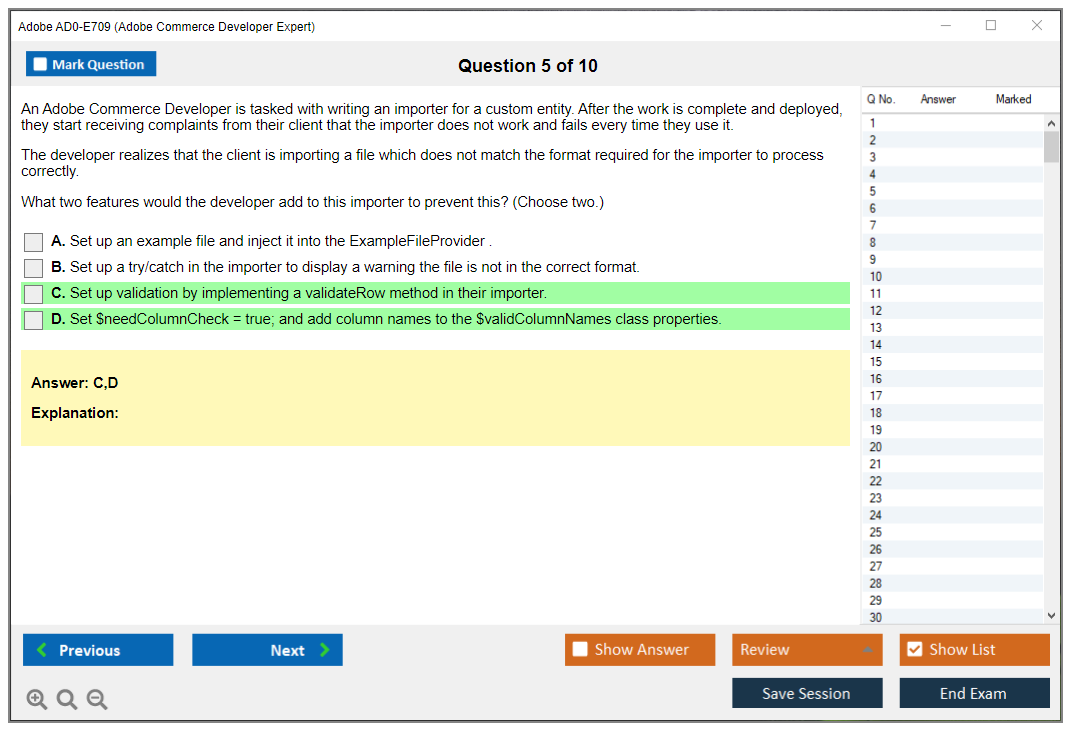
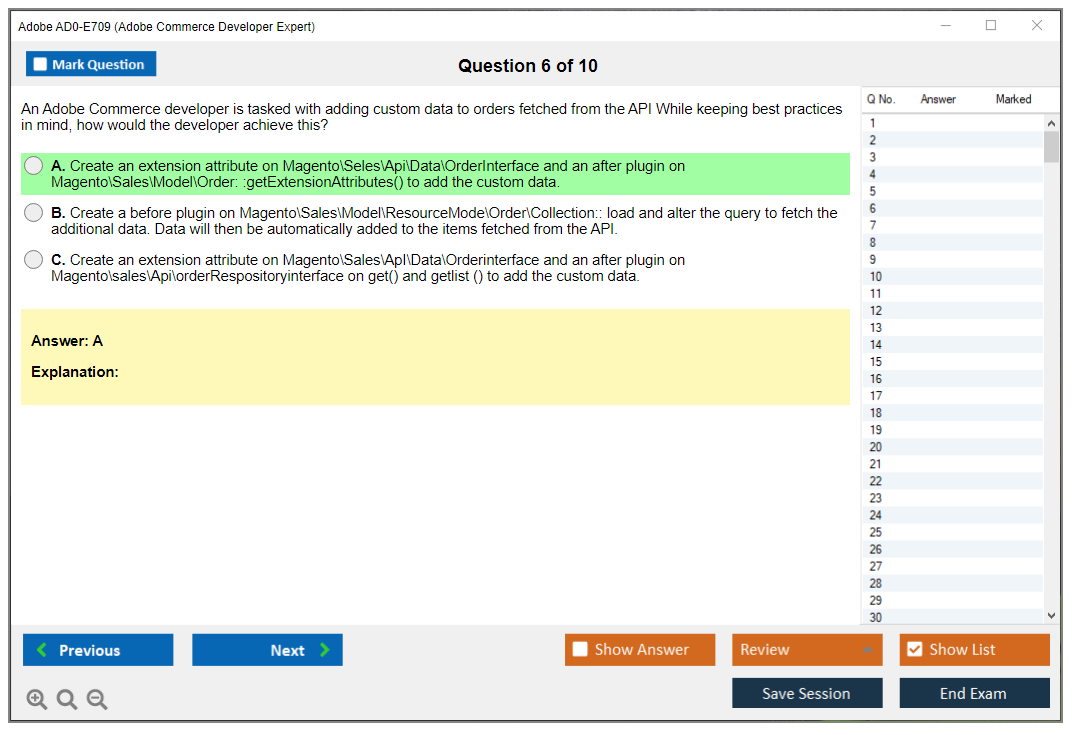
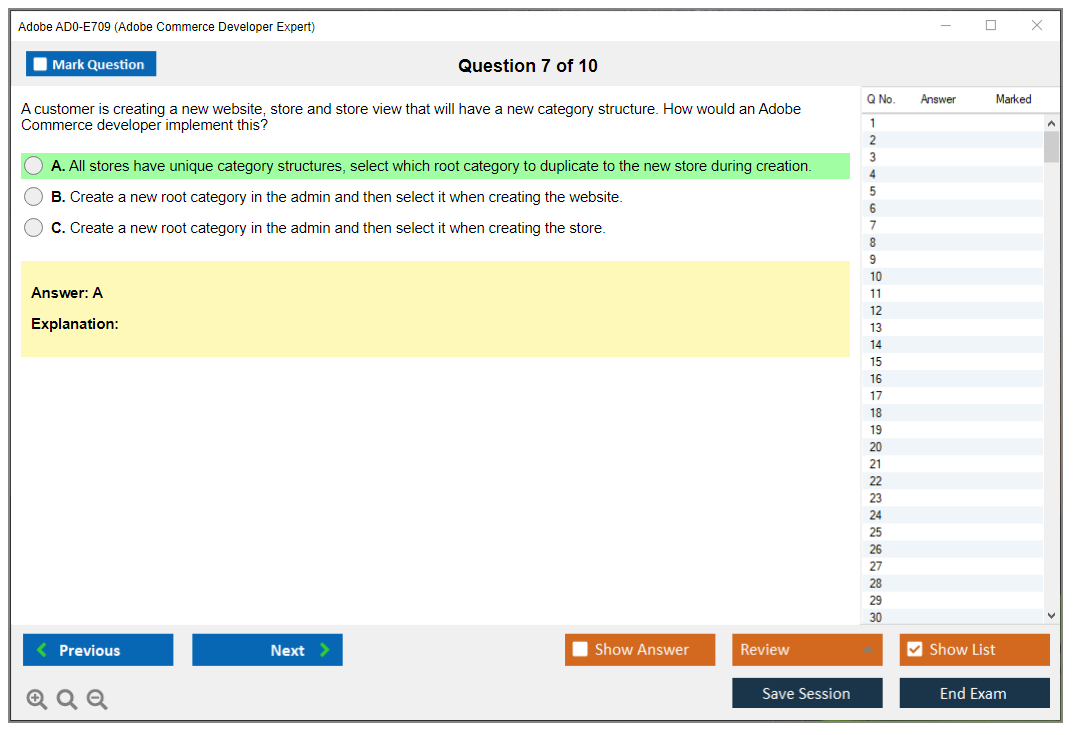
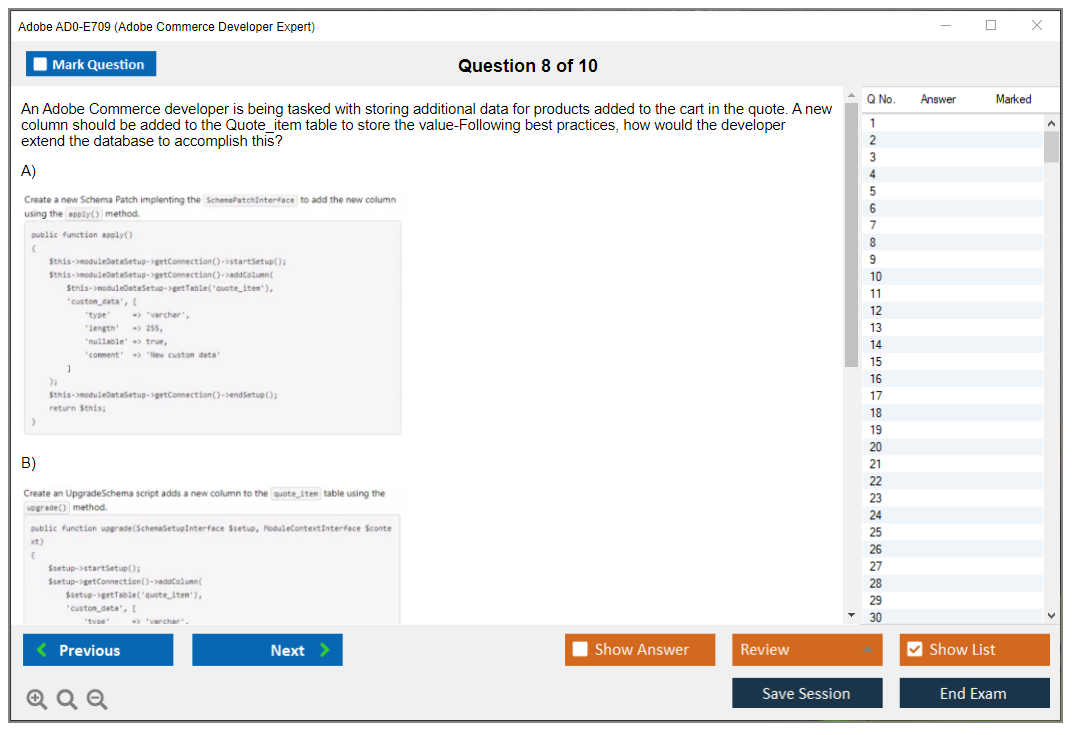
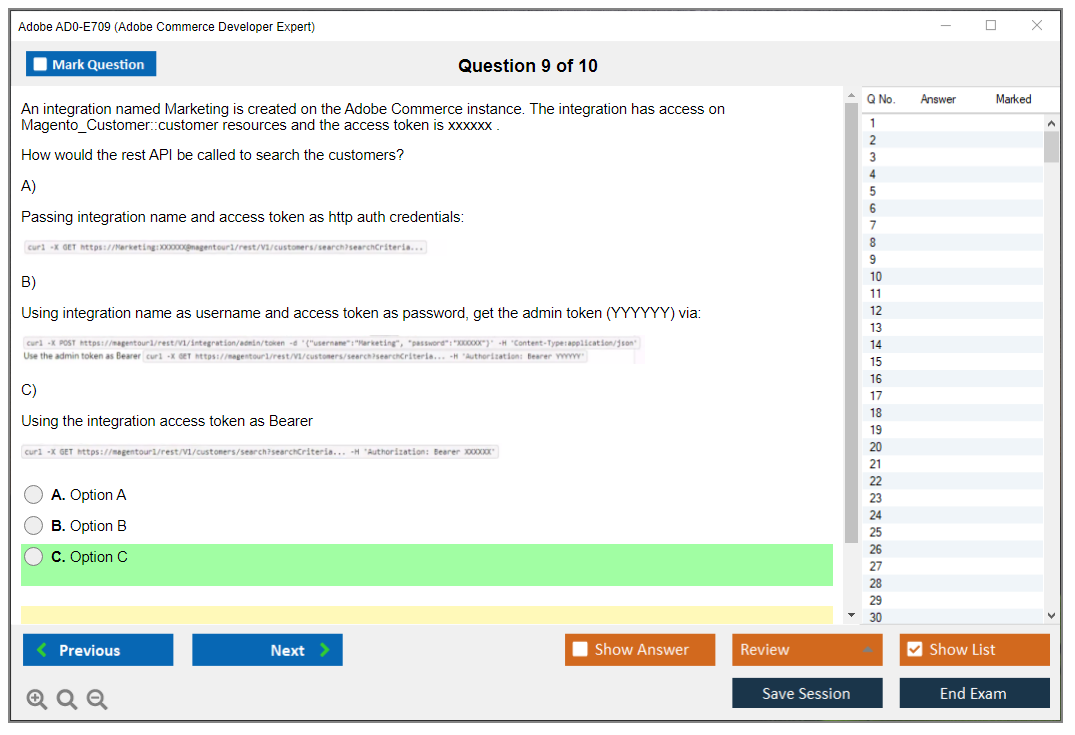
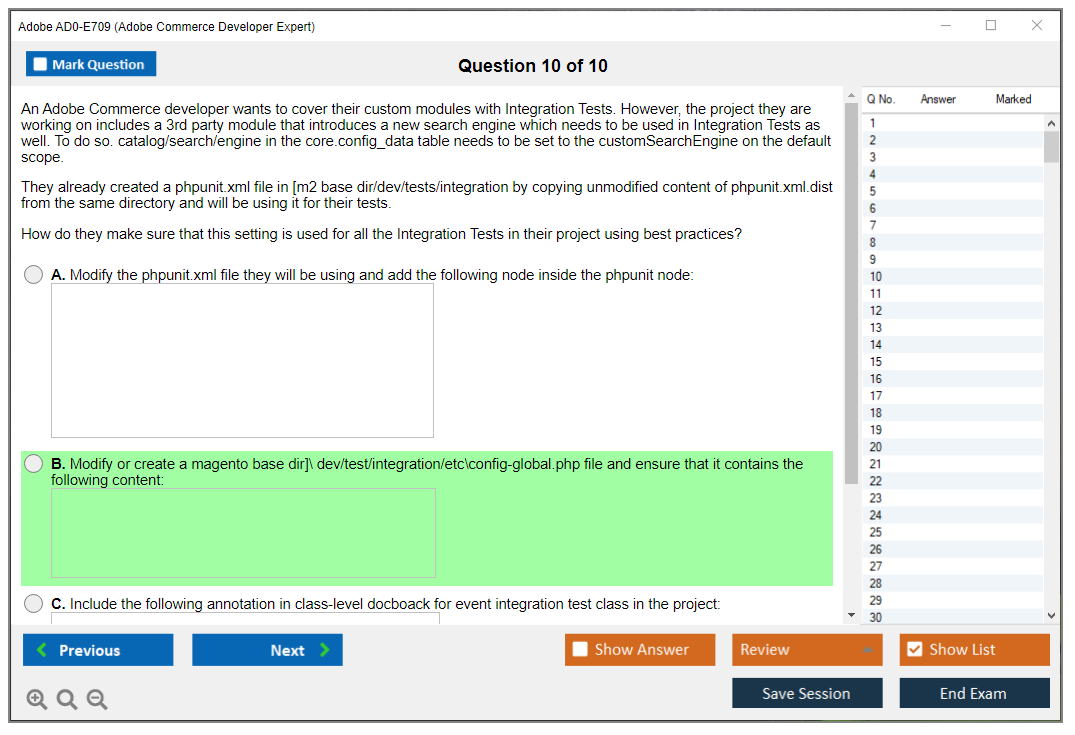
Adobe AD0-E709 Exam Overview and Certification Value
The Adobe AD0-E709 exam isn't for beginners. This certification you pursue after spending years building Adobe Commerce sites and dealing with production issues at 2 AM. It's designed for developers who've moved beyond "how do I create a module" into territory like "how do I architect a multi-store implementation that handles 50,000 concurrent users without melting down."
The Adobe Commerce Developer Expert certification separates people who can follow tutorials from those who actually solve problems nobody's written a Stack Overflow answer for yet. When you hold this credential, you're telling employers and clients that you understand the platform at a level where you can make choices that won't come back to haunt everyone six months later. I've seen too many Commerce implementations that work fine in development but absolutely fall apart under real traffic because the developer didn't understand caching layers or database query optimization.
What sets expert-level certification apart
This isn't about memorizing function names. The exam tests whether you can look at a business requirement and immediately know which extensibility pattern makes sense. Should you use a plugin? An observer? Maybe you need a custom service contract instead. The difference between adequate developers and expert-level ones often comes down to these choices that seem small but compound over time into either systems you can maintain or technical debt nightmares.
The certification proves you understand Adobe Commerce backend development beyond surface-level implementation. You need to demonstrate mastery of dependency injection containers, understand the plugin system's interception patterns, know when observers create performance bottlenecks, and build custom modules that integrate cleanly with the platform's modular structure. These aren't academic concepts. Every Commerce project over a certain complexity requires this knowledge.
Real-world expertise that employers actually need
Companies hiring for senior Adobe Commerce roles use AD0-E709 as a filter. They know certified experts can walk into existing codebases and understand what's happening. You can review someone's module implementation and spot the anti-patterns. You understand why certain approaches break upgradeability.
This matters because Adobe Commerce upgrades can be brutal if your codebase fights against the platform instead of extending it properly. I once worked on a project where the previous team had overridden core classes directly (back when that was easier to do), and when upgrade time came, we basically had to rebuild half the site. Not fun explaining that timeline to stakeholders.
The exam covers Commerce extensibility and customization principles that directly impact project success. You'll need to demonstrate understanding of how to modify checkout flows without breaking third-party extensions, how to implement custom pricing logic that respects all the platform's price calculation events, how to extend APIs without duplicating code. These scenarios come straight from real implementations.
I've worked with developers who could build features but created maintenance nightmares. Then you meet someone with expert-level knowledge who implements the same feature in half the time, following patterns that make future modifications straightforward. That's what this certification proves. The ability to deliver production-ready solutions that other developers can work with later.
Who actually needs this certification
Senior developers should pursue AD0-E709 when they've got 2-4 years of solid Adobe Commerce experience. Not "I followed some tutorials" experience, but actual client projects where you handled complex customizations, integrated payment gateways, debugged performance issues, and dealt with the fallout of bad decisions. Technical leads definitely benefit from this credential because it validates they can guide junior developers and make informed technical recommendations during project planning.
Solution architects working with Adobe Commerce need this knowledge even if they're not writing code daily. You can't design solutions effectively if you don't understand the platform's capabilities and limitations at this level. Development managers benefit too because it's hard to evaluate your team's technical decisions or estimate effort accurately without this depth of knowledge.
The exam assumes you've worked with DI, plugins, observers in Adobe Commerce extensively. Real experience deciding between these patterns based on project requirements. You've probably already built multiple custom modules, integrated various third-party services, and dealt with the challenges of maintaining customizations through platform upgrades. If you're still Googling basic Magento 2 concepts, you're not ready for this exam.
Technical depth the certification demands
Performance optimization is huge. You need to understand caching strategies across all layers. Full page cache, block cache, configuration cache, layout cache. You should know how to identify performance bottlenecks using profiling tools, understand query optimization for large catalogs, and implement efficient data loading patterns. I've seen implementations where someone added one poorly optimized observer that doubled page load times.
Security knowledge goes beyond "sanitize user input." You need to understand Adobe Commerce's ACL system, how to implement proper authorization checks, how to protect against common vulnerabilities specific to e-commerce platforms. The exam tests whether you can identify security issues in code samples and propose proper fixes. This stuff matters because Commerce sites handle payment information and customer data.
Adobe Commerce APIs and integrations form a major portion of the exam. You should be comfortable with REST and GraphQL APIs, understand how to extend them with custom endpoints, know how to implement webhooks for event-driven integrations. Most Commerce implementations integrate with ERPs, CRMs, payment processors, shipping providers. Expertise in API development is necessary. The exam includes scenarios where you need to design integration approaches that handle failures gracefully and maintain data consistency.
Testing methodologies and quality assurance
The certification validates you understand testing approaches beyond "I clicked through it and it worked." You should know how to write unit tests for your custom modules, understand integration testing for database interactions, and grasp functional testing concepts. The exam covers mocking dependencies, testing service contracts, and making sure your code doesn't break existing functionality. Quality assurance practices separate hobby projects from enterprise implementations.
Debugging complex issues requires systematic approaches. You need to know Adobe Commerce's logging system, how to use debugging tools effectively, how to trace execution flow through plugins and observers. The exam presents scenarios where something's broken and you need to determine the most efficient diagnostic approach. This reflects real consulting work where clients report issues and you need to identify root causes quickly.
Database and data management expertise
Understanding database schema modifications is critical. You need to know how to create data patches versus schema patches, understand upgrade script patterns, and handle data migrations safely. The exam tests whether you can modify database structures without breaking existing functionality or losing data. I've seen developers who could write PHP all day but created upgrade scripts that failed in production because they didn't understand transaction handling.
The certification confirms you can work with Adobe Commerce's declarative schema approach while understanding when you need programmatic modifications. You should know how to optimize database indexes for large catalogs, understand entity-attribute-value model implications, and implement efficient data loading patterns for custom entities.
Career impact and professional recognition
AD0-E709 opens doors. When you're applying for senior developer positions or technical lead roles, this certification immediately establishes credibility. Consulting firms value it because they can confidently put you in front of clients for complex implementations. The credential demonstrates you've invested in professional development beyond just accumulating years of experience.
For those considering the Adobe Commerce Business Practitioner Expert certification, the developer expert credential complements it by adding deep technical knowledge to business expertise. Similarly, if you're exploring broader Adobe certifications like the Adobe Experience Manager Developer track, Commerce expertise creates valuable cross-platform knowledge.
Organizations benefit from having certified experts on staff because it reduces project risk. Someone with AD0-E709 can evaluate technical approaches during planning, identify potential issues before they become expensive problems, and mentor junior developers effectively. The certification proves you can lead development projects, not just contribute to them.
Alignment with modern development practices
Adobe maintains the Magento 2 developer certification program's rigorous standards under the Adobe Commerce brand. The exam evolves with the platform, reflecting current best practices rather than outdated approaches. You'll be tested on modern PHP development patterns, object-oriented principles, and design patterns that apply beyond just Commerce development.
Understanding deployment processes and DevOps practices is increasingly important. The exam covers version control strategies, deployment pipelines, environment configuration management, and collaboration workflows. Commerce development isn't just about writing code anymore. It's about delivering that code reliably across development, staging, and production environments.
The certification validates expertise with Adobe Commerce CLI tools, code generation capabilities, and development utilities that improve productivity. You should understand how to use these tools effectively rather than manually creating repetitive code structures. This efficiency matters on real projects with tight deadlines.
The AD0-E709 represents a significant professional milestone. It's not the easiest certification to obtain, but that's exactly why it carries weight in the industry. When you pass this exam, you've proven you can handle the complex technical challenges that define expert-level Adobe Commerce development.
AD0-E709 Exam Cost, Registration, and Logistics
Adobe AD0-E709 (Adobe Commerce Developer Expert) exam overview
The Adobe AD0-E709 exam basically proves you can actually build and extend Adobe Commerce without breaking a store at 2 a.m. It maps pretty closely to day-to-day Adobe Commerce backend development. You're living inside modules, dependency injection, and those fun "why's this observer firing twice" moments that make you question career choices.
Here's the thing. What it validates is practical skill, not vibes or theoretical nonsense you crammed from outdated tutorials. You're expected to understand how Commerce is actually put together and how Commerce extensibility and customization works in the real world. This matters: you need to keep changes upgrade-safe so you're not that developer everyone blames six months later. You'll see plenty of situations where the right answer really depends on knowing when to use DI, plugins, observers in Adobe Commerce, and honestly, when you should just stop and write cleaner service contracts instead of clever hacks.
Who should take it?
Magento 2 devs with real project time. People doing integrations. Folks who own custom module architecture. If you're a junior who only tweaks templates, I mean, this exam will feel like a brick wall. Harsh? Maybe. But honest.
What the AD0-E709 certification validates
The Adobe Commerce Developer Expert certification is basically Adobe saying you can extend the platform the "Commerce way" rather than hacking core files or throwing random preferences everywhere like some cowboy developer. You need to be really comfortable with modules, configuration, EAV and non-EAV data flows (yeah, both), indexing, caching layers, and the parts of the system that talk to the outside world via Adobe Commerce APIs and integrations.
Also? Debugging.
Real debugging. Logs, stack traces, reading di.xml like it's a crime scene and you're trying to figure out which developer committed the murder of clean architecture. I once spent four hours tracking down a rogue preference that was declared in an old module nobody even knew was still active. Turned out the previous developer had left six months earlier and documented nothing. Fun times.
Who should take this exam (target roles)
Backend Adobe Commerce developers who've shipped features. Technical leads on Commerce projects who actually review pull requests. Integration engineers dealing with ERP/CRM/PIM nightmares. Anyone building custom checkout, catalog flows, or heavy business logic in service layers.
Not gonna lie, if your experience is mostly front end theming, you might want a different track first before you waste money here.
AD0-E709 exam cost and registration
Let's talk money. And the annoying admin stuff, because nobody wants surprises at checkout (ironic for a Commerce exam, right?).
Exam price (cost) and what's included
The Adobe Commerce Developer Expert exam cost for AD0-E709 is $225 USD as of 2026. That fee covers one attempt. Fail it, and you pay the full fee again for a retake. No free second shot, no "you were close" discount, nothing.
Pricing may vary by region and currency conversion rates. Adobe does localized pricing in different markets worldwide, so your total might be different if you're paying in EUR, GBP, AUD, INR, or whatever your region is set to. Look, don't trust a random blog (including mine, honestly) for the final number the day you register. Verify current pricing on Adobe's official certification site because fees can change and I'm not updating this post daily.
Discounts do happen sometimes, though. Adobe occasionally runs promotional pricing through partner programs, training bundles, or special events if you're lucky. Training partners also sometimes bundle exam vouchers with a prep course at a cheaper combined price, which can be a really good deal if you actually need the structured prep and won't just ignore the course videos after day two like most people.
Corporate or bulk purchasing can be a thing too, especially if a company is certifying multiple developers at once. If you're at an agency, ask your manager before you pay out of pocket. Seriously. Why donate your own money?
Where to register and scheduling options
Registration is only through Adobe's Certification Management System at certmetrics.com/adobe. No other portal works. No PSI direct signup option. CertMetrics is the gate, period.
You'll need to create an Adobe ID and a certification profile before you can schedule anything. The name on that profile matters a lot, because you'll have to present valid government-issued ID that matches it exactly. If your profile says "Mike" and your passport says "Michael," fix it early or you'll be turned away. This is one of those dumb logistics issues that can absolutely ruin your day and waste your money.
Scheduling usually gives you two options: online proctoring or a physical test center. Online proctoring is the flexible one. Take it from home or office, assuming you have reliable internet and a private testing space without roommates wandering through. Test centers are delivered through PSI locations globally, for people who prefer the traditional locked-down environment with someone watching you sweat.
Availability depends on where you live and which method you pick. Online proctoring usually has more time slots, including odd hours, but time zone considerations really matter. If you schedule at 11:30 p.m. local time, make sure proctoring services are actually available then in your region or you're screwed.
Schedule at least 2 to 3 weeks ahead if you care about your preferred date and time. Waiting until the last minute is how you end up taking it on a random Tuesday morning between client meetings. Been there, hated it.
Payment goes through the certification portal and is processed securely using major credit cards or other approved methods depending on region. After you pay and schedule, you'll get confirmation emails with exam details and preparation instructions. Read them, don't skim, because people miss important requirements all the time.
Reschedule/retake policy (the part people ignore)
You can reschedule up to 48 hours before your exam start time without penalty through the portal. Inside 48 hours? You're basically playing with fire. Miss the window or no-show the exam and you forfeit the fee entirely.
Late arrivals?
Also brutal. If you're more than 15 minutes late, you're typically not admitted and the money is gone. Poof, vanished, donated to Adobe's bottom line. Plan like an adult. Set alarms. Do not schedule during school pickup or right after another meeting.
Retakes are allowed after a 14-day waiting period following a failed attempt, which feels like forever when you're motivated. Pass it and you can move on to other tracks with no waiting period at all. Adobe recommends preparing thoroughly before scheduling, which is corporate-speak for "stop donating $225 to the exam fund every two weeks."
Passing score and exam format (what you can and can't plan around)
People always ask about AD0-E709 passing score, and honestly Adobe can adjust scoring models over time. Sometimes they publish it, sometimes they keep it vague, and sometimes it's "scaled" which means nobody really knows. The real move is to aim well above any borderline outcome by being strong across all the objectives, not just your favorite topics where you feel comfortable.
Question types are typically multiple-choice and scenario-based. Expect "what should you do" prompts that absolutely punish shallow memorization. Time limits and question counts can change too, so check the listing when you schedule and cross-reference the current AD0-E709 exam objectives document.
Results are usually available immediately when you finish, which is terrifying and satisfying at the same time. If you fail, you'll typically get diagnostic feedback showing performance areas, which is actually useful if you take it seriously and rebuild your study plan instead of rage-booking the next slot like an emotional wreck.
Delivery method details (online proctoring vs test center)
Online proctoring is convenient, sure. It's also picky as hell. You need a compatible computer, webcam, microphone, and stable internet connection that won't drop mid-exam. You'll do system checks before exam day. Do them early, because troubleshooting camera permissions 10 minutes before check-in is a special kind of stress nobody needs.
Your testing space must be private, quiet, and free from interruptions. No people walking in. No notes visible anywhere. No second monitor plugged in. You'll likely be asked to show the room via webcam doing a full pan, and identity verification is part of the process that feels invasive but whatever.
Test centers are stricter in a different way. They provide the computer and the secure room, and staff supervise the environment like prison guards. You can't bring personal items, reference materials, electronics, or notes into the testing area. Nothing. Scratch paper or a whiteboard may be provided at the center, while online proctoring usually gives you a digital whiteboard tool that feels clunky and terrible but technically works.
AD0-E709 FAQs (quick answers people actually search)
How much does the Adobe AD0-E709 exam cost? $225 USD as of 2026, with regional price variations and occasional discounts if you're lucky.
What is the passing score for AD0-E709? Adobe may use scaled scoring and can change details whenever they want, so treat the target as "strong coverage of all objectives," not scraping by with minimum effort.
How hard is the Adobe Commerce Developer Expert exam? Advanced, honestly. If you haven't built real extensions and integrations, it will feel rough. Like really rough.
What are the AD0-E709 exam objectives and topics? Core development, extensibility patterns, APIs/integrations, plus debugging and best practices that actually matter. Use the official objectives list as your AD0-E709 study guide spine, not some random blog's interpretation.
How do I renew the Adobe Commerce Developer Expert certification? Adobe updates renewal rules over time, so check the current Adobe AD0-E709 renewal policy in the certification portal and plan ahead instead of scrambling when it expires.
If you want my blunt advice: pick your exam mode first, confirm your ID/profile match second, then build your prep plan around the objectives and a legit AD0-E709 practice test or two. Because honestly, the logistics are easy compared to the actual content you need to master.
AD0-E709 Passing Score, Exam Format, and Structure
Understanding the 68% passing threshold
The AD0-E709 passing score? 68%. That's 34 questions right out of 50 total. Sounds doable at first, but here's the thing - this is expert-level certification we're discussing, and Adobe didn't just throw darts at numbers to pick that threshold. The 68% mark represents genuine competency across the entire Adobe Commerce development ecosystem, meaning you can't just master a couple domains and hope to slide by.
What's interesting here is how Adobe approaches scoring. They use scaled scoring methodology where your raw score gets converted to a standardized scale that ensures consistency across different exam versions. Think about it - if one version had slightly harder questions and another was easier, scaled scoring levels the playing field so you're not competing against the specific question set you get. You're being measured against a consistent standard.
Expert designation? It means something real. You need solid understanding across every exam domain. Selective expertise won't cut it. I've seen developers who are absolutely brilliant with dependency injection and plugins but weak on GraphQL or database optimization, and those gaps will hurt you. My old colleague Tom could write observers in his sleep but froze up completely whenever caching questions appeared, and guess what happened on exam day?
How the scoring actually works
Binary system. Each question is either right or wrong. There's no partial credit, no "well, you were close" points whatsoever. Multiple-choice questions have one correct answer, multiple-select questions tell you exactly how many to pick, and you need to nail them completely. Pick three when it asks for two? Wrong. Miss one of the three required answers? Also wrong.
This scoring approach pushes you toward thorough preparation rather than surface-level familiarity since Adobe wants certified developers who can actually solve real problems, not people who got lucky with educated guesses.
The exam structure and what you're facing
50 questions total. 100 minutes to work through them. That's 1 hour and 40 minutes, averaging out to 2 minutes per question, which sounds reasonable until you start hitting the complex scenario-based questions that Adobe loves to throw at you.
Time management becomes critical. Some questions are straightforward knowledge checks that take 30 seconds. Others present multi-layered scenarios with code snippets, architectural decisions, and performance considerations that require genuine analysis. You might spend 5 minutes on a single complex question trying to work through the implications of different implementation approaches.
Question types? Multiple-choice and multiple-select formats. Multiple-choice gives you four possible answers with one best response, while multiple-select explicitly tells you how many to choose - "Choose two" or "Select three" for example. Pay attention to those instructions because selecting the wrong number of answers guarantees failure on that question even if you identified some correct options.
What the questions actually test
Look, these aren't trivia questions about memorizing configuration file paths or anything like that. Everything is scenario-based, presenting realistic development challenges that mirror what you'd encounter building and customizing actual Adobe Commerce implementations. You'll see code snippets where you need to identify bugs, predict behavior, or choose the best implementation approach. Architectural questions assess whether you can select optimal solutions considering performance, maintainability, and platform best practices.
Debugging scenarios are common. You'll get a problem description and need to identify root causes or appropriate troubleshooting steps. Can you recognize when an observer is the right choice versus a plugin? Do you understand the performance implications of around plugins versus after plugins? These are the kinds of decisions the exam tests.
The interface lets you mark questions for review and jump around in any order. There's a question navigator showing your progress and which questions you've flagged while the timer displays remaining time prominently. Use these tools strategically. If you hit a tough question, mark it and move on rather than burning 10 minutes while easier points wait unclaimed.
The closed-book reality and what it means
Zero external resources. You cannot access any external resources during the exam. No documentation, no code samples, no reference materials. Nothing. It's entirely closed-book, which makes sense for a certification meant to validate internalized expertise since certified developers need knowledge they can apply in real situations, not people who can search documentation effectively.
The exam gets delivered through a secure browser environment that locks down your system entirely. Online proctored exams use monitoring software tracking eye movement, audio activity, and screen behavior. Yeah, it feels invasive, but it prevents cheating and maintains certification value. Proctors can communicate through chat if technical issues come up or if they observe policy violations.
Test center options provide on-site proctoring with similar security measures but in a controlled environment. Some people prefer this because home internet issues can't derail your exam, though others like the convenience of testing from home.
Question distribution and coverage
All official objectives get covered. The exam covers all official objectives with questions distributed according to published domain weightings, so no single area dominates. You can't just be a plugin expert or a database specialist and expect to pass. Adobe tests full platform knowledge.
Questions vary significantly in difficulty. Some are straightforward - "Which interface should a custom payment method implement?" Others present complex scenarios requiring you to mentally trace code execution, consider upgrade implications, and evaluate multiple valid approaches to identify the best one.
Here's something important: Adobe regularly updates questions to reflect current platform versions and emerging best practices, and different candidates get different question sets drawn from a larger pool. All sets are psychometrically validated to ensure equivalent difficulty, but you won't see the exact same exam as someone who tested last week.
Platform version and knowledge scope
Adobe Commerce 2.4.x focus. The exam targets Adobe Commerce 2.4.x, reflecting current production platform versions, which means you need modern PHP development knowledge, object-oriented programming fundamentals, and design pattern expertise. Backward compatibility might come up where it's relevant to understanding upgrade paths or maintaining legacy implementations.
Frontend development isn't tested in depth here. This is a backend-focused exam emphasizing architecture, customization, and integration. GraphQL and REST API knowledge is critical though since these are key integration points for headless implementations and custom frontends. Database optimization, indexing strategies, and data management questions assess your performance tuning capabilities.
Security coverage includes authentication, authorization, data protection, and common vulnerability prevention. Deployment considerations, configuration management, and environment-specific challenges reflect the DevOps responsibilities most Commerce developers handle.
Immediate results and what happens next
Preliminary results? Instantly. You get preliminary results immediately after submitting the exam while official scores and certification status get confirmed shortly after, usually within minutes. If you pass, congratulations. You're an Adobe Commerce Developer Expert. If not, you'll need to wait through Adobe's retake period before attempting again.
For serious exam preparation, the AD0-E709 Practice Exam Questions Pack at $36.99 provides scenario-based questions mirroring actual exam format and difficulty. Practice exams help you identify knowledge gaps and get comfortable with the question styles Adobe uses.
The certification validates real expertise. Passing at 68% with 50 complex questions covering the entire platform demonstrates genuine competency. Prepare thoroughly, understand the scoring methodology, and approach this as the expert-level assessment it is. Similar to how the AD0-E708 tests business practitioner expertise or the AD0-E711 validates professional-level development skills, this expert certification represents a significant achievement in Adobe Commerce development mastery.
AD0-E709 Difficulty Level and Preparation Requirements
What this certification actually proves
The Adobe AD0-E709 exam is the one people bring up when they want to separate "I built a module once" from "I can run a complex Commerce build without setting it on fire." It maps to the Adobe Commerce Developer Expert certification, and the vibe's very much expert-level: deep platform knowledge, real trade-offs, and the ability to reason through messy scenarios you'd normally only see after a few production incidents.
Look, this isn't an associate exam. It's hard. It's timed.
A lot of the difficulty comes from how the questions are written. They assume you already know the common patterns, then ask you to pick the best approach when multiple answers could technically work. Which is exactly how enterprise Adobe Commerce backend development feels on a Tuesday when cache invalidation and indexing are both misbehaving and the business still wants a new checkout tweak by end of day. The scenario-heavy format is deliberate. Annoying, but deliberate.
Who should take it (and who probably shouldn't yet)
If you're doing day-to-day Magento 2 work but mostly staying in one lane, like only frontend theming or only simple module additions, this exam's gonna feel like walking into a final exam for a class you didn't attend, honestly. Developers with 2 to 4 years of intensive Adobe Commerce development experience usually say it's challenging but achievable with proper prep, and that tracks with what I've seen in hiring and mentoring too.
Newer devs struggle. Even smart ones. Because this exam assumes scar tissue.
The exam expects you've solved real production problems, made architectural calls, debugged weird DI behavior, handled upgrades, and dealt with integrations that fail in ways the docs never warn you about. If your experience is mostly tutorials and greenfield "happy path" builds, the scenario questions can feel unfair, but they're not random. They're testing whether you can apply lessons learned instead of repeating patterns blindly. That's kind of the whole point of expert-level work, right? Though I've seen plenty of developers with solid skills still get tripped up by how Adobe phrases certain questions, which is a whole separate frustration.
Cost, scheduling, and the stuff nobody wants to read
People always ask: How much does the Adobe AD0-E709 exam cost? Adobe's exam pricing can vary by region and delivery method, so I'm not gonna pretend there's one universal number that never changes. Check the current listing when you register. If your employer reimburses certs, get the approval first and schedule immediately. Dragging your feet is how "I'll do it next month" turns into never.
Registration goes through Adobe's certification portal and their testing partner, with options like online proctoring or a test center depending on availability. Reschedule rules and retake windows also change over time, so read the policy at booking, not from some random forum post from 2022.
If you want a prep resource that's straightforward and time-boxed, the AD0-E709 Practice Exam Questions Pack is $36.99. It's the kind of thing you can use to pressure-test your readiness without spending a week building your own question bank.
Passing score and exam format (what it feels like under the clock)
What is the passing score for AD0-E709? Adobe sometimes publishes scoring details and sometimes keeps it a little opaque depending on the exam version, so treat any exact number you see online as "maybe." What matters more is how scoring feels: you don't get rewarded for shallow memorization, and you absolutely get punished for guessing when two answers look plausible but only one matches Adobe's preferred approach.
Time is the quiet enemy here. Two minutes per question is tight. Especially on scenarios.
The exam is closed-book, which removes your safety net. In real work you can check docs for syntax, confirm a class name, or verify how a GraphQL resolver is wired. On the Adobe AD0-E709 exam, you need that stuff internalized enough that your brain can focus on reasoning, not hunting for method signatures you should already know.
How hard is it, really?
How hard is the Adobe Commerce Developer Expert exam? Advanced-level. Significant difficulty. And not gonna lie, it earns that reputation. Candidates consistently rate AD0-E709 as challenging, and while Adobe doesn't publicly brag about pass rates in a way that's easy to compare year to year, the general pattern is clear. The standard is high because "Expert" is supposed to mean you can work independently on serious implementations.
The difficulty comes from depth and breadth at the same time. Brutal combination. You need wide coverage across the platform, and you also need deep understanding in core areas like DI, plugins, observers in Adobe Commerce, service contracts, module architecture, and how extensibility choices ripple through performance and maintainability. The questions often ask not just what you'd do, but why one approach is preferred. That pulls you into underlying principles like isolation, upgrade safety, and system-wide impact.
Scenario questions are the big wall. They'll give you realistic but complicated situations with no obvious answer. You have to evaluate trade-offs. Like whether a plugin is appropriate versus an observer, or when a preference is a bad idea, or how an indexing strategy affects storefront behavior under load. Overthinking is common. Second-guessing is common. Time management becomes a skill, not an afterthought.
What topics get people the most
What are the AD0-E709 exam objectives and topics? Adobe updates objectives, but the recurring themes are consistent: extensibility patterns, APIs, performance, security, and troubleshooting. The steepest difficulty curve tends to show up in performance optimization, security implementation, and advanced customization patterns, because those are the areas where "works on my machine" thinking falls apart fast.
Performance questions usually assume you know caching layers (full page cache, block cache behavior, varnish implications), indexing strategies, and basic database optimization. Security goes beyond "sanitize input" and hits platform security architecture and vulnerability prevention. The stuff you learn after cleaning up a mess. API and integration questions assume experience with both REST and GraphQL, including custom endpoint development, auth considerations, and how integrations behave when data models change. Which always happens mid-project somehow.
Troubleshooting questions are sneaky. They reward systematic problem-solving and familiarity with diagnostic tools and logs. They punish "guess a fix" habits. That's very real-world Adobe Commerce backend development, honestly.
Recommended prep time (based on your background)
Most people should plan 60 to 120 hours across 8 to 12 weeks if they already have the right experience. If you're strong on Adobe Commerce already, 40 to 60 hours of focused review and practice can be enough. If you're transitioning from another platform or your Adobe Commerce exposure is limited, plan more like 120 to 180 hours. You're not only studying. You're building instincts.
Daily sessions beat cramming. One hour counts. Two hours is great.
Then do longer weekend lab sessions where you actually build and break things: write modules, add DI configs, create plugins, debug event flows, build a GraphQL resolver, profile a slow page, and test cache invalidation behavior. This exam rewards hands-on practice way more than theory. Candidates who've implemented custom modules, worked with APIs, optimized production systems, and survived upgrades tend to find the scenarios familiar. Not friendly, but familiar.
Study groups help too, because hearing how another developer reasons through an architectural question can expose gaps in your thinking. Also, it keeps you honest when motivation drops.
Practice tests and prep strategy that doesn't waste your time
A good AD0-E709 practice test should do two things: simulate the time pressure, and force you to explain why the right answer is right. If you can't justify it, you got lucky. That's the whole trap of expert exams.
One resource you can slot into your plan is the AD0-E709 Practice Exam Questions Pack. Use it like this: do a timed run, review every miss, then go reproduce the concept in a sandbox project. The win condition is understanding, not a high score in practice mode.
Also, expect to hit weird corners. Advanced configuration options. Less frequently used features. Edge cases. That's part of why the Magento 2 developer certification path at expert level carries weight with employers, because the exam is calibrated to reflect the real-world complexity of enterprise implementations.
Prereqs, renewal, and the maintenance mindset
Adobe Commerce certification prerequisites are usually more about recommended experience than formal gatekeeping. Adobe won't stop you from registering just because you only have six months in the platform. But the exam will stop you.
How do I renew the Adobe Commerce Developer Expert certification? Adobe's renewal model changes as products evolve, and renewal is often tied to staying current with new versions and updates, so check Adobe's current policy for Adobe AD0-E709 renewal timing and requirements. Don't treat renewal like paperwork. Treat it like keeping your skills sharp, because the platform changes and the exam gets updated to match.
If you're taking this seriously, budget the time, do hands-on labs, and add a practice resource like the AD0-E709 Practice Exam Questions Pack when you're close to ready. The prep is an investment, and the payoff isn't just a pass. It's being the person who can walk into a messy Adobe Commerce system and actually make it better.
AD0-E709 Exam Objectives and Topic Breakdown
The Adobe AD0-E709 exam is structured around six distinct domains that test your practical knowledge of Adobe Commerce development at an expert level. Look, this isn't your typical multiple-choice test where you memorize definitions and call it a day. Adobe wants to see that you can actually build, customize, and troubleshoot Commerce implementations in real-world scenarios, the kind where clients change requirements mid-sprint and you've gotta pivot without breaking everything already in production.
Domain 1 accounts for 36% of the exam weight. Makes sense, honestly. It covers Adobe Commerce Architecture and Customization Techniques, which is the meat of what you do daily as a Commerce developer. You need to understand the modular architecture inside and out, not just at a surface level but deeply enough to make architectural decisions that won't come back to bite you six months into a project.
What architectural knowledge actually means here
When Adobe says "modular architecture," they're testing whether you know how modules interact, how to structure your custom code properly, and how to avoid creating technical debt. File structure matters. Registration matters. Dependencies and versioning matter because one poorly configured module can break an entire deployment. I've seen it happen, not gonna lie.
The component-based design aspect requires you to understand how blocks, models, controllers, and templates work together. You need to know when to extend existing functionality versus creating something from scratch, and the thing is, making that call wrong early on creates ripple effects that haunt you during UAT. Packaging includes understanding composer.json, module.xml, and how your code gets distributed and installed across different environments.
DI, plugins, and observers dominate this domain
DI, plugins, observers in Adobe Commerce aren't just buzzwords you memorize for the test. These are the three core extensibility patterns you use constantly, and the exam tests them hard. Dependency injection knowledge goes beyond just constructor injection. You need to understand virtual types, which honestly confuse a lot of developers at first, even experienced ones who've worked with other frameworks. Factories and proxies have specific use cases, and if you don't know when to use each, you'll write inefficient code.
Plugins (interceptors) come in three flavors: before, after, and around. The exam will test whether you know the performance implications of around plugins versus the other types. Around plugins are powerful but can create performance bottlenecks if you're not careful about calling the proceed method efficiently. I mean, one badly written around plugin can tank your site's response time.
Event/observer patterns let you hook into Adobe Commerce's workflow without modifying core code. You need to know how to dispatch custom events, create observers that respond to those events, and understand event propagation through the system. Wait, actually, understanding the sequence in which multiple observers for the same event fire is key too. The exam might present scenarios where you choose between a plugin and an observer. There's usually a right answer based on the specific requirements.
Preferences are another extension mechanism. Sometimes you need to override an entire class, and that's when preferences come in, though they're heavy-handed compared to plugins. Understanding when each approach is appropriate separates expert developers from intermediate ones.
Funny thing is, I once spent three hours debugging why a preference wasn't working in a staging environment only to realize another module had declared the exact same preference with higher sort order. That kind of conflict resolution knowledge? Yeah, the exam tests that too.
Service contracts and API architecture
Adobe's contract-based architecture using service contracts and API interfaces is tested because it's fundamental to building upgradeable, maintainable Commerce installations. When you use service contracts properly, your customizations survive Adobe Commerce upgrades. When you don't, you're rewriting code every time Adobe releases a new version, which nobody has budget for.
Layout XML customization includes understanding layout handles, which determine when specific XML instructions execute. Containers and blocks organize your frontend structure. UI components handle complex interactive elements. The XML configuration merging system across different scopes and modules is something you need hands-on experience with because it's not intuitive from just reading documentation. Trust me on this.
Database schema development has shifted to declarative schema using db_schema.xml files. Gone are the days of install and upgrade scripts for schema changes (though you still use patches for data). You need to know how to define tables, columns, constraints, and indexes properly. Foreign keys matter. Unique constraints matter. Index types all have specific syntax and use cases.
Data patches and schema patches handle database modifications with proper versioning. The exam tests whether you understand the difference between the two and when to use each, which sounds simple but gets tricky in practice.
Domain 2 dives into databases and EAV
At 16% of exam weight, Domain 2 focuses on Working with Databases and EAV, which is Adobe Commerce's entity-attribute-value system. EAV is weird if you're coming from traditional relational database design. Products, customers, and categories use EAV because it provides flexibility for attributes without constant schema changes.
But EAV has performance implications. That's why Adobe uses flat tables for products and categories in production environments. Understanding when to use EAV versus flat table structures is critical. The exam will test your knowledge of EAV architecture including entities, attributes, and attribute sets.
Resource models and collections are how you interact with database data in Adobe Commerce. The repository pattern provides a cleaner API layer over resource models, though honestly, there's mixed feelings in the developer community about whether repositories add unnecessary abstraction. You need to know how to implement repositories properly, use search criteria for filtering, and avoid common performance pitfalls like N+1 query problems where you accidentally run hundreds of queries in a loop.
Database optimization techniques include indexing strategies beyond just adding indexes everywhere. You need to understand composite indexes, covering indexes, and how MySQL query execution works. Transaction management keeps data integrity during multi-step operations, which is tested through scenario-based questions.
Domain 3 and beyond cover practical development
Domain 3 (Developing with Adminhtml) at 10% tests your ability to build admin interfaces. This includes creating admin grids, forms, and integrating them with the Commerce admin panel. UI components for admin are complex, and you need practical experience to understand how data providers, columns, filters, and mass actions work together.
Domain 4 covers Catalog, Checkout, Sales, and Customer Management at 22% of the exam. This domain is practical and scenario-heavy. You might get questions about customizing the checkout flow, adding custom product types, or modifying order processing. The sales order workflow in Commerce is complex, with multiple states and statuses that trigger different behaviors. It's way more nuanced than people expect going in.
Domain 5 focuses on Adobe Commerce Cloud architecture at 10%. If you're working with Commerce Cloud deployments, you need to understand the deployment pipeline, environment configuration, and Cloud-specific features. Not gonna lie, this domain trips up developers who only have on-premise Commerce experience.
Domain 6 rounds out the exam at 6% covering compliance and security. This includes understanding PCI compliance requirements, secure coding practices, and Adobe Commerce's security features like two-factor authentication and CSP (Content Security Policy) headers.
The AD0-E709 exam objectives are thorough and require hands-on experience across all six domains. You can't just study theory and pass this exam. Adobe structures the test to validate that you've actually built Commerce sites, debugged production issues, and made architectural decisions. Each domain builds on the others because real Commerce development involves all these areas working together.
Conclusion
Wrapping this up
Real talk? The Adobe AD0-E709 exam isn't something you just waltz into unprepared. We're talking expert-level Adobe Commerce development here. DI, plugins, observers, APIs, performance optimization, the whole nine yards. You need actual hands-on experience with Magento 2 backend development, not just skimming through docs the night before.
Most developers I've talked to spend 2-3 months preparing if they're already working with Adobe Commerce daily. If you're coming from a different platform or you've been doing mostly frontend work, honestly you should budget more time. Like, way more. The exam objectives are dense and they really test whether you understand the why behind architectural decisions, not just the how.
Here's the thing, though. Your study plan matters more than how many resources you throw at it.
Focus on the official Adobe documentation first. It's dry but it's exactly what the exam tests. Then get your hands dirty with actual Commerce projects, build custom modules, work with the service layer, mess around with extensibility patterns until they're second nature. Read through other developers' code on GitHub. Break things. Fix them. That's where learning happens.
I've wasted entire afternoons chasing down why a plugin wasn't firing, only to realize I had the sort order wrong. Frustrating? Sure. But that kind of troubleshooting sticks with you in ways that reading about it never does.
Practice tests? They're where you find out if you're actually ready or just think you are. They expose gaps you didn't know existed. They force you to work under time pressure, which is a different beast than leisurely reading documentation. I've seen developers who knew the material cold but struggled with the exam format and timing. Don't be that person.
The Adobe Commerce certification prerequisites aren't super strict officially, but you really should have at least a year of solid development experience before attempting this. The Adobe Commerce Developer Expert certification isn't entry-level, and the AD0-E709 passing score reflects that standard. You're proving you can architect solutions, not just follow tutorials.
When you're ready to test your knowledge seriously, check out the AD0-E709 Practice Exam Questions Pack at /adobe-dumps/ad0-e709/. Quality practice questions that mirror the actual exam format make a massive difference in your confidence and readiness. Not gonna lie, walking into that exam knowing you've already handled similar questions under timed conditions changes everything.
Get the experience, put in the study time, drill with practice tests. You've got this.
