

Adobe AD0-E711 Exam Overview and Certification Value
Look, if you're working with Adobe Commerce (yeah, it's still Magento 2 at heart), the AD0-E711 Adobe Commerce Developer Professional exam is basically your entry ticket into the certified developer world. This isn't some fluffy marketing cert. It's a code-level validation that you actually know how to build modules, work with dependency injection, and understand the architectural patterns that make Adobe Commerce tick. Anyone can install extensions from the marketplace. But can you create one from scratch? That's what this exam tests.
The Adobe Commerce Developer Professional certification sits at the foundation level in Adobe's Commerce certification track. You've got Professional (that's AD0-E711), then Expert, then Master, and honestly, each level gets progressively brutal. The Professional exam assumes you've got maybe 6 to 12 months of hands-on experience, which sounds reasonable but really depends on how deep you've gone. If you've just been tweaking CSS and adding CMS blocks, you're gonna struggle. If you've built custom modules, worked with plugins and observers, and debugged database issues, you're in better shape.
What this certification actually proves
Passing AD0-E711 shows you understand Adobe Commerce backend development at a functional level. We're talking module creation, service contracts, repository patterns, and how the whole DI container works. Not gonna lie, dependency injection confuses a lot of developers coming from other platforms. Magento does it differently, and the exam will test whether you actually get it or you've just been copying code from StackOverflow.
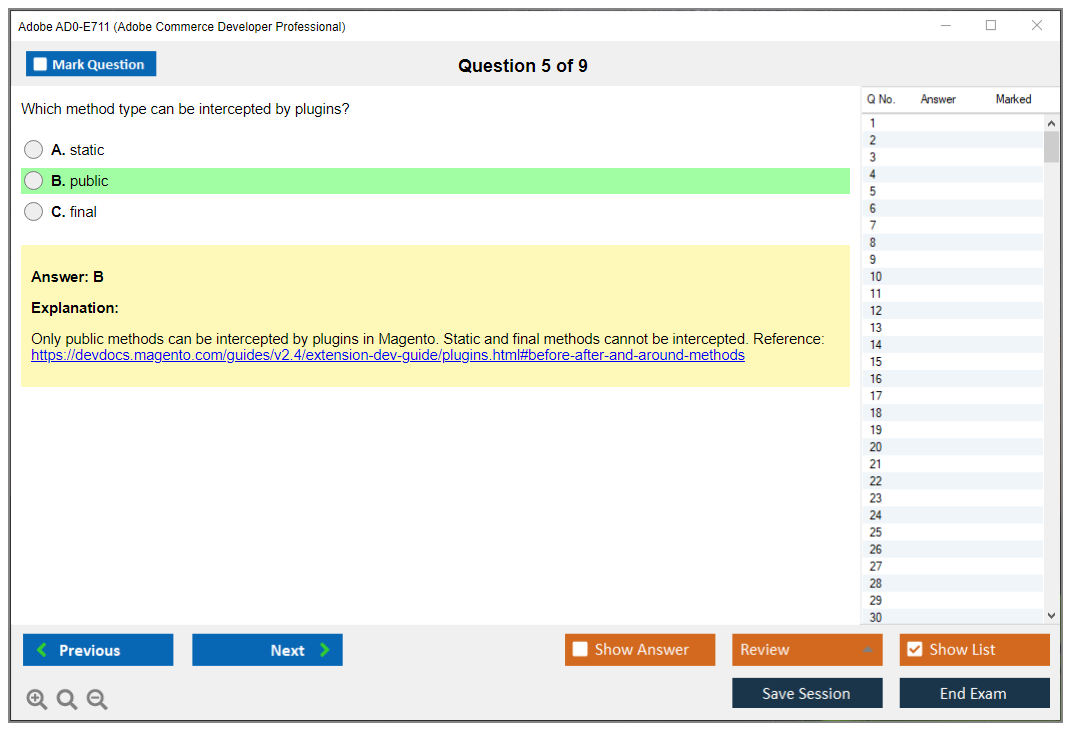
The exam covers Adobe Commerce modules and DI patterns extensively because that's literally the foundation of everything. You'll need to know how plugins intercept methods, how events and observers work, and when to use each pattern. Plus there's database stuff. EAV versus flat tables, collections, repositories. Performance topics like indexing modes and cache types. The thing is, most developers skip understanding why these patterns exist and just implement whatever works temporarily without considering long-term maintainability or how their choices impact performance when the catalog grows to tens of thousands of SKUs.
I once watched a developer create a custom attribute without understanding EAV's overhead, then wonder why the product page took seven seconds to load after importing 50,000 items. The exam won't stop you from making those mistakes in production, but it'll at least make sure you know better options exist.
Why junior to mid-level developers pursue this
The target audience is pretty specific. You're probably a developer who's been working with Adobe Commerce for several months, maybe at an agency or as part of an in-house e-commerce team. You know enough to be dangerous but want formal validation. Clients and employers increasingly look for certified developers because, honestly, there are too many "Magento developers" who can barely write a plugin without breaking the entire site.
Career-wise, this cert opens doors.
Agencies love it. They can show clients their team is certified. Freelancers use it to justify higher rates. In-house teams want it because it proves you can handle the platform without constant supervision. Salary impact varies. Some companies don't care at all, others bump your rate or make it a requirement for advancement.
How it fits with real-world development work
What I appreciate about the AD0-E711 Adobe Commerce Developer Professional exam is that it focuses on practical application. You're not memorizing trivia about Magento's history or marketing features. The questions test whether you can look at a code scenario and identify the correct approach for custom module creation, extension development, API integration, or performance tuning. It's closer to what you'd actually encounter in a sprint than most certification exams.
The exam aligns well with typical development tasks. Need to create a REST API endpoint? You better understand service contracts and data interfaces. Building a custom checkout step? I mean, that requires knowing layout XML, UI components, and how to properly extend core functionality without hacking files directly. Something I've seen way too many developers mess up by editing vendor files which gets wiped during the next composer update.
Certification logistics and career positioning
Adobe AD0-E711 exam cost runs around $125 USD, though pricing can vary by region. The AD0-E711 passing score is typically 68% (you need about 34 out of 50 questions correct), but Adobe doesn't publicize exact cutoffs. Exam format is multiple choice and multiple select, 50 questions, 100 minutes. Plenty of time if you know your stuff, but you'll second-guess yourself on tricky scenarios.
Certification validity is two years. Makes sense given how fast Adobe Commerce evolves. The AD0-E711 renewal policy requires you to pass a shorter renewal exam or move up to Expert level. Staying current matters because Adobe Commerce 2.4.x introduced significant changes compared to 2.3.x, and you need to understand newer patterns.
Building toward advanced credentials
Passing AD0-E711 sets you up nicely for the Expert-level developer exam (AD0-E709) down the road. The Professional cert proves foundational knowledge. Expert requires deeper architectural understanding and more complex problem-solving. Some developers jump straight to Expert if they've got years of experience, but most benefit from the structured progression.
This cert also complements other Adobe credentials. If you're working with teams that include Adobe Commerce Business Practitioners or Adobe Experience Platform specialists, having the developer cert helps you speak the same language and understand how your work integrates with broader digital experience initiatives.
The Magento 2 developer certification knowledge you gain stays relevant because Adobe Commerce's core architecture hasn't fundamentally changed. They've added features and improved patterns, but the basics of modules, DI, and service contracts remain consistent. That's actually valuable in an industry where platforms change constantly.
AD0-E711 Exam Cost, Registration Process, and Policies
The AD0-E711 Adobe Commerce Developer Professional exam checks whether you can actually build and maintain real Magento 2 code, not just work through Admin panels. We're talking Adobe Commerce backend development, constructing modules, wiring up Adobe Commerce modules and DI, plus understanding how Magento 2 APIs and service contracts fit together in production environments where things break at 3 AM and you need to know what you're doing.
Who needs this? Magento devs, obviously. Backend engineers who just inherited a Commerce codebase they didn't ask for. Anyone tired of being labeled "the theme person" who wants actual trust with business logic. That's it.
Price range, regional reality, and what you're paying for
Okay, let's discuss Adobe AD0-E711 exam cost. Most folks encounter pricing somewhere between $125 to $150 USD, though it shifts based on region, currency conversion, and tax rules that seem designed to confuse everyone. Don't carve that figure in stone. The reliable method? Check Adobe's certification portal right before checkout, where your specific region and currency get calculated and you'll see today's actual price.
Compared with other Adobe certification exams, AD0-E711 typically lands in that same mid-tier zone. Not the $300+ nightmare territory some vendor pro exams occupy. Still enough cash that bombing it twice stings, so approach this like you're paying once.
Vouchers, credentials, and where people mess up
Adobe usually sells exam attempts as vouchers or "exam credentials" instead of direct proctor payment. The cleanest path looks like this: purchase the voucher through Adobe's certification storefront or an approved training partner, then redeem during scheduling. Partners and training organizations occasionally offer special pricing for Adobe partners, students, or bulk purchases. Those deals can actually be legitimate if you're inside a corporate enablement program or classroom cohort.
Promos happen sometimes. Not constantly, but discounted vouchers appear during campaign periods, events, or training initiatives. Price-sensitive? Wait a couple weeks and monitor the certification portal announcements.
One more thing. Voucher expiration is absolutely real. Six-month voucher? Schedule within that window, because letting it expire is literally setting exam money on fire and watching it burn.
I once watched a colleague forget about a voucher he'd gotten approved through three layers of procurement bureaucracy, only to discover it expired two days earlier. He had to restart the entire approval dance. Painful.
Registering through Adobe's portal (step-by-step)
Registration runs through Adobe's Certification Management System. Steps are fairly standard, but gotchas exist.
Create or sign in with your Adobe account. Personal email? Fine. Corporate email? Also fine. Just stay consistent because certification records attach to that identity permanently.
Complete your candidate profile. Name must match government ID for proctored delivery. Yes, people actually get blocked for "Mike" versus "Michael."
Find the exam listing for AD0-E711. Confirm language, delivery option, current price in your specific region.
Add payment or apply voucher. Corporate budgets get weird here, because some employers reimburse only when receipts show the company card, while others demand you expense a voucher purchase instead.
Pick delivery. Adobe typically works with PSI or Pearson VUE depending on exam and region, and the portal bounces you into the provider's scheduler.
Choose time slot, confirm policies, book it. Finished.
Account prerequisites? Mostly administrative paperwork. There aren't hard AD0-E711 prerequisites like "must hold X cert first," but Adobe expects hands-on Magento 2 dev time, because this exam will absolutely punish pure memorization.
Payment options, budgets, and bundles
Payment methods usually include credit card, occasionally invoice options through training partners, and voucher redemption. Corporate training budgets often work smoothest via bulk voucher purchase. Procurement departments love single invoices, and you can distribute vouchers to an entire dev team without everyone battling expense reports.
Bundles exist sometimes, like learning path packages bundling training plus an exam voucher. Not always cheaper, honestly, but if you needed the course anyway, it simplifies budgeting.
Retakes, waiting periods, and how not to pay twice
Retake policies shift occasionally, but the common pattern shows 24 hours before the first retake, then longer waits for additional attempts. Each attempt costs money. Usually the same voucher price again. Multiple attempts get expensive ridiculously fast, plus it's demoralizing.
Strategy to dodge retakes? Map study time to the AD0-E711 exam objectives, then complete one serious AD0-E711 practice test and review every single miss back to docs and actual code. Can't explain why DI preference versus plugin matters, or how repositories versus collections appear in real code? You're not ready.
Rescheduling, refunds, and cancellation without losing cash
Refunds and reschedules usually carry a deadline, commonly 48 hours before your scheduled time, to change without penalty. Miss that window and you'll probably pay a fee or forfeit the attempt, depending on provider rules and what you agreed to during booking.
To reschedule, return to Adobe's portal, jump to the testing provider appointment page, move the slot there. Do it early. Life chaotic? Book a date you can actually protect.
Online proctoring requirements (this affects your choice)
Online proctored exams seem convenient, but technical requirements can absolutely ruin your day. Stable internet, quiet room, webcam, allowed OS, no bizarre corporate lockdown software. Can't guarantee that? Pick a test center and stop gambling with your voucher.
Passing score, renewal, and the career math
People constantly ask about AD0-E711 passing score. Adobe doesn't always make scoring details feel transparent across programs, so treat the official exam page as your source of truth for the current number and scoring model.
Also verify the AD0-E711 renewal policy. Some Adobe certs require periodic renewal or replacement when product versions shift.
Value proposition? If you're already doing Magento work, this cert can help justify rate increases, internal promotion, or simply getting past HR filters for "Magento 2 developer certification" roles. Exam cost versus salary impact usually represents a solid trade if it helps land even one better project, but only if you actually absorb the material, not just collect a badge nobody respects.
AD0-E711 Exam Format, Passing Score, and Delivery Options
What you're actually signing up for
So here's the deal. The AD0-E711 Adobe Commerce Developer Professional exam hits you with 60 questions and gives you 120 minutes to work through them. That's 2 minutes per question if you're doing the math, which honestly sounds generous until you slam into those scenario-based monsters that make you think through an entire module architecture like you're debugging someone's production nightmare at 3 AM. Most questions are multiple choice, but you'll also see multiple select items where two or three answers might be correct and you need to nail all of them to get credit. Adobe doesn't mess around with partial points on those, which is frustrating but fair, I guess?
Question weighting's something people obsess over but the thing is Adobe keeps it pretty straightforward. All questions carry equal value. No trick where the last 10 questions are worth double or anything like that. I mean, the catch is Adobe's scaled scoring system, which means your raw score gets converted to a standardized scale. You might answer 42 questions correctly but see a scaled score of 550 or whatever Adobe's reporting that cycle. The AD0-E711 passing score sits around 550 on their scale, which typically translates to about 68-70% correct or roughly 41-42 questions out of 60. Not gonna lie, that's a decent bar for a professional-level cert. Higher than some folks expect.
Time management when you're staring at the clock
Flag liberally. Seriously.
Adobe gives you review and flagging features specifically so you can mark the head-scratchers and circle back, and honestly 120 minutes feels like plenty until question 23 drops a massive "debug this DI configuration and explain why the plugin won't fire" scenario and suddenly you've burned 6 minutes on one question. First pass, knock out everything you're confident about. That builds momentum and banks time for the tough stuff. Second pass, tackle the flagged items with whatever minutes remain.
Unanswered questions count as incorrect. Full stop. There's no penalty for guessing beyond the obvious (you'll probably get it wrong), so fill in every single bubble before time expires. I've seen people leave 5-6 blank thinking they'd rather have "no answer" than a wrong one, which is just burning points for no reason. Like, why would you do that to yourself?
Oh, and if you're one of those people who needs a mechanical pencil and scratch paper to think properly, you're out of luck in online proctored mode. They give you a digital whiteboard tool that feels about as natural as drawing with your elbow, but test centers usually provide actual physical scratch paper and a pen. Small thing, but it matters when you're trying to sketch out event observer sequences or trace plugin execution order.
Online proctored vs dragging yourself to a test center
You've got two delivery options and they're pretty different experiences, mixed feelings on both. Online proctored sounds convenient until you're scrambling to clear your desk, unplug your second monitor, and convince the proctor your water bottle isn't a cheat sheet hidden in plain sight. The workspace requirements are strict: clean desk, no papers, no extra screens, nobody walking through the room mid-exam. Technical requirements include a working webcam, microphone, stable internet (they recommend 2 Mbps minimum but honestly get the fastest you can because buffering during an exam is a special kind of hell), and a quiet space where you won't be interrupted for two hours straight.
Adobe's system check tool is required before exam day. Run it 48 hours early so you're not discovering Java version conflicts at 8:55 AM on test day while panicking. The proctor needs to see your government ID, do a room scan with your webcam, watch you show all four walls like you're giving a house tour, check under your desk for hidden notes. It's invasive but that's the trade-off for testing in pajamas, I suppose.
Test centers remove all that hassle, though. Show up, they verify your ID, lock your stuff in a locker, seat you at a clean workstation with zero setup drama. Immediate technical support if something glitches. The environment's controlled so you're not worried about your neighbor's dog barking during question 47 or your roommate slamming doors. I'd pick test center if you've got one nearby and your schedule allows it. Just seems less stressful overall. Online proctored makes sense if you're remote, have mobility constraints, or just hate commuting for a 2-hour commitment.
What you absolutely cannot have during the exam
Reference materials are banned. No notes, no documentation, no second browser window with DevDocs open (believe me, they'll catch that). Mobile devices stay outside or powered off in your pocket if the test center allows. Most don't. Secondary monitors must be unplugged for online proctored exams, not just turned off but physically disconnected because the proctor checks. Smartwatches are iffy depending on the proctor. Honestly just leave it in the car and avoid the argument.
Breaks aren't really a thing for a 120-minute exam, which, okay, the timer doesn't stop if you need the restroom, so hydrate smart beforehand but don't go overboard. Adobe figures two hours is manageable without a formal break period, which is mostly true unless you had three coffees that morning and made poor life choices.
After you click submit
You'll sign an NDA before the exam starts, which means you can't share specific questions, scenarios, or answer choices anywhere. People violate this constantly in forums and it's a good way to get your cert revoked if Adobe catches it. The NDA's serious, not just legal theater.
Preliminary results pop up immediately. Pass or fail, right there on screen, no waiting around wondering how you did. Your official score report arrives via email within a few hours, breaking down performance by domain, and if you failed that domain breakdown is gold for your retake prep because you'll see exactly where you tanked (maybe database/EAV scored 45% while modules hit 80%) so you know what to hammer in round two instead of just studying everything again randomly.
Passing triggers the digital badge and certificate process within a few days. Your credential appears in Adobe's verification system where employers can confirm it's legit. Similar verification systems exist for other certifications like Adobe Experience Platform Technical Foundations if you're expanding your Adobe portfolio beyond Commerce. If you're looking at the business side instead, Adobe Commerce Business Practitioner Expert uses comparable exam mechanics but obviously different content domains, more strategy than code.
Technical issues during the exam (browser crash, proctor disconnect, power outage, whatever) should be reported right away through the chat function. Remedies vary but Adobe's usually reasonable about retakes if their system caused the problem, not your sketchy WiFi that drops every 20 minutes.
AD0-E711 Difficulty Assessment and Success Factors
The AD0-E711 Adobe Commerce Developer Professional exam is basically Adobe asking, "Can you ship backend Magento 2 features without guessing?" It's aimed at people doing Adobe Commerce backend development, custom module work, integrations, and the kind of maintenance where you touch DI config, plugins, and service contracts without breaking production. Not theory. Not trivia. Real dev judgment.
You'll feel that fast. Code-level thinking. Lots of "what would you do."
Cost, scheduling, and the stuff people forget
How much does the AD0-E711 exam cost? Adobe's pricing can shift by region and promos, but most candidates report a typical range around the usual pro cert pricing tier, and you'll see it during checkout when you schedule. So treat Adobe AD0-E711 exam cost as "check at registration time" not "memorize a number." Register through Adobe's certification portal, pick online proctored or test center, and schedule like any other vendor exam.
Retakes exist. They cost money. Plan accordingly.
Format, timing, and passing score expectations
What is the passing score for Adobe AD0-E711? Adobe doesn't always publish a fixed number the way some vendors do. The AD0-E711 passing score details can be presented as scaled scoring, so focus on mastery of the AD0-E711 exam objectives rather than hunting a magic percent. The exam's commonly described as 60 questions, and time pressure's real because scenario questions make you read carefully, then reread, then decide between two answers that both sound "Magento-ish."
Speed matters. Accuracy matters more. No time to "explore."
Is AD0-E711 hard? candidate feedback, pass rates, and why it feels rough
Is the Adobe Commerce Developer Professional certification hard? Honestly, yes for a lot of people. Not because the questions are unfair, though. The thing is, candidate feedback usually clusters around "I thought I knew Magento 2 until the exam asked me why I'd choose a plugin over a preference in a specific situation." That's the vibe. Pass rate chatter varies, but a common pattern's lower first-time success for folks who prepped only with reading. Much better outcomes for people who did targeted prep plus hands-on, with many reporting first-time pass rates feeling closer to "coin-flip" without prep and "comfortable" with structured practice.
The big divider? Time on the platform. Candidates with 6+ months of real-world Adobe Commerce development usually call it manageable because they've already fought the DI container, written plugins, and debugged service contracts at 2 a.m. The exam questions basically reward that pain. I mean, if you only tweak themes or install existing extensions, not gonna lie, it hits different.
Compared to AWS and Microsoft developer certs, AD0-E711's narrower but deeper in one stack. AWS exams test breadth across services. Microsoft dev exams often test platform patterns with tooling. AD0-E711's more like "do you understand how Magento 2 actually behaves." Compared to Magento 1.x certifications, the learning curve's harsher for DI, service contracts, and the plugin system, especially if you're bringing M1 habits forward. Oh, and if you're the type who learned PHP through WordPress, you're in for a rude awakening when you see how opinionated Magento's architecture gets.
The domains that punch people in the face
Candidate surveys and forum threads keep pointing to the same hardest areas: dependency injection patterns, the plugin system, and service contracts. And look, that tracks because Adobe Commerce modules and DI are where tiny config choices create huge runtime effects. The exam loves those "what happens if.." edges.
Common pitfalls show up constantly. Underestimating the depth required for module structure and DI implementation. Assuming theoretical knowledge's enough. Guessing at architecture decisions without having built anything. The exam tests practical application, so you need to know how it works in code, not how it sounds in a blog post.
Stuff that trips people up: observer vs plugin usage (when you need sequencing and when you need interception), preference vs plugin decisions (and why preferences are risky in extension ecosystems), and repository pattern implementation (especially when service contracts want data interfaces and you're tempted to return models). Also, scenario-based questions around Magento 2 APIs and service contracts are brutal if you've never actually shipped an endpoint.
Database, performance, security, and CLI pain points
Database questions get sneaky. EAV model comprehension's a must, plus when flat tables make sense, plus collection optimization so you don't accidentally build a "load everything then filter in PHP" disaster. Performance and caching comes up more than people expect. You need to understand Varnish, Redis, and full-page cache mechanics beyond "turn it on." What invalidates, what tags, what happens when you deploy, and why some content stays stale.
Security's the quiet trap. ACL implementation, input sanitization, and SQL injection prevention show up because Adobe wants you to build admin features safely, not just make them "work." Lack of bin/magento experience makes deployment and maintenance questions harder because the exam assumes you've run setup:di:compile, dealt with config:import, and understand what changes between dev and production modes.
Code reading skills matter a lot. You'll see snippets and need to spot the issue or the better approach. Developers who only work with existing modules struggle more than those who build custom extensions, because building forces you to touch DI, events, UI components, and APIs. Those are exactly the experience gaps that make the exam feel "unfair."
Preparation that actually reduces difficulty
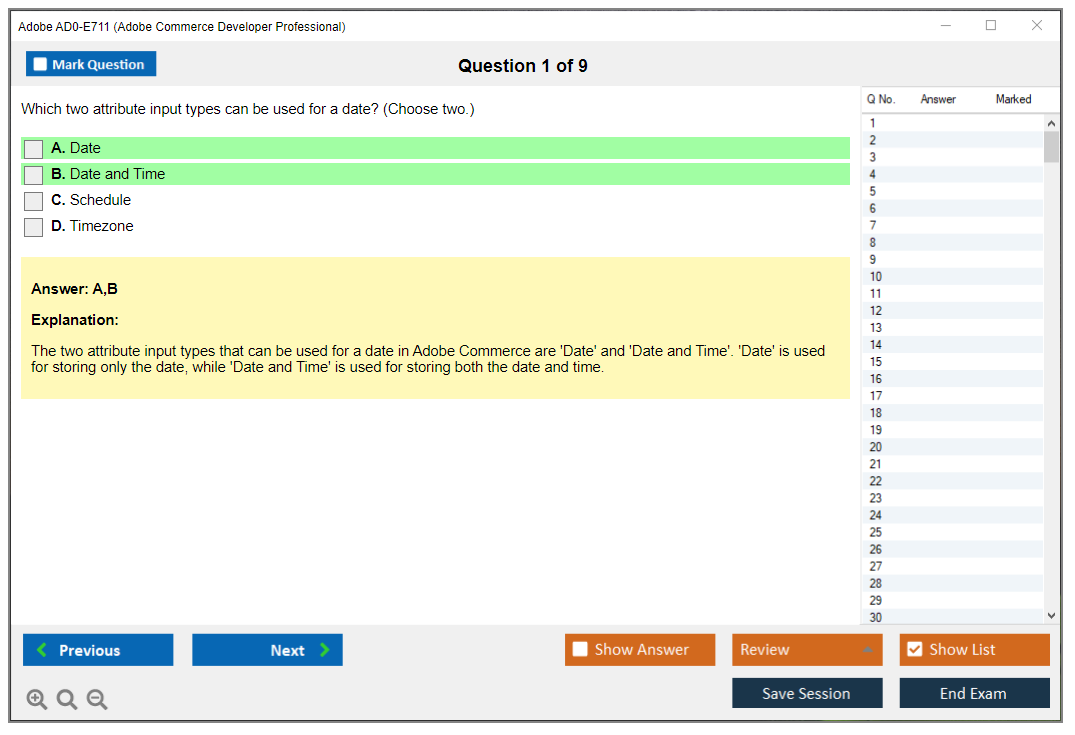
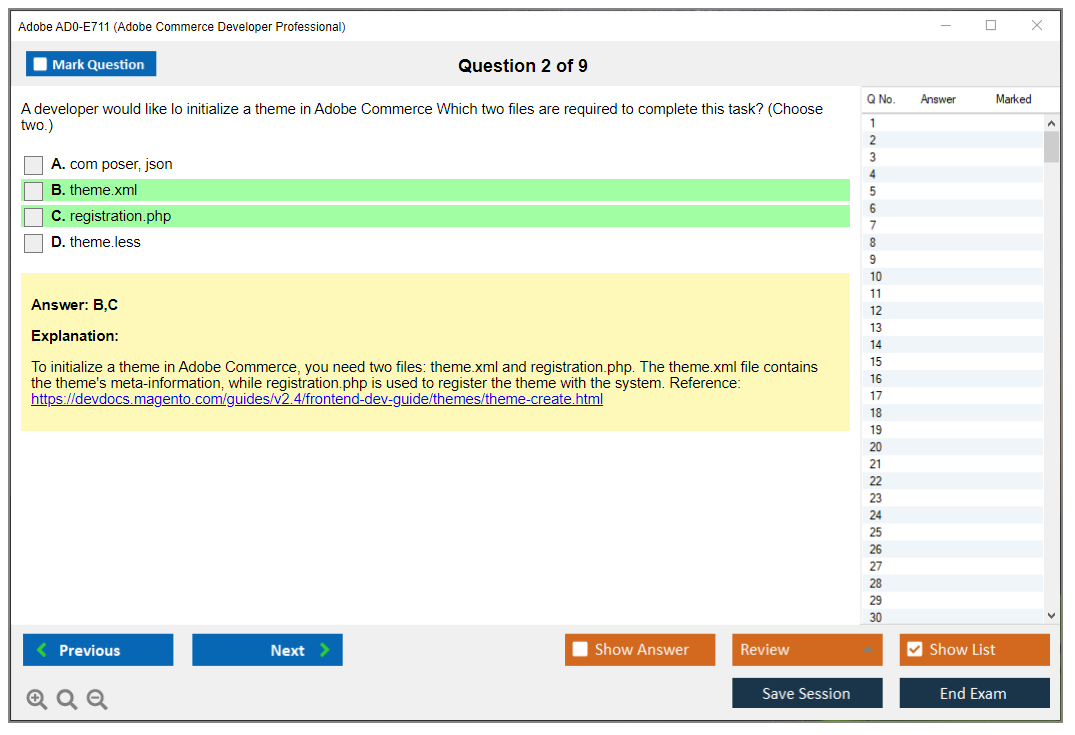
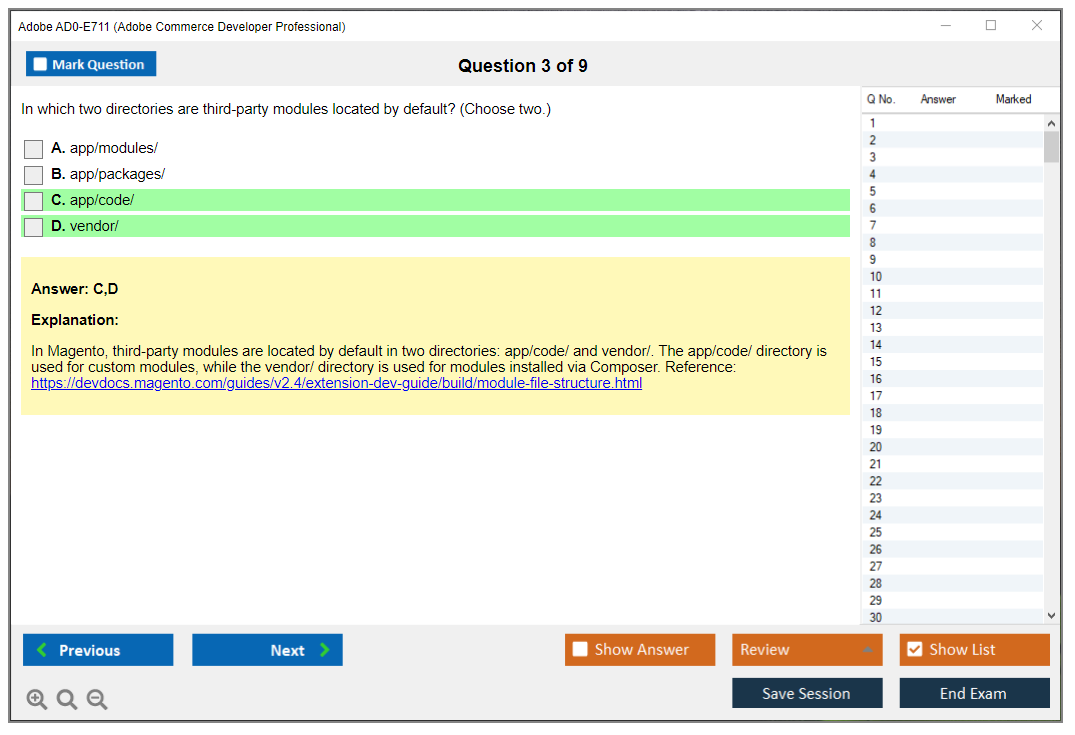
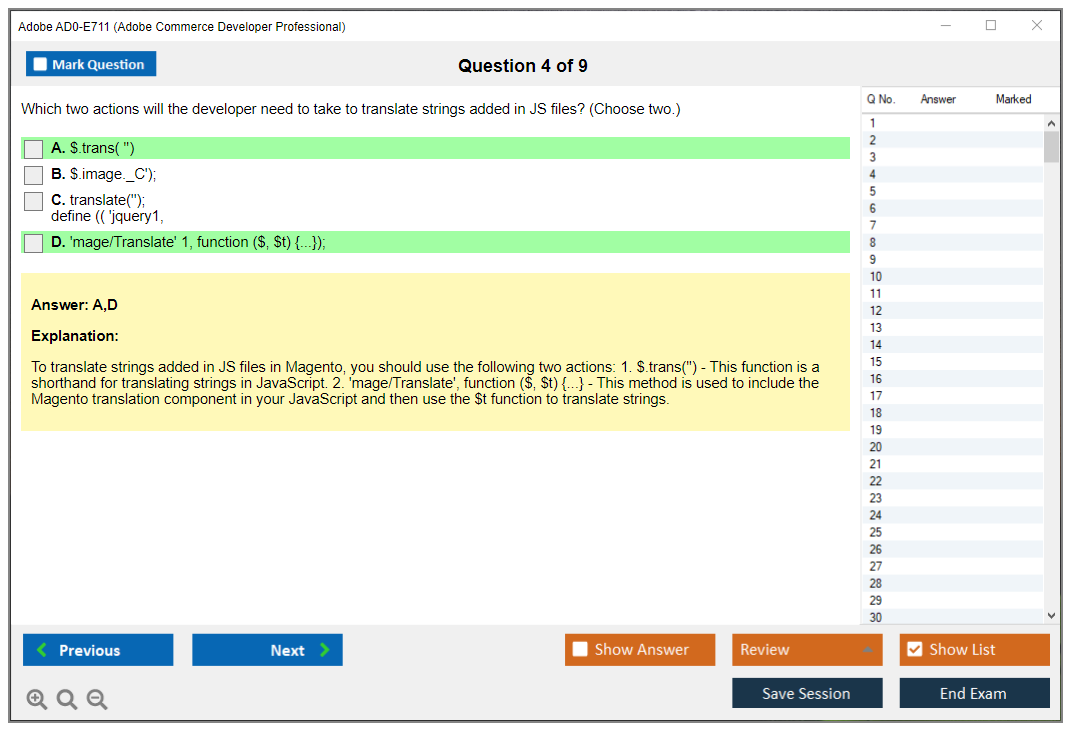
Proper prep changes the whole perception, especially with an AD0-E711 practice test routine that exposes weak domains early. If you want something structured, the AD0-E711 Practice Exam Questions Pack ($36.99) is a straightforward way to pressure-test your understanding, and it also helps you build pacing for 60 questions. I mean, you can read docs all week, but until you miss five DI questions in a row, you won't know what to fix. Wait, actually, that's where most people's "aha moment" happens. Use the AD0-E711 Practice Exam Questions Pack to identify gaps, then go build small labs to close them.
Strategies that work: hands-on lab work (write 3+ custom modules, seriously), code review practice (read core modules and trace DI), and systematic study of AD0-E711 study materials mapped to objectives. Familiarity with Adobe's documentation structure also helps because you start recognizing where concepts live and how Adobe phrases features. Weirdly matches how questions're written.
Quick answers people ask
Is the Adobe Commerce Developer Professional exam hard? Yes, unless you've got real dev time. What are the objectives covered in AD0-E711? Architecture, modules, DI/plugins/events, service contracts/APIs, database, performance/caching, security. How do I prepare and find practice tests? Use official docs plus targeted drills like an AD0-E711 Practice Exam Questions Pack, then build features that force DI, plugins, repositories, and API contracts. AD0-E711 prerequisites and renewal policy? Adobe lists recommended experience more than strict gates, and AD0-E711 renewal policy details depend on Adobe's current certification rules, so check your credential portal before you book.
AD0-E711 Exam Objectives and Domain Breakdown
Breaking down what Adobe actually tests
The AD0-E711 Adobe Commerce Developer Professional exam objectives split into six domains that mirror actual development scenarios. Adobe built this structure around real work, weighting domains based on what you encounter building and maintaining Commerce sites. Development grabs the biggest chunk at 38%, which tracks because that's where most of your time goes. Architecture and Data Management each take 18%, Performance claims 14%, and Security rounds it out with 12%.
Understanding this weighting matters. You can't just study what interests you.
Architecture and customization fundamentals (18%)
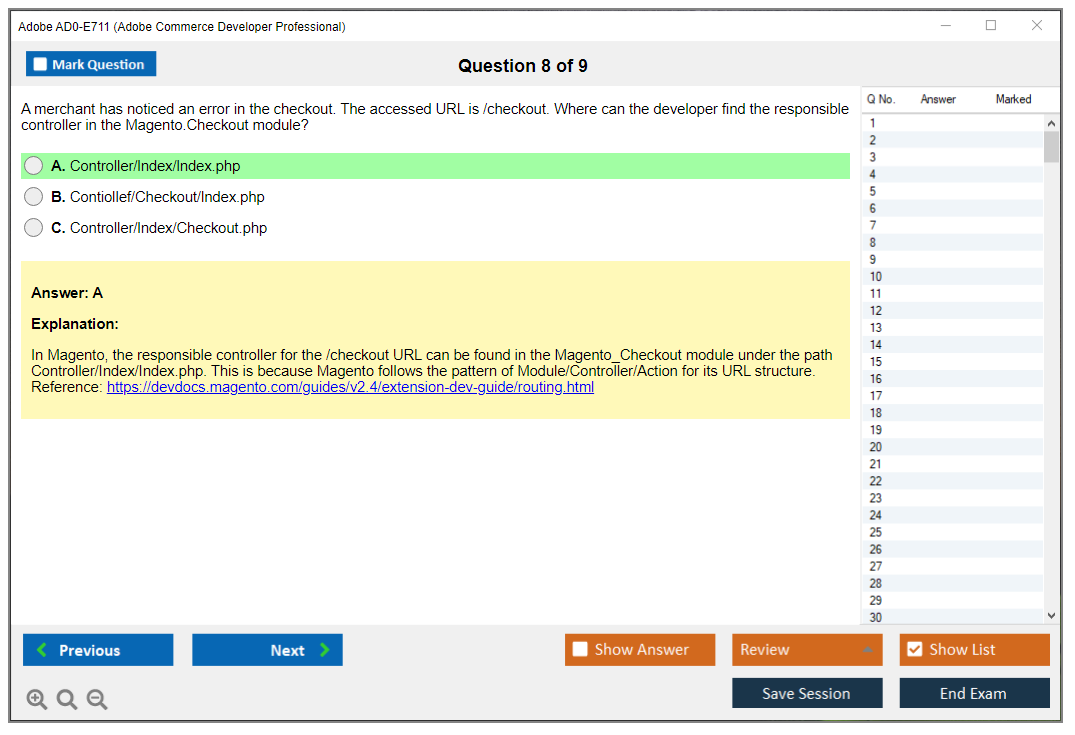
This domain covers how requests flow through Adobe Commerce, starting from index.php and moving through routing, controllers, layout XML, and finally rendering. You need module anatomy down cold: registration.php, module.xml, di.xml, and how configuration files interact across different scopes.
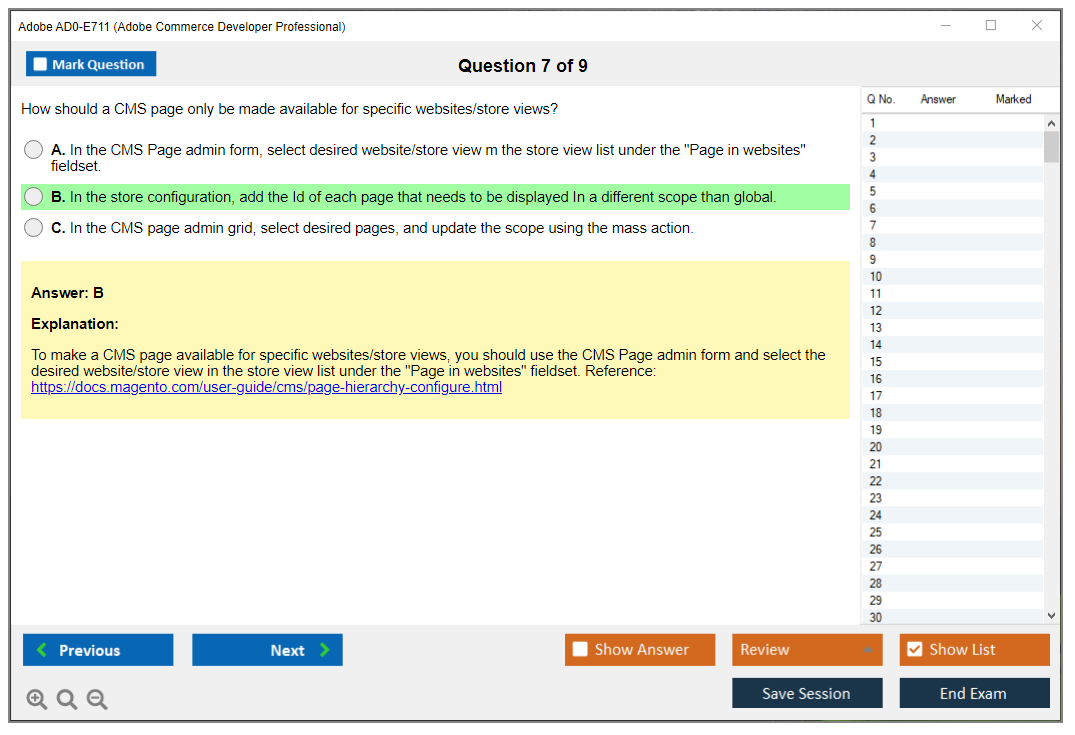
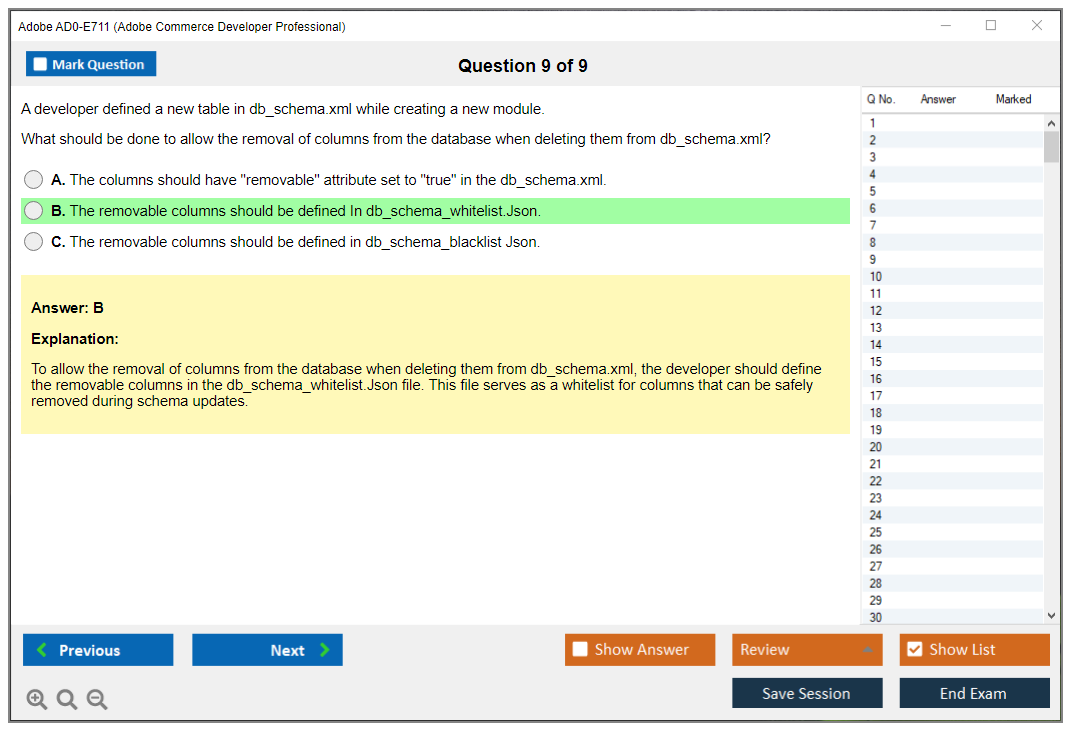
Declarative schema is huge here. You're expected to understand db_schema.xml for database modifications, plus the difference between data patches and schema patches, which gets confusing because both handle upgrades but in different ways depending on whether you're modifying structure or populating information. Configuration scope hierarchy (global, website, store, store view) determines how settings cascade, and this trips up developers coming from simpler platforms.
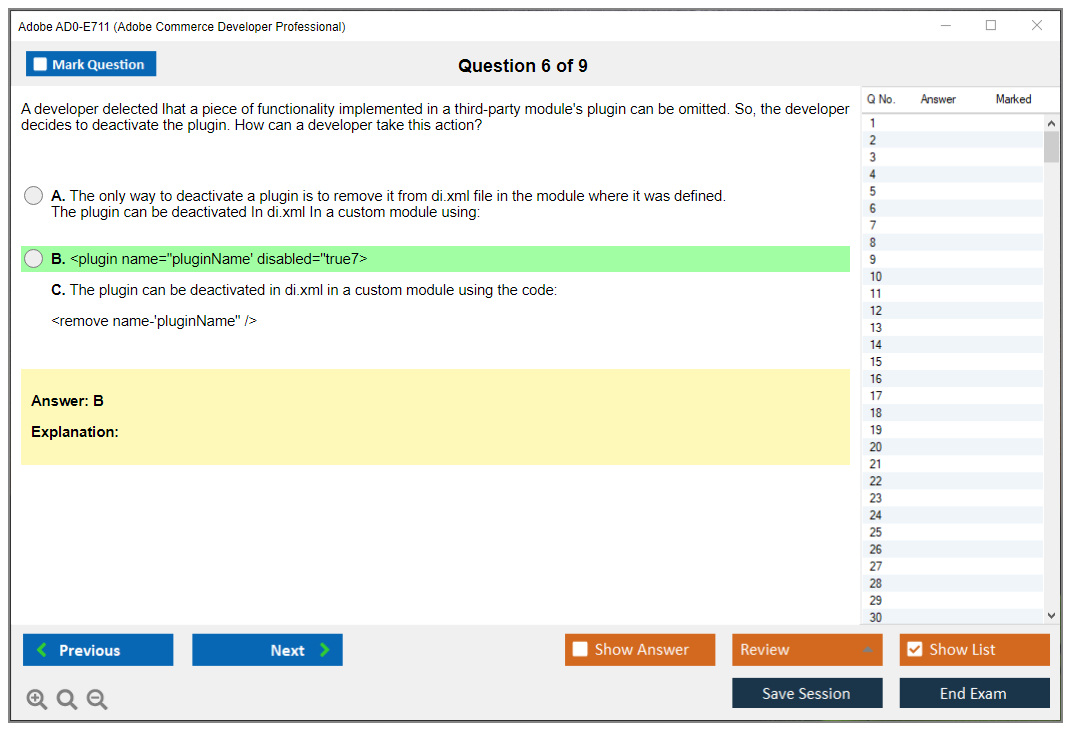
The plugin system deserves serious attention. Before, after, and around methods each have specific use cases, and you need to grasp sorting and prioritization when multiple plugins target the same method. Preferences replace entire classes, but knowing when to use plugins instead of preferences separates competent developers from those who create maintenance nightmares.
Dependency injection container configuration and constructor injection patterns are fundamental. Virtual types let you create variations without writing new classes, which is powerful when used correctly. The core principle? Extend and customize without touching vendor code.
Dependency injection deep dive (part of combined domains)
The di.xml structure appears everywhere in Adobe Commerce. Type configuration, preferences, plugins, virtual types - you configure it all here. Object Manager is an anti-pattern. Direct usage screams "I don't understand DI." Plugin method signatures must match specific requirements or interception fails silently, which is frustrating to debug.
Multiple plugins on the same method interact based on sorting order. Event dispatching with the event manager gives you another extension point, configured through events.xml. Choosing between plugins and observers depends on whether you need to modify data (plugins) or just react to actions (observers). Shared versus non-shared instances affect memory usage and object lifecycle. Not glamorous, but critical for performance.
I spent two days once tracking down a memory leak that turned out to be a shared instance where I needed a non-shared one. Sometimes the boring details matter most.
Service contracts and APIs (significant portion)
Understanding Magento 2 APIs and service contracts architecture defines professional-level development. The repository pattern abstracts data access. Data interfaces (ProductInterface, CustomerInterface, etc.) form API contracts that maintain backward compatibility. Search criteria builders and filter groups enable complex queries without writing raw SQL.
Extension attributes versus custom attributes confuses many developers. Extension attributes extend existing interfaces without database changes, while custom attributes store in EAV tables. Web API configuration in webapi.xml exposes functionality through REST and SOAP endpoints. Authentication methods (token-based, OAuth, session-based) each suit different integration scenarios.
Version management in API design prevents breaking changes that anger integration partners. Integration testing validates service contracts actually work as advertised, which the exam covers in practical scenarios.
Database and EAV model understanding
Declarative schema in db_schema.xml replaced the old migration scripts, and you need to know the syntax for table creation and modification. The EAV (Entity-Attribute-Value) model powers products, categories, and customers. Understanding when it's used, its advantages, and performance considerations is non-negotiable.
Flat tables and indexing improve EAV performance by denormalizing data. Collection classes and resource models handle database queries, but you should optimize by selecting only needed columns and filtering at the database level. Repository implementation patterns using search criteria keep you within service contract boundaries, which is the preferred approach now. Data patches populate or modify data during installation and upgrades. Understanding indexers and their relationship to database performance affects every custom module you build. Transaction handling prevents partial updates that corrupt data integrity.
Performance optimization strategies (14%)
Adobe Commerce performance and caching strategies span multiple cache types. Full-page cache mechanics and hole-punching for dynamic content within cached pages require careful planning. Varnish configuration basics matter because most production environments use it.
Block cache, layout cache, configuration cache - each serves specific purposes. Cache invalidation using cache tags provides granular control instead of flushing everything, which makes debugging easier when you're uncertain whether your code change should clear everything or just specific entries. Redis configuration for session storage, page cache, and backend cache appears in most professional deployments.
Indexer modes (update on save versus scheduled) dramatically impact performance. Cron job configuration handles background processing, but misconfigured cron causes mysterious performance issues. Database query optimization and identifying N+1 query problems separate slow sites from fast ones.
Production mode versus developer mode changes how Adobe Commerce handles caching, compilation, and error display. Profiling tools help identify bottlenecks that aren't obvious from symptoms.
Security practices that matter (12%)
ACL configuration in acl.xml controls admin resource access. Input validation and output escaping prevent XSS attacks. Basic stuff, but tested thoroughly. SQL injection prevention requires parameterized queries through proper repository usage. CSRF token validation protects forms and POST requests from cross-site attacks.
Content Security Policy configuration and whitelist management now handles inline scripts and external resources. Password hashing and customer data encryption protect sensitive information. Admin user roles and permissions follow least-privilege principles, which the exam tests through scenario questions.
If you're also looking at related Adobe certifications, the Adobe Commerce Business Practitioner Expert exam covers the business side of these same systems, while the Adobe Experience Platform Technical Foundations provides broader ecosystem context.
AD0-E711 Prerequisites and Recommended Experience
What Adobe actually requires
So here's the deal. Adobe doesn't list hard AD0-E711 prerequisites like "you must pass X first" or "you need Y years at a partner." That's the official vibe, honestly. No formal prerequisites, just recommended experience and a very clear expectation that you've touched real Adobe Commerce code and survived the chaos that comes with it.
That said, the AD0-E711 Adobe Commerce Developer Professional exam is not a PHP trivia quiz. It's a product exam. You're expected to know how Adobe Commerce behaves when you add a module, change DI, extend a service contract, or ship code that won't crater indexing and caching the moment it hits production. If you've only watched videos and never merged a PR? You'll feel it fast.
How much experience is "enough"
My honest recommendation is the common baseline: 6 to 12 months of hands-on Adobe Commerce backend development. Not "I installed it once." Actual work. Tickets. Bugs. Deploys. Those few scary moments where you're sweating bullets wondering if you broke the entire checkout flow.
Production context matters because the exam questions smell like real problems, and you only get that instinct after you've broken something and then fixed it properly, maybe late at night while questioning your career choices. I once spent four hours debugging a plugin conflict that turned out to be a single misplaced preference in di.xml. That kind of pain teaches you things no tutorial can.
Newer devs can still pass, sure. But you'll need to replace missing time with focused labs and good AD0-E711 study materials, plus repetition. Short bursts help. Daily practice helps more. Random weekend cram sessions? Not so much.
Core technical prerequisites (the stuff you can't fake)
Strong PHP is non-negotiable.
Think PHP 7.4+ and 8.x features. Types. Strictness. Constructor property promotion in 8.x. Reading code that assumes you know how modern PHP is written. If namespaces and autoloading still feel weird, pause and fix that before you book. Don't try winging it.
OOP proficiency matters a lot: classes, interfaces, inheritance, traits, namespaces. You'll see patterns everywhere. Factories, proxies, preference overrides, data interfaces. Fragments. Lots of them. They're baked into every corner of the framework.
Composer is also table stakes. You should be comfortable reading composer.json, understanding autoload rules, and knowing what happens when you add a package or patch. And you need MySQL/MariaDB skills beyond "SELECT *": writing queries, understanding table design, and having at least a basic grasp of indexing concepts, because Commerce performance and data access show up in subtle ways.
Tooling and workflow you should already have
CLI comfort is a big deal.
You should be able to run bin/magento commands without copying from a blog post, and understand what deployment procedures change between dev and production. Git experience is required in practice, even if Adobe doesn't call it a prerequisite. Branching. Resolving conflicts. Reviewing diffs. Collaboration stuff. The messy, real-world workflows that don't make it into the official docs but will absolutely trip you up if you've never dealt with them.
Linux/Unix command-line familiarity helps a ton too. Real deployments and debugging often happen there, not in a cozy IDE bubble. And yes, you should have a working dev environment: Docker, XAMPP, Warden, whatever. Just make it repeatable. If you can't rebuild your environment in an hour, you're going to waste time while studying.
Architecture knowledge that shows up everywhere
You need a working understanding of MVC.
Not the textbook definition. The request flow. Routing to controllers, blocks and view models, layout, templates, and where backend decisions surface in frontend output. You should be able to explain request flow out loud. If you can't, that's a gap. Actually, that's a huge gap that'll haunt you across multiple exam domains.
XML configuration skills are huge. Adobe Commerce is basically "XML plus DI plus conventions." You should be comfortable reading and writing multiple config types like di.xml, events.xml, routes.xml, webapi.xml, acl.xml, and system.xml. Also know the project structure and what belongs in app code versus the vendor directory organization.
JavaScript and RequireJS basics matter for integration points, not because this is a frontend exam, but because backend devs still touch UI components, requirejs-config, and admin behavior. Enough to not be lost when questions reference those layers.
Module work you should complete before booking
If you haven't built 2 to 3 custom modules from scratch, wait.
That's the fastest self-check I know. You want muscle memory for wiring controllers, models, and blocks, then extending core behavior with plugins and observers, and then doing clean data operations with repositories and service contracts like they're second nature, because exam scenarios move fast and you won't have time to look up syntax.
Do at least one deeper lab: implement declarative schema for a custom table, add an EAV attribute (product or customer), and then confirm it survives setup upgrade and behaves in admin. Also practice configuring dependency injection, including virtual types, because those questions show up in sneaky ways. Caching and indexing also matter. Configure and test different cache types, troubleshoot indexers, and understand what breaks when you deploy without warming things up.
ACL is another. Build a custom admin resource and lock it down properly. It feels annoying. It's worth it. Trust me on this one.
Quick checklist and smart prep options
Skills assessment checklist: can you explain request flow, create a plugin, implement a repository, configure DI?
If any answer is "kind of," do a gap analysis now, before you worry about AD0-E711 exam objectives, the AD0-E711 passing score, or the Adobe AD0-E711 exam cost. Sequence matters.
Formal education is optional here. Self-taught is fine. Training courses can substitute for some hands-on time, especially if they force you to build and debug, but they don't replace reading the actual Adobe Commerce codebase in vendor to learn patterns you're expected to recognize on exam day.
If you want structured drilling, a paid question pack can help you spot weak spots quickly. I've seen people pair labs with an AD0-E711 practice test style resource like this AD0-E711 Practice Exam Questions Pack to pressure-test timing and identify what to reread, and at $36.99 it's a cheaper feedback loop than failing and rebooking. Use it like a diagnostic, not a replacement for building. Then circle back later with the same AD0-E711 Practice Exam Questions Pack after you've patched the gaps and reworked your modules, because the second pass tells you if your fixes actually stuck.
Best AD0-E711 Study Materials and Resources
Finding quality AD0-E711 study materials feels overwhelming when you're staring down this certification. I've watched developers waste weeks on outdated resources or skip critical documentation sections entirely. Let me break down what actually works.
Start with Adobe's official exam guide
Your blueprint? The Adobe Commerce Developer Professional Exam Guide. Seriously. This PDF lists every single domain, every weighted topic, even sample question formats. People skip this and wonder why they fail sections they didn't know existed. I mean, it's right there in black and white. Download it first, print it, annotate it with checkmarks as you master each objective.
Adobe Experience League has learning paths built for AD0-E711 preparation, and honestly, they're free and surprisingly thorough. The courses walk through module development, dependency injection patterns, and service contracts with actual code examples you can run locally.
Documentation is your best friend (no really)
The official Adobe Commerce Developer Documentation at devdocs.magento.com is where you'll spend most of your prep time if you're serious. The Architecture and Customization section covers module structure, layout XML, and how everything fits together. Exam questions pull directly from these concepts, which makes sense when you think about it. The PHP Developer Guide goes deep on coding patterns, which you absolutely need for questions about plugins versus observers versus preferences.
Look, the Extension Developer Guide teaches marketplace-quality development. That's the standard Adobe tests against. Configuration files like di.xml, events.xml, webapi.xml? They're all explained here with examples that mirror exam scenarios.
API documentation shows up constantly. Service contracts, data interfaces, repositories. These aren't abstract concepts. They're testable patterns you'll encounter in real development work and definitely on the exam. The Testing guide covers unit tests and integration tests, which appear in at least 10-15% of questions based on what I've seen from candidates.
Performance best practices matter here. Security guidelines too. Caching strategies, indexing modes, ACL implementations. Skip these and you're guessing on critical questions.
Training courses worth your money (and some free ones)
Adobe-authorized training partners offer instructor-led courses that run $1,500-3,000, which yeah, is steep. But they include labs, real-time Q&A, and structured pacing. Adobe Digital Learning Services has paid options if you want official content with completion certificates.
For self-paced learning, Udemy and LinkedIn Learning have Adobe Commerce developer courses for $20-50. Quality varies wildly though. SwiftOtter and Mage2.tv are specialized Magento training providers. Their stuff is expensive but extremely focused on certification objectives.
Free Adobe Experience League courses cover fundamentals through advanced topics. I'd recommend this sequence: start with architecture fundamentals, move into module development patterns, tackle advanced topics like custom APIs and performance optimization, then finish with exam-specific prep courses that tie everything together. Most quality programs include hands-on labs where you actually build modules, which beats passive video watching by a mile.
I spent way too long once trying to memorize every XML node from videos before realizing I needed to just break things in a dev environment. That's when stuff clicked.
Community resources and real-world practice
GitHub repositories? Total goldmines for studying. Find well-written open-source extensions and analyze how they implement plugins, events, preferences. This shows you production-quality patterns that match exam expectations.
Magento Stack Exchange answers specific technical questions with code examples. I've seen exam topics discussed there with better explanations than official docs sometimes. Adobe Commerce community forums let you clarify confusing concepts with other developers.
Community Slack channels and Discord servers offer real-time help when you're stuck on a concept at 11 PM before your exam. The thing is, YouTube channels from experienced developers break down complex topics visually. Some people just learn better that way.
Technical blogs document real pitfalls. These often highlight exam-relevant scenarios based on actual client work.
Books and supplementary materials
"Magento 2 Developer's Guide" and similar texts provide structured learning if you prefer reading over videos. Third-party study guides for Adobe Commerce certification exist, though verify they're updated for current exam versions. Official Adobe whitepapers on architecture and performance add depth to documentation topics.
Get your hands dirty with actual development
Set up a local instance. Mandatory, honestly. Use the Open Source edition. This is required for real preparation, not just reading about abstract concepts. Docker-based environments like Mark Shust's docker-magento or Warden make setup painless. Install sample data so you have products, categories, customers to work with.
Build actual features from exam objectives. Create a custom module with dependency injection, add a plugin to modify core behavior, implement a REST API endpoint, build a custom indexer. This practical work cements concepts way better than reading ever could.
The AD0-E711 Practice Exam Questions Pack at $36.99 gives you realistic question formats and helps identify weak areas before you spend $125 on the actual exam. Practice tests show you where documentation study needs more focus.
If you're also eyeing other Adobe certifications, check out the AD0-E103 Adobe Experience Manager Developer or AD0-E213 Adobe Analytics Developer Professional exams. They share some foundational concepts with Commerce development.
Conclusion
Wrapping up your AD0-E711 prep path
Real talk here. The AD0-E711 Adobe Commerce Developer Professional exam? You can't just wing it after some random YouTube binge. It's testing actual Magento 2 backend chops.
I mean, honestly, you're gonna see questions on dependency injection, service contracts, database architecture. Stuff that demands genuine hands-on experience, not cramming facts the night before. The exam objectives? They cover module development all the way through performance optimization and Adobe Commerce APIs, and the thing is, if you haven't actually built custom modules or messed with plugins and observers in real-world projects, you'll hit a wall pretty quick. That said, the passing score's totally reachable if you've done the legwork. Most experienced devs who live in Adobe Commerce daily nail it first try, though newer folks sometimes need round two after spotting where they're shaky.
The Adobe AD0-E711 exam cost? Around $225. (Check Adobe's site because pricing shifts sometimes.) Not cheap, but honestly reasonable for professional certification that proves you've got legit skills. Prerequisites aren't exactly enforced, but c'mon, you really need six months minimum working with Adobe Commerce or Magento 2 before booking this thing. The renewal policy means staying current, so factor that into long-term plans.
Study materials matter. Like, way more than you'd think. The official Adobe exam guide gives you your blueprint, but you've gotta supplement with Adobe Commerce developer documentation, especially the modules and DI sections, Magento 2 APIs, caching strategies. Community resources? Super helpful. GitHub repos with sample modules are absolute gold for understanding patterns. Forums show what actually trips people up.
Practice tests, though? Not optional. You need question formats and gap identification before exam day hits. Working through Adobe Commerce backend development scenarios, testing your grasp of performance and caching concepts, building actual features in dev environments. That cements everything way better than.. what was I saying? Oh right, better than just passive reading. I once spent three days debugging a plugin conflict that turned out to be a two-line observer priority issue, and that kind of pain teaches you more than any study guide ever could.
Not gonna sugarcoat it: having quality AD0-E711 practice test materials makes a massive difference in confidence and prep efficiency. If you're serious about passing, check out the AD0-E711 Practice Exam Questions Pack because it's specifically designed mirroring actual exam format and covering all exam objectives thoroughly. Real preparation? It's testing yourself under realistic conditions, and that's exactly what solid practice questions deliver.
