

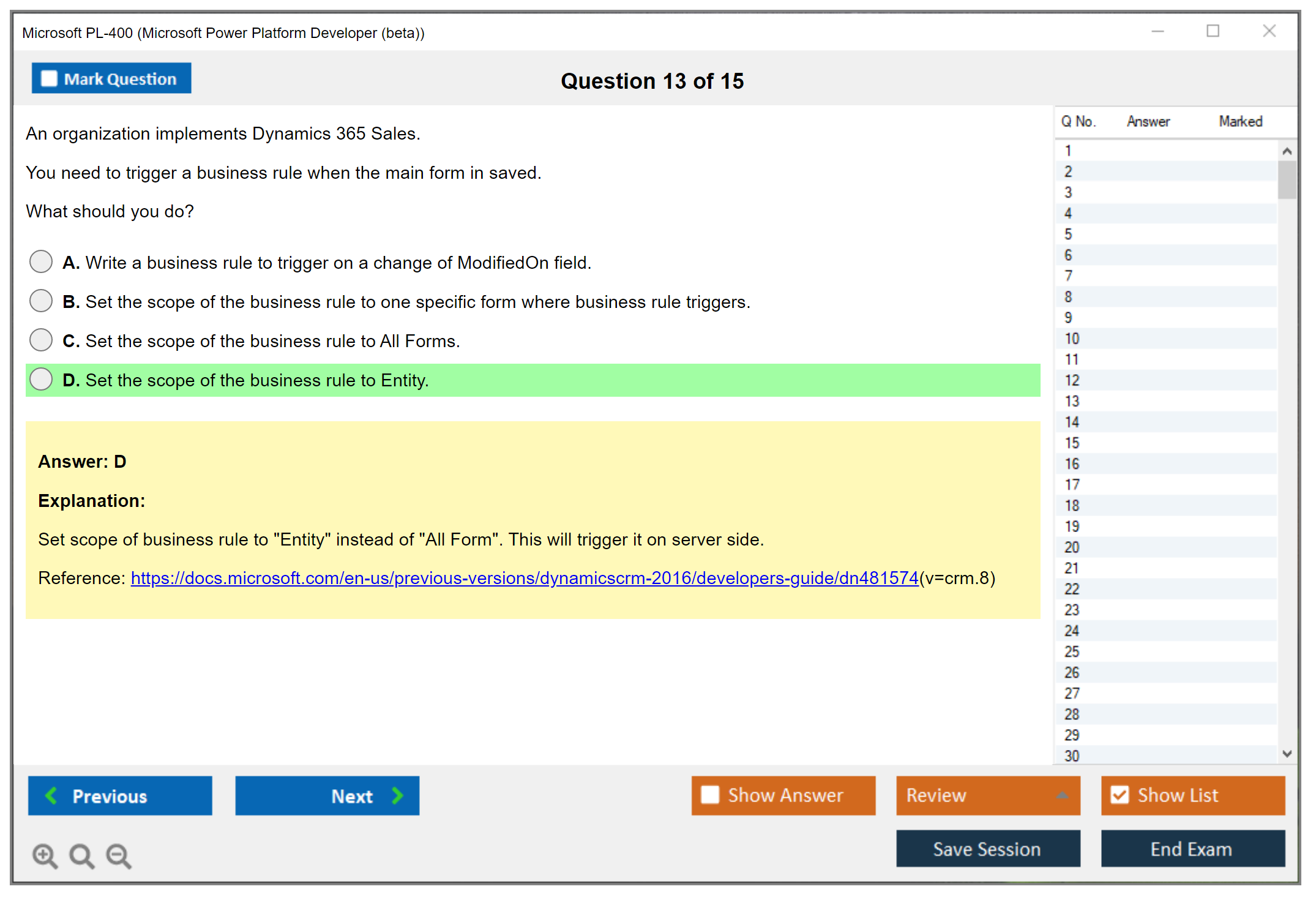
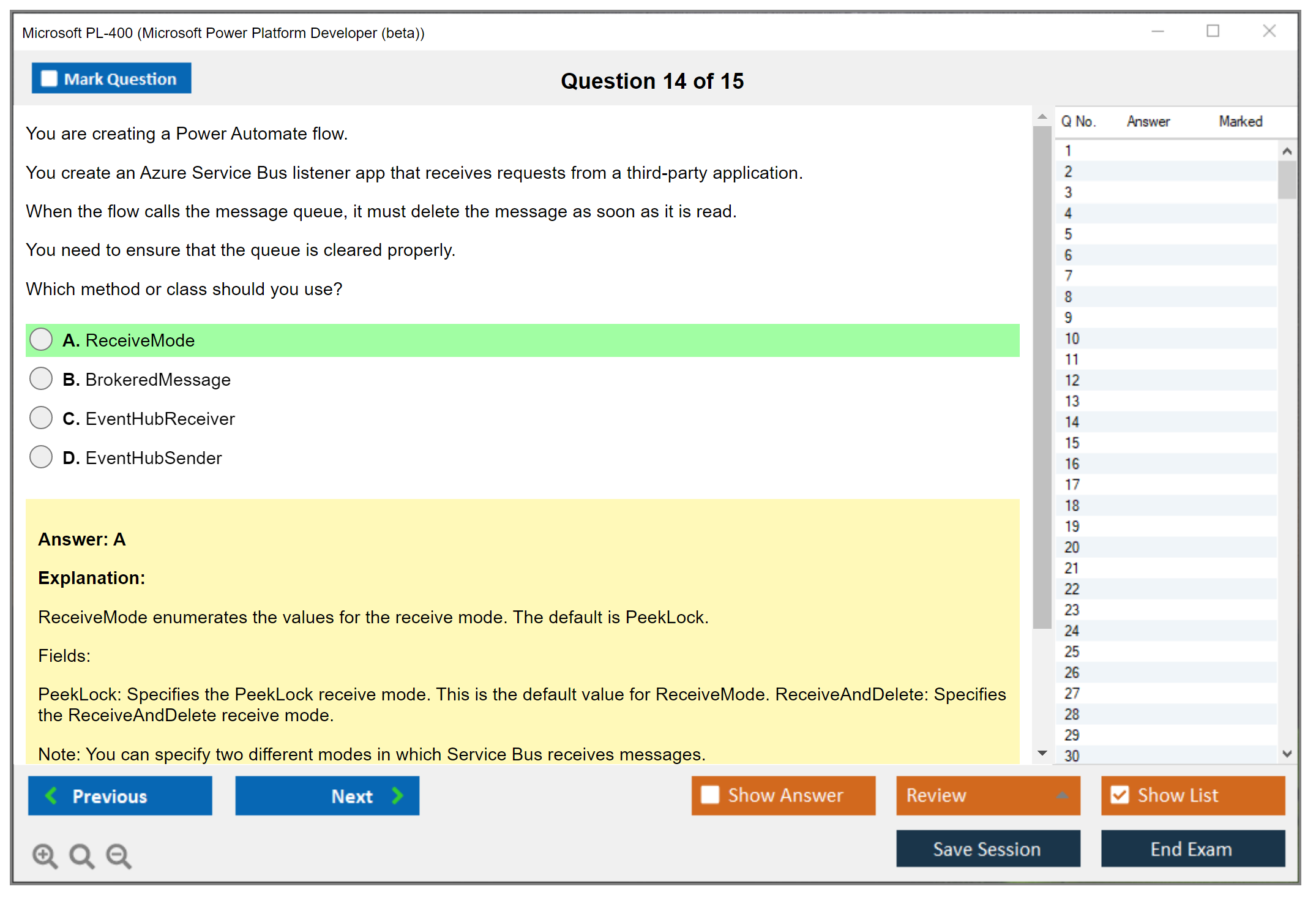
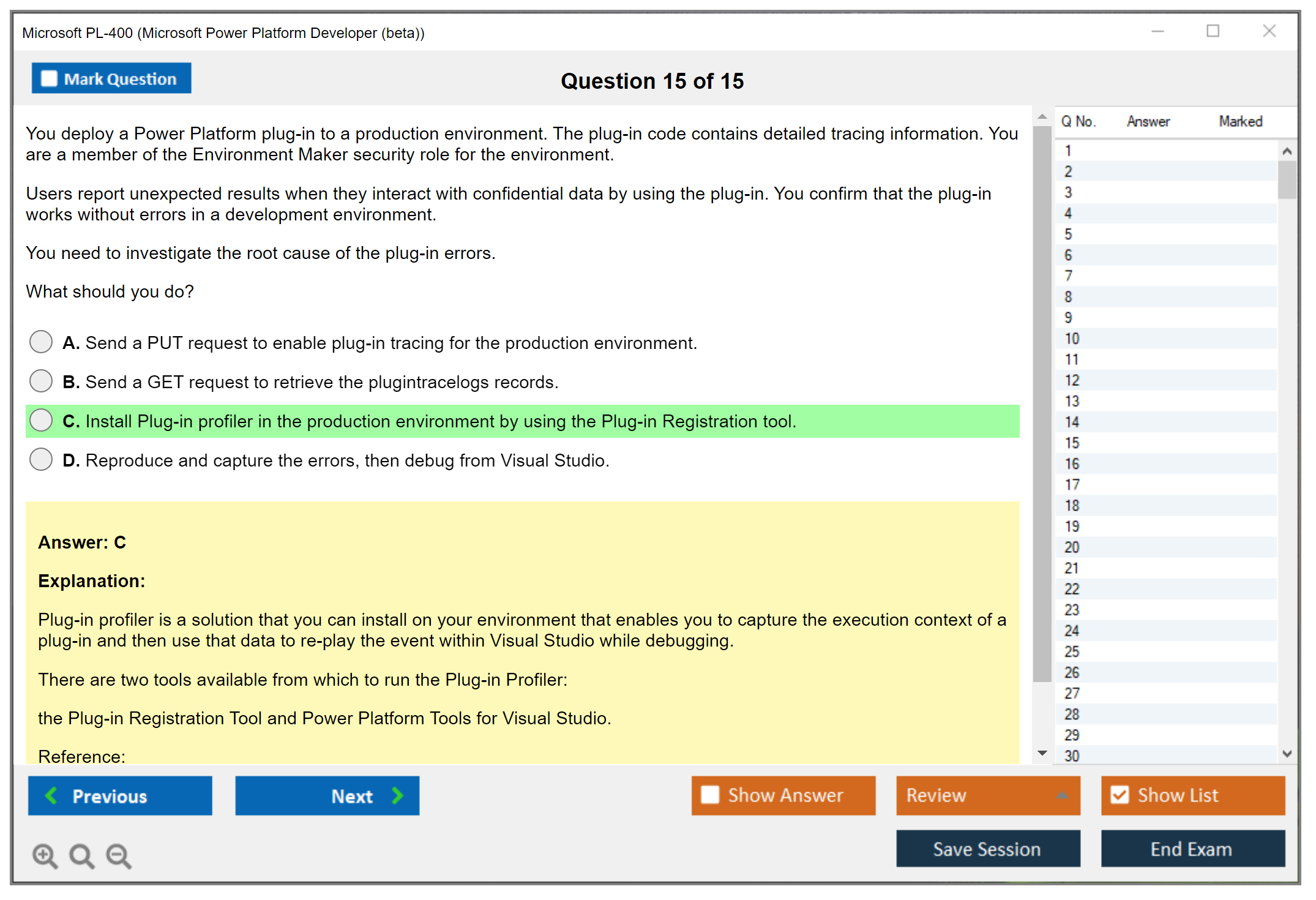
Microsoft PL-400 (Microsoft Power Platform Developer)
Microsoft PL-400 Certification Overview
What the Microsoft PL-400 certification validates
Okay, so here's the deal. The Microsoft PL-400 certification is basically Microsoft saying "yeah, you actually know how to build stuff on Power Platform, not just click through pre-built templates." Anyone can drag-drop controls. Sure. But this cert? It proves you understand the deeper technical side of things. Designing full solutions that actually scale, securing them properly, and troubleshooting when things inevitably break.
What makes PL-400 different from something like the PL-900 (Microsoft Power Platform Fundamentals) is the developer angle. You're expected to write code. Real code. JavaScript for client-side scripting, TypeScript for building Power Apps Component Framework controls, C# for plugins and custom workflow activities in Dataverse. it's about understanding what Power Platform can do. Honestly, it's about extending it when the out-of-box functionality hits its limits.
The exam tests your ability to configure Microsoft Dataverse at a technical level, which trips up tons of people. Security models, relationships, business rules, calculated fields.. there's a lot there. You also need to know both canvas apps and model-driven apps inside and out, including when to use which one. Spoiler: model-driven apps are way better for data-heavy enterprise scenarios, but nobody wants to hear that.
Core competencies assessed
Look, the PL-400 exam objectives break down into several major areas.
Technical design is huge. You need to understand solution architecture, not just "how do I make this button work." That means knowing when to use Power Automate cloud flows versus Power Automate Desktop flows. When a plugin makes more sense than a flow. How to structure solutions so they don't turn into unmaintainable messes six months later.
Dataverse configuration goes deep. You're configuring tables (they used to call them entities, old habits die hard), columns, relationships, business rules, security roles. All the stuff that makes enterprise data management actually work. This isn't beginner stuff.
Power Apps development covers both types. Canvas apps where you're building pixel-perfect UIs for specific scenarios. Model-driven apps where you're using Dataverse's data model to create database-driven applications that feel enterprise-grade. The exam will test you on customizing forms, views, charts, dashboards, commands. All of it.
Business process automation is where Power Automate comes in. Cloud flows, desktop flows, business process flows that guide users through multi-step processes. You need to know triggers, actions, conditions, error handling. How to integrate with external systems through connectors.
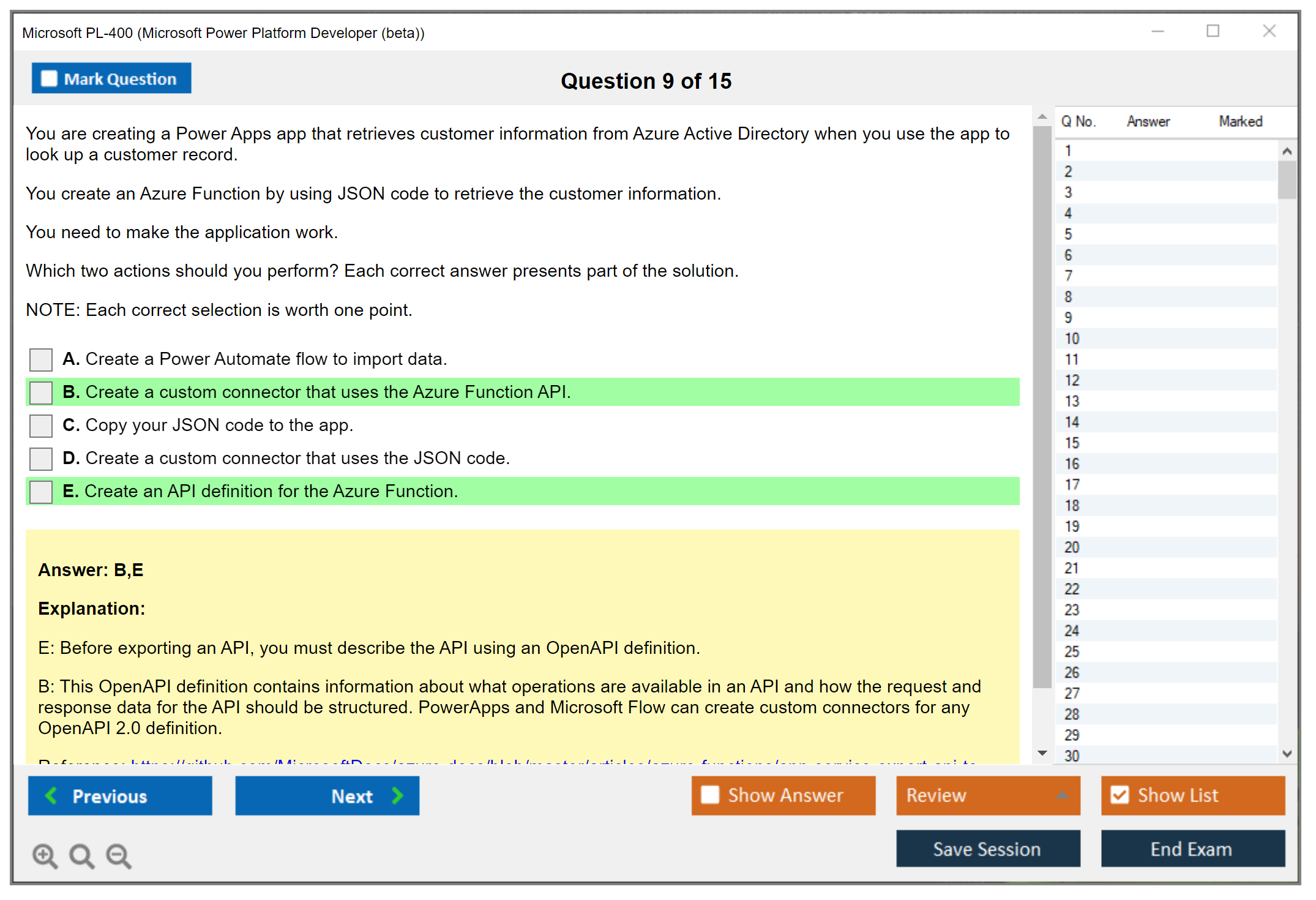
Extending the user experience? That means building custom components with PCF (Power Apps Component Framework). Writing client scripts that run in model-driven apps, maybe even building custom pages. Integration development covers APIs, both consuming them and creating them. Custom connectors, Azure Functions, Logic Apps. The whole integration ecosystem.
Application lifecycle management is probably the area most developers sleep on during prep, then get hammered on the exam. I mean, solutions, publishers, versioning, moving between environments, CI/CD pipelines. If you've never deployed a Power Platform solution through proper ALM processes, you're gonna struggle here.
Power Platform developer role definition
A Power Platform developer isn't a lone wolf.
You're working with business analysts who understand requirements. Solution architects who design the overall approach. Functional consultants like those who pass the PL-200 (Microsoft Power Platform Functional Consultant) exam, and administrators keeping everything running. Your job is implementing the technical pieces.
Sometimes that means building a custom connector so the business can integrate with that weird legacy system nobody wants to talk about. Sometimes it's creating a PCF control because the standard controls don't quite fit the UX requirements. Other times you're writing plugins to enforce complex business logic that can't be handled declaratively. Actually, my last project involved all three of those simultaneously, and the deadline kept getting moved up because of course it did.
The role requires understanding both the low-code/no-code capabilities and when to drop into pro-code. Not every problem needs code. But when it does, you need to know C#, understand asynchronous programming, handle errors properly, write performant queries against Dataverse.
Distinction from other Power Platform certifications
The PL-900 is fundamentals.
It's for anyone touching Power Platform. Sales people. Business users. Project managers. It's broad but shallow. The PL-200 is for functional consultants, people configuring Power Platform solutions but not necessarily writing custom code. They're building flows, apps, configuring Dataverse, but staying within the platform's native capabilities.
PL-400 is where developers live. If you're comfortable with Visual Studio, debugging code, understanding REST APIs, working with source control.. this is your cert. It assumes you can code and wants to validate you can apply those skills within Power Platform's ecosystem.
There's also the PL-600 (Microsoft Power Platform Solution Architect), which is more about designing solutions end-to-end, making architectural decisions, managing stakeholders. Different beast entirely. Expert-level, requires other certs as prerequisites.
Career validation and target audience
Honestly, the PL-400 certification demonstrates you can build real enterprise solutions, not just demos.
Organizations need people who can extend Power Platform when the business requirements get complex. Custom connectors to integrate with SAP. Plugins enforcing complex validation rules. PCF controls providing specialized UI components.
The target audience is professional developers. Maybe you're coming from a .NET background and want to specialize in Microsoft's low-code platform. Maybe you're a Dynamics 365 developer (like those with experience in MB-400 (Microsoft Power Apps + Dynamics 365 Developer)) expanding into the broader Power Platform. Full-stack developers working with Azure, Microsoft 365, and now adding Power Platform to their toolkit.
You should have experience with JavaScript, C#, TypeScript, or similar languages. Understanding of REST APIs, authentication (OAuth 2.0), asynchronous programming. The thing is, if terms like "promise," "async/await," and "dependency injection" make you go "huh?" you might want to build some foundational coding skills first.
Job roles benefiting from certification
Power Platform Developer is the obvious one.
But also Power Apps Developer specifically, Dynamics 365 Developer, Solutions Architect roles, Technical Consultant positions. Application Developer roles within organizations heavily invested in the Microsoft ecosystem.
The business value is clear. Companies can't always solve problems with out-of-box functionality. They need developers who can build custom connectors to integrate Power Platform with their existing systems. Create reusable components that teams across the organization can use. Implement complex business logic that goes beyond what flows and business rules can handle.
Organizations also need people who understand application lifecycle management for Power Platform. Moving solutions between dev, test, and production environments safely. Implementing source control for canvas apps. Setting up CI/CD pipelines using Azure DevOps or GitHub Actions.
Prerequisites and certification level
Technically, no prerequisites.
Microsoft won't stop you from registering for the exam tomorrow. Realistically? You need practical experience. I'd say at least six months working with Power Platform components, building real solutions, running into problems and solving them.
Programming fundamentals are essential. If you've never written code before, PL-400 will crush you. The exam assumes you understand programming concepts and tests whether you can apply them in Power Platform contexts. You should be comfortable with Dataverse. Have built both canvas and model-driven apps, created flows, maybe played with plugins or custom connectors.
This is an associate-level certification, which means intermediate to advanced technical knowledge. It's not entry-level like the AI-900 (Microsoft Azure AI Fundamentals), but it's not expert-level either. It validates you're a competent professional developer who can handle most scenarios independently.
The global recognition matters. Microsoft certifications work everywhere. You can take this cert to London, Singapore, Sydney, wherever. Organizations worldwide recognize it as validation of your technical capabilities.
Integration with Microsoft ecosystem and continuous learning
What makes PL-400 valuable? How Power Platform integrates with everything else Microsoft offers.
You're not learning an isolated platform. Power Platform connects to Azure services, Microsoft 365, Dynamics 365, third-party systems. Understanding these integrations is key. When to use Azure Functions versus Power Automate, how to use Microsoft Graph, integrating with systems like those managed by DP-300 (Administering Relational Databases on Microsoft Azure) certified professionals.
The certification demonstrates commitment to staying current. Power Platform changes constantly. New features every month. The renewal process (which happens annually through a free online assessment) makes sure you're keeping up with changes. It's not a one-and-done deal.
Not gonna lie, the exam is challenging. It's not something you pass by memorizing dumps. You need hands-on experience, understanding of architectural patterns, ability to troubleshoot real problems. But if you're serious about building a career around Power Platform development, PL-400 is the certification that proves you know your stuff.
PL-400 Exam Details and Logistics
microsoft PL-400 certification overview (power platform developer)
Microsoft PL-400 certification? It's the one that actually proves you can build on Power Platform, not just fumble around in Power Apps pretending you're "developing" something. The thing is, it's aimed at folks who can grab requirements, turn them into a proper technical design, and then ship a real solution with Dataverse development, Power Apps canvas and model-driven apps, Power Automate flows development, plus the whole Power Platform ALM and solutions story. Real work. Real consequences.
Look, this exam is for developers.
Not admins. Not analysts. Not "I watched a YouTube playlist".
If your day job includes plugins, custom connectors, PCF controls, solution layering, environment variables, and occasional pain with deployments, you're the target audience here. No question. If you're trying to break into that role, PL-400's also a legit signal, but honestly you'll want hands-on time first because the questions assume you've already hit those sharp edges and lived to tell about it.
what PL-400 validates (developer skills and role)
You're being tested on building, extending, and integrating Power Platform solutions in ways that actually matter in production environments. That means knowing when to use a Dataverse table versus an external data source. How security roles and business units affect what users can do. How to package things into solutions without breaking everything. How to extend model-driven apps with JavaScript or PCF when the built-in stuff isn't enough.
Also, integrations.
The exam loves integrations.
who should take PL-400 (target audience and job roles)
Power Platform developer, Dynamics 365 developer, "low-code" developer who got tired of pretending everything is low-code, app makers moving into dev responsibilities where the rubber meets the road. Consultants too, especially if you're the person who ends up fixing everyone else's environment mistakes at 2 AM.
PL-400 exam details
exam format and question types
PL-400 consists of 40-60 questions delivered in various formats. Multiple choice. Multiple select. Case studies. Drag-and-drop. Scenario-based questions that'll make you second-guess your life choices. That range matters because some versions feel short and sharp, others feel like you're grinding through scenario after scenario, and you've still got the same clock running either way.
Expect traditional multiple-choice questions. Best answer scenarios. Drag-and-drop matching exercises. Case study sections with multiple related questions piled on top of each other. Some items are "select all that apply" and yes, they can be brutal because one missed checkbox is still wrong.
No partial credit.
More on that later.
case study format
Some questions are grouped into case studies presenting business scenarios requiring analysis and solution recommendations based on provided information you'd better read carefully. You'll get a packet of details. Current environment, requirements, constraints, sometimes even security needs and ALM requirements. Then you answer multiple related questions based on that same scenario. Read the constraints. Seriously. The exam writers hide the "gotcha" in the part everyone skims, like "must support offline" or "data residency requirement" or "no premium connectors allowed" buried in paragraph three.
Actually, I once watched a colleague blow a case study because he assumed cloud flow meant they could use premium connectors. The constraint said otherwise, right there in the second paragraph. He was so focused on the technical solution he wanted to build that he missed what they were actually asking for. Happens more than you'd think.
active vs. inactive questions
Some questions are experimental and don't count toward your score, though they're indistinguishable from scored questions. Kind of annoying when you think about it. So if you hit a question that feels weirdly worded or oddly specific, don't spiral. Answer it like it counts, move on, and don't waste ten minutes arguing with the screen in your head.
PL-400 exam cost (pricing, regional variations, discounts)
PL-400 exam cost in the United States is typically $165 USD, give or take depending on when you're reading this. Costs vary by country and region based on local currency and market conditions, so don't assume your coworker in another country paid the same amount you did.
Regional pricing variations? They're real.
You'll often see pricing around £99 in the UK and €99 in Eurozone countries, plus adjusted pricing for emerging markets and developing economies where Microsoft and Pearson VUE set this stuff differently. And it changes, so check the official registration page when you're ready to schedule instead of trusting some Reddit comment from 2022.
Discount opportunities exist, but they're inconsistent at best. Students and educators sometimes get discounted exam vouchers. Microsoft Partner Network members may qualify for promos depending on what your org has access to. Also watch for event-based voucher codes, cloud skills challenges, and occasional training offers that pop up around big Microsoft events.
Bundle options pop up too. Microsoft occasionally offers training and certification bundles that include exam vouchers at reduced combined pricing, and if you were already going to pay for an instructor-led course or labs, the bundle can be a decent deal. Not always, though. Do the math.
PL-400 passing score (what it is and how scoring works)
PL-400 passing score is 700. Microsoft uses scaled scoring from 1-1000, with 700 as the passing threshold for PL-400, and that number is not negotiable no matter how nicely you ask.
Scaled scoring methodology means your raw score is converted to a scaled score to ensure consistency across different exam versions, accounting for difficulty variations between test forms. Translation: you can't compare your "I got 52 right" with someone else's exam because you don't know the weighting or how that particular form was scaled against the baseline.
Score interpretation is simple and unforgiving, honestly. Scores below 700 mean failure regardless of how close you got. Partial credit isn't awarded. There's no benefit to scores above 700 on your certificate. A 701 and a 950 both say "pass". That's it. No tiered recognition. No "passing with distinction" badge to show off.
Score reporting happens immediately, which is both a blessing and a curse. You receive an immediate pass/fail notification upon completion, with a detailed score report showing performance by objective domain. Helpful for retakes because it tells you what to fix instead of guessing what went wrong.
exam duration, language availability, and delivery options (online/in-person)
Candidates receive 120 minutes (2 hours) to complete all exam questions without interruption. With 40-60 questions, time management matters more than you'd think. I mean, you can't spend eight minutes debating one Dataverse security question and still expect to calmly finish a case study at the end without rushing.
A decent pacing rule? Aim for 2-3 minutes per question. Reserve time for review. Be extra careful on multi-part case study items because those are where people bleed time without noticing until it's too late.
Additional time considerations: non-native English speakers may request accommodations for extra time in certain regions, but don't assume it's automatic. Check the policy when you book.
Pre-exam procedures also eat time that catches people off guard. Allow 15 minutes before your scheduled time for check-in procedures, identity verification, and NDA acceptance that you can't skip. Online proctoring can take longer if your room scan or ID check gets picky about lighting or your webcam angle.
Language availability is primarily English, with potential availability in Japanese, Chinese (Simplified), Korean, German, French, Spanish, and Portuguese (Brazil) depending on demand and regional testing patterns. Availability changes, so verify at scheduling time.
Delivery method options: Pearson VUE test centers (in-person) or online proctored exams from your location, depending on what works for your situation.
Test center advantages include controlled environment, reliable technology, no home setup requirements, immediate technical support if something breaks. If your home internet is flaky or you have roommates, a test center is boring in the best way possible.
Online proctoring benefits include convenience, flexible scheduling, no travel required, comfortable home environment where you can wear sweatpants. But you need to be disciplined, because one notification sound or someone walking in can turn into a proctor interruption that derails your flow.
Online proctoring requirements are a stable internet connection, webcam, microphone, private quiet room, cleared workspace, and government-issued ID that matches your registration exactly. Do the system check. Actually do it, not the night before. Complete technical setup verification before exam day to avoid delays or rescheduling, because troubleshooting drivers while a proctor watches you is a special kind of stress nobody needs.
Scheduling flexibility is solid overall. Exams are available year-round with varying time slots depending on location and delivery method you choose. Rescheduling policies are strict though: cancel or reschedule at least 24 hours before your appointment to avoid forfeiture of the exam fee, which hurts.
PL-400 exam objectives (skills measured)
PL-400 exam objectives cover the full build-and-ship cycle from start to finish. Create a technical design. Configure Microsoft Dataverse. Create and configure Power Apps. Configure business process automation (Power Automate). Extend the user experience (PCF, client scripting, integrations). Develop integrations (APIs, connectors, Azure services). Manage solutions and application lifecycle (ALM).
The exam tends to reward people who've shipped solutions through environments in real projects, because Power Platform ALM and solutions is where theory meets pain: unmanaged versus managed, patches versus upgrades, environment variables, connection references, and what breaks when you move things between dev and production.
PL-400 prerequisites and recommended experience
PL-400 prerequisites (official vs recommended)
PL-400 prerequisites aren't hardcore on paper if you read the official requirements, but the exam assumes you know your way around the platform already. Officially, Microsoft positions it for developers with some background. Practically, you want experience building apps, automations, and Dataverse components, plus familiarity with the extension points where low-code ends and actual code begins.
helpful background
Dataverse development helps a lot. Security roles, relationships, and business rules trip people up. Power Apps canvas and model-driven apps both show up heavily. Power Automate flows development is all over scenario questions. Azure knowledge helps for integrations with external services. JavaScript is common for client scripting. C# shows up if you're thinking about plugins and custom APIs, though not as deep as you might fear.
PL-400 difficulty: what to expect
PL-400 difficulty depends on where you're starting from, honestly. Beginners can pass with enough study time, but it's not a friendly first certification because it expects you to reason like a builder, not memorize menus. The case studies will punish shallow knowledge when they ask what you'd do given constraints like ALM rules, licensing limits, or security boundaries that force you to pick between two seemingly valid approaches.
Common challenging areas include Dataverse security, ALM, integrations, PCF. Basically anything where Microsoft's documentation gets vague or contradicts itself depending on which page you're reading.
Also, the "best answer" questions where two options feel right but one aligns better with Microsoft's recommended approach that you were supposed to just know.
best PL-400 study materials (official + third-party)
PL-400 study materials should start with Microsoft Learn, then branch into docs when Learn gets vague or skips important details. Prioritize Dataverse docs, model-driven app behavior, Power Automate connector behavior, and solution/ALM documentation that explains what actually happens during deployments. Community blogs and GitHub samples help for PCF and integration examples, but don't treat random dumps as gospel. Some are outdated or just wrong.
PL-400 practice tests and exam prep strategy
PL-400 practice tests are useful if they're realistic and current, which is a big if. Bad ones teach you wrong patterns that'll hurt you on exam day. I like using practice questions to find weak spots, then going back to docs and building a tiny proof-of-concept, because hands-on practice sticks when the exam throws a scenario at you with constraints you need to work around.
Build stuff.
A small model-driven app with security roles. A plugin or custom API. A flow with error handling. Package it into solutions and move it between environments. That loop is basically the exam in practical form.
Exam-day strategy: don't get stuck on any single question. Mark for review, keep moving, and come back if time allows. Case studies can eat your lunch if you rush the reading, but also if you overthink every line looking for tricks that aren't there.
retakes, waiting periods, and payment
Exam retake policy is strict and expensive. Failed attempts require waiting periods: 24 hours for second attempt, 14 days for subsequent attempts. Full payment for each retake. So yeah, failing is expensive and slow, which is frustrating. Treat the first attempt like it matters, because it does.
renewal and maintaining your certification
PL-400 renewal process (Microsoft renewal assessment overview)
PL-400 renewal is handled through Microsoft's renewal assessment process on Microsoft Learn for role-based certifications, not by paying for the full exam again. Which is nice. It's shorter, online, and focused on what changed in the platform since you originally certified.
renewal timeline and staying current
Renewal is typically annual, though Microsoft adjusts this sometimes. Keep an eye on skills updates, especially around Dataverse features, solution deployment changes, and new Power Platform capabilities that roll out constantly. Microsoft updates PL-400 exam objectives over time and your day job might not cover the newest pieces if you're maintaining older solutions.
FAQs (people also ask)
how much does the PL-400 exam cost?
PL-400 exam cost is usually $165 USD in the US, with regional pricing like £99 (UK) and €99 (Eurozone) common, plus discounts sometimes for students, educators, and partners who qualify through specific programs.
what is the passing score for Microsoft PL-400?
PL-400 passing score is 700 on a scaled score from 1-1000, period.
is PL-400 difficult for beginners?
Yes, if you're brand new to the platform. It's doable, but you'll need hands-on time with Dataverse development, Power Apps canvas and model-driven apps, Power Automate flows development, and Power Platform ALM and solutions, not just reading study guides and watching videos.
what are the main objectives covered in PL-400?
PL-400 exam objectives include technical design, Dataverse configuration, app creation, automation, extending the UX (PCF and scripting), integrations with external systems, and ALM with solutions across environments.
how do you renew the PL-400 certification?
PL-400 renewal is done via the online renewal assessment on Microsoft Learn, typically yearly, assuming the certification is still active and within the renewal window Microsoft gives you.
PL-400 Exam Objectives and Skills Measured
What PL-400 actually tests and why it's organized this way
Microsoft breaks down the PL-400 exam objectives into distinct skill areas because the Power Platform developer role is absolutely massive. You're not just building apps. You're designing architectures, configuring Dataverse, automating processes, extending functionality with code, integrating external systems, and managing the entire application lifecycle. Each domain gets weighted differently on the exam. Some areas hit you with more questions than others, which tells you where Microsoft thinks you should spend your study time.
As of 2026, the exam structure covers technical design, Dataverse configuration, Power Apps development, business process automation, user experience extensions, integrations, and application lifecycle management. That's a lot.
The weighting distribution matters. Not all topics are created equal here. Some domains might represent 25% of your exam questions while others only show up in 10-15% of questions. You could spend weeks mastering PCF component development only to get three questions on it, while Dataverse security and ALM concepts might dominate a quarter of your exam. Understanding these weights helps you prioritize what deserves deep study versus what needs basic familiarity.
Microsoft updates these objectives regularly, usually every few months, to keep pace with new Power Platform features and changing industry practices. What was relevant six months ago might not reflect current product capabilities, so always check the official exam page before you start studying. New connectors get added. Features get deprecated. Best practices evolve.
Breaking down technical design and solution architecture
Solution architecture planning is where you prove you can actually think like a developer, not just click through wizards. You need to analyze business requirements (those vague requests from stakeholders who "just want an app") and translate them into concrete technical specifications. This means understanding data models, security requirements, integration points, performance needs, and licensing implications before writing a single line of code.
Component selection tests whether you know when to use canvas apps versus model-driven apps versus portals versus Power Pages. Each has strengths and limitations. Canvas apps give you pixel-perfect control but require more manual work for enterprise-scale data operations. Model-driven apps handle complex data relationships beautifully but offer less UI flexibility. Making the wrong choice early can doom a project.
Data model design in Dataverse goes beyond just creating tables. You're designing entity relationships with appropriate cardinality, choosing column types that balance functionality with performance, and configuring relationship behaviors that cascade correctly. A poorly designed data model causes problems that haunt you forever. Performance issues, data integrity nightmares, maintenance headaches that never quit.
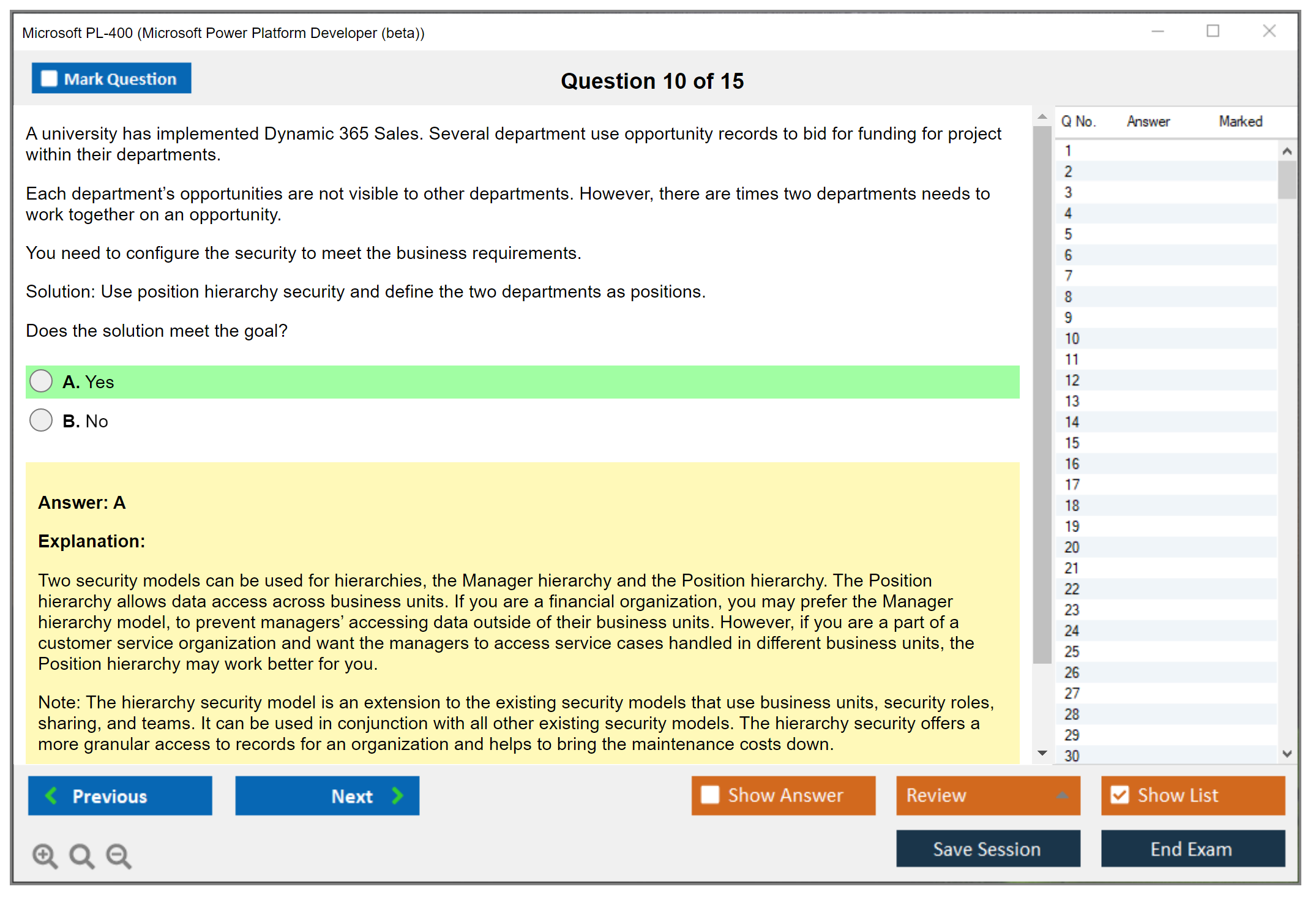
Security architecture planning requires understanding the entire security model: business units for organizational hierarchy, security roles for access control, field-level security for sensitive data, hierarchical security for manager-subordinate scenarios. You also need to factor in how security decisions impact user experience and performance. Overly restrictive security frustrates users. Too permissive creates compliance risks.
Integration strategy means identifying where your Power Platform solution connects to external systems, which APIs you'll consume, whether Azure services make sense, and how third-party applications fit in. Not every integration problem needs a custom solution. Sometimes a standard connector handles it, sometimes you need Azure API Management, sometimes a simple webhook works fine.
Performance considerations and licensing implications often get ignored until it's too late. Design choices affect how many API calls you make, how much Dataverse storage you consume, whether users need premium licenses. A solution that works great in testing might collapse under production load or blow the budget with unexpected licensing costs. I once saw a project get killed three months in because nobody calculated that each user would need a $40/month premium license. That's the kind of oversight that gets consultants fired.
Dataverse configuration fundamentals
Table creation and configuration forms the foundation of most Power Platform solutions. You're creating tables with appropriate columns, setting up relationships between tables, defining business rules, configuring table properties like ownership and auditing. This isn't just database design. Dataverse tables include metadata that drives UI behavior, security, and integration capabilities.
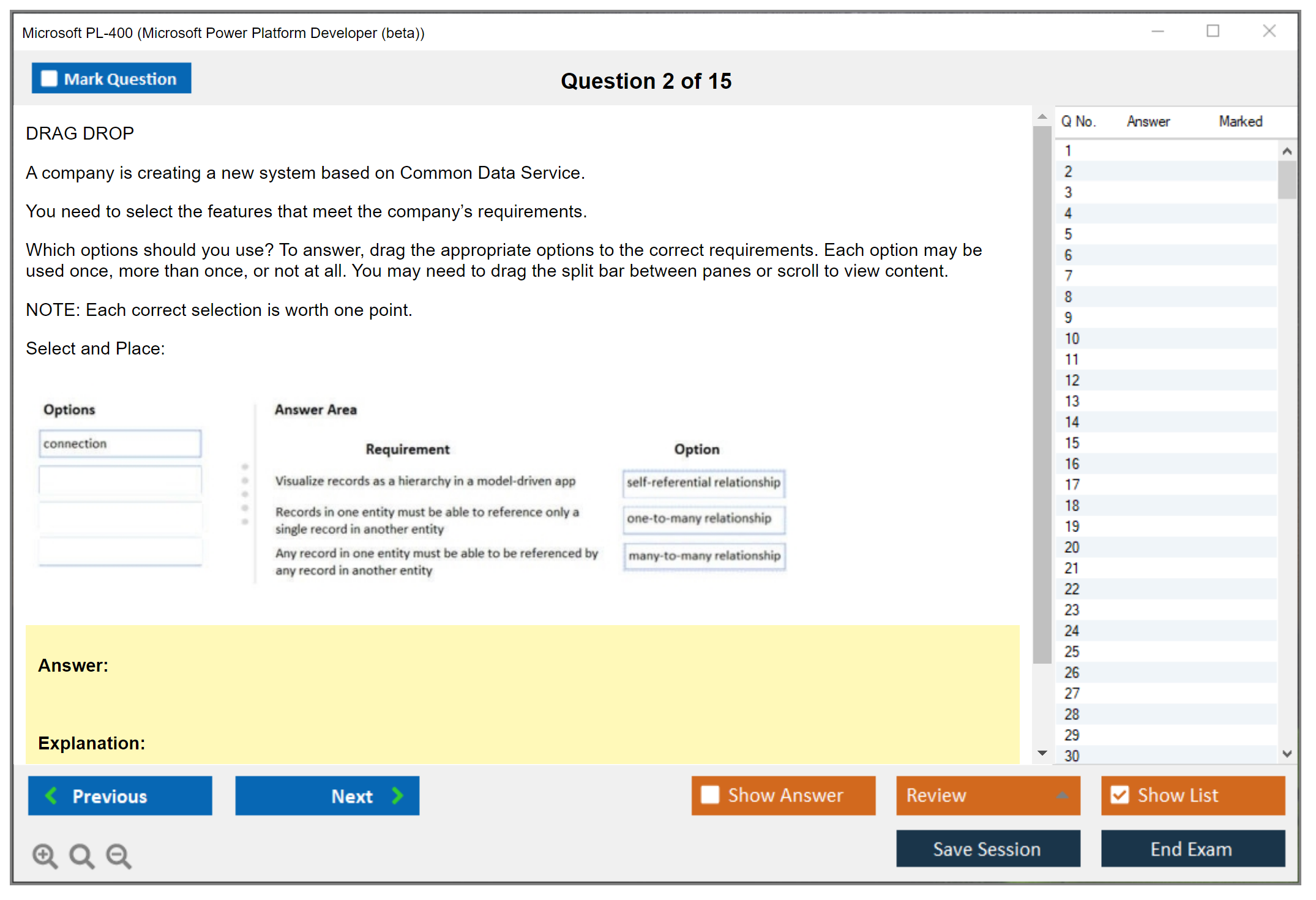
Relationship types get complicated fast. One-to-many relationships are straightforward, but many-to-many relationships require understanding how Dataverse creates and manages intersection tables. Relationship behaviors (whether deletes cascade or get restricted, whether assignments cascade to related records) affect data integrity and user workflows.
Column types include text, number, choice (option sets), lookup, calculated, and rollup among others. Calculated columns perform real-time calculations using formulas, which is great for derived values but can impact performance. Rollup columns aggregate data from related records, but they calculate asynchronously and have limitations on how deeply they can traverse relationships.
Business rules let you implement validation, set default values, and control field visibility without writing JavaScript. They're client-side, so they provide immediate feedback, but they only work in certain contexts (model-driven app forms, not canvas apps). Knowing when business rules suffice versus when you need code separates beginners from experienced developers.
Data import and migration scenarios come up constantly in real projects. The Data Import Wizard handles basic CSV imports, Power Query provides more sophisticated ETL capabilities, and Azure Data Factory handles enterprise-scale migrations. Each tool has different strengths and limitations regarding data volume, transformation complexity, and error handling.
Security configuration in Dataverse involves security roles that grant create/read/write/delete/append/append-to privileges at various organizational scopes. Column security profiles protect sensitive fields. Hierarchy security lets managers see subordinates' records. Getting security wrong means either users can't do their jobs or they see data they shouldn't.
Power Apps development and customization
Canvas app development requires mastering Power Fx formulas, which look deceptively simple but get complex quickly when you're managing collections, variables, context variables, and data sources. You need to understand delegation, how certain formulas push processing to the data source versus pulling all records locally, which kills performance with large datasets.
Model-driven app creation focuses on configuration more than coding. You design site maps for navigation, customize forms with sections and tabs, create views that filter and sort data appropriately, build charts and dashboards for data visualization, and configure business process flows that guide users through multi-stage processes.
Form customization extends beyond dragging fields onto a form. You're implementing business rules for client-side logic, writing JavaScript for complex scenarios, controlling form behavior based on user roles or data values, and creating responsive layouts that work on desktop and mobile.
The Power Apps Component Framework (PCF) lets you build custom controls when standard controls don't meet requirements. Understanding when PCF makes sense (and when it's overkill) matters. Building a custom slider control might take hours when configuring a standard control would take minutes. But for truly unique requirements like specialized data visualizations or third-party library integrations, PCF is essential.
Responsive design means your apps work on phones, tablets, and desktops without separate versions. Canvas apps need explicit responsive design using containers and flexible layouts. Model-driven apps handle this more automatically but you still need to test how forms render on mobile.
App performance optimization requires understanding delegation, minimizing data calls, using concurrent functions where appropriate, avoiding unnecessary collections, and keeping formulas efficient. A canvas app that works fine with 50 records might crawl with 5,000 if you haven't designed for delegation.
Business process automation with Power Automate
Power Automate cloud flows come in three main types: automated flows triggered by events like new records or file uploads, instant flows triggered manually by users, and scheduled flows that run on a timer. Each serves different automation scenarios, and choosing the right trigger type matters.
Business process flows create guided experiences that span multiple tables and enforce stage progression. They're perfect for processes like lead-to-opportunity conversion or employee onboarding where you need users to complete specific steps in order.
Flow actions and connectors provide the building blocks for automation. Standard connectors are included with most licenses, premium connectors require premium licensing. You're constantly choosing between built-in actions, connector-specific actions, and HTTP actions for custom API calls.
Expressions and dynamic content let you transform data, implement conditional logic, parse JSON, format dates, and manipulate strings. The expression language borrows from Azure Logic Apps and requires learning functions like if(), concat(), formatDateTime(), and json().
Error handling separates production-ready flows from quick hacks. You implement try-catch patterns using scope actions and configure run-after settings, set retry policies for transient failures, and handle exceptions gracefully with logging and notifications instead of just failing silently.
Child flows promote reusability by letting you create modular flow components that can be called from multiple parent flows. This is huge for maintainability. Update the child flow once instead of updating ten separate flows with duplicated logic.
Extending user experience and developing integrations
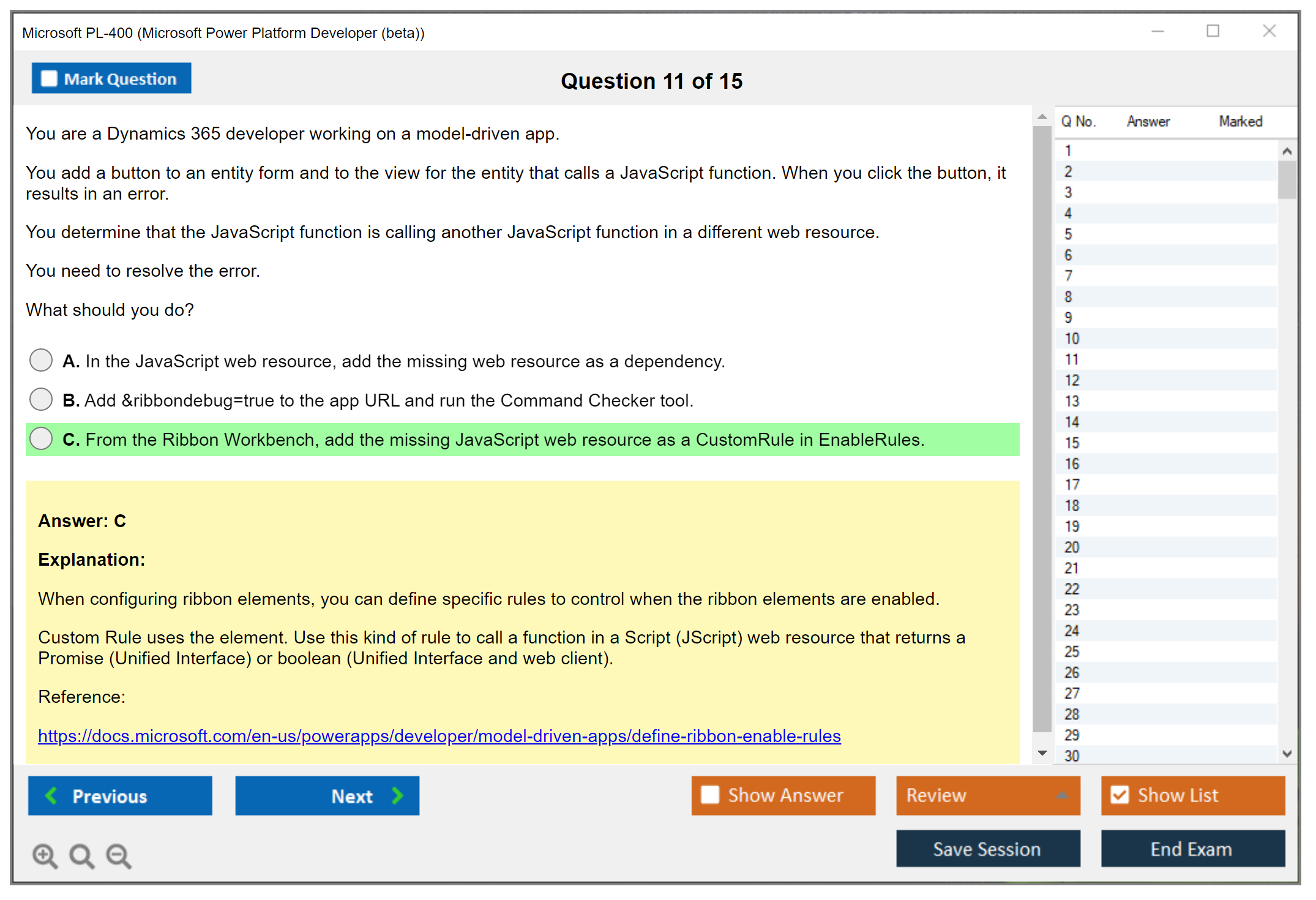
Client-side scripting with JavaScript handles scenarios that business rules can't cover in model-driven apps. You're writing event handlers for form OnLoad, field OnChange, and form OnSave events. You're using the Client API to manipulate form data, control UI elements, and call web services.
The Xrm.WebApi provides methods for CRUD operations against Dataverse from client-side code. Xrm.Navigation handles opening forms, dialogs, and URLs. These APIs let you build sophisticated client-side experiences without full postbacks.
PCF development requires TypeScript skills, understanding of the component lifecycle (init, updateView, getOutputs, destroy), and often integration with frameworks like React. You're building controls that can be used in canvas apps, model-driven apps, and Power Pages.
Custom pages in model-driven apps blur the line between model-driven and canvas apps by letting you embed canvas app capabilities into model-driven app navigation. It's perfect when you need pixel-perfect layouts or specific controls that model-driven forms don't support.
Integration scenarios dominate real-world Power Platform implementations. You're building custom connectors for APIs that don't have standard connectors, using the Dataverse Web API for programmatic data access, implementing OAuth authentication flows, and registering webhooks for real-time event notifications.
Azure service integration brings enterprise capabilities like Azure Functions for serverless computing, Logic Apps for complex orchestrations, Service Bus for reliable messaging, and Event Grid for event-driven architectures. Knowing when to keep logic in Power Platform versus pushing it to Azure requires understanding both platforms' strengths.
If you're serious about passing PL-400 on your first attempt, the PL-400 Practice Exam Questions Pack for $36.99 gives you realistic practice questions that mirror the actual exam format and difficulty. Look I've seen too many people fail because they studied concepts but never practiced exam-style questions with tricky scenario-based wording.
Application lifecycle management and solution management
Solution concepts form the backbone of Power Platform ALM. Unmanaged solutions are for development, you can modify components freely. Managed solutions are for distribution to higher environments, they're sealed and prevent direct modification. Understanding solution layers, how customizations stack, and how dependencies work prevents deployment nightmares.
Environment strategy typically involves separate development, test, UAT, and production environments. Some organizations add hotfix environments or personal developer environments. Each environment needs appropriate security, data, and licensing.
Source control integration with Azure DevOps or GitHub brings version control to Power Platform solutions. You export solutions as unmanaged, break down them into individual component files, commit to source control, and merge changes from multiple developers. It's essential for team development.
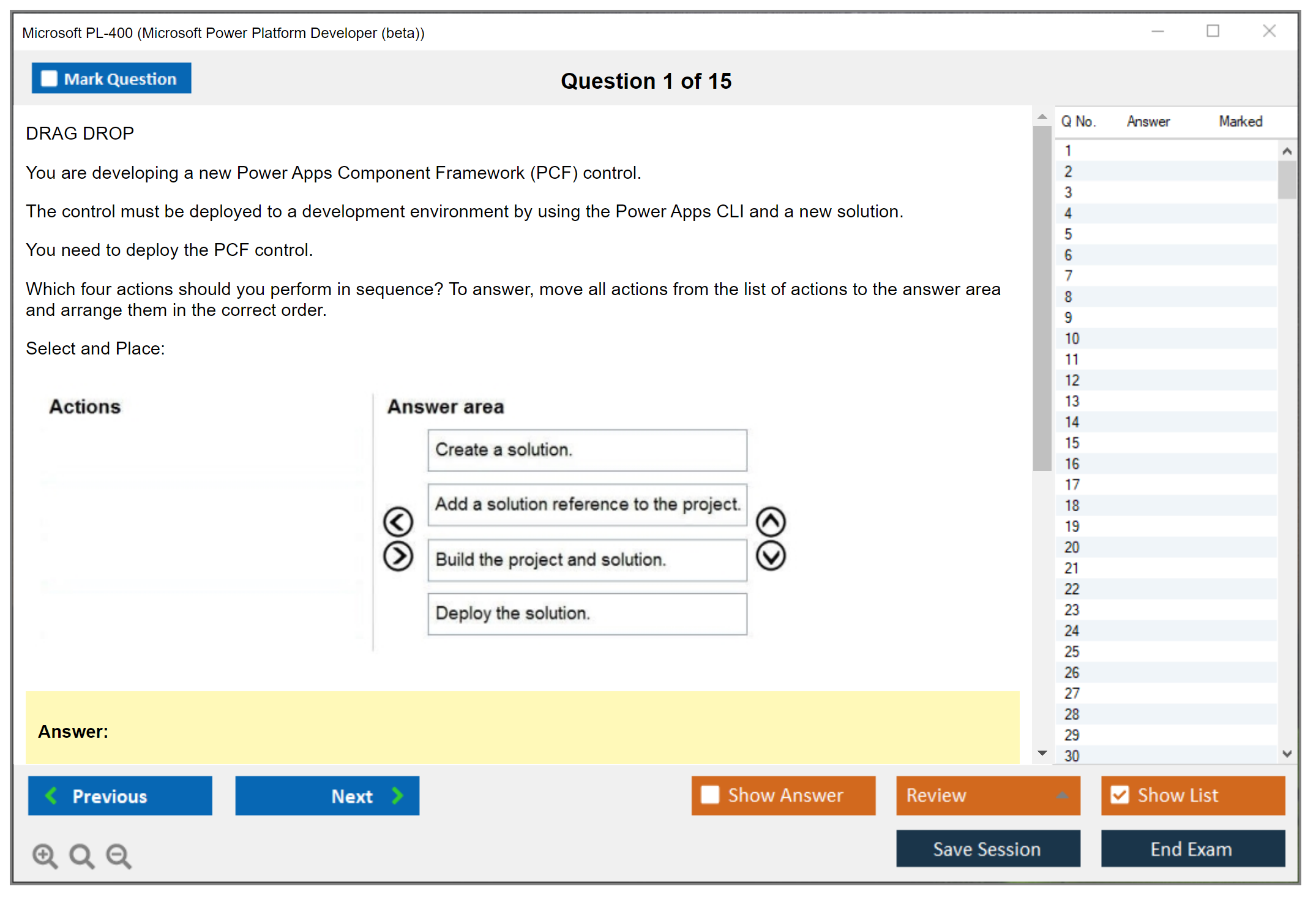
Automated deployments using Power Platform Build Tools or GitHub Actions create CI/CD pipelines that export solutions from development, check them into source control, run solution checker validation, and deploy to downstream environments automatically. This eliminates manual deployment errors and provides deployment history.
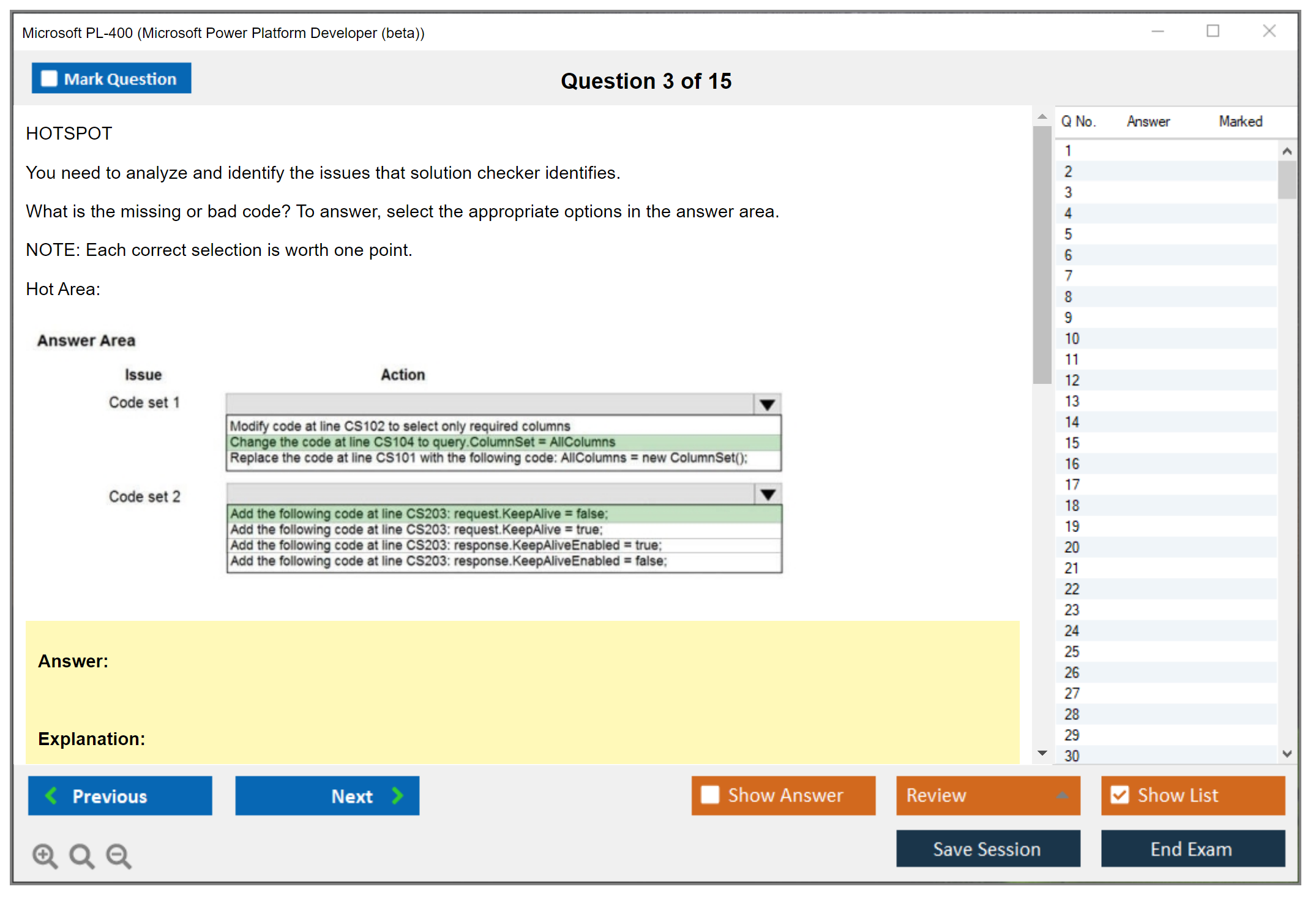
Solution checker analyzes solutions for performance problems, security issues, and best practice violations. It catches things like missing null checks in JavaScript, inefficient plugin code, and accessibility problems. Running it before deploying to production saves embarrassment.
Environment variables and connection references solve the problem of environment-specific configuration. Instead of hardcoding URLs or credentials that differ between environments, you use variables that get set per environment. Connection references handle connector authentication across environments. If you're also studying related Microsoft exams like AZ-204 (Developing Solutions for Microsoft Azure) or PL-200 (Microsoft Power Platform Functional Consultant), understanding ALM patterns helps across the Microsoft ecosystem since similar concepts apply to Azure deployments and Power Platform solution management.
PL-400 Prerequisites and Recommended Experience
Microsoft PL-400 certification overview (Power Platform developer)
The Microsoft PL-400 certification basically says you can build on Power Platform. Real development, not just clicking buttons around.
PL-400 targets folks creating solutions with Power Apps, Dataverse, Power Automate, plus extension points like plugins and PCF. If your daily grind involves model-driven apps, canvas apps, integrations, and packaging everything into solutions without exploding production, you're who they're after.
Who takes it? Power Platform developers, obviously. Dynamics 365 people doing Dataverse customization. App makers who suddenly got dragged into "hey can you write the plugin for this" territory. Here's the thing, if you're a business analyst building simple flows only, this exam's gonna feel like hitting concrete.
PL-400 exam details
You'll encounter multiple choice, case studies, scenario questions where they describe business needs and you pick the best design or implementation. Less "memorize this definition," more "you've actually done this, right?"
PL-400 exam cost
PL-400 exam cost usually runs around USD $165, though Microsoft pricing shifts by country and currency. Sometimes employer enterprise agreements, student discounts, or exam vouchers change what you actually pay. Check the official exam page for your region before budgeting.
PL-400 passing score
The PL-400 passing score is 700 on a 1000-point scale. That doesn't mean 70 percent correct. Microsoft scoring's weighted, depends on question types and forms, and honestly you need solid coverage across the board, not perfection in one area and cluelessness in another.
Exam duration, language availability, and delivery options
Expect roughly 100 to 120 minutes for the exam itself, plus onboarding screens. Delivery options? Online proctored or testing center. Languages vary. If English isn't your first language, check whether your preferred language's offered because the wording gets very "Microsoft-y."
PL-400 exam objectives (skills measured)
The PL-400 exam objectives map to project work. Technical design. Dataverse. App building. Automations. Extensibility. Integrations. ALM.
Create a technical design
Real-world experience shows here. You'll get scenarios asking what to build, where to build it, how to keep it supportable. Requirements. Constraints. Security. Data model. Integration approach. All that.
Configure Microsoft Dataverse
This is core. Tables, columns, relationships, choices, business rules, security roles, teams, and how everything behaves when you ship it in solutions.
Create and configure Power Apps
Both app types matter. Power Apps canvas and model-driven apps show up differently, and the exam expects you knowing when each makes sense, plus implementing the common stuff.
Configure business process automation (Power Automate)
You need comfort with Power Automate flows development. Triggers, actions, approvals, error handling, and those "why's this running as the wrong user" headaches.
Extend the user experience (PCF, client scripting, integrations)
PCF and client scripting expose people fast. You don't need front-end wizard status, but you do need understanding the patterns and constraints.
Develop integrations (APIs, connectors, Azure services)
REST, connectors, custom connectors, and Azure services show up constantly. Not theoretical. Practical integration design.
Manage solutions and application lifecycle (ALM)
Power Platform ALM and solutions is huge. Solution layers, managed versus unmanaged, environment strategy, pipelines, connection references, environment variables. Stuff wrecking deployments if you hand-wave it.
PL-400 prerequisites and recommended experience
PL-400 prerequisites (official vs recommended)
Here's the official part: Microsoft states there aren't formal PL-400 prerequisites, meaning anyone can register and attempt it. No gatekeeping. No required prior cert.
Practical reality though? The lack of formal requirements doesn't mean you can roll in cold and pass. Not gonna lie, PL-400 punishes "I watched a playlist" preparation. So many questions are scenario-driven, assuming you've built things, broken things, and fixed them under time pressure while someone from the business keeps changing requirements mid-sprint.
My recommendation? Have 1 to 2 years hands-on experience building Power Platform solutions before sitting the exam. That doesn't have to be 2 years full-time dev work, but you should've shipped real apps and flows, dealt with Dataverse security, packaged solutions, and touched at least one extension point like JavaScript, plugins, or PCF.
PL-900's not required, but foundational knowledge helps tremendously. If you're brand new, PL-900 first can reduce pain. You won't be learning vocabulary and architecture concepts at the same time you're trying to learn dev patterns, and that combo's brutal when the clock's running.
Helpful background (Dataverse, Power Apps, Power Automate, Azure, JavaScript/C#)
Programming experience matters. JavaScript. C#. TypeScript. Python. Pick one you're comfortable with. You won't write tons of code inside the exam, but questions assume you understand what async means, what an API call's doing, and why a plugin step might fire twice.
Dataverse familiarity's not optional. You need practical Dataverse development experience: tables, relationships (1:N, N:N), business rules, calculated and rollup columns, and especially security models with roles, business units, teams, and sharing. People underestimate this, then get wrecked by questions about who can read what, and under which context automation runs.
Data modeling translates directly. Relational database concepts, normalization, entity-relationship modeling. If you've done SQL design work before, you already get why you shouldn't cram everything into one table, and why many-to-many relationships exist. SQL isn't directly tested, but it helps when thinking about Dataverse queries, FetchXML, and how filtering actually behaves.
Power Apps experience needs being real. Canvas and model-driven.
Canvas apps? You should be comfortable with Power Fx, controls, galleries, forms, variables, collections, and connecting to data sources. Lots of "best answer" questions come down to knowing what's delegable, what runs client-side, and what turns into "why's this only returning 500 records" in production. Practice this.
Model-driven apps. Know forms, views, business process flows, command bar basics, site map design. Also know where JavaScript fits. Client-side scripting for model-driven apps really does require JavaScript knowledge, including asynchronous programming patterns. You'll see questions around calling Web API, handling promises, timing issues on form events.
TypeScript's a quiet advantage. PCF uses TypeScript, and if you've built anything with typed languages or even basic modern front-end tooling, PCF concepts click faster. If you've never touched Node tooling, npm, or building a component, PCF questions feel like they came from a different exam.
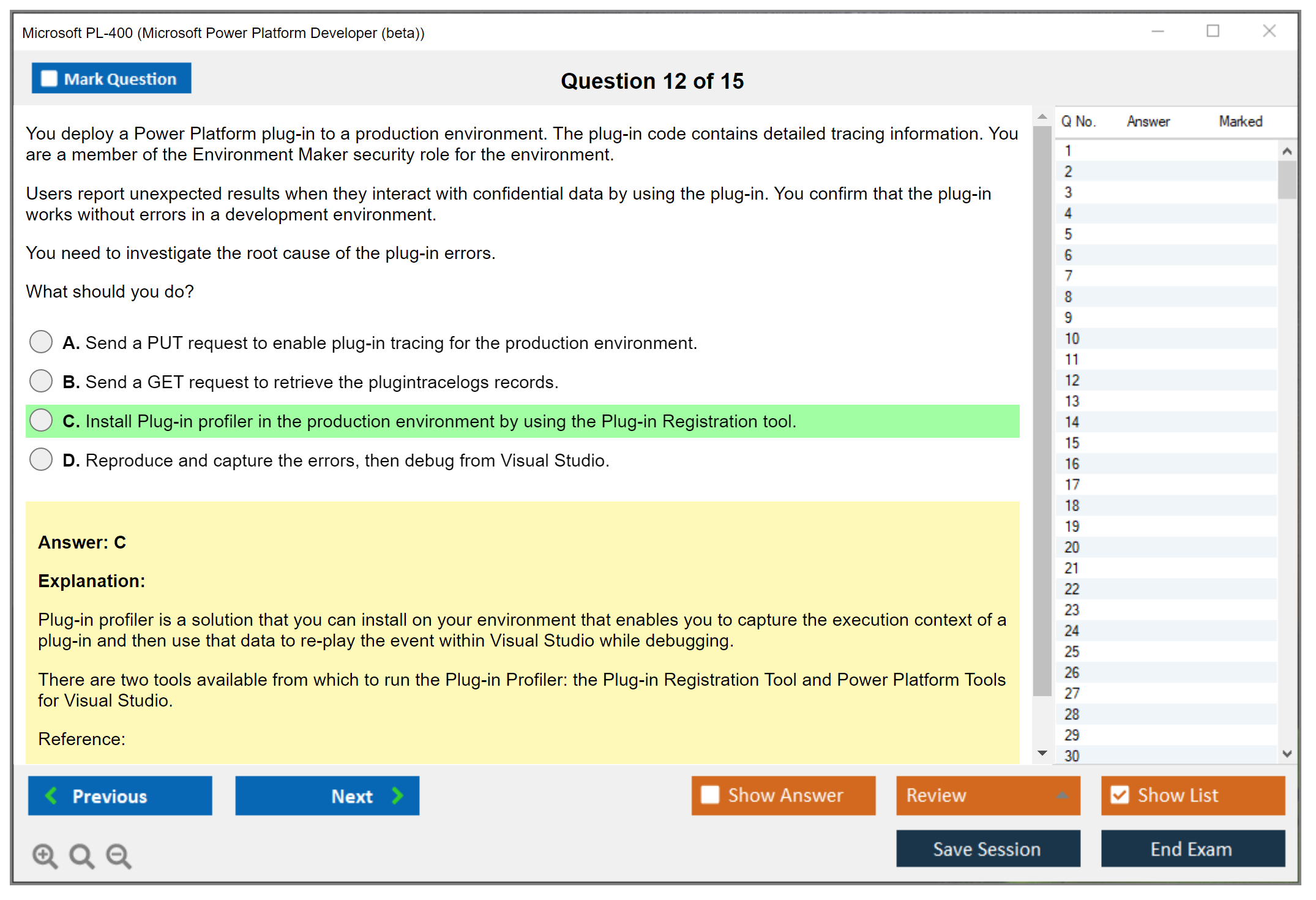
C# helps for plugins and custom workflow activities. You don't need being a .NET architect, but you should understand plugin execution pipeline basics, impersonation, and why you don't do slow network calls inside synchronous plugins. Fragment. Learned it the hard way.
Azure fundamentals show up in integration scenarios. Functions, Logic Apps, Service Bus, API Management. You don't need deploying a full enterprise integration platform, but you should know what each service's good at and what problem it solves, because PL-400 loves "pick the best tool" questions.
Azure Active Directory knowledge matters too. App registrations, service principals, delegated versus application permissions, how authentication ties into calling Dataverse or external APIs. This is where people who only built internal apps get surprised.
Web API concepts are essential. RESTful APIs, HTTP methods, auth headers, JSON structures. If you can't read a simple request and response and understand what it means, the integration section'll be rough.
Version control. Git, GitHub, Azure DevOps. ALM questions assume you get why source control exists and how solution export and import fits into a release process. DevOps principles help. CI/CD concepts, pipelines, automated checks. You don't have to build a perfect pipeline, just understand what good looks like.
Solution architecture exposure's a plus. Designing enterprise apps gives context for technical design questions, like when to use Dataverse versus external storage, how to handle integration reliability, and how to avoid painting yourself into a corner with security and environment strategy.
Recommended learning path and practice approach
Complete the Microsoft Learn modules for PL-400 before the exam. That's your baseline PL-400 study materials. Then go build stuff. Reading docs isn't enough. Honestly, you only learn solution layering after you've accidentally overwritten something and had to explain it.
Use a trial environment. Make a free developer environment so you can break things safely. Build one canvas app, one model-driven app, at least a couple cloud flows with approvals, and package everything into solutions with environment variables and connection references. That's where "I know it" becomes "I can do it."
Explore sample solutions. Microsoft samples and community GitHub projects are useful, especially for PCF patterns and integration examples.
If you want structured drilling, mix hands-on with practice questions. I've seen people pair Microsoft Learn with a targeted question pack like PL-400 Practice Exam Questions Pack when they're trying identifying weak spots fast, especially around ALM and Dataverse security where you can't really guess your way through. Use it as a check, not as your only plan.
Time investment? Plan 2 to 4 months depending on experience. If you already build in Dataverse daily, you're mostly filling gaps. If you're new to dev concepts, I mean, you're learning two skills at once.
PL-400 practice tests and exam prep strategy
PL-400 practice tests are useful when they explain why an answer's right. If it's just "A is correct," that's not teaching anything. You're trying building intuition for scenarios, not memorizing letters.
A decent routine? Learn module, build a small feature, then quiz yourself. Repeat. Also, keep notes on mistakes. It works.
If you want a single product anchoring your review, the PL-400 Practice Exam Questions Pack is one option, and the $36.99 price is low enough that some people grab it late in prep as a confidence check right before scheduling. Don't let it replace labs.
PL-400 difficulty: what to expect
PL-400 difficulty is high for beginners. For intermediate folks with real project time, it's fair. For advanced Power Platform developers who've shipped solutions with ALM and integrations, it's very passable. Still annoying in that "two answers look right" way.
Common hard areas? Dataverse security. ALM. Integrations. PCF. Also anything involving execution context, like "which user does this run as" and "where should this logic live," because the exam expects you thinking like someone responsible for production behavior and support.
Quick tangent: I once watched someone bomb this exam because they built everything in Default Environment for two years and never once packaged a proper solution or dealt with connection references. On paper they had the experience. In practice? They couldn't answer basic ALM questions that any consultant hits in week one. Environment matters.
Renewal and maintaining your certification
PL-400 renewal is done through Microsoft's online renewal assessment on Microsoft Learn (when available for your certification), and it's typically open within the renewal window before expiration. No testing center. You take it online. Content shifts as Power Platform changes, so staying current with release waves and reading updated docs is part of keeping the cert meaningful.
FAQs (People also ask)
How much does the PL-400 exam cost?
The PL-400 exam cost is commonly around $165 USD, with regional pricing differences and possible discounts through employers or programs.
What is the passing score for Microsoft PL-400?
The PL-400 passing score is 700. Scoring's weighted, so focus on broad competence across the objectives.
Is PL-400 difficult for beginners?
Yes. If you're new, expect a steep climb. You need both platform fundamentals and developer skills. Consider PL-900 first if you're starting from zero.
What are the main objectives covered in PL-400?
The PL-400 exam objectives include technical design, Dataverse configuration, Power Apps development, Power Automate automation, extensibility (JavaScript, PCF, plugins), integrations, and ALM.
How do you renew the PL-400 certification?
PL-400 renewal is typically an online renewal assessment through Microsoft Learn during your renewal window. Keep an eye on your certification dashboard for timing and the exact steps.
PL-400 Difficulty Level and What to Expect
Overall difficulty assessment: what you're getting into
Here's the deal. The PL-400 exam? It's solidly intermediate to advanced. You can't just wake up one random Tuesday and decide to crush this thing. Real talk: you need both the book smarts and the actual doing-it-yourself experience, which means memorizing dump questions won't cut it (I mean, you could attempt that route, but those scenario questions will absolutely wreck you).
This exam tests whether you can really build functioning solutions. We're talking creating custom connectors, messing with Dataverse plugins, rolling out ALM strategies. All stuff that demands you've actually gotten your hands dirty. If you've been casually clicking around Power Apps for a couple months without truly grasping what's happening behind the scenes, you're in for a rough time. Like, really rough.
How PL-400 stacks up against other Microsoft certs
Versus the PL-900 fundamentals exam? Complete opposites. PL-900's your friendly "hello world" intro to Power Platform. Basic ideas, vocabulary, understanding what components do. The PL-200 functional consultant certification bumps up the complexity by emphasizing configuration and business-focused solutions, though it stays mostly in low-code land.
PL-400 tosses you straight into actual development territory. JavaScript, C#, Azure integrations, PCF controls, plugin architecture. The works. It's closer to something like AZ-204 (Azure developer) regarding technical intensity and expecting you to write legitimate working code. Some Azure developer exams might actually feel marginally easier if cloud development patterns are already second nature to you, honestly.
Moving from PL-200 to PL-400 represents a substantial leap. You're transitioning from "I configure solutions" to "I extend and customize using code."
Pass rates and what the community says
Microsoft guards official pass rates like state secrets, but community chatter across forums and study groups suggests first-try pass rates land somewhere around 60-70% for folks who really prepared. That "really prepared" qualifier's doing serious work there, though.
People with six months or more working in actual production Power Platform environments generally perform better. The thing is, those who just crammed materials for two weeks? They're usually scheduling retakes. The exam's gotten tougher since launch too. Microsoft continuously updates it with current best practices and fresh features.
Why beginners should probably wait
Look, if you're brand new to programming or Power Platform, jumping into PL-400 is like learning to drive in a Formula 1 car. Technically achievable? I guess. Smart move? Absolutely not.
The obstacles for newcomers are punishing. You've gotta understand Dataverse architecture first. Tables, columns, relationships, security roles, foundational elements. Then JavaScript for client-side scripting, C# for plugins and custom workflow activities, TypeScript for PCF controls. Oh, and Azure services knowledge, API development, OAuth, webhook architecture. See the problem?
Without hands-on experience, you lack the mental scaffolding to grasp why certain approaches outperform others. The exam loves scenario questions where multiple answers could technically function, but only one represents the best practice. You need real-world context making those judgment calls. It's like trying to explain why a particular guitar riff sounds better in a minor key versus major when you've never actually touched an instrument.
The practical experience gap
Someone mentioned in a study group they'd consumed all Microsoft Learn videos and felt prepared. Failed with 580. Why? They'd never actually constructed a plugin, never deployed solutions across environments, never debugged why a PCF control wasn't rendering properly.
Videos deliver knowledge. Not skills.
You need battle-tested experience. Created canvas and model-driven apps. Built flows accomplishing something really useful. Written JavaScript manipulating form behavior. Developed plugins firing on specific events. Configured environment strategies and solution layers. This hands-on work separates passers from failers.
Common areas where people get destroyed
ALM and solution management absolutely wreck candidates. Grasping managed versus unmanaged solutions, solution layers, dependency tracking, environment strategies..this isn't intuitive. You need experiencing the agony of a botched deployment to truly understand it.
Dataverse security's another massacre zone. Row-level security, column-level security, business units, security roles, sharing, field security profiles. It's complex, and the exam will definitely test how these layers interact.
PCF controls destroy people too, particularly if TypeScript and web development concepts aren't comfortable territory. Plugin development's similar. Understanding the event pipeline, pre/post images, impersonation, deciding between synchronous versus asynchronous execution demands solid development fundamentals.
API and integration questions get tricky. You need understanding Web API versus Organization Service, authentication patterns, custom connectors, Azure Logic Apps, Service Bus, Event Grid. That's extensive integration knowledge stretching beyond just Power Platform.
Time investment required
Solid Power Platform experience plus development skills? Maybe 40-60 hours focused study. That includes hands-on labs, not merely reading. Traditional development background with Azure experience but Power Platform newbie? Add another 30-40 hours getting comfortable with platform specifics.
Complete beginners? You're looking at 150+ hours minimum, and that's optimistic. You'd honestly benefit more getting PL-900 and PL-200 first, then returning to PL-400 after six months real project work.
What makes this exam particularly challenging
Scenario questions are brutal.
They'll describe business requirements and present four solution approaches. All four might technically work, but you're picking the most appropriate considering maintainability, performance, security, future scalability factors.
The exam also spans massive topic breadth. You can't just excel at plugin development hoping that carries you. You need solid knowledge across client scripting, PCF, ALM, Dataverse configuration, Power Automate development, API integration, Azure services, security models. It's legitimately overwhelming.
Performance-based questions require actually demonstrating knowledge, not just recognizing correct answers. These consume more time and demand deeper understanding.
Is it worth the difficulty?
Honestly? Absolutely, if you're serious about Power Platform development career-wise. The Microsoft PL-400 certification proves you can do more than drag-and-drop. You extend the platform, integrate external systems, build enterprise-grade solutions. That unlocks higher-paying roles and more compelling projects.
But don't rush. Build your foundation first, gain real experience, then tackle this cert when you're actually ready. Your future self will thank you.
Conclusion
Wrapping this up
Here's the reality. The Microsoft PL-400 certification isn't something you just walk into on a whim. It's a serious exam that tests whether you can actually build production-ready solutions on Power Platform, not just drag and drop some basic apps. The PL-400 exam objectives cover everything from Dataverse development to Power Apps canvas and model-driven apps, plus you're dealing with Power Automate flows development and the whole Power Platform ALM and solutions lifecycle. That's a ridiculous amount of ground to cover, honestly.
The PL-400 exam cost runs about $165 USD, though regional pricing varies a bit. You need to hit a 700 passing score out of 1000, which sounds more forgiving than it actually is. The difficulty really depends on your background. If you've been building Power Platform solutions professionally for a year or two, you'll probably find it challenging but doable. Beginners? Not gonna lie, you're gonna struggle without solid hands-on experience first.
Here's what works.
You can't just memorize stuff for this one. You need actual keyboard time building plugins, working with the Dataverse Web API, creating PCF controls, managing solutions across environments. The PL-400 study materials from Microsoft Learn are full, but they're also kinda dry. Supplement them with real projects, even personal ones. I spent way too much time last year trying to reverse-engineer someone's Canvas app performance optimization only to realize they'd just thrown every control onto a single screen. Sometimes the best learning comes from seeing what not to do.
Practice tests matter. They matter more than you think, actually. They expose gaps in your knowledge you didn't know existed. I've watched people think they're ready, take a practice exam, and realize they completely blanked on ALM concepts or integration patterns. The PL-400 practice tests help you understand not just what you know but how Microsoft phrases questions and what they're really asking, which is sometimes two different things.
Once you pass, remember the PL-400 renewal happens annually through Microsoft's online assessment. It's free but you gotta stay on top of it or your cert expires.
If you're serious about passing on your first attempt, I'd recommend checking out the PL-400 Practice Exam Questions Pack. It's designed to mirror the actual exam format and covers all the current objectives, plus it shows you where you're weak so you can focus your studying where it actually matters. Mixed feelings about practice exams in general, but this one's solid. The Power Platform developer exam rewards preparation. Put in the work now, and you'll have credentials that actually open doors in the Dataverse development world.
