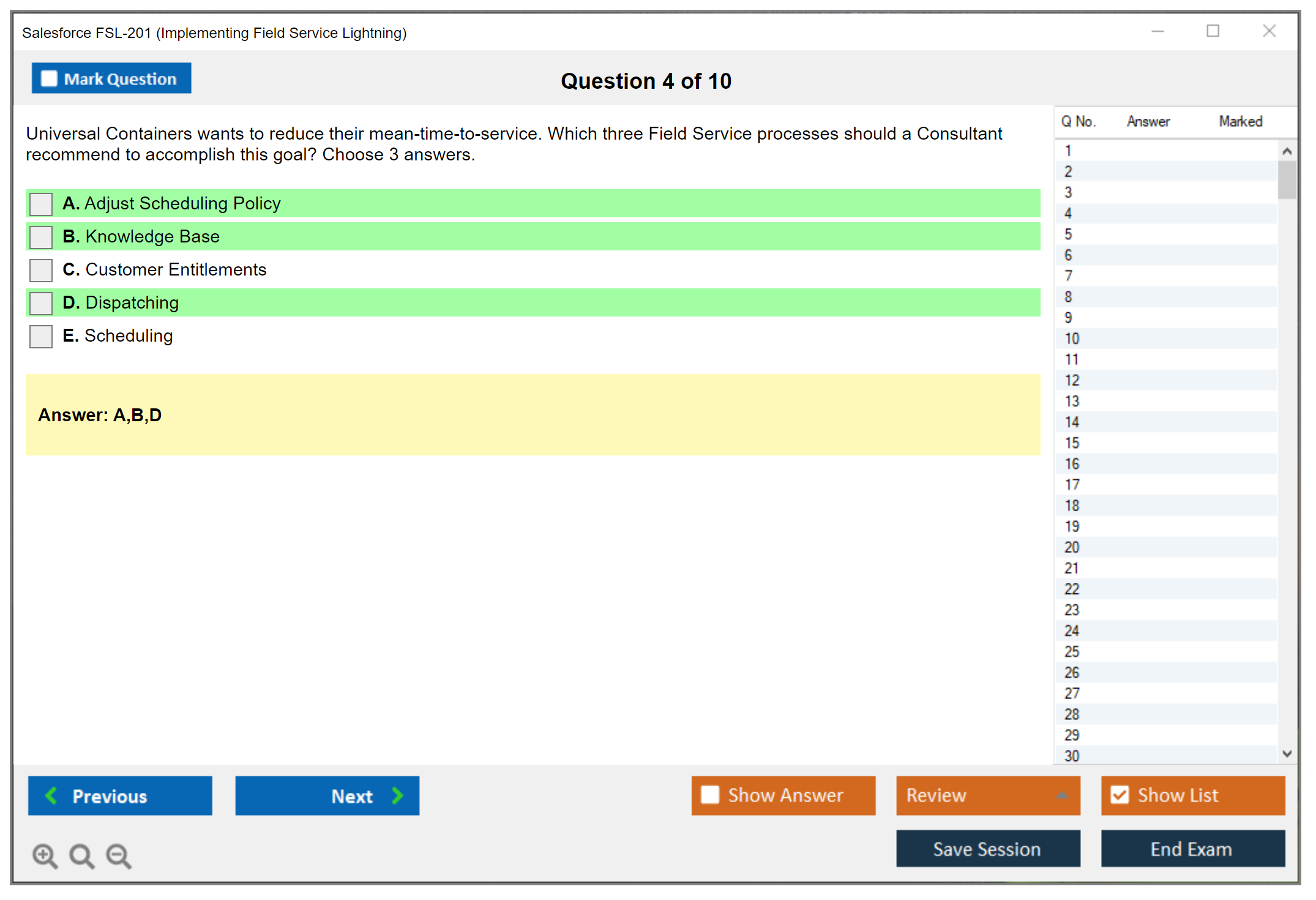
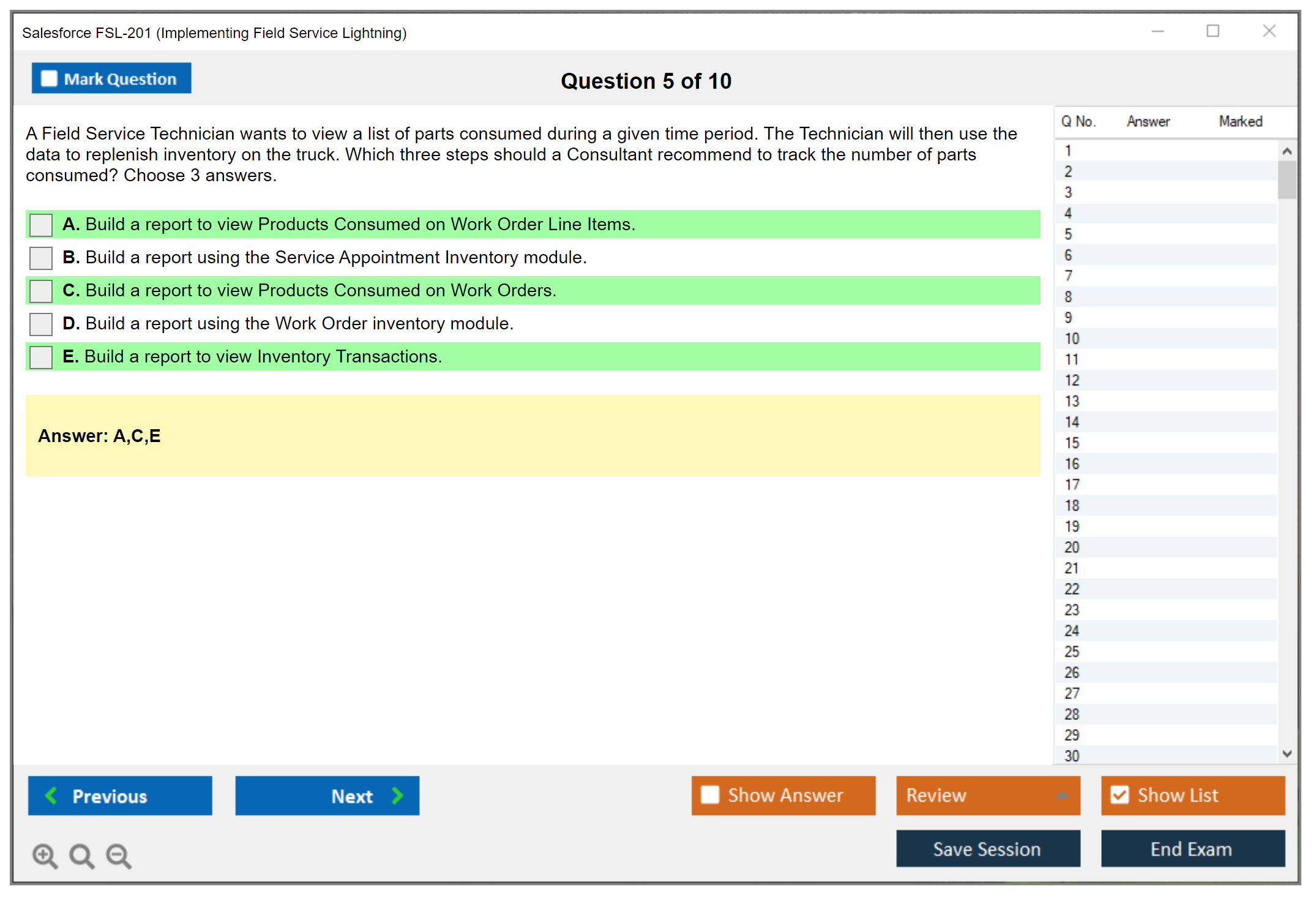
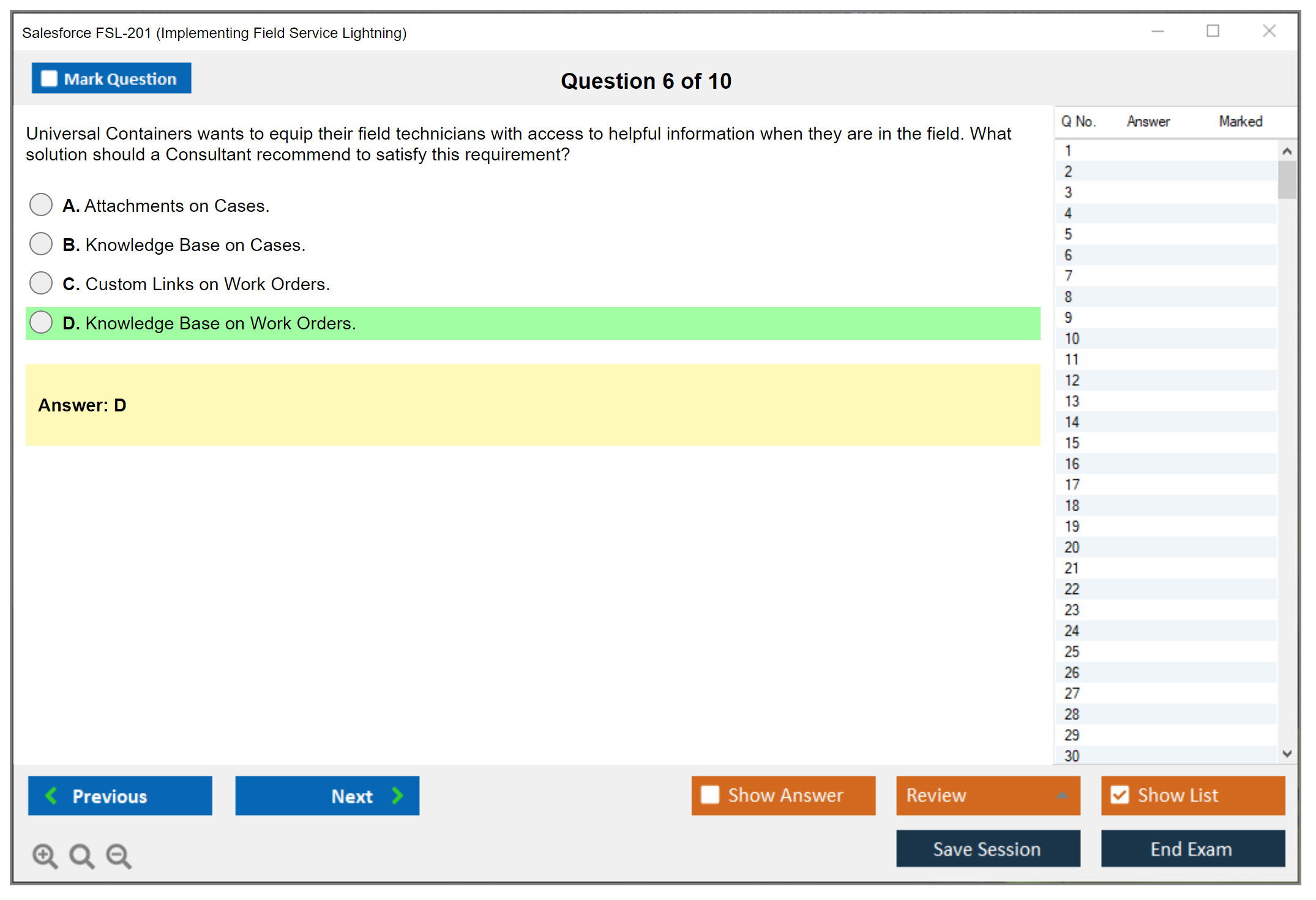
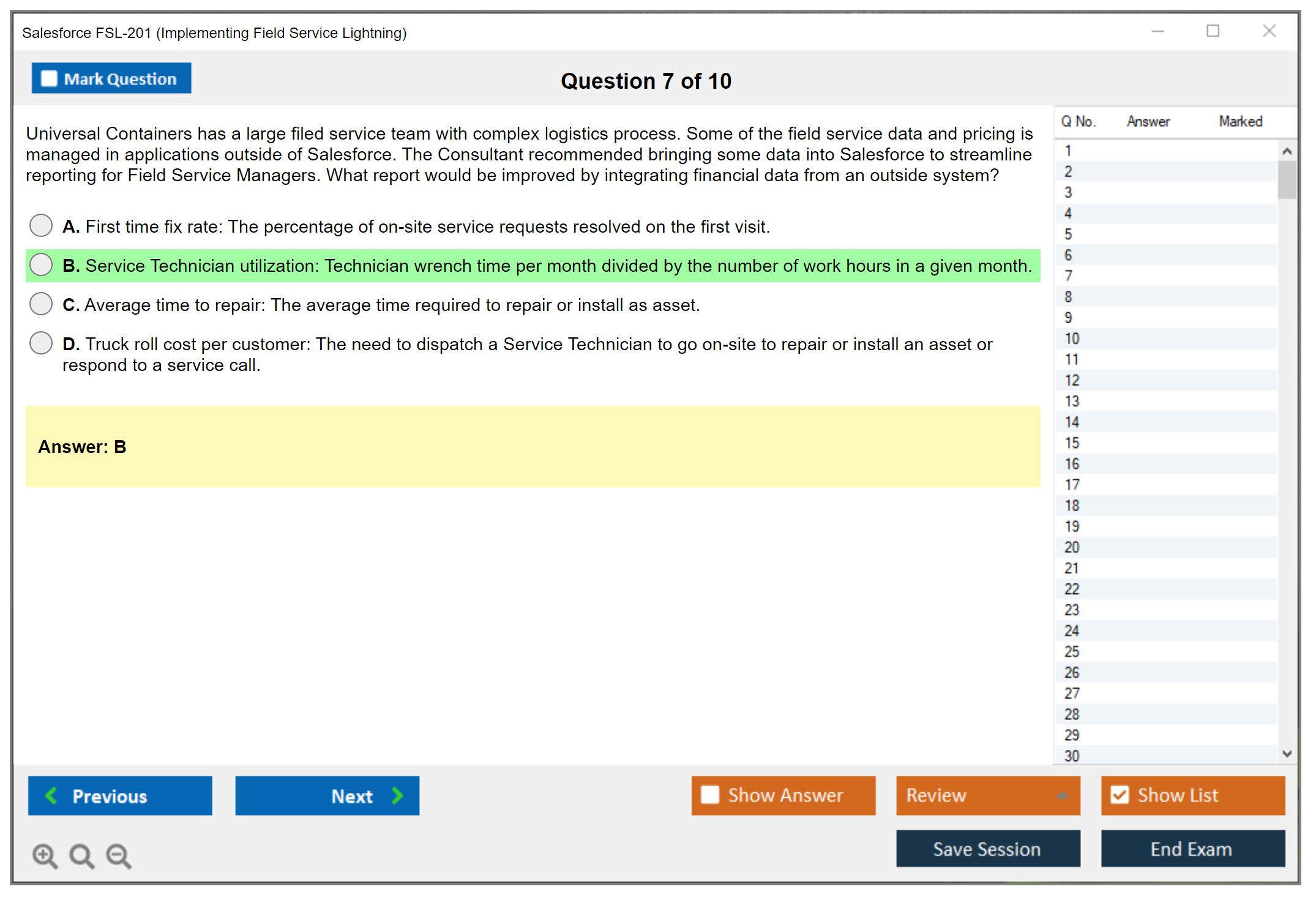
Salesforce FSL-201 Certification: Complete Exam Overview and What It Validates
Okay, so you're eyeing the Salesforce FSL-201 certification? You're stepping into one of the more specialized corners of the Salesforce ecosystem, and honestly, this isn't your typical admin cert. It's laser-focused on Field Service Lightning, the platform that powers mobile workforces, dispatch operations, and everything involved in getting the right technician to the right place at the right time with minimal headaches and maximum efficiency. We're talking utilities, telecom crews, HVAC techs, healthcare equipment servicers. Basically anyone who needs to manage people in the field doing actual work at customer locations.
What you're actually proving with FSL-201
Real talk here. The Salesforce FSL-201 certification validates that you can design, configure, and deploy Field Service Lightning solutions from the ground up. We're not just talking about clicking through setup menus and calling it a day. You need to understand work order management, service appointment scheduling, dispatch console configuration, mobile app setup, resource management, territory design, optimization policies, and the security models specific to Field Service.
This is where things get interesting. The exam confirms you can handle real implementation challenges, like figuring out why your scheduling policies aren't assigning the right technician. Or configuring the mobile app so field workers can actually do their jobs offline without losing critical data when they're in basements or rural areas with spotty connectivity. You're proving you understand both the technical configuration and the business process design that makes Field Service work in production environments.
How FSL-201 differs from the usual Salesforce certs
Here's the thing. If you've already knocked out your ADM-201 or Platform App Builder certification, you know the Salesforce platform fundamentals. Objects, workflows, security, all that foundational stuff. But FSL-201? Different animal entirely.
It's exclusively about Field Service Lightning functionality, no fluff. You're diving deep into scheduling engines, dispatch strategies, mobile workforce enablement, and service-specific data models that don't really show up in other exams. While the Service Cloud Consultant cert touches on case management and service processes, FSL-201 is all about getting technicians out the door, managing their schedules, optimizing routes, and tracking field work in real time.
The overlap's minimal. Not gonna lie, this one demands a completely different headspace than your general platform knowledge. I spent maybe six months doing basic admin work before I even touched Field Service, and let me tell you, nothing about managing user permissions prepared me for debugging why a scheduling policy kept routing technicians two hours away when qualified people were already nearby. Totally different skill set.
Real industries where this knowledge matters
Successful FSL-201 candidates can implement solutions across tons of industries with remarkably similar field service challenges. Utilities dispatching field crews to repair power lines after storms. Telecommunications companies sending technicians for installations and service calls. Healthcare equipment servicing where you need to track maintenance schedules and parts inventory meticulously. HVAC companies managing seasonal maintenance contracts and emergency calls. Field sales teams making customer visits.
Any organization dispatching technicians matters here. The business problems are remarkably similar across industries: resource allocation, travel time optimization, skill-based assignment, emergency response prioritization, SLA compliance. You configure it once for telecom, you can configure it for medical equipment with some industry-specific tweaks to the data model and processes.
The actual exam format and what to expect
The FSL-201 exam throws 60 questions at you. Mix of multiple-choice and multiple-select formats. You get 105 minutes in a proctored environment, either online or at a testing center, which sounds generous until you're actually in there. Time management matters because some scenario-based questions require you to think through multi-step configurations and troubleshoot complex business requirements.
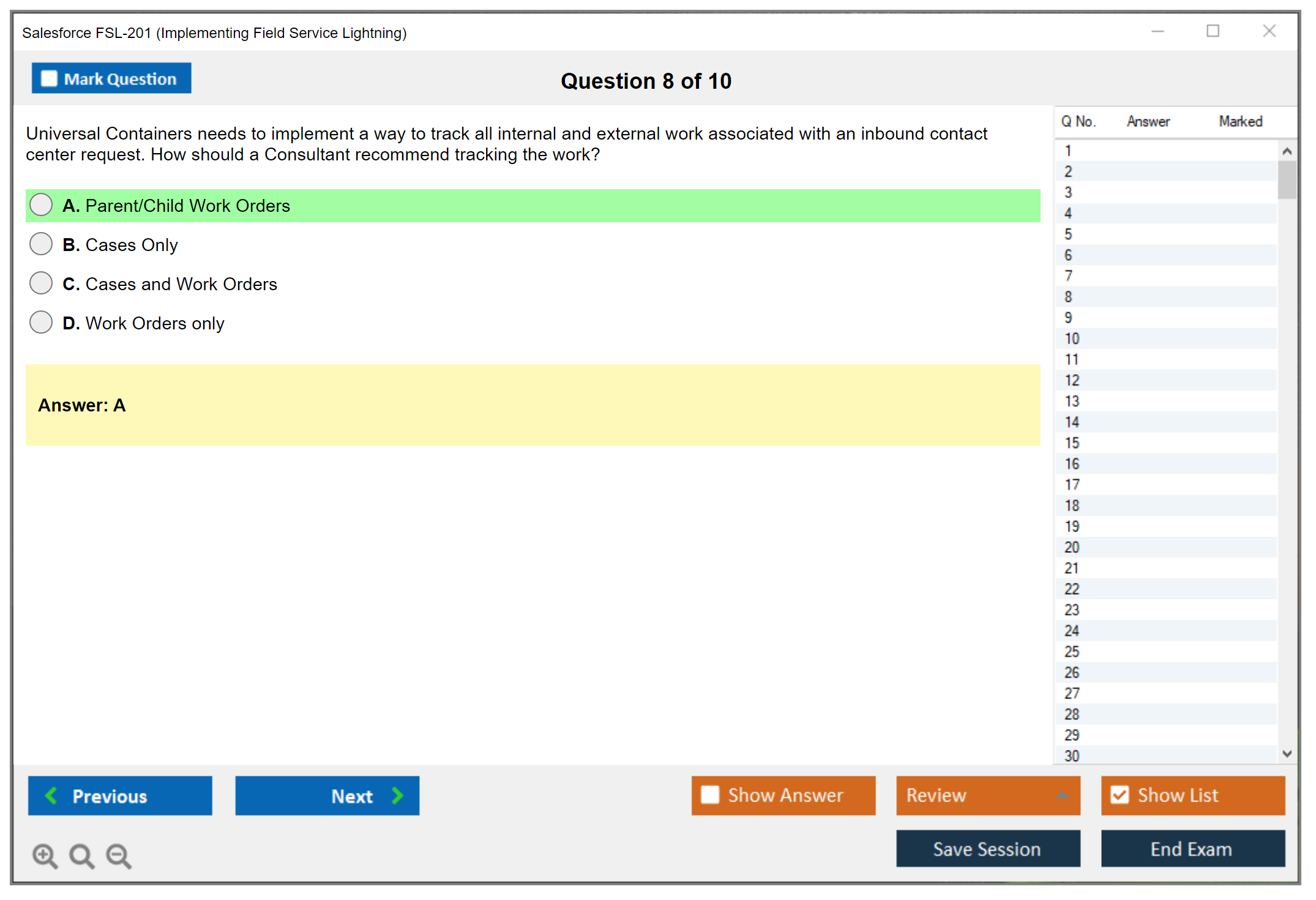
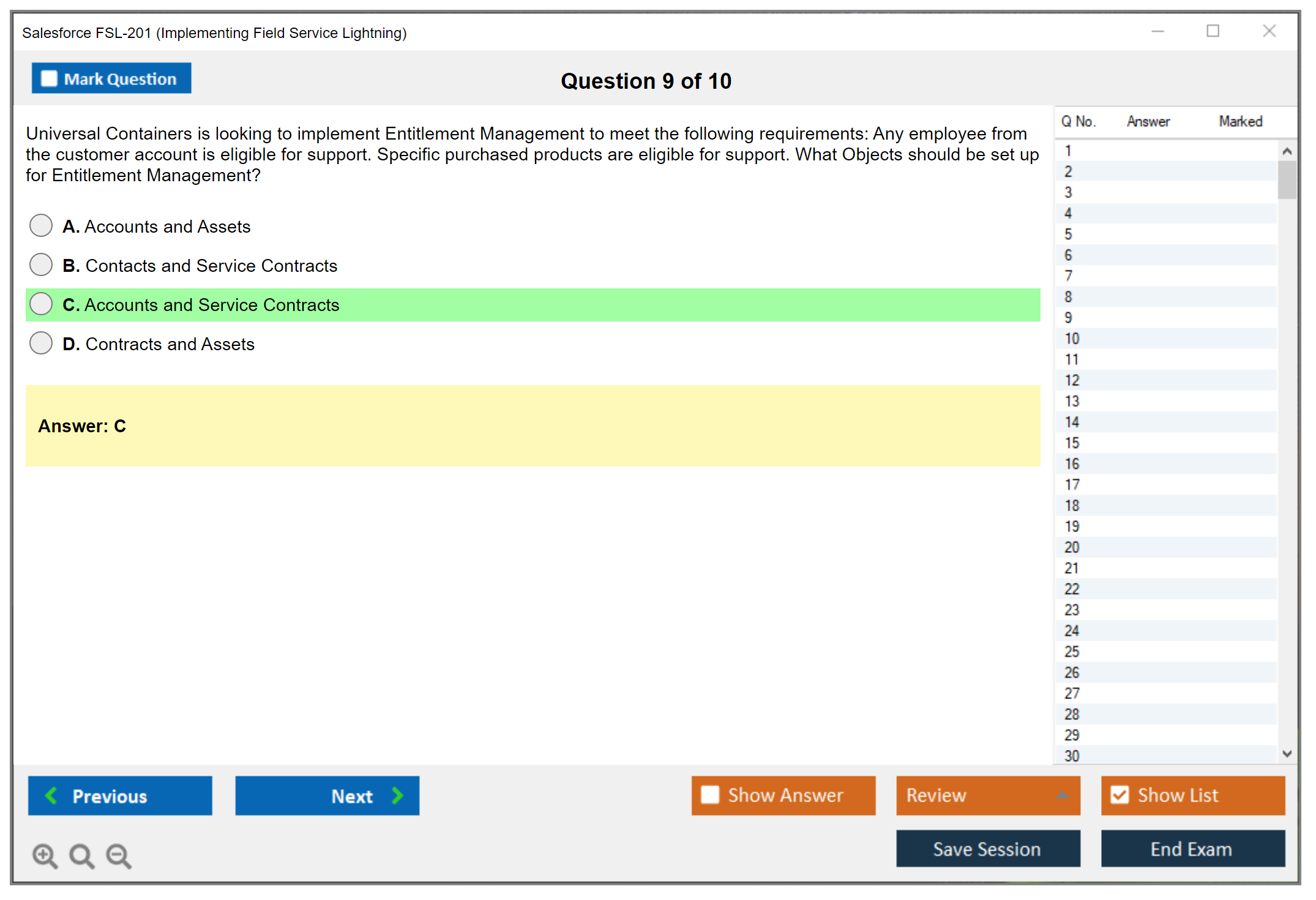
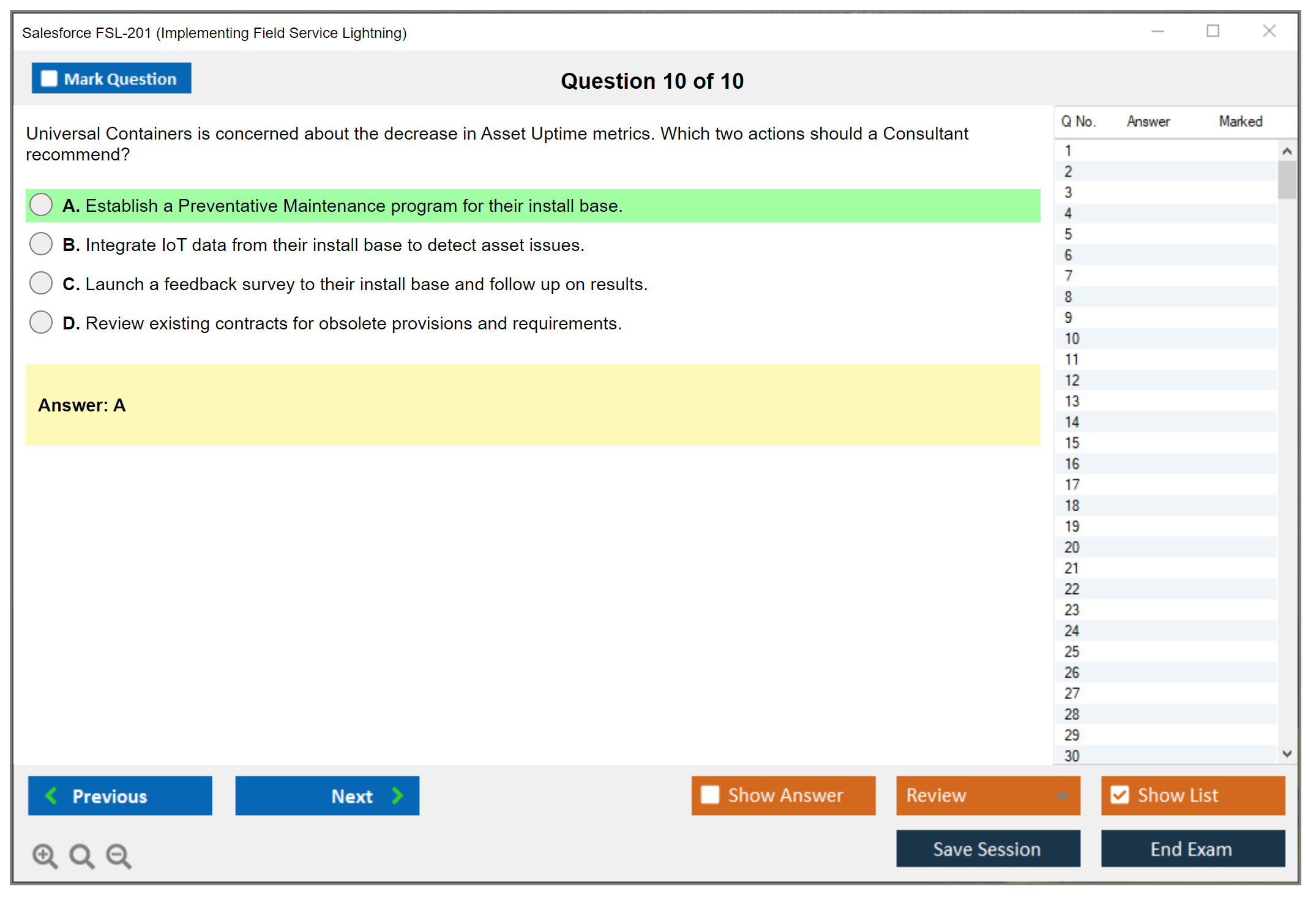
Expect questions that present business requirements and ask you to identify the correct configuration approach. The kind that tests whether you've actually done this work. "A utility company needs to ensure only certified electricians can be assigned to high-voltage work orders while balancing travel time and skill availability. Which combination of features should you use?" That kind of thing. You're selecting appropriate scheduling policies, determining optimal mobile settings, troubleshooting common implementation challenges, understanding when to use standard features versus custom solutions.
The questions are weighted across major domains, and this matters for study prioritization. Managing Field Service is about 18% of the exam. Configuring Scheduling & Optimization is the heaviest at 23%. Makes sense since that's where most implementations get complicated. Managing Resources & Territories is 15%. Configuring the Field Service Mobile App is 20%.
The official exam guide breaks down all the domains with specific objectives, and you really need to study that document thoroughly. It's your blueprint for what actually shows up on test day.
Who should actually take this exam
Ideal candidates? Salesforce consultants actively implementing Field Service projects. Solution architects designing mobile workforce solutions for enterprise clients. Experienced administrators who want to expand into Field Service territory and differentiate themselves. Professionals with 6-12 months hands-on FSL implementation experience, preferably across multiple projects.
I've seen people try to tackle FSL-201 right after getting their admin cert with zero Field Service exposure or practical implementation work. Bad idea, honestly. This exam assumes you've wrestled with real dispatch console configurations, debugged scheduling policies that aren't firing correctly, and dealt with mobile workers complaining about app performance in the field. Book knowledge alone won't cut it. You need that practical problem-solving experience that only comes from actual implementations.
Career paths that align with FSL-201
You're looking at Field Service consultant roles primarily, where you'll design and implement solutions for clients. Salesforce implementation specialists who focus on service delivery and field operations. Technical architects who design field operations solutions within larger enterprise ecosystems. Business analysts who map out field service processes and translate business requirements into technical configurations. Project managers overseeing Field Service deployments from discovery through go-live.
The specialized nature of this cert means you're qualifying for projects that general Salesforce folks can't touch. Organizations need someone who understands both the technology and the unique business challenges of field service operations. Organizations hiring for Field Service implementations specifically look for FSL-201 credential holders, and premium consulting rates follow because the talent pool is smaller than general Salesforce admins or even Service Cloud consultants.
Prerequisites and what you should know first
Salesforce doesn't mandate prerequisites officially. But let's be real. You should have strong Salesforce platform knowledge, ideally holding the Administrator certification already as your foundation. Understanding Service Cloud fundamentals helps tremendously since Field Service builds on Service Cloud objects like cases and work orders. Practical experience with at least one full Field Service implementation is basically required to have any realistic shot at passing this exam confidently.
This is an intermediate-to-advanced certification. You need practical decision-making skills around configuration trade-offs, not just theoretical knowledge you can memorize from study guides. When do you use skill-based scheduling versus territory-based routing? What's the performance impact of complex scheduling policies with multiple criteria? How do you balance optimization goals with business constraints and customer expectations?
These aren't lookup-in-documentation questions. They require judgment that comes from experience.
Why this certification matters for your career
FSL-201 credential holders demonstrate specialized expertise in a high-demand Salesforce cloud that many organizations are adopting to modernize their field operations. The certification signals to employers and clients that you can handle complex field service implementations from design through deployment, not just basic configuration. You're not just another Salesforce admin. You're someone who understands mobile workforce management, dispatch operations, optimization algorithms, and field service business processes across multiple industries.
The credential complements other Salesforce certifications nicely, building a powerful skill stack. Pair it with Service Cloud Consultant and you're covering the full service delivery spectrum from contact center to field operations. Add Platform App Builder and you can extend Field Service with custom functionality when standard features don't meet requirements. The combination creates a full skill profile that's really hard to find in the market, which translates to better opportunities and higher compensation.
Official resources and study approach
Salesforce publishes a detailed FSL-201 exam guide that outlines weighted objectives, sample questions, and recommended training paths for candidates. This document should be your primary reference when planning your study approach, not third-party summaries or generic Field Service content that may or may not align with actual exam objectives. The exam guide tells you exactly what domains are tested and how heavily each topic is weighted.
Trailhead modules cover Field Service fundamentals: work orders, service appointments, territories, all that foundational knowledge. But honestly, they're just the starting point for exam preparation, not the complete solution. You need hands-on practice in a developer org or sandbox environment where you can experiment freely.
Build a mini-implementation from scratch. Create work orders, configure service appointments, set up territories, build scheduling policies, configure the mobile app with various features enabled. Break things intentionally and figure out how to fix them, because troubleshooting skills matter enormously on the exam.
Maintaining your certification over time
Like all Salesforce credentials, FSL-201 requires ongoing maintenance through Trailhead modules released with each major Salesforce release. That's three times annually with Spring, Summer, and Winter releases. You complete the maintenance modules, pass the quiz at the end, and your credential stays active on your profile.
Miss your maintenance deadlines? Your certification goes inactive, which looks terrible when clients or employers check your credentials. You can reinstate it by completing the overdue modules, but letting certifications lapse looks sloppy on your profile and raises questions about your commitment to staying current. Set calendar reminders for release cycles and knock out the maintenance modules early. They're usually available several weeks before the deadline.
Exam logistics and delivery
Tests can be taken at authorized Pearson VUE testing centers worldwide or via online proctoring from your home or office, depending on your preference and comfort level. Online proctoring involves strict identity verification, webcam monitoring throughout the exam, and desktop lockdown software that prevents you from accessing other applications. Testing centers offer a controlled environment if you prefer that setup or don't have a suitable quiet space at home.
Multiple languages available. The exam is primarily offered in English as the default option. Additional languages might be available depending on regional demand and Salesforce's localization efforts, but English is your safest bet for the most current exam content. Check the Salesforce certification site for current language availability if that's a concern for your situation.
Integration with the broader Salesforce certification path
FSL-201 fits into a larger Salesforce credential ecosystem that you can strategically build over time. It complements Service Cloud Consultant, which covers broader service processes beyond field operations. It pairs well with Administrator for platform fundamentals that underpin everything you'll configure. If you're building custom integrations for Field Service to connect with ERP systems or legacy scheduling tools, Integration Architect rounds out your technical profile nicely.
Think of certifications as building a specialty stack rather than collecting random credentials. FSL-201 establishes you as a Field Service expert with deep domain knowledge. Additional certs expand your capabilities into related areas where you can provide more full solutions. The combination makes you more valuable than someone with just one general certification. You become the person who can handle end-to-end implementations.
Stay current, seriously. Salesforce periodically updates exam content to reflect new features, best practices, and changing implementation patterns in the market. Always verify you're studying the current exam guide version, not last year's objectives that might be missing newer features or de-emphasizing deprecated functionality.
Release notes matter too, since new Field Service features often show up on the exam within a release or two of being introduced. Stay current with what Salesforce is actually releasing, and you'll be ready when exam day arrives without nasty surprises about features you've never seen.
FSL-201 Exam Cost, Registration Process, and Retake Policy
Salesforce FSL-201 Exam Overview (Implementing Field Service Lightning)
What FSL-201 validates
The Salesforce FSL-201 certification is basically Salesforce asking, "Can you implement Field Service in a way that won't blow up dispatch, mobile, and reporting the minute real technicians touch it?" It's about configuration choices and tradeoffs. Not trivia.
You're expected to understand Field Service Lightning implementation patterns like work order and service appointment setup, service resource modeling, and how scheduling rules behave when the business starts throwing exceptions at you. Stuff like "we need 2-person crews for some jobs" and "customers only allow visits 1 to 3 PM" and "techs must have electrical certs". Real life.
And yes, the Salesforce Field Service mobile app configuration angle matters too. Offline, parts, status transitions. That's where a lot of implementations get messy fast.
Who should take the FSL-201 exam (target roles)
Field Service Consultant. Admin who got pulled into a Field Service rollout. Business analyst who keeps translating operations speak into Salesforce objects. Also, if you're aiming to grow "Salesforce Field Service consultant skills", this credential is one of the more direct signals you can send.
Newbies can take it. I mean, you can. But honestly, it reads like it was written by people who assume you've already tried a Field Service Lightning implementation and learned which settings have sharp edges. The exam writers clearly remember their worst implementation days.
Exam format and question types
Salesforce exams? Typically multiple choice and multiple select, heavy on scenario questions. The official FSL-201 exam guide is the final word on number of questions, time limit, and whether any items are unscored pretest questions. Salesforce changes details sometimes (quietly, I might add), so always check the current guide in the credential portal before you book.
Short questions exist. Most aren't. Expect long prompts.
FSL-201 Cost and Registration
FSL-201 exam cost (include region/currency notes)
The standard Salesforce Field Service Lightning exam fee for FSL-201 is $200 USD for your first attempt, which lines up with most Salesforce "specialist" style exams and it's the number people budget around.
Outside the U.S.? Pricing can shift. Currency conversion, local pricing adjustments, and taxes are all a thing, so you should verify the exact amount in your regional Salesforce certification portal before checkout. Look at the total at payment time, not the marketing page, because VAT or similar taxes can show up late in the flow depending on where you are.
Retake fees and retake policy (if applicable)
Each retake? Also $200 USD. No "second attempt discount". No bundle deal for suffering. Not gonna lie, this is why I tell people to take prep seriously, because two attempts is suddenly $400 and that's before you've bought a single FSL-201 practice test.
There's also a waiting period. Typically you must wait at least 14 days after a failed attempt before scheduling the retake. Plan for that. If you're on a project timeline and your manager expects you certified "next week", you want this detail in the conversation early.
Where to register (Salesforce certification portal / Webassessor)
Registration runs through Webassessor at webassessor.com/salesforce. That portal handles scheduling, payment, score reporting, and credential tracking. It's the place you'll keep coming back to, even after you pass, when you need receipts or to confirm exam history.
Creating a Webassessor account
First-time test takers create a Webassessor account and link it to a Salesforce Trailblazer profile. Do that carefully. Use the same email you want tied to your public credential profile, because if you accidentally split your identity across two emails, you'll spend time with support later, and you'll have better things to do than argue about which inbox owns your certification.
Scheduling flexibility, rescheduling, cancellation
After you register, you can schedule either a testing center appointment or online proctoring. Availability varies, but you'll usually find slots within days to a few weeks depending on your region and time of year.
Salesforce lets you reschedule or cancel up to 24 hours before your appointment without penalty. Inside 24 hours, you typically forfeit the fee. It's strict. Treat your exam slot like a flight.
Payment methods, vouchers, and corporate purchasing
Webassessor takes major credit cards like Visa, MasterCard, and American Express. In some regions, you may also see purchase orders or vouchers, especially for corporate programs.
Salesforce does occasionally offer vouchers through partner channels, promotional campaigns, or employer learning benefits. Ask your employer. Ask your Salesforce partner manager if you're at a consultancy. For teams training multiple consultants, bulk voucher purchases can sometimes be arranged through partner channels, and sometimes the pricing's better. I'm not promising a deal, just saying it's a real option people forget to check.
Testing center vs online proctoring costs are the same. Still $200 USD. Pick based on how you test. If your home internet's flaky, go to a center. If you hate driving, go online.
Additional costs to consider
The exam fee? Obvious line item. The sneaky costs are prep.
A decent FSL-201 study guide or practice exams often run $40 to $80. Instructor-led training can be $500 to $2000 depending on vendor and format. A developer org's free, but the time investment isn't, and Field Service is one of those products where hands-on practice saves you from bad assumptions later.
Refunds are generally non-refundable unless there's a documented technical failure or an approved exception through certification support. And yes, employer reimbursement's common, so check your company's training policy. Also, depending on your jurisdiction, certification expenses may be tax-deductible as career development costs. Ask a tax pro, not a Salesforce admin on Slack.
FSL-201 Passing Score and Scoring
Passing score
People always ask. "What's the passing score for FSL-201?" Salesforce sometimes publishes it in the exam guide, and sometimes it changes by release. If the guide lists an official percentage, use that. If not, assume it can vary and check the current FSL-201 exam objectives section in the guide for the latest.
How the exam is scored
Salesforce scores by weighted objectives. So if you bomb scheduling but ace security, your result depends on how those sections are weighted in that release. Also, Salesforce exams sometimes include unscored items used for future calibration, and if the current guide mentions that, believe it.
Score report and what to do if you don't pass
You'll get a score report showing performance by section. Use it like a diagnostic. Map weak sections back to your FSL-201 exam guide objectives, then rebuild those areas in a sandbox. Read. Configure. Break it. Fix it. That loop works.
FSL-201 Difficulty: How Hard Is the Exam?
Difficulty level (beginner/intermediate/advanced)
Intermediate.
Maybe pushing advanced if you've never implemented Field Service. The tricky part isn't memorizing objects, it's reasoning through messy ops constraints and knowing which setting changes behavior across the whole system.
What makes FSL-201 challenging
Scenario questions hit stuff like scheduling and dispatch optimization, policy constraints, and what happens when operating hours and territories collide with required skills. The platform's powerful, but it's easy to set up something that looks fine in Setup and then dispatchers hate it on day one.
Also, mobile. Offline behavior and inventory workflows are the kind of details people skip, and then the exam asks exactly the thing you didn't test.
Time-to-prepare estimates by experience level
If you've done a real implementation, 2 to 4 weeks of focused prep can be enough. If you're coming from Service Cloud but new to Field Service, think more like 4 to 8 weeks with hands-on builds, because you need instincts about service territories and operating hours and how policies affect scheduling outcomes.
FSL-201 Exam Objectives (What to Study)
Field Service core setup
Start with Field Service settings, licensing concepts, Setup Assistant, and the data model foundation. Know what turns features on and what controls access.
Work orders, work order line items, service appointments, and flows
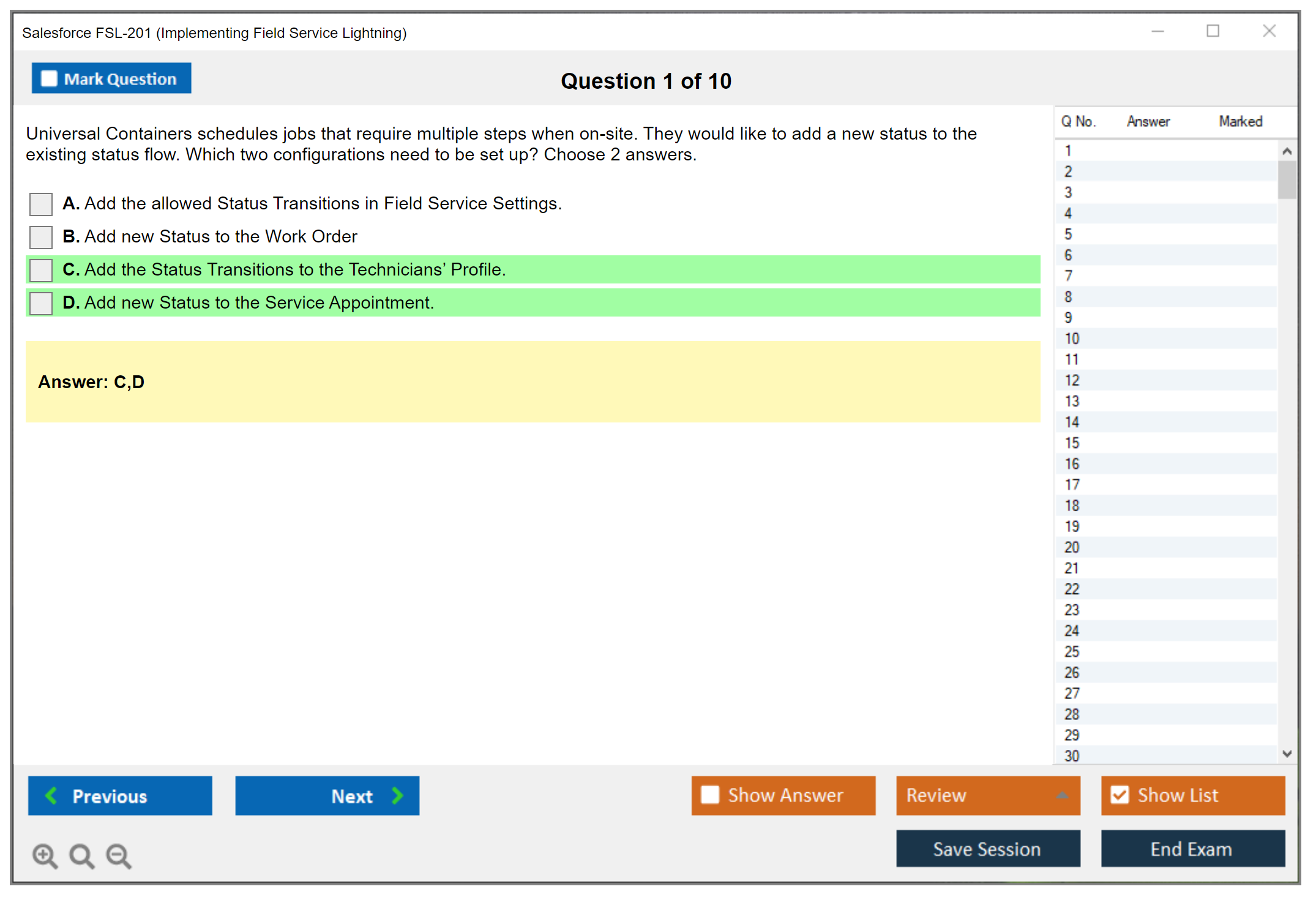
Understand relationships and lifecycle. Practice automations that update statuses, create service appointments, and enforce required fields. This is where "simple" builds turn into production pain if you don't think through transitions.
Scheduling, dispatch, and optimization
Policies, rules, constraints, and dispatch console behavior. Practice tuning. Don't just read. Build scenarios where the scheduler fails, then figure out why.
Service territories, operating hours, and resources
Model territories, resources, skills, capacity, and crews. Your ability to reason about eligibility and travel time assumptions will carry you through a lot of questions.
Mobile configuration
Field Service Mobile configuration, offline expectations, inventory and parts usage. Test on the app if you can. Desktop-only prep is where confidence goes to die.
Security and access
Profiles, Field Service permission sets and security, sharing considerations, and who can see what in dispatch vs the mobile app. This is easy to under-study.
Reporting and analytics
KPIs, dashboards, operational reporting. Know what stakeholders ask for: completion rates, SLA compliance, travel time, first-time fix. Basics matter.
Integrations and data model considerations
If the current guide covers integrations, focus on what typically connects: ERP inventory, work order creation from external systems, and identity/auth basics. Don't overthink APIs unless the guide emphasizes them.
Prerequisites and Recommended Experience
Prerequisites (required vs recommended)
No hard prerequisite cert's usually required, but Salesforce often recommends experience. Check the exam guide. Requirements can change.
Recommended hands-on experience
You want comfort with Salesforce admin fundamentals and a sandbox where you can build an end-to-end mini setup: accounts, work orders, service appointments, territories, resources, policies, and a dispatcher workflow. Seeing the full chain is the point.
Helpful related certs/knowledge
Admin knowledge helps. Service Cloud fundamentals help. If you can already explain cases vs work orders without pausing, you're ahead.
Best Study Materials for FSL-201
Official resources
Start with the official exam guide, Trailhead modules, Help Docs, and Release Notes. Salesforce updates Field Service often, and the exam tends to reflect current behavior more than your memory of a blog post from 2021.
Hands-on practice plan
Build a mini implementation. One territory. Two operating hours sets. Three resources with different skills. Then create jobs that force scheduling decisions. Make it fail, adjust policies, repeat, because that muscle memory is what the exam's poking at with those "best answer" questions.
Instructor-led training options
If your employer pays, instructor-led can compress time. If you're self-funding, you can still pass without it, but you need discipline and hands-on reps.
Study checklist mapped to objectives
Make a checklist directly from the FSL-201 exam objectives. Track what you've built, not what you've read. Reading feels productive. Building is productive.
FSL-201 Practice Tests and Exam Prep Strategy
Practice test types
Topic quizzes help you isolate weaknesses. Full-length timed exams help with pacing and fatigue. Both matter. Most people only do one.
How to review missed questions
Keep an error log. Map each miss to an objective. Then recreate the scenario in a sandbox or write out why each wrong option's wrong. It's slow, it works.
High-yield scenarios to practice
Dispatch console flows, policy tuning, mobile status and offline behavior, and those "why isn't this service appointment eligible" puzzles. Also, practice explaining your choices out loud. If you can't explain it, you don't know it.
Final-week revision plan
Stop chasing new content. Re-run your weak areas. Skim release notes for changes that affect scheduling, mobile, and permissions. Sleep. Seriously.
Renewal / Maintenance for Salesforce FSL-201
Salesforce certification renewal model
Salesforce uses maintenance modules on Trailhead for many credentials. The thing is, the model changes sometimes, so confirm the current requirement for your credential in the certification maintenance page tied to your profile.
Renewal frequency and deadlines
Deadlines are set by Salesforce and can vary by credential and release cycle. Check your Trailblazer account maintenance section. Put reminders on a calendar. Forgetting's common.
What happens if you miss renewal
If you miss maintenance, your credential can go inactive until you complete the required modules. The reinstatement steps are usually straightforward, but waiting too long can create annoying gaps on your public profile.
FAQs (Quick Answers)
FSL-201 cost, passing score, and difficulty (at-a-glance)
How much does the Salesforce FSL-201 exam cost? $200 USD per attempt, with regional variation and taxes possible. Passing score: check the current exam guide if published, otherwise expect it to vary by release. Difficulty: intermediate, with heavy scenario configuration.
Best study materials and practice tests
Official exam guide, Trailhead, Help Docs, and at least one reputable FSL-201 practice test. Hands-on builds are the difference maker.
Objectives, prerequisites, and renewal summary
Study scheduling, territories, mobile, security, and the core work order model. No hard prerequisites usually, but implementation experience helps a lot. Maintenance's handled through Salesforce's Trailhead-based renewal model, with deadlines you must track in your profile.
FSL-201 Passing Score, Scoring Methodology, and Score Reporting
What you're actually measured against
So here's the deal. The FSL-201 exam needs 63% to pass. That's 38 correct answers out of 60 scored questions, and honestly, that threshold exists because Salesforce brought in a panel of Field Service experts who sat down and decided what minimum competency looks like for someone implementing Field Service Lightning in the real world.
The percentage-based scoring system means your final number reflects only the questions that actually count. This trips people up. The exam throws in some unscored pilot questions that Salesforce is testing for future versions. You can't tell which ones they are during the test. It's frustrating when you're sitting there. You're still answering 60 questions, but some of those are basically invisible to your final grade.
Psychometric analysis sounds fancy but it just means Salesforce uses statistical methods and expert judgment to set that 63% cut score. They're trying to make sure anyone who passes actually knows enough to configure scheduling policies, set up service territories, and handle mobile configuration without breaking a client's org. The threshold isn't arbitrary. It represents what a competent Field Service consultant should know walking into an implementation project.
How the scoring actually works when you're in the exam
Multiple-select questions? Brutal.
You need to choose all the correct answers and only the correct answers. Pick three out of four correct options? Zero points. Pick all four correct ones plus one wrong one? Also zero points. There's no partial credit system, which makes those multi-select items way more challenging than they look on practice tests. Honestly, way harder than anyone expects going in.
The exam distributes questions across different objective domains, and those domains carry different weights. Scheduling and Optimization sits at 23% of your exam. Mobile Configuration takes up 20%. That weighting matters because if you absolutely nail the heavily weighted sections, you can afford to struggle a bit in lighter areas and still clear 63%. I've seen people bomb a few questions on reporting (a smaller domain) but crush the scheduling and dispatch questions and walk out with passing scores in the mid-70s. Kind of proves the point about knowing where to focus your energy.
During the actual test you won't see your running score. You answer 60 questions, some scenario-based configuration problems that make you think through work order flows and dispatch console behavior, and then you submit. The system calculates your percentage based only on the scored items. Those pilot questions vanish from the calculation entirely. Boom, you get immediate preliminary results on-screen. Pass or fail, right there.
What happens after you click that final submit button
You'll see pass/fail immediately. Done.
But the detailed breakdown hits your Webassessor account within minutes, and that score report is honestly more valuable than the pass/fail screen, especially if you didn't pass. It shows your percentage performance in each exam objective domain. You might see you scored 85% on Service Territories and Operating Hours but only 45% on Mobile Configuration and Inventory Management. That tells you exactly where to focus if you need to retake. The thing is, it removes the guesswork from your next study session.
The report won't tell you which specific questions you missed. Salesforce protects question integrity by keeping that locked down. You get domain-level feedback, not item-level. This frustrates people who wanna review every mistake, but I get why they do it. If everyone walked out knowing exactly which questions they got wrong, the whole question bank would be on Reddit within a month.
Passing candidates get access to their digital badge and certificate through the Salesforce certification portal within 24 hours, usually faster. You can add that badge to LinkedIn, your email signature, wherever. If you didn't pass, you see those domain breakdowns and your retake eligibility. Salesforce has specific retake policies, so check the current waiting period because it's changed over the years. You can schedule another attempt once that window opens.
The stuff nobody talks about until they need it
Score validity is permanent in the sense that your exam result doesn't expire. If you pass, you passed. But the certification itself requires ongoing maintenance through release-specific Trailhead modules. Honestly, it's a whole separate commitment. Passing once grants the credential, then you maintain it by completing those modules tied to Salesforce's three annual releases. Miss your maintenance deadline and your cert goes into "not maintained" status, which is basically expired for all practical purposes.
I once forgot to complete my Spring release maintenance because I was heads-down on a go-live, and watching that certification badge turn gray in my Trailhead profile felt worse than any exam failure. Just set calendar reminders twice a year and knock out those modules when they drop.
Technical issues happen. Proctoring software crashes, internet cuts out during an online proctored exam, or you really believe there was a scoring error. You can submit an appeal through Salesforce certification support within 10 days of receiving your score report. Honestly though, successful appeals are rare. The scoring system is pretty well automated and tested. Most appeals that succeed involve provable technical disruptions, not disagreements about question wording.
If you're using something like the FSL-201 Practice Exam Questions Pack during your prep, you want to consistently hit 75-80% on full-length practice tests before you schedule the real thing. That margin above the 63% threshold accounts for exam-day stress, unfamiliar question formats, and those weird scenario questions that make you second-guess yourself. I've watched people score 68% on practice tests, think they're ready, then panic during the real exam and score 59%. Build in that buffer.
When you don't clear the bar
Failing stings. Not gonna lie.
But that domain-level breakdown is your roadmap for the retake. If you scored 50% on Scheduling and Optimization (the heaviest-weighted section), that's where you need to spend your study time. Spin up a developer org, build out scheduling policies, play with the dispatch console, test different optimization configurations. Actually get your hands dirty with the platform instead of just reading about it. The Service-Cloud-Consultant exam overlaps in a few areas if you're studying both, especially around case-to-work-order automation and service contracts.
Your retake strategy should focus on the weak domains first because of that objective weighting. Bringing your Scheduling and Optimization score from 50% to 75% has way more impact than improving Service Territories from 70% to 85%. Seems obvious when you say it out loud but people mess this up constantly. Do the math on where points actually live in the exam structure. Some people waste time perfecting domains they already know well instead of shoring up the gaps.
The ADM-201 admin certification is honestly a smart prerequisite if you're weak on Salesforce fundamentals. Field Service builds on standard objects, flows, and security models. If you're fumbling with permission sets or don't understand object relationships, FSL-201 will be rough because it assumes you know that baseline admin stuff cold. Same with Platform-App-Builder. Understanding the data model and declarative automation makes the Field Service-specific config way easier to grasp.
The benchmark that actually matters
During practice, scenario-based questions are your best predictor of real exam performance. Multiple choice recall questions about "which object stores technician skills" are fine for memorization, but the exam leans heavily on "you need to configure a scheduling policy that prioritizes high-value customers while respecting technician skill requirements and travel time, which three settings would you configure?" Those multi-layered scenarios test whether you actually understand how the pieces fit together, not just whether you memorized some flashcards.
Time management during the exam is less critical than on some other Salesforce certs because 60 questions in 105 minutes gives you almost two minutes per question. But some scenario questions have long setups. Three paragraphs describing a client requirement, then a question with five or six answer choices. Those eat up time fast if you're not careful. Don't rush those. Read carefully, eliminate obviously wrong answers, and think through the actual system behavior before selecting.
The 63% threshold means you can miss 22 questions and still pass. That's a decent margin, but it evaporates fast if you're guessing on multi-select questions or misreading scenario details. It happens to everyone under pressure. One tip: if a question asks you to choose two answers and you're certain about one but torn between three options for the second choice, think about real-world implementation. What would actually solve the client's problem without creating downstream issues? Salesforce exam questions usually reward practical thinking over edge-case gotchas.
FSL-201 Difficulty Level: How Hard Is the Implementing Field Service Lightning Exam?
What this exam actually proves
The Salesforce FSL-201 certification is basically Salesforce asking, "Can you implement Field Service for real companies, with real constraints, and not wreck dispatch?" It validates that you understand the Field Service data model, the scheduling stack, the dispatch console, mobile behavior, and the weird little admin decisions that only show up once a dispatcher's yelling because Tuesday's overbooked.
It's not a "click these buttons" badge. It's judgement. Configuration judgement.
Who should take it (and who shouldn't)
This is for admins and consultants doing Field Service Lightning implementation work, Service Cloud folks getting pulled into Field Service projects, and anyone building scheduling, territories, and mobile experiences for technicians. Also relevant if you want the "Salesforce Field Service consultant skills" story on your resume because hiring managers see Field Service as specialized and, honestly, harder to fake.
If you've never touched scheduling policies, don't know what a service territory is beyond the definition, and you've only read a FSL-201 study guide without building anything, you can still pass, but you'll feel every question.
Exam format and question style
Official details can change, so check the FSL-201 exam guide for current specifics. As of the typical format people train for, it's 60 multiple-choice/multi-select questions in 105 minutes, which is about 1.75 minutes each. That sounds fine until you hit the multi-paragraph scenarios and you realize you're reading, re-reading, then trying to choose between two answers that both "work" but only one matches Salesforce's recommended approach.
Some questions are direct. Many aren't. Fragments. Gotchas.
Cost and registration basics
Exam cost and currency notes
The exam price varies by region, but commonly you'll see USD pricing around the standard Salesforce pro-level exam rate. Salesforce changes pricing and local taxes, so check the certification site for your country before you budget it.
Retakes and policy
Retakes usually cost less than the first attempt, and there's a waiting period. Again, confirm in the current exam guide because Salesforce does tweak policies over time.
Where to register
Register through the Salesforce Certification Portal, and you'll get routed to Webassessor for scheduling. Online proctoring's common. Test center's an option in many areas.
Passing score and how scoring works
Salesforce publishes passing scores per exam in the exam guide, but it can vary with updates, so treat it as "check the guide for the current %." I mean, don't rely on a random blog post for a number that might've shifted last release.
Weighted objectives and unscored items
The exam's scored by objective weighting, so missing a bunch of scheduling and optimization can hurt more than missing a couple of reporting questions, depending on the blueprint. There may also be unscored items Salesforce uses for future exams. You won't know which ones. Everyone hates that. It's still reality.
If you don't pass
You get a section-level score report. Use it. Don't just book another attempt and hope. Map the weak sections back to the FSL-201 exam objectives, then rebuild those features hands-on.
How hard is FSL-201, honestly?
Difficulty level in plain English
Industry consensus puts the Salesforce FSL-201 certification at intermediate-to-advanced difficulty. It's more challenging than the Salesforce Administrator exam because it's narrower but deeper, and it expects you to make the "best" configuration call, not just remember where a setting lives. It's also usually less abstract than architect-level certs, but some parts, like optimization, absolutely feel architect-ish when the question starts stacking constraints on constraints.
Harder than Admin. Different kind of hard than Service Cloud Consultant. And it punishes shallow studying.
Why people struggle (the real reasons)
The biggest shift versus Admin's the scenario style. You'll get multi-paragraph setups describing business requirements, constraints, dispatcher preferences, technician skill rules, travel time expectations, and then the question asks for the best configuration, policy, or implementation approach. Not a fact. A decision. And those decisions come with trade-offs that you only really understand after you've broken a scheduling policy once and watched it produce nonsense.
Scheduling and dispatch optimization's the monster topic. The thing is, the scheduling engine, optimization policies, and the way settings interact can be counterintuitive. There are performance implications. You constantly balance automation versus dispatcher control, which is a polite way of saying "how much chaos are you okay with in the name of efficiency."
Mobile's the other trap. Salesforce Field Service mobile app configuration behaves differently than standard Salesforce mobile in ways that matter on exam day, like offline behavior, inventory flows, and the way technicians actually complete work when the network drops. You can read docs all day, but without clicking around, it's easy to pick the answer that sounds like core Salesforce mobile instead of Field Service Mobile.
Security's sneakier than people expect. Field Service brings unique access considerations around service territories, resource visibility, service appointment access, and mobile permissions. Standard sharing rules knowledge helps, but it's not the whole story. Field Service permission sets and security questions tend to be "which combination prevents X but allows Y," and the distractors are very believable.
Here's something weird I noticed after my second attempt: the questions that look simple are often testing edge cases. The ones that seem complicated sometimes just want you to pick the most obvious answer. Your brain wants patterns, and this exam knows it.
Time pressure is real
105 minutes for 60 questions isn't generous when the scenarios are long. You can't "admire the problem." You need a method: skim for the ask, identify the objects involved, then read for constraints. If you fully read every paragraph like it's a novel, you'll run out of time.
Prep time estimates that match reality
If you've got 6+ months implementing Field Service in a sandbox or production, expect 40 to 60 hours of focused study. That's reviewing the FSL-201 exam objectives, running through scheduling scenarios, and doing targeted practice tests. If your experience's mostly theoretical or you've only configured the basics like work order and service appointment setup, budget 80 to 120 hours because you're not just studying, you're building intuition you don't yet have.
Community-reported first-time pass rates often land around 60 to 70% for well-prepared people with hands-on experience, and lower for folks relying on memorization. Salesforce doesn't publish official pass rates, so treat that as directional, not gospel.
What to study (the stuff that shows up a lot)
The exam covers a wide slice of the product: work orders, service appointments, scheduling, dispatch, mobile, inventory, maintenance plans, returns, and integrations. Feature breadth's part of the pain.
Here are the areas that keep coming up:
Scheduling and optimization policies. This is where people fail. Practice scheduling and dispatch optimization with different constraints, understand what happens when policies conflict, and know when to let optimization run versus when dispatchers should drive.
Mobile configuration and offline edge cases. Spend time in the mobile app settings, test offline, and understand inventory behaviors. This is where "sounds right" answers lure you in.
Service territories and operating hours. You need to be comfortable with service territories and operating hours, capacity planning, skills, crews, and how those choices affect scheduling results.
Security and access. Profiles, permission sets, visibility, and the Field Service specifics that go beyond basic sharing rules.
Reporting. Know what dispatchers and ops leaders measure, but don't over-invest here compared to scheduling.
Common failure points I see people mention: optimization policies, mobile edge cases, territory and capacity scenarios, and questions tied to newer features from recent releases. Field Service gets meaningful enhancements every release, so exam content evolves fast, and yes, you can get questions on functionality introduced within the last year.
Practice tests and strategy that actually works
Practice tests matter, but only if you use them correctly. A FSL-201 practice test should be timed sometimes, and untimed other times, because you need both speed and understanding. When you miss a question, don't just note the right answer. Write why the other options are wrong in Field Service terms, because the distractors are often "valid in other Salesforce contexts" but wrong here.
I also like having one paid resource you can grind through when you're close to exam day. If you want something straightforward, the FSL-201 Practice Exam Questions Pack is $36.99 and works well for drilling that "two answers both work, one's best practice" muscle. Use it as a mirror, not a crutch. Another pass through the FSL-201 Practice Exam Questions Pack in the final week can help with pacing, especially if you keep an error log by objective.
Success predictors are boring but consistent: practice exam scores above 75%, hands-on configuration exercises, reviewing release notes, and understanding scheduling optimization theory well enough to explain it to someone else without waving your hands.
Renewal and maintenance
Salesforce credentials generally require periodic maintenance via Trailhead modules. The frequency and deadlines can change, so confirm the current maintenance cycle on the certification site. Miss it and your cert can go inactive, and you'll have to complete the assigned maintenance to get back to current.
Don't ignore it. It's annoying. It's part of the deal.
Quick FAQs
Cost, passing score, difficulty
Cost depends on region and currency, passing score's listed in the current exam guide, and difficulty's intermediate-to-advanced, with scheduling/optimization and mobile/security being the main pain points.
Best study materials
Start with the FSL-201 exam guide, Trailhead, Help Docs, and recent release notes, then add hands-on builds in a dev org or sandbox. If you want extra drilling, the FSL-201 Practice Exam Questions Pack is a decent add-on for timed practice.
Objectives, prerequisites, renewal summary
No hard prerequisite cert's usually required, but Admin and Service Cloud fundamentals help a lot. Treat hands-on Field Service work as your biggest advantage. Renew via Salesforce maintenance modules on the schedule they publish.
Complete FSL-201 Exam Objectives: Detailed Domain Breakdown and What to Study
Look, if you're prepping for the Salesforce FSL-201 exam (officially called Implementing Field Service Lightning), you need to understand how the exam objectives are actually structured. This isn't one of those "memorize the UI and you're good" certifications.
The FSL-201 exam guide breaks content into weighted domains, and those weights matter way more than most people think when they're planning study time.
Why domain weights actually determine your score
The exam guide publishes percentage weights for each domain. Some areas might be 18% of the exam, others only 8%. Do the math: if you've got 60 questions, that 18% domain is going to give you roughly 11 questions, while the 8% domain only shows up maybe 5 times.
Study everything, obviously. But if you're short on time or struggling with a particular topic, focus where the points are. Spending three weeks mastering a low-weight domain while ignoring high-impact areas? Bad strategy.
The highest-weighted sections tend to be scheduling/dispatch optimization and work order lifecycle management. Those are the meat of Field Service implementations in the real world, so Salesforce tests them heavily.
Getting Field Service up and running
The exam covers Field Service setup and configuration in detail, starting with the Field Service Settings page where you enable features and configure defaults. You'll need to know the Field Service Setup Assistant. It's basically a guided wizard that walks you through initial implementation steps like creating your first service territory, setting up resources, and configuring basic scheduling policies.
The assistant's helpful for new orgs, but you should understand what it's doing behind the scenes, not just click through it blindly.
Licensing is another area people underestimate. Field Service Lightning licenses are separate from core Salesforce licenses, and different user types need different permission sets. Dispatchers need console access, mobile workers need the Field Service Mobile app permissions, and administrators need.. well, everything. You have to know which features are locked behind which license types because that affects what you can actually configure in a given org.
The Field Service data model is everything
Deep understanding of the core objects? Non-negotiable for this exam.
Work Order is your parent object that represents the job. Work Order Line Items break that job into specific tasks or products. Service Appointments represent the actual scheduled time slots when a technician shows up. Service Resource represents your mobile workers (or equipment, or contractors). Resource Absence tracks when resources aren't available.
These objects relate to standard Salesforce objects in ways you need to memorize. Work Orders typically link to Accounts and Contacts (who needs the service), Cases (what problem triggered the work), and Assets (what equipment is being serviced). The exam loves scenario questions where you have to trace relationships between objects. Like "a customer calls about a broken asset, which creates a case, which generates a work order, which spawns service appointments."
Work order lifecycle from creation to completion
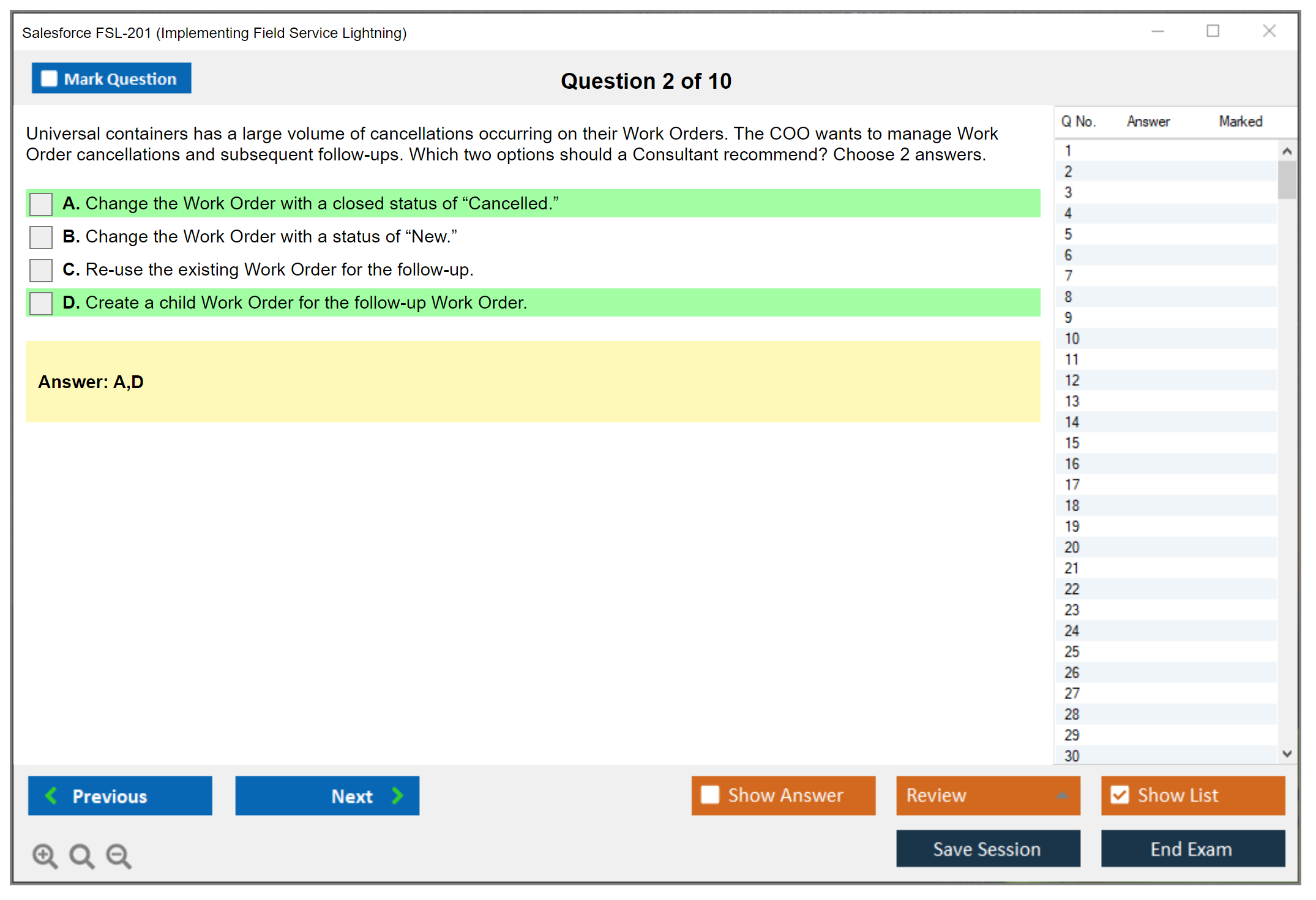
Work order lifecycle management is huge on this exam. You need to understand work order types (different templates for different kinds of jobs), work order statuses (New, In Progress, Completed, Closed, Canceled, and custom statuses you can add), and how entitlements and service contracts control what work gets done under what terms.
Automation is where things get interesting.
Work orders can be created manually, sure, but most organizations automate creation from cases using flows or process builder. Maintenance plans auto-generate work orders on schedules. Return orders create work orders for retrieving parts. The exam will test whether you know which automation tool to use for which scenario.
Work order line items let you break a complex job into pieces. One line item for the inspection, another for the repair, a third for the parts replacement. Each line item can have its own service appointment if needed, which matters for scheduling because you might send different technicians with different skills to handle different parts of the job.
Service appointments and the scheduling puzzle
Service appointments are where Field Service gets interesting and complicated. An appointment represents a scheduled block of time. It's got statuses like None, Scheduled, Dispatched, In Progress, Complete, and Canceled. Understanding the lifecycle from creation (often auto-generated from work order line items) through completion is critical.
Appointment dependencies let you chain appointments together. You might configure a predecessor/successor relationship where the installation appointment can't start until the site survey appointment is complete.
The exam loves testing complex dependency scenarios. Actually, I once saw a practice question with three-level dependencies that made my head spin, but once you diagram it out the logic becomes clear.
Maintenance plans and preventive maintenance
Implementing preventive schedules through maintenance plans is a common real-world requirement. You set up maintenance plan templates that define the frequency and tasks, associate them with assets, and the system auto-generates work orders on schedule.
This is one of those features that's straightforward in concept but has configuration details you need to know. Like how to handle maintenance windows, how to adjust schedules when work is delayed, and how to track maintenance history.
Parts, products, and inventory
Product and parts management comes up on the exam, though it's not the highest-weighted area. You need to understand product catalogs, product required settings (which mark certain products as required for specific work types), product requests (when a technician needs parts sent to them), and product transfers (moving inventory between locations or trucks).
Return order processing handles the reverse flow when a technician has defective or excess parts that need to come back.
Return orders have their own lifecycle and line items, and they integrate with inventory management to update stock levels. This is one of the less glamorous parts of Field Service, but it shows up on the exam enough that you can't ignore it.
Scheduling policies: the brain of Field Service
Here's where FSL-201 gets really technical. The scheduling policy framework controls how appointments get scheduled, both when dispatchers do it manually and when the optimization engine runs automatically. Policies are built from components: work rules enforce requirements, service objectives define goals, and the policy itself ties them together with match criteria.
Work rules are constraints.
Hard constraints must be met. Required skills, territory membership, time windows. Soft constraints should be met if possible but can be violated. Preferred resources, minimize travel. Understanding when to use hard constraints versus soft constraints? That's a judgment call the exam tests.
Service objectives prioritize what you're optimizing for. Minimize travel time, get the maximum number of appointments scheduled, balance workload across resources, respect customer preferences. You can combine multiple objectives with different weights, and understanding how the optimization algorithm balances competing objectives is exam material.
Emergency scheduling and complex scenarios
Emergency and same-day scheduling requires different configuration. Emergency appointments often override normal scheduling policies. You might ignore territory boundaries or skill requirements to get someone on-site fast.
The exam will ask about override behavior and when to use the manual scheduler instead of the optimization engine.
Multi-day appointments (jobs that span multiple days or require multiple visits) have special configuration requirements. Crew-based scheduling, where you're sending multiple technicians to one job, requires understanding crew capacity calculations and how to configure crew member assignments. These are advanced scenarios but they definitely appear on the exam.
The dispatch console and optimization engine
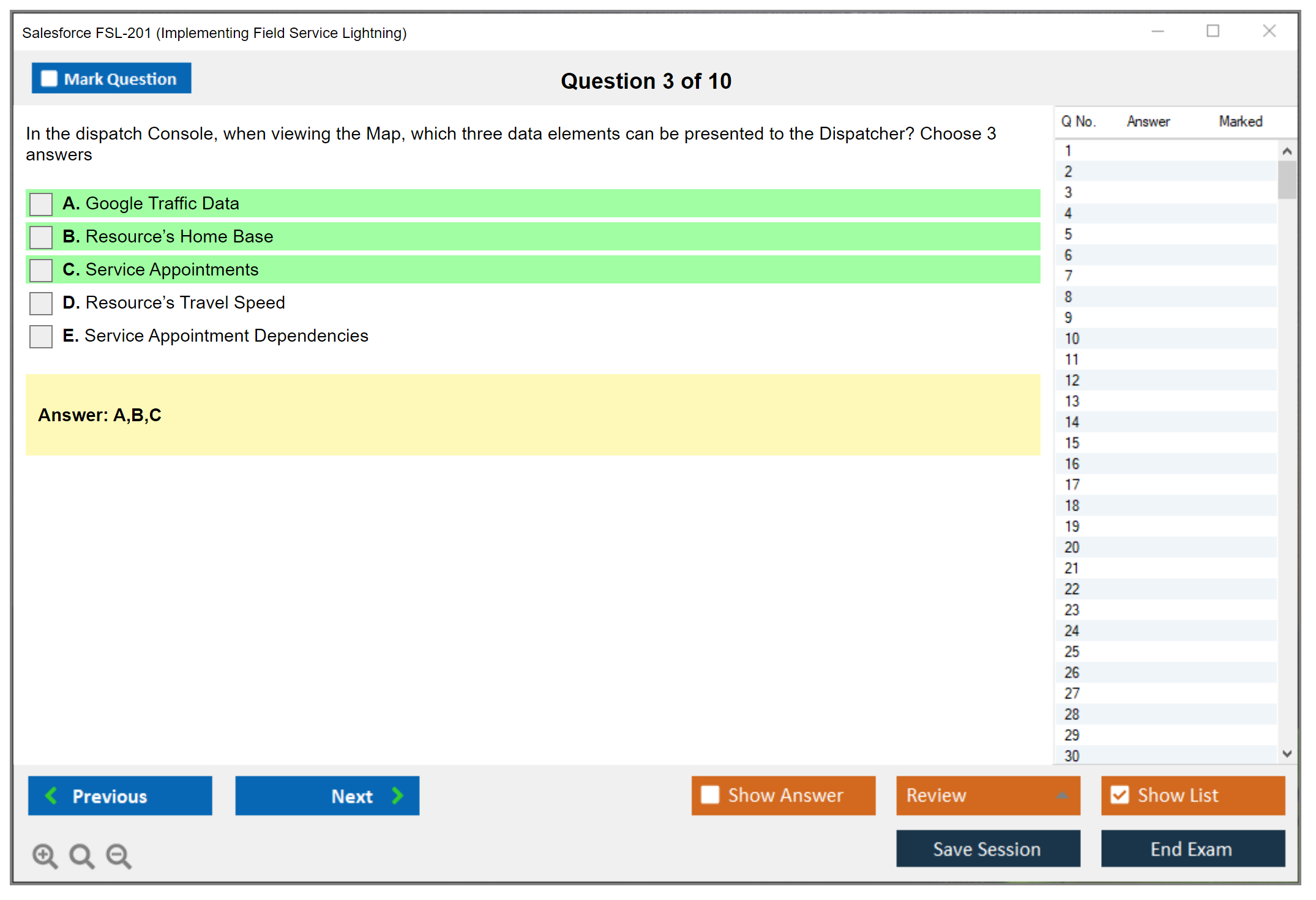
Dispatch console configuration is about customizing the dispatcher's workspace. You can configure Gantt chart views, set up filters and color-coding, and optimize performance for large datasets. Because a poorly configured console gets unusably slow with thousands of appointments.
The exam might show you a screenshot and ask how to achieve a particular view or filter.
The optimization queue and batch jobs are backend processes. The optimization engine doesn't schedule everything instantly. It processes appointments in batches. You need to understand batch sizes, how to monitor optimization performance, and how to troubleshoot when optimization fails or produces poor results.
Candidate resource identification, how the system finds which resources could possibly do a job, is part of this. Optimizing candidate pool size affects performance in ways that aren't always obvious.
Resources, skills, and territories
Service resource setup covers creating resources for technicians, contractors, and equipment. Resource types matter because they affect scheduling differently.
Skills and competencies let you match resources to work requirements. You can configure skill levels, certifications, expiration dates, and use skills in scheduling policies to ensure only qualified technicians get assigned to specialized work.
Service territory design is about organizing geographic service areas. Territory hierarchy lets you nest territories. West Coast contains California, which contains San Francisco, which contains specific ZIP codes. Territory membership rules determine which resources belong to which territories. The exam tests territory design decisions and how territory configuration affects scheduling.
Operating hours configuration defines when work can be scheduled.
You can set different operating hours for different territories, resources, or even specific assets. Understanding how operating hours interact with scheduling policies is important. Appointments can't be scheduled outside operating hours unless you configure an override.
If you want structured practice that maps directly to these objectives, the FSL-201 Practice Exam Questions Pack is $36.99 and covers all the domains with scenario-based questions. Hands-on practice in a developer org is still necessary. You can't learn this stuff just by reading. But practice questions help identify gaps in your knowledge.
Security, mobile, and reporting domains
Security and access control isn't the biggest domain, but it's tested. You need to know which permission sets enable which features, how object-level and field-level security affects Field Service users, and sharing considerations for work orders and appointments.
Mobile configuration (setting up the Field Service Mobile app, configuring offline behavior, managing inventory and parts on mobile devices) is practical knowledge that shows up in scenario questions.
The exam might describe a mobile worker's workflow and ask how to configure the app to support it.
Reporting and analytics covers Field Service-specific KPIs, building dashboards for dispatchers and managers, and operational reporting. This isn't as heavily weighted as scheduling, but you should know which standard reports exist and how to build custom reports on Field Service objects.
How this connects to other Salesforce skills
FSL-201 assumes you have solid Salesforce fundamentals. If you're weak on core admin concepts, go back and review ADM-201 material first.
The exam also overlaps with Service Cloud Consultant knowledge around case management and service contracts, and if you're planning to build custom functionality you'll want Platform App Builder skills for flows and automation.
Bottom line: the FSL-201 exam objectives are detailed and technical. The domain weights tell you where to focus your study time. Scheduling and optimization are the biggest areas, followed by work order lifecycle and data model fundamentals.
Don't neglect the smaller domains, but prioritize based on question distribution. Hands-on practice is required. You can't fake experience with the dispatch console or scheduling policies. Use the FSL-201 practice test materials to identify weak areas, then go build those scenarios in a sandbox until they make sense.
Conclusion
Look, honestly? There's a lot here.
The whole situation, I mean when you really dig into what's happening, it's this massive web of factors that you can't just boil down to one simple explanation or fix, you know?
Here's the thing. It's messy.
We need to see the details for what they are. Can't ignore them. Because honestly, the easy answers? They're usually wrong. Or at least half-baked. I've watched it happen too many times where people jump to conclusions without thinking it through. My brother does this constantly, actually drives me nuts. He'll read one headline and suddenly he's an expert on geopolitics or whatever. But I'm getting off track.
Point is: there's real benefit in seeing the full picture before you plant your flag anywhere.
Mixed feelings? Sure. On one hand, there's clear evidence pointing in a particular direction. But then you've got these outliers, these weird cases that make you second-guess the whole thing. That's how it goes though, right? Nothing's ever simple.
Bottom line here: take what works for you, ditch what doesn't, and keep asking questions.
Wrapping up: is the Salesforce FSL-201 certification right for you?
Okay, real talk. Implementing Field Service Lightning isn't something you pick up overnight, and honestly, anyone who tells you otherwise is selling something. This exam really tests whether you understand the moving parts (work orders, service appointments, scheduling policies, mobile config, the whole stack) and can wire them together in a way that actually solves business problems instead of just creating data entry forms that nobody wants to use. You can't just memorize field names and call it a day. FSL-201 wants to see that you've thought through territory design, dispatch optimization trade-offs, and how permissions cascade through the service org. It's scenario-heavy, which makes it more interesting but also harder to bluff your way through.
If you're eyeing Salesforce Field Service consultant skills as the next step in your career, the Implementing Field Service Lightning certification is one of the clearest signals you can send to employers that you know the platform. Not gonna lie, it's not the easiest Salesforce exam out there. Scheduling and dispatch alone can trip up people who've never built a real-world implementation. But it's not unapproachable if you put in hands-on time.
Build stuff. Break it. Fix it.
That's where the learning happens. Reading documentation only gets you maybe 40% of the way there. The rest comes from clicking around until something finally clicks in your brain. I once spent three hours trying to figure out why service appointments weren't showing up for a mobile worker, turned out I'd missed one checkbox in the permission set. That kind of thing sticks with you way more than any guide.
The best FSL-201 study guide is the one you create yourself by actually configuring a dev org end-to-end and mapping each step back to the FSL-201 exam objectives. Pair that with Trailhead modules, the official exam guide, practice scenarios. When you're ready to test your readiness, practice tests are non-negotiable because they surface your weak spots faster than anything else and help you get used to the question style Salesforce loves. You know, lots of "which configuration achieves X with the fewest customizations?" type stuff.
One resource I keep coming back to is the FSL-201 Practice Exam Questions Pack at /salesforce-dumps/fsl-201/. It mirrors the exam format pretty closely and covers the full range of objectives, from service territories and operating hours to Field Service permission sets and security. Gives you that timed, high-pressure environment you need before sitting the real thing. The feedback on missed questions alone is worth it. You start to see patterns in how Salesforce frames config decisions versus custom code, which is huge for the Salesforce Field Service Lightning exam.
Bottom line?
FSL-201's a solid investment if Field Service is in your future. Start with hands-on work, layer in study materials, drill with a quality FSL-201 practice test. You'll be in good shape. Good luck out there.